Meet The Spotted Lanternfly : A Growing Threat To Canada’s Ecosystems
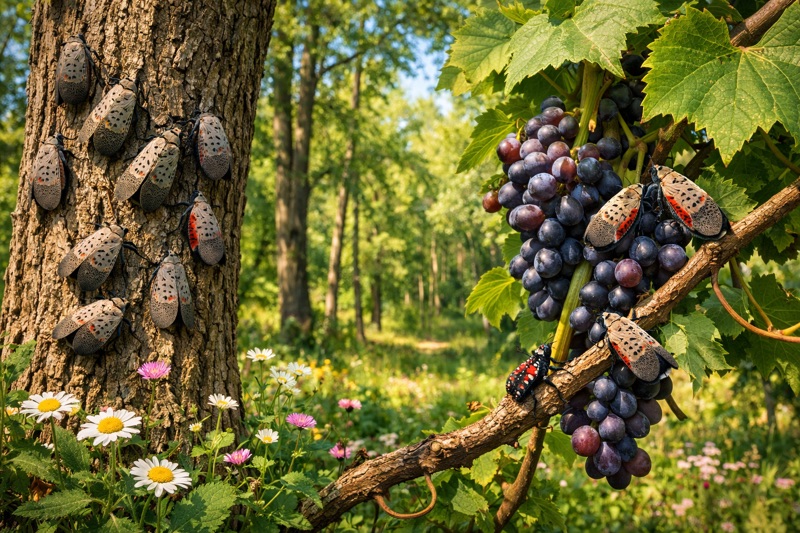
An eye-catching invader you need to know about.
This invasive insect may look harmless, but as it spreads, it poses a serious threat to trees, plants, and Canada’s ecosystems.
The Spotted Lanternfly is a striking insect that often catches attention because of its bold colours and patterned wings. However, beneath its eye-catching appearance is an invasive species that poses a serious threat to trees, plants, and ecosystems. Originally from Asia, the Spotted Lanternfly has been spreading across North America, feeding on a wide range of plants and weakening trees that are already under stress. Its presence can disrupt natural ecosystems, impact agriculture, and place additional pressure on native wildlife that depend on healthy habitats.
In this article, you’ll learn what the Spotted Lanternfly is, how to identify it at each stage of its life cycle, and why it is considered such a serious invasive species. We’ll explore how it spreads, the damage it causes, and what individuals and communities can do to help slow its spread. By understanding this invasive insect and its impact, we can take meaningful steps toward protecting Canada’s ecosystems and preserving the balance of nature.
What Is The Spotted Lanternfly?
The Spotted Lanternfly (Lycorma delicatula) is an invasive insect that belongs to a group known as planthoppers, not true flies. It is easily recognized by its spotted forewings and brightly coloured hindwings, especially when in flight. This species is native to parts of Asia, including China, Vietnam, and India, where it exists as part of the natural ecosystem and is kept in check by predators and environmental factors.
In North America, the Spotted Lanternfly was first detected in Pennsylvania in 2014. Since then, it has spread to multiple regions by laying egg masses on trees, vehicles, firewood, outdoor equipment, and other surfaces that can be easily transported. It is considered invasive because it feeds on the sap of over 70 plant species, including hardwood trees, vines, and agricultural crops, causing stress and damage to plants. With few natural predators and a high ability to spread, the Spotted Lanternfly poses a serious risk to forests, agriculture, and overall ecosystem health.
Why The Name? : The name comes from its lantern-like shape when at rest and the distinctive black spots on its wings.
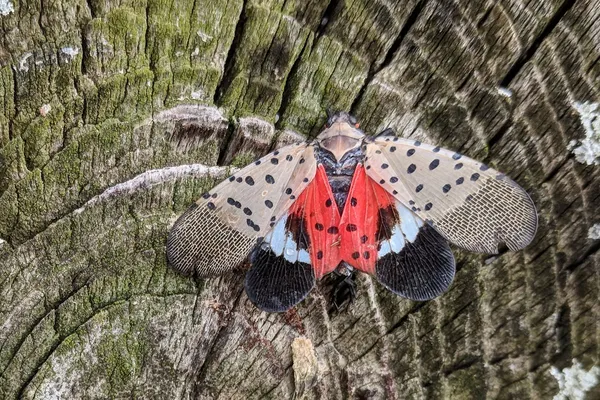
Photo Credits: Caitlyn Johnstone / Chesapeake Bay Program via Flickr
How To Identify The Spotted Lanternfly
Correctly identifying the Spotted Lanternfly is one of the most important steps in slowing its spread. This insect looks very different at each stage of its life cycle, which can make identification challenging especially early in the season. Egg masses, nymphs, and adults each have distinct appearances, and many are often mistaken for harmless insects or overlooked entirely.
In the following subsections, we’ll take a closer look at each life stage to help you recognize the Spotted Lanternfly in the wild. Understanding what to look for, and why misidentification is so common, can make a real difference in early detection and prevention.
Egg Masses :
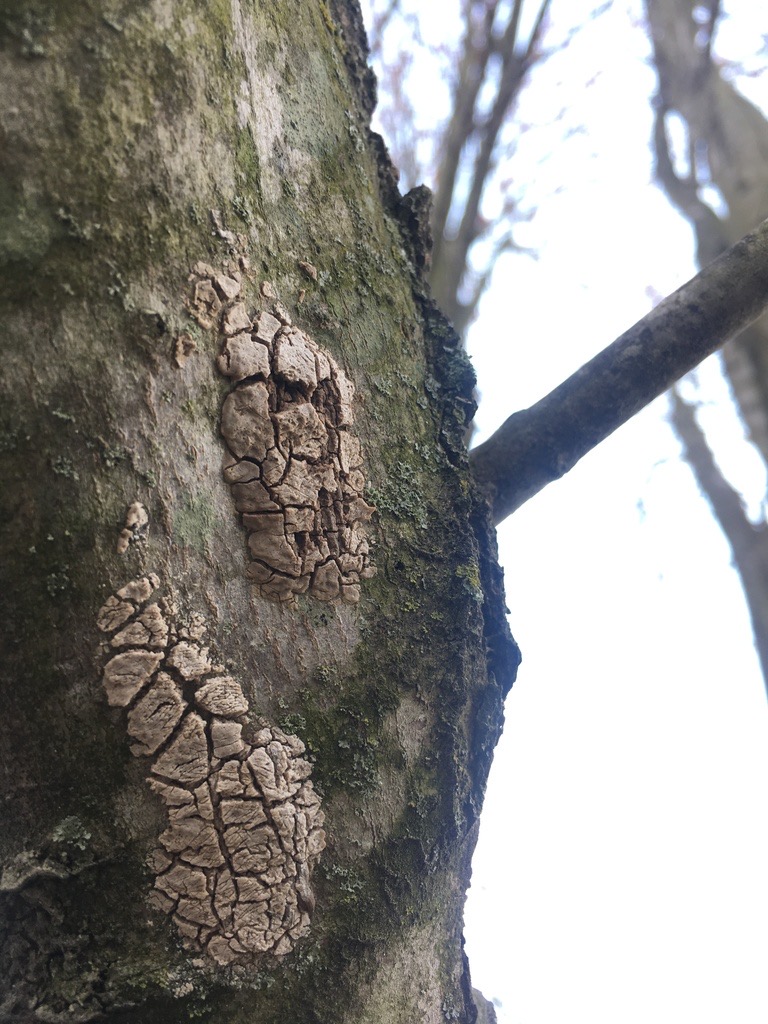
Spotted Lanternfly Egg Masses on a trunk of a tree.
Photo Credits: mroxidation on iNaturalist
Spotted Lanternfly egg masses are often overlooked because they do not resemble insects at all. Each egg mass contains multiple eggs laid close together and is covered by a grayish, mud-like coating that helps protect them from the environment. When freshly laid, egg masses may appear smooth and wet, but over time they dry out, crack, and take on a more textured appearance that blends easily into their surroundings.
Egg masses can be found on a wide variety of surfaces, including tree trunks, branches, stones, outdoor furniture, vehicles, firewood, and other man-made objects. Because they are laid in the fall and remain through winter, they are frequently mistaken for lichen, dried mud, or tree bark. This makes them easy to miss and allows the species to spread unknowingly when egg-covered items are moved to new areas.
What to look for? :
➡️ Grey, tan, or brown patches that resemble dried mud or putty.
➡️ Oval or elongated shapes, often about the size of a coin to a credit card.
➡️ A cracked or flaky surface as the egg mass ages.
➡️ They are found on both natural surfaces (trees and rocks) as well as human made objects like vehicles, chairs, planter pots, deck, fences, and so much more.
➡️ They are most visible from late fall through early spring.
Nymphs
After hatching from egg masses in spring, Spotted Lanternfly nymphs go through several growth stages before becoming adults. During this time, their appearance changes significantly, which is one of the main reasons they are often misidentified or overlooked. Understanding the differences between young and older nymphs is essential for early detection.
Young Nymphs (Early Stage) :
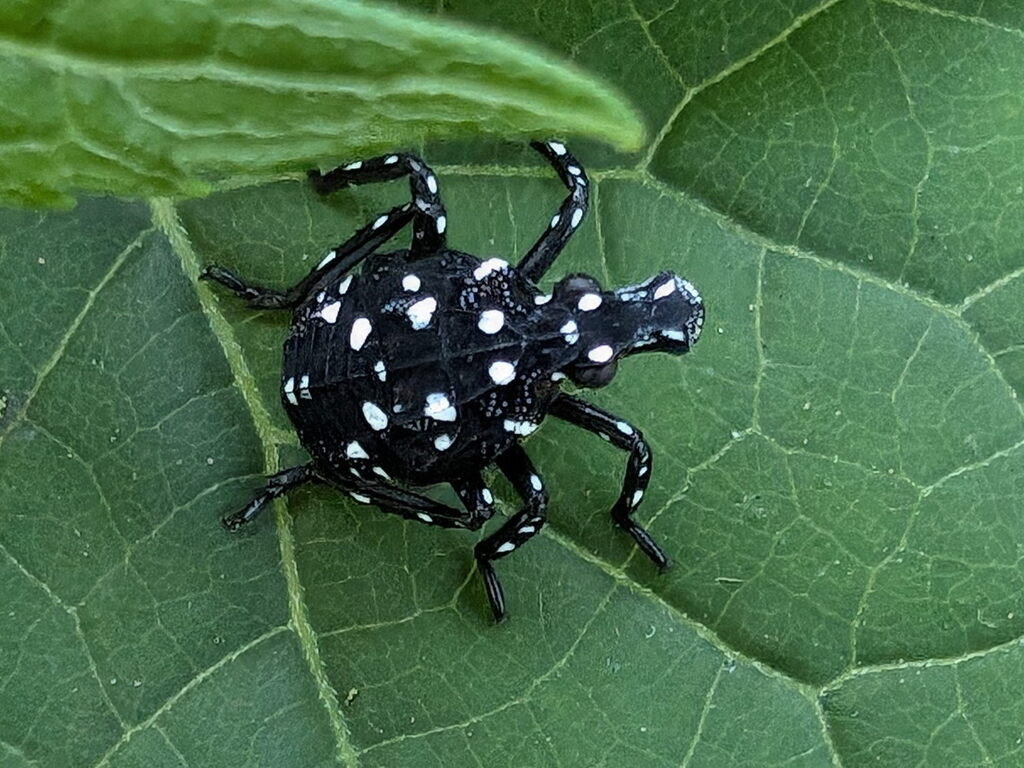
A Spotted Lanternfly Early Stage Nymph (Young Nymph) resting on a plant leaf.
Photo Credits: blkvulture on iNaturalist
Young Spotted Lanternfly nymphs are small and black with bright white spots covering their bodies. At this stage, they are wingless and often mistaken for ticks, spiders, or other harmless insects. Their small size and dark colouring make them easy to miss, especially when they are moving quickly or hiding on plant stems and leaves.
What To Look For? :
➡️ Black body with distinct white spots
➡️ Very small size, similar to a grain of rice or even smaller than that.
➡️ No wings present
➡️ Commonly found on leaves, stems, and young plant growth.
➡️ Most often seen in late spring and early summer.
Older Nymphs (Late / Final Stage) :
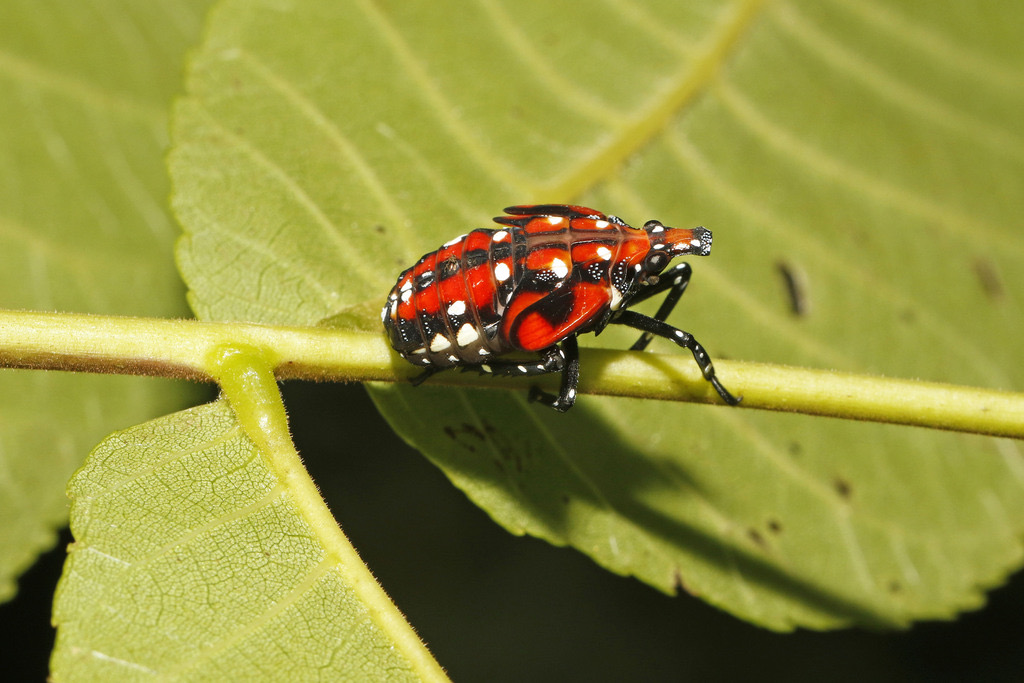 An older Nymph of a Spotted Lanternfly on a plant stem. It is starting to get the colours of the adult Spotted Lanternfly. Photo Credits: smpvolunteer-jcannon on iNaturalist
As nymphs mature, they develop a striking red body with black and white markings. Although still wingless, older nymphs are larger and more noticeable than earlier stages. Despite their bold colours, they are still frequently misidentified as native insects, which can delay reporting and control efforts.
What To Look For? :
➡️ Red body with black and white spots
➡️ Larger size than the early stage nymphs
➡️ Wing pads may be visible, but full wings are not developed.
➡️ Often found feeding on a variety of plants and trees.
➡️ They are most commonly seen in mid to late summer.
Why Nymphs Are Often Misidentified?
Spotted Lanternfly nymphs are frequently mistaken for other insects, especially during their early stages. This misidentification can delay detection and allow populations to grow unnoticed.
Common Reasons Misidentification Happens :
1️⃣ They don’t look like the adult insect: Many people expect invasive insects to resemble their adult form, not realizing that Spotted Lanternflies change appearance dramatically as they grow.
2️⃣ Early-stage nymphs resemble other insects: Young nymphs are often mistaken for ticks, spiders, beetles, or harmless native insects due to their small size and dark colouring.
3️⃣ Bold colours don’t always signal danger: Older nymphs have bright red markings, which can cause people to assume they are native or harmless rather than invasive.
4️⃣ They are fast-moving and easy to miss: Nymphs move quickly and often hide on leaves, stems, or tree trunks, making them harder to observe closely.
5️⃣ Lack of awareness: Many people are unfamiliar with the nymph stages and only recognize the adult Spotted Lanternfly.
Understanding these differences helps improve early identification and reporting, which is critical for slowing the spread of this invasive species.
Look A Likes To Watch For :
Because Spotted Lanternfly nymphs look very different from their adult form, they are often confused with native or harmless insects. Being aware of common look-alikes can help prevent misidentification and ensure that native species are not harmed by mistake.
Common Insects often confused with Spotted Lanternfly Nymphs include :
🔘 Ticks: Young nymphs are sometimes mistaken for ticks due to their small size and dark colouring. However, ticks lack white spots and do not jump.
🔘 Spiders: Early-stage nymphs may be confused with spiders at a quick glance, but Spotted Lanternfly nymphs have six legs and move with short hops.
🔘 Lady beetle larvae: These larvae are beneficial insects that help control pests. They have elongated bodies but lack the distinct white spotting pattern seen on Spotted Lanternfly nymphs.
🔘 Native leafhoppers or planthoppers: Some native species share similar shapes or colours, especially in the nymph stage, but do not match the exact black-and-white or red-and-black spotted patterns of the Spotted Lanternfly.
When identifying insects, it’s important to take a moment to observe patterns, colours, and behaviour before making conclusions. Learning the key differences helps protect native species while supporting efforts to monitor and control invasive ones.
Adult Spotted Lanternfly :
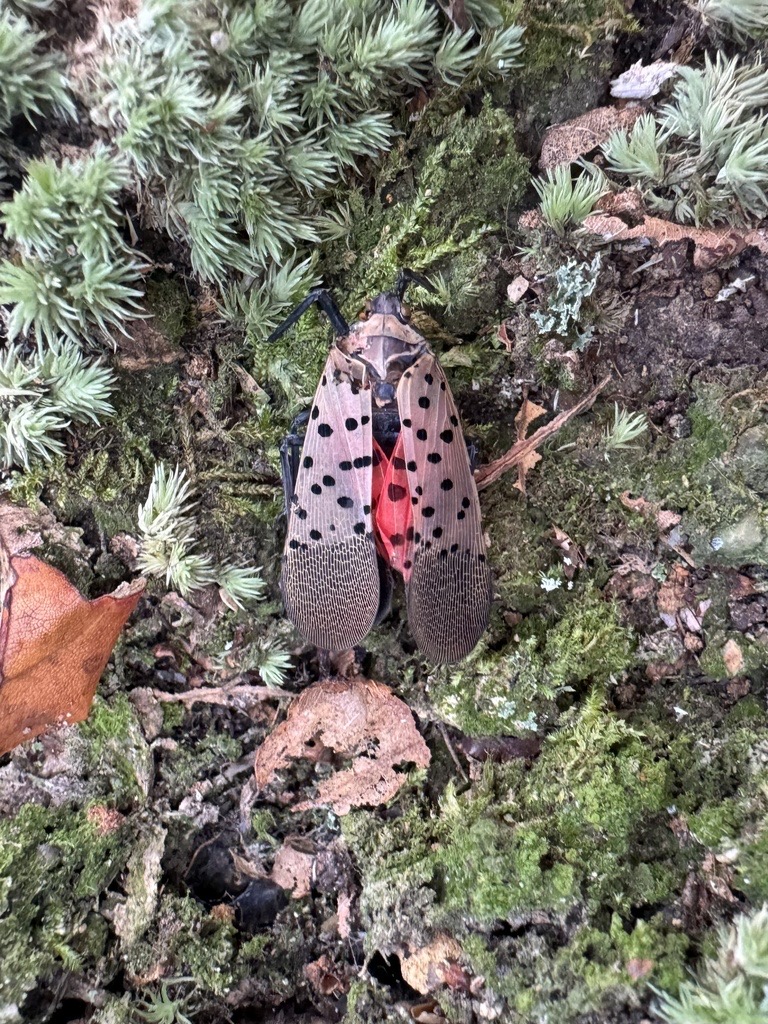
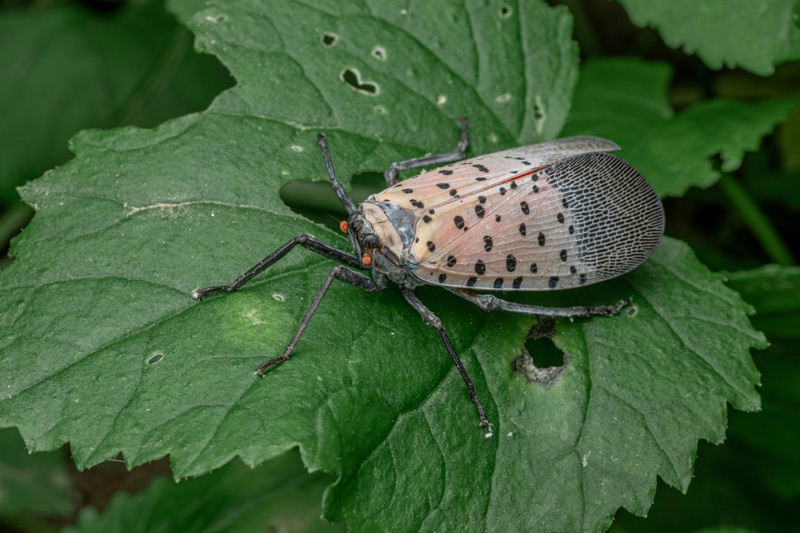
An adult Spotted Lanternfly with their wings closed. Photo Credits: ivan_uceda on iNaturalist
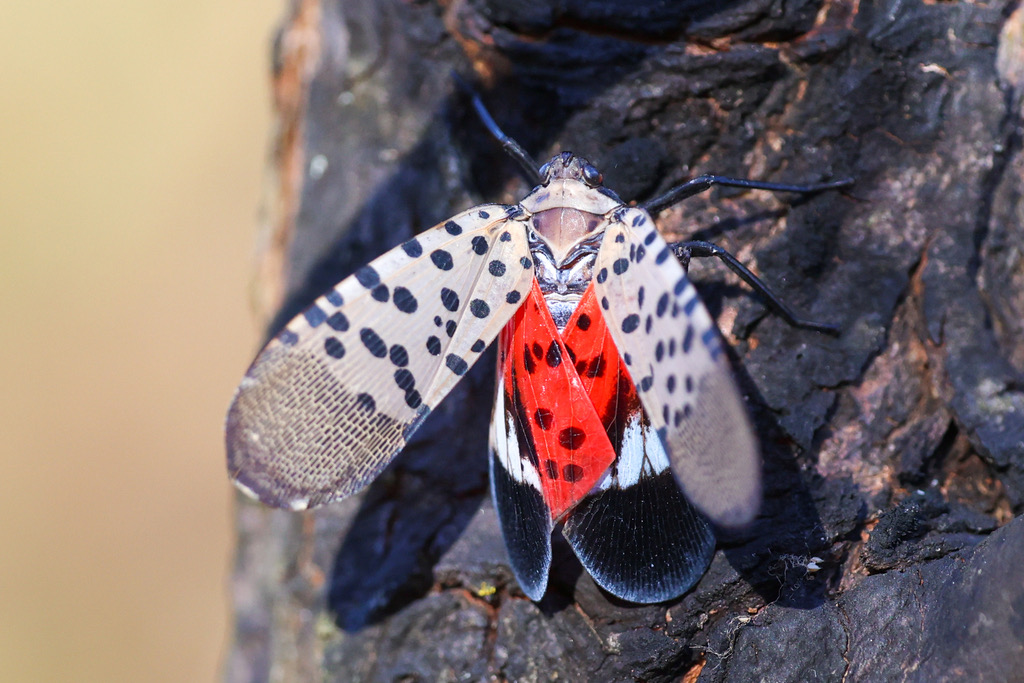
An adult Spotted Lanternfly resting with their wings opened.
Photo Credits: tomfeild on iNaturalist
Adult Spotted Lanternflies are the most recognizable stage of this invasive insect, but they are also the stage people are most likely to misidentify at first glance. When at rest, adults hold their wings tent-like over their bodies, showing pale gray forewings with distinct black spots. When the wings are opened or in flight, bright red hindwings with black and white markings become visible, making them especially eye-catching.
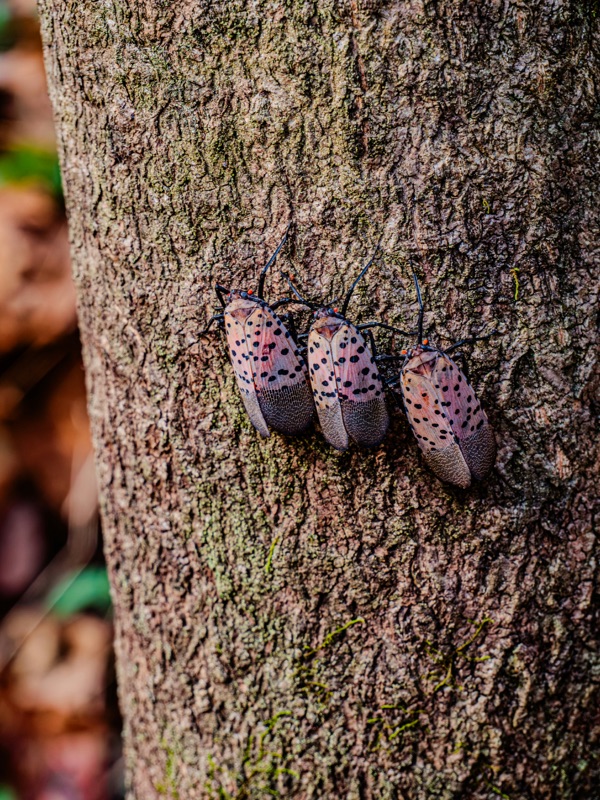
Adults are typically found from mid-summer through fall and are often seen feeding in large numbers on tree trunks and plant stems. They feed by piercing plants and extracting sap, which weakens trees and leaves behind a sticky substance called honeydew. This can attract other insects and encourage the growth of sooty mold, further stressing plants.
Common Adult look A likes :
Adult Spotted Lanternflies are sometimes confused with moths or butterflies due to their wing size and colouring. However, moths and butterflies do not have the same spotted wing patterns or hopping behaviour. Some native planthoppers may appear similar in shape, but they lack the distinctive red hindwings and bold black spotting that make the Spotted Lanternfly unique.
Why Adults Are Often Misidentified? :
Adult Spotted Lanternflies are frequently misidentified because their folded wings make them appear plain and moth-like when at rest. Many people only recognize the bright red colouring once the insect takes flight, which can happen too quickly for proper identification. In addition, their large size and striking appearance can lead people to assume they are a native species rather than an invasive one.
Limited awareness also plays a role, as many people are unfamiliar with what adult Spotted Lanternflies look like or where they are most commonly found. Understanding their behaviour, seasonal timing, and distinctive wing patterns helps reduce confusion and improves accurate identification.
What To Look For :
➡️ Grey forewings with bold black spots when at rest.
➡️ Bright red hindwings with black and white markings when flying or disturbed.
➡️ Wings held roof like over the body
➡️ Strong jumping behaviour and short distance flight.
➡️ Often seen in groups on tree trunks, vines, and woody plants.
➡️ Most commonly observed from mid summer through fall.
Why The Spotted Lanternfly Is A Problem? :
The Spotted Lanternfly is not harmful because of a single action, but because of the widespread damage it causes over time. By feeding on the sap of many different plants and trees, this invasive insect places continuous stress on vegetation that plays an important role in ecosystems and food production. Its ability to thrive in large numbers allows damage to spread quickly across forests, agricultural areas, and urban landscapes.
In the following subsections, we’ll explore how the Spotted Lanternfly affects native trees, vineyards, fruit crops, and forest health. We’ll also look at how its feeding produces honeydew a sticky substance that creates additional problems for plants and how long-term stress from infestations can disrupt ecosystems and further strain habitats already facing environmental pressures.
Feeding On A Wide Range Of Plants And Trees :
The Spotted Lanternfly feeds by piercing plants and extracting sap, which is essential for a plant’s growth and survival. Unlike insects that specialize in only one or two species, this invasive insect feeds on dozens of different plants and trees. This wide host range allows it to spread easily across forests, gardens, agricultural areas, and urban landscapes.
Repeated feeding weakens plants over time, reducing their ability to grow, produce leaves or fruit, and defend themselves against disease. Trees and plants under constant stress become more vulnerable to other pests, infections, and environmental pressures.
Threats To Native Trees, Vineyards, And Crops :
Spotted Lanternflies pose a major threat to native trees, including hardwood species that support wildlife and stabilize ecosystems. Heavy infestations can cause dieback, reduced growth, and long-term decline in tree health. In agricultural settings, vineyards and fruit crops are especially vulnerable, as feeding can reduce yields and weaken plants over multiple growing seasons.
This damage has economic impacts as well as ecological ones, affecting farmers, food production, and the health of surrounding natural habitats that depend on strong, diverse plant communities.
Honeydew Production and Secondary Damage :
As Spotted Lanternflies feed, they release a sugary waste product called honeydew—the same sticky substance produced by aphids. Honeydew coats leaves, bark, and surfaces beneath infested plants. This creates ideal conditions for sooty mold to grow, which blocks sunlight and interferes with photosynthesis.
The buildup of honeydew can also attract other insects and create nuisance conditions in both natural and residential areas, further compounding the damage caused by infestations.
Long Term Plant Stress, Not Immediate Death :
Unlike some pests that kill plants quickly, the Spotted Lanternfly causes damage gradually. Continuous sap feeding weakens plants over time, reducing their resilience and ability to recover from stress. Over multiple seasons, this ongoing pressure can lead to severe decline or death, especially in plants already affected by drought, pollution, or disease.
Because the damage is slow and cumulative, infestations may go unnoticed until plants show visible signs of decline.
Ecosystems Imbalance And Habitat Stress :
Healthy ecosystems depend on balanced relationships between plants, insects, and wildlife. The Spotted Lanternfly disrupts this balance by overwhelming plants that native species rely on for food and shelter. As vegetation weakens or declines, the effects ripple outward, impacting insects, birds, and other animals.
This added pressure is especially concerning for habitats already stressed by climate change, habitat loss, and pollution. Invasive species like the Spotted Lanternfly increase strain on ecosystems that are already vulnerable, making recovery more difficult.
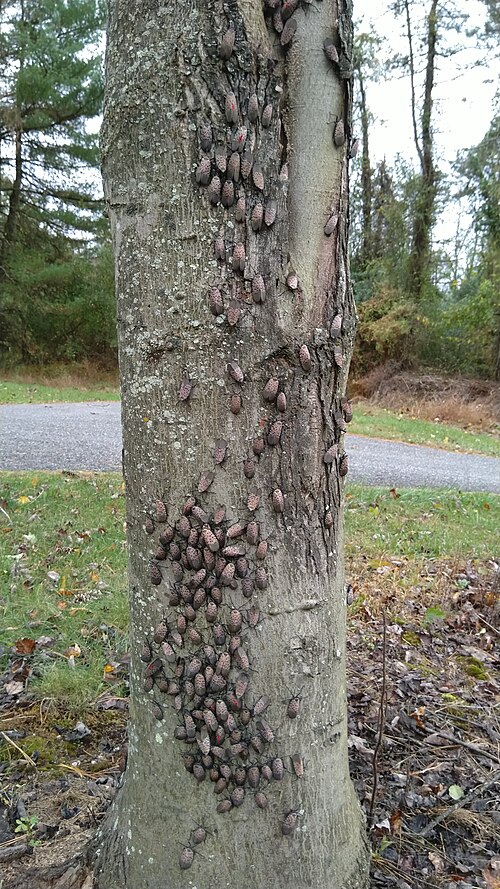
Adult Spotted Lanternflies on a Red Maple Tree. Photo Credits: Rkillcrazy on Wikipedia
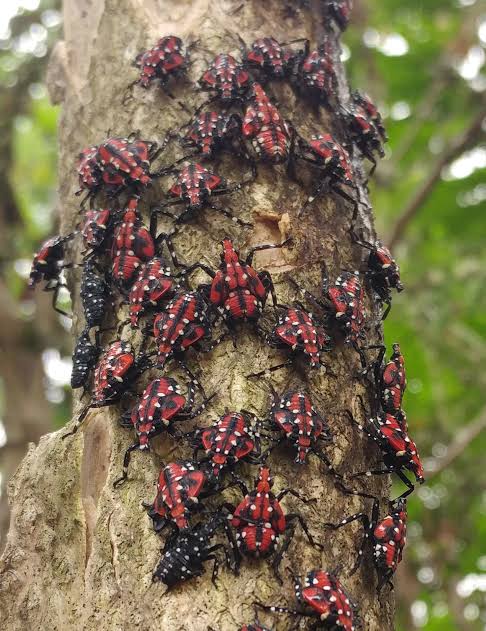
Spotted Lanternfly Nymphs cover a tree
Photo Credits: Michael Raupp
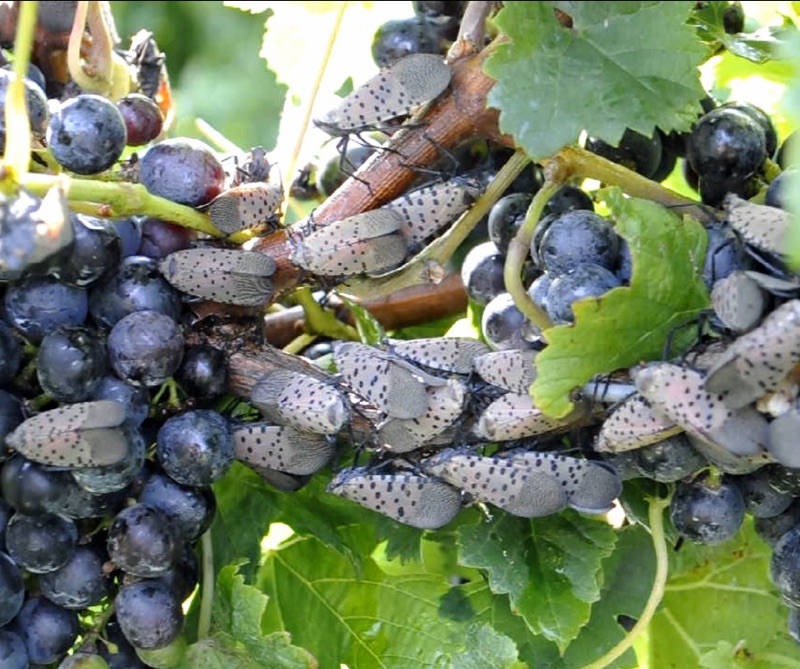
Spotted Lanternfly Infestation on a Grape Vine.
Photo Credits: National Nut Grower
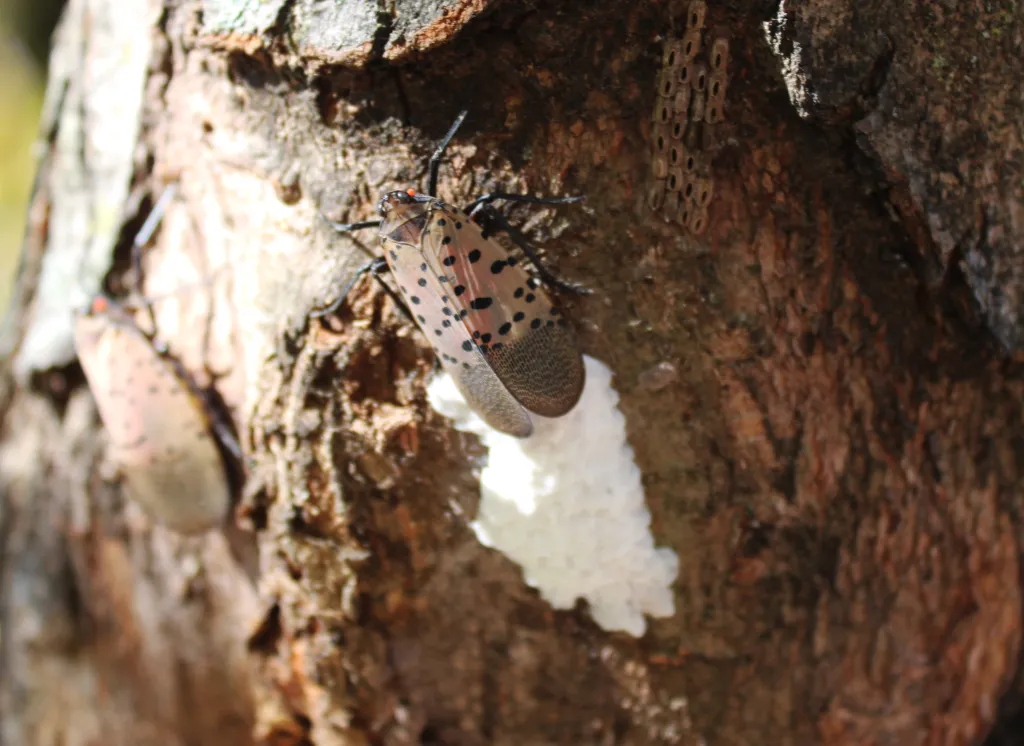
A Spotted Lanternfly laying eggs on a trunk of a tree. Photo Credits: Nadège Belouard, Ph.D
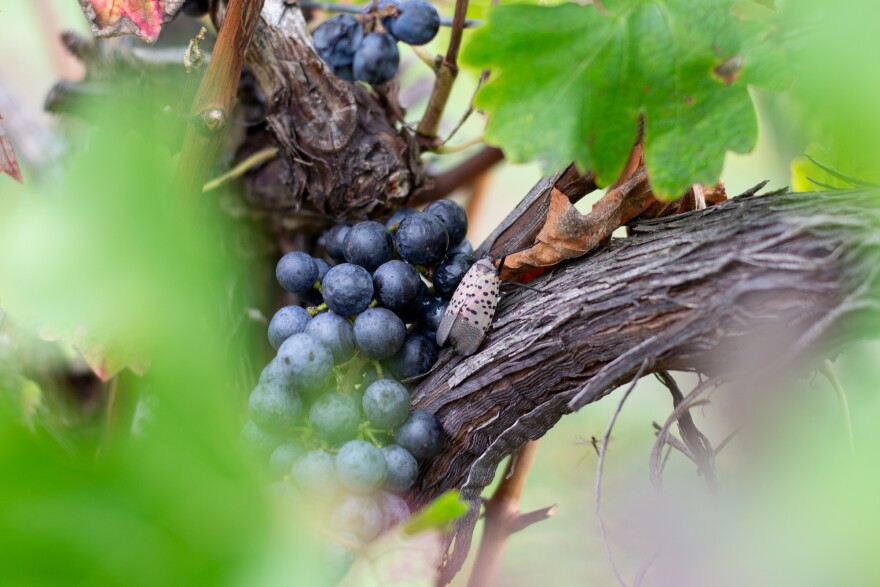
A Spotted Lanternfly crawling up a Grape Vine at Wolf Gap Vineyard and Winery.
Photo Credits: Randi B. Hagi
The Role Of The Tree Of Heaven
Invasive species often do not act alone. In many cases, one invasive species can create ideal conditions for another to survive and spread. The Tree of Heaven is a strong example of how an invasive plant can support and accelerate the impact of an invasive insect like the Spotted Lanternfly.
In the following subsections, we’ll explore what the Tree of Heaven is, its key characteristics, and why it is considered invasive. We’ll also examine its close relationship with the Spotted Lanternfly and how these two species work together intentionally or not to spread more quickly and place additional stress on ecosystems.
What Is The Tree Of Heaven?
The Tree of Heaven (Ailanthus altissima) is a fast-growing deciduous tree native to parts of China and Taiwan. It was originally introduced to North America as an ornamental tree and later used for erosion control because of its ability to grow quickly in poor soil conditions. Today, it is found in urban areas, roadsides, disturbed land, and forest edges.
This tree is easily recognized by its large compound leaves, smooth gray bark, and strong odour released when leaves or stems are crushed. Its ability to thrive in difficult conditions allows it to spread aggressively in both natural and human-altered landscapes.
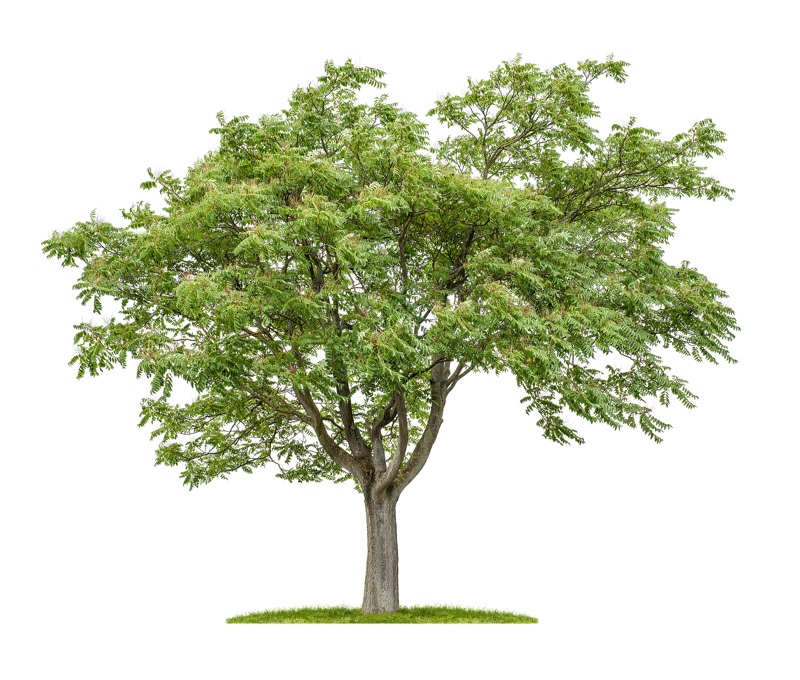
Photo Credits: Stephen Albert (Horticulturalist and Master Gardener in California)
Why The Tree Of Heaven Is Invasive
The Tree of Heaven is considered invasive because it spreads rapidly and outcompetes native vegetation. It reproduces through large quantities of wind-dispersed seeds and by sending up root suckers, allowing a single tree to form dense colonies. These colonies can quickly take over an area, reducing space, light, and resources for native plants.
In addition to its rapid growth, the Tree of Heaven produces chemicals that inhibit the growth of nearby plants. This gives it a competitive advantage while further reducing biodiversity and weakening ecosystem balance.
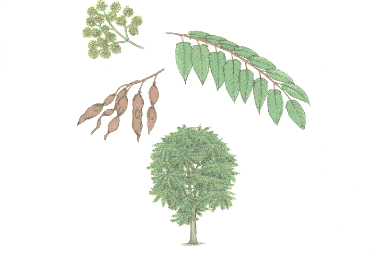
An illustration of a Tree Heaven showing what the tree looks like, what the leaves look like, what the flowers look like, and what the seed pods look like. Photo Credits: Patricia J. Wayne
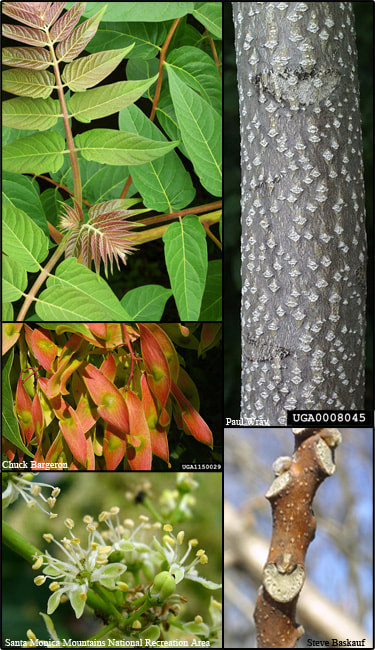
The different parts of the Tree Of Heaven Photo Credits: Chuck Bargeron, Paul Wray, Santa Monica Mountains National Recreation Area, and Steve Baskauf.
The Relationship Between The Tree Of Heaven And The Spotted Lanternfly
The Tree of Heaven plays a key role in the life cycle of the Spotted Lanternfly. While the insect feeds on many different plants, it shows a strong preference for this tree, especially during its later life stages. The Tree of Heaven provides an ideal food source that supports large populations of Spotted Lanternflies.
Areas with established Tree of Heaven populations often experience heavier infestations of Spotted Lanternflies. This close relationship allows both species to thrive, increasing their ability to spread and intensifying their combined impact on surrounding ecosystems.
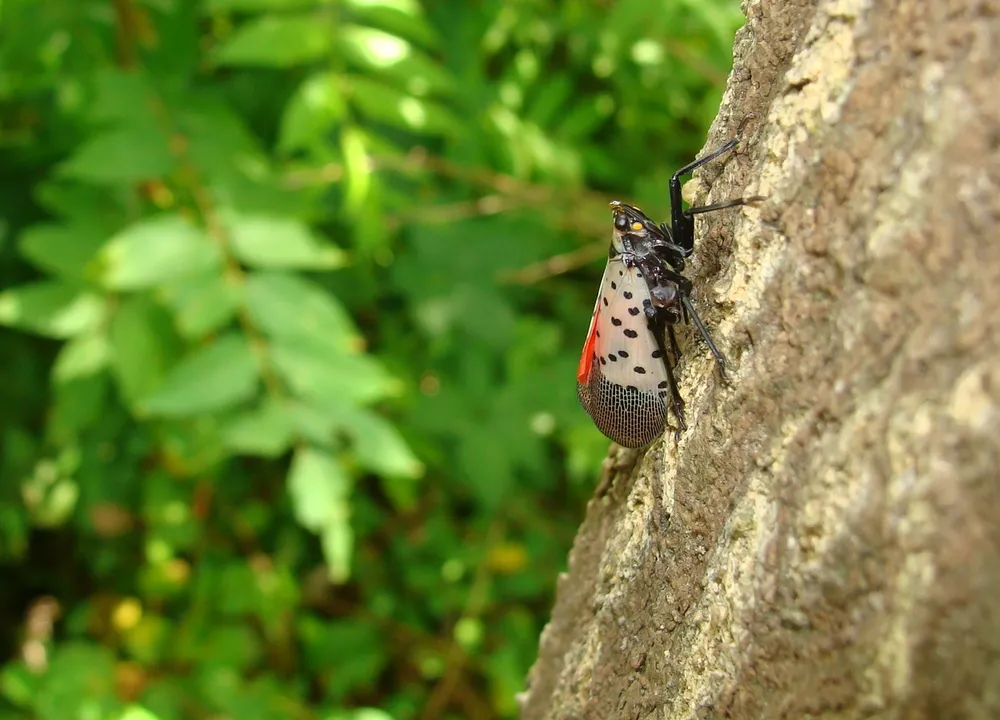
A Spotted Lanternfly on the trunk of a Tree Of Heaven. Photo Credits: Eric R. Day
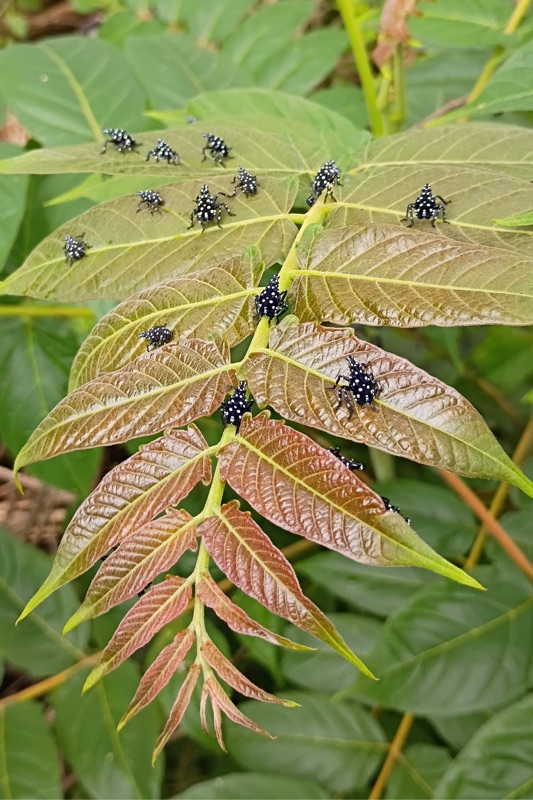 A bunch of the early stage nymphs of the Spotted Lanternfly on new Tree Of Heaven growth. Photo Credits: Damien Ossi
How Invasive Species Support Each Other’s Spread
Invasive species often create conditions that make it easier for other invasive species to establish themselves. In this case, the Tree of Heaven provides food and habitat that help Spotted Lanternfly populations grow, while the insect’s presence places additional stress on surrounding vegetation.
This kind of interaction can create a cycle where invasive species reinforce one another, making management and restoration more difficult. When invasive plants and insects work together, they can accelerate ecosystem damage and increase pressure on native species and already vulnerable habitats.
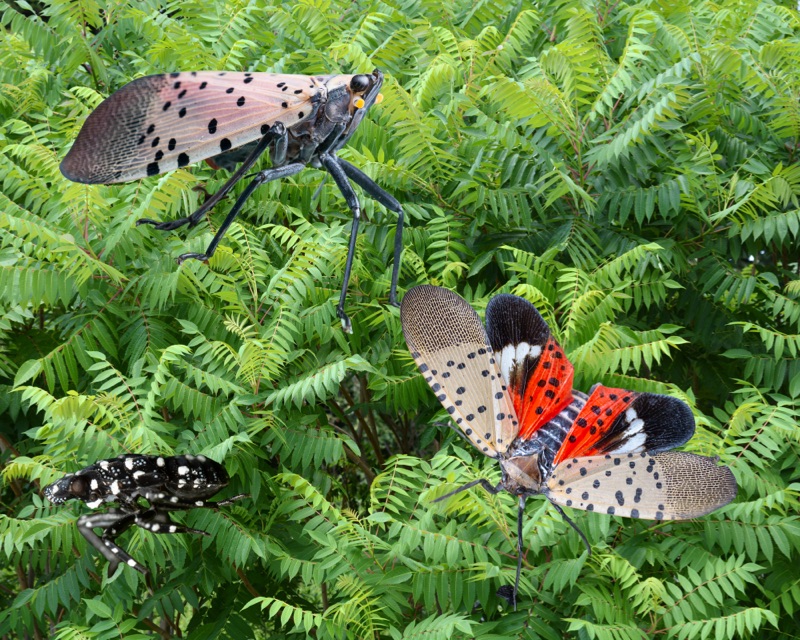
A photo that shows an adult Spotted Lanternfly with their wings closed, an adult Spotted Lanternfly with their wings opened, and a early stage nymph of a Spotted Lanternfly on the foliage of clusters of Tree Of Heaven growth.
Photo Credits: Colleen Grablick from the 51st News Outlet
Tree Of Heaven : Identification Tips
The Tree of Heaven can be mistaken for native trees, especially when young. Knowing a few key features can help with accurate identification.
What To Look For:
🔘 Large compound leaves made up of many smaller leaflets, often over 30 cm (12 inches) long.
🔘 Smooth-edged leaflets with one or two small lobes near the base, each with a noticeable gland.
🔘 Strong, unpleasant odour when leaves or stems are crushed, often described as peanut butter or burnt rubber.
🔘 Smooth grey bark on young trees that becomes lightly ridged as the tree matures.
🔘 Fast-growing shoots and root suckers, often forming dense clusters or groves.
🔘 Winged seeds (samaras) that hang in large clusters and are easily spread by wind.
Common Look - alikes to be aware of:
Black walnut and sumac species, which may appear similar at a glance but lack the strong odour and distinctive glandular lobes on the leaflets.
Taking time to confirm identification is important, especially since some native species resemble the Tree of Heaven. Accurate identification helps protect native trees while supporting invasive species management efforts.
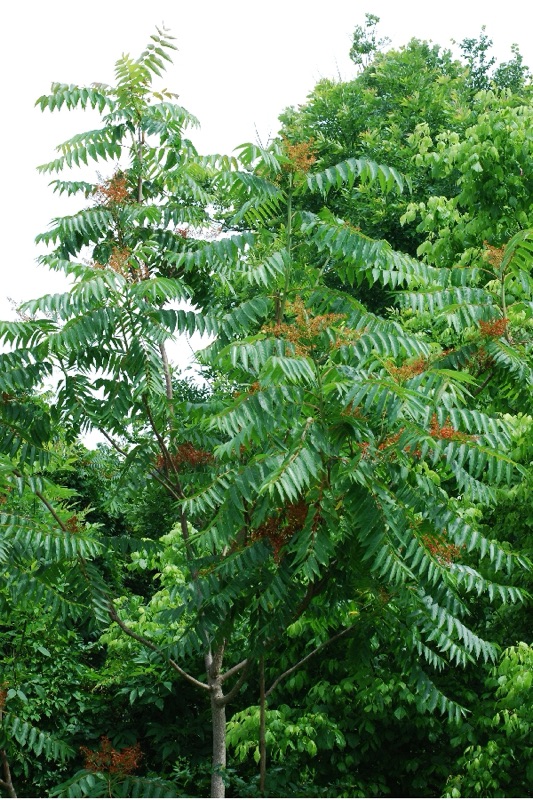
A image of a Tree Of Heaven that is mature in a forest. Photo Credits: USDA-NRCS PLANTS Database
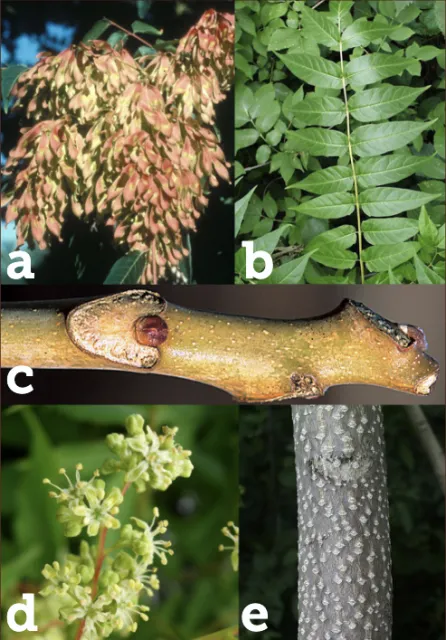
Photo Collage Of Tree Of Heaven
Parts of the tree-of-heaven: a) samaras; b) leaves; c) twig; d) flowers; e) bark.
Photo Credits: Bugwood.org
Where Is The Spotted Lanternfly Found Now?
Since its first detection in North America in 2014, the Spotted Lanternfly has continued to expand its range. What began as a localized infestation has grown into a broader regional concern, with new detections reported over time. Tracking where this invasive species is found helps scientists, governments, and communities respond more effectively.
In the following subsections, we’ll look at the Spotted Lanternfly’s current range in North America, why it spreads so quickly, and why Canada remains at risk even in areas where confirmed sightings are still limited. Understanding its movement patterns is key to prevention and early action.
Current Range In North America
Since its detection in Pennsylvania in 2014, the Spotted Lanternfly has established populations in multiple U.S. states, particularly throughout the eastern United States. In heavily affected areas, large infestations are now common in forests, agricultural regions, residential neighbourhoods, and transportation corridors. Some states are managing long-established populations, while others are responding to newer detections through monitoring and containment efforts.
In Canada, confirmed detections have been limited and are typically treated as isolated findings rather than established populations. However, provinces closest to infested U.S. states face the highest level of risk due to geographic proximity and shared climate conditions. Ongoing surveillance and reporting efforts are essential to detect any early stage introductions before widespread establishment occurs.
Why The Spread Happens So Quickly
The rapid spread of the Spotted Lanternfly is largely driven by human activity. While adults can move locally by hopping and short flights, long-distance movement most often occurs when egg masses are unknowingly transported. Because eggs are laid on a wide variety of surfaces including vehicles, rail cars, shipping pallets, firewood, outdoor equipment, and building materials. They can travel far beyond the insect’s natural movement range.
High reproductive capacity also contributes to population growth. Each egg mass can contain dozens of eggs, and females may lay multiple masses in a season. When combined with the insect’s ability to feed on many plant species, this allows populations to expand quickly once introduced into a new area.
Why Canada Is At Risk
Several regions in southern Canada provide suitable environmental conditions for the Spotted Lanternfly’s survival. The presence of host plants such as grapes, fruit trees, hardwood species, and Tree of Heaven increases habitat availability. Urban centres, transportation hubs, and cross-border trade routes further elevate the likelihood of accidental introduction.
Even without widespread confirmed populations, risk remains significant due to the frequency of travel and goods movement between Canada and affected U.S. states. Early detection is particularly important because newly introduced populations are easier to manage than long-established infestations.
What Can People Do?
Preventing the spread of the Spotted Lanternfly depends heavily on public awareness and early action. Because this invasive insect spreads easily through human movement, everyday choices can make a significant difference. Knowing how to report sightings, inspect outdoor items, and avoid accidental transport helps protect local ecosystems and agriculture.
The following subsections outline practical steps individuals and communities can take. Whether you live in Ontario or elsewhere in Canada, understanding the reporting process and prevention strategies is key to slowing the spread of this invasive species.
How To Report Sightings
Reporting sightings of the Spotted Lanternfly at any stage of its life cycle is different depending on where you live. Prompt reporting helps officials track movement and respond quickly.
Reporting In Ontario :
There are three options for reporting sightings in Ontario:
Option 1:
Report online through the Canadian Food Inspection Agency (CFIA) by filling out their official reporting form. You can search:
“Canadian Food Inspection Agency Report Sightings Form” in Google.
Option 2:
Call the Invading Species Hotline at:
1-800-563-7711
Option 3:
Submit your sighting through the EDD MapS website or mobile app.
Reporting In Other Parts Of Canada
If you live outside Ontario, there are several reporting options available:
Option 1:
Report online through the Canadian Food Inspection Agency (CFIA) form.
Option 2:
Call the Invasive Species Hotline at:
1-800-563-7711
Option 3:
Report using EDD MapS (website or app).
Option 4:
Submit a sighting through iNaturalist (website or app).
Option 5:
Contact the Invasive Species Centre
Phone: 705-541-5790
Email: info@invasivespeciescentre.ca
Information To Include When Reporting About A Spotted Lanternfly Sighting :
Providing accurate details improves response efforts. When submitting a report, include:
1️⃣ Clear photographs (preferably a top-down view).
2️⃣ The specific location (GPS coordinates if possible).
3️⃣ The date of the sighting
4️⃣ The host plant or surface where it was found (e.g., Tree of Heaven, vehicle, shipping container).
Preventing Accidental Spread
Because Spotted Lanternflies are strong hitchhikers, prevention is just as important as reporting.
Do Not Transport Live Specimens
Avoid moving live insects. If you collect a specimen for identification or reporting, ensure it is dead by placing it in a sealed container with alcohol or vinegar.
Inspect Vehicles and Outdoor Equipment
If travelling from areas in the United States with known infestations:
1️⃣ Inspect vehicles, trailers, campers, and cargo areas.
2️⃣ Check outdoor furniture, firewood, gardening tools, and recreational gear.
3️⃣ Look carefully for egg masses on flat or protected surfaces.
Scrape and Destroy Egg Masses
Egg masses resemble dried mud or plaster. If you find one:
1️⃣ Scrape the egg masses into a plastic bag.
2️⃣ Add rubbing alcohol or hand sanitizer to kill the eggs.
3️⃣ Seal the bag before disposal
Community Awareness
Community education plays a major role in preventing establishment. Sharing accurate information with neighbours, local groups, schools, and agricultural communities increases early detection. The sooner a population is identified, the more effectively it can be managed.
Public awareness reduces accidental spread and protects ecosystems before infestations become widespread.
What to Do If You Find Nymphs or Adult Spotted Lanternflies
If you find a Spotted Lanternfly nymph or adult, the most important first step is to report the sighting, especially in areas where the species is not yet established. Early reporting helps officials track movement and respond appropriately.
After reporting (or if instructed by local authorities), individuals may take steps to destroy the insect to help reduce spread.
Removing and Killing Nymphs and Adults
If you encounter a nymph or adult Spotted Lanternfly:
1️⃣ Photograph the insect first for documentation and reporting.
2️⃣ Kill the insect immediately if possible. This can be done by crushing it firmly.
3️⃣ Alternatively, place the insect in a sealed container with rubbing alcohol, hand sanitizer, or vinegar to ensure it is dead.
4️⃣ Avoid transporting live insects to another location.
Spotted Lanternflies are strong jumpers, so act quickly and carefully when attempting removal.
Important Considerations
1️⃣ Always confirm identification before killing an insect to avoid harming native species.
2️⃣ Follow any local or provincial guidance, as response recommendations may vary depending on whether the insect is established in your area.
3️⃣ Do not use broad pesticide sprays unless specifically advised by local authorities, as this can harm beneficial insects and pollinators.
How Early Detection Reduces Spread
Early detection plays a critical role in limiting the spread of the Spotted Lanternfly. When a population is identified in its early stages, response efforts can focus on containment before the insect becomes widely established. Smaller populations are easier to monitor, manage, and reduce than large, established infestations that have already spread across multiple areas.
Because Spotted Lanternflies reproduce in large numbers and can be transported unknowingly by people, delays in detection allow populations to grow quickly. Reporting sightings as soon as they are discovered helps officials track movement patterns and respond before long-term ecological and agricultural impacts occur.
Why Egg Masses And Nymphs Matter Just As Much As Adults
While adult Spotted Lanternflies are more noticeable, egg masses and nymphs are just as important to identify and report. Egg masses represent the next generation, and each one can contain dozens of eggs. If left undetected, they hatch in the spring and contribute to rapid population growth.
Nymphs, especially in their early stages, are often overlooked due to their small size. However, targeting populations before they reach adulthood reduces the number of insects that can reproduce and spread further. Recognizing and responding to all life stages strengthens prevention efforts and helps interrupt the insect’s life cycle.
Why Timing Makes A Difference For Ecosystems
Ecosystems already face stress from habitat loss, climate change, pollution, and other invasive species. Introducing another invasive insect increases pressure on plants and wildlife that may already be vulnerable. Acting early reduces the long-term strain placed on forests, agricultural systems, and urban green spaces.
Timing also matters seasonally. Detecting egg masses in fall or winter prevents hatching in spring. Identifying nymphs early in the growing season reduces the number of adults later in the year. The sooner action is taken, the greater the opportunity to protect native species, maintain biodiversity, and support overall ecosystem resilience.
Myths & Facts About The Spotted Lanternfly
As awareness of the Spotted Lanternfly grows, so does the amount of information and misinformation circulating online and in communities. Misunderstandings about how this invasive insect behaves, spreads, and impacts ecosystems can lead to confusion or ineffective responses.
In the following subsections, we’ll separate common myths from verified facts about the Spotted Lanternfly. Understanding what is true and what is not helps individuals take informed, responsible action while supporting effective monitoring and prevention efforts.
Myth vs. Fact : Spotted Lanternfly
❌ Myth: The Spotted Lanternfly is a type of fly
✅ Fact: Despite its name, the Spotted Lanternfly is not a true fly. It is a planthopper (Lycorma delicatula), a group of sap-feeding insects.
❌ Myth: They only damage one type of plant
✅ Fact: Spotted Lanternflies feed on more than 70 plant species, including hardwood trees, grapevines, fruit crops, and ornamental plants. Their wide host range is one reason they spread so successfully.
❌ Myth: If you don’t see adults, they aren’t present
✅ Fact: Egg masses and nymphs are often present long before adults are noticed. Because early life stages are easy to miss, populations can grow unnoticed without careful inspection and reporting.
❌ Myth: Cold Canadian winters will completely stop them
✅ Fact: Research shows the Spotted Lanternfly can survive in climates similar to parts of southern Canada. While extreme cold may reduce survival in some areas, many regions still provide suitable conditions.
❌ Myth: They kill trees instantly
✅ Fact: Spotted Lanternflies typically weaken plants over time through repeated sap feeding. The damage is cumulative and may take multiple seasons to result in serious decline, especially in already stressed plants.
❌ Myth: Any spotted insect is a Spotted Lanternfly
✅ Fact: Many native insects have spots or similar colours. Proper identification using life stage, pattern, and behaviour is important to avoid harming beneficial or harmless species.
❌ Myth: Spraying pesticides everywhere is the best solution
✅ Fact: Broad pesticide use can harm pollinators and beneficial insects. Targeted management, early detection, and reporting are more effective and environmentally responsible approaches.
❌ Myth: One sighting isn’t important to report
✅ Fact: Even a single verified report helps officials track movement and respond early. Early detection is one of the most effective tools for slowing the spread.
❌ Myth: Only rural or forested areas are at risk
✅ Fact: Spotted Lanternflies thrive in urban, suburban, and agricultural environments. Transportation corridors and populated areas can actually increase spread.
Protecting Our Native Ecosystems
Native ecosystems support an incredible web of life from plants and pollinators to birds, mammals, and soil organisms. When invasive species like the Spotted Lanternfly become established, they place added stress on these already complex and sometimes vulnerable systems. Protecting native habitats is not only about responding to one invasive insect, but about strengthening the overall resilience of the natural environments we depend on.
In the following subsections, we’ll explore why native ecosystems are so important, practical ways individuals and communities can help reduce the spread of invasive species, and everyday actions that support healthier, more resilient landscapes. Small, informed steps taken early can make a meaningful difference in protecting Canada’s natural environment.
Why Native Ecosystems Matter
Native ecosystems are carefully balanced networks of plants, animals, fungi, and microorganisms that have evolved together over time. Native trees and plants provide food and shelter for pollinators, birds, and wildlife, while also supporting soil health, water filtration, and climate regulation. When these systems are healthy, they are more resilient to environmental stress and better able to support biodiversity.
Invasive species like the Spotted Lanternfly can disrupt this balance by placing additional pressure on native vegetation. As plants become weakened, the effects can ripple outward through the ecosystem, impacting the species that depend on them. Protecting native ecosystems helps maintain biodiversity, supports food webs, and preserves the natural landscapes that communities rely on.
Ways To Help Protect Ecosystems From Spotted Lanternfly
Protecting ecosystems from the Spotted Lanternfly begins with awareness and early action. Learning to identify the insect at all life stages and reporting sightings promptly helps officials monitor and respond before populations become established. Community participation plays a key role in slowing spread.
Reducing populations of the Tree of Heaven the insect’s preferred host where appropriate, and permitted can also help limit suitable habitat. In addition, avoiding the movement of potentially infested materials such as firewood, outdoor equipment, and vehicles from affected areas reduces the chance of accidental spread. Targeted, informed actions are far more effective than reactive measures after populations have grown.
Everyday Habits That Reduce The Spread Of Invasive Species
Simple, consistent habits can make a meaningful difference in preventing the spread of invasive species. Regularly inspecting outdoor items, vehicles, and recreational equipment especially after travel helps catch hitchhiking insects before they move to new locations. Choosing native plants for gardens and landscapes also supports local biodiversity and reduces opportunities for invasive species to gain a foothold.
Staying informed, sharing accurate information, and encouraging responsible practices within your community strengthens early detection efforts. When individuals, gardeners, landowners, and communities work together, they create a stronger line of defense that helps keep Canada’s natural environments healthier and more resilient.
Closing Message : Protecting Nature Starts With Awareness
The story of the Spotted Lanternfly is a reminder of how quickly invasive species can take hold when they go unnoticed. While this insect poses real challenges for trees, agriculture, and natural habitats, early awareness and informed action give us powerful tools to respond. Education remains one of the most effective ways to slow the spread and protect the ecosystems that support so much life.
Each observation, report, and careful inspection of outdoor items contributes to a larger network of protection. Whether you are a gardener, nature enthusiast, landowner, or simply someone who enjoys the outdoors, your awareness matters. Small actions like learning to recognize egg masses or checking equipment after travel can help prevent new populations from becoming established.
Protecting native ecosystems is a shared responsibility that extends beyond any single species. By staying informed about invasive plants and insects, supporting native biodiversity, and sharing accurate information within our communities, we help strengthen the resilience of the landscapes around us. Healthy ecosystems benefit pollinators, wildlife, agriculture, and future generations alike.
With continued awareness, community cooperation, and early detection efforts, we can reduce the impact of the Spotted Lanternfly and other invasive species. Every informed step forward helps safeguard Canada’s natural heritage and keeps our forests, gardens, and green spaces thriving for years to come.
🌿 Key Points To Remember 🔑:
➡️ The Spotted Lanternfly is an invasive planthopper that can stress trees, crops, and natural ecosystems.
➡️ It spreads easily by hitchhiking on vehicles, outdoor items, and equipment.
➡️ Egg masses and nymphs are just as important to detect as adults.
➡️ Early detection and reporting greatly improve the chances of slowing its spread.
➡️ Canada remains at risk, especially in regions near affected U.S. areas.
➡️ Accurate identification helps protect native and beneficial species.
➡️ Community awareness is one of the most powerful tools in invasive species prevention.
✅ Responsible Actions People Can Take :
🩷 Learn to identify the Spotted Lanternfly at all life stages.
🩷 Report sightings promptly using official reporting tools.
🩷 Inspect vehicles, trailers, and outdoor equipment after travel.
🩷 Check for and properly destroy egg masses when found.
🩷 Avoid transporting firewood or outdoor items from infested areas.
🩷 Consider managing Tree of Heaven where appropriate and permitted.
🩷 Choose native plants when possible to support local ecosystems.
🩷 Share accurate information with neighbours and community groups.
🩷 Stay informed about updates from local invasive species programs.
💚 Every Action Matters
Small, informed steps taken by many people can make a meaningful difference in protecting Canada’s ecosystems.
⭐️ Top 5 Quick Facts : Spotted Lanternfly
1️⃣ They are strong jumpers before they are strong fliers
Spotted Lanternflies often move by powerful hopping, especially in the nymph stages. This quick movement is one reason they can be hard to catch or photograph.
2️⃣ Females can lay multiple egg masses
A single female may lay more than one egg mass in a season, with each mass containing dozens of eggs. This high reproductive potential allows populations to grow quickly once established.
3️⃣ They produce large amounts of sticky honeydew
As they feed, Spotted Lanternflies release honeydew, which can coat leaves, bark, and surfaces below. This sticky buildup encourages the growth of black sooty mold on plants.
4️⃣ They are attracted to certain high-traffic areas
Spotted Lanternflies are often found along transportation corridors, rail lines, parking areas, and urban edges places where accidental movement by people is more likely.
5️⃣ Fall is a critical monitoring season
Late summer through fall is when adults are most visible and when egg laying begins. Checking for egg masses during fall and winter can help prevent the next spring’s hatch.


Comments
Post a Comment