Hidden Danger: Venomous and Toxic Caterpillars in Canada
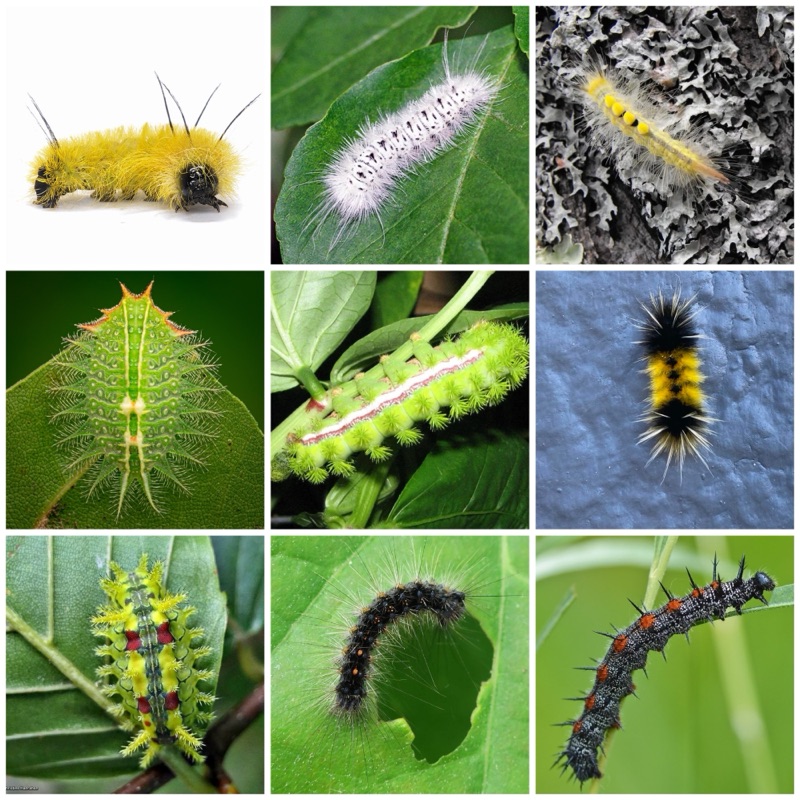
Small but Deadly: The Venomous and Toxic Caterpillars You Need To Avoid!
They may look soft and harmless, but lurking beneath their fuzzy exteriors are hidden dangers you wouldn’t expect. Canada is home to a surprising number of venomous and toxic caterpillars. The tiny, creeping creatures that can cause painful rashes, allergic reactions, and even more serious health concerns. From deceptive beauty to outright menace, these caterpillars are nature’s silent threat. Before you brush one aside, you might want to think twice. What makes them so dangerous, and how can you protect yourself? Let’s uncover the truth about Canada’s most toxic crawlers.
American Dagger Moth Caterpillar (Acronicta americana)
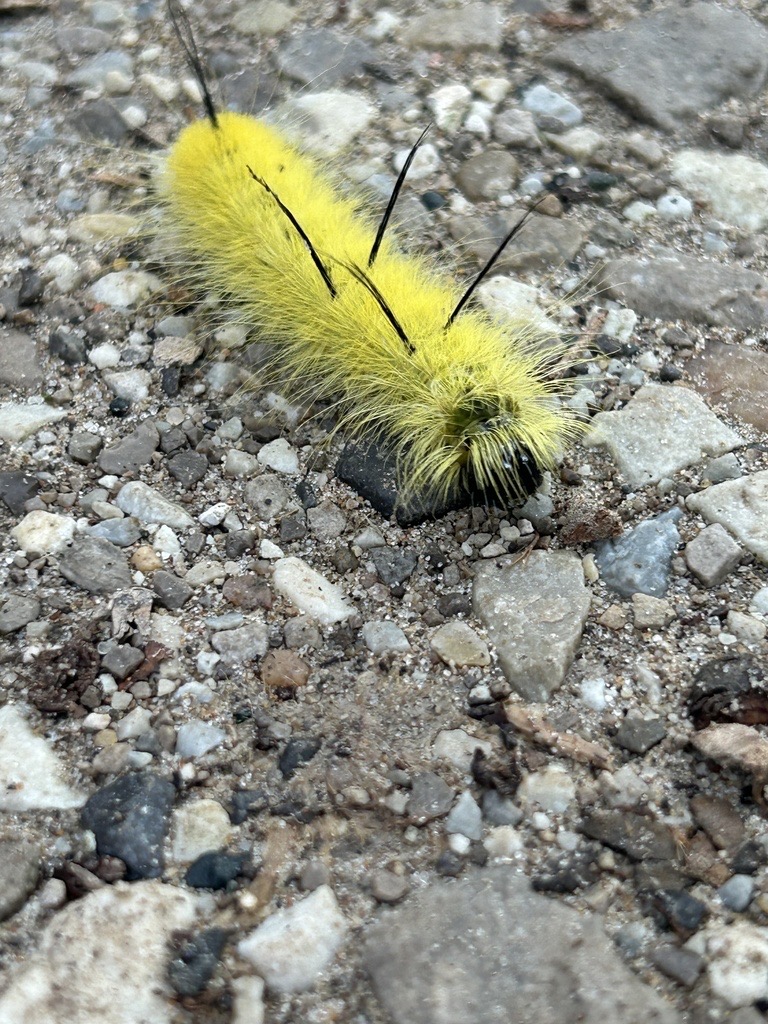 Photo Credits: mydesk from iNaturalist
Common Name: American Dagger Moth Caterpillar
Scientific Name: Acronicta americana
Other Names: Dagger Moth Caterpillar
Genus: Acronicta
Family: The Owlet Moth Family
Colours: yellow, yellow green, white, and black.
Body: Has a fuzzy body that is covered in soft, yellow, yellow green, or white setae (hairs) and there are four prominent long black pencil like setae extending from the first and third abdominal segments.
Skin Type: Exoskeleton
Length: Around 2 inches (50 mm) in length
Most Distinctive Features: Is their five pairs of long black hairs or setae.
Sightings: The American Dagger Moth Caterpillar is often observed from July to October, with sightings extending into the late fall.
Native: Yes, the American Dagger Moth Caterpillar is native to Canada.
Native Range: The native range spans from Eastern North American extending from the United States to Canada.
Host Plants: The American Dagger Moth Caterpillar feeds on a wide variety of hardwood trees including alder, ash, elm, maple, oak, and willow.
Toxicity: The hairs on the caterpillar are not venomous in the sense of containing a substance that is injected directly into the body.
Warning ⚠️: The hairs (setae) on the body of an American Dagger Moth Caterpillar contain toxins that can cause a stinging or burning sensation when they come in contact with the skin. These toxins can lead to a rash or hives on the human body.
The American Dagger Moth Caterpillar (Acronicta americana) is a very fuzzy caterpillar that has two pairs of long black hairs (setae) that sprout out from the dense yellow or pale hairs on the upper half of their back near the head, and the black tail like spike.
Hickory Tussock Moth Caterpillar (Lophocampa caryae)
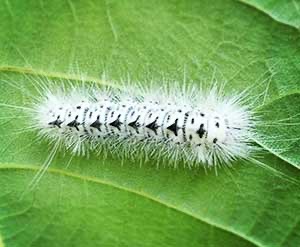 Photo Credits: Eastern Ontario Health Unit
Common Name: Hickory Tussock Moth Caterpillar
Scientific Name: Lophocampa caryae
Other Names: Hickory Tiger Moth Caterpillar or Hickory Tiger Tussock Moth Caterpillar.
Genus: lophocampa
Family: The Owlet Moth Family
Colours: white and black
Body: A fluffy white body with striking black markings and hairs.
Skin Type: Exoskeleton
Length: 4.5 centimeters (1.7 inches)
Most Distinctive Features: Their white fluffy body with black chain like markings on it’s back, and long black hairs that protrude from areas near it’s front and black.
Sightings: It is typically seen during the summer and fall months, which typically is around July to September.
Native: Yes, The Hickory Tussock Moth Caterpillar is native to Canada.
Native Range: Is primarily found in the eastern half of North America specifically from Maine and New Brunswick south to North Carolina, and west to Wisconsin and Illinois. They also occur in Texas and Mexico, but are less common there. In Canada, they are distributed from Quebec, Ontario, and Alberta to the Maritime provinces.
Host Plants: Hickory Tussock Moth Caterpillar feeds on deciduous trees that are particularly hickory, pecan, walnut, and american hornbeam. They can also be found on ash, elm, oak, willow, and maple trees.
Additionally, they may feed on other plants like hops, Virginia creeper, raspberry, rose, sumac, and blueberry.
Toxicity: It is not toxic but some individuals may experience allergic reactions or skin irritations when they come in contact with this caterpillar.
Warning ⚠️:
The Hickory Tussock Moth Caterpillar has stinging hairs on it’s body, and when the hairs of the caterpillar come into contact with bare skin they can cause an irritant contact dermatitis, a skin irritation that is similar to poison ivy or stinging nettle. The symptoms from being exposed to this caterpillar are itching, burning, and swelling.
The Hickory Tussock Moth Caterpillar (Lophocampa caryae) is a fluffy caterpillar that is white and has black chain-like markings on its back. It also has long black hairs that stick out from areas near the front and back of the caterpillar.
Definite Tussock Moth Caterpillar (Orgyia definita)
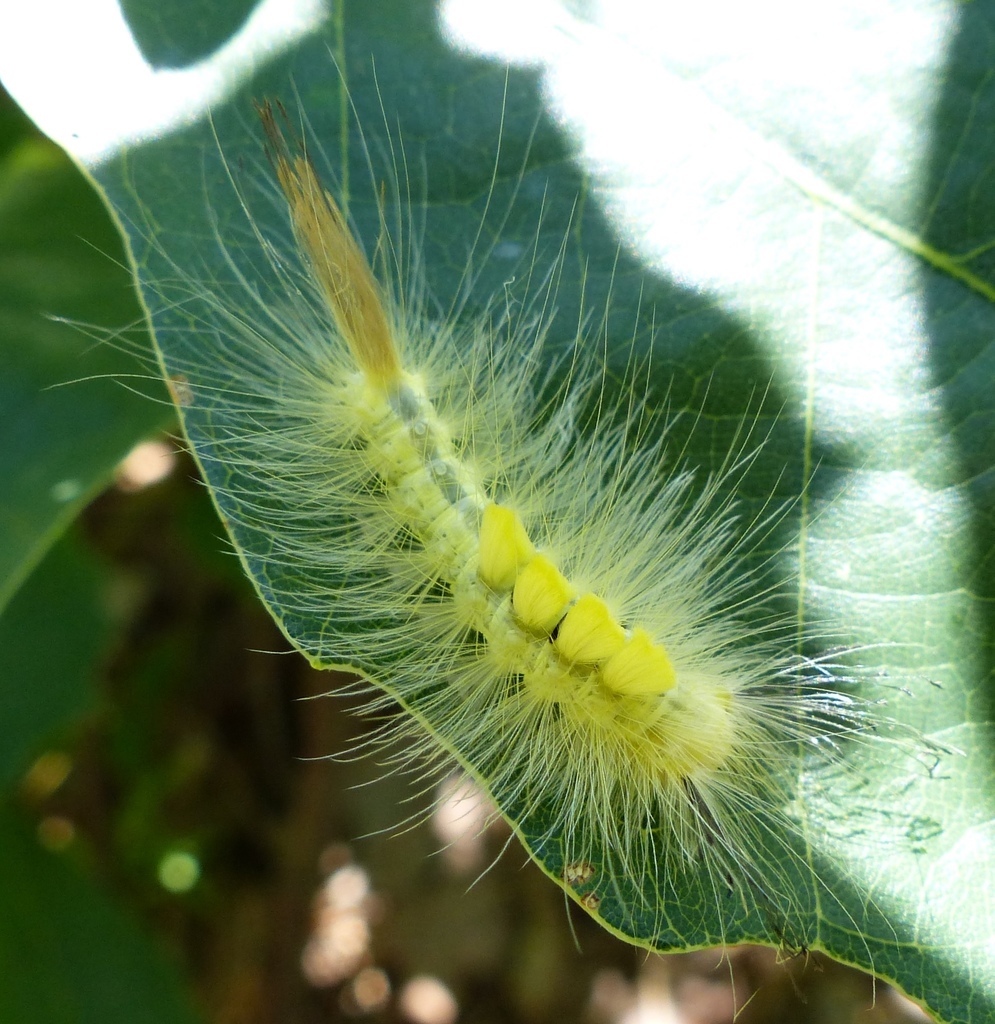 Photo Credits: Jeremy Collison
Common Name: Definite Tussock Moth Caterpillar
Scientific Name: Orgyia definita
Other Names: Definite - marked Tussock Moth Caterpillar
Genus: Orgyia
Family: The Owlet Moth Family
Colours: bright yellow, tan, and black
Body: They have a bright yellow body and a yellow tan head, and is characterized by pale yellow verrucae (wart like structures) along the body.
Skin Type: Exoskeleton
Length: 1 to 1.5 inches (25 to 38 mm) when fully grown.
Most Distinctive Features:The wart like structures that are along their body.
Sightings: Between late May through early September.
Native: Yes, the Definite Tussock Moth Caterpillar is a native species in Canada.
Native Range: It is found from Maine, Southern Quebec, the province of Ontario, New Brunswick, Alberta, Minnesota, South Carolina, Mississippi, Louisiana, and Texas.
Host Plants: The Definite Tussock Moth Caterpillar is known to feed on a variety of deciduous trees and shrubs such as willow, oak, basswood, maple, and birch. They can also feed on ash, cherry, and elm.
Toxicity: It is not poisonous or venomous, but they can cause some skin issues and reactions to people that are sensitive.
Warning ⚠️: The hairs that the Definite Tussock Moth Caterpillar has irritating hairs on their body. They can cause a rash, itching, burning, and possibly some swelling in some cases. Some individuals may experience allergic reactions such as hives, itchy red bumps, or blister like bumps on the skin.
The Definite Tussock Moth Caterpillar (Orgyia definita) has an over all colour of yellow. The head of the caterpillar is distinctly yellow or tan.
The body of the Definite Tussock Moth Caterpillar (Orgyia definita) is generally lighter in colour compared to other Tussock Moth Caterpillars.
There are yellow toothbrush like tufts of hairs on the body. It has four yellow bumps on their back.
Crowned Slug Moth Caterpillar (las textula)
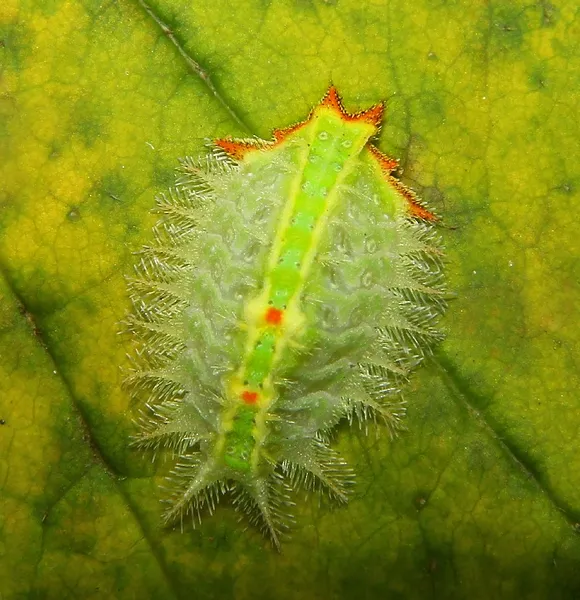 Photo Credits: Staff Writer from POCONO RECORD
Common Name: Crowned Slug Moth Caterpillar
Scientific Name: lsa textula
Other Names: Skiff Moth Caterpillar
Genus: lsa
Family: The Slug Moth Family / The Cup Moth Family
Colours: pastel green
Body: Has a flattened body that is oval in shape, and is a pastel green in colour.
Skin Type: Exoskeleton
Length: Typically reaches a length of about 15 mm (approximately 0.5 inches).
Most Distinctive Features: Their flattened oval shaped body and the presence of the spines of hairs that surround the perimeter of the body.
Sightings: The Crowned Slug Moth Caterpillar is typically found from late summer into the fall.
Native: Yes, the Crowned Slug Moth Caterpillar is native to Canada.
Native Range: It is found in Southern Ontario, Massachusetts, Florida, and Mississippi.
Host Plants: Typically feeds on various trees and shrubs such as elms, hickories, lindens, maples, oaks, and cherries.
Toxicity: Yes, the Crowned Slug Moth Caterpillar is toxic. The hairs on their body release toxins.
Warning ⚠️: When the hairs on the Crowned Slug Moth Caterpillar are touched they break away releasing toxins. The pain is a sharp, burning, or stinging sensation. The affected area may become itchy and develop a rash. Swelling around the sting site is also possible. In some cases the affected area can turn into blisters.
The Crowned Slug Moth Caterpillar (Isa textula) is a caterpillar that is flattened and oval in shape and has a pastel green colouration.
It has plumes of stinging hairs around the perimeter of their body, and shorter less conspicuous stinging hairs on the top.
There are two pale lines down the back terminate in a pair of “horns” on the front, and a pair of stinging plumes on the rear. Sometimes they have small red dots on the back and red markings on the front edge.
lo Moth Caterpillar (Automeris io)
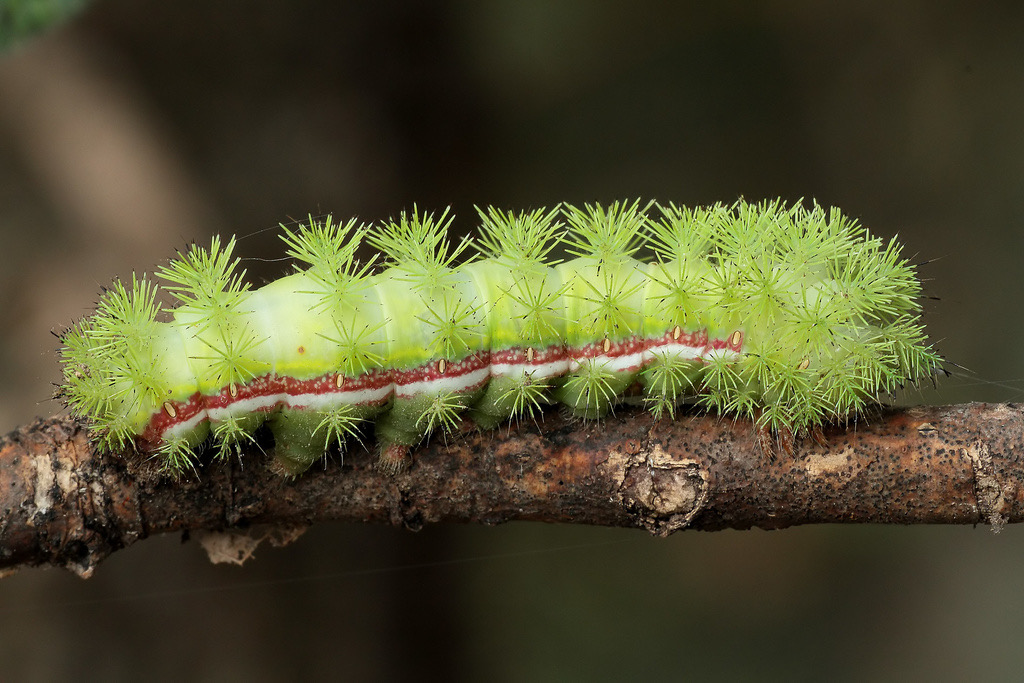 Photo Credits: stomlins701 from iNaturalist
Common Name: lo Moth Caterpillar
Scientific Name: Automeris io
Other Names: Peacock Moth Caterpillar
Genus: Automeris
Family: The Silk Moth Family
Colours: orange to bright green, bright red, and white.
Body: A long body that is covered in bristly , stinging spines that are a bright green in colour.
Skin Type: Exoskeleton
Length: They are typically 5 - 8 cm (2 to 3 inches) long.
Most Distinctive Features: The spines (hairs) that are covering their whole body which are a bright green colour.
Sightings: The lo Moth Caterpillar can mostly be seen during the spring and summer moths, which typically occurs from May through July.
Native: Yes, the lo Moth Caterpillar is a native caterpillar species in Canada.
Native Range: Southern Canada, Eastern United States, Mid Western United States, and Mexico.
Host Plants: lo Moth Caterpillars feed on a wide variety of plants such as hackberry, willow, redbud, blackberry, cherry, oak, elm, and maple.
Toxicity: Venomous
Warning ⚠️: The urticating spines that the body of the lo Moth Caterpillar is covered in release a venomous substance upon contact to bare skin.
When the spines are in contact with bare skin cause a painful burning rash on the infected area. The pain can last for hours and may be accompanied by swelling and itching.
In some cases, allergic reactions can occur and in rare instances, neurological issues have been reported.
The lo Moth Caterpillar (Automeris io) is a hairy and spiny caterpillar that reaches up to 2.4 inches in length. It is a native caterpillar of North America including Canada and The United States.
It is typically bright green in colour although when young they may be brown or orange-brown in colour.
There is a red stripe above a white stripe on the sides of the body. They are covered in green, urticating spines (stinging hairs) that can cause irritation to bare skin.
Spotted Tussock Moth Caterpillar (Lophocampa maculata)
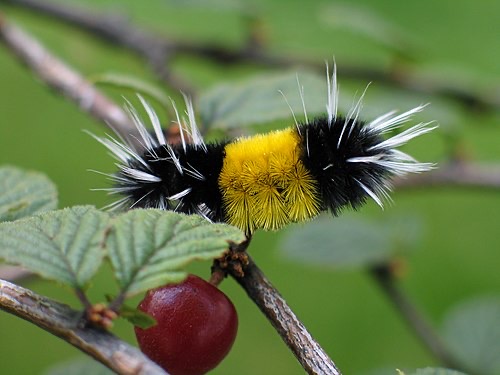 Photo Credits: DonES from Wikipedia
Common Name: Spotted Tussock Moth Caterpillar
Scientific Name: Lophocampa maculata
Other Names: Yellow Spotted Tussock Moth Caterpillar, Mottled Tiger Moth Caterpillar, or Spotted Halisidota Moth Caterpillar.
Genus: Lophocampa
Family: The Tiger Moth Family / The Owlet Moth Family
Colours: black, yellow, and white
Body: Their body has two black ends and a yellow or orange middle section that sometimes has black spots. The body is very fuzzy and hairy all over.
Skin Type: Exoskeleton
Length: 40 mm in length
Most Distinctive Features: Is their brightly coloured hairy body with distinctive tufts of hairs.
Sightings: The Spotted Tussock Moth Caterpillar is typically found from July to September.
Native: Yes, the Spotted Tussock Moth Caterpillar is native caterpillar species in Canada.
Native Range: Across Southern Canada and The Western United States.
Host Plants: The Spotted Tussock Moth Caterpillar primarily feeds on the leaves of broad-leaved deciduous trees such as willow, poplar, birch, maple, oak, alder, basswood, and rose.
Toxicity: The Spotted Tussock Moth Caterpillar is not poisonous or venomous, but their body can cause skin irritation.
Warning ⚠️: The tuft hairs on the Spotted Tussock Moth Caterpillar are capable of causing skin irritations such as a rash, itchy, or burning sensation when they come into contact with bare skin on a human.
The Spotted Tussock Moth Caterpillar (Lophocampa maculata) is a fuzzy caterpillar that is native to North America including Canada and The United States.
The caterpillar is covered in white and black hairs. Young caterpillars are white with black spots, but older ones can grow up to 1.7 inches (4.5 cm).
Black hairs are arranged in tufts along the back, and a set of black "pencils" often occurs at the front and back.
The caterpillar's body has a distinct yellow or orange middle section, broken by black. They have long white hairs and tufts of black hairs on their front and rear segments.
The Spotted Tussock Moth Caterpillar (Lophocampa maculata) looks similar to the Woolly Bear Caterpillar, but with the addition of long white hairs. The middle of the caterpillar is either orange or yellow in colour which is somewhat different than the Woolly Bear Caterpillar.
Spiny Oak Slug Moth Caterpillar (Euclea delphinii)
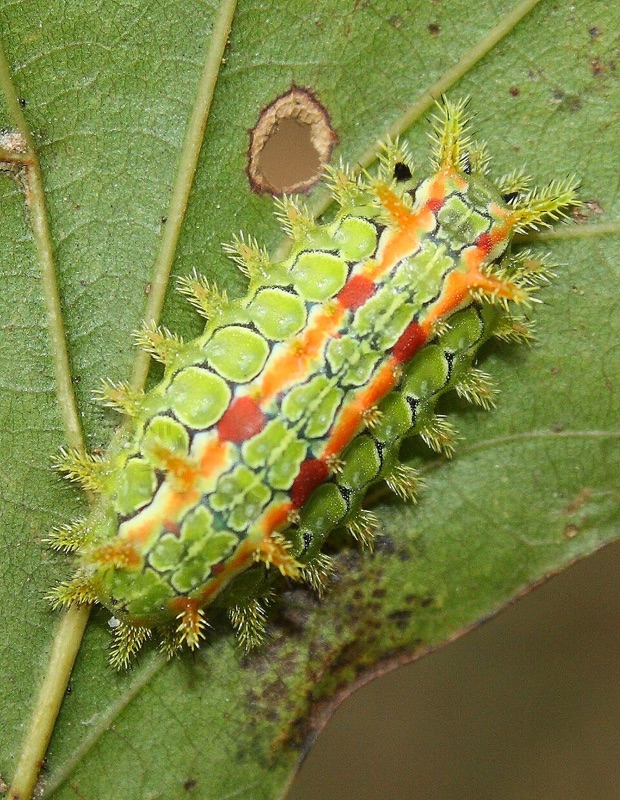 Photo Credits: GothMoths (Shaina Noggle) from Wikipedia
Common Name: Spiny Oak Slug Moth Caterpillar
Scientific Name: Euclea delphinii
Other Names: Slug Caterpillar Moth, Oak Slug Moth Caterpillar, or Euclea delphinii.
Genus: Euclea
Family: The Slug Moth Family / The Cup Moth Family
Colours: green, yellow, orange, and red
Body: Has a flattened and ovoid body
Skin Type: Exoskeleton
Length: It is around 2 cm in length
Most Distinctive Features: Their flattened body and the stinging spines that are all over their body.
Sightings: The Spiny Oak Slug Caterpillar is typically seen from late June to late October.
Native: Yes, the Spiny Oak Slug Caterpillar is a native caterpillar species in Canada.
Native Range: Much of Eastern North America including the Eastern United States and Southern Ontario Canada.
Host Plants: The Spiny Oak Slug Moth Caterpillar feeds on a variety of deciduous trees and shrubs such as oak, willow, cherry, beech, ash, and maple.
Toxicity: Venomous
Warning ⚠️: Touching the caterpillar causes a reaction in humans such as mild reactions, more severe reactions, and allergic reactions. The reactions vary depending on the individual.
For the mild reactions from touching the caterpillar include itching, burning, and redness at the point of contact.
The more severe reactions from touching the caterpillar include a strong allergic reaction that requires medical attention.
The allergic reactions from touching the caterpillar include shortness of breath, difficulty swallowing, and swelling in the face or throat.
Other potential symptoms of touching the caterpillar are headaches and nausea.
The Spiny Oak Slug Moth Caterpillar (Euclea delphinii) is a unique shaped caterpillar that is round. It is a native caterpillar of North America including Canada and The United States.
Unlike typical caterpillars with prominent legs and prolegs, spiny oak slug caterpillars have a flattened, ovoid body with short, reduced prolegs that resemble a disc or foot.
They come in a variety of colors, including green, yellow, orange, and red.
The caterpillar has three pairs of large, hornlike spines with dark-tipped bristles at the front and two pairs at the rear.
The head of the caterpillar is small and often difficult to spot with the naked eye. The spines are stinging, capable of causing a painful sting in humans.
Sometimes this caterpillar has red spots decorating the top rows of spiny lobes.
The sides of the abdomen have rounded depressions, often edged in black or white.
Spongy Moth Caterpillar (Lymantria dispar)
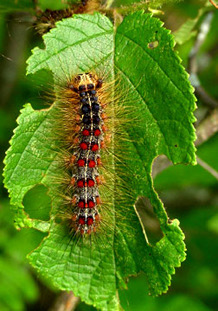 Photo Credits: Wisconsin Department of Natural Resources
Common Name: Spongy Moth Caterpillar
Scientific Name: Lymantria dispar
Other Names: European Gypsy Moth Caterpillar or LDD Moth Caterpillar
Genus: Lymantria
Family: The Tiger Moth Family / The Tussock Moth Family
Colours: dark grey or dark black, blue, red, and white.
Body: The body is long and dark coloured and covered in hairs.
Skin Type: Exoskeleton
Length: Up to 2 inches (5 cm) in length
Most Distinctive Features: The two rows of raised spots on their back.
Sightings: During their early stages the Spongy Moth Caterpillar are most commonly seen from mid April to mid May. They are also visible in their older caterpillar stages from Mid May to June.
Native: No, The Spongy Moth Caterpillar is not a native caterpillar species in Canada.
The Spongy Moth Caterpillar is an introduced species in Canada and The United States.
Native Range: Europe, Eurasia, and North Africa
Host Plants: The Spongy Moth Caterpillar feed on a wide variety of trees and shrubs including oaks, birch, alder, poplar, willow, cherry, and apple.
Toxicity: The Spongy Moth Caterpillar is not poisonous or venomous, but their body can cause skin irritations.
Warning ⚠️: The hairs that are located on the Spongy Moth Caterpillar are capable of causing skin irritations such as rashes, red bumps, hives, itching, and allergic reactions.
The Spongy Moth Caterpillar (Lymantria dispar) is a fuzzy and hairy caterpillar that is a non native caterpillar that is an invasive species in North America including Canada and The United States.
It has a fuzzy and hairy appearance, and has five pairs of blue bumps followed by six pairs of red bumps down the length of their back.
Just after hatching when the caterpillar is very young they are generally black and the other markings are difficult to see for another week or two.
Mourning Cloak Butterfly Caterpillar (Nymphalis antiopa)
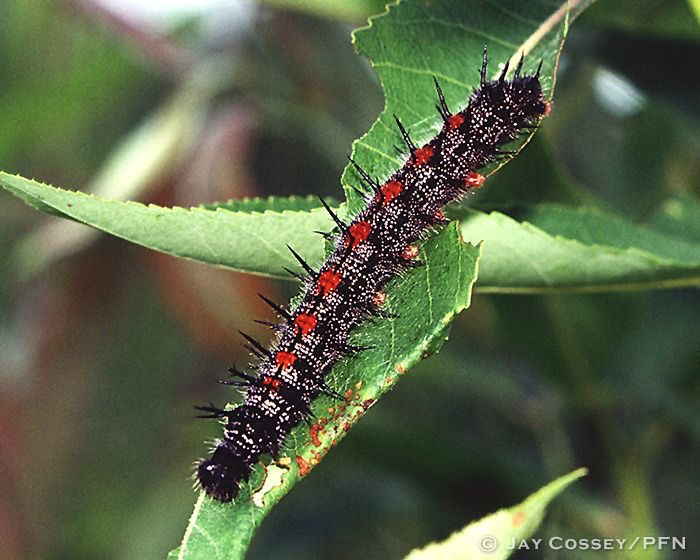 Photo Credits: Jay Cossey / PFN
Common Name: Mourning Cloak Butterfly Caterpillar
Scientific Name: Nymphalis antiopa
Other Names: Spiny Elm Caterpillar or Camberwell Beauty Caterpillar
Genus: Nymphalis
Family: The Brush - footed Butterflies Family
Colours: black, white, reddish - orange, and dark red.
Body: a long body that is covered in black spines and white dots.
Skin Type: Exoskeleton
Length: 2 inches
Most Distinctive Features: Is their striking appearance that is characterized by a black body and a line of eight reddish-orange dots down its back.
Sightings: late spring to early summer
Native: Yes, the Mourning Cloak Butterfly Caterpillar is native to Canada.
Native Range: In Canada the Mourning Cloak Butterfly Caterpillar can be found throughout most of Canada, even north to the tundra in areas like the British Mountains, Yukon, and Northwest Territories.
In The United States Of America it’s widespread extending south to central Mexico in the West and reaching Florida in the East, although it's less common south of the Appalachian Mountains.
In South America it may extend further south into northern South America.
In Eurasia the Morning Cloak Butterfly Caterpillar can be spotted in Europe, Eurasia, and even Japan.
Host Plants: Mourning Cloak Butterfly Caterpillars eat a variety of trees such as willows, poplars, birches, elms, hackberries, alders, hornbeam, maples, red mulberry, american basswood, ash, spireas, and roses.
Toxicity: It is not venomous or toxic as well as they don’t sting. But their body and hairs can cause irritations to the skin.
Warning ⚠️: Even though Mourning Cloak Butterfly Caterpillars are not toxic or venomous, their hairy bodies and the spines on their back side can cause skin irritations in humans when bare skin has any interaction.
The skin irritations that humans can experience include a stinging sensation or an itching sensation, which is due to the way how the spines on the caterpillars are designed.
The Mourning Cloak Butterfly Caterpillar (Nymphalis antiopa) is a spiny caterpillar that is native to North America including Canada and The United States.
It is primarily black in colour with a line of reddish-orange spots along its back. White speckles and short hairs are also present, along with black spines. The spines, also called scoli, are numerous and prominent on its back and sides. When the caterpillar is mature and is full grow it can be up to two inches in length.
Baltimore Checkerspot Butterfly Caterpillar (Euphydryas phaeton)
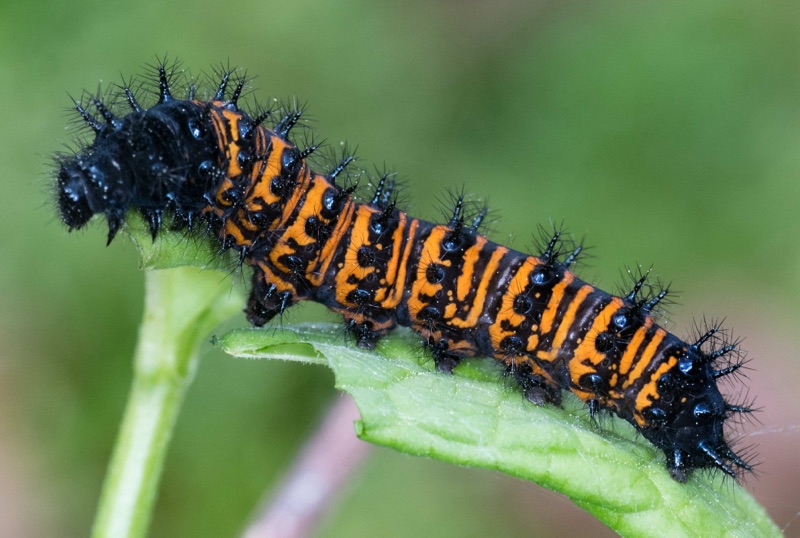 Photo Credits: Sarah Bright
Common Name: Baltimore Checkerspot Butterfly Caterpillar
Scientific Name: Euphydryas phaeton
Other Names: Spiny Caterpillar
Genus: Euphydryas
Family: The Brush - footed Butterflies Family
Colours: orange and black
Body: the body is black with orange stripes and bands, as well as rows of branching black spines.
Skin Type: Exoskeleton
Length: about 1 inch
Most Distinctive Features: Is their alternating bands of black and bright orange, often with spine like protrusions arranged along these bands.
Sightings: They are typically active from late April to early May, since they overwinter in leaf litter and come out to feed and wander around during the spring of the following year.
Native: Yes, the Baltimore Checkerspot Butterfly Caterpillar is native to Canada.
Native Range: South Eastern Canada (Nova Scotia to Ontario) and The Eastern United States.
Host Plants: The preferred host plant for this caterpillar is White Turtlehead. The caterpillar will also feed on Hairy Beardtongue and English Plantain.
Toxicity: It is not venomous or toxic but the hairs and spikes on them can cause skin irritations.
Warning ⚠️: When the spikes and hairs on the caterpillar have encounters with bare skin, the hairs and spikes can cause skin irritations such as itching, pain, a raised weal, or a rash.
The severity of the reaction can vary depending on the individual's sensitivity to the hairs and spikes on the caterpillar.
The Baltimore Checkerspot Butterfly Caterpillar (Euphydryas phaeton) is a not fuzzy caterpillar that is native to North America including Canada and The United States.
It has a black head, and their body pattern is alternating bands of black and bright orange with spine like protrusions.
The spines are branching black spines and they’re a distinctive feature of this caterpillar.
The back segments of this caterpillar are black just like their head, and the bands all over the body are orange and black.
White Marked Tussock Moth Caterpillar (Orgyia leucostigma)
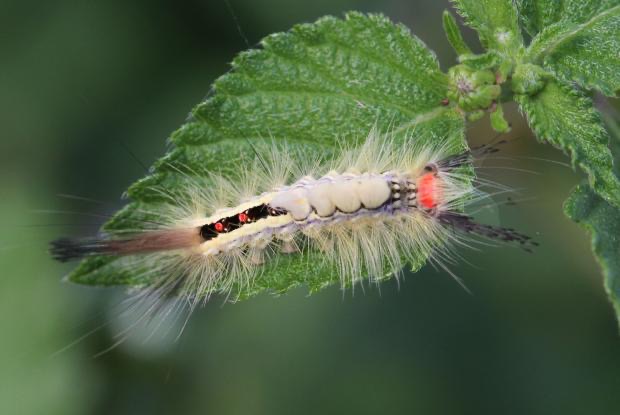 Photo Credits: Flickr
Common Name: White Marked Tussock Moth Caterpillar
Scientific Name: Orgyia leucostigma
Other Names: Tussock Moth Caterpillar
Genus: Orgyia
Family: The Tiger Moth Family / The Tussock Moth Family
Colours: red, black, yellow, and white
Body: a fuzzy body with tufts of white or yellow hair.
Skin Type: Exoskeleton
Length: 1 1/4 inches (35 mm) when fully mature.
Most Distinctive Features: their bright colours and assorted tufts of hair.
Sightings: They are typically active from late June to early July.
Native: Yes, the White Marked Tussock Moth Caterpillar is native to Canada.
Native Range: Most of Canada including as far west as Alberta, and most of The Eastern United States.
Host Plants: Some of their common host plants include apple, birch, cherry, elm, fir, oak, rose, spruce, and willow.
They can also be found on other trees like basswood, hackberry, hickory, larch, maple, and sycamore.
Toxicity: It is not poisonous but can be venomous. The hairs and spikes on their body can cause skin irritations in humans.
Warning ⚠️: Even though the caterpillar is not poisonous to humans but is capable of being venomous where their hairs and spikes can get break off and penetrate the skin causing irritation like itchy sensation, burning sensation, red rash, or blister like bumps near or around the infected area of the skin.
The White Marked Tussock Moth Caterpillar (Orgyia leucostigma) is a very hair and dangerous caterpillar that is a native caterpillar species in North America including Canada and The United States.
The caterpillar’s head is bright red in colour. There are two long, black tufts of hair extend from the sides of the head and one shorter tuft near the hind end.
There are four brush-like tufts, often white, grey, or yellow, are located on the back, typically on the first four abdominal segments.
There is a black stripe runs down the middle of the back, and yellow stripes are present on the sides.
There are two bright red spots may be present on the back, near the hind end.
Garden Tiger Moth Caterpillar (Arctia caja)
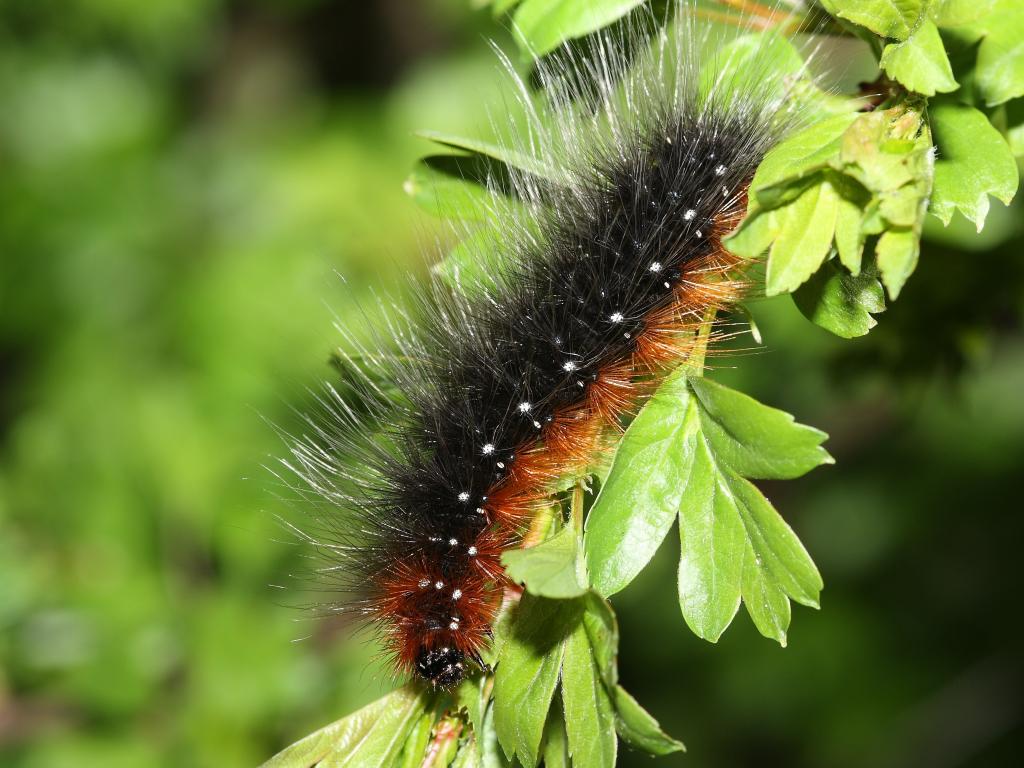 Photo Credits: Dean Morley
Common Name: Garden Tiger Moth Caterpillar
Scientific Name:Arctia caja
Other Names: Woolly Bears
Genus: Arctia
Family: The Tiger Moth Family / The Tussock Moth Family
Colours: black, rust orange, yellow, and white
Body: dark coloured body with tufts of rust orange and black hairs along with yellowish tufts on it’s back.
Skin Type: Exoskeleton
Length: 6 cm (2.4 inches) long
Most Distinctive Features: their extremely hairy body
Sightings: Typically tends to get spotted during the late summer and early fall, which usually occurs from August to September.
Native: Yes, the Garden Tiger Moth Caterpillar is a native caterpillar species in Canada.
Native Range: Northern United States, Canada, Europe, Lapland, and throughout much of the Palearctic, including Northern and Central Asia.
Host Plants: Their native host plants include willows, maples, hackberry, redbud, and blackberry.
They can also be seen feeding on plants such as dandelions, nettles, docks, and plantains.
Toxicity: The Garden Tiger Moth Caterpillar is not generally venomous or toxic to humans, but the hairs on their bodies can cause some irritations in humans.
Warning ⚠️: Even though this caterpillar is not venomous or toxic to humans, the hairs that are all over their body are capable of causing skin irritations in humans such as itching, hives, red bumps, or a red rash.
The Garden Tiger Moth Caterpillar (Arctia caja) is a very fuzzy and hairy caterpillar that sort of resembles a Isabella Tiger Moth Caterpillar, and it is a native caterpillar species in North America including Canada and The United States.
The caterpillar is covered in long, dense hairs, giving it a "woolly" appearance. It has a black head and a mix of black, ginger, and white hairs on its body.
The hairs are not only a defining feature but also provide protection from predators and can be irritating to the skin.
The caterpillar of the Garden Tiger Moth is typically black with ginger and white hairs.
As you wander through Canada’s forests, parks, and gardens, take a moment to appreciate the fascinating world of caterpillars, but remember, some of these seemingly innocent creatures hide a painful secret. Their venomous bristles and toxic defenses can cause severe discomfort, from burning rashes to allergic reactions that could ruin your outing.
The best way to admire their beauty is from a safe distance. By staying vigilant and informed, you can protect yourself and others while allowing these incredible insects to complete their transformation into butterflies and moths unharmed. So, whether you're hiking, gardening, or simply enjoying nature’s wonders, keep an eye out and resist the urge to touch.
You never know what dangers may be disguised in a tiny, crawling package.
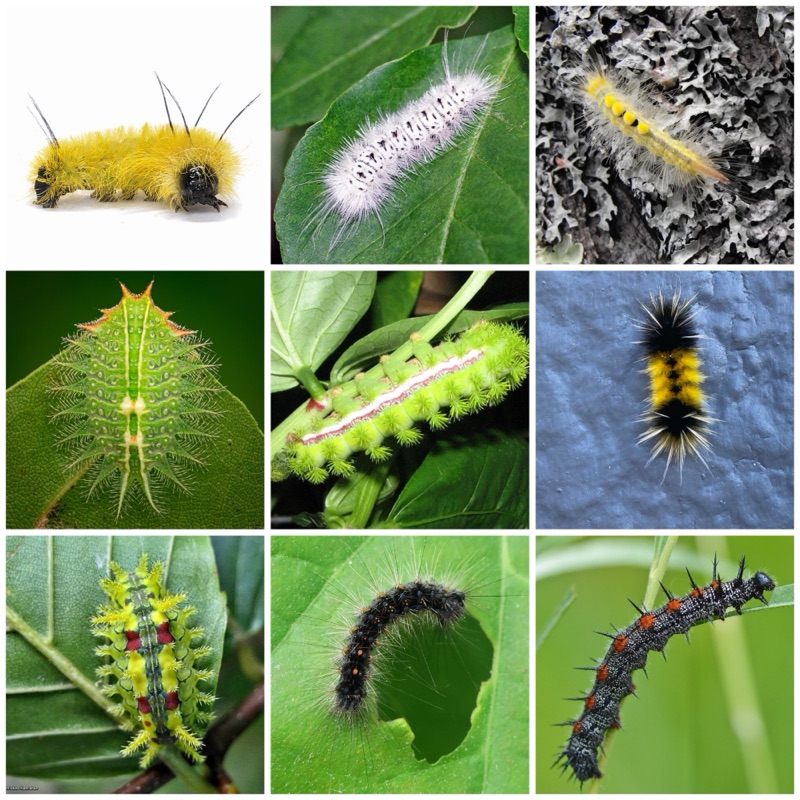 Photo Credits: The Mascoma River Greenway, The Bug Lady, 9and3quarters/Dreamstime.com, Rick on X, r/Entomology on Reddit, Chris415, Christine Hanrahan, ontario.ca, and Wild Columbia County.
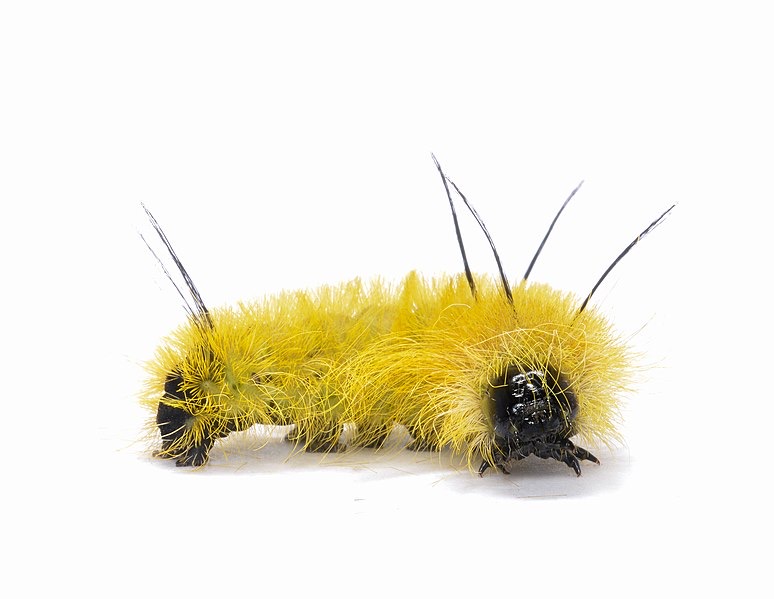 Photo Credits: The Mascoma River Greenway
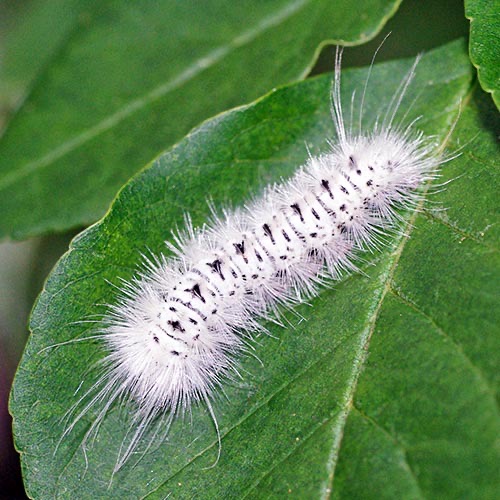 Photo Credits: The Bug Lady
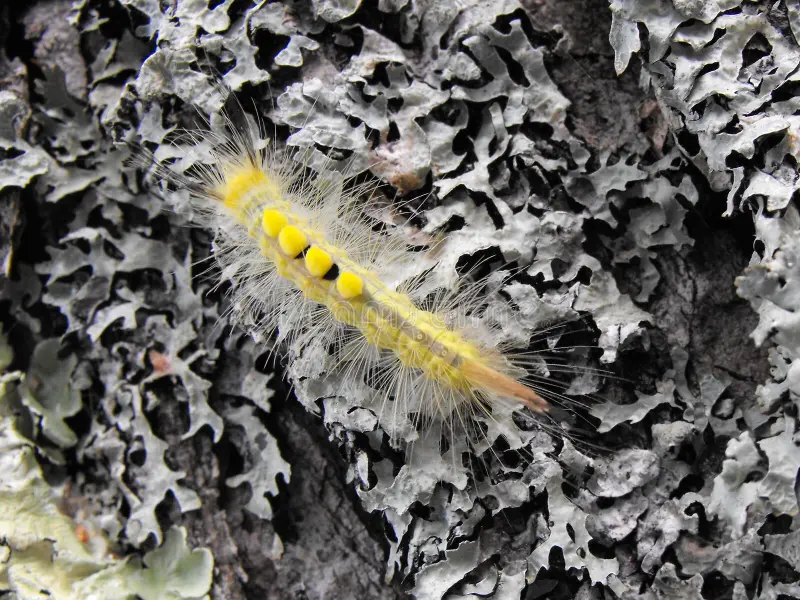 Photo Credits: 9and3quarters/Dreamstime.com
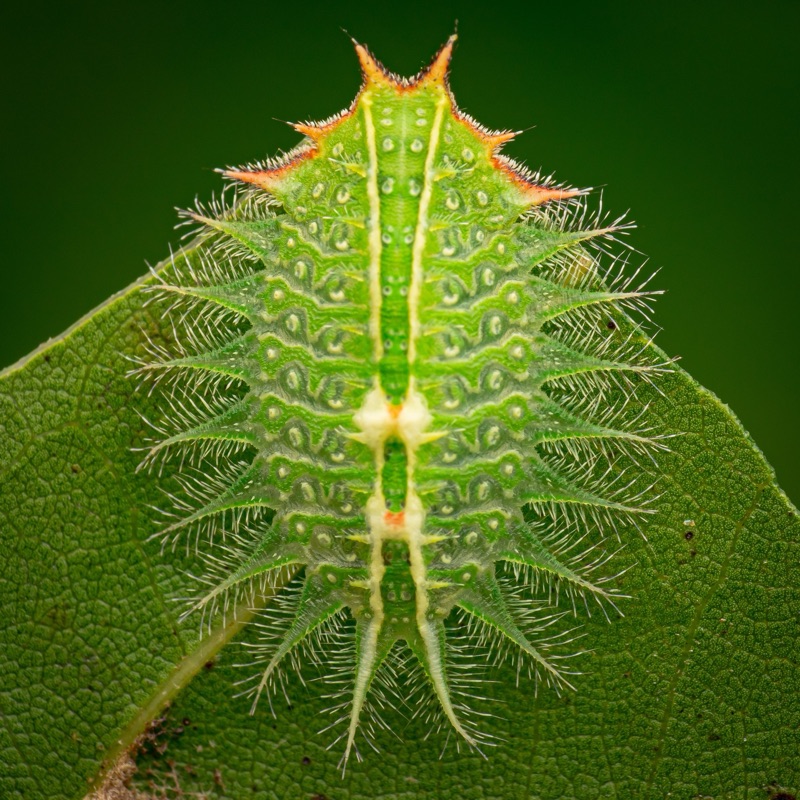 Photo Credits: Rick on X (use to be called Twitter)
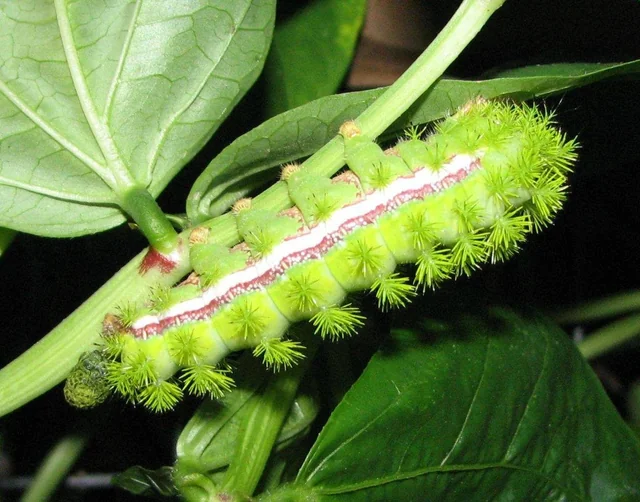 Photo Credits: r/Entomology on Reddit
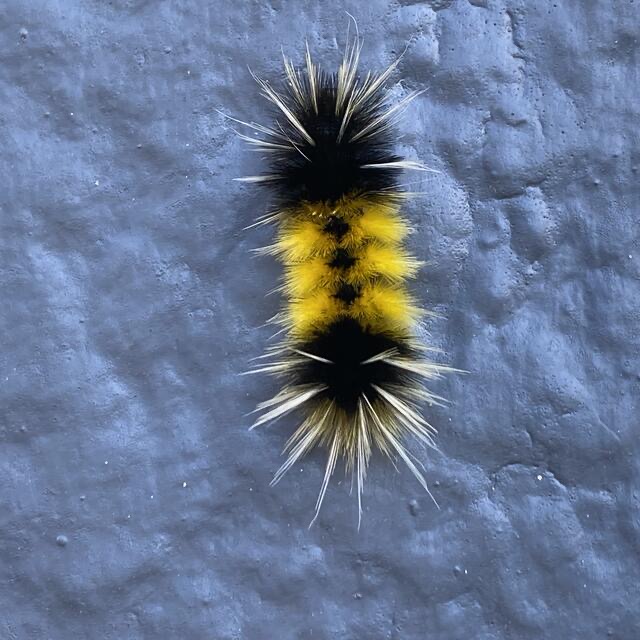 Photo Credits: Chris415
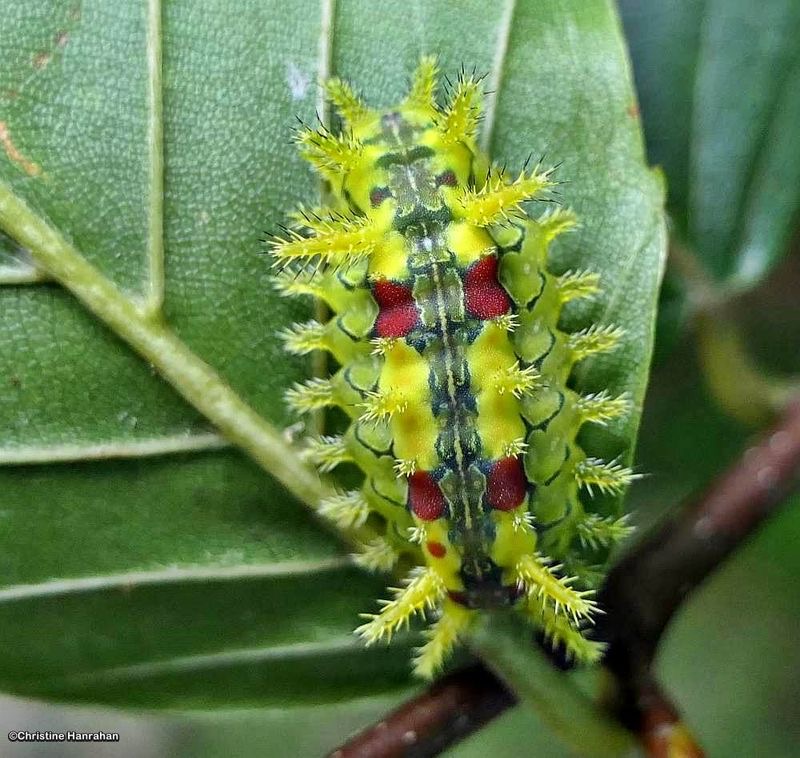 Photo Credits: Christine Hanrahan
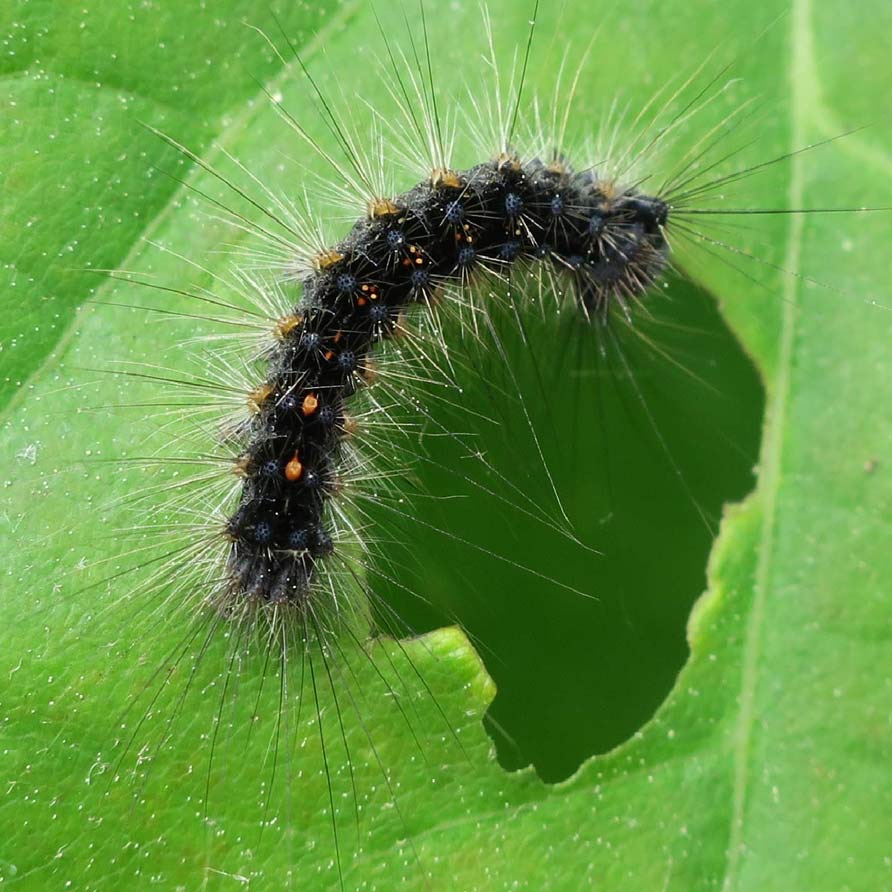 Photo Credits: ontario.ca
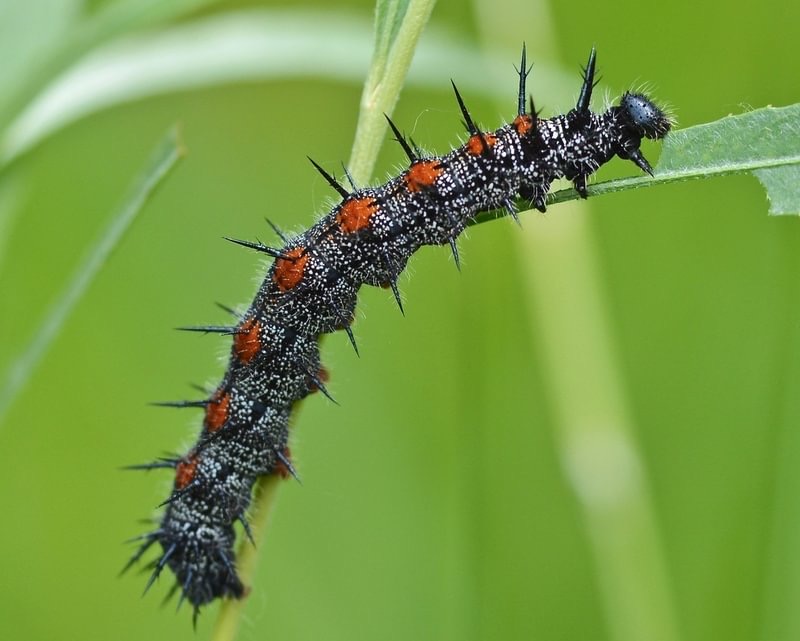 Photo Credits: Wild Columbia County


Comments
Post a Comment