Summer’s Pollinator Paradise: Native Blooms Across Canada
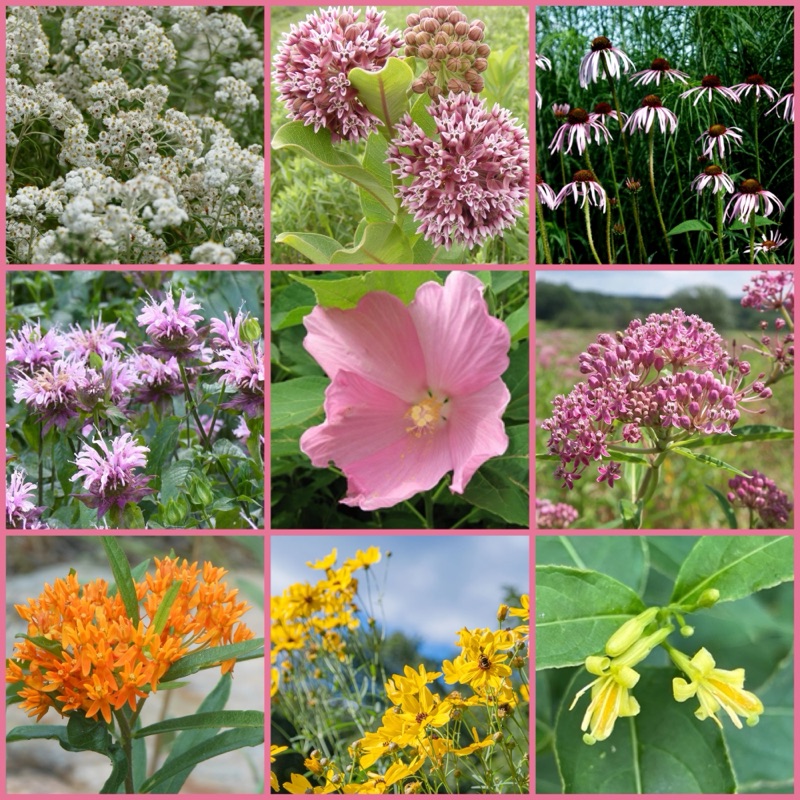
From Petals To Pollinators: Canada’s Summer Symphony in Bloom
Canada’s summer landscapes burst into life with a dazzling array of native flowers, each playing a crucial role in supporting pollinators. From the buzzing of bees to the flutter of butterflies, these blooms create a vibrant ecosystem, ensuring the health of our gardens, forests, and farmlands. But which flowers truly make a difference? Discover the stunning native plants that not only thrive in Canada’s diverse climates but also provide essential nourishment to the pollinators we rely on. Get ready to explore nature’s living masterpiece that is right in your own backyard.
Pearly Everlasting (Anaphalis margaritacea)
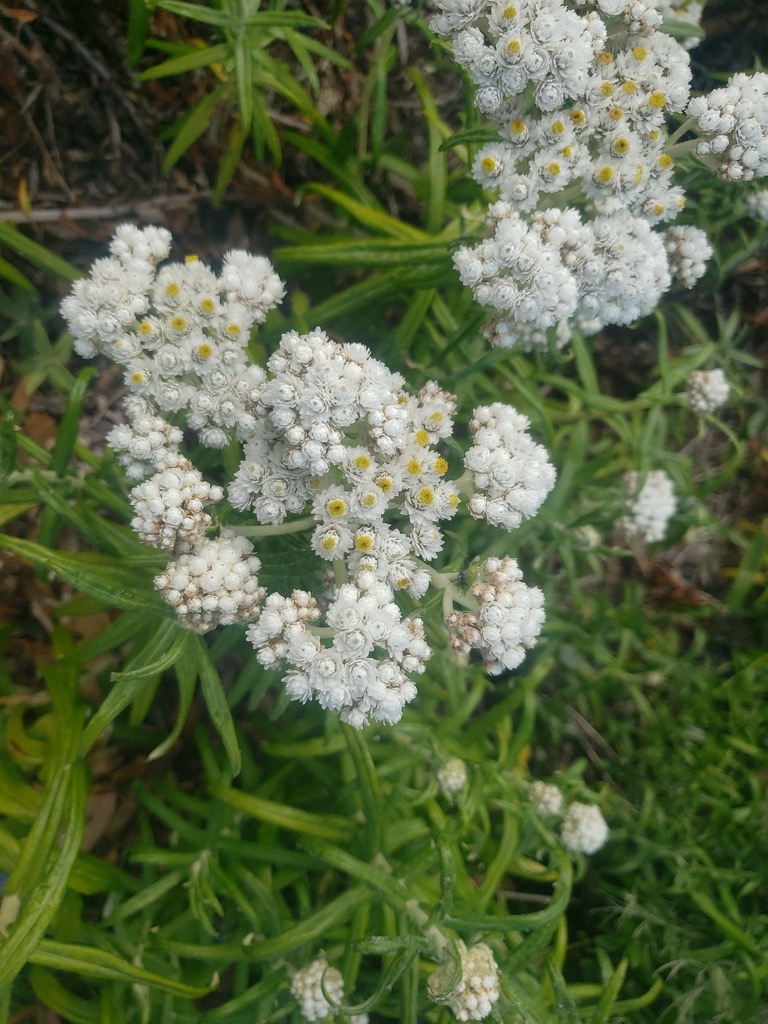 Photo Credits: plantsplantsplantsplants from iNaturalist
Common Name: Pearly Everlasting
Scientific Name: Anaphalis margaritacea
Other Names: Sweet Everlasting, Western Pearly Everlasting, and Large - flowered Everlasting.
Genus: Anaphalis
Plant Family: The Aster Family
Flowers: Button like white flowers with yellow centres.
Foliage: Slender, blue green leaves that are long and narrow. The leaves are also pretty soft to the touch.
Height: 1 to 3 feet tall
Width: 1 to 2 feet wide
Bloom Time: late June to October
Hardiness Zones: 2 through 7
Moisture Requirements: It is a drought tolerant plant that prefers drier conditions, but this plant can also tolerate some moisture. The location needs to have good drainage.
Soil Type: Sandy, rocky, or clay soils that are well drained.
Light Requirements: Pearly Everlasting thrives in full sun, but it can tolerate partial shade.
Host Plant: Yes, Pearly Everlasting is a host plant for the American Lady butterfly and the Painted Lady butterfly.
Attracts: bees, butterflies, hummingbirds, and some birds
Wildlife Benefits: The flowers of Pearly Everlasting provide both nectar and pollen for pollinators including bees, butterflies, and hummingbirds. American Lady butterflies and Painted Lady butterflies are attracted to the plant to lay their eggs on her foliage.
The foliage of the plant provides a food source for the caterpillars of the American Lady butterfly and the Painted Lady butterfly.
The seeds on Pearly Everlasting provide a food source for many birds including and they use the fluffy seed coverings for nesting material.
Pearly Everlasting (Anaphalis margaritacea) is a wildflower that has clusters of numerous small flower heads at the top of the stems. These flower heads are composed of tiny yellow flowers surrounded by white, papery bracts that resemble petals.
The bracts are often described as button like or pearl like in appearance. The plant has both male and female flowers, which are often on separate plants.
The leaves are lance-shaped, grey-green on top, and white and woolly on the underside. They are covered in tiny white hairs, giving them a woolly feel. The leaves are 7 to 13 cm long and up to 2 cm wide.
The seeds of a Pearly Everlasting plant are tiny, and brown in colour achenes with a white pappaus (a tuft of hairs) attached to them. They are very small, typically around 0.97 mm in length and 0.32 mm in width.
Common Milkweed (Asclepias syriaca)
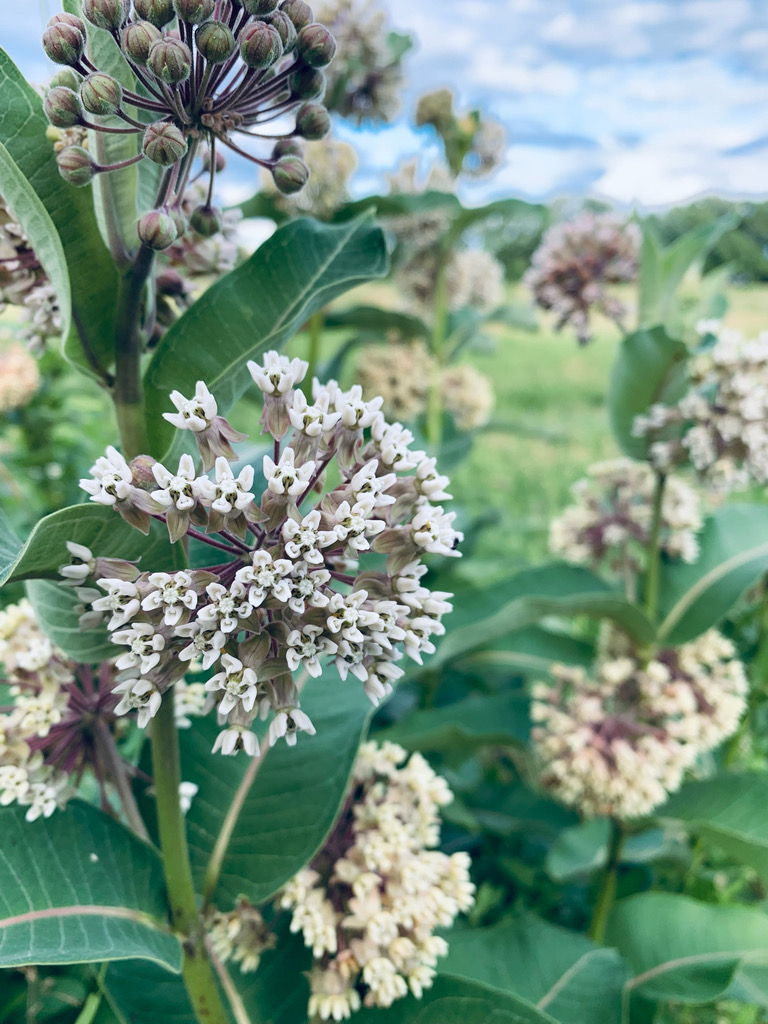 Photo Credits: michaelhill95 from iNaturalist
Common Name: Common Milkweed
Scientific Name: Asclepias syriaca
Other Names: Butterfly flower, Silkweed, Silky Swallow - wort, and Virginia Silkweed.
Genus: Asclepias
Plant Family: The Dogbane Family
Flowers: Large drooping umbels that are dense and consist of 1 - 130 tiny individual flowers on each cluster.
Foliage: The leaves are dark green on the top side and a pale light green on the underside. They are ovate and hairy on the undersides.
Height: Typically reaches a height between 3 to 5 feet tall.
Width: Typically reaches a width between 1 and 2 feet wide.
Bloom Time: June to August
Hardiness Zones: 3 through 9
Moisture Requirements: It is generally drought tolerant and can grow in dry conditions. Common Milkweed benefits from consistent watering especially during prolonged dry periods.
Soil Type: sandy, clay, or rocky soils that is well drained and has good drainage.
Light Requirements: It thrives in full sun, where Common Milkweed requires at least 6 to 8 hours of direct sunlight daily.
Host Plant: Yes Common Milkweed is a host plant. It is a host plant for the Monarch Butterfly, Milkweed Tussock Moth, and Milkweed Beetle.
Attracts: bumblebees, carpenter bees, sweat bees, leaf cutting bees, plasterer bees, yellow - faced bees, swallowtail butterflies, fritillary butterflies, hairstreak butterflies, monarch butterflies, pollinating flies, and hummingbirds.
Wildlife Benefits: The flowers on Common Milkweed provide both nectar and pollen for several local pollinators. The scent of the plant attracts female Monarchs and female Milkweed Tussock Moths to lay their eggs.
The foliage on Common Milkweed provides a food source for Monarch caterpillars, Milkweed Tussock Moth caterpillars, and Milkweed bugs.
The seed pods that Common Milkweed produces provide food for Milkweed bugs, beneficial insects, Monarch caterpillars, and Milkweed Tussock Moth caterpillars.
Common Milkweed (Asclepias syriaca) is a wildflower that can reach 5 feet tall in height, but can grow up to 6 feet or 8 feet tall.
It is identified by their large oval leaves, milky white sap, pinkish - purple flowers in round clusters and distinctive seed pods.
The leaves are broad and oval in shape that can get up to be 10 inches long with prominent white midveins. The undersides of the leaves are slightly hairy.
The stems are erect, unbranched, and hollow. The plant exudes a milky white sap when stems or leaf petioles are broken.
The flowers are round clusters of small, pinkish-purple flowers (sometimes white or pale purple). The scent that the flowers give off is the scent of lilacs which is a very aromatic scent.
The seed pods are smooth, spindle-shaped pods that split open to release fluffy white seeds.
The roots are thick, fleshy, white rhizomes that are difficult to pull out of the soil.
Pale Purple Coneflower (Echinacea pallida)
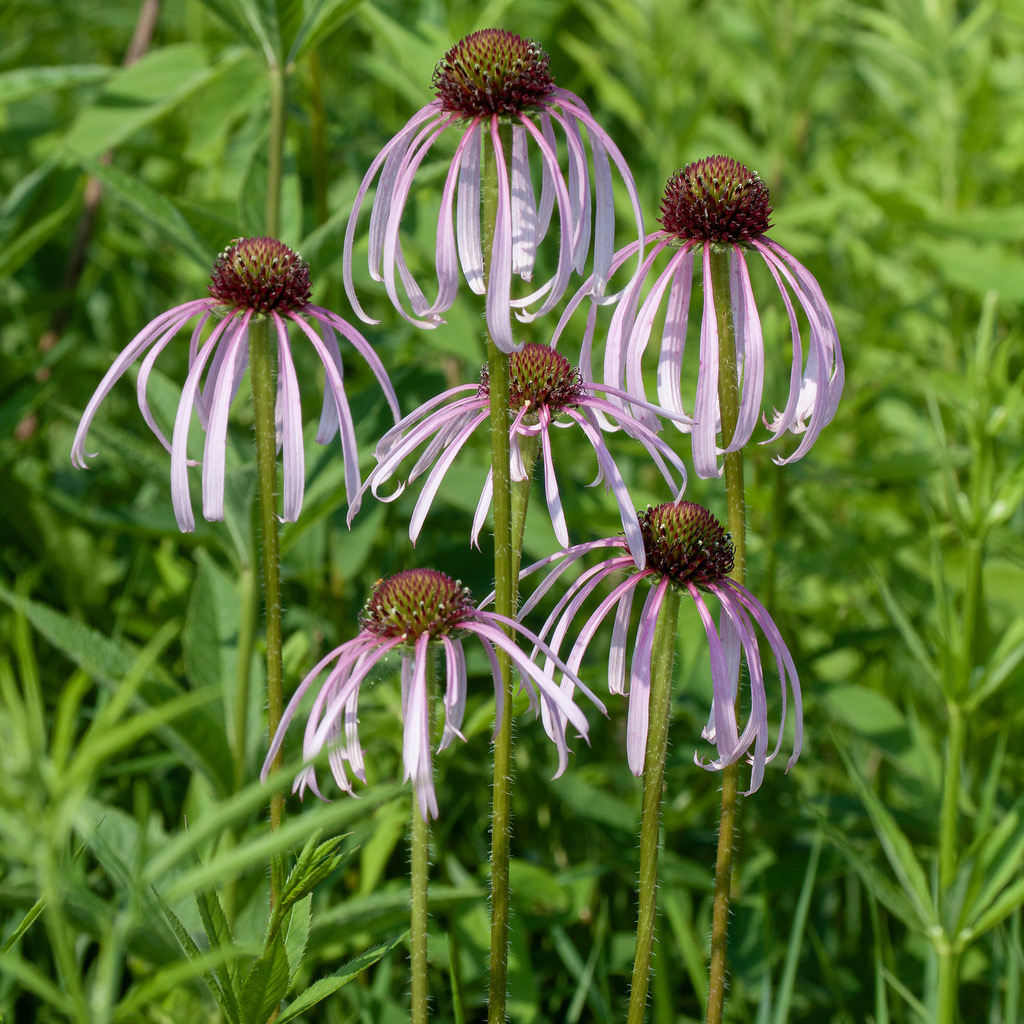 Photo Credits: kodiakgarden from iNaturalist
Common Name: Pale Purple Coneflower
Scientific Name: Echinacea pallida
Other Names: Pale Echinacea
Genus: Echinacea
Plant Family: The Aster Family
Flowers: Gentle pinkish purple flowers that have droopy petals and a cone like middle that is brown in colour.
Foliage: Long, narrow, lanceolate, or oblanceolate, alternate, hairy, and green in colour.
Height: Typically grows to a height of 24 - 36 inches (60 - 90 cm) tall.
Width: Typically grows to a width of 12 - 18 inches (30 - 45 cm) wide.
Bloom Time: June to July
Hardiness Zones: 3 through 9
Moisture Requirements: dry to medium moisture and they need to be in a location that has good drainage.
Soil Type: Sandy or clay soils that neutral and acidic and are well drained.
Light Requirements: Pale Purple Coneflower thrives in full sun, where this plant needs at least 6 to 8 hours of direct sunlight daily.
Host Plant: Yes, the Pale Purple Coneflower is a host plant for the Silvery Checkerspot Butterfly and Wavy - lined Emerald Moth.
Attracts: bumblebees, mining bees, carpenter bees, leaf cutting bees, sweat bees, mason bees, swallowtail butterflies, american lady butterflies, painted lady butterflies, fritillary butterflies, monarch butterflies, hairstreak butterflies, and hummingbirds.
Wildlife Benefits:
The flowers on Pale Purple Coneflower provide both nectar and pollen to local pollinators such as bees, butterflies, and hummingbirds.
The scent of the plant attracts the silvery checkerspot butterfly and wavy - lined emerald moth to lay their eggs on the leaves.
The foliage on Pale Purple Coneflower provides a food source for the caterpillars of the silvery checkerspot butterfly and the wavy - lined emerald moth.
The seeds that the Pale Purple Coneflower produces provide a food source for several of our songbirds including goldfinches, chickadees, cardinals, sparrows, orioles, and woodpeckers.
The Pale Purple Coneflower (Echinacea pallida) is easily identified by their delicate, drooping petals that are a pale pinkish-purple colour. These petals (ray flowers) gracefully droop down from a central spiny cone-like structure, which is typically reddish-brown. The leaves are narrow and parallel-veined, and the plant stands on a rigid stem.
Wild Bergamot (Monarda fistulosa)
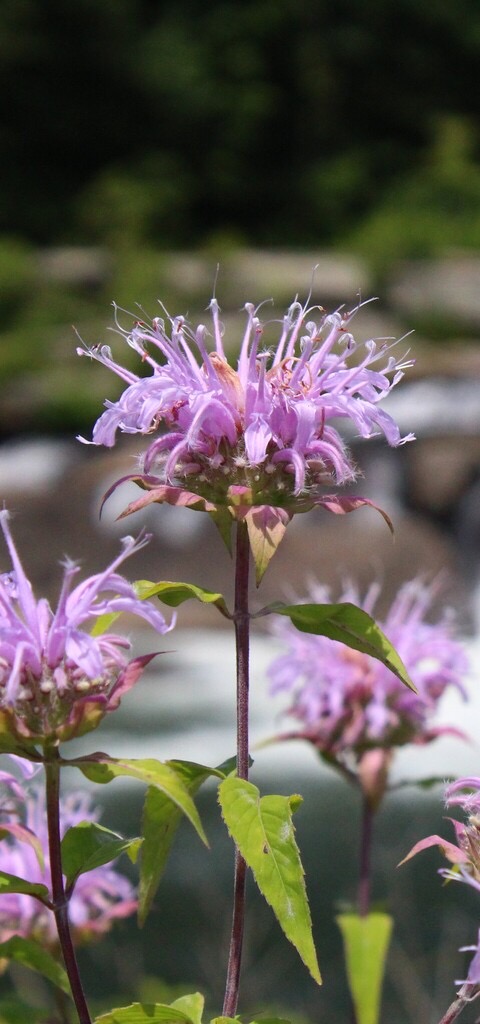 Photo Credits: roseblue from iNaturalist
Common Name: Wild Bergamot
Scientific Name: Monarda fistulosa
Other Names: Bee Balm, Monarda, Mint leaf Bee Balm, or Horsemint.
Genus: Monarda
Plant Family: The Mint Family / Deadnettle Family/Sage Family
Flowers: Showy in appearance and are pinkish lavender in colour.
Foliage: The leaves are opposite along the stem. They are lanceolate or ovate, and approximately 3-4″ long by half as wide. The colour of the leaves range from light green to tinted red or purple. The edges of the leaves are saw toothed.
Height: Typically grows to a height of 2 - 4 feet (60 - 120 cm) tall.
Width: Typically grows to a width of 2 - 3 feet (60 - 90 cm) wide.
Bloom Time: Summer to Fall
Wild Bergamot typically blooms from mid or late Summer to Fall.
Hardiness Zones: 3 through 9
Moisture Requirements: Moist and occasionally dry
The location needs to have good drainage.
Soil Type: clay or shallow rocky soils that are well drained.
Light Requirements: Full sun ☀️ (6 or more hours of direct sunlight) to partial sun ⛅️ (direct sunlight only part of the day, and about 2 to 6 hours of sunlight).
Host Plant: Yes, Wild Bergamot is a host plant for some of our local moth species. It is a host plant for the Hermit Sphinx Moth, Orange Mint Moth, and Raspberry Pyrausta Moth.
Attracts: bumblebees, sweat bees, mason bees, leaf cutter bees, bee balm short faced bees, hummingbirds, monarch butterflies, swallowtail butterflies, hawk moths, and clear wing hummingbird moth.
Wildlife Benefits:
The flowers provide both nectar and pollen for various local pollinators such as bumblebees, bees, hummingbirds, butterflies, hawk moths, and clear wing hummingbird moths.
The scent of the plant brings in the hermit sphinx moth, orange mint moth, and raspberry pyrausta moth to lay their eggs on the foliage.
The foliage (leaves) provides a food source for the caterpillars of the hermit sphinx moth, orange mint moth, and raspberry pyrausta moth.
The seeds that the Wild Bergamot produces provide a food source for birds, insects, and small mammals.
Wild Bergamot (Monarda fistulosa) is a wildflower that has square stems that are reddish brown in colour and hairy.
The leaves are opposite and lance shaped with a triangular base. They are grey green in colour and slightly toothed. They have an aromatic fragrance. When they are crushed or fingers are rubbed in between them, the leaves give off a mint scent.
The flowers are dense and globular clusters at the end of branches with tubular lilac purple flowers. They have a sweet aromatic fragrance.
Swamp Rose Mallow (Hibiscus moscheutos)
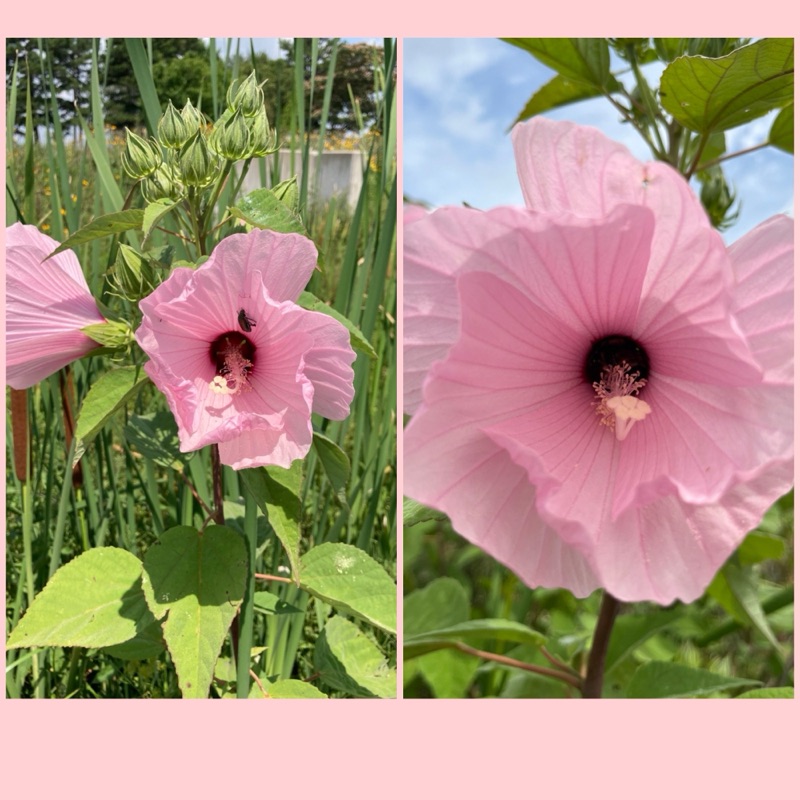 Photo Credits: whiteriverranger from iNaturalist
Common Name: Swamp Rose Mallow
Scientific Name: Hibiscus moscheutos
Other Names: Hardy Hibiscus, Common Rose Mallow, Swamp Mallow, Swamp Hibiscus, Dinner Plate Hibiscus, Mallow Rose, Wild Cotton, or Crimson - eyed Rose Mallow.
Genus: Hibiscus
Plant Family: The Mallow Family
Flowers: Showy saucer shaped flowers that can be up to 6 - 8 inches in diameter. They typically appear in shades of white or pink with a darker crimson or reddish purple eye or throat.
Foliage: The leaves are large, ovate to lanceolate, alternate, and simple. They are green on the upper surface. On the under surface the leaves are hairy, whitish or grey in colour.
Height: Typically grows to be 3 to 7 feet tall
*The height of the Swamp Mallow can vary slightly depending on growing conditions. *
Width: Typically has a width of 2 to 4 feet wide.
Bloom Time: Swamp Rose Mallow primarily blooms from late July to mid September.
Hardiness Zones: 4 through 9
Moisture Requirements: Swamp Rose Mallow blooms best when provided with moist to wet conditions. it prefers a consistent moisture level. Regular watering, especially in hotter weather or when grown in containers is essential for healthy blooms.
Soil Type: Thrives best in loam, and clay loam soils that are rich in organic matter.
Light Requirements: Thrives in full sun conditions, which this plant requires at least 6 hours of direct sunlight daily. While Swamp Rose Mallow can tolerate partial shade conditions, full sun conditions are necessary for optimal bloom production and disease resistance.
Host Plant: Yes, Swamp Rose Mallow is a host plant for some of our local butterfly and moth species. It is a host plant for the Grey Hairstreak Butterfly, Painted Lady Butterfly, Common Checkerspot Skipper Butterfly, lo Moth, and Pearly Wood Nymph Moth.
Attracts: rose mallow bee, bumblebees, carpenter bees, cuckoo bees, mining bees, mason bees, sulphur butterflies, fritillary butterflies, swallowtail butterflies, hairstreak butterflies, american lady butterflies, painted lady butterflies, hummingbirds, and songbirds.
Wildlife Benefits: The flowers of Swamp Rose Mallow provide both nectar and pollen for various local pollinators such as bumblebees, bees, butterflies, and hummingbirds.
The scent of the plant and the foliage attract the females of the grey hairstreak butterfly, painted lady butterfly, common checkerspot butterfly, lo moth, and pearly wood nymph moth to lay their eggs on the leaves.
The foliage on a Swamp Rose Mallow provides a food source for the caterpillars of the grey hairstreak butterfly, painted lady butterfly, common checkerspot skipper butterfly, lo moth, and pearly wood nymph moth.
The seeds that the Swamp Rose Mallow produces provide a food source for goldfinches, sparrows, juncos, chickadees, cardinals, bluejays, towhees, and woodpeckers.
Swamp Rose Mallow (Hibiscus moscheutos) is a perennial wildflower that is a member of The Mallow Family.
The flowers are large and dinner plate sized. They have 5 overlapping petals in shades of white, pink, red, or burgundy. The petals have a darker, crimson or burgundy center, and a prominent staminal column with white to pale yellow anthers.
The leaves are alternate, ovate to lanceolate shaped, with slightly toothed edges. The upper surface is green, and the underside is white and hairy.
The mature seed capsules are ovoid (egg-shaped) and brown, containing dark brown, kidney-shaped seeds.
Swamp Milkweed (Asclepias incarnata)
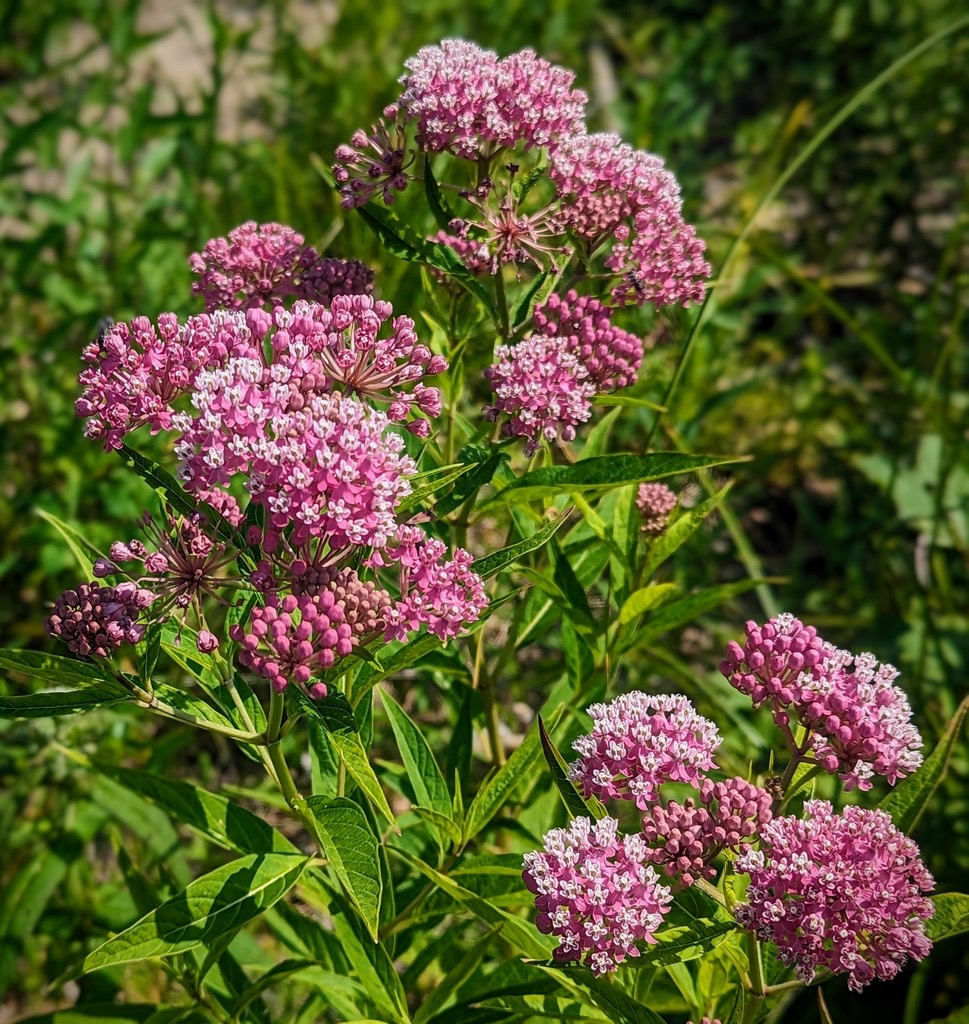 Photo Credits: waynes51 from iNaturalist
Common Name: Swamp Milkweed
Scientific Name: Asclepias incarnata
Other Names: Rose Milkweed, Rose Milk-flower, Swamp Silkweed, or Pink Indian Hemp.
Genus: Asclepias
Plant Family: The Dogbane Family
Flowers: Fragrant pink to mauve flowers arranged in rounded, umbel clusters at the top of tall branching stems.
Foliage: The leaves are narrow and lance shaped that are typically 3 to 6 inches long and 1/2 - 1 1/2 inches wide. They are dark green on the top and a lighter green to pale green on the bottom. Each leaf has a pointed tip at the top.
Height: Typically reaches a height of 3 to 5 feet (90 - 150 cm).
Width: Typically reaches a width of 2 to 3 feet (60 - 90 cm).
Bloom Time: Swamp Milkweed typically blooms from mid to late summer, which is usually from July to August.
Hardiness Zones: 3 through 7
Moisture Requirements: Swamp Milkweed thrives in moist to wet conditions.
Soil Type: clay, loam, or sandy soils that have medium to wet moisture, that has good drainage. While Swamp Milkweed can tolerate some drought once established, it needs consistently moist soil especially in the spring and during hot and drought spells.
Light Requirements: Thrives in full sun but it can tolerate partial shade. It prefers 6 or more hours of direct sunlight daily. While it can survive in some shade, it's best to provide at least 6 hours of sun for optimal growth and bloom.
Host Plant: Yes, Swamp Milkweed is a host plant for a local butterfly species, moth species, and a beneficial insect. It is a host plant for the Monarch Butterfly, Milkweed Tussock Moth, and Swamp Milkweed Leaf Beetle.
Attracts: bumble bees, leaf cutter bees, mason bees, mining bees, great black wasps, golden digger wasps, monarch butterflies, swallowtail butterflies, fritillary butterflies, hairstreak butterflies, milkweed tussock moths, common eastern fireflies, black fireflies, pink spotted lady beetles, hoverflies, hummingbirds, hummingbird moths, and birds.
Wildlife Benefits: The flowers on Swamp Milkweed provide both nectar and pollen for local various pollinators including bumblebees, bees, butterflies, fireflies, pollinating flies, wasps, hummingbirds, and hummingbird moths.
The scent of the plant and the leaves attract females of Monarch butterflies and Milkweed Tussock Moths to lay their eggs on the underside of the foliage.
The foliage provides a good source for the caterpillars of the Monarch Butterfly and Milkweed Tussock Moth, and the Swamp Milkweed Leaf Beetle.
The seed pods provide a food source for various beneficial insects such as swamp milkweed leaf beetles, monarch caterpillars, and milkweed bugs. They also provide a food source for other local wildlife including goldfinches, cardinals, chickadees, woodpeckers, sparrows, chipmunks, and squirrels.
The fluff that the seed pods produce, and the old plant material pieces provide nesting material for some birds such as goldfinches and orioles.
Swamp milkweed (Asclepias incarnata) is a tall, upright plant with narrow, and lance-shaped, leaves that are arranged oppositely on the stem.
The flowers are in small clusters (umbels) that consist of 50 to 100 individual flowers. The colours vary from bright pink, light pink, or dark pink and pale pink. The scent of the flowers smell like cotton candy or vanilla bean.
Butterfly Weed (Asclepias tuberosa)
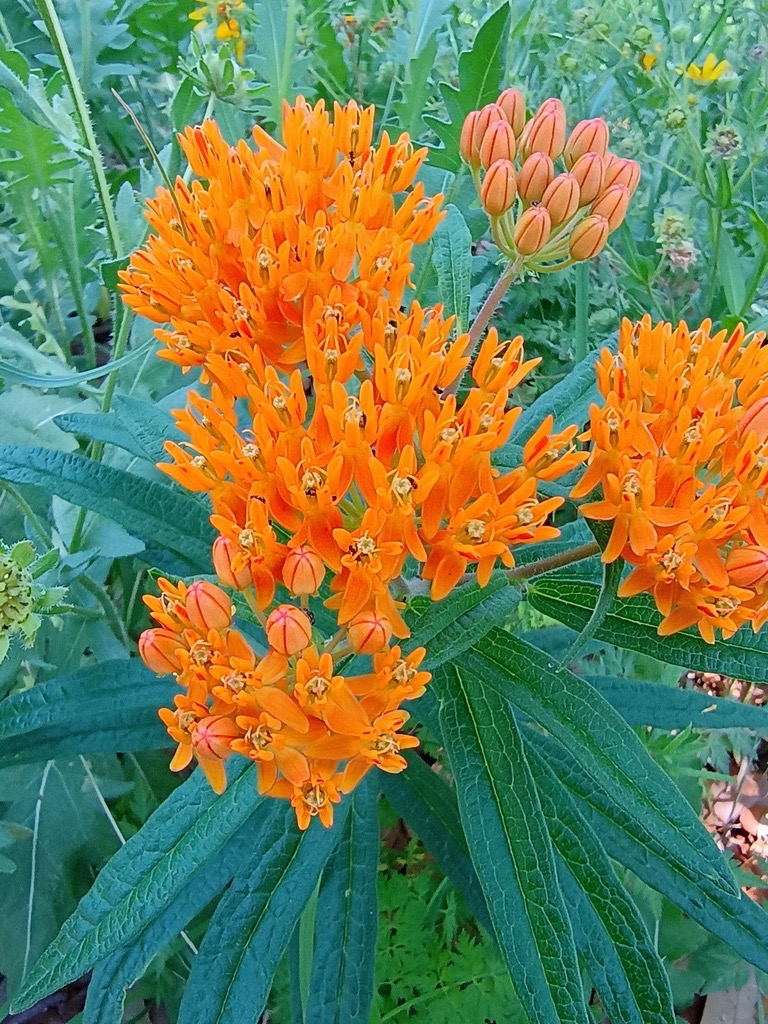 Photo Credits: deerlydeparted from iNaturalist
Common Name: Butterfly Weed
Scientific Name: Asclepias tuberosa
Other Names: Butterfly Milkweed, Orange Milkweed, Pleurisy root, Chigger Flower, or Indian Paint - brush.
Genus: Asclepias
Plant Family: The Dogbane Family
Flowers: Vibrant orange to yellow flowers that are in small clusters at the top of the stems.
Foliage: Stiff, lance - shaped, and alternate leaves that are smooth on the edges, and they’re typically a dark green to light green colour.
Height: 24 - 36 inches (2 to 3 feet) tall.
Width:
18 - 24 inches (1 foot 6 inches to 2 feet) wide.
Bloom Time: Typically blooms from late spring to mid summer, with the majority of the bloom period occurring from June to August.
Hardiness Zones: 3 through 9
Moisture Requirements: Butterfly Weed prefers dry to average moisture conditions. Newly planted Butterfly Weed needs consistent moisture. Mature Butterfly Weed can tolerate long periods without water, and may only need supplemental watering during very dry periods or in dry climates.
Soil Type: sandy, loam, gravel, or clay soils that are well drained, as long as Butterfly Weed doesn’t remain wet for extended periods.
Light Requirements: Butterfly Milkweed prefers to be in full sun to get the best performance and blooms. It can tolerate some shade but not too much, but full sun is best for a healthy plant and blooms.
Host Plant: Yes, Butterfly Weed is a host plant to a local butterfly species and some other beneficial insects. It is a host plant for the Monarch Butterfly, Milkweed Bug, and Milkweed Beetle.
Attracts: bumblebees, leaf cutter bees, mason bees, mining bees, great black wasps, golden digger wasps, monarch butterflies, hairstreak butterflies, sulphur butterflies, common eastern fireflies, black fireflies, pink spotted lady beetles, milkweed bugs, milkweed beetles, hoverflies, green lacewings, hummingbirds, and hummingbird moths.
Wildlife Benefits: The flowers on Butterfly Weed provide both nectar and pollen for various local pollinators such as bumblebees, bees, butterflies, fireflies, pollinating flies, beetles, butterflies, lady beetles, hummingbirds, and hummingbird moths.
The scent that the plant gives off and the foliage attracts female Monarch Butterflies to lay their eggs on the leaves.
The leaves (foliage) on Butterfly Weed provides a food source for the caterpillars of the Monarch Butterfly, Milkweed Beetles, and Milkweed Bugs.
The seeds (seed pods) that Butterfly Weed produces provide a food source for a variety of wildlife including monarch caterpillars, milkweed beetles, milkweed bugs, squirrels, chipmunks, and songbirds.
The plant fibres and old plant material from the previous year’s plants provide nesting material for songbirds.
Butterfly Weed (Asclepias tuberosa) is a coarse perennial herb consisting of several stems.
The flowers bright orange to a light orange in colour, that are clustered in small clumps at stem tips. Each flower has 5 petals and 5 hood lobes.
The leaves are lance-shaped and arranged alternately along the stems. Each leaf is small, thin, and short in physical appearance. The upper side of the leaves is a dark green to light green in colour, and on the under side the leaves are a pale green colour with a bunch of fuzz.
The stems on Butterfly Weed are tall and straight. There are a bunch of stems on the plant. Each stem is full of a lot of fuzz which is similar to hair.
The seed pods are long and prominent, as well as very soft and fuzzy with a bunch of hairs. There are about 10 to 20 seed pods at the top of each stem. The pods are a light green to dark green, but turn to an olive green with a reddish tinge when matured. When the seed pods are ripen they go to a dark brown to light brown, and they open where the seeds are dispersed attached to fluff that is white.
Tall Coreopsis (Coreopsis tripteris)
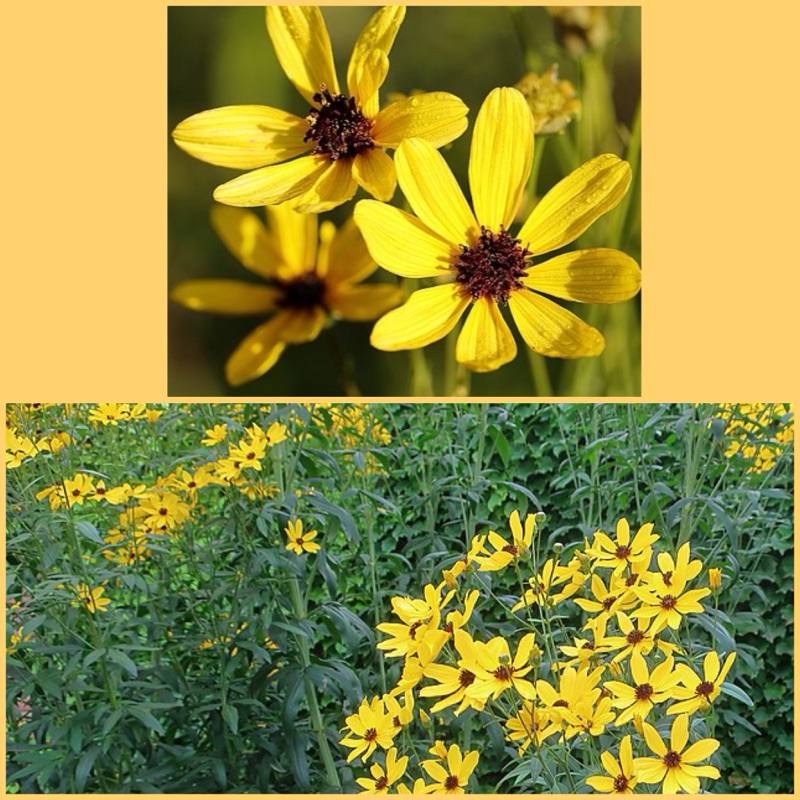 Photo Credits: New Leaf Natives
Common Name: Tall Coreopsis
Scientific Name: Coreopsis tripteris
Other Names: Atlantic Coreopsis or Golden Crown
Genus: Coreopsis
Plant Family: The Aster Family
Flowers: Daisy like flowers that are bright yellow with flat brown centre disks.
Foliage: The leaves are lance shaped, long, and narrow often with a wedge shaped base and a pointed tip. The upper surface is a dark green and the lower surface is a light green.
Height: 3 to 8 feet (60 to 240 cm) tall.
Some sources say that Butterfly Weed can grow up to 10 feet tall.
Width: 2 to 8 feet (60.9 to 243 cm) wide.
Bloom Time: Typically blooms from mid summer to mid fall, which usually occurs from July to September.
Hardiness Zones: 3 through 8
Moisture Requirements: Tall Coreopsis thrives in dry to medium moisture conditions.
Soil Type: sandy, loamy, or clay soils that have good drainage.
Light Requirements: Full Sun ☀️
Host Plant: Yes, Tall Coreopsis is a host plant for some local moth species. It is a host plant for the Wavy - lined Emerald Moth and Common Tan Waved Moth.
Attracts: bumblebees, mason bees, mining bees, carpenter bees, leaf cutter bees, butterflies, pollinating flies, pollinating moth species, and birds.
Wildlife Benefits: The flowers of Tall Coreopsis provide both nectar and pollen for various local pollinators such as bumblebees, bees, butterflies, pollinating flies, and pollinating moth species.
The scent that the plant gives off and the foliage attracts the females of the wavy - lined emerald moth and common tan waved moth.
The foliage of Tall Coreopsis provides a food source for the caterpillars of the wavy - lined emerald moth and common tan waved moth.
The seeds (seed pods) that the Tall Coreopsis provide a food source for local birds, squirrels, and chipmunks.
Tall Coreopsis (Coreopsis tripteris) is a large spindly perennial that is tall in height and has slender stems.
Arranged in a flat topped cluster, the flowers comprise a disk of yellow that deepens to purple red. The flowers have a daisy like appearance, but they look different compared to actual daisies.
The leaves are divided into three lobes with the lower leaves on the stem being quite large, up to 6". Each leaf is dark to light green in colour.
The seed heads on Tall Coreopsis resemble ticks, which gives them their name tickseed.
Northern Bush Honeysuckle (Diervilla lonicera)
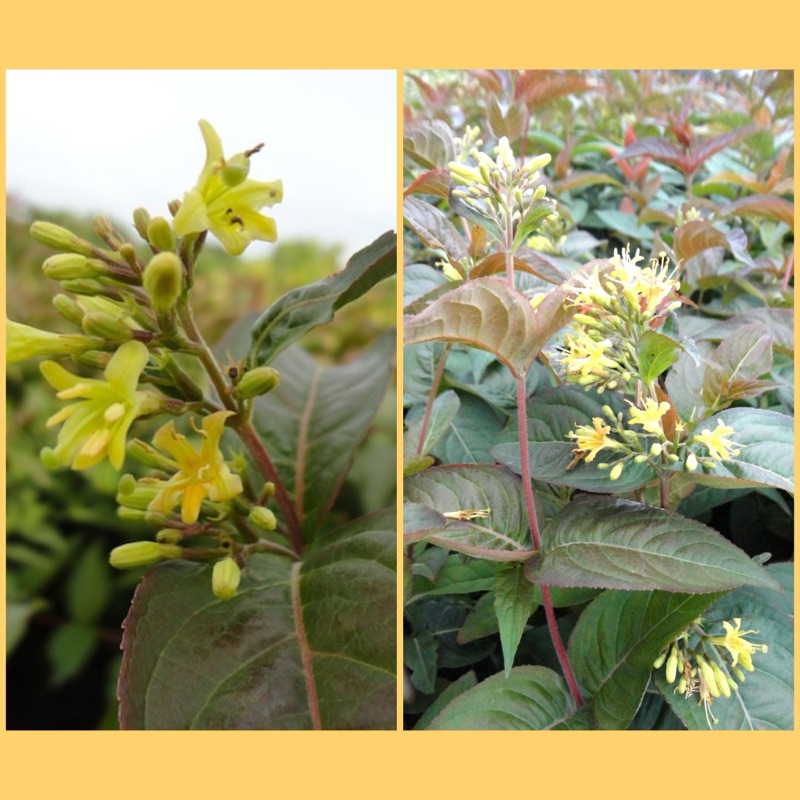 Photo Credits: bambooplants.ca
Common Name: Northern Bush Honeysuckle
Scientific Name: Diervilla lonicera
Other Names: Low bush Honeysuckle, Dwarf bush Honeysuckle, or Yellow - flowered upright Honeysuckle.
Genus: Diervilla
Plant Family: The Honeysuckle Family
Flowers: Small and bell shaped flowers that come in clusters. The colour of the flowers are yellow - green.
Foliage: Simple and lance - shaped leaves that are bronze green a first and then turn to a deep dark green colour.
Height: Typically reaches a height of 2 to 3 feet (24 - 36 inches) tall.
Width:
Typically reaches a width of 2 to 4 feet (24 - 48 inches) wide.
Bloom Time: It blooms primarily in early to mid summer, which usually occurs from June to July.
Hardiness Zones: 3 through 7
Moisture Requirements: Low to average moisture conditions
Northern Bush Honeysuckle thrives in moist conditions.
Soil Type: chalk, clay, loam, or sand soils that are well drained.
Light Requirements: Full Sun ☀️ to Partial Sun ⛅️
Host Plant: Yes, the Northern Bush Honeysuckle is a host plant for two local moth species. It is a host plant for the Laurel Sphinx Moth and Strawberry Clearwing Moth.
Attracts: bumblebees, mason bees, mining bees, leaf cutter bees, hairstreak butterflies, sulphur butterflies, hummingbirds, moths, and birds.
Wildlife Benefits: The flowers on the Northern Bush Honeysuckle provide both nectar and pollen for specific local pollinators such as bumblebees, small sized bees, hairstreak butterflies, sulphur butterflies, hummingbirds, and pollinating moths.
The scent of the plant and the foliage attracts the females of the laurel sphinx moth and strawberry clearwing moth to lay their eggs.
The foliage (leaves) on the Northern Bush Honeysuckle provide a food source for the caterpillars of the laurel sphinx moth and strawberry clearwing moth.
The seeds (seed pods) and berries (fruit) of the Northern Bush Honeysuckle provide a food source for local bird species, squirrels, and chipmunks.
The Northern Bush Honeysuckle (Diervilla lonicera) is a small, deciduous shrub that is mound shaped.
The flowers are funnel-shaped, ½ to ¾ inch long, hairy on the inner surface especially inside the tube, and with 5 narrow, spreading lobes, one of which typically is somewhat larger and has a darker colouring than the rest. In the center are 5 densely hairy stamens with yellow tips and a long, slender, green style with a dome-shaped stigma at the tip.
They are in clusters on the plant where there are 2 to 7 individual flowers per cluster.
The flower colour is intitially pale yellow or even greenish yellow, becoming orange to red with age.
The 5 sepals surrounding the base of the flower are narrowly triangular and about as long as the floral tube. The ovary sits between the stalk and flower.
The leaves are 2 to 5 inches long, 1 to 2¾ inches wide, lance-elliptic to egg-shaped with a rounded or tapered base, a long taper to the pointed tip, and a short stalk. Edges are finely toothed and finely hairy, surfaces are mostly hairless except sometimes along the midvein.
The upper surface is dark green, the lower paler, and leaves may be tinged a bronzy color across the surface or around the edges, especially when young.
The twigs are green or reddish brown, hairless or minutely hairy in lines. Older bark is brown to gray, becoming hairless. Plants sucker from spreading rhizomes, often forming colonies.
The persistent sepals spread out as fruit develops, capping the fruit forming below. Fruit is a 2-valved capsule 1/3 to ½ inch long, green to brown, oblong-elliptic to narrowly egg-shaped. Plants are self-sterile, requiring pollination from a different plant that is not a clone. The capsules persist through winter.
The seeds are less than 5 mm long and are golden brown in colour with a textured surface.
Prickly Rose (Rosa acicularis)
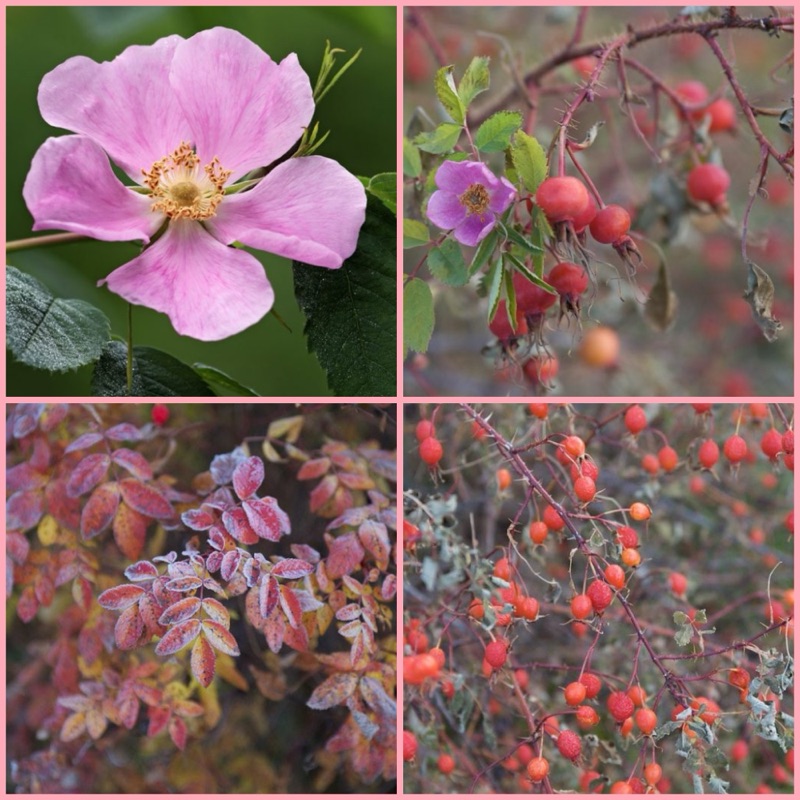 Photo Credits: Malcom Manners, Flickr, Nikolay Kurzenko, and Shuttershock.
Common Name: Prickly Rose
Scientific Name: Rosa acicularis
Other Names: Wild Rose, Prickly Wild Rose, Bristly Rose, or Arctic Rose.
Genus: Rosa
Plant Family: The Rose Family
Flowers: The flowers are showy and fragrant that have five rounded petals with a yellow eye in the middle. The colour of the flowers range from light to hot pink.
Foliage: The leaves are bright green in colour and deciduous.
Height: Typically reaches a height of 3 to 5 feet (36 to 60 inches) tall.
Width: Typically reaches a width of 2 to 4 feet (24 to 48 inches) wide.
Bloom Time: Typically blooms from late spring to early summer, which usually occurs from June to July.
Hardiness Zones: The hardiness zones for Prickly Rose varies depending on where you are in Canada. For Albert, Manitoba, and other northern parts the hardiness zones are 2 through 4. For the southern regions which are Ontario and British Columbia the hardiness zones are 5 through 7.
Moisture Requirements: dry, moist, and wet moisture conditions.
Soil Type: sand, loam, or clay soils that consist of organic matter which has a bit of mulch in them. The soil needs to well drained, and shouldn’t be overwatered.
Light Requirements: Full Sun ☀️ to Partial Shade ⛅️
Host Plant: Yes, the Prickly Rose is a host plant for a local butterfly species. It is a host plant for the Northern Pearly Eye Butterfly.
Attracts: bumblebees, carpenter bees, leaf cutter bees, mason bees, mining bees, cuckoo bees, small butterflies, and birds.
Wildlife Benefits: The flowers on Prickly Rose provide both nectar and pollen for some local pollinators such as bumblebees, small bees, and small butterflies.
The scent of the plant and the foliage attracts the females of the Northern Pearly Eye Butterfly to lay their eggs on the foliage.
The foliage (leaves) on a Prickly Rose provide a food source for the caterpillars of the Northern Pearly Eye Butterfly.
The berries (fruit) and seeds (seed pods) provide a food source for local wildlife including songbirds, upland game birds, rabbits, beavers, black bears, and grizzly bears.
Prickly Rose (Rosa acicularis) is a deciduous shrub that is distinguished by its densely prickly stems and pink 5 petaled flowers.
It has stems that are densely covered with straight, slender, grey prickles, distinguishing it from some other rose species like Woods' rose, which may only have prickles at the base of the stems.
The leaves are alternate, compound, and usually have 5 leaflets, which are ovate to elliptic and have toothed margins.
The flowers are typically pink (occasionally white), solitary or in small clusters, and have 5 petals.
After flowering, the rose hips are pear-shaped to ovoid and red, and are a valuable food source for wildlife.
Scarlet Beebalm (Monarda didyma)
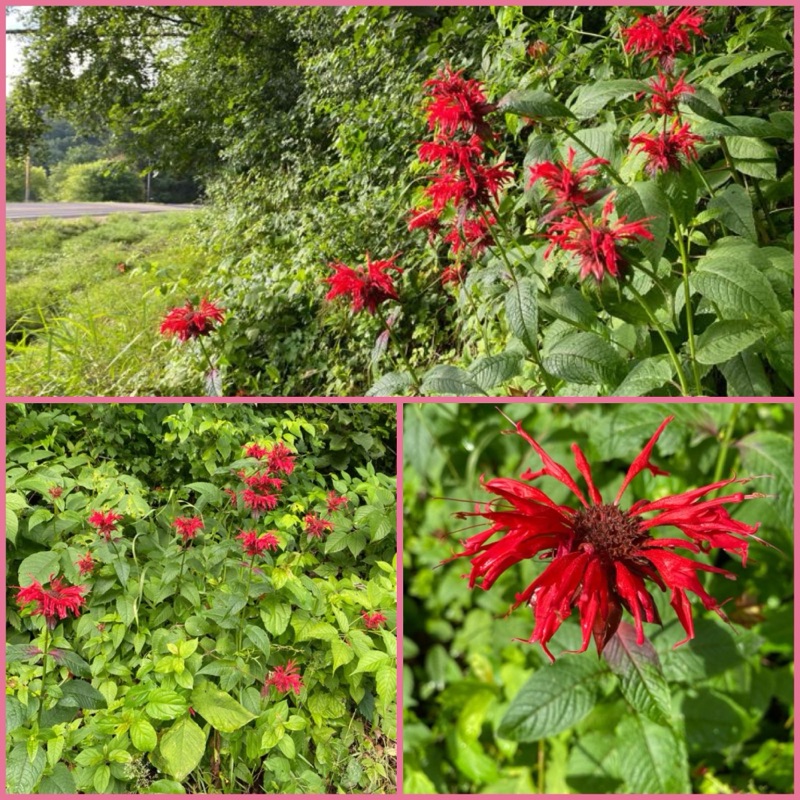 Photo Credits: PRAIRIE MOON NURSERY
Common Name: Scarlet Beebalm
Scientific Name: Monarda didyma
Other Names: Crimson Beebalm, Scarlet Monarda, Eau - de - Cologne plant, Oswego Tea, or Bergamot.
Genus: Monarda
Plant Family: Mint Family/ Deadnettle Family/ Sage Family
Flowers: Vibrant scarlet - red flowers in dense terminal clusters.
Foliage: The leaves are ovate to ovate - lanceolate shaped that are medium to deep green in colour with toothed margins.
Height: Typically reaches a height of 2 to 4 feet (24 to 48 inches) tall.
Width: Typically reaches a width of 2 to 3 feet (24 to 36 inches) wide.
Bloom Time: Typically blooms from summer to fall with a bloom period lasting approximately 6 to 8 weeks.
Hardiness Zones: 3 through 9
Moisture Requirements: Scarlet Beebalm prefers moist to wet moisture conditions. While it can tolerate some dry periods, it thrives with adequate moisture, especially during its flowering season.
Soil Type: chalk, clay, loam, or sand soils that have a little bit of acid or alkaline in them. The soil needs to be well drained, so the plant is not water logged.
Light Requirements: Full Sun ☀️ to Partial Sun ⛅️
Host Plant: Yes, Scarlet Beebalm is a host plant for a couple of local moth species. It is a host plant for the Hermit Sphinx Moth, Orange Mint Moth, and Raspberry Pyrausta Moth.
Attracts: bumblebees, carpenter bees, mason bees, mining bees, cuckoo bees, monarch butterflies, swallowtail butterflies, hummingbirds, hummingbird moths, fritillary butterflies, moths, and birds.
Wildlife Benefits: The flowers on a Scarlet Beebalm provide both nectar and pollen for some local pollinators such as bumblebees, bees, hummingbird moths, hummingbirds, a variety of butterflies, and pollinating flies.
The scent and the leaves attract the females of the Hermit Sphinx Moth, Orange Mint Moth, and Raspberry Pyrausta Moth to lay their eggs on the foliage.
The foliage (leaves) on a Scarlet Beebalm provides a food source for the caterpillars of the hermit sphinx moth, orange mint moth, and raspberry pyrausta moth.
The seeds (seed pods) of Scarlet Beebalm provide a food source for some local wildlife including songbirds, game birds, and small mammals.
Scarlet Beebalm (Monarda didyma) is a vibrant perennial flowering plant that is an herb.
This plant is recognized by its bright red tubular flowers clustered in terminal heads atop square stems.
The flowers are long, and narrow and two lipped flowers with a narrow upper lip and a wider lower lip.
They are scarlet red in colour and are tubular flowers in dense head like clusters. The flower heads are terminal and rounded often with reddish bracts.
The stems on a Scarlet Beebalm are square and hairy that are branched. There are several stems on the plant that consist of several flowers.
The leaves are opposite, ovate - lanceolate in shape and are dark green in colour and are coarsely toothed.
Smooth Rose (Rosa blanda)
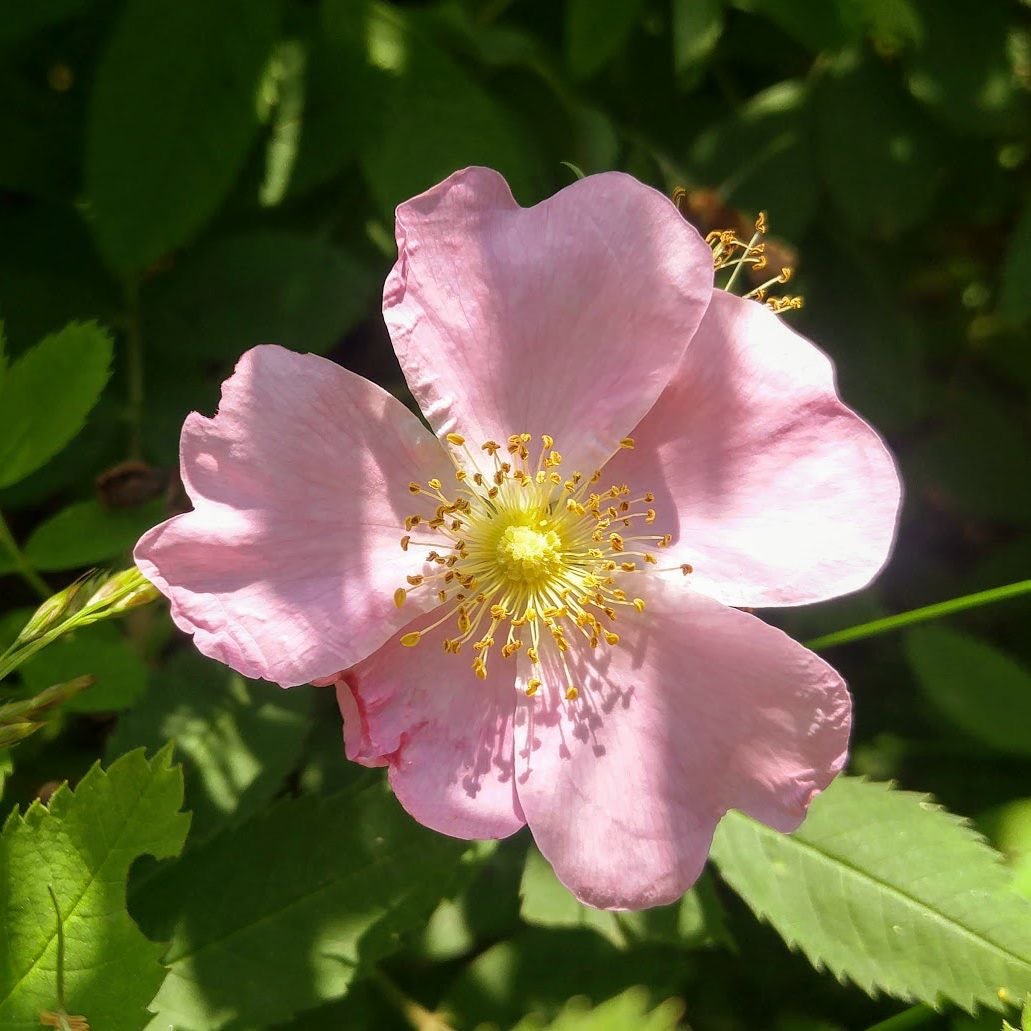 Photo Credits: Ontario Native Plants
Common Name: Smooth Rose
Scientific Name: Rosa Blanca
Other Names: Meadow Rose, Prairie Rose, Wild Smooth Rose, Early Wild Rose, Labrador Rose, or Shrub Rose.
Genus: Rosa
Plant Family: The Rose Family
Flowers: Singled petaled flowers that are fragrant and usually pale pink to white in colour. They have a showy yellow centre (middle).
Foliage: The leaves are compound leaves with 5 to 9 elliptical leaflets. They are deciduous and dark green to light green in colour.
Height: Typically reaches a height of 2 to 5 feet (24 - 60 inches) tall.
Width: Typically reaches a width of 2 to 4 feet (24 - 48 inches) wide.
Bloom Time: June to July
Hardiness Zones: 3 through 7
Moisture Requirements: Average to moist conditions
Soil Type: chalk, clay, loam, and sand soils that are well drained.
Light Requirements: Full Sun
Host Plant: Yes, Smooth Rose is a host plant for some local moth species. It is a host plant for the Apple Sphinx Moth, Blinded Sphinx Moth, lo Moth, and Cecropia Moth.
Attracts: bumblebees, carpenter bees, leaf cutter bees, mason bees, mining bees, pollinating moths, small butterflies, and birds.
Wildlife Benefits: The flowers of the Smooth Rose provide both nectar and pollen for local pollinators such as bees, pollinating moths, and small butterflies.
The scent of the plant and the foliage attracts the females of the apple sphinx moth, blinded sphinx moth, lol moth, and cecropia moth to deposit their eggs on the foliage.
The leaves (foliage) provide a food source for the caterpillars of the apple sphinx moth, blinded sphinx moth, lo moth, and cecropia moth.
The fruit (berries) provide a food source for a variety of wildlife including songbirds, game birds, and small mammals.
The foliage of Smooth Rose is also used by the female leaf cutter bees to wrap their eggs or larvae in.
The Smooth Rose (Rosa blanda) is a thornless or near thornless species of rose that is a native rose to North America including Canada and The United States.
It only has a few thorns located near the base of the plant. Smooth Rose doesn’t have as many thorns as most species of rose have.
The flowers are pale pink in colour and are singular with five saucer like petals, and a yellow centre in the middle. They are very fragrant, which makes them a pollinator magnet.
The leaves on Smooth Rose are pinnately compound, meaning they are made up of multiple leaflets attached to a central stem.
These leaflets are typically elliptic to ovate in shape, with serrated edges (though sometimes only on the tip half). The upper surface is generally dark green and sparsely hairy, while the underside is light green and can be more hairy.
New stems and branches are typically smooth and green. Lower stems, which are older and more woody, may have a different appearance.
Young stems are green. As the plant ages, stems can turn reddish-brown or purplish-grey.
The stems on Smooth Rose are smooth in texture and appearance, and there are no thorns that are present. Some may have little hairs on them.
The fruit is bright red rose hips (berries) that develop in summer, and persist through the winter providing a food source for local wildlife.
Climbing Prairie Rose (Rosa setigera)
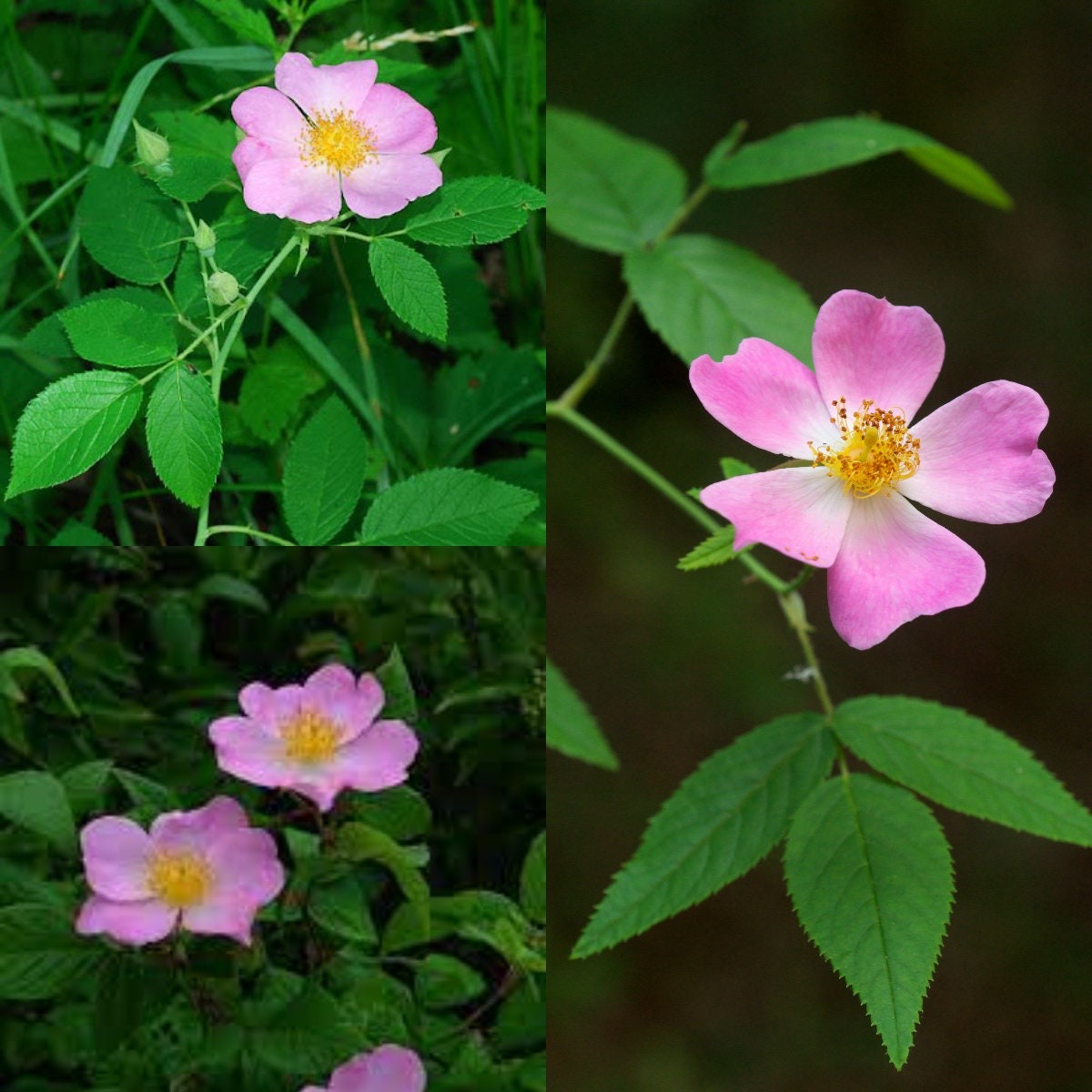 Photo Credits: Majestygarden /Etsy
Common Name: Climbing Prairie Rose
Scientific Name: Rosa setigera
Other Names: Climbing Rose or Climbing Wild Rose
Genus: Rosa
Plant Family: The Rose Family
Flowers: The flowers are large and showy with five petals with a yellow centre. The colours of the flowers can vary from different shades of pink.
Foliage: The leaves are alternate and compound with 3 to 5 leaflets per leaf. The overall colour of the foliage (leaves) is a medium green.
Height: Typically reaches a height of 6 to 15 feet (72 to 180 inches) tall.
Width: Typically reaches a width of 8 to 10 feet (96 - 120 inches) wide.
Bloom Time: Typically blooms from late June through the month of July.
Hardiness Zones: 4 through 8
Moisture Requirements: dry, medium, moist
Soil Type: clay, loam, or sand that have good drainage.
Light Requirements: Full Sun ☀️ to Partial Sun ⛅️
Host Plant: Yes, Climbing Prairie Rose is a host plant for some local moth species. It is a host plant for the Apple Sphinx Moth, Blinded Sphinx Moth, lo Moth, Cecropia Moth, and other Sphinx Moths.
Attracts: bumblebees, leaf cutter bees, carpenter bees, mason bees, mining bees, cuckoo bees, hairstreak butterflies, sulphur butterflies, gossamer winged butterflies, beetles, lady beetles, pollinating moths, birds, and small mammals.
Wildlife Benefits: The flowers of the Climbing Prairie Rose provide both nectar and pollen for various local pollinators including bees, butterflies, beetles, pollinating moths, and lady beetles.
The scent of the plant and the foliage attracts the females of the apple sphinx moth, blinded sphinx moth, lo moth, cecropia moth, and other sphinx moth species to lay their eggs on the leaves.
The foliage of the Climbing Prairie Rose provides a food source for the caterpillars of the apple sphinx moth, blinded sphinx moth, lo moth, cecropia moth, and other sphinx moth species.
The berries (fruit) of the Climbing Prairie Rose provides a food source for a wide range of wildlife including songbirds, some insects, chipmunks, and squirrels.
The foliage of the plant is used by the female leaf cutter bees as nesting material for their young, and to roll up their eggs or larvae in the pieces of leaves.
The Climbing Prairie Rose (Rosa setigera) is a vine like shrub, that is native to North America including Canada and The United States.
The flowers are singular with five petals that are pink in colour, but fades to white in colour with a yellow centre (middle).
The leaves are compound leaves with 3-5 leaflets, which are oval-shaped and serrated.
The stems are long arching stems that can climb by using their prickles (thorns).
The rose hips (fruit) are bright red or orange in colour that are berry like in appearance. Inside the hips are several hard, light brown seeds. The fruit (rose hips) is about 1/2 inch in diameter. They are a key food source for wildlife including birds and small mammals.
Anise Hyssop (Agastache foeniculum)
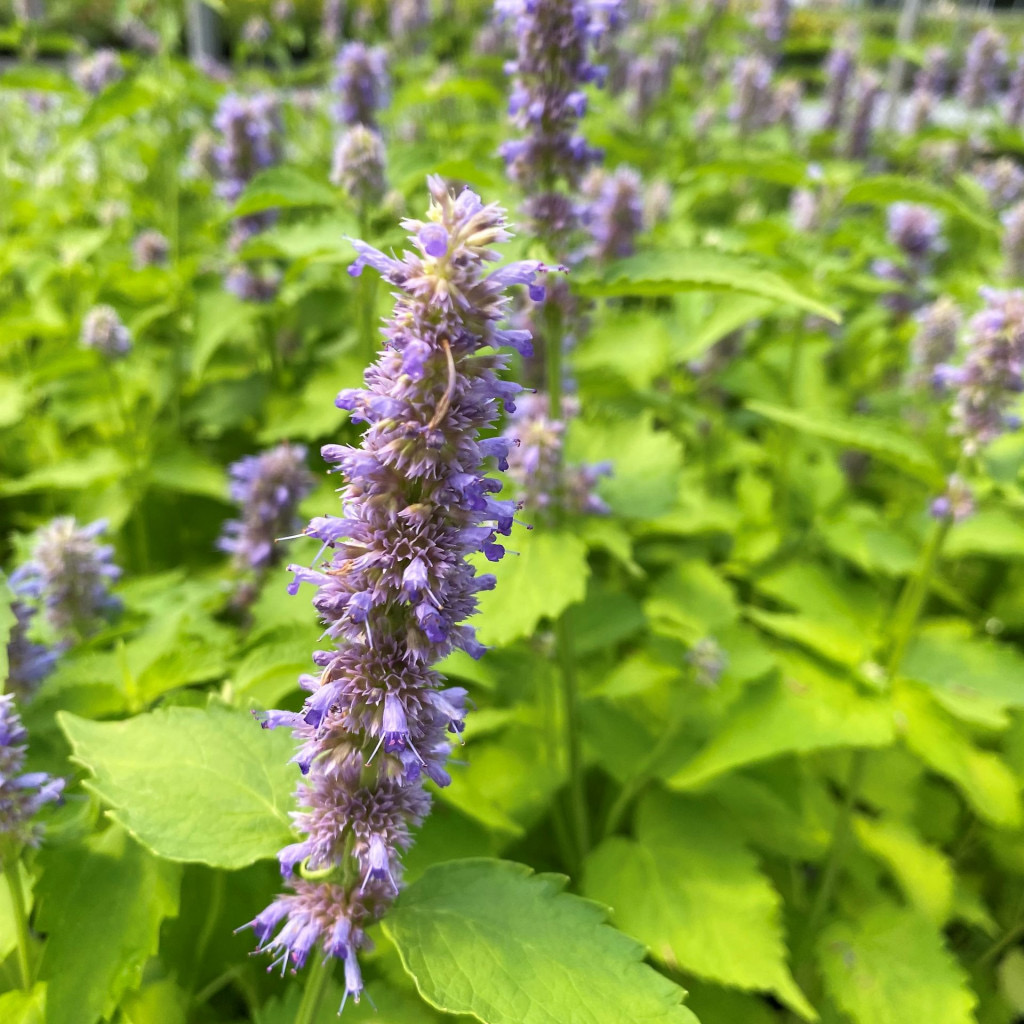 Photo Credits: Cavano’s Perennials
Common Name: Anise Hyssop
Scientific Name: Agastache foeniculum
Other Names: Giant Hyssop, Blue Giant Hyssop, Licorice Mint, or Lavender Giant Hyssop.
Genus: Agastache
Plant Family: Mint Family /Deadnettle Family / Sage Family
Flowers: Small flowers that are tubular, and clustered densely on the upper stems. The flowers range from different colours including different shades of purple.
Foliage: The foliage (leaves) is ovate - triangular in shape and are toothed. The colour is dull green with a white tint underneath.
Height: Typically reaches a height of 2 to 4 feet (60 - 122 cm) tall.
Width: Typically reached a width of 1 to 3 feet (30 - 90 cm) wide.
Bloom Time: Typically blooms from mid summer to early fall, which is specifically from June to September.
Hardiness Zones: 3 through 9
Moisture Requirements: dry to moist conditions
Soil Type: sandy or loamy soil that has good drainage.
Light Requirements: Full Sun ☀️
Host Plant: Yes, Anise Hyssop is a host plant for a local moth species called the Red Radcliff Moth.
Attracts: bumblebees, small specialized bees, butterflies, and hummingbirds.
Wildlife Benefits:
The flowers on Anise Hyssop provide both nectar and pollen for some local pollinators such as bumblebees, small specialized bees, butterflies, and hummingbirds.
The scent of the plant and the foliage attracts the females of the Red Radcliff Moth to deposit their eggs on the leaves.
The foliage (leaves) on Anise Hyssop provide a food source for the caterpillars of the Red Radcliff Moth.
The Anise Hyssop (Agastache foeniculum) is a perennial wildflower that is identified by its upright, clump forming habit, square stems, and scented foliage.
The flowers are small but long in appearance that tubular in shape which are lavender to purple in colour. They are located on the plants terminal spikes, which are located at the top of each stem.
The leaves are oval, toothed, and dull green, with an anise scent when crushed.
The stems are four angled and typically light green in colour ranging in height from 2 to 4 feet. They are generally smooth or slightly hairy (glabrous to finely pubescent). Each of the stems are square shaped.
Lance leaf Coreopsis (Coreopsis lanceolata)
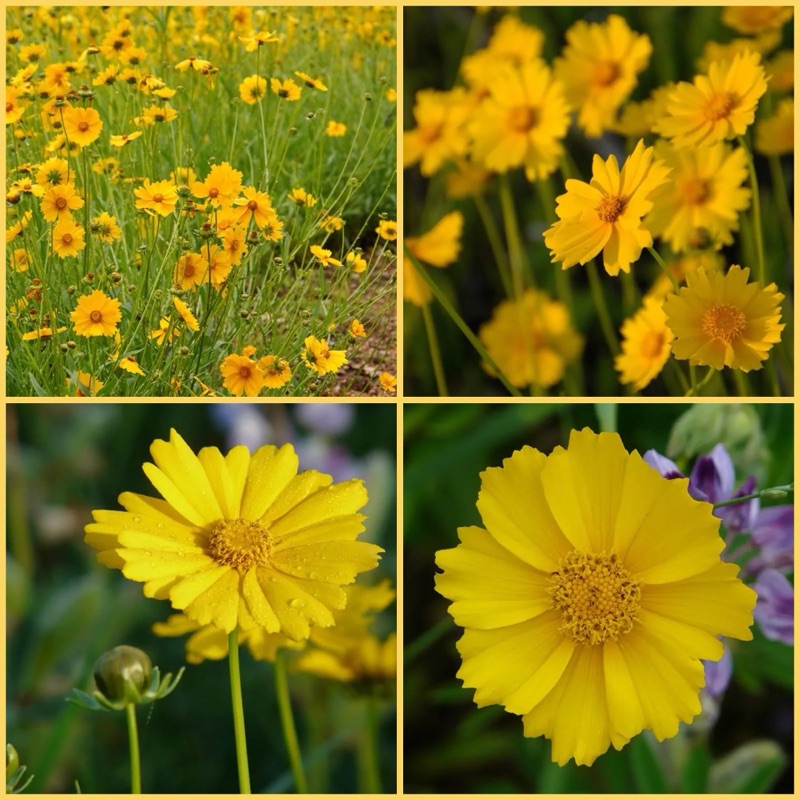 Photo Credits: Prairie Nursery
Common Name: Lance leaf Coreopsis
Scientific Name: Coreopsis lanceolata
Other Names: Lance - leaf tickseed, Sand Coreopsis, or Longstalk Coreopsis.
Genus: Coreopsis
Plant Family: The Aster Family
Flowers: Bright yellow daisy like flowers
Foliage: Narrow leaved lance shaped leaves that are bright green in colour.
Height: Typically reaches a height of 1 - 2 feet (30 - 60 cm) tall.
Width: Typically reaches a width of 0.5 - 1 foot (15 - 30 cm) wide.
Bloom Time: Typically blooms from late spring (early summer) to mid summer, which usually occurs from June to August.
Hardiness Zones: 4 through 9
Moisture Requirements: medium to wet
Soil Type: sandy or gravelly soils that have good drainage.
Light Requirements: Full Sun ☀️, Part Shade ⛅️, Shade ☁️
Host Plant: Yes, Lance - leaf Coreopsis is a host plant for a local moth species called the Wavy - lined Emerald Moth.
Attracts: bumblebees, mason bees, mining bees, sweat bees, leaf cutter bees, butterflies, pollinating moths, pollinating flies, beetles, lady beetles, birds, and small mammals.
Wildlife Benefits: The flowers on the Lance - leaf Coreopsis provide both nectar and pollen for local pollinators including bumblebees, bees, pollinating flies, pollinating moths, beetles, lady beetles, and butterflies.
The scent of the plant as well as the foliage attracts the females of the Wavy - lined Emerald Moth to lay their eggs on the leaves.
The foliage (leaves) of the Lance - leaf Coreopsis provides a food source for the caterpillars of the wavy - lined emerald moth.
The seeds that the plant produces after the flowers have bloomed provided a food source for a variety of wildlife including birds, and small animals.
The Lance leaf Coreopsis (Coreopsis lanceolata) is a perennial wildflower that is native to North America including Canada and The United States.
It is characterized and identified by its narrow, lance shaped leaves, and bright yellow daisy like flowers.
The flowers are bright yellow, daisy-like flowers with 8 toothed rays and a dark yellow center. They are solitary, meaning they are singular in each of the stems.
The leaves are long, narrow, lance-shaped (linear or lance linear) leaves, often with a smooth, entire margin. Some leaves may be deeply divided and resemble feathers.
Prairie Coneflower (Ratibida columnifera)
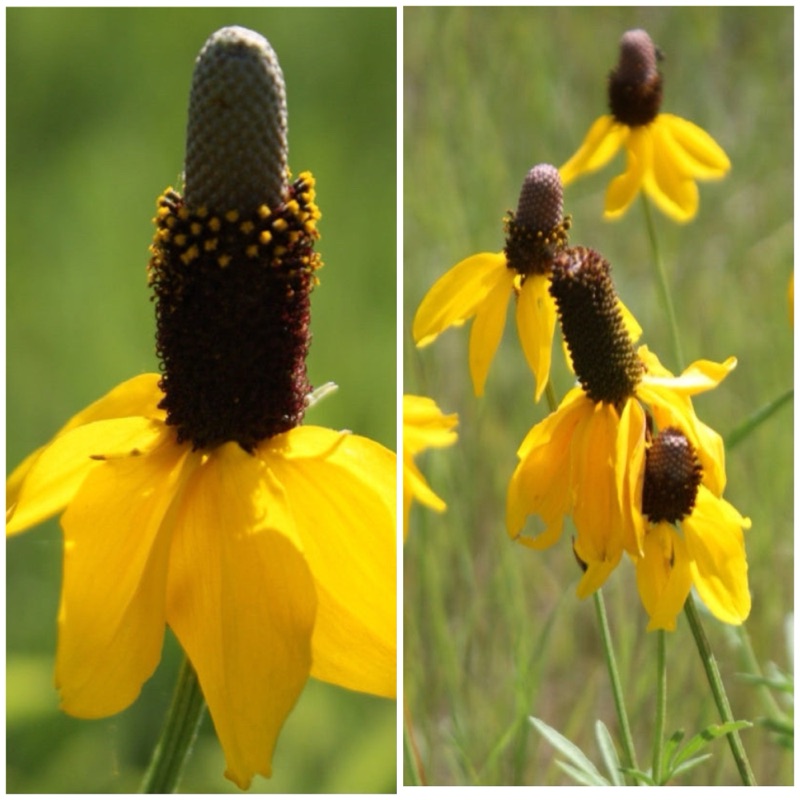 Photo Credits: growwildflowers.ca
Common Name: Prairie Coneflower
Scientific Name: Ratibida columnifera
Other Names: Upright Prairie Coneflower, Long - headed Coneflower, or Mexican hat.
Genus: Ratibida
Plant Family: The Aster Family
Flowers: The flowers are long upright cone shaped central disk surrounded by 3-7 drooping ray florets, resembling a sombrero with a drooping brim.
Foliage: The leaves (foliage) are feathery, and are made up of multiple leaflets along a central stalk. These leaves are typically alternate, with 5 to 11 lobes, and can be up to 6 inches long.
Height: Typically reaches a height of 1 to 3 feet (30 - 90 cm) tall.
Width: Typically reaches a width of 1 - 2 feet (30 - 60 cm) wide.
Bloom Time: Typically blooms from June to September, which is a longer bloom period compared to the average flower.
Hardiness Zones: 3 through 8
Moisture Requirements: low to moderate moisture
Soil Type: clay, clay loam, medium loam, sandy loam, or sandy that are calcareous or limestone based. The soil needs to be well drained, which means it needs to have good drainage.
Light Requirements: Full Sun ☀️
Host Plant: Yes, Prairie Coneflower is a host plant for a local butterfly species. It is a host plant for the Silvery Checkerspot Butterfly.
Attracts: bumblebees, sweat bees, mason bees, mining bees, skipper butterflies, sulphur butterflies, monarch butterflies, swallowtail butterflies, hummingbirds, hummingbird moths, beetles and pollinating flies.
Wildlife Benefits: The flowers of the Prairie Coneflower provide both nectar and pollen for local pollinators such as bees, butterflies, hummingbirds, pollinating flies, and hummingbird moths.
The scent and the foliage of the plant attracts the females of the silvery checkerspot butterfly to lay their eggs on the leaves.
The leaves on the Prairie Coneflower provide a food source for the caterpillars of the silvery checkerspot butterfly.
The seeds that the plant produces after the flowering has been completed provide a food source for local wildlife including songbirds, game birds, ground feeding birds, seed loving birds, and small mammals.
The Prairie Coneflower ( Ratibida columnifera) is a native, and a late season herbaceous perennial in The Aster Family.
The central cone can be up to 1.5 inches long and is covered with tiny purplish or brown disk florets that bloom from the bottom up. The yellow ray flowers droop and are notched at the tips.
The leaves are alternate, pinnately lobed, and the lobes are slender.
The stems are erect and sometimes branching, growing to a height of 12 to 24 inches (30 to 60 cm) tall.
The fruits are small, oblong achenes, and mature seedheads have a pleasant anise or licorice scent when crushed.
Cut leaf Coneflower (Rudbeckia laciniata)
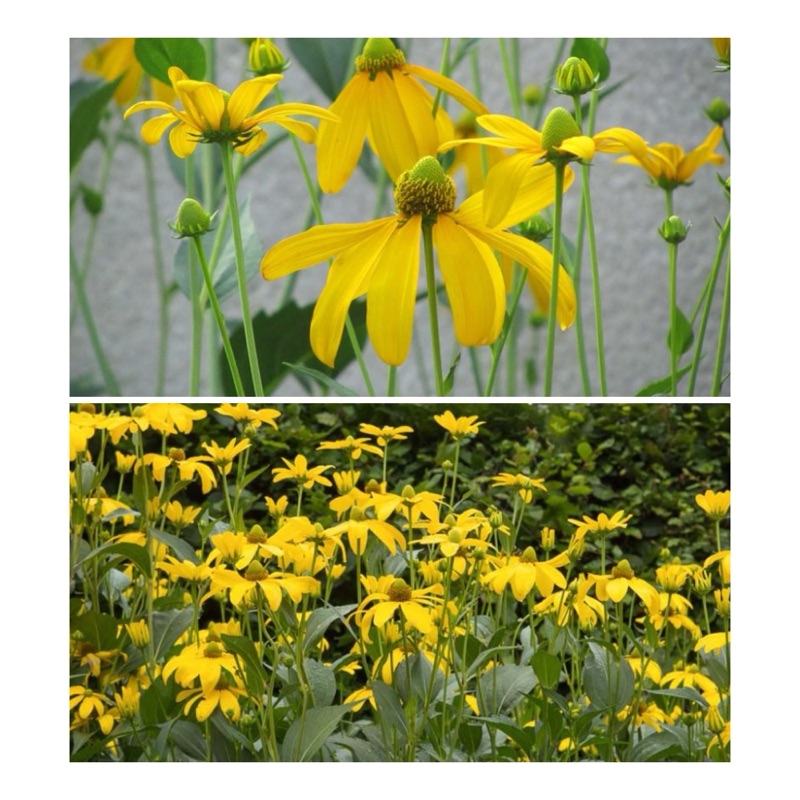 Photo Credits: Katja Schulz (Flickr) and Peter Turner Photography (Shutterstock).
Common Name: Cut leaf Coneflower
Scientific Name: Rudbeckia laciniata
Other Names: Green - headed Coneflower, Greenhead Coneflower, Wild Goldenglow, or Sochan.
Genus: Rudbeckia
Plant Family: The Aster Family
Flowers: The flowers are large in size and are daisy like with a central cone of tubular flowers surrounded by drooping ray florets.
Foliage: Large deeply lobed leaves that are bright green in colour, and can grow up to 10 inches long.
Height: Typically reaches a height of 3 to 10 feet (36 - 120 inches) tall.
Width: Typically reaches a width of 2 to 4 feet (24 - 48 inches) wide.
Bloom Time: Typically blooms from mid - summer to mid fall, which normally occurs from July to September.
Hardiness Zones: 3 through 8
Moisture Requirements: moist conditions but can also thrive in drought.
Soil Type: clay or loam soils that are well drained.
Light Requirements: Full Sun ☀️ to Partial Sun ⛅️
Host Plant: Yes, Cut leaf Coneflower is a host plant for a local butterfly species as well as a local moth species. It is a host plant for the Silvery Checkerspot Butterfly and the Wavy - lined Emerald Moth.
Attracts: bumblebees, mason bees, leaf cutter bees, mining bees, cuckoo bees, butterflies, pollinating flies, beetles, moths, lady beetles, fireflies, hummingbirds, hummingbird moths, birds, and small animals.
Wildlife Benefits: The flowers provide both nectar and pollen for some local pollinators such as bumblebees, bees, butterflies, pollinating flies, beetles, pollinating moths, hummingbirds, and hummingbird moths.
The scent of the plant as well as the foliage attracts the females of the silvery checkerspot butterfly, and wavy - lined emerald moth to lay their eggs on the leaves.
The foliage provides a food source for the caterpillars of the silvery checkerspot butterfly and the wavy - lined emerald moth.
The seed heads that the Cut leaf Coneflower produces provides a food source for a wide range of wildlife including songbirds, seed loving birds, squirrels, chipmunks, and some insects.
The Cut leaf Coneflower (Rudbeckia laciniata) is a tall herbaceous perennial wildflower that is native to North America including Canada and The United States. This species of coneflower is a member of The Aster Family.
The flowers are large, daisy-like flowers with drooping yellow petals and a prominent green, conical center that turns brown as it matures.
The stems are robust, somewhat gangly, and can grow up to 3-10 feet tall.
The leaves are basal leaves that are large, up to 10 inches long, deeply lobed, and irregularly toothed. Leaves become smaller and less lobed higher up the stem.
False Sunflower (Heliopsis helianthoides)
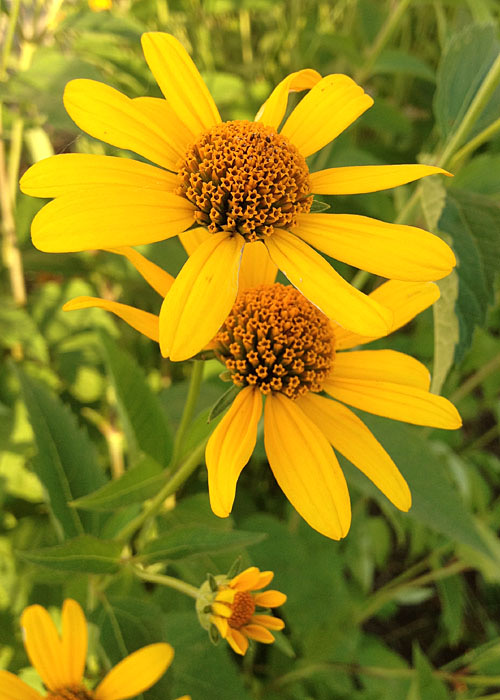 Photo Credits: Wildflower Farm
Common Name: False Sunflower
Scientific Name: Heliopsis helianthoides
Other Names: Oxeye Sunflower, Smooth Oxeye, Oxeye Daisy, or Early Sunflower.
Genus: Heliopsis
Plant Family: The Aster Family
Flowers: Bright yellow daisy like flowers that are 2 - 3 inches across, and are borne on sturdy branching stems.
Foliage: The leaves are coarse and serrated. The colour of the leaves on a False Sunflower is medium green.
Height: Typically reaches a height of 3 - 6 feet (36 - 72 inches) tall.
Width: Typically reaches a width of 2 - 4 feet (24 - 48 inches) wide.
Bloom Time: Typically blooms from mid summer to late summer, and can continue blooming into early fall.
Hardiness Zones: 3 through 9
Moisture Requirements: average to moist conditions that provide good drainage.
Soil Type: False Sunflowers can thrive in a variety of soil types including dry, poor, rocky, sandy, or clay soils with a neutral soil ph that has proper drainage.
Light Requirements:
Full Sun ☀️
Host Plant: Yes, False Sunflower is a host plant to two local butterfly species and a moth species. It is a host plant for the Painted Lady Butterfly, Silvery Checkerspot Butterfly, and Sunflower Moth.
False Sunflower is also a host plant for some of our specialized bee species including the Rugose Spurred - Miner Bee, and Long - horned Bees.
Attracts: bumblebees, long horned bees, sweat bees, mining bees, butterflies, moths, beetles, lady beetles, fireflies, other beneficial insects, birds, and small animals.
Wildlife Benefits: The flowers on a False Sunflower provide both nectar and pollen for local pollinators including bumblebees, bees, butterflies, fireflies, pollinating moths, lady beetles, and beetles.
The scent of the plant as well as the foliage attracts the females of the painted lady butterfly, silvery checkerspot butterfly, and sunflower moth to lay their eggs on the foliage.
The leaves (foliage) on False Sunflower provides a food source for the caterpillars of the painted lady butterfly, silvery checkerspot butterfly, and sunflower moth.
The seeds that the False Sunflower produces after the flowering is done provide a food source for a variety of wildlife including songbirds, seed loving birds, squirrels, chipmunks, and other small animals.
The False Sunflower (Heliopsis helianthoides) is a perennial wildflower that is native to North America including Canada and The United States, and this sunflower species is a member in The Aster Family.
The flowers are small, daisy-like flowers with yellow-orange ray petals and a brownish-yellow center disk.
Both the ray and disk florets are fertile, meaning they can produce seeds.
The leaves are opposite, toothed leaves that are ovate, or lance-shaped. They form upright clumps with stiff, branched stems.
The ray petals persist on the flower heads, even after they dry, whereas the rays of true sunflowers wither and fall away.
Woodland Sunflower (Helianthus divaricatus)
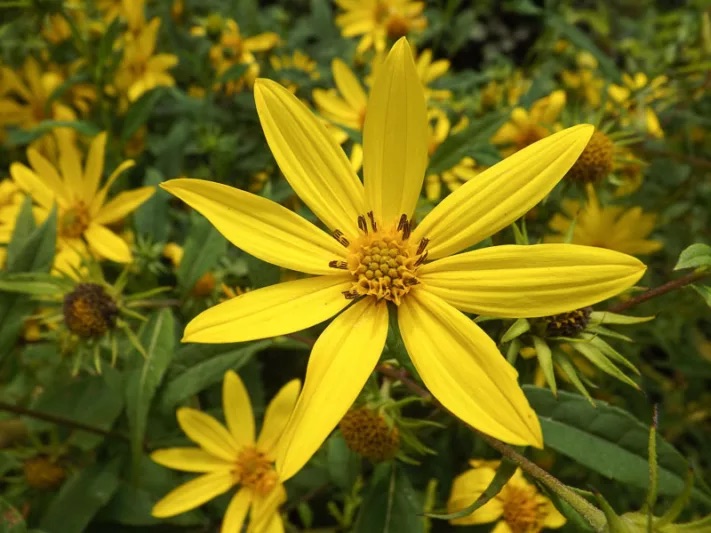 Photo Credits: Dan4Earth / Shutterstock
Common Name: Woodland Sunflower
Scientific Name: Helianthus divaricatus
Other Names: Rough Sunflower or Rough Woodland Sunflower
Genus: Helianthus
Plant Family: The Aster Family
Flowers: The flowers are bright yellow with 8 - 15 ray florets or petals that are surrounding a darker yellow centre.
Foliage: The leaves are opposite, lance-shaped to ovate leaves that are green and have rounded bases and pointed tips. They can have smooth or slightly toothed margins and are typically 2.5 to 7 inches long.
Height: Typically reaches a height of 2 - 6 feet (60 - 180 cm) tall.
Width: Typically reaches a width of 1 to 3 feet (30 - 90 cm) wide.
Bloom Time: It typically blooms from mid summer to mid fall, which is usually between July and September.
Hardiness Zones: 3 through 8
Moisture Requirements: moderate moisture that is consistent moist but has good drainage all the time.
Soil Type: loam or sandy soils that has a soil ph of acid, alkaline, or neutral that is well drained.
Light Requirements: Partial Sun ⛅️
Host Plant: Yes, Woodland Sunflower is a host plant for two local butterflies and a moth species.
It is a host plant for the painted lady butterfly, silvery checkerspot butterfly, and sunflower moth.
Attracts: bumblebees, long horned bees, sweat bees, mason bees, mining bees, skipper butterflies, gossamer winged butterflies, monarch butterflies, swallowtail butterflies, pollinating moths, pollinating flies, fireflies, beetles, birds, and small mammals.
Wildlife Benefits: The flowers on a Woodland Sunflower provide both nectar and pollen for a variety of local pollinators including butterflies, pollinating moths, pollinating moths, fireflies, bees, and beetles.
The scent of the plant and its foliage attracts the females of the painted lady butterfly, silvery checkerspot butterfly, and sunflower moth to lay their eggs on the foliage.
The foliage (leaves) on a Woodland Sunflower provides a food source for the caterpillars of the painted lady butterfly, silvery checkerspot butterfly, and sunflower moth.
The seeds that the Woodland Sunflower produces once the flowering is finished provides a food source for a wide variety of wildlife such as songbirds, seed loving birds, ground feeding birds, squirrels, and chipmunks,
The Woodland Sunflower (Helianthus divaricatus) is a perennial wildflower that is native to North America including Canada and The United States, and it is a member of The Aster Family.
It’s flowers has 8 to 15 rays, and each one is 1.5 to 3 cm long with bright yellow petals. They are surrounded by an orange or yellowish brown central disk which is in the middle.
The leaves are lanceolate to oval in shape that are 8 cm wide with toothed margins. The colour of the leaves is usually medium green to light green.
The stalks of the plant are long and thin. They vary in colour depending on age and where the this flower got planted. The colours can be dark green, greenish red, or reddish brown.
Pale leaf Sunflower (Helianthus strumosus)
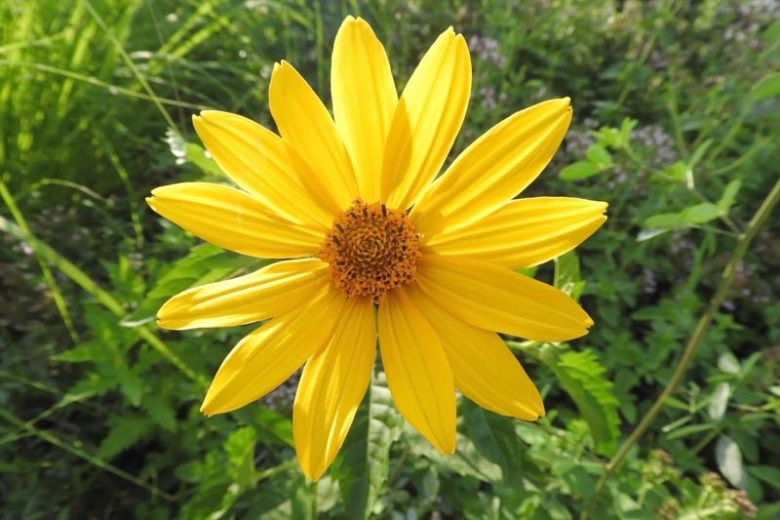 Photo Credits: Jovan Milosavijevic / Shutterstock
Common Name: Pale - leaf Sunflower
Scientific Name: Helianthus strumosus
Other Names: Pale leaf Woodland Sunflower or Woodland Sunflower
Genus: Helianthus
Plant Family: The Aster Family
Flowers: The flowers are large and daisy like in appearance with a dark centre in the middle.
Foliage: The leaves are narrow, oval leaves that are often whitish on the underside due to a dense covering of white hairs.
The leaves are thick and can have a slightly rough texture, with three noticeable veins radiating from the base. They are arranged opposite each other on the stem, or alternately near the top.
Height: Typically reaches a height of 3 to 7 feet (36 - 84 cm) tall.
Width: Typically reaches a width of 2 to 3 feet (24 - 36 inches) wide.
Bloom Time: Typically blooms from late summer to early fall, which usually happens from July to October.
Hardiness Zones: 3 through 9
Moisture Requirements: medium - wet, medium, medium - dry
Soil Type: chalk, clay, loam, or sand soils that have a soil ph of acid, alkaline, or neutral. The soil needs to have good drainage that drains the excess water properly.
Light Requirements: Full Sun ☀️ to Partial Sun ⛅️
Host Plant: Yes, Pale leaf Sunflower is a host plant for two local butterfly species and a moth species.
It is a host plant for the silvery checkerspot butterfly, painted lady butterfly, and giant leopard moth.
Attracts: bumblebees, sweat bees, mason bees, mining bees, long horned bees, butterflies, pollinating flies, pollinating moths, beetles, birds, and small mammals.
Wildlife Benefits: The flowers of the Pale leaf Sunflower provide both nectar and pollen for a variety of local pollinators including bumblebees, specialized bees, butterflies, pollinating flies, pollinating moths, and beetles.
The scent of the plant and its foliage attracts the females of the painted lady butterfly, silvery checkerspot butterfly, and giant leopard moth to lay their eggs on the leaves.
The foliage (leaves) of the Pale leaf Sunflower provide a food source for the caterpillars of the painted lady butterfly, silvery checkerspot butterfly, and giant leopard moth.
The seeds that this sunflower species produces once the flowers have finished blooming provide a great food source for some local wildlife including songbirds, seed loving birds, ground feeding birds, squirrels, chipmunks, and possibly other small animals.
The Pale - leaved Sunflower (Helianthus strumosus) is a perennial sunflower that is native to North America including Canada and The United States. This sunflower species is a member of The Aster Family.
The leaves are opposite arranged, and can be altered at the top of the plant. They are lance - like to oval in shape. On the Pale leaf Sunflower the leaves are thick and rough with noticeable veins. They are green on the top and whitish green on the bottom.
There are several stems on Pale leaf Sunflower that are smooth and erect and may have a whitish bloom or colouration.
The flowers are bright yellow with 8 - 12 ray petals and numerous disk florets in the centre. They bloom from mid summer to early fall.
Azure Blue Sage (Salvia azurea)
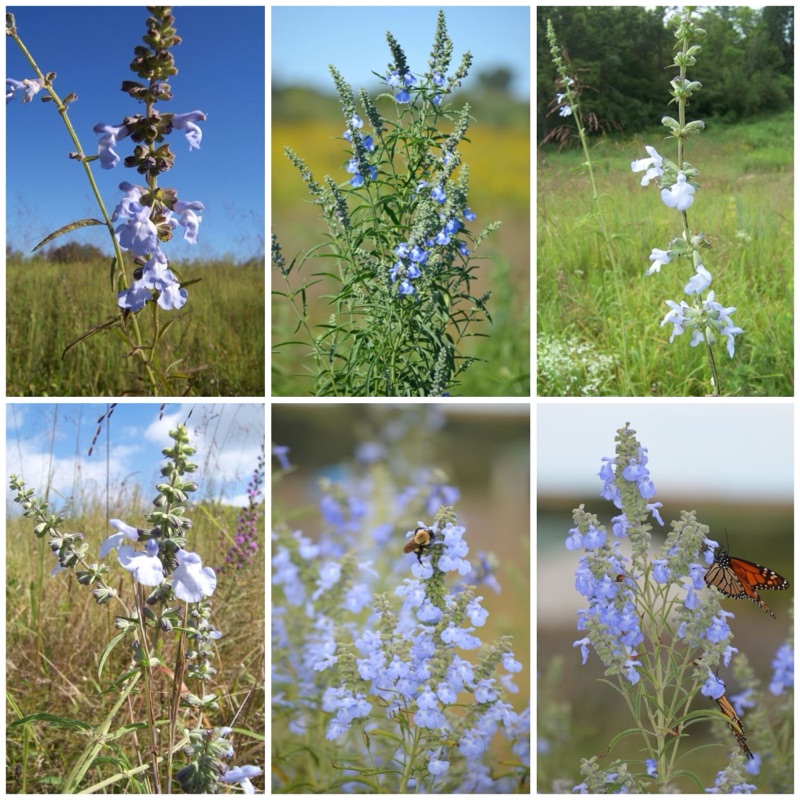 Photo Credits: PRAIRIE MOON NURSERY
Common Name: Azure Blue Sage
Scientific Name: Salvia azurea
Other Names: Azure Sage, Pitcher Sage, Big Blue Sage, or Giant Blue Sage.
Genus: Salvia
Plant Family: The Mint Family / The Deadnettle Family / The Sage Family
Flowers: They’re delicate, two-lipped, tubular flowers in a vibrant, sky-blue colour. These blooms are typically 1 inch long, which is not very long compared to other flowers.
Foliage: The leaves are linear to lanceolate, grayish -green leaves that are generally 3-4" long. They’re slightly fuzzy and have a fragrant, aromatic quality when crushed.
They are arranged oppositely along the stems and have a lance-shaped, oblanceolate form. The foliage is often described as gray-green and can be evergreen or deciduous depending on the variety and climate.
Height: Typically reaches a height of 3 - 5 feet (90 - 150 cm) tall.
Width: Typically reaches a width of 2 - 4 feet (60 - 120 cm) wide.
Bloom Time: The bloom is typically from mid summer through fall, often lasting until the first frost which is usually from August to October.
Hardiness Zones: 5 through 9
Moisture Requirements: dry to medium moisture conditions that has good drainage.
Soil Type: loam or sandy soils that have a soil ph of acid, alkaline, or neutral. The soil needs to be well drained, so the plant doesn’t get waterlogged.
Light Requirements:
Full Sun ☀️
Host Plant: Yes, Azure Blue Sage is a host plant and it is a host plant to a local moth species called the Hermit Sphinx Moth.
Attracts: bumblebees, sweat bees, mining bees, mason bees, long - horned bees, carpenter bees, skipper butterflies, gossamer - winged butterflies, hummingbirds, hummingbird moths, birds, squirrels, and chipmunks.
Wildlife Benefits: The flowers of Azure Blue Sage provide both nectar and pollen for a variety of local pollinators including bumblebees, specialized bees, small butterflies, hummingbirds, and hummingbird moths.
The scent of the plant and its foliage attract the females of the hermit sphinx moth to lay their eggs on the leaves.
The leaves (foliage) on Azure Blue Sage provide a food source for the caterpillars of the hermit sphinx moth.
The seeds that Azure Blue Sage produces once the flowers are finished blooming provide a food source for songbirds, seed loving birds, ground feeding birds, squirrels, and chipmunks.
The Azure Blue Sage (Salvia azurea) is a perennial wildflower that is native to North America including Canada and The United States.
The flowers on Azure Blue Sage are two lipped and tubular flowers that bloom in whorls along tall spikes. The lower lip of each flower may have white stripes. The colouration of the flowers vary in colour from pale blue, light blue, or even dark blue with a purplish tinge.
The leaves are greyish green in colour. They are linear to lanceolate, oblong, and opposite of each other. The leaves are usually 3 - 4 inches long in size, and are light green to medium green in colour.
Purple Milkweed (Asclepias purpurascens)
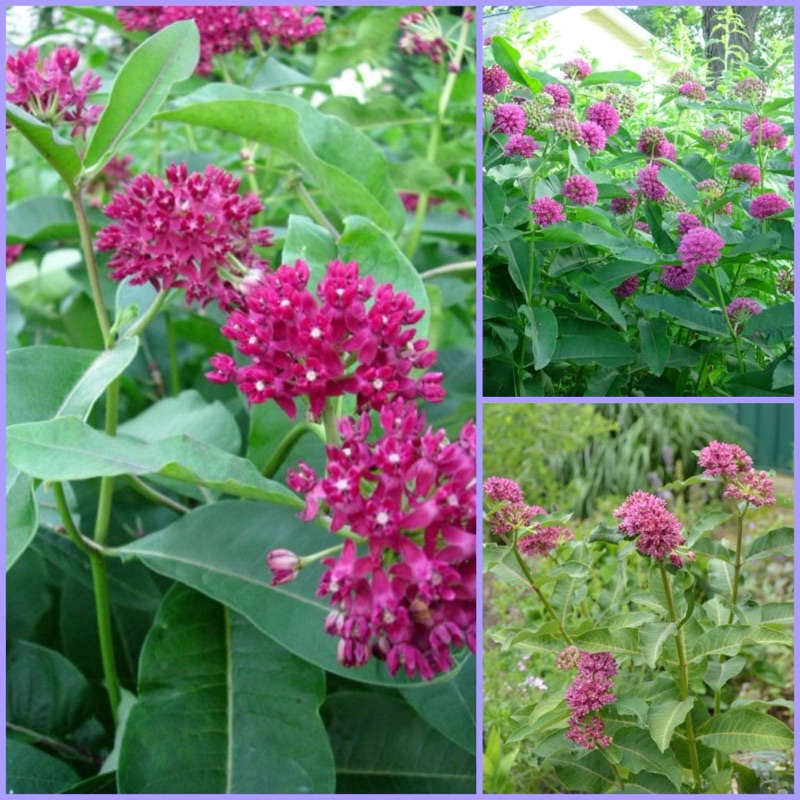 Photo Credits: PRAIRIE MOON NURSERY
Common Name: Purple Milkweed
Scientific Name: Asclepias purpurascens
Other Names: Marsh Milkweed, Red Milkweed, Wood Milkweed, or Purple Savanna Milkweed.
Genus: Asclepias
Plant Family: The Dogbane Family
Flowers: distinctive, showy purple pink flowers with a white centre borne on clusters.
Foliage: Opposite, ovate - oblong to elliptic leaves that are dark green and pale green with a hairy underside.
Height: Typically reaches a height of 2 to 4 feet (24 - 48 inches) tall.
Width: Typically reaches a width of 1 to 3 feet (12 - 36 inches) wide.
Bloom Time: Typically blooms from late spring to midsummer, which usually occurs from June to July. Occasionally the blooming period can extend to August.
Hardiness Zones: 3 through 9
Moisture Requirements: It can tolerate both medium - dry and medium - wet conditions, but is sensitive to prolong dryness.
Soil Type: It thrives in light to medium textures like sand soils or loam soils. Purple Milkweed prefers soils that are slightly acidic to slightly alkaline that are not overly wet.
Light Requirements: Full Sun ☀️ to Partial Shade ⛅️, but Purple Milkweed has a preference for partial shade ⛅️.
Host Plant: Yes, Purple Milkweed is a host plant for a local butterfly species, a moth species, and beneficial insects.
It is a host plant for the Monarch Butterfly, Milkweed Tussock Moth, Milkweed Bug, and Milkweed Beetle.
Attracts: bumblebees, carpenter bees, leaf cutter bees, mason bees, sweat bees, great black wasps, golden digger wasps, monarch butterflies, swallowtail butterflies, fritillary butterflies, skipper butterflies, sulphur butterflies, common eastern fireflies, black fireflies, milkweed bugs, milkweed beetles, hummingbirds, and hummingbird moths.
Wildlife Benefits: The flowers of Purple Milkweed provide both nectar and pollen for a variety of local pollinators including bumblebees, carpenter bees, specialized bees, butterflies, fireflies, hummingbirds, and hummingbird moths.
The scent of the plant and its foliage attract the females of the Monarch Butterfly and Milkweed Tussock Moth to lay their eggs on the leaves.
The leaves of Purple Milkweed provide a food source for the caterpillars of the monarch butterfly and milkweed tussock moth, as well as the nymphs and the adults of milkweed bugs and milkweed beetles.
The seed pods (fruit) that Purple Milkweed produces provides a food source for some local wildlife including milkweed bugs, milkweed beetles, monarch caterpillars, milkweed tussock moth caterpillars, other seed feeding insects, and birds.
The Purple Milkweed (Asclepias purpurascens) is a perennial herb and wildflower that is native to North America including Canada and The United States.
Purple milkweed's flowers are a rich, reddish-purple, unlike the lighter pink of common milkweed. They are arranged in terminal flower clusters at the top of the plant and in axils of upper leaves.
Leaves are opposite, dark green on the upper surface and densely pubescent (hairy) on the underside, with prominent net-like veination. They are also less likely to have wrinkled or wavy margins compared to common milkweed.
Stems are stout and erect, and may release a milky-white sap when broken, like other milkweed species.
Purple milkweed's seedpods are smooth, unlike the prickly seedpods of common milkweed.
Showy Milkweed (Asclepias speciosa)
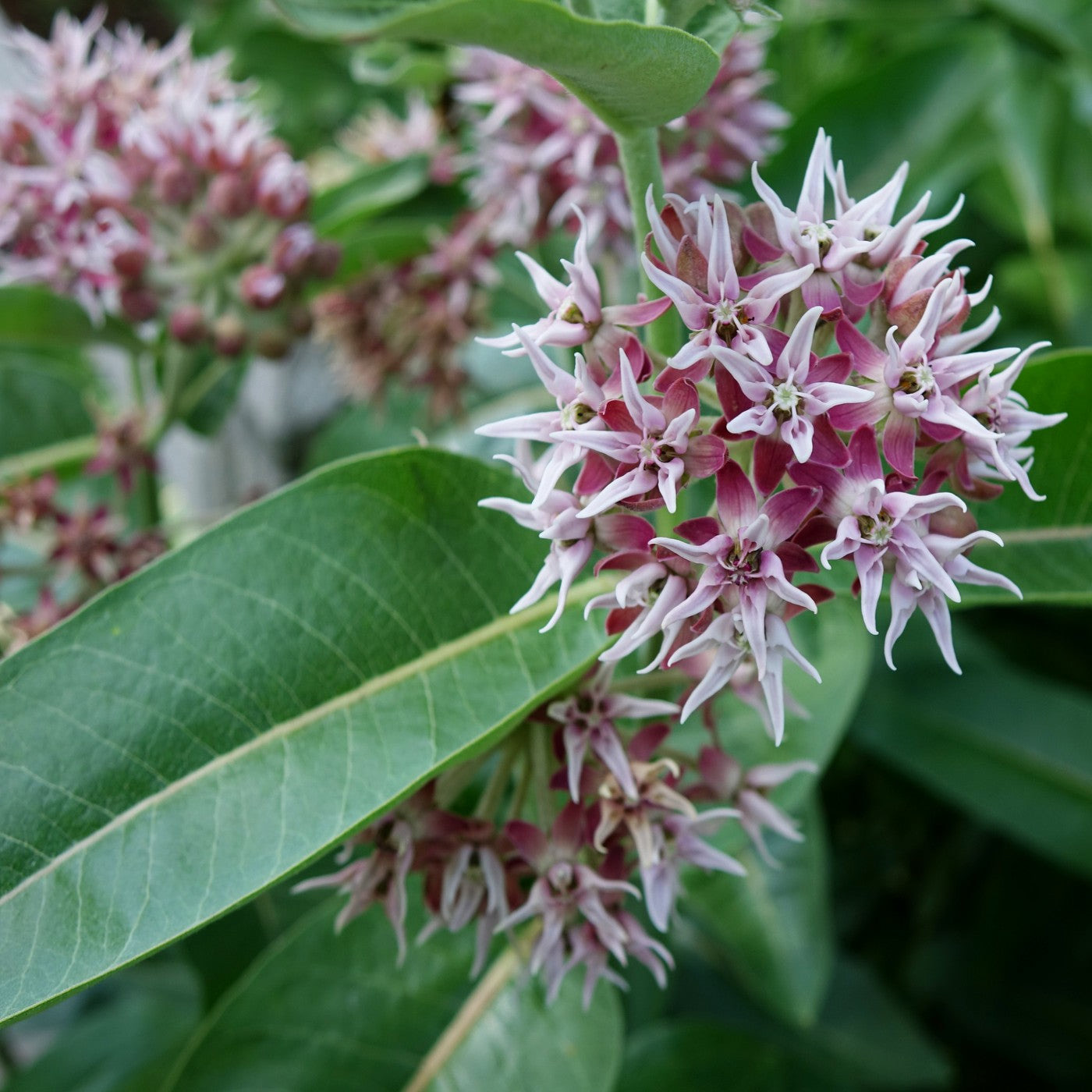 Photo Credits: Vermont Wildflower Farm
Common Name: Showy Milkweed
Scientific Name:
Asclepias speciosa
Other Names: American Silkweed, Jewelweed, Silken Cissy, Silkweed, Swallow Wort, Showy Silkweed, or White Indian Hemp.
Genus:
Asclepias
Plant Family: The Dogbane Family
Flowers: star shaped flowers that soft pink to purple in colour, and they bloom in loose clusters.
Foliage: opposite, ovate, and may have a slightly fuzzy appearance due to the soft silvery hairs. The leaves are green in colour, but they can come in different shades of green or there can be two shades of green on them.
Height: Typically reaches a height of 3 to 4 feet (36 - 48 inches) tall.
Width: Typically reaches a width of 1.5 to 2 feet (12.5 to 24 inches) wide.
Bloom Time: Typically blooms from late spring to late summer, which usually occurs from June to August.
Hardiness Zones: 3 through 9
Moisture Requirements: dry to moderately moist conditions, while it can handle drier environments, Showy Milkweed does well in areas with medium moisture as long as the location drains well.
Soil Type: sandy, loamy, or rocky soils that has proper drainage.
Light Requirements: Thrives in full sun ☀️, where it needs 6 or more hours of direct sunlight a day. This species of Milkweed is not shade tolerant, and requires an open sunny location for optimal growth.
Host Plant: Yes, Showy Milkweed is a host plant for a local butterfly species, a moth species, and two beneficial insects.
It is a host plant for the Monarch Butterfly, Milkweed Tussock Moth, Milkweed Bug, and Milkweed Beetle.
Attracts: bumblebees, carpenter bees, leaf cutter bees, mason bees, sweat bees, great black wasps, golden digger wasps, monarch butterflies, swallowtail butterflies, fritillary butterflies, skipper butterflies, sulphur butterflies, common eastern fireflies, black fireflies, milkweed bugs, milkweed beetles, hummingbirds, and hummingbird moths.
Wildlife Benefits: The flowers of Showy Milkweed provide both nectar and pollen for a variety of local pollinators including bumblebees, carpenter bees, specialized bees, butterflies, fireflies, hummingbirds, and hummingbird moths.
The scent of the plant and its foliage attract the females of the Monarch Butterfly and Milkweed Tussock Moth to lay their eggs on the leaves.
The leaves of Showy Milkweed provide a food source for the caterpillars of the monarch butterfly and milkweed tussock moth, as well as the nymphs and the adults of milkweed bugs and milkweed beetles.
The seed pods (fruit) that Showy Milkweed produces provides a food source for some local wildlife including milkweed bugs, milkweed beetles, monarch caterpillars, milkweed tussock moth caterpillars, other seed feeding insects, and birds.
The Showy Milkweed (Asclepias speciosa) is a stout, sparingly branched, and pubescent perennial that is native to North America including Canada and The United States.
Showy Milkweed has large, star-shaped flowers that are pink to purple. The flowers are arranged in spherical clusters (umbels).
The leaves are opposite, ovate (egg-shaped) leaves are typically 10-25 cm long and have a slightly fuzzy, silvery-downy texture due to fine hairs.
The stems of the plant have a velvety or pubescent (hairy) texture and appearance.
The fruit (seed pods) are large, warty, pubescent cylindrical follicles (pods) develop after flowering, releasing wind-dispersed seeds with silky filaments.
Whorled Milkweed (Asclepias verticillata)
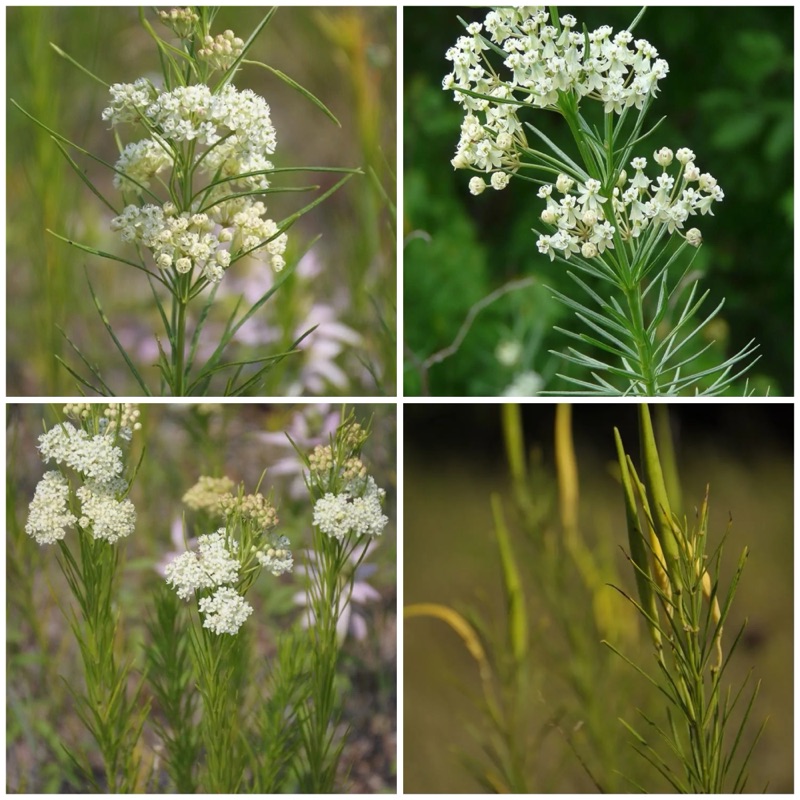 Photo Credits: Prairie Nursery
Common Name: Whorled Milkweed
Scientific Name: Asclepias verticillata
Other Names: Eastern Whorled Milkweed
Genus: Asclepias
Plant Family: The Dogbane Family
Flowers: small, white or creamy white flowers in clusters at the upper part of the stems.
Foliage: narrow needle like leaves arranged in a whorled pattern, meaning they grow in a circle around the stem in groups of 3 to 6. The leaves are 3 inches long in size, and are typically dark green in colour.
Height: Typically reaches a height of 1 - 3 feet (12 - 36 inches) tall.
Width: Typically reaches a width of 1 - 2 feet (12 - 24 inches) wide.
Bloom Time: Typically blooms from June to August, with some plants blooming later into July and September.
Hardiness Zones: 4 through 9
Moisture Requirements: Whorled Milkweed thrives in dry to medium moist conditions. Once it is established in a location Whorled Milkweed is pretty drought tolerant.
Soil Type: sandy, loamy, or rocky soils that have good drained and are well drained.
It does not tolerate heavy clay or waterlogged conditions. It's a drought-tolerant plant, meaning it can survive with minimal watering once established.
Light Requirements: Full Sun ☀️ to Partial Shade ⛅️
Host Plant: Yes, Whorled Milkweed is a host plant for a local butterfly species which is the Monarch Butterfly.
Attracts: bumblebees, carpenter bees, leaf cutter bees, mason bees, sweat bees, great black wasps, golden digger wasps, monarch butterflies, swallowtail butterflies, fritillary butterflies, skipper butterflies, sulphur butterflies, common eastern fireflies, black fireflies, hummingbirds, and hummingbird moths.
Wildlife Benefits: The flowers of Whorled Milkweed provide both nectar and pollen for a variety of local pollinators including bumblebees, carpenter bees, specialized bees, butterflies, fireflies, hummingbirds, and hummingbird moths.
The scent of the plant and its foliage attract the females of the Monarch Butterfly and Milkweed Tussock Moth to lay their eggs on the leaves.
The leaves of Whorled Milkweed provide a food source for the caterpillars of the monarch butterfly and milkweed tussock moth.
The seed pods (fruit) that Whorled Milkweed produces provides a food source for some local wildlife including milkweed bugs, milkweed beetles, monarch caterpillars, milkweed tussock moth caterpillars, other seed feeding insects, and birds.
The Whorled Milkweed (Asclepias verticillata) is a native creeping perennial with rhizomes, that is a very unique species of Milkweed. It is native to North America including Canada and The United States.
The most distinctive feature is the arrangement of leaves in circles around the stem, rather than opposite each other.
The leaves are long and thin, resembling needles. They are narrow and linear in shape.
The flowers are small and clustered in umbels (flat-topped clusters). After flowering, the plant produces smooth, slender seed pods that are 7-10 cm long and 5-8 mm wide.
Like all Milkweed species, the Whorled Milkweed releases a milky sap when the leaves or stems get broken.
Purple Prairie Clover (Dalea purpurea)
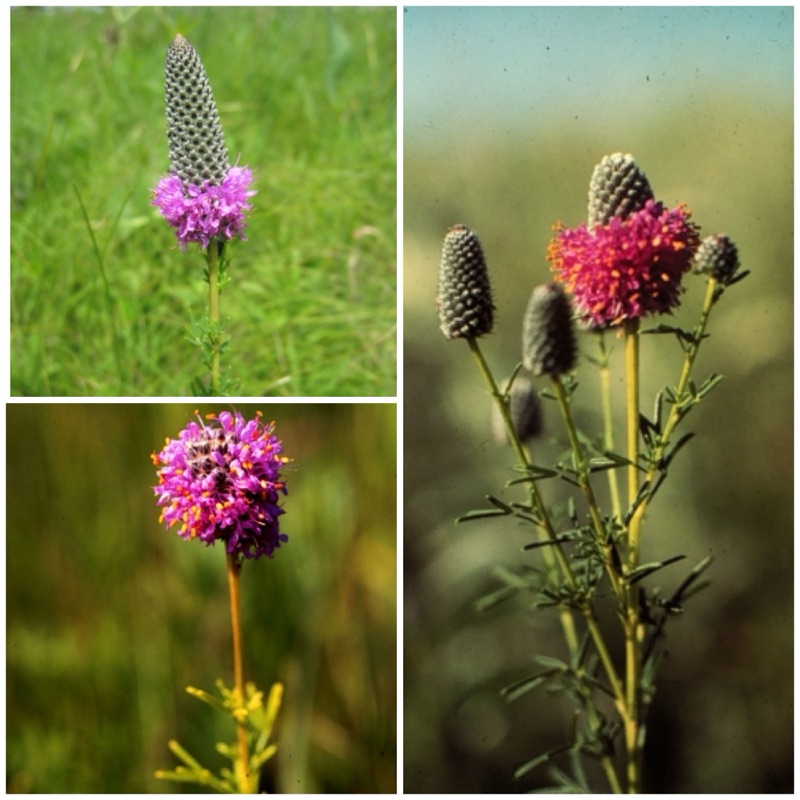 Photo Credits: Michigan Natural Features Inventory / Michigan State University
Common Name: Purple Prairie Clover
Scientific Name: Dalea purpurea
Other Names: Violet Prairie Clover, Red Tassel Flower, Thimbleweed, or Petalostemum purpureum.
Genus: Dalea
Plant Family: The Legume Family
Flowers: small, bright purple flowers that grow in a dense, cylindrical spike at the top of it’s upright stems.
Foliage: delicate and compound leaves with 3 - 5 narrow linear leaflets. They are alternate and pinnately compound, meaning they are arranged in clusters along the stem. The foliage is often described as having a grey - green colour and have a slightly hairy texture.
Height: Typically reaches a height of 1 to 3 feet (12 - 36 inches) tall.
Width: Typically reaches a width of 1 to 1.5 feet (12 - 12.5 inches) wide.
Bloom Time: Typically blooms from July to
Hardiness Zones: 3 through 8
Moisture Requirements: dry to moist conditions, and is generally drought tolerant once established.
Soil Type: clay, loam, clay loams, sandy, loamy sands, or calcareous soils that are well drained.
Light Requirements: Full sun ☀️, It requires at least 6 to 8 hours of direct sunshine each day for optimal growth and healthy blooms.
Host Plant: Yes, it is a host plant for three local butterfly species which are the Southern Dogface Sulphur, Orange Sulphur, and Clouded Sulphur.
Attracts: bumblebees, cuckoo bees, cellophane bees, leaf cutter bees, long tongued bees, short tongued bees, butterflies, flies, beetles, hummingbirds, songbirds, and small mammals.
Wildlife Benefits: The flowers provide both nectar and pollen for a variety of local pollinators and beneficial insects including bumblebees, specialized bees, butterflies, flies, beetles, and hummingbirds.
The scent of the plant and the foliage attracts the females of the Southern Dogface butterfly, Orange Sulphur butterfly, and Clouded Sulphur butterfly to lay their eggs on the leaves.
The leaves of the Purple Prairie Clover provide a food source for the caterpillars of the southern dogface butterfly, orange sulphur butterfly, and clouded butterfly.
The seed heads (fruit) that the Purple Prairie Clover provides a food source for local wildlife including songbirds, squirrels, chipmunks, and seed loving insects.
The Purple Prairie Clover (Dalea purpurea) is a species of flowering plant in The Legume Family. It is a perennial clover that is native to North America including Canada and The United States.
The most striking feature is the cylindrical, cone-shaped flower head composed of numerous tiny purple flowers.
The flowers have gold-orange anthers, which are the pollen-producing parts of the flower.
The leaves are pinnately compound, with 3-5 narrow, linear leaflets.
Purple Prairie Clover has multiple stems that arise from a woody base.
Dense Blazing Star (Liatris spicata)
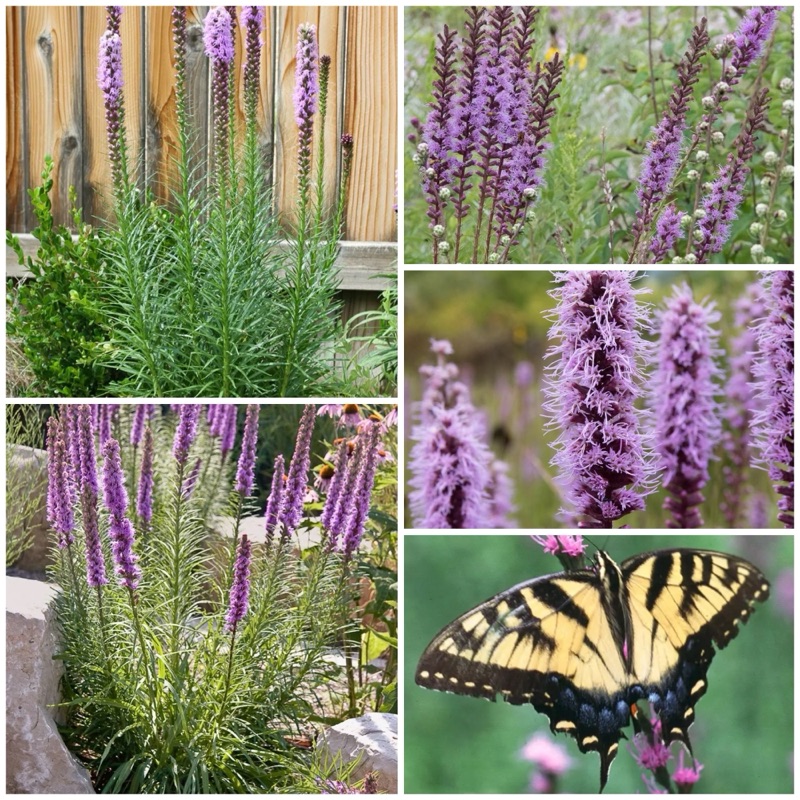 Photo Credits: Prairie Nursery
Common Name: Dense Blazing Star
Scientific Name: Liatris spicata
Other Names: Prairie Feather, Gayfeather, Button Snakewort, Dense Gayfeather, Dense Liatris, Marsh Blazing Star, Marsh Gayfeather, or Marsh Liatris.
Genus: Liatris
Plant Family: The Aster Family
Flowers: tall and showy pink to purple blooms
Foliage: narrow grass like leaves that are clustered at the base of the plant, and become smaller in size up the stem.
Height: Typically reaches a height of 1 to 5 feet (30 cm - 150 cm) tall.
Width: Typically reaches a width of 6 inches - 2 feet (15 cm - 60 cm) wide.
Bloom Time: Typically blooms from mid to late summer to fall, occasionally this plant can bloom through the fall season.
Hardiness Zones: 3 through 9
Moisture Requirements: medium to wet conditions
While it can tolerate a range of moisture levels from dry to very moist, it generally does best in moist areas.
Soil Type: clay, loam, or sandy soils that has medium to moist conditions and good drainage.
Light Requirements:
Full Sun ☀️
Host Plant: Yes, Dense Blazing Star is a host plant for four local moth species.
It is a host plant for the Glorious Flower Moth, Three - lined Flower Moth, Wavy - lined Emerald Moth, and Blazing Star Borer Moth.
Attracts: bumblebees, carpenter bees, mason bees, mining bees, leaf cutter bees, monarch butterflies, swallowtail butterflies, fritillary butterflies, skipper butterflies, hairstreak butterflies, sulphur butterflies, hummingbirds, hummingbird moths, common eastern fireflies, black fireflies, songbirds, and small mammals.
Wildlife Benefits: The flowers on Dense Blazing Star provide both nectar and pollen for a variety of local insects such as bumblebees, carpenter bees, small specialized bees, butterflies, hummingbirds, and hummingbird moths.
The scent and the foliage of the plant attracts the females of the glorious flower moth, three lined flower moth, wavy lined emerald moth, and blazing star borer moth to lay their eggs on the foliage on the plant.
The leaves of the Dense Blazing Star provide a food source for the caterpillars of the glorious flower moth, three lined flower moth, wavy - lined emerald moth, and blazing star borer moth.
The seeds (fruit) of the plant provides a food source for finches, sparrows, chickadees, cardinals, other songbirds, squirrels, and chipmunks.
The Dense Blazing Star (Liatris spicata) is a herbaceous perennial wildflower that has a clumping and erect habit.
6-12 inch long flower spikes are densely packed with stemless flowers in purple, pink or white that bloom from the top down. Some cultivars have red flowers. Individual flowers contain 4 to 10 disks florets (no ray florets), are 1/3- 1/2 inch across with an exserted style. Blooms mid-summer.
The basal clump of alternate, narrow deep green leaves with a strong central vein are up to 12 inches long and 1/3 inch wide. Leaves grow smaller as they ascend the flower stalk. They are glabrous to sparsely hairy, and the margins are entire.
Green to purplish stem is round and smooth to slightly pubescent.
Cypselae (a type of achene) with stiff light brown bristles in fall. The fruit is has a length of 1 inch and a width of 1 inch. The colouration for the fruit is either brown or copper.
Cylindrical Blazing Star (Liatris cylindracea)
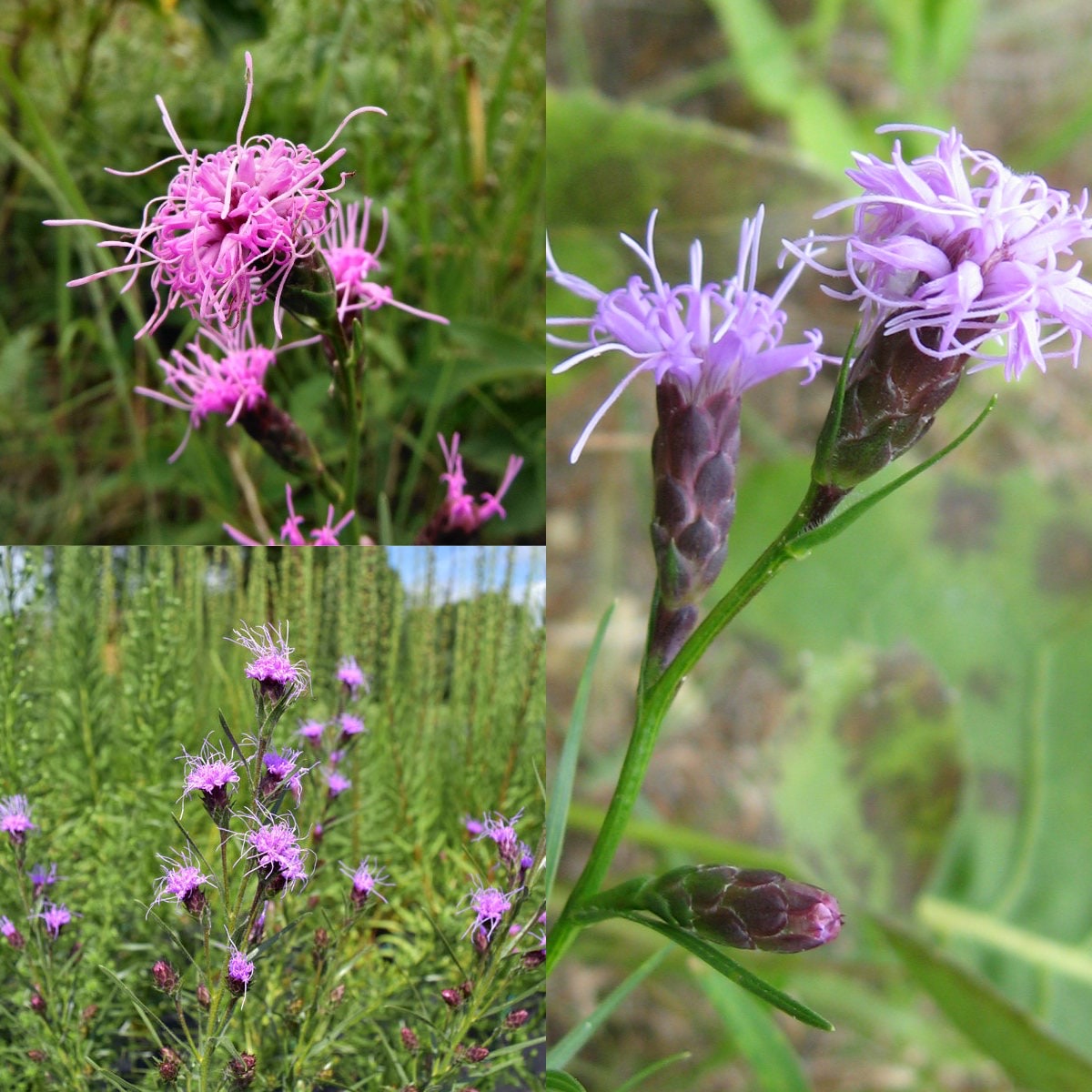 Photo Credits: Majestygarden / Etsy
Common Name:
Cylindrical Blazing Star
Scientific Name: Liatris cylindracea
Other Names: Ontario Blazing Star, Ontario Gayfeather, Ontario Liatris, Dwarf Blazing Star, or Dwarf Liatris.
Genus: Liatris
Plant Family: The Aster Family
Flowers: a loose cluster of 2 to 28 flower heads, each flower head has 10 - 35 florets, and is stemless or has a stem that is 2 - 10 mm in size. The flowers are purplish to pink in colour.
Foliage: The leaves are narrow and linear and grass like in appearance that appear densely packed along the stem.
Height: Typically reaches a height of 1 to 2 feet (24 - 36 inches) tall.
Width: Typically reaches a width of 1 to 2 feet (24 to 36 inches) wide.
Bloom Time: Typically blooms from July to September.
Hardiness Zones: 4 through 7
Moisture Requirements: dry to medium moisture conditions
Soil Type: sandy, rocky, or loamy soils that are well drained.
Light Requirements:
Full Sun ☀️
Host Plant: Yes, Cylindrical Blazing Star is a host plant for four local moth species.
It is a host plant for the Glorious Flower Moth, Three - lined Flower Moth, Wavy - lined Emerald Moth, and Blazing Star Borer Moth.
Attracts: bumblebees, carpenter bees, mason bees, mining bees, leaf cutter bees, monarch butterflies, swallowtail butterflies, fritillary butterflies, skipper butterflies, hairstreak butterflies, sulphur butterflies, hummingbirds, hummingbird moths, common eastern fireflies, black fireflies, songbirds, and small mammals.
Wildlife Benefits: The flowers of the Cylindrical Blazing Star provide both nectar and pollen for a variety of local insects such as bumblebees, carpenter bees, small specialized bees, butterflies, hummingbirds, and hummingbird moths.
The scent and the foliage of the plant attracts the females of the glorious flower moth, three lined flower moth, wavy lined emerald moth, and blazing star borer moth to lay their eggs on the foliage on the plant.
The leaves of the Cylindrical Blazing Star provide a food source for the caterpillars of the glorious flower moth, three lined flower moth, wavy - lined emerald moth, and blazing star borer moth.
The seeds (fruit) of the plant provides a food source for finches, sparrows, chickadees, cardinals, other songbirds, squirrels, and chipmunks.
The Cylindrical Blazing Star (Liatris cylindracea) is an upright and clump forming perennial wildflower.
The leaves are narrow and grass-like, with a darker green color near the base and decreasing in size towards the top of the stem.
Leaves are alternate and linear, often described as lance-shaped, and arranged along the stem.
The flowers are a fluffy pink or purplish pink colour. The flower heads are short, spike-like racemes, with multiple small, tubular florets. Each flower head is typically 1 inch across. The floral bracts form a tight, elongated cylinder around each flower head.
Black - eyed Susan (Rudbeckia hirta)
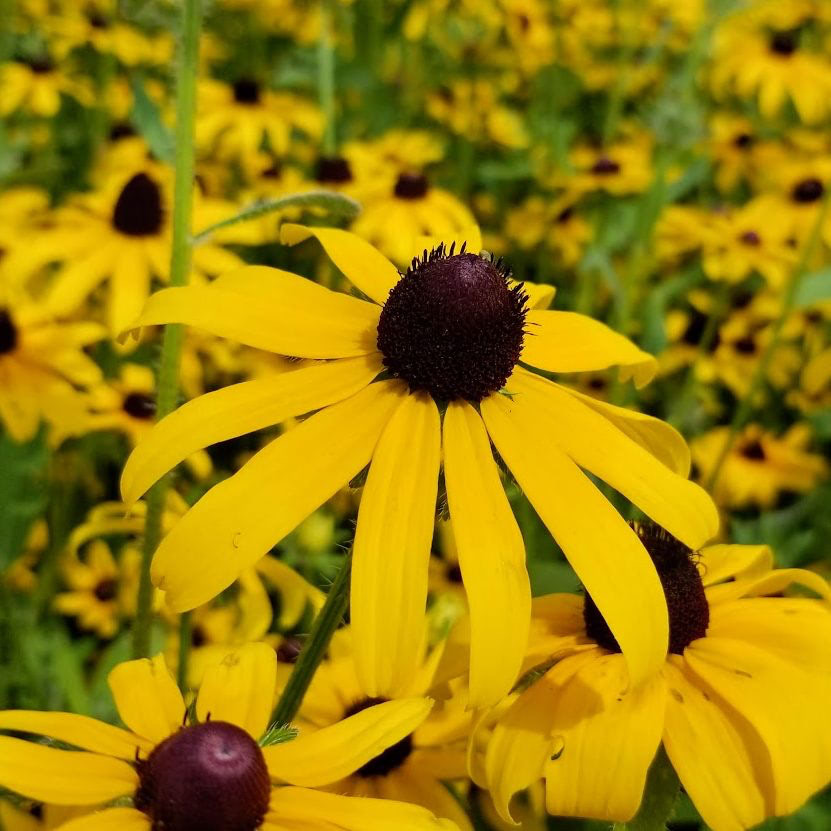 Photo Credits: Ontario Native Plants
Common Name: Black - eyed Susan
Scientific Name: Rudbeckia hirta
Other Names: Common Black - eyed Susan, or Brown - eyed Susan.
Genus: Rudbeckia
Plant Family: The Aster Family
Flowers: bright yellow 2 - 3 inches wide flowers that are daisy like with dark centres (middle).
Foliage: The leaves are oval in shape and are scattered around the stem of the plant. The colouration of the leaves vary from medium green to dark green.
Height: Typically reaches a height of 2 - 3 feet (24 - 36 inches) tall.
Width: Typically reaches a width of 1 - 2 feet (12 - 24 inches) wide.
Bloom Time:
Summer 💐 to Fall 🍂
Hardiness Zones: 3 through 7
Moisture Requirements: average to dry conditions
Soil Type: clay, loam, or sandy soils that have good drainage.
Light Requirements:
Full Sun ☀️ to Partial Sun ⛅️
Host Plant: Yes, Black - eyed Susan is a host plant for three local butterfly species.
It is a host plant for the Bordered Patch Butterfly, Gorgone Checkerspot Butterfly, and Silvery Checkerspot Butterfly.
Attracts: bumblebees, metallic green bees, sweat bees, coneflower mining bees, mining bees, mason bees, monarch butterflies, swallowtail butterflies, skipper butterflies, hairstreak butterflies, hummingbirds, hummingbird moths, common eastern fireflies, black fireflies, great golden digger wasps, great black wasps, birds, and small animals.
Wildlife Benefits: The flowers on Black eyed Susan provide both nectar and pollen for a variety of local pollinators such as bumblebees, small specialized bees, butterflies, fireflies, wasps, hummingbirds, and hummingbird moths.
The scent of the plant and the foliage attract the females of the bordered patch butterfly, gorgone checkerspot butterfly, and silvery checkerspot butterfly to lay their eggs on the leaves.
The leaves of Black - eyed Susan provide a food source for the caterpillars of the bordered patch butterfly, gorgone checkerspot butterfly, and silvery checkerspot butterfly.
The seeds that Black eyed Susan produces provide a food source for some local wildlife including songbirds, seed loving birds, squirrels, chipmunks, and rabbits.
The Black - eyed Susan (Rudbeckia hirta) is a herbaceous perennial wildflower that deciduous and has a habit of forming to be erect and open.
2"-4" whorl of involucral bracts that flower on a head with 10 to 20 bright orange-yellow to red rays surrounding a dark purplish brown egg-shaped dome. Blooms from summer to fall, producing long-lasting cut flowers and cutting encourages the plants to send out more blossoms. They are yellow to darker yellow at the centre.
Lower leaves are larger and taper into long stalks. Margins are smooth, to prominent serrate teeth. Prominent veins and winged petioles. They are a basal rosette of hairy leaves that emerge early in the spring.
1-2' tall grooved bristly stems that are simple or limited-branching stem; rough and hairy.
The fruit is a small capsule that has a bunch of small brown seeds inside. The colouration of the seed capsule is brown or copper.
Blue Vervain (Verbena hastata)
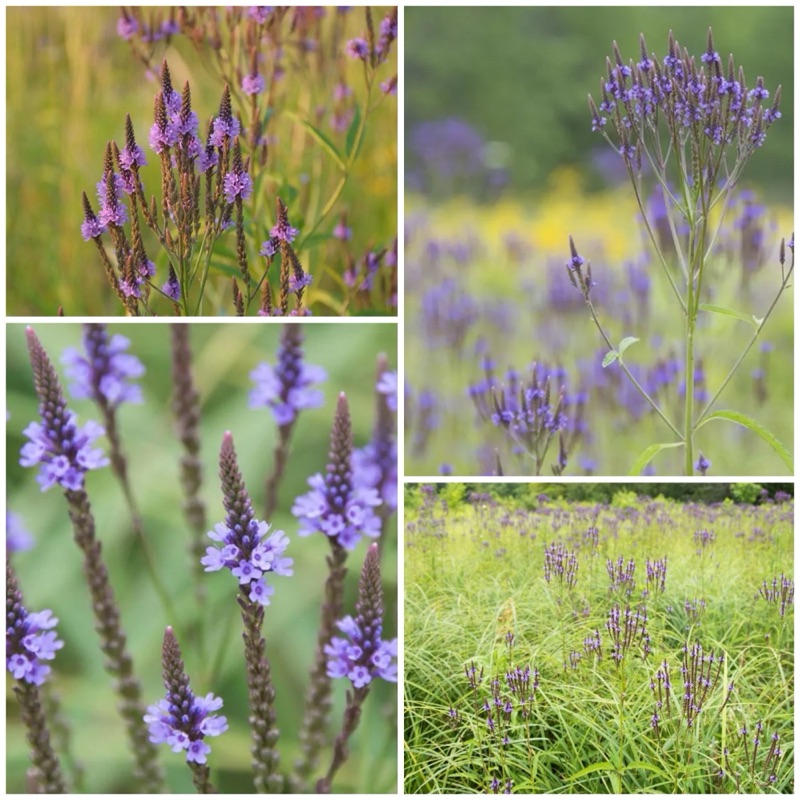 Photo Credits: Prairie Nursery
Common Name:Blue Vervain
Scientific Name: Verbena hastata
Other Names: American Vervain, Simpler’s Joy, Swamp Verbena, or Blue Verbena
Genus:Verbena
Plant Family: The Verbena Family / The Vervain Family
Flowers: tiny in size and showy in appearance blue to purple flowers that bloom in dense spikes.
Foliage: The leaves are opposite, and lance - shaped leaves with coarsely toothed edges. The colouration of the leaves vary from yellowish - green to medium - green.
Height: Typically reaches a height of 2 to 4 feet (24 - 48 inches) tall.
Width: Typically reaches a width of 1 - 2 feet and 6 inches (12 to 30 inches) wide.
Bloom Time:
Mid Summer 💐 to Early Fall 🍂
Hardiness Zones: 3 through 8
Moisture Requirements: moist conditions
It can tolerate being in more drier conditions, but being in more drier areas will cause the plant to be much smaller in size and won’t perform well with flowers. So, Blue Vervain prefers an area that is consistently moist.
Soil Type: clay, loam, or sandy soils as long as the soil is moist.
Light Requirements:
Full Sun ☀️ to Partial Sun ⛅️
Host Plant: Yes, Blue Vervain is a host plant for a local butterfly species and a moth species.
It is a host plant for the Common Buckeye Butterfly and the Verbena Moth.
Attracts: bumblebees, carpenter bees, mason bees, sweat bees, mining bees, monarch butterflies, swallowtail butterflies, fritillary butterflies, painted lady butterflies, american lady butterflies, skipper butterflies, hairstreak butterflies, common buckeye butterflies, hummingbirds, hummingbird moths, lady beetles, common eastern fireflies, black fireflies, beetles, and birds.
Wildlife Benefits: The flowers of Blue Vervain provide both nectar and pollen to a variety of local pollinators including bumblebees, carpenter bees, small specialized bees, butterflies, lady beetles, hummingbirds, hummingbird moths, fireflies, and beetles.
The scent of the plant as well as their foliage attracts the females of the common buckeye butterfly and the verbena moth to lay their eggs on the leaves.
The leaves of the plant provide a food source for the caterpillars of the common buckeye butterfly and the verbena moth.
The seeds that Blue Vervain produces provide a food source for a variety of birds such as songbirds, seed loving birds, ground feeding birds, and game birds.
The Blue Vervain (Verbena hastata) is a herbaceous perennial wildflower which is a native plant of North America including Canada and The United States. It has an erect form and is very low maintenance plant. Showy, 6-inch panicles of purplish-blue flowers. 1/4 inch individual blooms have a blue-violet corolla with 5 spreading lobes, a short-tubular calyx with 5 narrow teeth, 4 inserted stamens, and a pistil. Panicles appear candelabra-like with pencil-thin flower spikes. They bloom bottom to top with only a few open at a time.
Up to 6 in long x 1 in wide, toothed, lance-shaped leaves with conspicuous veins that occur in pairs on the stem.
Stems are square and green or red with white appressed hairs.
The calyx persists and encloses 4 oblong, reddish-brown, triangular-convex “nutlets.” The fruit is either brown, copper, red, or burgundy in colour.
Hoary Vervain (Verbena stricta)
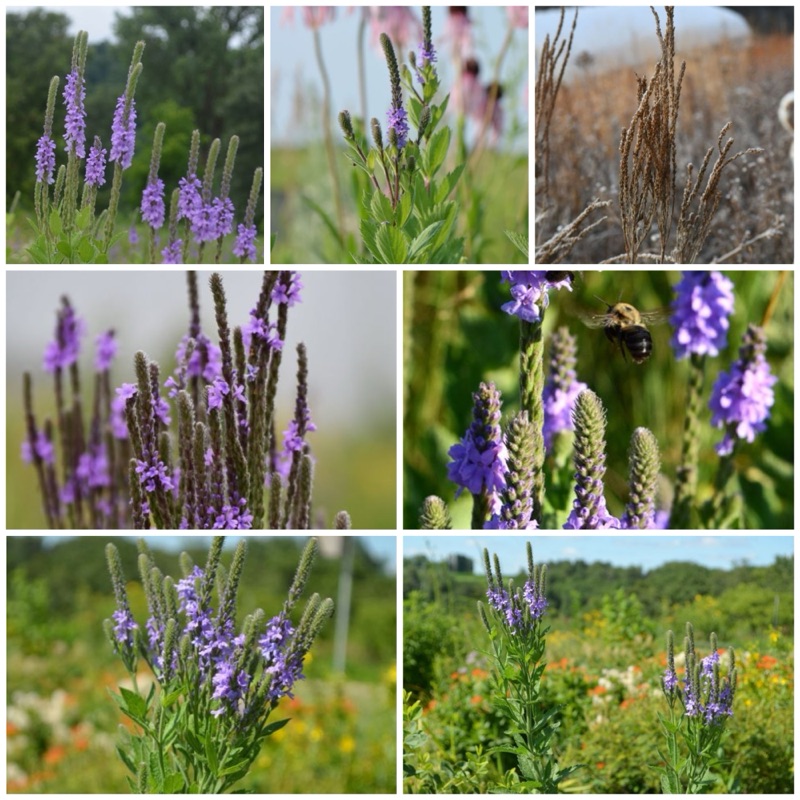 Photo Credits: PRAIRIE MOON NURSERY
Common Name: Hoary Vervain
Scientific Name: Verbena stricta
Other Names: Hoary Verbena, Woolly Vervain, Tall Vervain, or Woolly Verbena.
Genus: Verbena
Plant Family: The Verbena Family / The Vervain Family
Flowers: tiny, lavender to blue - purple flowers densely packed into pencil like branched stems.
Foliage: the leaves are grey to green in colour that is due to a dense covering of hairs on both leaf surfaces.
They are oval to egg-shaped, coarsely toothed, and can grow up to 4 inches long and 3 inches wide.
Height: Typically grows to a height of 2 - 4 feet (24 - 48 inches) tall.
Width: Typically reaches a width of 18 - 24 inches (1 feet and 6 inches to 2 feet) wide.
Bloom Time:
mid summer 💐 to fall 🍂
Hardiness Zones: 4 through 7
Moisture Requirements: moist conditions
It can tolerate being in more drier conditions, but being in more drier areas will cause the plant to be much smaller in size and won’t perform well with flowers. So, Blue Vervain prefers an area that is consistently moist.
Soil Type: clay, loam, or sandy soils as long as the soil is moist.
Light Requirements:
Full Sun ☀️ to Partial Sun ⛅️
While it can tolerate some shade, especially in hot climates, it generally performs best and blooms most profusely with at least 6 hours of sunlight per day
Host Plant: Yes, Hoary Vervain is a host plant for a local butterfly species and a moth species.
It is a host plant for the Common Buckeye Butterfly and the Verbena Moth.
Attracts: bumblebees, carpenter bees, mason bees, sweat bees, mining bees, monarch butterflies, swallowtail butterflies, fritillary butterflies, painted lady butterflies, american lady butterflies, skipper butterflies, hairstreak butterflies, common buckeye butterflies, hummingbirds, hummingbird moths, lady beetles, common eastern fireflies, black fireflies, beetles, and birds.
Wildlife Benefits: The flowers of Hoary Vervain provide both nectar and pollen to a variety of local pollinators including bumblebees, carpenter bees, small specialized bees, butterflies, lady beetles, hummingbirds, hummingbird moths, fireflies, and beetles.
The scent of the plant as well as their foliage attracts the females of the common buckeye butterfly and the verbena moth to lay their eggs on the leaves.
The leaves of the plant provide a food source for the caterpillars of the common buckeye butterfly and the verbena moth.
The seeds that Hoary Vervain produces provide a food source for a variety of birds such as songbirds, seed loving birds, ground feeding birds, and game birds.
The Horary Vervain (Verbena stricta) is a clumping perennial wildflower that is a native plant of North America including Canada and The United States.
Densely packed spike clusters of ½-inch purple to blue-violet flowers, sometimes rose pink or white. Flowers have 5 petals fused at the base forming a short tube. The petal lobes are slightly unequal in size, the 2 lateral lobes largest and the lower lobe notched at the tip. Hidden inside the tube are 4 stamens and a short style. The spike elongates as the plant matures with flowers blooming from the bottom up and fruit forming below.
Leaves are opposite, nearly erect to spreading, 2 to 3 inches long, oval to egg-shaped, pointed at the tip, coarsely toothed, covered with dense hairs, and stalkless. Stems are square, short-hairy, and may be a reddish colour. The calyx persists and encapsulates 4 tiny nutlets.
Embracing native summer-blooming plants isn’t just about cultivating a stunning garden, it’s about fostering a thriving ecosystem. These plants provide essential food and shelter for pollinators, ensuring the health and survival of species like bees, butterflies, and hummingbirds.
By choosing native blooms, gardeners can create landscapes that not only burst with color and life but also contribute to biodiversity and environmental sustainability.
Whether it's the vibrant petals of wild bergamot or the delicate sway of black-eyed Susans, every native plant added to a garden plays a crucial role. So why not start planting today and transform your space into a pollinator paradise? The beauty of nature awaits!
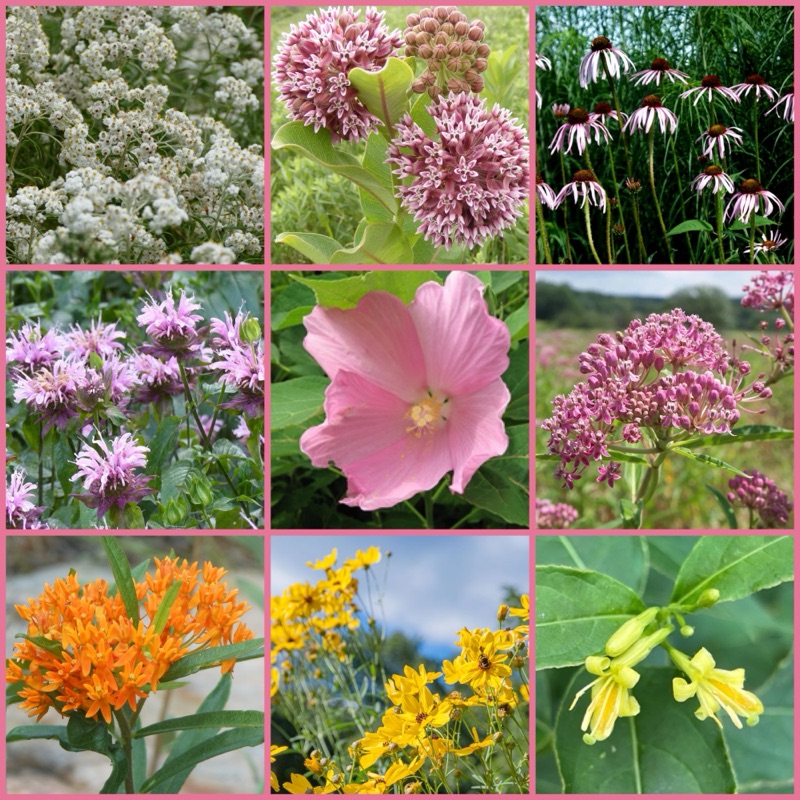 Photo Credits: Satinflower Nurseries, Davenport Garden Centre, SiteOne Landscape Supply, Landscape Direct, Ontario.ca, American Meadows, beauxarbres.ca, selectseeds.com, and Designs By Nature - UP Native Plants.
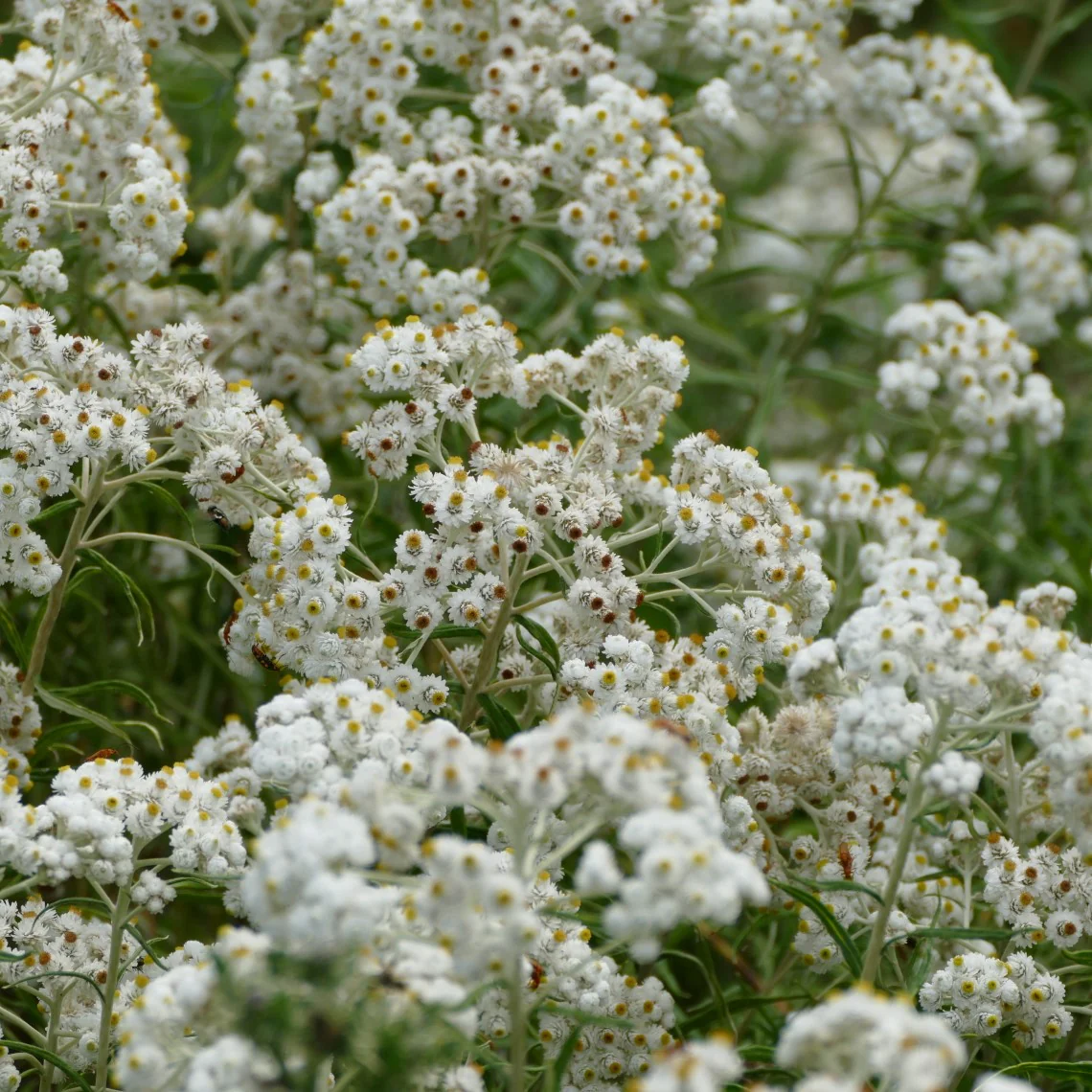
Photo Credits: Satinflower Nurseries
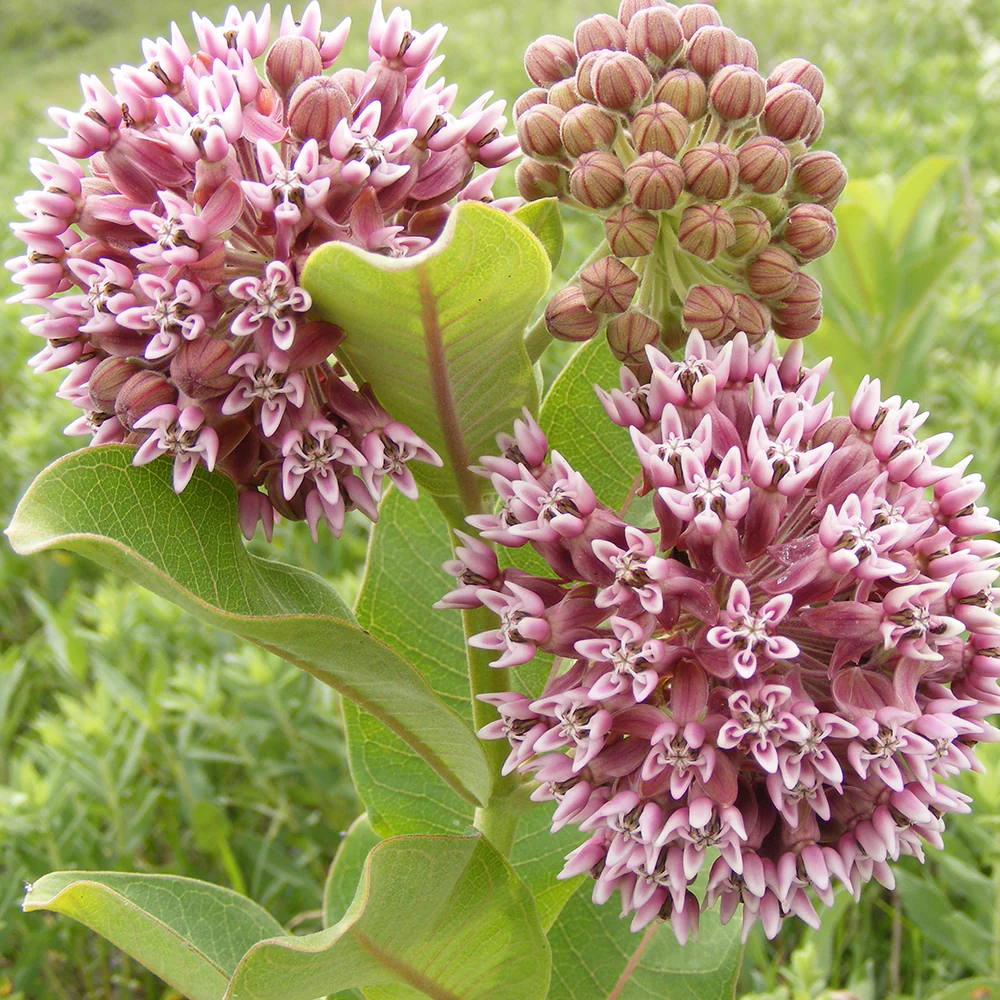
Photo Credits: Davenport Garden Centre
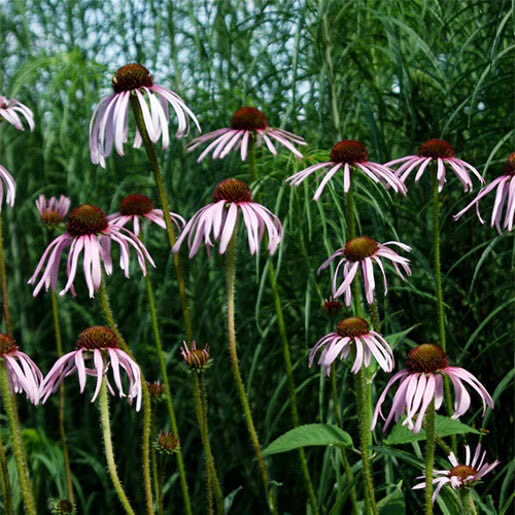
Photo Credits: SiteOne Landscape Supply
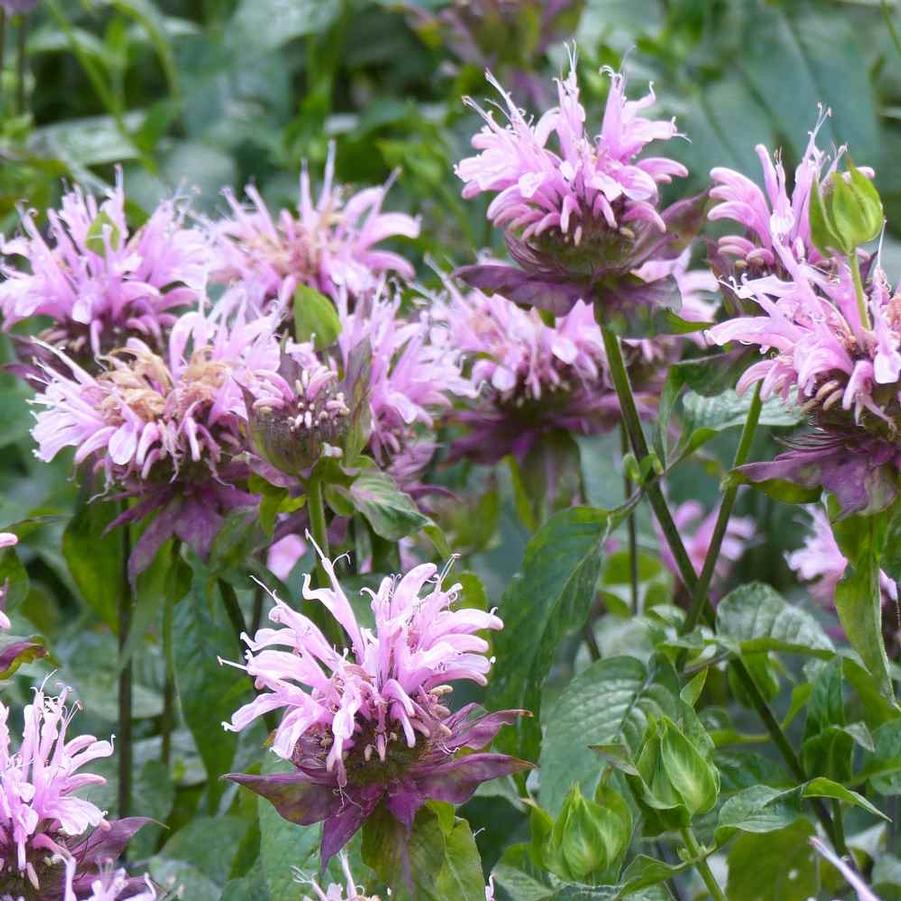
Photo Credits: Landscape Direct
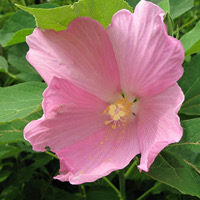
Photo Credits: Ontario.ca
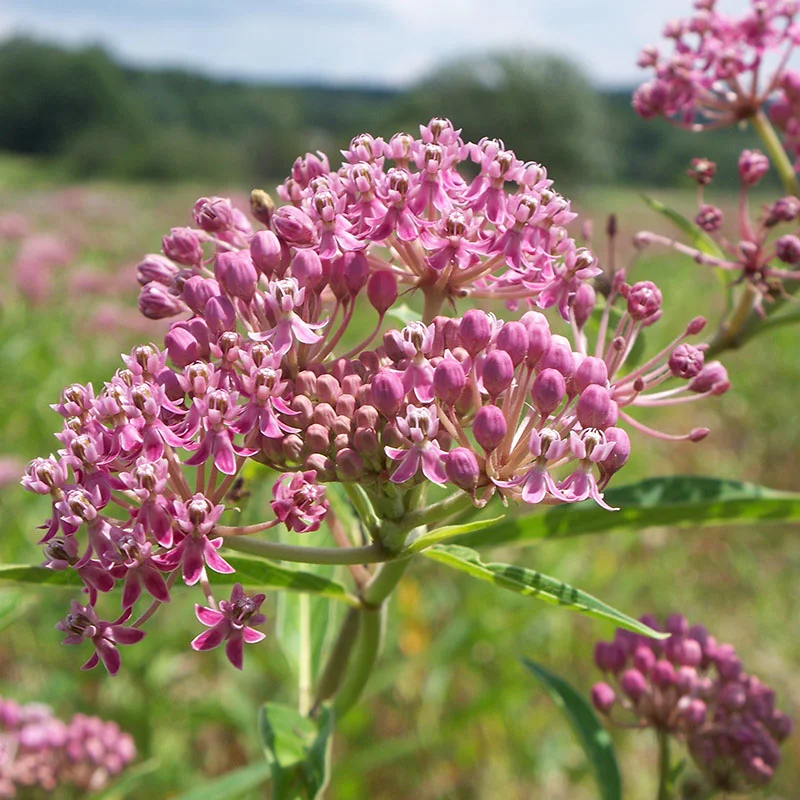
Photo Credits: American Meadows
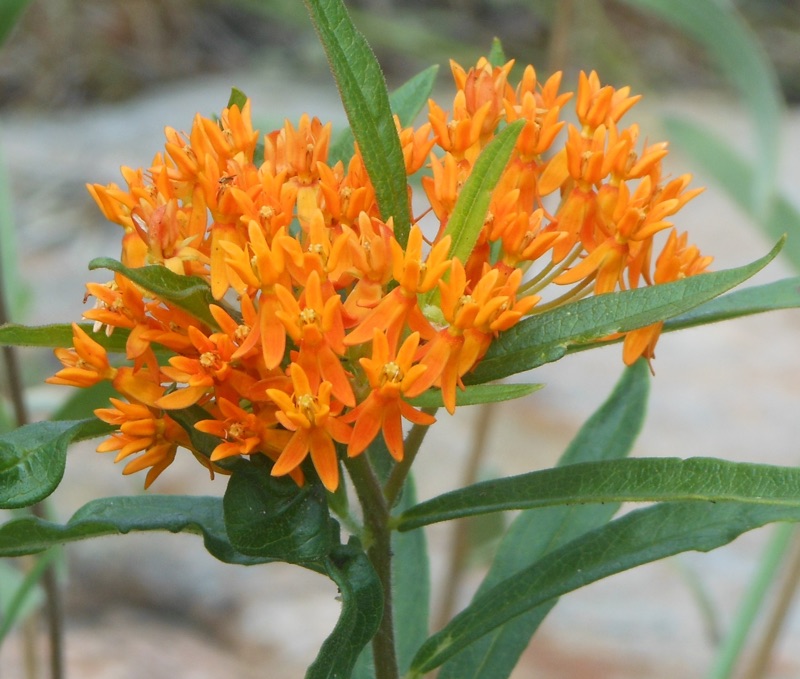
Photo Credits: beauxarbres.ca
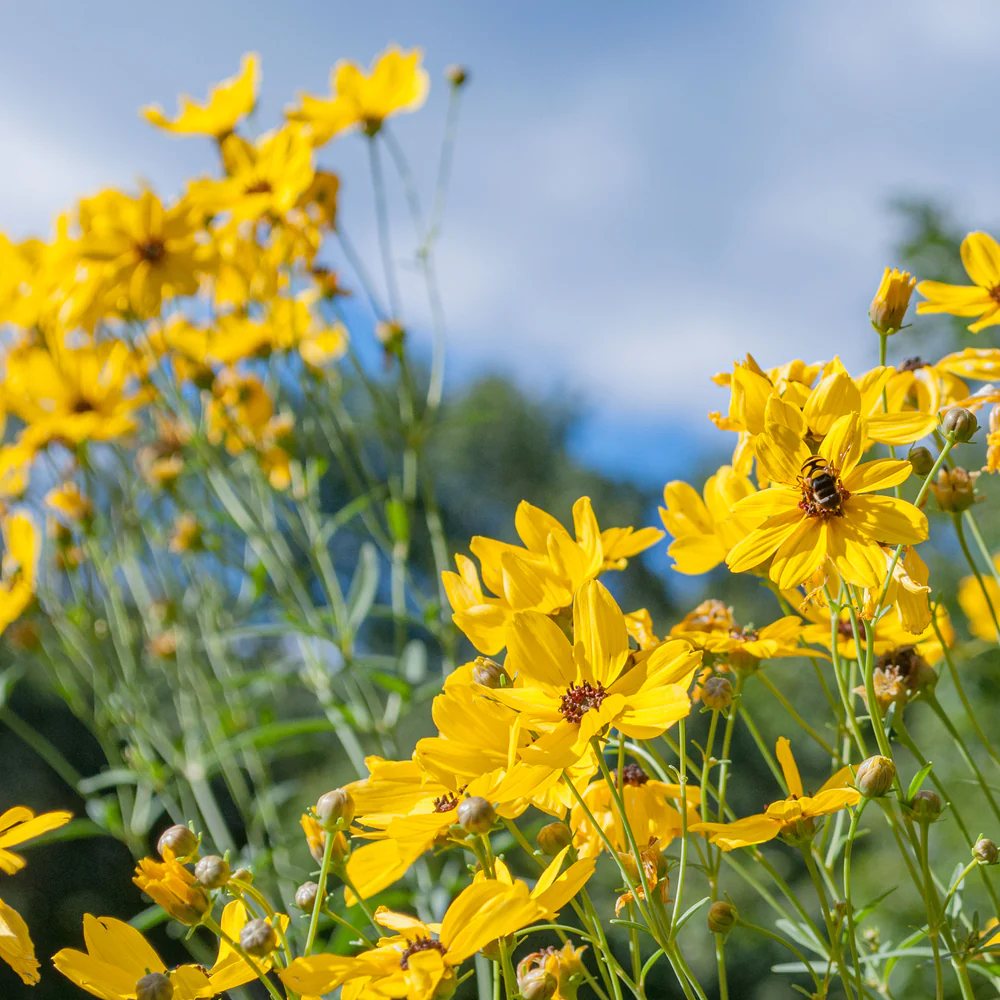
Photo Credits: selectseeds.com
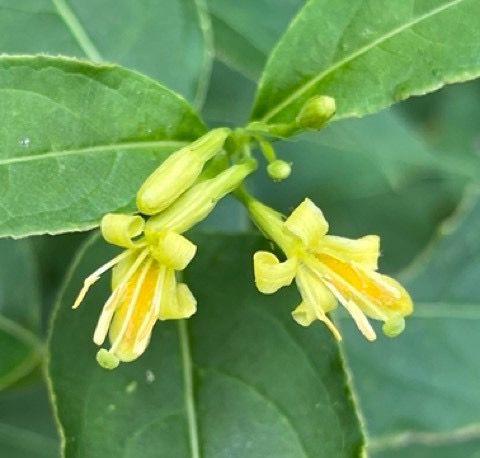
Photo Credits: Designs By Nature - UP Native Plants


Comments
Post a Comment