Winter Lifelines : Helping Native Songbirds Survive The Cold
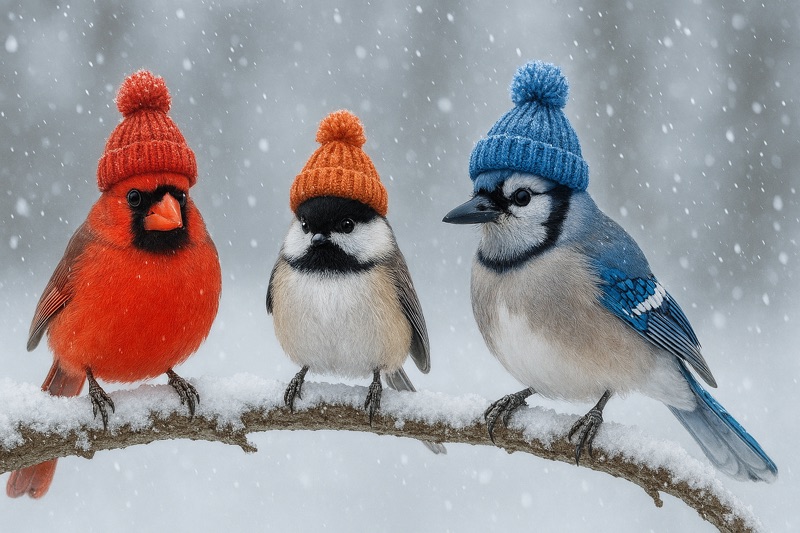
When winter takes away nature’s resources, our kindness can become a lifeline to birds and other wildlife.
Winter can be one of the most challenging seasons for native songbirds. As temperatures drop and snow covers the ground, food becomes scarce, natural shelter disappears, and survival becomes a daily struggle. While many people admire birds during the warmer months, the quiet hardships they face in winter often go unnoticed. Yet, this season is when songbirds need support the most.
This article explores the challenges native songbirds encounter during winter and the essential resources they rely on to survive. Readers will learn why winter is such a critical time for birds and discover simple, meaningful ways to provide food, shelter, and safe habitats. By understanding their struggles and needs, we can play a small but powerful role in helping native songbirds endure the cold months and continue filling our landscapes with life and song.
Why Winter Is So Hard For Songbirds
Winter is a difficult and dangerous time for native songbirds. As temperatures drop, birds must work much harder to stay warm and maintain their body heat. Unlike humans, they cannot rely on clothing or heated shelters, so they depend entirely on their own energy to survive. To produce enough warmth, songbirds need to eat frequently, which makes access to food one of the most critical factors in their winter survival.
However, winter greatly reduces the availability of natural food sources. Insects disappear, berries and seeds become scarce, and many plants stop producing food altogether. Snow and ice often cover the ground, hiding seeds and other resources that birds normally depend on. With fewer places to find food, songbirds must spend more time searching, which can be exhausting and risky, especially in harsh weather conditions.
Shorter daylight hours also make survival harder. With less time to forage for food each day, songbirds must balance feeding with staying safe from predators and conserving energy. At the same time, habitat loss caused by human development, deforestation, and the removal of native plants reduces the number of safe places where birds can find shelter and protection. Together, these challenges make winter one of the most demanding seasons for songbirds, where even small changes in their environment can determine whether they survive until spring.
Despite these challenges, many native songbirds remain in our landscapes throughout the winter, quietly enduring the cold season and adapting in remarkable ways to survive. Understanding which songbirds stay through the winter helps us better appreciate their resilience and their needs.
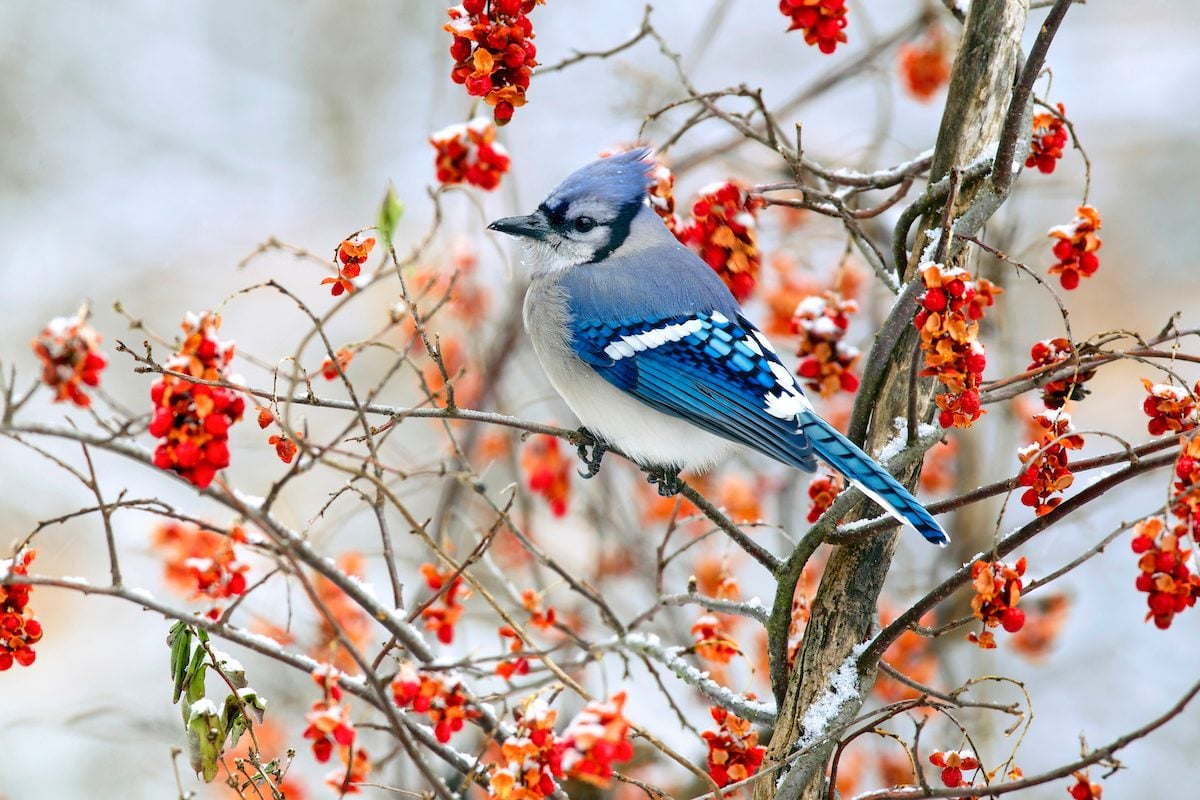
Photo Credits: STEVE AND DAVE MASLOWSKI
Native Songbirds That Stay Through The Winter
While many birds migrate south to escape harsh winter conditions, some native songbirds remain year-round, facing the cold with remarkable resilience and adaptability. These birds have developed unique behaviors and survival strategies that allow them to endure freezing temperatures, limited food, and changing landscapes. Their presence during winter serves as a powerful reminder of nature’s strength and persistence, even in the most challenging seasons.
In this section, readers will learn about several native songbirds that stay through the winter, including the Black-capped Chickadee, Northern Cardinal, Blue Jay, Downy Woodpecker, Hairy Woodpecker,
Red-bellied Woodpecker, Pileated Woodpecker, White-breasted and Red-breasted Nuthatches, Canada Jay, Brown Creeper, House Finch, Dark-eyed Junco, Tufted Titmouse, American Goldfinch, and Mourning Dove. Understanding these species helps us better appreciate their resilience, the important roles they play in our ecosystems, and the meaningful ways we can support them during the cold months.
Black Capped Chickadee :
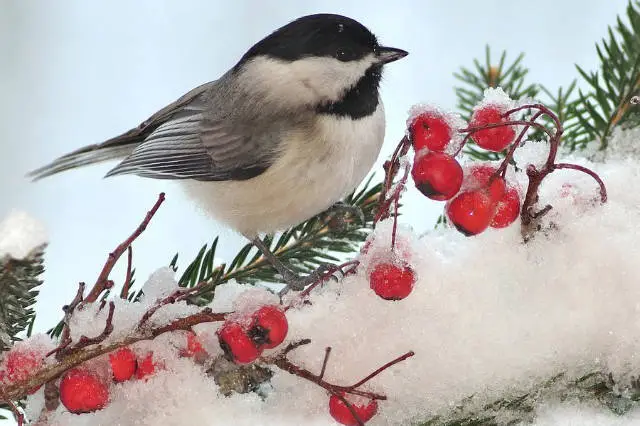
Photo Credits: Brian Minter / Black Press Media Staff
The Black-capped Chickadee is one of the most recognizable and beloved songbirds of northern regions. With its distinctive black cap and bib, soft grey body, and cheerful “chick-a-dee-dee-dee” call. This small bird brings life and sound to winter landscapes. Despite its tiny size, the Black-capped Chickadee is remarkably resilient.
During winter, it relies on seeds, berries, and insects hidden in bark, and it often visits bird feeders when natural food becomes scarce. Its ability to store food, form social flocks, and adapt to cold temperatures makes it one of the most successful winter survivors among native songbirds.
Fun Fact:
Black-capped Chickadees can lower their body temperature at night by several degrees to conserve energy, a rare survival strategy that helps them endure freezing winter nights.
Northern Cardinal :
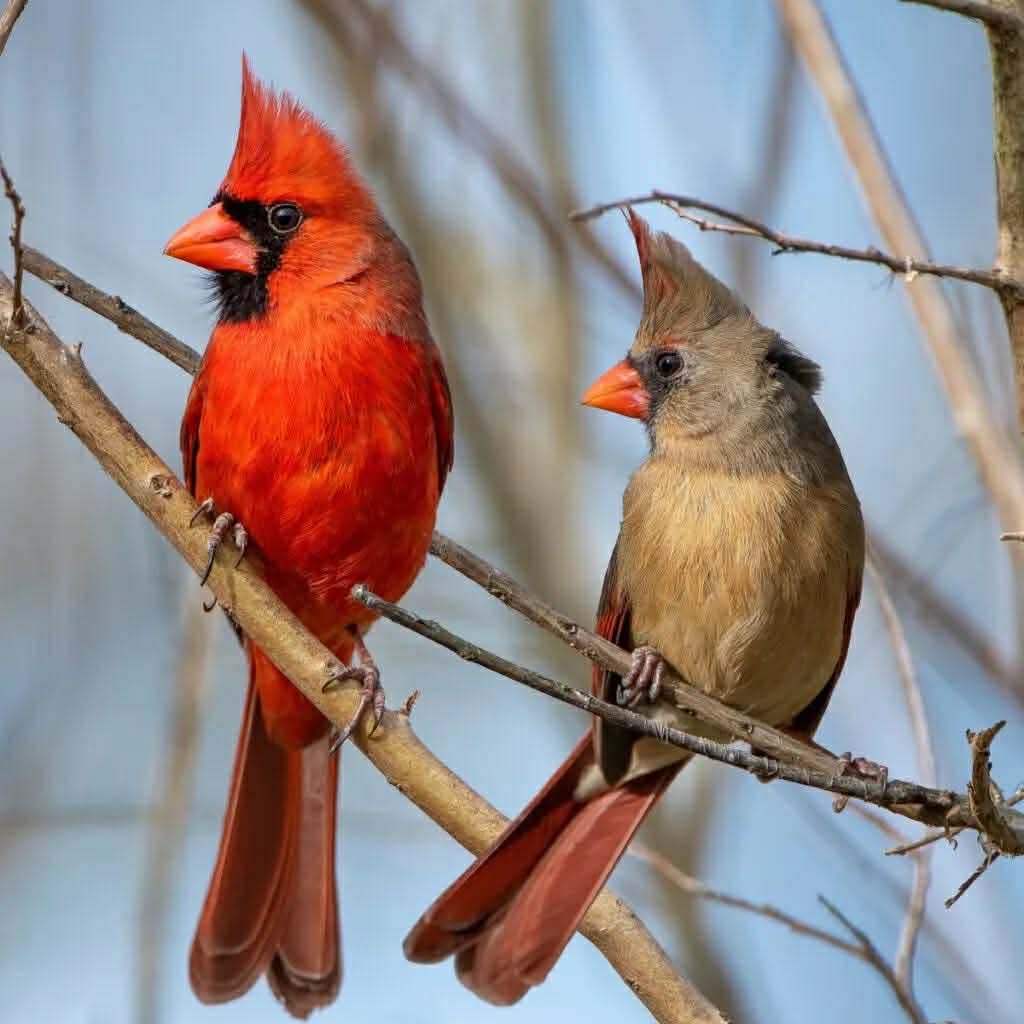 A male and female Northern Cardinals on a thin tree or shrub branch during the winter. Photo Credits: Jim and Mary Competti from This Is My Garden
The Northern Cardinal is one of the most striking and familiar songbirds seen throughout the year, especially in winter when its bright red plumage stands out against snow-covered landscapes. Males are known for their vivid red colour, while females display warm brown tones with hints of red, making them equally beautiful in their own way.
Unlike many songbirds, Northern Cardinals do not migrate, instead relying on seeds, fruits, and sheltered habitats to survive the cold months. They are frequent visitors to bird feeders and are often seen in pairs, reflecting their strong social bonds. Their adaptability, territorial behaviour, and ability to find food in winter make them one of the most resilient native songbirds.
Fun Fact:
Northern Cardinals are monogamous and often stay with the same mate year-round. During breeding season, males sometimes feed their partners beak-to-beak, a rare and fascinating behaviour among songbirds.
Blue Jay :
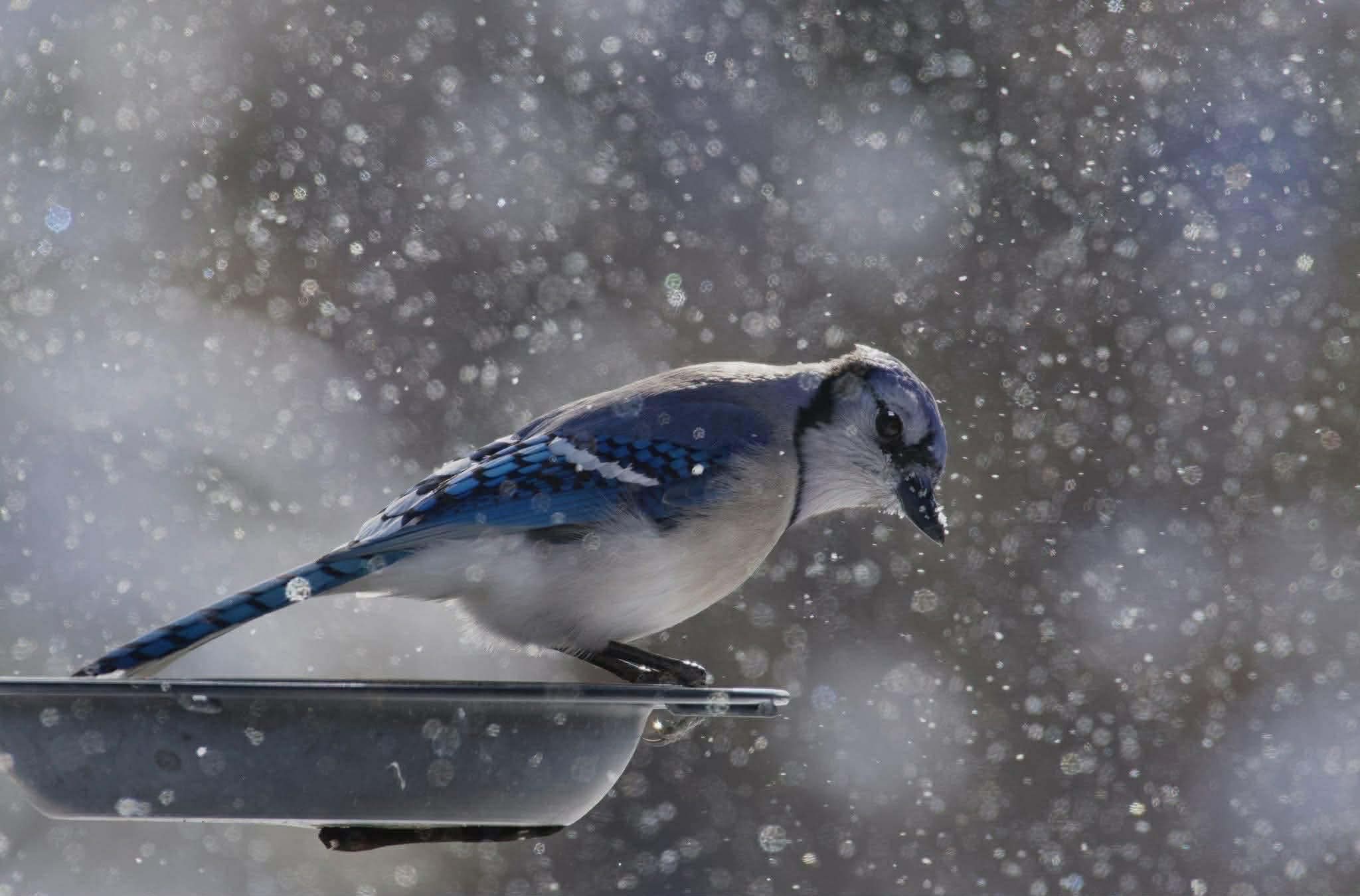 A Blue Jay looking for sunflower seeds as the snow blows by. Photo Credits: Paul Simko from Take A Walk With Us Facebook group
The Blue Jay is a bold, intelligent, and highly recognizable songbird known for its bright blue feathers, white markings, and loud, expressive calls. Unlike many birds that migrate, Blue Jays often remain in their home regions throughout winter, relying on seeds, nuts, and stored food to survive.
They are especially known for collecting and caching acorns, which they hide in the ground to eat later when food is scarce. Blue Jays are also highly social and alert birds, often acting as “watchdogs” of the forest by warning other birds of predators.
Their adaptability, strong memory, and problem-solving abilities make them one of the most resourceful native songbirds during the winter months.
Fun Fact:
Blue Jays can imitate the calls of hawks, such as the Red-tailed Hawk. Scientists believe they sometimes use this ability to scare away other birds or to test whether predators are nearby, making them one of the most clever and strategic songbirds in North America.
Downy Woodpecker :
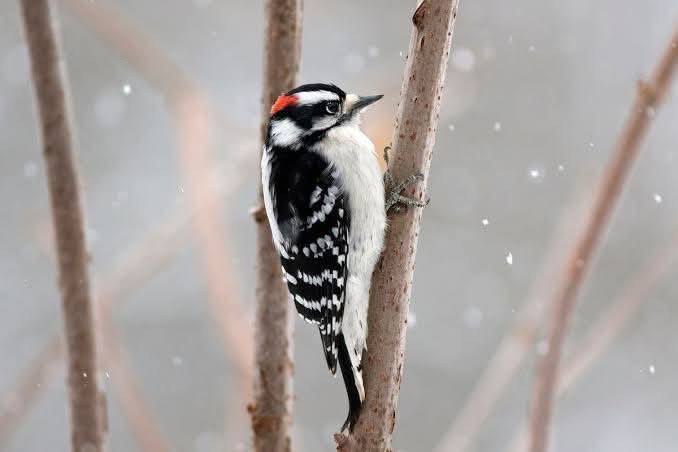 Downy Woodpecker on a branch while it is snowing. Photo Credits: DOUG HITCHCOX / Staff Naturalist from MAINE AUDUBON Your Wildlife Community
The Downy Woodpecker is the smallest and one of the most common woodpeckers in North America. With its black-and-white patterned feathers and small bill, it is often seen clinging to tree trunks, branches, and even bird feeders during winter.
Unlike many migratory birds, the Downy Woodpecker remains active throughout the cold months, relying on insects hidden beneath tree bark, as well as seeds and suet from feeders.
Its ability to adapt to both forests and urban areas makes it a successful winter survivor. Despite its tiny size, the Downy Woodpecker plays an important role in ecosystems by controlling insect populations and creating small cavities that other wildlife may later use for shelter.
It is often mistaken for the larger Hairy Woodpecker, but it can be distinguished by its smaller size and shorter bill.
Fun Fact:
Even though it looks similar to the larger Hairy Woodpecker, the Downy Woodpecker has a surprisingly soft drumming sound. Its lighter tapping helps it find insects without using as much energy which is a smart survival strategy during winter.
Hairy Woodpecker :
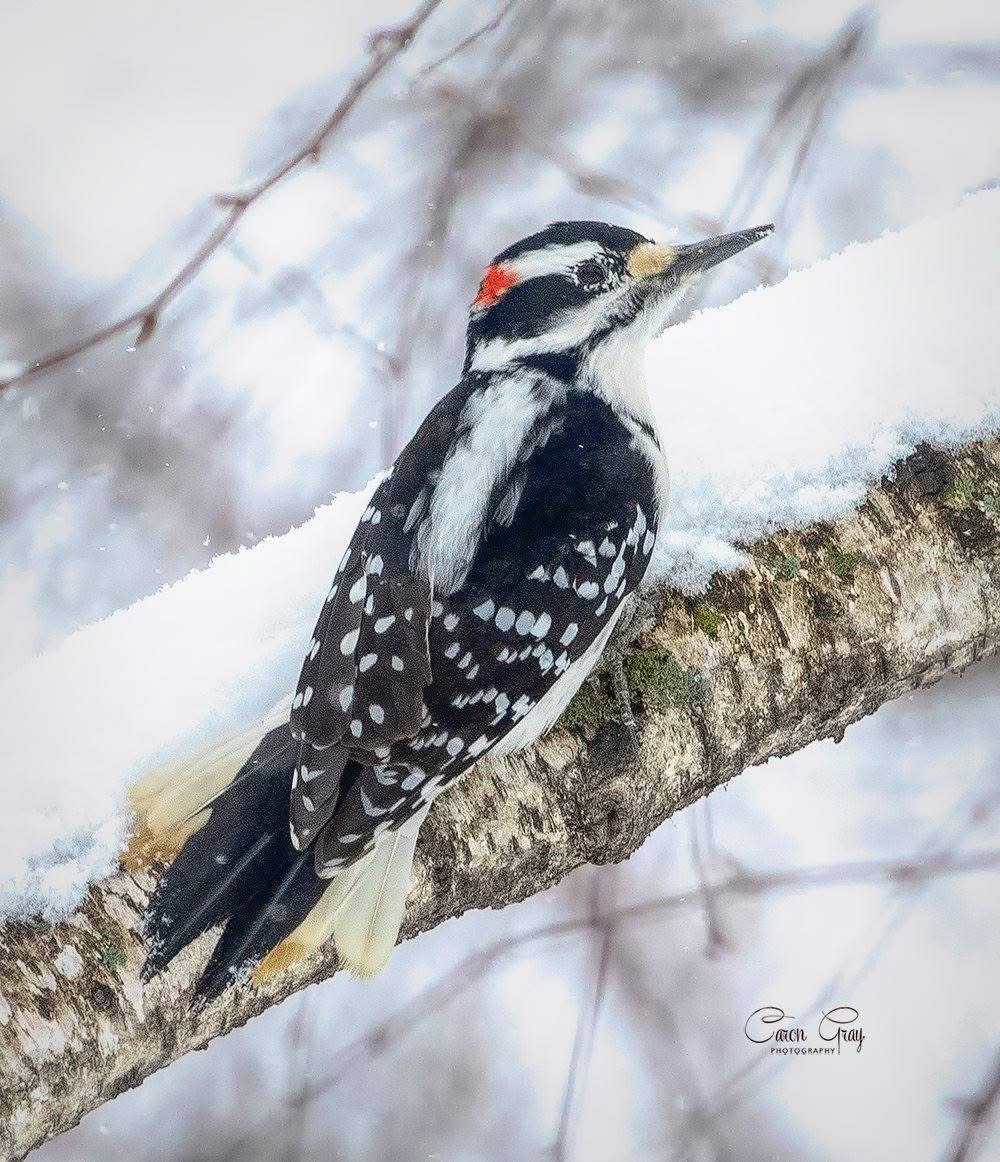 A Hairy Woodpecker on a very snow large branch Photo Credits: Caron Gray
The Hairy Woodpecker is a medium-sized woodpecker known for its bold black-and-white plumage and strong, chisel-like bill. Often found in forests, woodlands, and even suburban areas, it remains active throughout the winter, searching tree trunks and branches for insects hidden beneath the bark.
Unlike the smaller Downy Woodpecker, the Hairy Woodpecker has a longer bill and a larger body, allowing it to dig deeper into wood to find food.
During winter, it may also visit bird feeders for suet and seeds, making it a familiar sight for many people. Its strength, adaptability, and persistence make it an important species in winter ecosystems.
Fun Fact:
The Hairy Woodpecker’s tongue can extend far beyond its beak and is coated with sticky saliva and tiny barbs, helping it pull insects out of deep crevices in wood like a natural insect-catching tool.
Red - bellied Woodpecker :
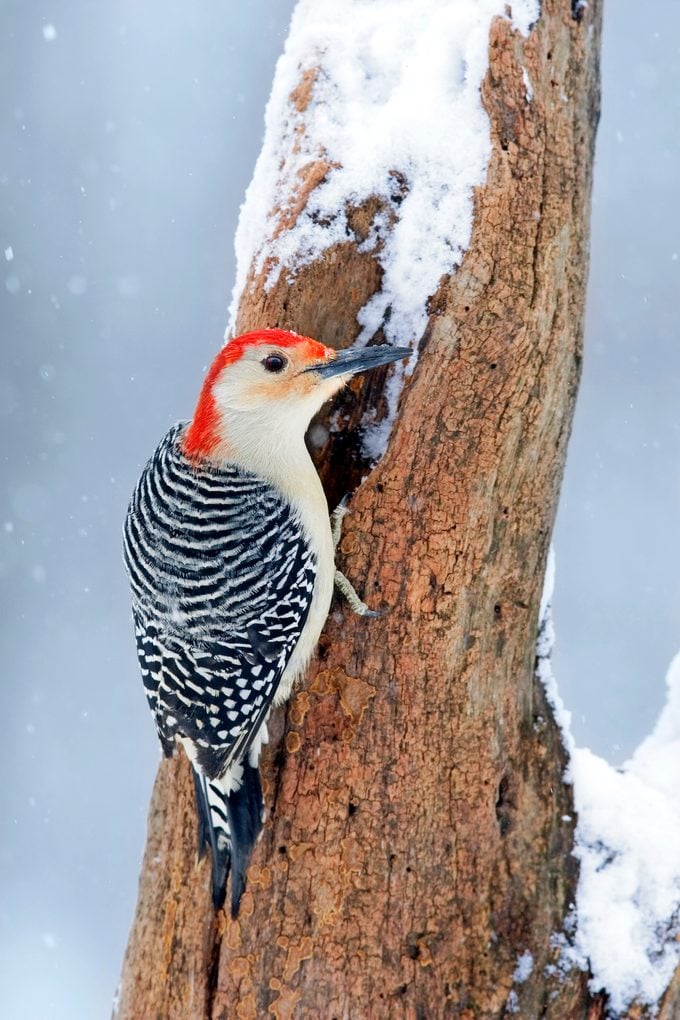 Red bellied Woodpecker has bold stripping on it’s back.Photo Credits: STEVE AND DAVE MASLOWSKI
The Red-bellied Woodpecker is a striking woodpecker recognized by its black-and-white barred back and the red patch on its head. Despite its name, the red colour on its belly is often faint and difficult to see.
This species remains active during winter, feeding on insects, nuts, seeds, berries, and occasionally visiting bird feeders. Highly adaptable, the Red-bellied Woodpecker thrives in forests, parks, and urban areas, using its strong bill to explore tree bark and branches for food.
Its curiosity and intelligence make it one of the more dynamic and noticeable woodpeckers during the colder months.
Fun Fact:
Red-bellied Woodpeckers are known to store food in tree bark and crevices for later use. Some individuals can remember dozens of hiding spots, showing an impressive level of memory and problem-solving ability.
Pileated Woodpecker :
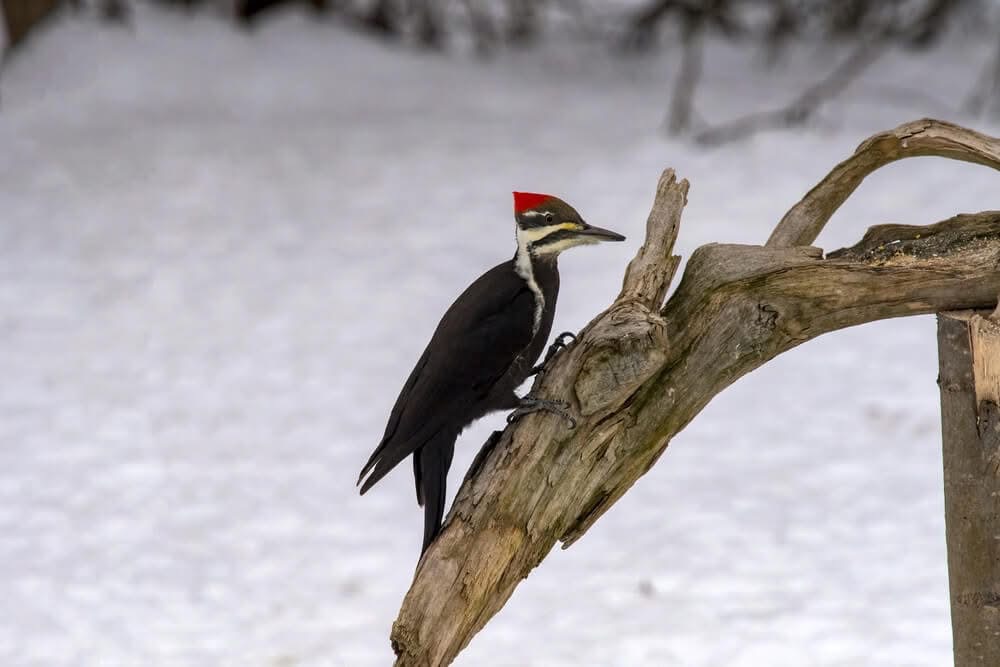
Pileated Woodpecker on big log or branch in the winter. Photo Credits: Bird Chronicle on Facebook
The Pileated Woodpecker is one of the largest and most impressive woodpeckers in North America. With its bold black body, white wing markings, and striking red crest, it is often associated with mature forests and large trees.
Unlike many birds that migrate, the Pileated Woodpecker remains in its territory throughout the winter, using its powerful bill to excavate deep holes in wood in search of carpenter ants and other insects. Its loud calls and dramatic drumming make it a distinctive presence even during the quiet winter months.
By creating large cavities in trees, the Pileated Woodpecker also provides shelter for many other wildlife species, making it an important part of forest ecosystems.
Fun Fact:
The rectangular holes made by Pileated Woodpeckers are so large that they are sometimes mistaken for damage caused by small mammals, showing just how powerful this bird’s excavation abilities are.
White - breasted Nuthatch :
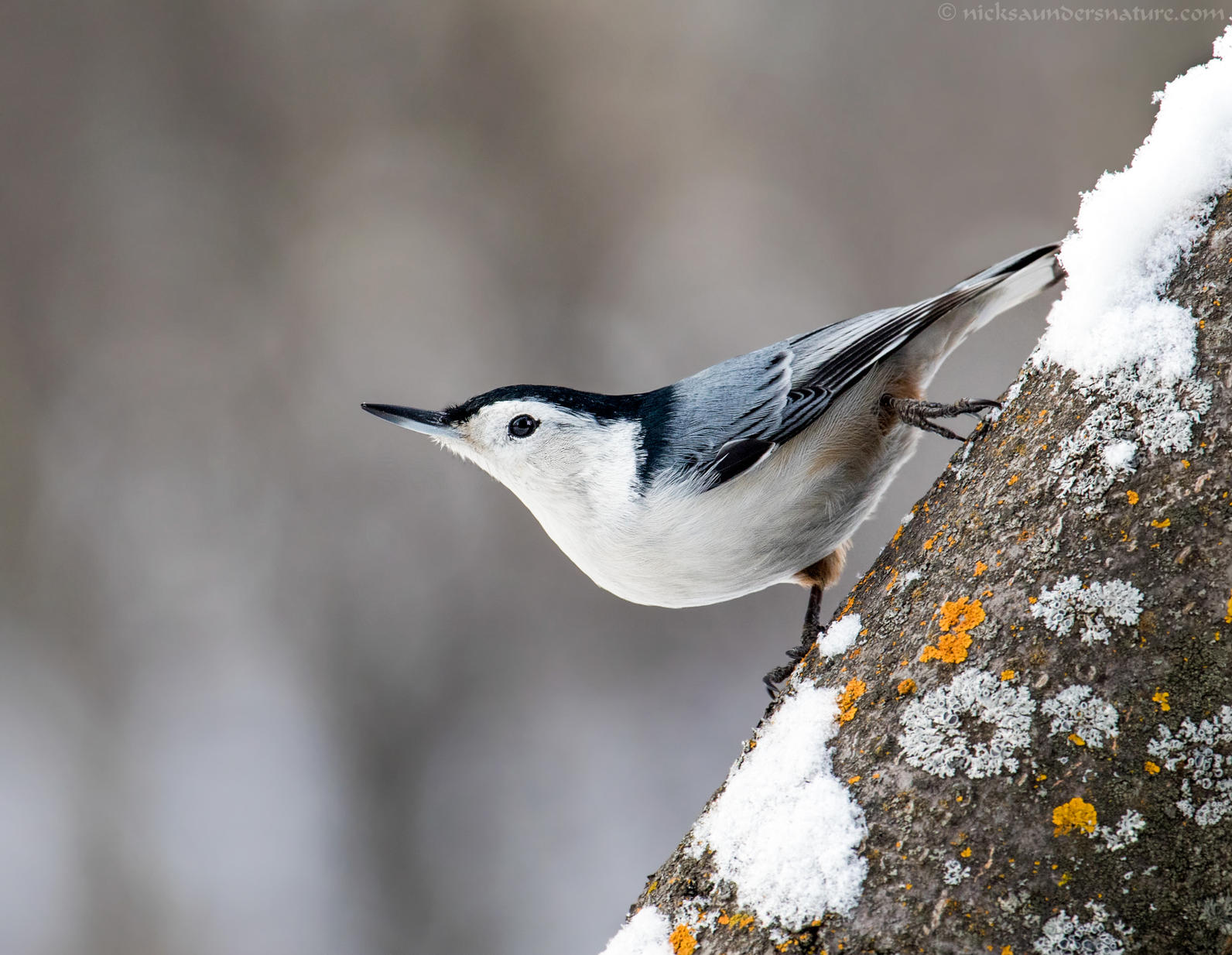 White - breasted Nuthatch walking down a large trunk of a tree upside down in the winter.Photo Credits: Nick Saunders/Great Backyard Bird Count
The White-breasted Nuthatch is a small, energetic songbird known for its blue-gray back, white underside, and unique habit of moving headfirst down tree trunks. This species remains active throughout winter, relying on seeds, nuts, and insects hidden in tree bark.
White-breasted Nuthatches often visit bird feeders, especially for sunflower seeds and suet, and are known for storing food in crevices to eat later.
Their agility and curiosity allow them to thrive in cold conditions, making them a familiar and welcome sight in winter landscapes.
Fun Fact:
White-breasted Nuthatches sometimes cover stored seeds with bits of bark or lichen to hide them from other animals, which is a clever behaviour known as “food camouflage.”
Red - breasted Nuthatch :
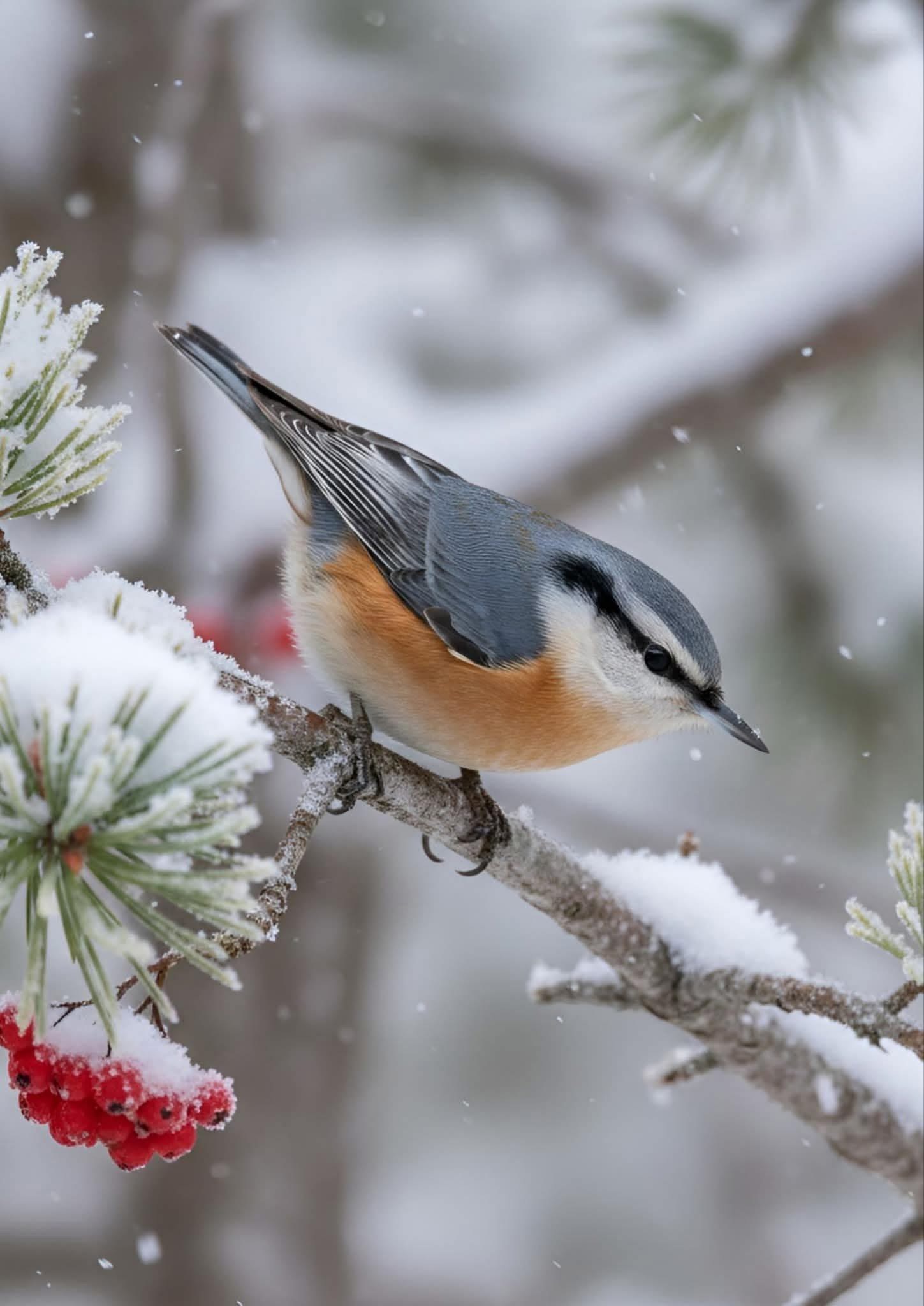
Red breasted Nuthatch on a thin branch that has berries in the snow. Photo Credits: Nature Uncovered on Facebook
The Red-breasted Nuthatch is a smaller, more compact nuthatch with a rusty-red underside and bold facial stripes.
Unlike its white-breasted relative, this species is more closely associated with coniferous forests and often moves south in some winters when food is scarce, a behavior known as “irruption.”
During winter, Red-breasted Nuthatches feed on seeds and insects and frequently visit bird feeders.
Their high-pitched calls and quick movements make them easy to recognize despite their small size. Their adaptability to changing food availability helps them survive unpredictable winter conditions.
Fun Fact:
When cone crops are low, Red-breasted Nuthatches can travel hundreds or even thousands of kilometres in search of food. This unusual movement, called an “irruption,” is driven by food availability rather than seasons.
Canada Jay :
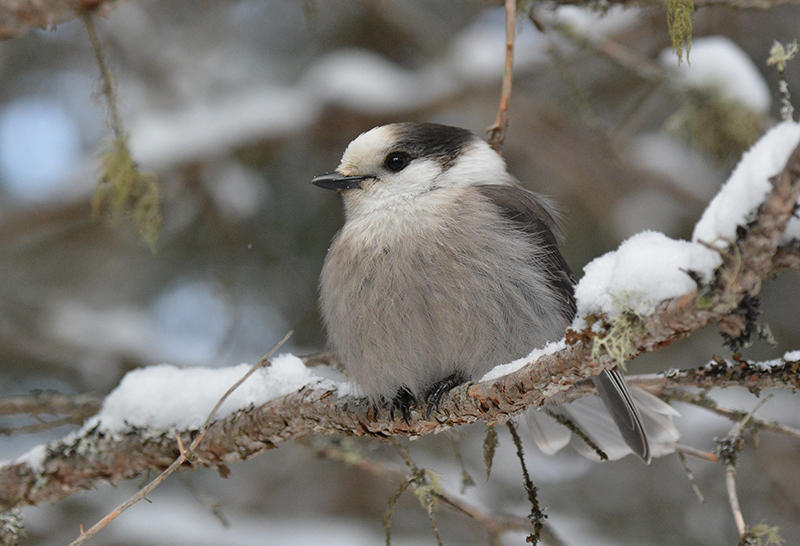 Canada Jay on a thin branch in winter Photo Credits: CHRIS EARLEY
The Canada Jay is a hardy and intelligent bird that thrives in cold northern forests. With its soft grey feathers, white face, and calm demeanor, it is often seen in boreal and mixed forests throughout the year.
Unlike many songbirds, the Canada Jay remains in its territory during winter, relying on stored food to survive harsh conditions.
It is known for collecting berries, insects, fungi, and even small scraps of food, which it carefully hides in tree bark and crevices. Its remarkable memory and ability to plan ahead make the Canada Jay one of the most resilient winter birds in Canada.
Fun Fact:
Canada Jays use sticky saliva to glue food to tree branches and bark for storage, allowing them to save meals for months even through freezing winter temperatures.
Brown Creeper :
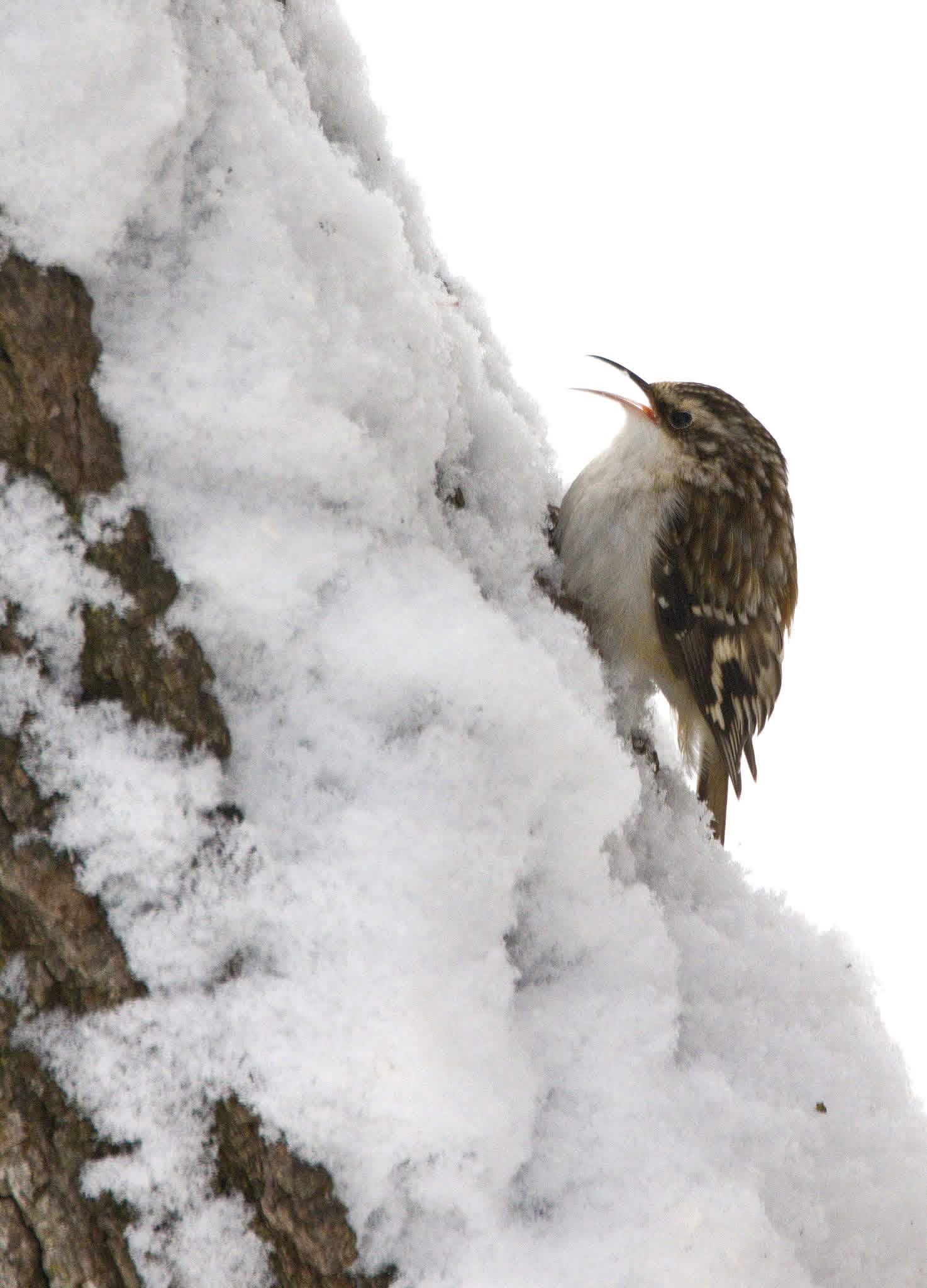 Brown Creeper eating the snow Photo Credits: Steven Patterson on Facebook
The Brown Creeper is a small, well-camouflaged bird that blends perfectly with the bark of trees. Its mottled brown plumage makes it easy to overlook as it spirals upward along tree trunks in search of insects and spiders hidden in crevices.
During winter, when insects are scarce, the Brown Creeper continues this unique feeding behavior, relying on its slender bill to extract tiny prey from beneath bark.
Quiet and elusive, it often goes unnoticed, yet it plays an important role in forest ecosystems by controlling insect populations.
Fun Fact:
Unlike woodpeckers and nuthatches, Brown Creepers almost always move upward on tree trunks and then fly down to the base of another tree to start again, creating a distinctive climbing pattern that few people recognize.
House Finch :
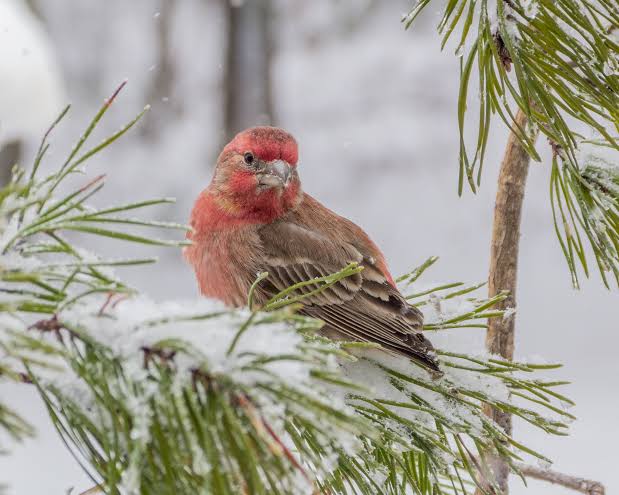
House Finch on a snowy branch Photo Credits: Bob Vuxinic
The House Finch is a cheerful and adaptable songbird commonly found in urban areas, gardens, and open woodlands. Males are known for their rosy-red colour on the head and chest, while females display soft brown streaks.
House Finches remain active during winter, feeding on seeds, buds, and berries, and are frequent visitors to bird feeders. Their social nature and ability to thrive in human-altered environments make them one of the most successful winter songbirds.
Fun Fact:
The red colour of a male House Finch comes from pigments in its diet. If a male eats fewer red pigments as a young bird, its feathers may appear orange or yellow instead of bright red.
Dark - eyed Junco :
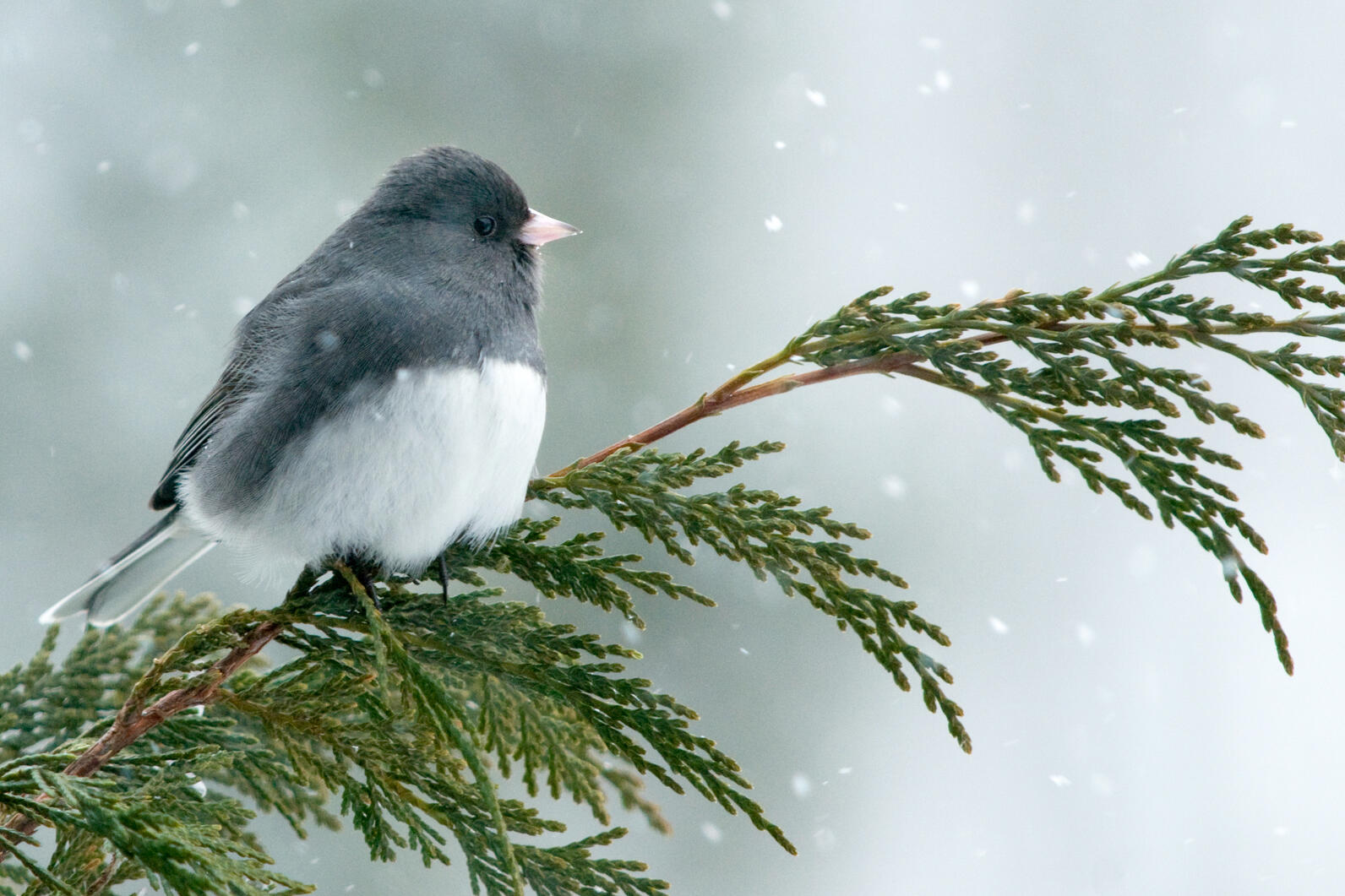
Dark - eyed Junco on a cedar branch Photo Credits: Jocelyn Anderson/Audubon Photography Awards
The Dark-eyed Junco is often called the “snowbird” because it frequently appears in large numbers during winter. With its soft grey body, white belly, and quick hopping movements, it is commonly seen foraging on the ground for seeds.
Dark-eyed Juncos migrate short distances and settle in winter habitats where food is more available. They are highly adaptable and often form flocks, which helps them find food and stay safe from predators during the colder months.
Fun Fact:
Dark-eyed Juncos have several different colour forms across North America. Birds that look quite different can actually be the same species, making them one of the most visually diverse songbirds on the continent.
Tufted Titmouse :
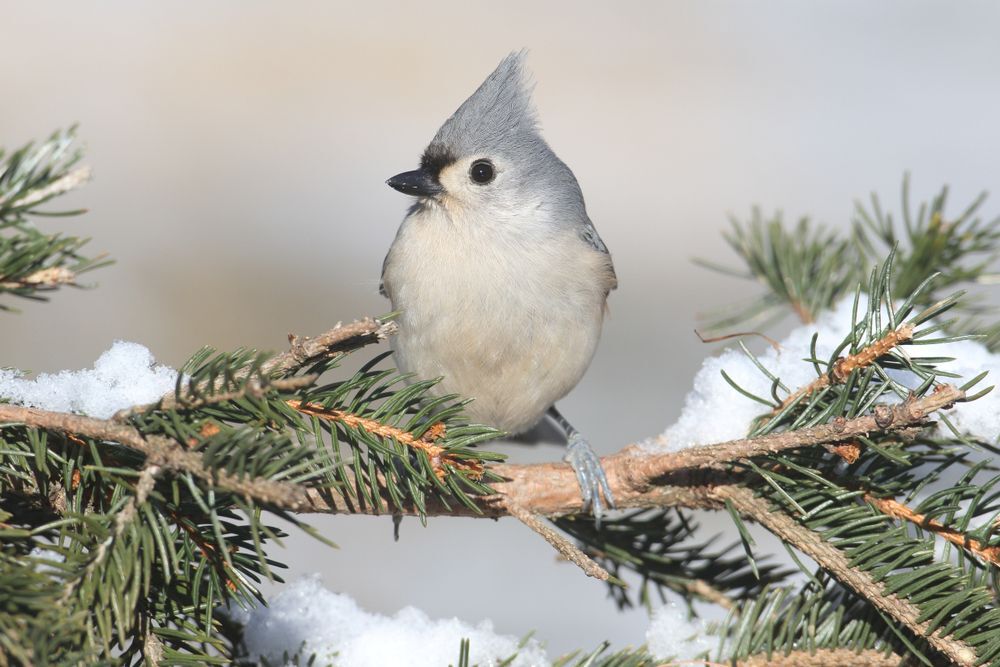
Titmouse on a Pine Tree Branch Photo Credits: STEVE BYLAND / SHUTTERSTOCK
The Tufted Titmouse is a small, lively songbird recognized by its soft grey plumage, pale underside, and distinctive pointed crest on its head.
This species remains active throughout winter, relying on seeds, nuts, and insects to survive the cold months. Tufted Titmice are frequent visitors to bird feeders and are known for their curious and bold behaviour, often grabbing seeds and flying off to eat them in nearby trees.
Their adaptability, intelligence, and strong social connections help them endure harsh winter conditions.
Fun Fact:
Tufted Titmice sometimes store seeds in multiple hidden locations and can remember where they placed them, showing impressive memory and problem-solving abilities.
American Goldfinch :
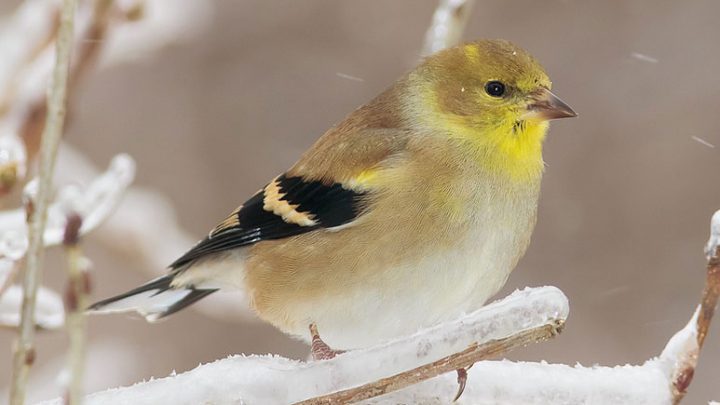 American Goldfinch on a icy branch Photo Credits: Trevor Carl via Birdshare
The American Goldfinch is a graceful and recognizable songbird, famous for its bright yellow breeding plumage and delicate flight. In winter, its feathers change to softer brown and olive tones, helping it blend into its surroundings.
Unlike many songbirds, the American Goldfinch relies heavily on seeds throughout the year, making it well adapted to winter survival. It often feeds on thistle, sunflower seeds, and other plant seeds, and is a common visitor at bird feeders. Their seasonal plumage change and seed-based diet make it a unique presence among winter songbirds.
Fun Fact:
American Goldfinches are one of the few songbirds that delay breeding until late summer, timing their nesting season to match the peak availability of seeds rather than insects.
Mourning Dove :
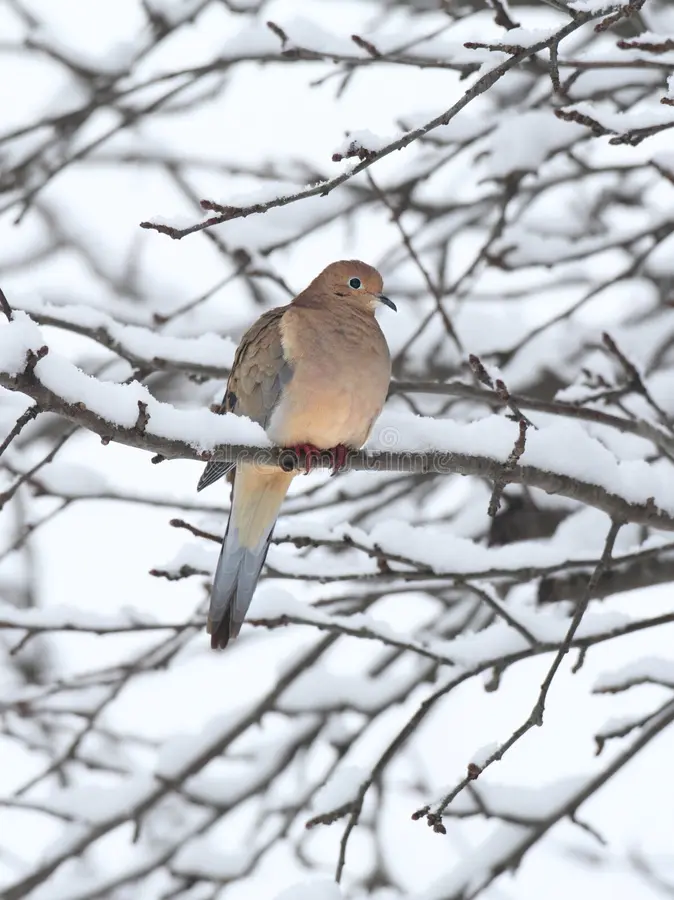
Mourning Dove resting on a snowy branch Photo Credits: Steve Byland / Dreamstime.com
The Mourning Dove is a gentle, slender bird known for its soft grey-brown feathers and mournful cooing call. Although some populations migrate, many Mourning Doves remain in their habitats throughout winter, especially in areas where food is available.
They feed primarily on seeds and are often seen foraging on the ground or visiting open feeding areas. Their calm nature and ability to survive in a variety of environments make them a quiet but resilient presence during the colder months.
Fun Fact:
Mourning Doves can drink water without lifting their heads, unlike most birds. This rare ability allows them to stay alert while drinking, reducing their vulnerability to predators.
Fascinating Winter Adaptions Of Songbirds
To survive the harsh conditions of winter, native songbirds rely on a range of remarkable adaptations that help them conserve energy, find food, and stay warm. One of the most important strategies is increasing their metabolism and fluffing their feathers to trap warm air close to their bodies. Many birds also shiver to generate heat, much like humans do, allowing them to maintain their body temperature even during freezing nights.
Food storage is another key adaptation. Several songbird species, such as chickadees, nuthatches, jays, and woodpeckers, hide seeds and other food in tree bark, soil, or crevices to eat later when natural resources are scarce. These birds have excellent memory and spatial awareness, enabling them to relocate hundreds or even thousands of stored food items. Some species also adjust their diets in winter, shifting from insects to seeds and berries that remain available throughout the colder months.
Songbirds also adapt their behaviour to conserve energy and reduce risk. Many species form flocks during winter, which helps them locate food more efficiently and stay alert to predators. Others choose sheltered roosting sites, such as tree cavities, dense shrubs, or man-made structures, to protect themselves from wind and extreme cold. Some birds even lower their body temperature at night, entering a state similar to light hibernation to conserve energy.
These extraordinary adaptations highlight the resilience of songbirds and the delicate balance they must maintain to survive winter. Understanding these survival strategies not only deepens our appreciation for these birds but also reminds us how important it is to protect their habitats and provide safe, supportive environments during the coldest months of the year.
Did You Know?
🔘 Some songbirds can remember hundreds of food hiding places, helping them survive long periods when food is scarce.
🔘 Tiny birds lose heat faster than larger birds, which is why species like chickadees must eat almost constantly during winter days.
🔘 Birds can fluff their feathers to trap warm air, creating a natural insulated layer against the cold.
🔘 Certain songbirds roost together at night, sharing body heat to stay warm during freezing temperatures.
🔘 Woodpeckers have shock-absorbing skulls, allowing them to hammer into trees repeatedly without injuring their brains.
🔘 Many winter birds adjust their daily routines, spending less time singing and more time searching for food to conserve energy.
🔘 Some songbirds can survive temperatures far below freezing, even when their small bodies weigh less than a few coins.
Even with their remarkable adaptations, songbirds face constant challenges during winter and must rely on a delicate balance of energy, shelter, and survival strategies.
While their behaviours and physical adaptations help them endure freezing temperatures, their ability to survive ultimately depends on what nature still provides during the cold months.
To truly understand how songbirds make it through winter, it is essential to explore the natural food sources that sustain them when the landscape appears barren and lifeless.
Natural Winter Food Sources
During winter, food becomes one of the most critical factors in the survival of native songbirds. As snow covers the ground and many plants stop producing seeds, fruits, and insects, birds must search harder for nourishment. Unlike the abundance of food available in spring and summer, winter offers limited resources, forcing songbirds to rely on what remains in their natural environment. Understanding these natural food sources helps us see how closely bird survival is connected to healthy ecosystems.
Natural winter foods provide more than just nourishment they shape where birds live, how they behave, and which species are able to remain in cold climates. Seeds, berries, nuts, and hidden insects all play essential roles in sustaining songbirds through the harshest months.
By learning about these resources, we gain a deeper appreciation for the complex relationships between birds and their habitats and can better understand how to protect and support them during winter.
Even in the coldest months, nature continues to provide essential food sources that help native songbirds survive. Although these resources are less abundant than in warmer seasons, many birds have evolved to rely on specific plants and habitats that still offer nourishment during winter. Understanding these natural food sources reveals how deeply connected songbirds are to native ecosystems.
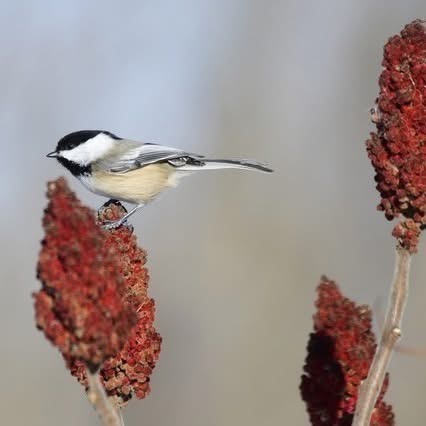
Black Capped Chickadee on Staghorn Sumac thinking about getting seed.
Photo Credits: Blooming Boulevards on Facebook
Native Seed Bearing Plants
Many native grasses and wildflowers produce seeds that persist through winter, making them an important source of energy for songbirds. Plants such as goldenrod, coneflowers, asters, and native grasses provide seeds that remain accessible even after snowfalls.
Birds like finches, sparrows, and juncos depend heavily on these seeds to maintain their energy levels. When native plants are left standing instead of being removed in fall, they become vital feeding grounds for winter birds.
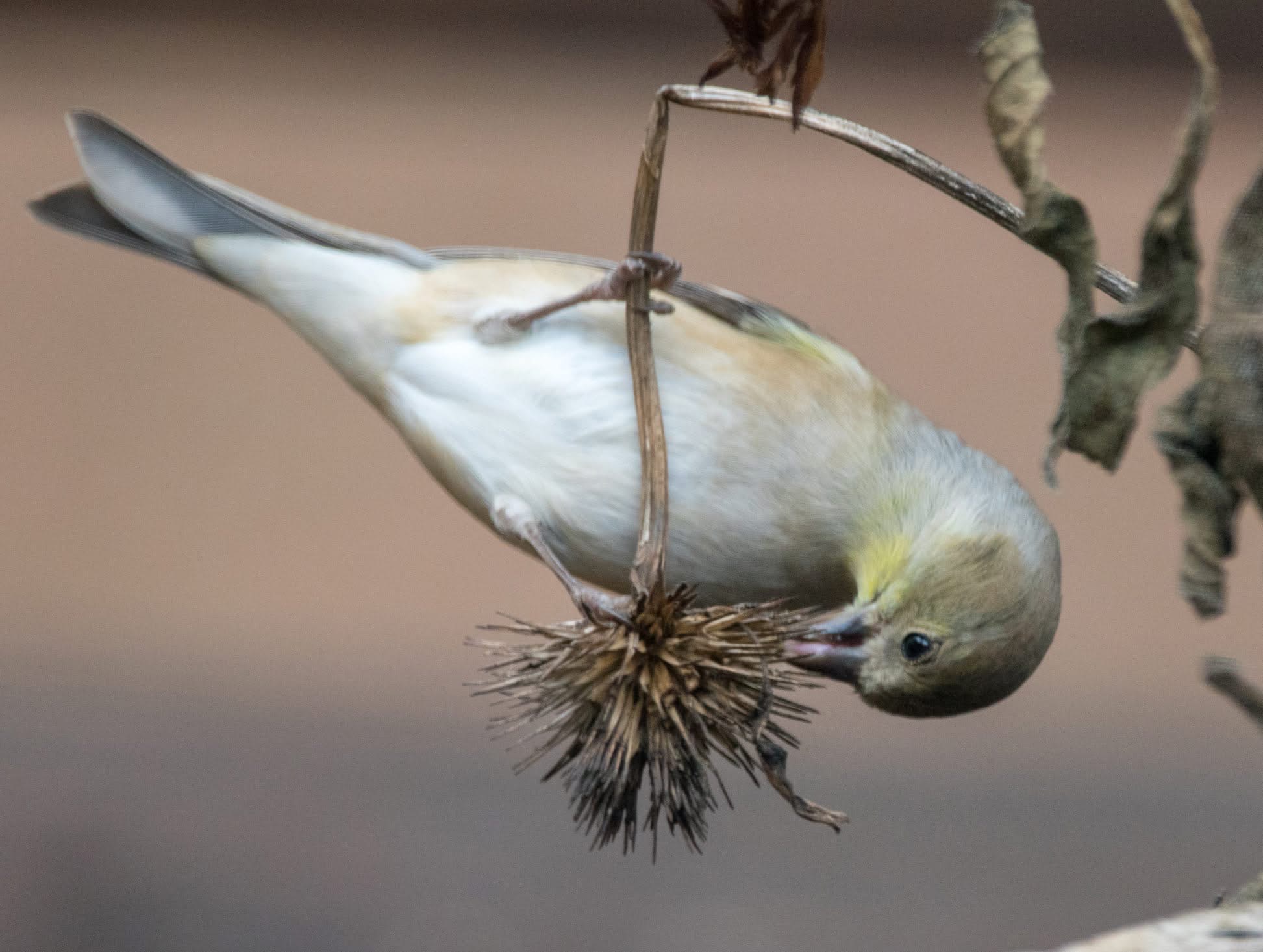
American Gold Finch enjoying the seeds from a Purple Coneflower
Photo Credits: Alice Johnson Searcy from Alabama The Beautiful Facebook group.
Berries from Native Shrubs and Trees
Native shrubs and trees that produce berries play a crucial role in winter survival. Species such as dogwood, serviceberry, hawthorn, highbush cranberry, and mountain ash retain berries into the colder months, offering a valuable food source when other options are scarce.
These berries provide carbohydrates and nutrients that help birds sustain their body heat and energy. Many songbirds, including cardinals, cedar waxwings, and thrushes, rely on these fruits during winter.
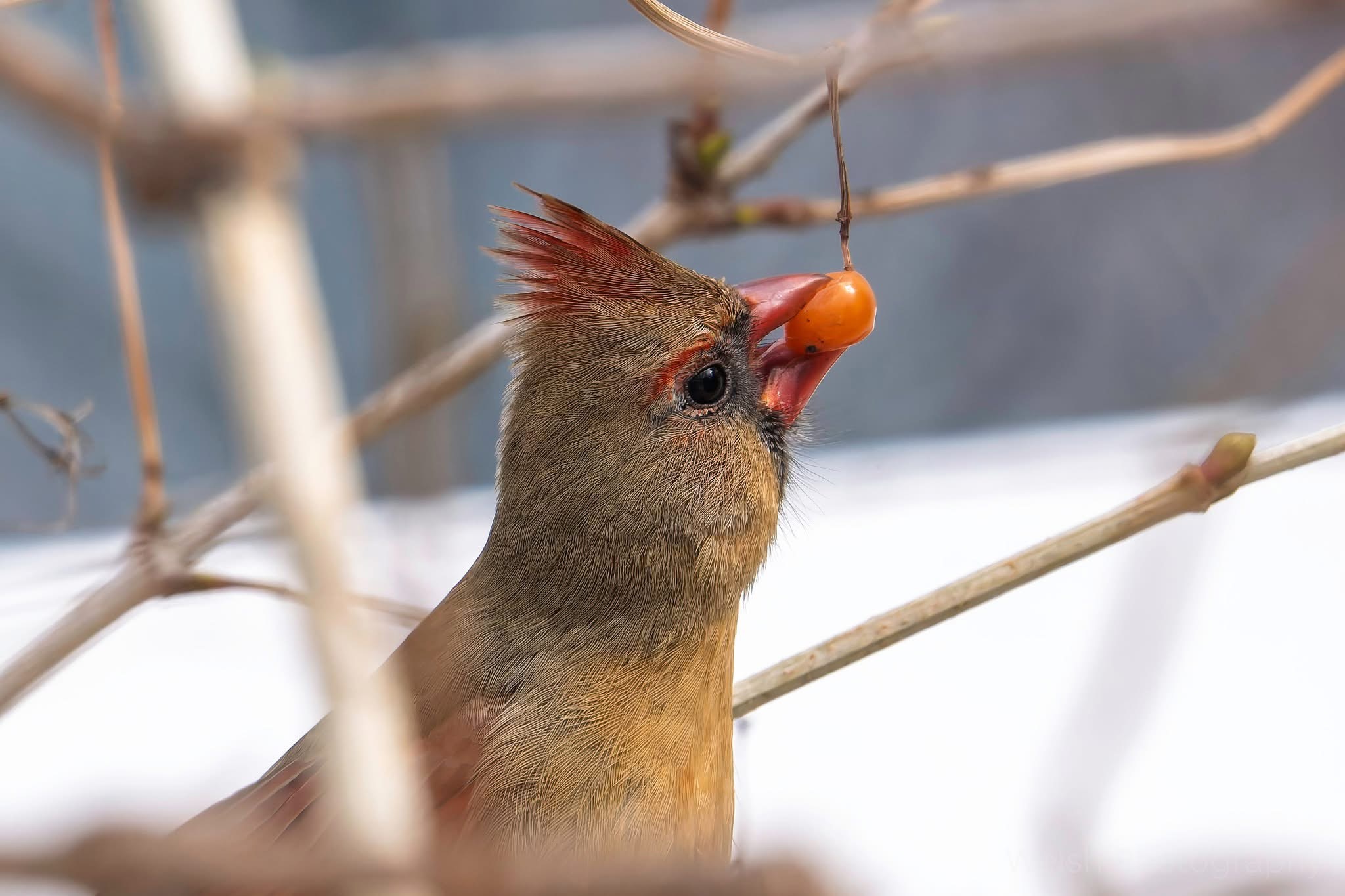
Female Northern Cardinal with a Highbush Cranberry in her mouth during winter
Photo Credits: Pete Witnesses Nature
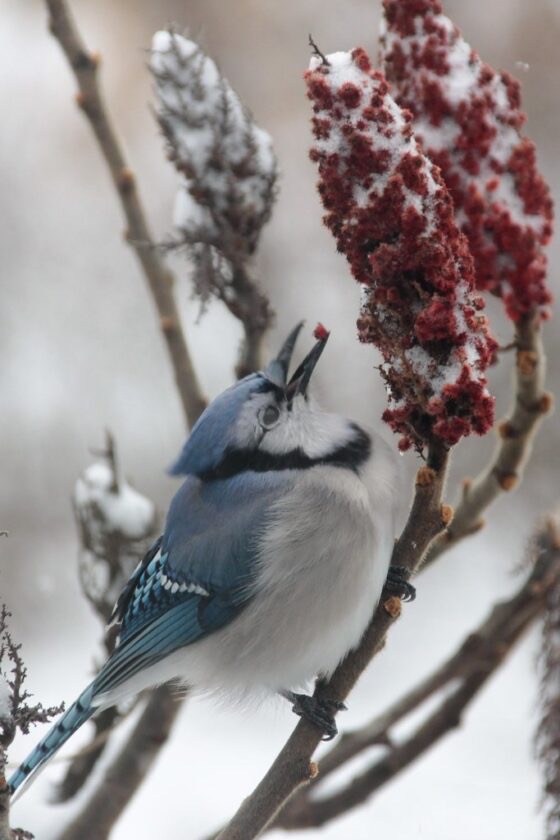
Blue Jay eating Sumac Berries in winter
Photo Credits: Jeff Tome
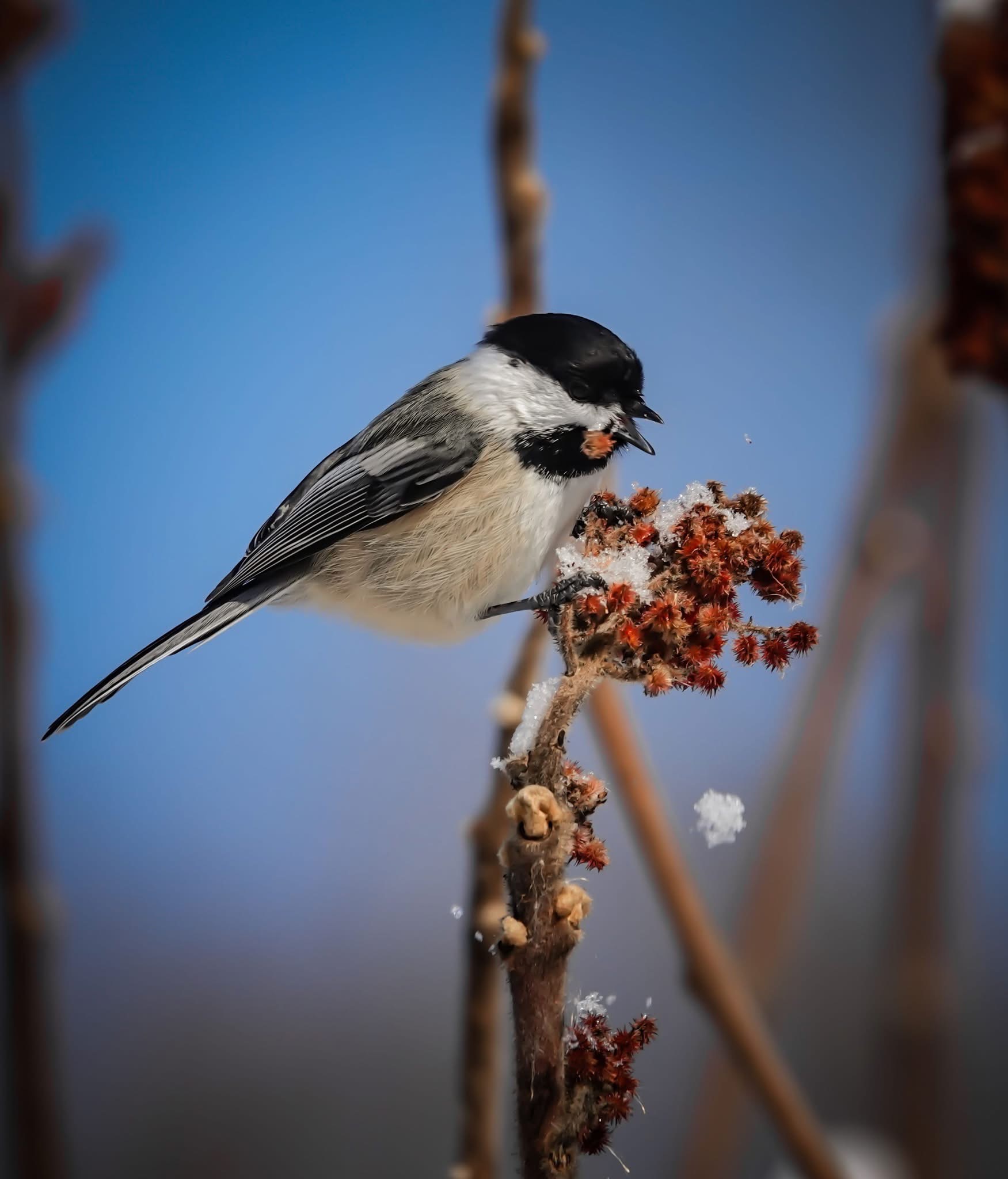
A Black Capped Chickadee indulging in ice sumac
Photo Credits: Thai Lee from Facebook
Pine Cones and Conifer Seeds
Coniferous trees such as pine, spruce, and fir continue to produce seeds throughout winter. Pinecones shelter seeds that birds like crossbills, chickadees, nuthatches, and woodpeckers extract using specialized beaks and feeding techniques.
Conifer forests also provide shelter from wind and predators, making them essential winter habitats. The presence of healthy conifer trees significantly increases the chances of songbird survival in cold climates.
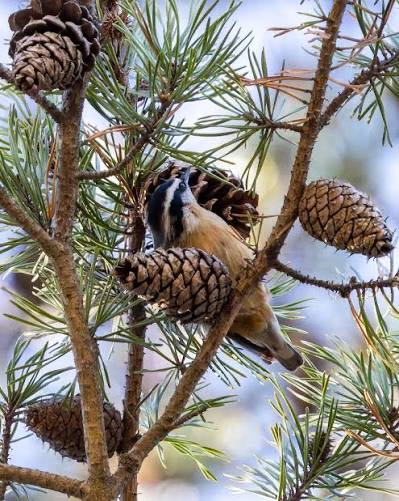
Red breasted Nuthatch enjoying Conifer seeds
Photo Credits: schoeng from Instagram
Insects Hidden Under Bark and Leaf Litter
Although insects seem absent in winter, many survive in protected spaces beneath tree bark, inside wood, or under leaf litter. Woodpeckers, nuthatches, creepers, and chickadees actively search for these hidden insects, using their bills to probe cracks and crevices.
These insects are rich in protein and fats, providing critical nutrition when plant-based foods are limited. Fallen leaves and decaying wood, often overlooked, are therefore essential components of winter ecosystems.
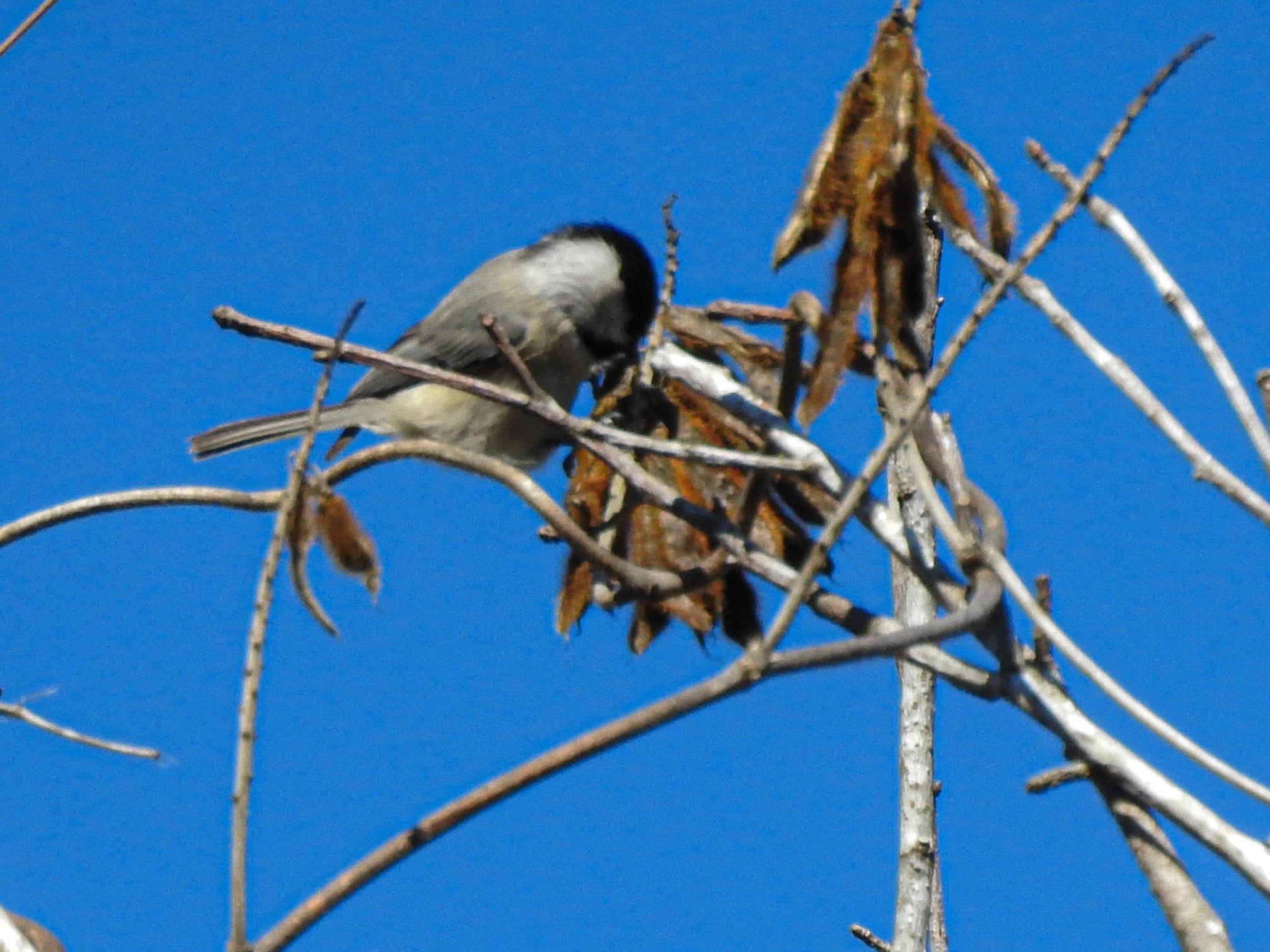
A Black Capped Chickadee eating leaves during winter on a tree or shrub searching for insects.
Photo Credits: Amber Nicole Thatch
The Importance of Leaving Seed Heads and Fallen Leaves in The Garden
Many gardens are cleaned up in the fall in preparation for winter, but what may look untidy to us can be lifesaving for songbirds and other wildlife. Leaving seed heads on native plants such as coneflowers, sunflowers, grasses, and goldenrod provides a steady source of food during winter. These seeds are often one of the last remaining natural resources available when snow covers the ground. By allowing plants to remain standing instead of cutting them back, gardens can become vital feeding areas for birds like finches, chickadees, juncos, and sparrows.
Fallen leaves also play a crucial role in winter ecosystems, even though they are often removed from yards and gardens. Leaf litter creates shelter for insects and other invertebrates that birds rely on for food. It also insulates the soil, protects plant roots, and helps maintain moisture and nutrients in the ground. Birds such as woodpeckers, nuthatches, and brown creepers search leaf litter and tree bark for hidden insects, making fallen leaves an essential part of their winter diet.
Beyond providing food, seed heads and leaf litter contribute to healthy, balanced habitats. They support a wide range of organisms that form the foundation of the food web, benefiting not only birds but also pollinators and other wildlife. By choosing to leave parts of the garden natural through winter, we can transform our outdoor spaces into safe havens for native songbirds and help sustain them through the harshest months of the year.
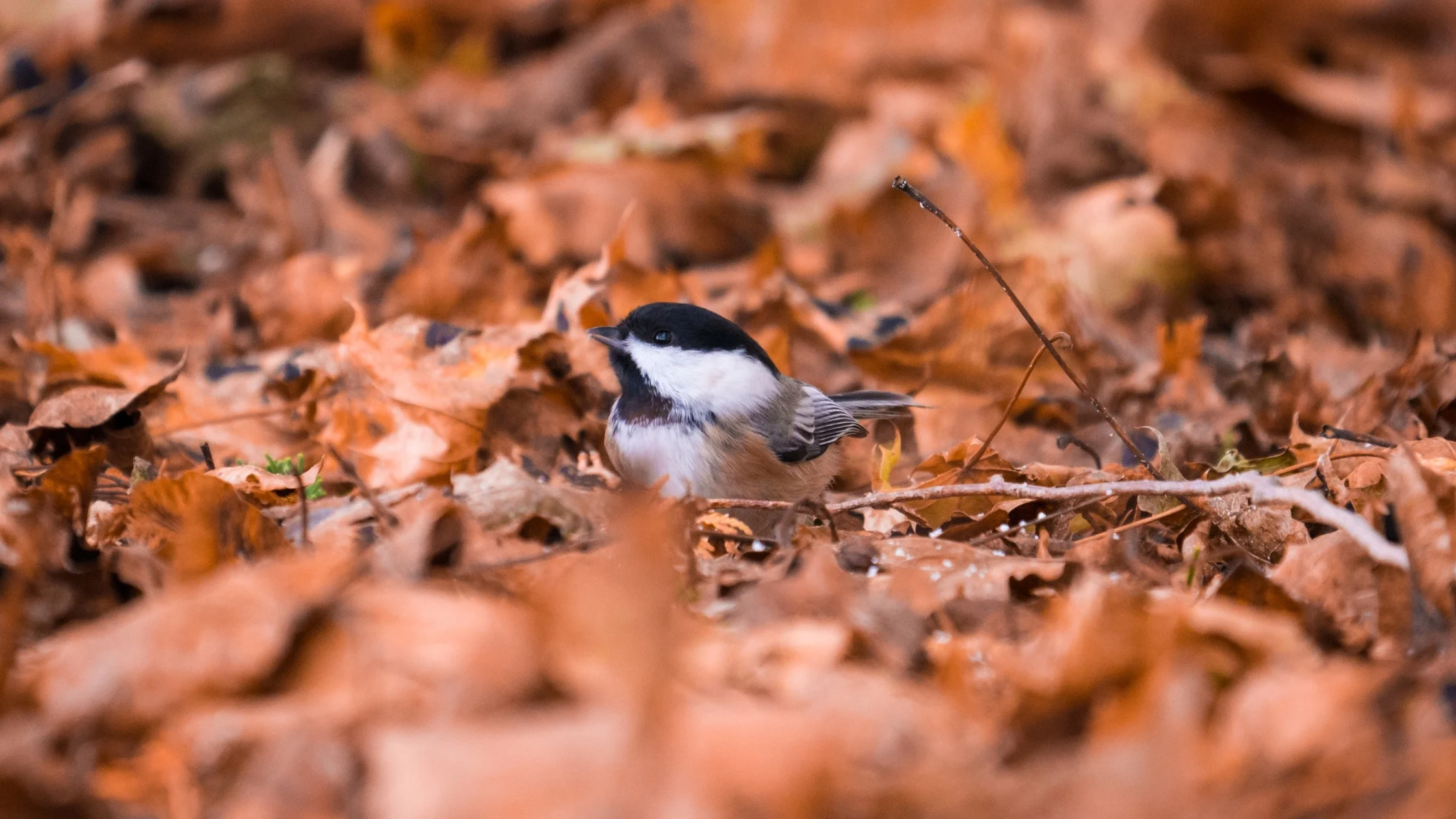
Chickadee in the fallen leaves
Photo Credits: Julie Anne Dellinger / Garden For Wildlife by National Wildlife Federation
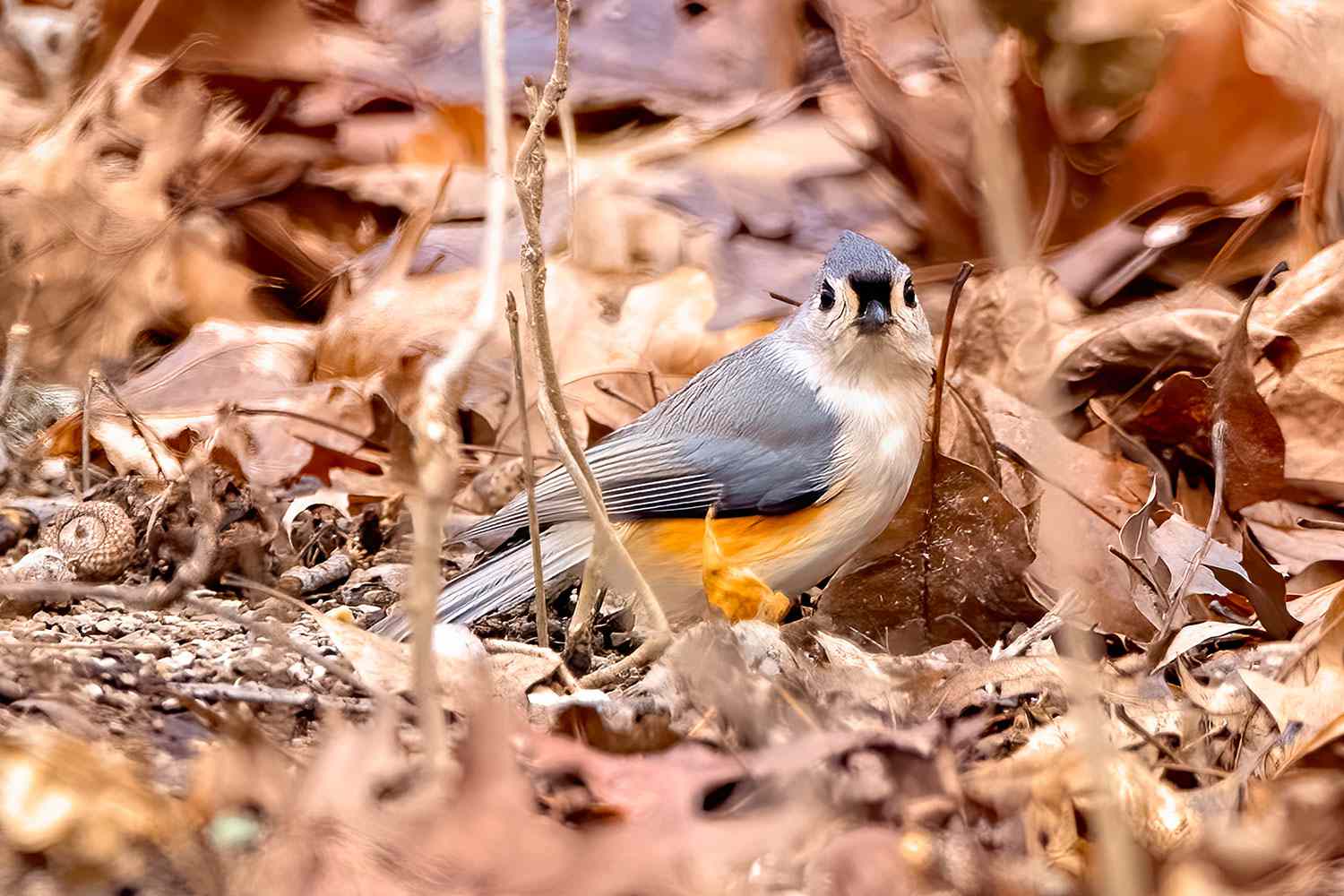
Tufted Titmouse in a large pile of fallen leaves.
Photo Credits: Ali Majdfar / Getty Images
As we have seen, native plants, trees, and natural habitats provide essential food sources that help songbirds survive the winter. Seeds, berries, conifer cones, insects, and leaf litter all play vital roles in sustaining birds during the cold months. However, in many landscapes, these natural resources are becoming less abundant due to habitat loss, urban development, and seasonal garden cleanups. As a result, songbirds often face increasing challenges in finding enough food to meet their energy needs.
While protecting and restoring natural habitats is one of the most important ways to support songbirds, people can also help by providing supplemental food in thoughtful and responsible ways. When done correctly, feeding birds can offer valuable support during harsh winter conditions without harming their health or natural behaviours. Understanding how to feed songbirds safely is an important step in ensuring that our efforts truly benefit the birds we hope to protect.
Feeding Songbirds Safely
During winter, many people feel a natural desire to help songbirds by offering food when the landscape appears empty and lifeless. Bird feeders become points of activity in quiet winter environments, bringing birds closer to our homes and allowing us to witness their resilience firsthand. When done thoughtfully, feeding songbirds can create moments of connection between people and nature while providing birds with much-needed support during harsh conditions.
However, feeding birds is not simply about putting out food, it is a responsibility that requires care and understanding. The way food is offered, the types of food provided, and the cleanliness of feeding areas all play important roles in bird health and survival. Approaching bird feeding with awareness and respect helps ensure that our efforts truly benefit songbirds and contribute to their well-being throughout the winter months.
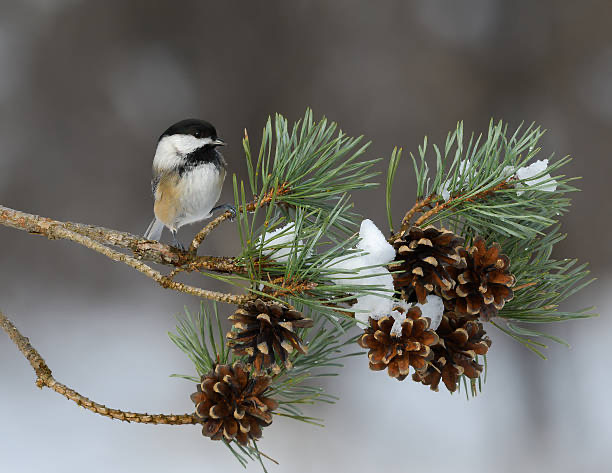
Black Capped Chickadee perched on Pine Tree with Pinecones
Photo Credits: FotoRequest / Stock Images
Choosing The Right Food For Songbirds
Providing the right types of food is one of the most important ways to support songbirds during winter. Different bird species have different dietary needs, and offering a variety of foods helps ensure that multiple species can find suitable nourishment.
Seeds such as black oil sunflower seeds, nyjer (thistle), millet, and cracked corn are widely enjoyed by many songbirds. Suet, made from animal fat, is especially valuable in winter because it provides high-energy nutrition that helps birds maintain body heat. Nuts and native berries can also supplement natural diets, mimicking the foods birds would normally find in the wild.
Matching food to bird species can make feeding more effective and beneficial. For example, chickadees, nuthatches, and woodpeckers are attracted to sunflower seeds and suet, while finches prefer nyjer and small seeds.
Sparrows and juncos often forage on the ground for millet and mixed seeds, while cardinals and blue jays favour larger seeds and nuts. By understanding these preferences, people can create feeding areas that support a diverse range of songbirds rather than just a few common species.
The Importance Of Consistency
Once bird feeding begins, consistency becomes essential, especially during winter. Songbirds quickly learn where reliable food sources are located and may depend on them during periods of extreme cold or heavy snowfall.
Suddenly removing feeders or failing to refill them during harsh weather can make it difficult for birds to find alternative food sources when they need energy the most. While birds are not entirely dependent on feeders, maintaining a regular feeding routine helps provide stability during a season when resources are limited.
Foods To Avoid
Not all foods that seem harmless are safe for birds. Bread, for example, is often offered to birds but provides little nutritional value and can fill their stomachs without giving them the energy they need to survive.
Processed foods such as crackers, chips, salted nuts, sugary snacks, and cooked leftovers can be harmful to birds’ digestive systems and may even be toxic. Moldy or spoiled food is especially dangerous and can cause serious illness.
Offering natural, nutrient-rich foods instead of human leftovers is one of the simplest ways to ensure that feeding efforts truly support songbird health and survival.
Songbirds and The Food that They Prefer
🔘 Black Capped Chickadee: Black oil sunflower seeds, suet, peanuts, and insects.
🔘 Northern Cardinal: Sunflower seeds, safflower seeds, cracked corn, suet, peanuts, and berries.
🔘 Blue Jay: Peanuts, sunflower seeds, acorns, suet and corn.
🔘 Woodpeckers (Downy, Hairy, Red - bellied and Pileated) : Suet, sunflower seeds, peanuts, and insects.
🔘 Nuthatches (White - breasted and Red - breasted) : Sunflower seeds, suet, peanuts, and insects.
🔘 Canada Jay : Suet, berries, seeds, and nuts.
🔘 Brown Creeper : Insects (naturally found under bark) and suet.
🔘 House Finch : Sunflower seeds, nyier (thistle), and small seeds.
🔘 Dark - eyed Junco : Millet, mixed nuts, and sunflower seeds (often on the ground).
🔘 Tufted Titmouse : Sunflower seeds, peanuts, and suet.
🔘 American Goldfinch : Nyier (thistle) and sunflower seeds.
🔘 Mourning Dove : Cracked Corn, millet, and mixed seeds (usually on the ground).
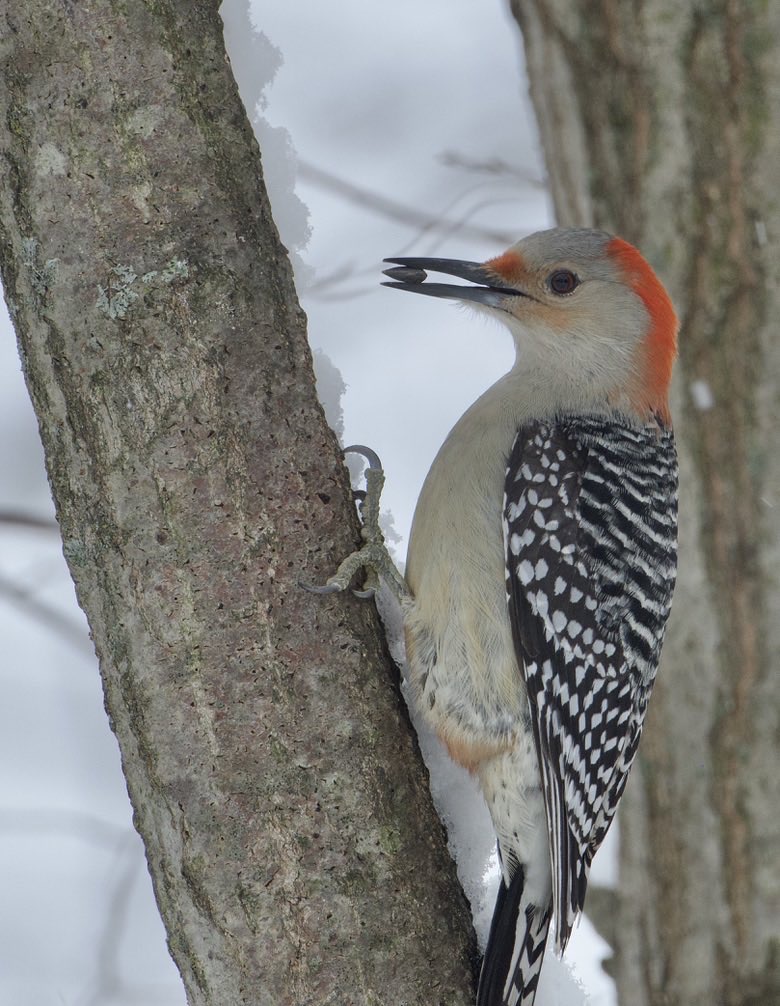
Red Bellied Woodpecker on a tree trunk with a black sunflower seed in it’s mouth
Photo Credits: Roppity Photography 🧸 on X
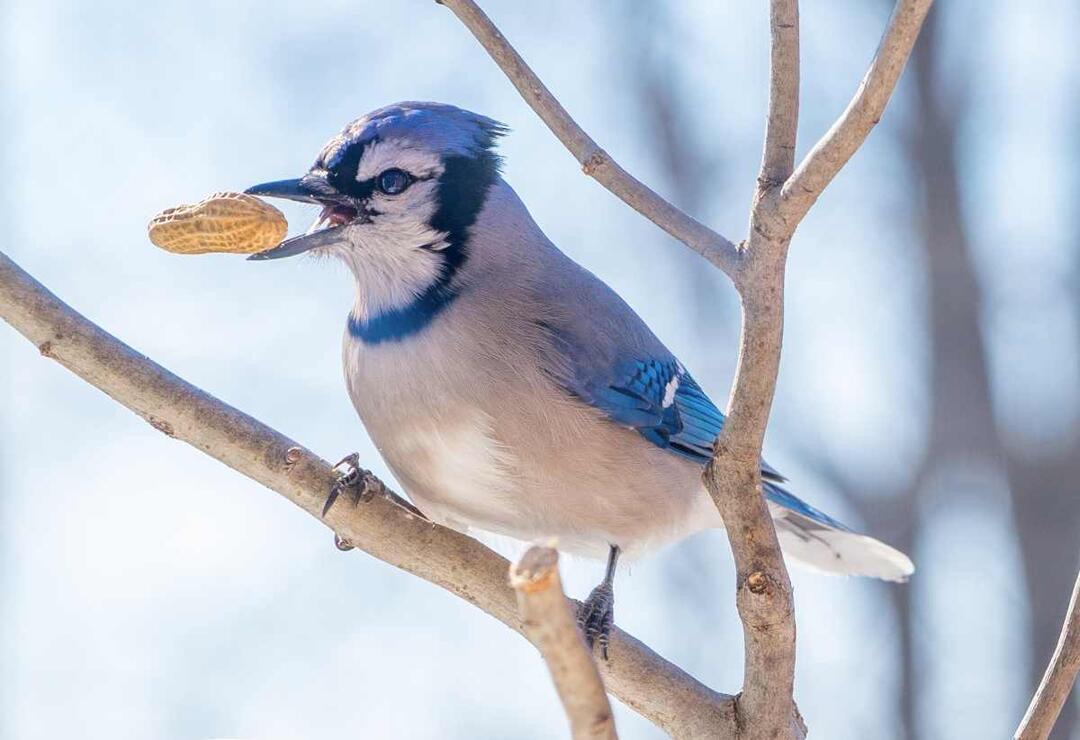
A Blue Jay on a bare shrub with a whole peanut in it’s mouth
Photo Credits: Randy Maslovich / Great Backyard Bird Count
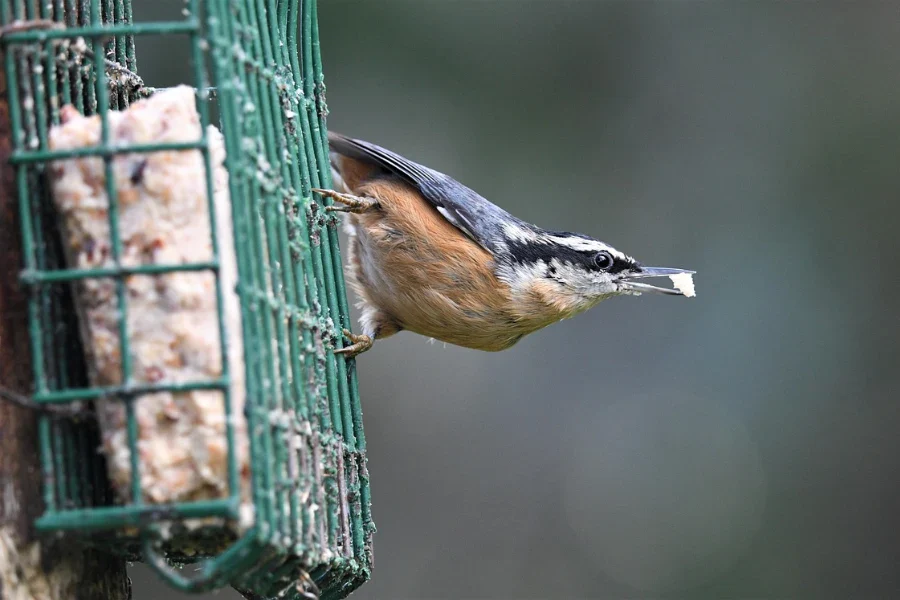
A Red breasted Nuthatch on a Suet Feeder with a piece of suet in it’s mouth
Photo Credits: Veronika Andrews Andrews from Pixabay
Understanding which foods are safe and nutritious for songbirds is an important first step in supporting them during winter. However, the way food is offered is just as important as the food itself. The design, placement, and type of feeding structures can influence which birds are able to access food, how safe they feel while feeding, and how healthy the feeding environment remains.
Bird feeders can become lifelines for songbirds when natural resources are scarce, but they must be chosen and used thoughtfully. Different feeder types attract different species, and proper setup can help reduce risks such as predation, overcrowding, and the spread of disease. Exploring the role of bird feeders allows us to better understand how to create safe, welcoming spaces that truly benefit songbirds during the winter months.
Bird Feeders
Bird feeders can play an important role in supporting songbirds during winter, especially when natural food sources become limited. By providing reliable access to nutritious food, feeders can help birds conserve energy and survive harsh weather conditions. Beyond their practical benefits, bird feeders also offer opportunities to observe and connect with wildlife, bringing the presence of songbirds closer to our everyday lives during the quiet winter months.
However, not all bird feeders are equally beneficial for songbirds. The type of feeder, its design, and how it is used can influence which birds are able to feed safely and comfortably. Choosing appropriate feeders helps reduce competition, prevent overcrowding, and support a wider variety of species. Understanding the strengths of different feeder types allows us to create feeding spaces that are both safe and welcoming for native songbirds.
In this section, readers will learn how to choose bird feeders that best support songbirds in winter, how to create safe ground feeding areas, and how thoughtful placement can reduce risks from predators and window collisions. This section also explores the importance of keeping feeders clean to prevent the spread of disease, helping ensure that bird feeding remains a safe and positive experience for both birds and people.
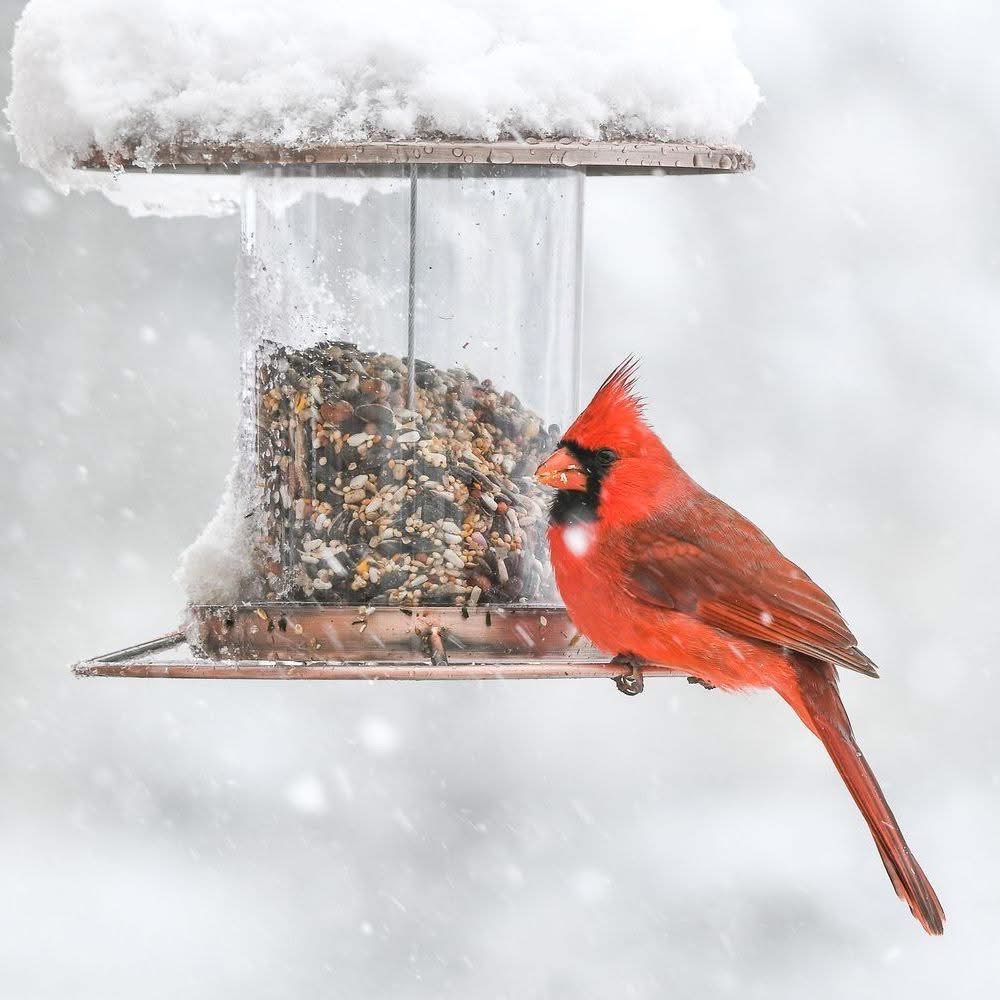
A Northern Cardinal on a Bird Feeder
Photo Credits: Martha Stewart on Facebook
Ground Feeding Areas (Ground Feeding Tables) :
Ground feeding areas are an important feeding option for many songbirds that naturally forage on or near the ground. Species such as Dark-eyed Juncos, Mourning Doves, sparrows, and some finches prefer to search for seeds at ground level rather than using hanging feeders.
A ground feeding table or a designated open area with scattered seeds can help meet their natural feeding behaviours while reducing competition at elevated feeders. When creating ground feeding spaces, it is important to choose locations that offer good visibility so birds can watch for predators, while still being close to shrubs or trees that provide quick shelter.
Using clean surfaces and regularly removing leftover food also helps prevent the buildup of mold and bacteria, making ground feeding areas a safe and supportive resource for winter songbirds.
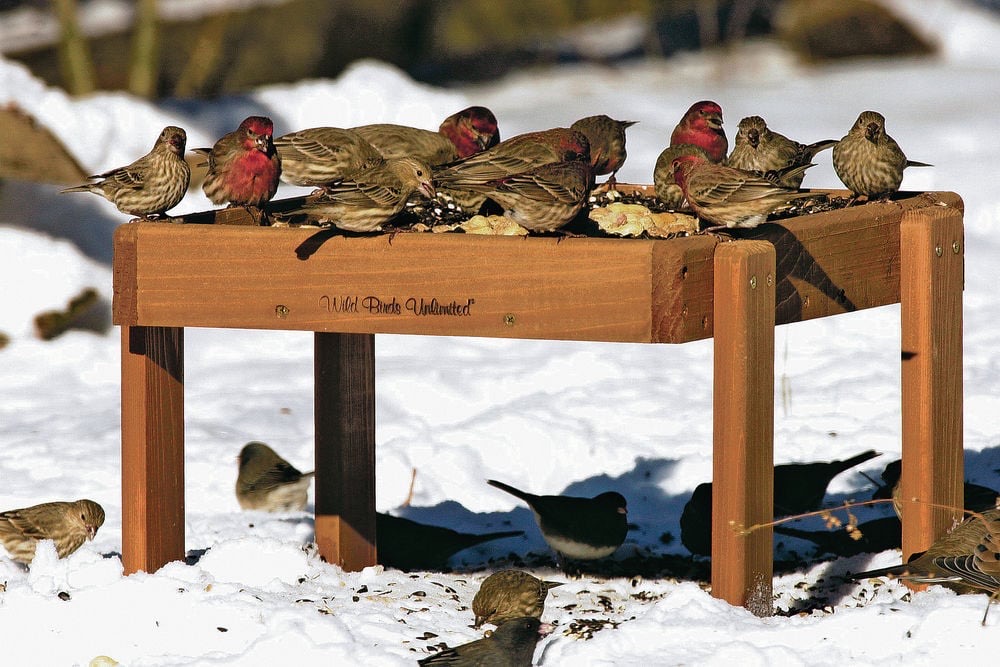
Ground Feeding Table with birds feeding
Photo Credits: Anne Schmauss / For The New Mexican
Sunflower Seed Tube Feeder :
Sunflower seed tube feeders are one of the most effective and popular feeder types for supporting songbirds in winter. These vertical feeders are designed with multiple feeding ports, allowing several birds to feed at once while keeping seeds protected from snow and moisture.
Black oil sunflower seeds are especially attractive to a wide variety of species, including chickadees, nuthatches, finches, titmice, and woodpeckers. Tube feeders also help reduce seed waste and discourage larger, more aggressive birds from dominating the feeding area.
When placed in open yet sheltered locations, sunflower seed tube feeders provide a reliable and efficient food source that supports many songbird species throughout the cold months.
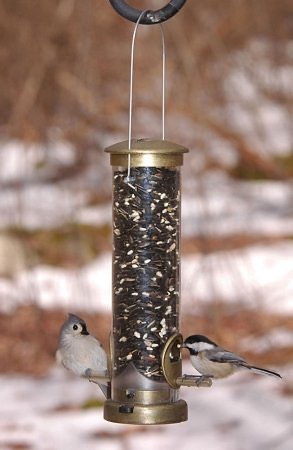
Sunflower Seed Tube Feeder with a Titmouse and Black Capped Chickadee on it
Photo Credits: Urban Nature Store on Amazon.ca
Suet Block Feeder :
Suet block feeders are especially valuable during winter because they provide high-energy nutrition that helps birds maintain body heat in cold temperatures. Suet is made from animal fat and often mixed with seeds, nuts, or insects, making it an excellent food source for insect-eating birds when insects are scarce.
Woodpeckers, chickadees, nuthatches, titmice, and creepers are frequent visitors to suet feeders. Because suet feeders are usually hung vertically or attached to trees, they allow birds to feed in a natural posture while keeping food off the ground.
When placed in sheltered areas away from predators, suet block feeders can become an essential winter resource for many songbird species.
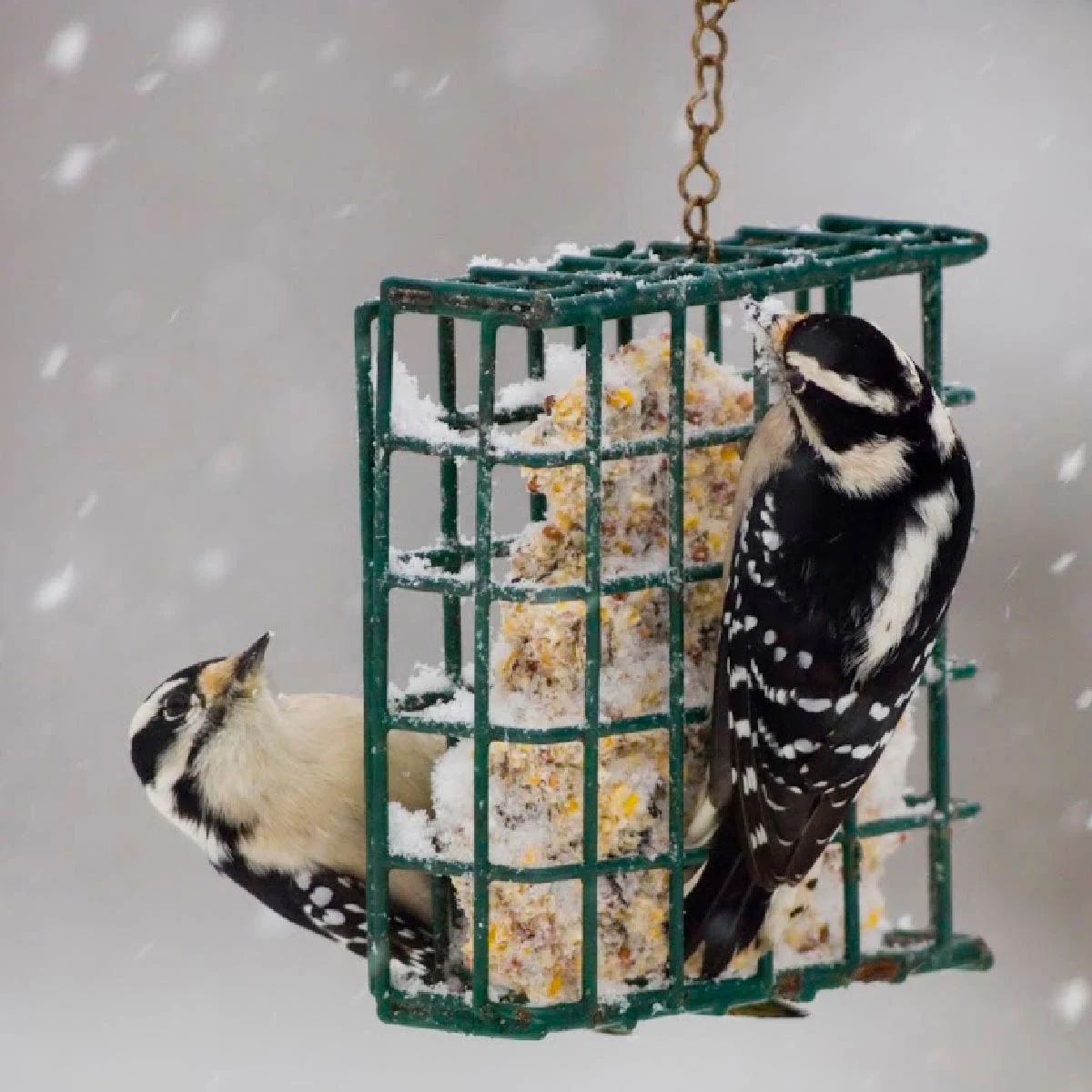
Female Downy Woodpeckers at a Suet Block Feeder in snow storm
Photo Credits: Empress of Dirt
Suet Ball Feeder :
Suet ball feeders offer a similar nutritional benefit to suet blocks but in a form that is often easier for smaller birds to access.
These feeders typically hold round suet balls or fat-based mixes and can attract a wide range of songbirds, including finches, chickadees, and nuthatches. Their compact design allows multiple birds to feed at once, encouraging diverse species to share the feeding space.
Suet ball feeders are particularly helpful during harsh weather, when birds require extra energy to stay warm. By providing a consistent source of high-fat food, suet ball feeders help support songbirds during the most demanding periods of winter.
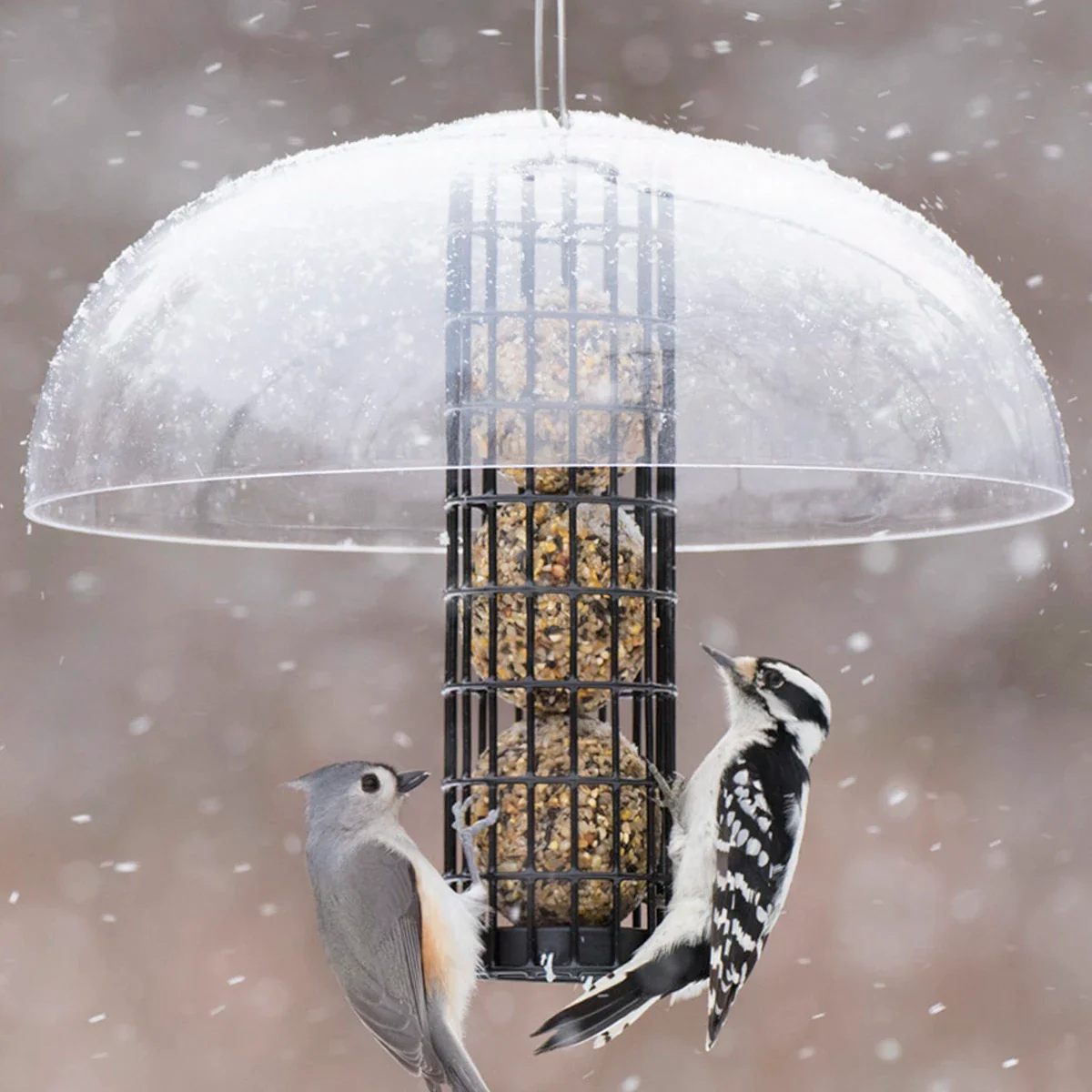
A Titmouse and a Woodpecker on a Suet Ball Feeder in a snow storm
Photo Credits: duncraft.com
Large Hopper Bird Feeder :
Large hopper bird feeders are ideal for providing generous amounts of seed to a wide variety of songbirds, especially during winter when food needs are high.
These feeders typically hold mixed seeds, sunflower seeds, or cracked corn and are designed with covered roofs that protect food from snow and rain.
Their platform-style feeding areas allow multiple birds to feed at once, making them popular with species such as cardinals, blue jays, finches, sparrows, and doves.
Because hopper feeders can attract many birds at the same time, placing them in open areas with nearby shelter helps birds feel safe while feeding. When maintained properly, large hopper feeders can become reliable winter food sources for diverse songbird communities.
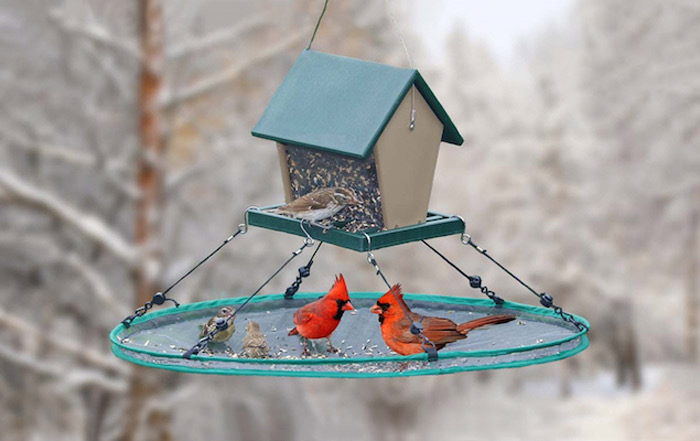
A Large Hopper Bird Feeder with birds feeding
Photo Credits: Bluebird Landing
Squirrel Proof Feeder :
Squirrel-proof feeders are designed to protect bird food from squirrels and other larger animals that may quickly empty feeders.
These feeders often use weight-sensitive mechanisms, metal cages, or specialized designs that allow smaller birds to access food while blocking heavier animals. By reducing food loss, squirrel-proof feeders help ensure that songbirds have consistent access to nutritious seeds throughout winter.
They also minimize competition and overcrowding at feeding sites, creating a calmer and safer environment for birds. When combined with other feeder types, squirrel-proof feeders can play an important role in maintaining balanced and sustainable feeding areas for winter songbirds.
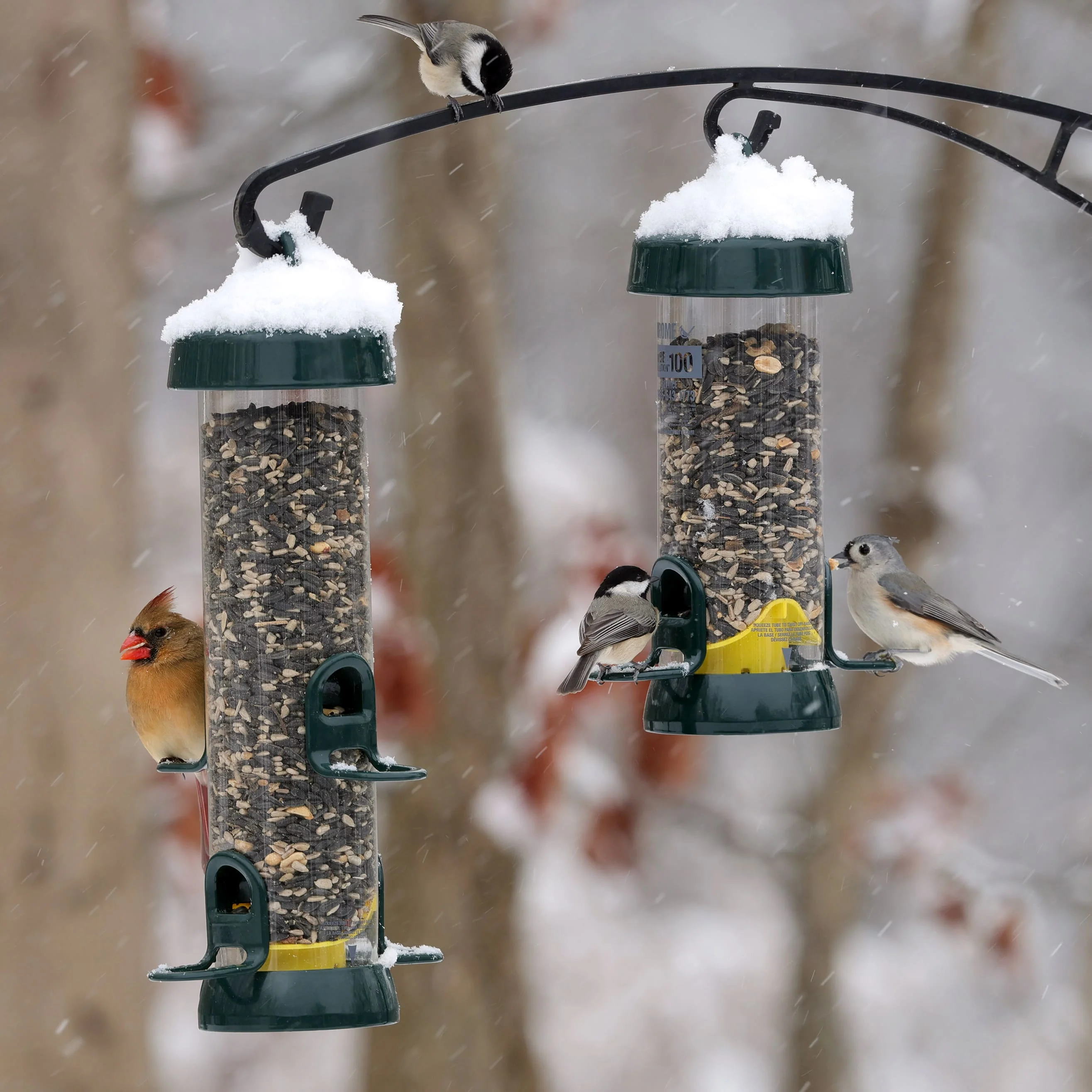
Birds at Squirrel Proof Feeders during the winter
Photo Credits: bromebirdcare.ca
Cleaning Bird Feeders :
Keeping bird feeders clean is one of the most important responsibilities of feeding songbirds, especially during winter when birds gather in large numbers at feeding sites.
Dirty feeders can quickly become breeding grounds for bacteria, mold, and parasites, which can spread diseases among birds.
When many birds share the same feeding space, even a small amount of contamination can affect an entire flock.
Regular cleaning helps ensure that feeders remain safe and healthy sources of food rather than hidden threats to bird populations.
Bird feeders should be cleaned frequently, ideally every one to two weeks, and more often during periods of heavy use or wet weather. Old seeds, droppings, and moisture should be removed before refilling feeders.
Using hot water and a mild solution of vinegar or diluted bleach can effectively disinfect feeders without leaving harmful residues. After cleaning, feeders should be thoroughly rinsed and completely dried before adding fresh food. Rotating feeding areas and cleaning the ground beneath feeders also helps reduce the buildup of waste and pathogens.
Beyond protecting individual birds, clean feeding practices contribute to the overall health of local ecosystems. By maintaining hygienic feeding stations, we reduce the risk of disease outbreaks that can impact entire bird communities.
Thoughtful care of bird feeders reflects a deeper respect for wildlife and ensures that our efforts to help songbirds during winter truly support their well-being and survival.
Quick Cleaning Guide :
🔘 Empty the feeder completely and discard old or wet seed.
🔘 Wash feeders with hot water to remove dirt and debris from the feeders.
🔘 Disinfect using a mild solution (one part vinegar or diluted bleach to nine parts water).
🔘 Scrub all surfaces, including feeding parts and perches where bacteria can build up.
🔘 Rinse Thoroughly to remove any cleaning solution residue that might still be in the feeders.
🔘 Allow bird feeders to dry completely before refilling them with fresh bird seed.
🔘 Clean the ground beneath feeders by removing fallen seeds and droppings regularly to prevent diseases and any unwanted visitors from coming to the feeders.
🔘 Wash your hands after handling feeders or bird food.
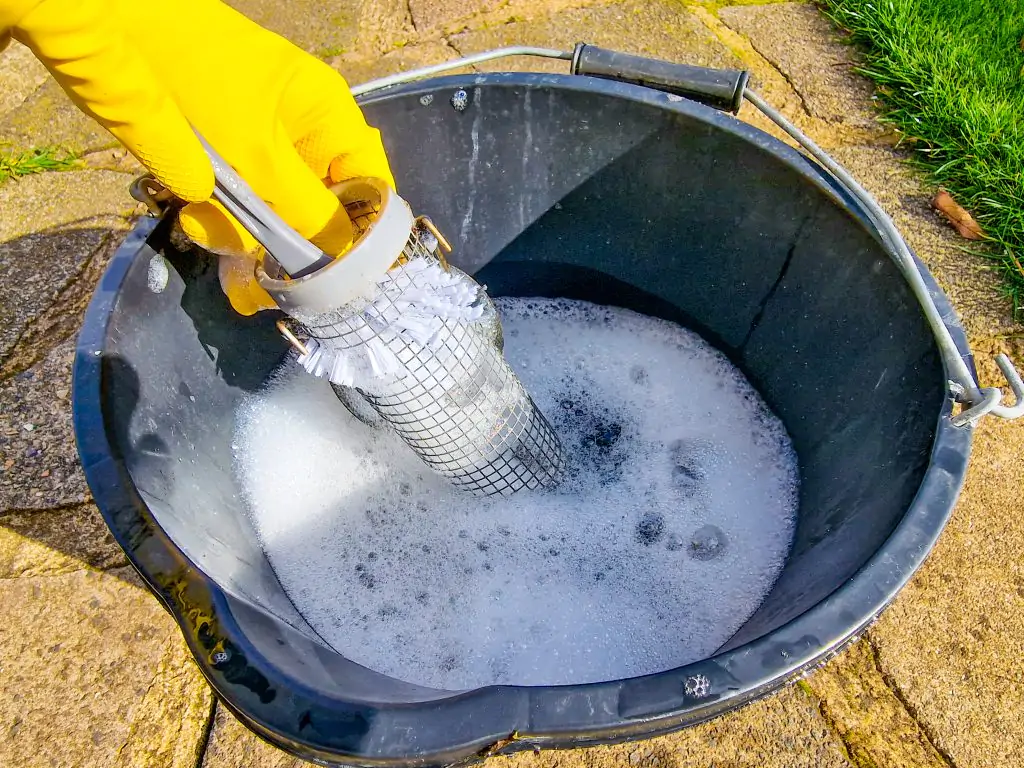
Cleaning a Bird Feeder
Photo Credits: Ivel Valley Wild Bird Food
Safer Feeder Placement
The placement of bird feeders plays a crucial role in the safety and well-being of songbirds. While feeders provide valuable food, poorly placed feeders can expose birds to predators, harsh weather, and other dangers. Choosing thoughtful locations helps birds feel secure while feeding and reduces the risks they face during vulnerable moments.
Bird feeders should be placed in areas that offer a balance between visibility and shelter. Positioning feeders near trees or shrubs allows birds to quickly escape if a predator approaches, while still keeping feeders far enough away from dense cover where predators, such as cats, may hide.
Ideally, feeders should be placed several metres away from thick bushes to reduce ambush risks while maintaining access to nearby shelter. Elevating feeders off the ground also helps protect smaller birds from ground predators and makes feeding areas safer and more accessible.
It is also important to consider the surrounding environment when placing feeders. Feeders should be positioned away from busy roads, high-traffic areas, and reflective surfaces that may confuse birds.
Spacing multiple feeders apart can reduce overcrowding and aggressive behaviour among birds, creating a calmer and healthier feeding environment. Thoughtful feeder placement not only improves bird safety but also enhances the effectiveness of winter feeding efforts, ensuring that songbirds can feed with confidence and minimal risk.
Placement Tips :
- Place feeders near trees or shrubs, but not directly beside dense cover where predators can hide.
- Keep feeders 1.5–3 metres (5–10 feet) away from thick bushes to reduce ambush risks.
- Hang or mount feeders above ground level to protect birds from ground predators.
- Position feeders in quiet, low-traffic areas away from busy roads and frequent human activity.
- Space multiple feeders apart to reduce overcrowding and competition among birds.
- Avoid placing feeders too close to windows unless collision prevention measures are in place.
- Ensure feeders are stable and secure to prevent swinging or falling during wind and storms.
Safe Vs. Risky Feeder Placements
Safer Placement ✅:
🔘 Feeders placed near trees or shrubs that provide quick escape routes.
🔘 Feeders positioned in open, visible areas where birds can spot predators.
🔘 Feeders mounted securely above the ground.
🔘 Feeders located in quiet areas away from heavy traffic and frequent disturbances.
Risky Feeder Placement ⚠️:
🔘 Feeders placed directly inside dense bushes where predators can hide.
🔘 Feeders too close to the ground, making birds vulnerable to cats and other predators.
🔘 Feeders placed beside busy roads or high-traffic areas.
🔘 Feeders positioned very close to windows without collision prevention measures.
🔘 Feeders that swing excessively or are unstable in strong winds.
Is Your Bird Feeder Location Safe? ✅
Ask yourself these questions:
➡️ ⬜ Is the feeder placed above ground level to reduce risks from predators?
➡️ ⬜ Is it located near trees or shrubs, but not directly inside dense cover?
➡️ ⬜ Can birds easily see approaching predators from the feeding area?
➡️ ⬜ Is the feeder in a quiet area, away from busy roads and heavy human activity?
➡️ ⬜ Are multiple feeders spaced apart to reduce crowding and aggression?
➡️ ⬜ Is the feeder placed away from windows, or are collision prevention measures in place?
➡️ ⬜ Is the feeder stable and secure, even in wind or snow?
➡️ ⬜ Is the ground beneath the feeder kept clean of spilled seeds and waste?
If you answered “yes” to most of these questions, your feeder location is likely a safe and supportive space for songbirds.
Window Collision Prevention
Window collisions are one of the most common and often overlooked dangers facing songbirds. Birds may not recognize glass as a solid surface and can mistake reflections of trees, sky, or vegetation for open space. During winter, when birds frequently visit feeders and fly between feeding areas and shelter, the risk of collisions increases. These impacts can cause serious injuries or even death, making window safety an essential part of responsible bird feeding.
One of the most effective ways to reduce window collisions is to make windows more visible to birds. Applying window collision prevention stickers, decals, or patterns to glass helps break up reflections and signals to birds that the surface is not open air. These stickers are most effective when placed on the outside of windows and spaced closely enough that birds cannot mistake the gaps for safe flight paths. Using a variety of visible markers, such as silhouettes, UV-reflective decals, tape patterns, or frosted designs, can significantly lower the risk of collisions.
Feeder placement also plays an important role in preventing window strikes. Positioning feeders either very close to windows or farther away can reduce the impact of collisions. When feeders are placed extremely close to windows, birds do not build enough speed to injure themselves if they accidentally fly toward the glass. When placed farther away, birds have more time to change direction. Combining thoughtful feeder placement with visible window markers creates a safer environment where birds can feed and move freely without unnecessary risk.
Safe Vs. Risky Windows
Safer Windows 🪟 ✅:
🔘 Windows with visible markers or collision prevention stickers.
🔘 Glass with patterns, decals, or frosted section.
🔘 Windows with screens, netting, or external shades.
🔘 Feeders placed thoughtfully in relation to windows.
🔘 Reduced reflections from trees, sky, and vegetation.
Risky Windows 🪟 ⚠️:
🔘 Large, clear glass surfaces with no markings.
🔘 Highly reflective windows that mirror trees and sky.
🔘 Feeders placed directly in front of unmarked windows.
🔘Brightly lit windows that create confusing reflections.
🔘 Floor-to-ceiling or corner windows without visual markers.
Quick Window Safety Tips :
- Apply window collision prevention stickers or decals on the outside of windows to make glass visible to birds.
- Place stickers close together so birds do not mistake gaps for open space. Use multiple types of markers, such as UV-reflective decals, tape patterns, frosted designs, or silhouettes.
- Adjust feeder placement so feeders are either very close to windows or farther away to reduce collision impact.
- Close blinds or curtains when possible to reduce reflections of trees and sky.
- Add screens, netting, or external shades to windows to soften reflections and slow birds.
- Regularly check windows for collision risks, especially during winter when birds visit feeders frequently.
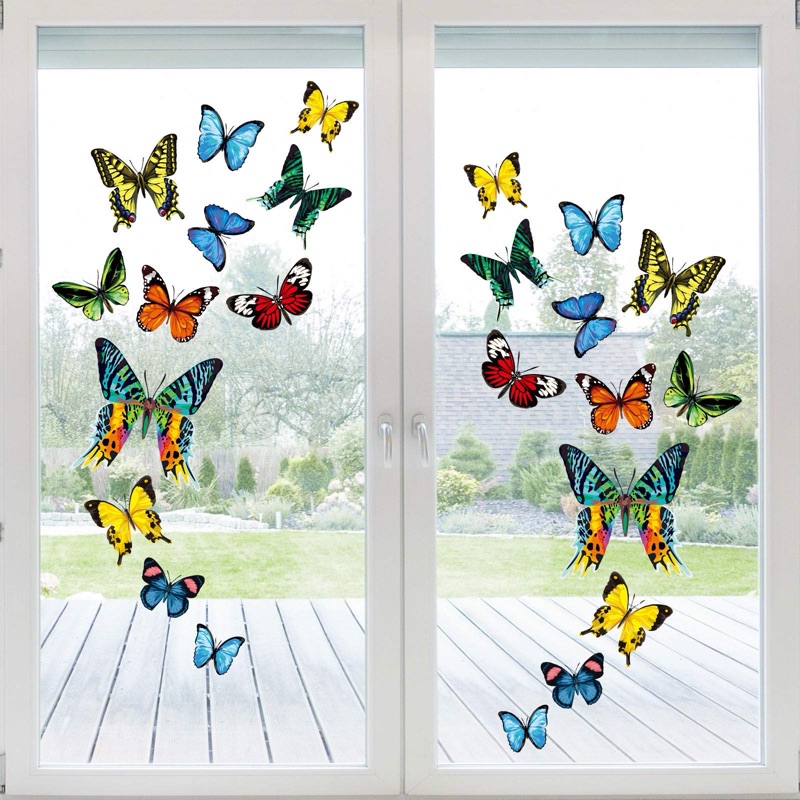
Butterfly Window Stickers to prevent Window Collisions
Photo Credits: Fastmedia ship USA from Amazon.ca
Providing food and creating safe feeding spaces are important ways to support songbirds during winter, but nourishment alone is not enough to ensure their survival. In cold weather, birds also face challenges in finding fresh, unfrozen water, which is essential for hydration, digestion, and maintaining healthy body functions. As natural water sources freeze over, access to clean water becomes increasingly limited, making it one of the most overlooked yet critical resources for winter songbirds.
Just as thoughtful feeding practices and safe environments can make a difference, offering reliable water sources can significantly improve birds’ chances of surviving harsh winter conditions. Understanding how songbirds use water in winter and how we can provide it safely allows us to further strengthen our role in supporting native birds during the coldest months of the year.
Providing Water During Winter
During winter, access to fresh water becomes one of the most challenging and essential needs for songbirds. As temperatures drop and natural water sources freeze, birds often struggle to find safe places to drink and bathe. While food is commonly offered to birds during the colder months, water is often overlooked, even though it plays a vital role in their daily survival. Without reliable water, birds can become dehydrated and less able to regulate their body temperature and energy levels.
Providing water during winter can make a significant difference in the lives of songbirds. Even small, consistent sources of unfrozen water can offer birds the hydration they need when natural options disappear. By understanding the importance of winter water and learning how to provide it safely, we can further support songbirds and help create more balanced and life-sustaining habitats during the cold months.
Why Water Matters In Winter
Even during winter, songbirds need water every day to survive. Water is essential for drinking, digesting food, and maintaining healthy body functions. Many people assume birds get enough moisture from snow or food, but this is not always true. Eating snow requires extra energy to melt it inside their bodies, which can be costly during cold weather when energy must be conserved. As lakes, ponds, and puddles freeze, natural water sources become scarce, making access to liquid water a serious challenge for winter birds.
Without reliable water, birds can become dehydrated and weakened, reducing their ability to stay warm and find food. Providing a consistent source of fresh water can therefore be just as important as offering food. By understanding the role water plays in winter survival, we can better appreciate how even small actions can support songbirds during harsh conditions.
Safe Ways To Provide Water During Winter
One of the simplest ways to help songbirds is by offering shallow water sources that are easy to access. Bird baths, shallow bowls, or low dishes placed outdoors can provide birds with a safe place to drink and bathe. These containers should have gently sloping edges or stones inside so birds can stand securely without slipping. Placing water sources in open, visible areas near shelter helps birds feel safe while using them.
To prevent water from freezing, it is helpful to refresh it regularly, especially during extremely cold weather. Using heated bird baths or water heaters designed for wildlife can provide a reliable source of unfrozen water throughout winter. Even partially thawed water can make a significant difference, giving birds a rare and valuable resource when natural options are frozen solid.
Safety And Hygiene For Winter Water Sources
Just like bird feeders, water sources must be kept clean to protect bird health. Dirty water can spread bacteria and disease, especially when many birds share the same source. Water containers should be cleaned frequently, ideally every few days, using hot water and a mild cleaning solution. Regularly removing debris, ice, and droppings helps maintain a safe environment for birds.
Placement also matters when providing water. Water sources should be positioned away from areas where predators may hide, while still being close enough to trees or shrubs for birds to escape quickly. By maintaining clean, safely placed water sources, we can ensure that winter hydration efforts truly benefit songbirds and contribute to their long-term survival.
Safe Vs. Risky Water Setups
Safer Water Setups 💦 ✅:
• Shallow bird baths or dishes that are easy for birds to access.
• Containers with stones, pebbles, or textured surfaces to prevent slipping.
• Heated bird baths that keep water from freezing.
• Clean, regularly maintained water sources.
• Water placed in visible areas with nearby escape cover.
• Containers free of chemicals, soap residue, and debris.
Risky Water Setups 💦 ⚠️:
• Deep containers where birds could slip or drown.
• Frozen or rarely refreshed water sources.
• Dirty water filled with debris, algae, or droppings.
• Water placed in dense bushes where predators can hide.
• Use of salt, antifreeze, or harsh chemicals to melt ice.
Quick Water Tips 💧 📍:
- Use shallow containers such as bird baths, bowls, or trays so birds can safely drink and bathe.
- Add small stones or pebbles to provide stable footing and prevent slipping.
- Refresh water daily or as often as possible, especially during freezing temperatures.
- Use a heated bird bath or safe water heater designed for wildlife to keep water from freezing.
- Place water sources in open, visible areas near shelter but away from dense hiding spots for predators.
- Avoid using salt, antifreeze, or chemicals to melt ice, as these substances are harmful to birds.
- Clean water containers regularly to prevent the buildup of bacteria and algae.
Winter Water Safety Checklist 🐦
Ask yourself these questions:
⬜ Is the water source shallow enough for birds to safely drink and bathe?
⬜ Are there stones or textured surfaces to prevent slipping?
⬜ Is the water kept unfrozen or refreshed regularly during cold weather?
⬜ Is a heated bird bath or safe water heater used when possible?
⬜ Is the water container cleaned frequently to prevent bacteria and disease?
⬜ Is the water placed in a visible area where birds can watch for predators?
⬜ Is it located near trees or shrubs that provide quick escape cover?
⬜ Are harmful substances like salt, antifreeze, or chemicals avoided?
⬜ Is the area around the water source kept clear of debris and waste?
If you answered “yes” to most of these questions, your winter water setup is likely safe and supportive for songbirds.
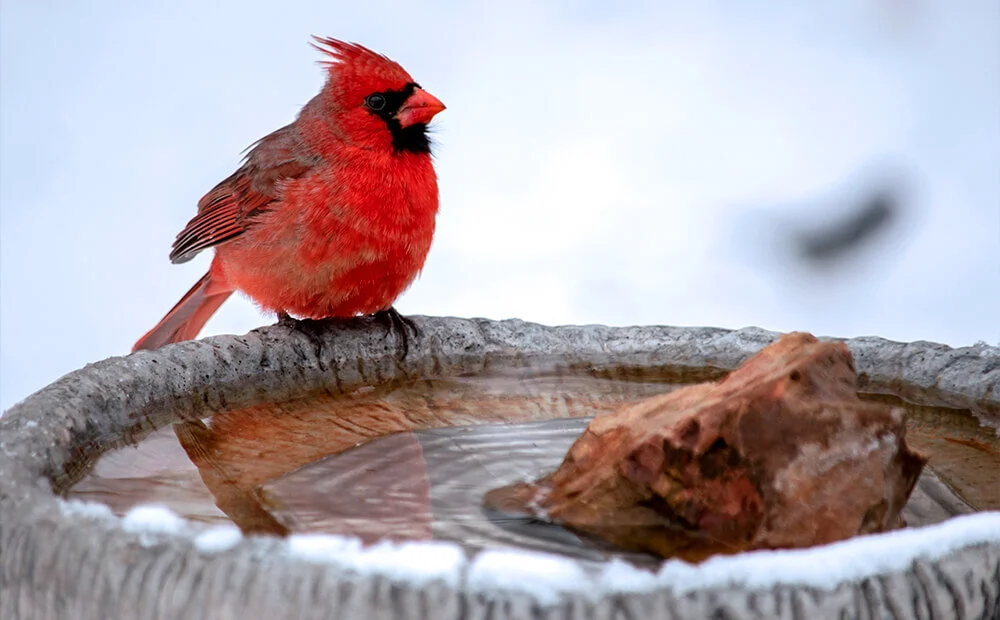
A Cardinal on a bird bath during the winter
Photo Credits: Dammann’s Garden Company
Food and water are essential resources for songbirds during winter, but survival in cold climates depends on more than nourishment alone. Harsh winds, freezing temperatures, heavy snow, and icy rain can quickly drain a bird’s energy, making protection from the elements just as important as access to food and water. Without safe places to rest and escape severe weather, even well-fed birds can struggle to survive the winter months.
In addition to feeding and hydration, shelter plays a vital role in helping songbirds conserve energy and stay warm. Natural and human-made shelters provide birds with protection from predators and harsh weather while offering safe spaces to roost and recover. Understanding how to create and preserve winter shelter allows us to further support songbirds and complete the foundation of care they need to endure the cold season.
Creating Winter Shelter
During winter, songbirds face constant exposure to cold temperatures, strong winds, and heavy snowfall. While food and water help birds maintain energy, shelter is what allows them to conserve heat and survive harsh weather conditions. Safe shelter provides protection from predators and the elements, offering birds places to rest, roost, and recover during the coldest months of the year. Many natural shelters that birds rely on are disappearing due to habitat loss and landscape changes, making supportive environments more important than ever.
Creating winter shelter does not always require complex structures, sometimes it simply means preserving natural features that already exist. Dense shrubs, evergreen trees, brush piles, and natural cavities can all serve as critical refuges for birds in winter. By understanding how birds use shelter and learning how to protect and create safe spaces, we can help songbirds conserve energy, avoid danger, and increase their chances of surviving the winter season.
Natural Winter Shelters
Natural shelters are one of the most important resources for songbirds during winter. Dense shrubs, evergreen trees, tall grasses, and fallen branches provide protection from wind, snow, and predators. Coniferous trees such as pine, spruce, and fir are especially valuable because their needles create thick cover that blocks harsh weather while offering safe roosting spaces. Many birds also use natural cavities in trees, woodpecker holes, and cracks in bark as nighttime shelters, where they can conserve body heat and avoid exposure to the elements.
Leaving parts of the landscape natural can significantly increase available shelter. Brush piles made from fallen branches, leaf litter left on the ground, and untrimmed shrubs all create microhabitats that birds rely on for warmth and safety. By preserving these natural features instead of removing them during fall cleanup, we can help maintain the protective environments that songbirds need to survive winter.
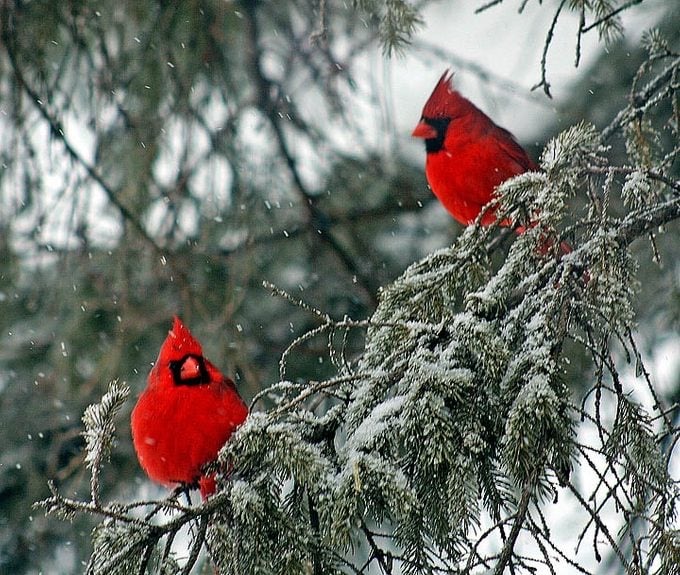
MALE NORTHERN CARDINALS ON AN EVERGREEN TREE
Photo Credits: BETH HUEBNER
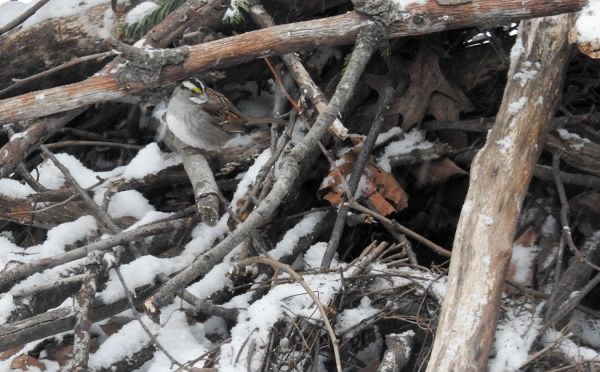
A bird in a brush pile hiding
Photo Credits: Nancie Waterman / taken in 2016
Man Made Shelters
In areas where natural shelter is limited, man-made structures can provide valuable alternatives for songbirds. Birdhouses designed for winter roosting, roost boxes, and specially built shelters offer birds safe places to rest and escape severe weather. Unlike nesting boxes, winter roost boxes often have multiple entrances and thicker walls to reduce heat loss and allow several birds to shelter together.
Placement is important when installing man-made shelters. Shelters should be positioned in quiet, sheltered areas away from heavy human activity and predators, ideally near natural vegetation that birds already use. Proper maintenance is also essential, as shelters should be cleaned periodically to prevent parasites and disease. When thoughtfully designed and placed, man-made shelters can complement natural habitats and provide additional support for songbirds during winter.
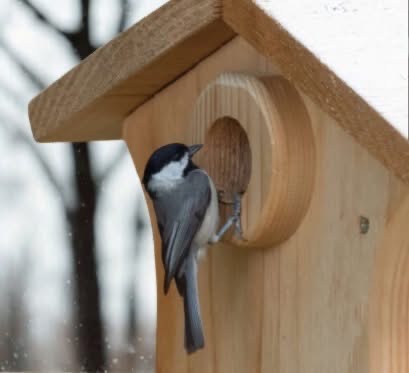
A Black Capped Chickadee on a Nesting Box thinking about going in to keep warm.
Photo Credits: Wild Birds Unlimited of Royal Oak, MI on Facebook
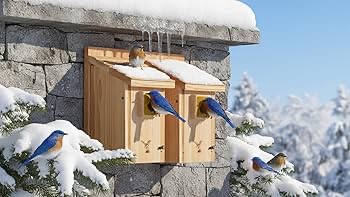
Eastern Bluebirds going into Nesting Boxes
Photo Credits: MilkyWay on Amazon.ca
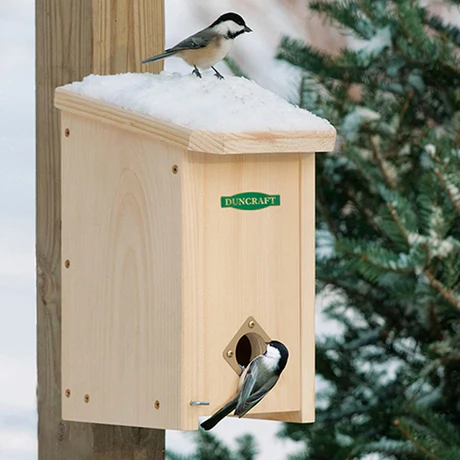
Two Chickadees on a roosting box
Photo Credits: duncraft.com
How To Clean Man Made Bird Shelters (Nest Boxes, Roost Boxes & Bird Houses)
Keeping bird shelters clean helps prevent the spread of disease, parasites, and harmful bacteria especially during winter, when birds may gather closely for warmth.
When to Clean Bird Shelters
• Late fall to early winter: After nesting season ends and before harsh winter weather sets in
• Mid-winter (as needed): If shelters are used as roosts and become heavily soiled
• Early spring: Before nesting season begins
What You’ll Need
• Rubber or reusable gloves
• A stiff brush or old toothbrush
• Mild dish soap or white vinegar
• A bucket of warm water
• Optional: a small scraper or wooden stick
⚠️ Avoid bleach or harsh chemical cleaners, because they can leave harmful residues.
Step-by-Step Cleaning Instructions
1. Wait for a mild day
Choose a warmer winter day when birds are less likely to be sheltering inside.
2. Remove the shelter carefully
Take down the bird shelter slowly to avoid damaging it or startling wildlife.
3. Empty old nesting material
Remove all old nests, feathers, droppings, and debris. These can harbor mites and bacteria.
4. Scrub the interior
Use warm water with mild soap or vinegar and scrub all inner surfaces, corners, and ventilation holes.
5. Rinse thoroughly
Rinse with clean water to remove all soap or vinegar residue.
6. Air-dry completely
Allow the shelter to dry fully in the sun before rehanging. Moisture can promote mold growth.
7. Check for damage
Inspect for loose nails, cracks, sharp edges, or poor drainage and repair if needed.
8. Rehang in the same location
Place the shelter back where it was to avoid disrupting established bird habits.
Extra Winter Care Tips
• Never clean shelters while birds are actively nesting
• Avoid handling shelters during extreme cold snaps
• Clean bird feeders separately and more frequently than shelters
• Keep shelters dry and well ventilated to prevent frost buildup
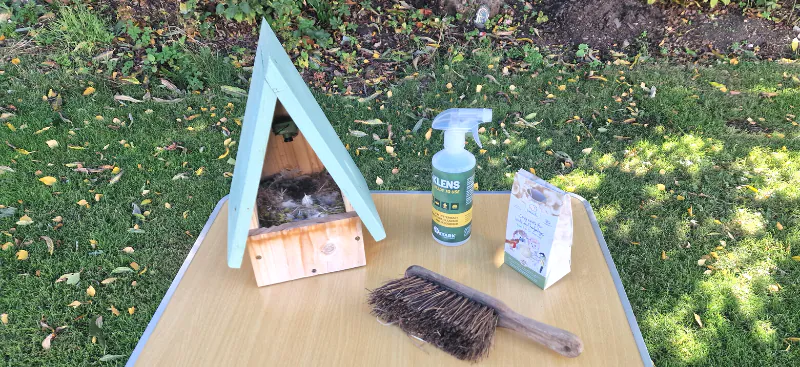
Preparing to clean a Bird Nesting Box
Photo Credits: Ivel Valley Wild Bird Food
Habitat Friendly Gardens
Gardens can play a powerful role in creating winter shelter for songbirds. Planting native shrubs, trees, and grasses helps build layered habitats that provide both shelter and food. Native plants are especially valuable because they support insects, produce seeds and berries, and offer natural cover that birds have evolved to rely on. Evergreen hedges, berry-producing shrubs, and mixed vegetation create safe corridors where birds can move, hide, and roost.
Reducing excessive pruning and avoiding complete garden cleanups in fall can also benefit birds. Leaving seed heads, fallen leaves, and natural plant structures creates shelter while supporting the broader ecosystem. Habitat-friendly gardens not only help birds survive winter but also strengthen local biodiversity, creating resilient landscapes where wildlife and people can coexist.
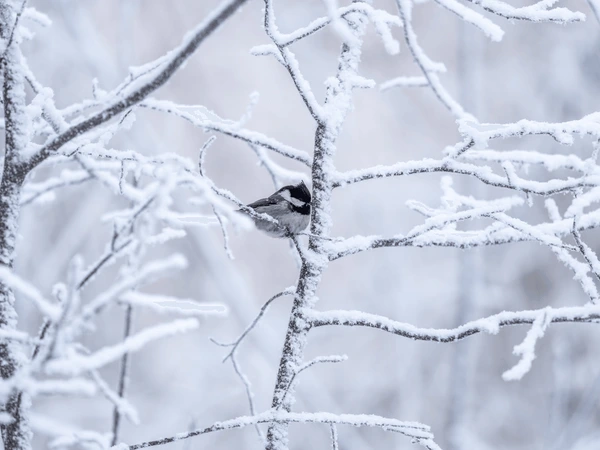
A Black Capped Chickadee taking shelter in a bare tree that is snowy trying to keep warm.
Photo Credits: Dark_Side on Shutterstock
Safe Vs. Risky Shelter
Safe Shelter Options ✅:
- Dense shrubs and evergreen trees that block wind and snow.
- Natural brush piles made from fallen branches.
- Tree cavities, woodpecker holes, and thick bark crevices.
- Native grasses and untrimmed vegetation that provide cover.
- Roost boxes or winter bird shelters placed in quiet areas.
- Gardens with layered vegetation (trees, shrubs, and ground cover).
Risky Shelter Options ⚠️:
- Completely cleared yards with no shrubs or natural cover
- Over-pruned trees and bushes with little protection from wind
- Open areas far from trees or vegetation
- Shelters placed near busy roads or heavy human activity
- Structures located where predators, such as cats, can easily access birds.
- Artificial shelters that are rarely cleaned or poorly maintained.
Quick Winter Shelter Tips ❄️ 📍:
- Leave shrubs, hedges, and native plants untrimmed through winter whenever possible.
- Preserve brush piles, fallen branches, and leaf litter to create natural hiding places.
3. Plant evergreen trees and shrubs to provide year-round cover.
4. Install winter roost boxes or bird shelters in quiet, sheltered locations.
5. Place shelters near natural vegetation but away from predator hiding spots.
6. Avoid excessive fall cleanup that removes important natural shelter.
7. Maintain man-made shelters by cleaning them periodically to prevent parasites and disease.
Winter Shelter Checklist 🌿
Ask yourself these questions:
⬜ Are there dense shrubs or evergreen trees that provide protection from wind and snow?
⬜ Have some natural elements like brush piles, fallen branches, or leaf litter been left in place?
⬜ Are shelters located in quiet areas away from heavy disturbance?
⬜ Are man-made shelters or roost boxes secure and well-placed?
⬜ Are shelter areas positioned near food and water sources without being overcrowded?
⬜ Are potential predator hiding spots minimized around shelters?
⬜ Is the garden designed with layered vegetation (trees, shrubs, and ground cover)?
If you answered “yes” to most of these questions, your winter shelter environment is likely safe and supportive for songbirds.
Providing shelter during winter helps songbirds survive the harshest months, but true support extends beyond seasonal care. The places birds find refuge, the food they eat, and the safety they rely on are all deeply connected to the landscapes we create and protect. When natural habitats are healthy and diverse, songbirds are better equipped to withstand winter and thrive throughout the rest of the year.
One of the most powerful ways to support songbirds is by cultivating native plants that provide food, shelter, and nesting opportunities across all seasons. Native trees, shrubs, and flowers form the foundation of resilient ecosystems, offering seeds, berries, insects, and protective cover long before winter arrives and long after it ends. Understanding the role of native plants helps us move from temporary solutions to lasting habitat, creating environments where songbirds can survive not only in winter, but all year round.
Native Plants That Support Songbirds All Year Round
While feeders, water sources, and shelters can help songbirds survive winter, the most lasting and natural support comes from native plants. Native trees, shrubs, wildflowers, and grasses form the foundation of healthy ecosystems, providing birds with food, shelter, and nesting opportunities throughout every season. Unlike non-native plants, native species have evolved alongside local wildlife, making them especially valuable for supporting insects, producing nutritious seeds and berries, and creating complex habitats that birds depend on.
By planting native vegetation, we move beyond temporary solutions and begin restoring the natural landscapes that songbirds truly need. From towering trees and berry-producing shrubs to seed-rich wildflowers and grasses, native plants offer year-round resources that sustain birds from spring through winter. Understanding which native plants benefit songbirds helps us create environments that not only attract birds, but also strengthen biodiversity and resilience in our local ecosystems.

A Plant Collage with a bird on a Coneflower
Photo Credits: Garden For Wildlife
Benefits Of Native Plants Vs. Ornamental Plants
Many gardens and landscapes are filled with ornamental plants chosen for their appearance, colour, or exotic origins. While ornamental plants can be visually appealing, they often provide limited ecological value for native wildlife. Native plants, on the other hand, have evolved alongside local birds, insects, and ecosystems for thousands of years. Because of this long relationship, native plants offer the specific food sources, shelter, and habitat that songbirds naturally depend on.
One of the most significant benefits of native plants is their ability to support insects, especially native caterpillars and pollinators. Insects are a crucial food source for songbirds, particularly during the breeding season when adult birds need protein-rich prey to feed their young. Many ornamental plants do not host native insects, meaning they contribute little to the food web. Without insects, birds lose an essential source of nutrition, even if gardens appear lush and green.
Native plants also produce seeds, berries, and nuts that are more nutritious and accessible for songbirds than those from many ornamental species. Trees such as oaks, willows, and cherries support hundreds of insect species and provide fruits and seeds that birds rely on throughout the year. In contrast, many ornamental plants produce seeds or berries that birds cannot eat or do not recognize as food. As a result, landscapes dominated by ornamental plants can become ecological deserts, offering beauty but little sustenance for wildlife.
Beyond food, native plants create natural shelter and nesting habitats. Dense shrubs, layered vegetation, and native grasses provide safe spaces for birds to hide from predators, roost in winter, and build nests in spring. Ornamental plants are often bred for neatness or uniform shape, which can reduce their ability to provide protective cover. Native plant gardens, by contrast, mimic natural ecosystems and support a wider range of species.
Choosing native plants does not mean eliminating ornamental plants entirely. Rather, it means rethinking how we design landscapes and prioritizing plants that contribute to ecological health. By incorporating more native species into gardens, yards, and public spaces, we can transform our surroundings into living habitats that support songbirds not just seasonally, but all year round.
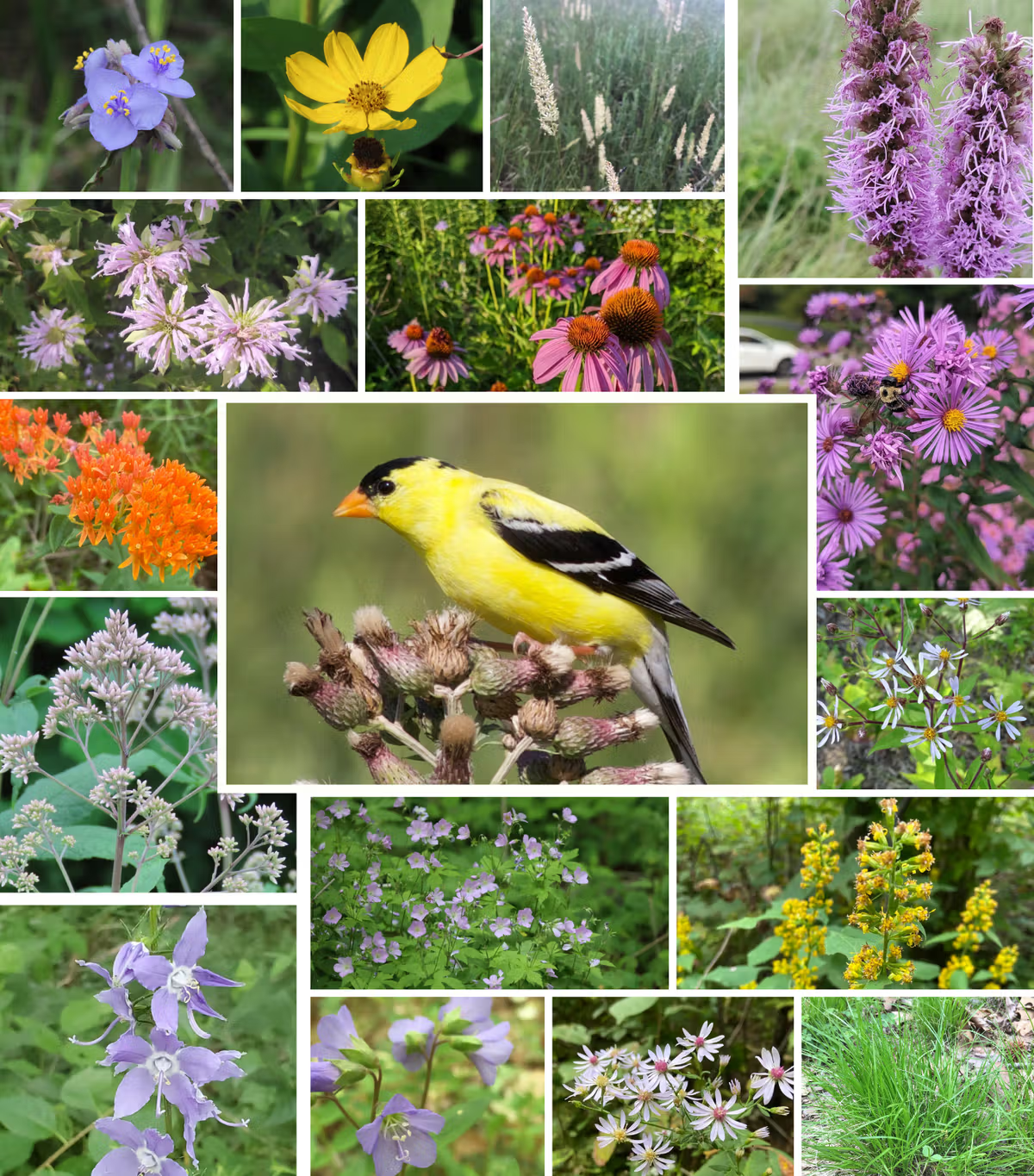 Native Plant Photo Collage with an American Goldfinch on a Plant Seed Head.
Photo Credits: My Home Park
Native Vs. Ornamental Plants 🪴
Native Plants 🌱:
💚 Have evolved alongside local birds, insects, and ecosystems.
💚 Provide nutritious seeds, berries, nuts, and insects for songbirds.
💚Support native insects and caterpillars that birds rely on for food.
💚 Strengthen biodiversity and healthy ecosystems.
💚Offer natural shelter and nesting opportunities.
💚 Support wildlife throughout all seasons
💚 Are usually well adapted to local climate and soil conditions.
Ornamental Plants 🌿:
❤️ Are often introduced from other regions or continents.
❤️ Frequently provide little or no usable food for songbirds
❤️ Support few or no native insects.
❤️ Offer limited ecological value despite their appearance.
❤️ Are often bred for visual appeal rather than habitat function.
❤️ May require more water, fertilizer, and maintenance.
❤️ Contribute less to long-term ecosystem health.
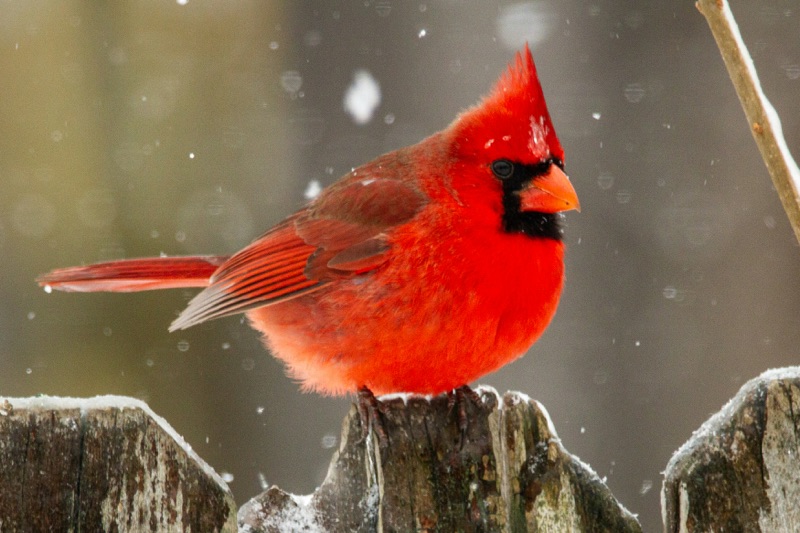
A Male Northern Cardinal perched on a fence
Photo Credits: Joshua J. Cotten from Unsplash
Understanding the difference between native and ornamental plants helps us see why plant choices matter so deeply for songbirds and ecosystems. When we choose native species, we are not just adding greenery to our landscapes we are restoring food sources, shelter, and habitats that birds have depended on for generations. Each type of native plant plays a unique role, whether it is a towering tree, a berry-producing shrub, a flowering plant, or a grass that provides seeds and cover.
Below are examples of native trees, shrubs, wildflowers, and grasses that support songbirds throughout the year. These plants offer a combination of insects, fruits, seeds, and shelter, creating balanced habitats that nourish birds across all seasons. By incorporating a variety of these native species into gardens and natural spaces, we can create environments where songbirds can truly thrive.
Native Trees That Support Songbirds 🌳
Native trees are essential for songbirds because they provide insects, fruits, seeds, and shelter. They form the foundation of healthy ecosystems and support birds throughout every season.
Oaks (Quercus spp.) :
Oaks are one of the most valuable trees for wildlife, supporting hundreds of native insect species. These insects are a crucial food source for songbirds, while acorns provide nourishment in fall and winter.
Willows (Salix spp.) :
Willows are among the earliest trees to support insects in spring, making them especially important for birds during nesting season when protein-rich food is needed.
Serviceberry (Amelanchier spp.) :
Serviceberry produces sweet berries that many birds eat in late spring and summer. It also supports insects and provides early nectar for pollinators.
Dogwoods (Cornus spp.) :
Dogwoods produce berries that persist into fall and winter, offering an important food source when other fruits are scarce. Their dense branches also provide shelter.
Black Cherry (Prunus serotina) :
Black cherry supports numerous caterpillar species and produces fruits eaten by birds, making it highly valuable for insect-eating songbirds.
Hackberry (Celtis occidentalis) :
Hackberry produces berries that birds rely on in fall and winter and supports native insects that contribute to the food web.
Sumac (Rhus spp.) :
Sumac produces clusters of berries that often remain on branches through winter, providing long-lasting food for birds.
Winterberry (Ilex verticillata) :
Winterberry is known for its bright red berries that persist into winter, offering a critical food source when snow covers the ground.
Pines (Pinus spp.) :
Pine trees provide seeds and dense shelter. Their evergreen needles protect birds from wind and snow, making them important winter habitats.
Maples (Acer spp.) :
Maples support early-season insects and produce seeds eaten by birds, while also contributing to layered forest structure and shelter.
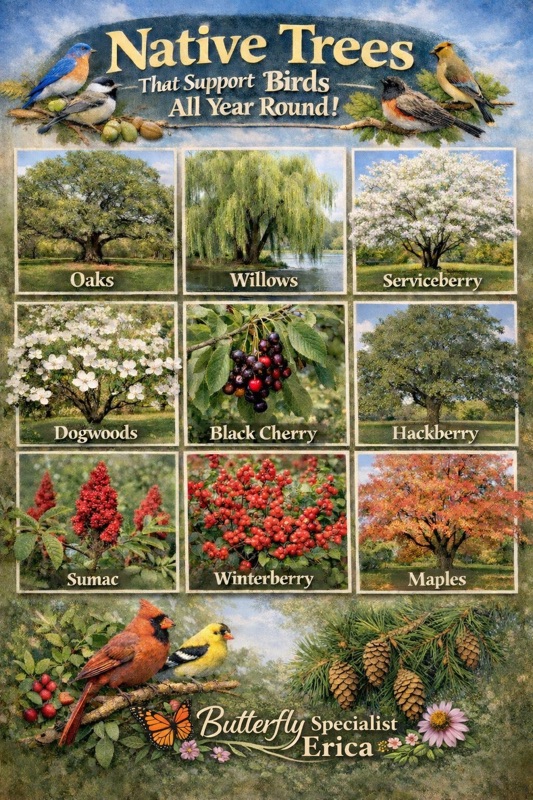
Poster Reference:
To help you recognize these tree species, please refer to the poster below this list. This poster was specially created to show what each native tree looks like and to support identification. It can also be used as a helpful guide when planning and planting native trees in the future.
Native Shrubs That Support Songbirds 🌿
Native shrubs are vital for berries, nesting, and protection from predators. They create dense, layered habitats that birds depend on year-round.
Elderberry (Sambucus spp.)
Elderberry produces nutrient-rich berries that attract many bird species and provides insects and nesting cover.
Highbush Cranberry (Viburnum trilobum)
Highbush Cranberry produces bright red berries that persist into winter, offering an important late-season food source.
Nannyberry (Viburnum lentago)
Nannyberry provides berries in fall and shelter throughout the year, supporting birds with both food and habitat.
Ninebark (Physocarpus opulifolius)
Ninebark offers dense cover and supports insects, making it an excellent shelter plant for birds.
Wild Rose (Rosa spp.)
Wild roses produce rose hips eaten by birds in winter, while their thorny branches offer safe hiding and nesting spaces.
Chokecherry (Prunus virginiana)
Chokecherry produces fruits eaten by birds and supports many insect species, contributing to ecosystem diversity.
Buttonbush (Cephalanthus occidentalis)
Buttonbush thrives in wet areas and supports pollinators and insects. Its structure and seeds provide food and shelter for birds.
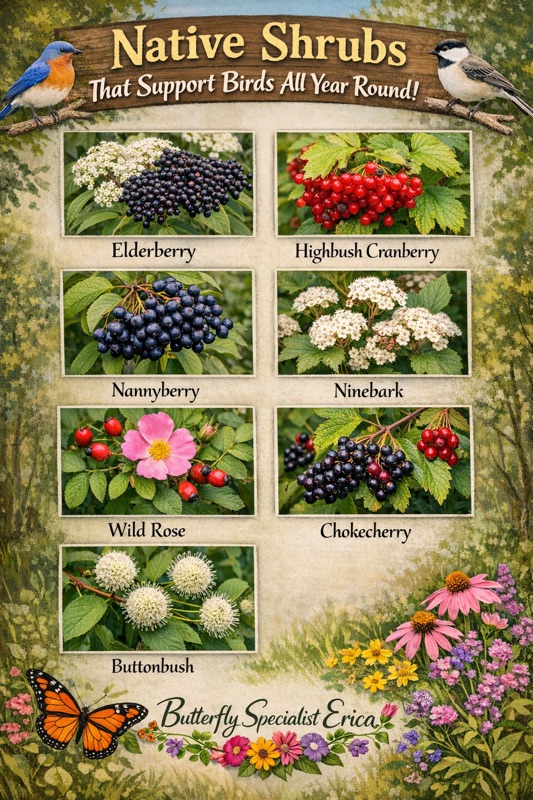
Poster Reference:
To help you identify these shrub species, please refer to the poster below this list. This poster was specially designed to illustrate each native shrub and provide visual guidance. It can also serve as a useful resource when choosing native shrubs to add to your garden or landscape.
Native Wildflowers That Support Songbirds 🌼
Native wildflowers support insects and produce seeds, making them essential for songbirds, especially in late summer and winter.
Pale Purple Coneflower (Echinacea pallida)
Coneflowers produce seeds that birds eat in fall and winter and attract pollinators that support the insect food chain.
Black-Eyed Susan (Rudbeckia hirta)
This wildflower produces abundant seeds and attracts insects, benefiting both birds and pollinators.
Goldenrod (Solidago spp.)
Goldenrod supports a wide variety of insects and produces seeds that birds rely on, making it one of the most important late-season plants.
Milkweed (Asclepias spp.)
Milkweed supports monarch butterflies and many insects, which become an important food source for birds.
Wild Bergamot (Monarda fistulosa)
Wild Bergamot attracts pollinators and produces seeds eaten by birds, contributing to habitat diversity.
False Sunflower (Heliopsis helianthoides)
False Sunflower produces seed-rich flower heads that birds enjoy and supports insects throughout the growing season.
Pearly Everlasting (Anaphalis margaritacea)
Pearly Everlasting provides seeds and habitat for insects, indirectly supporting birds through the food web.
Poster Reference:
To better understand what each wildflower species looks like, refer to the poster below this list. This poster was created to help individuals visually identify native wildflowers and to provide guidance for future planting and habitat creation.
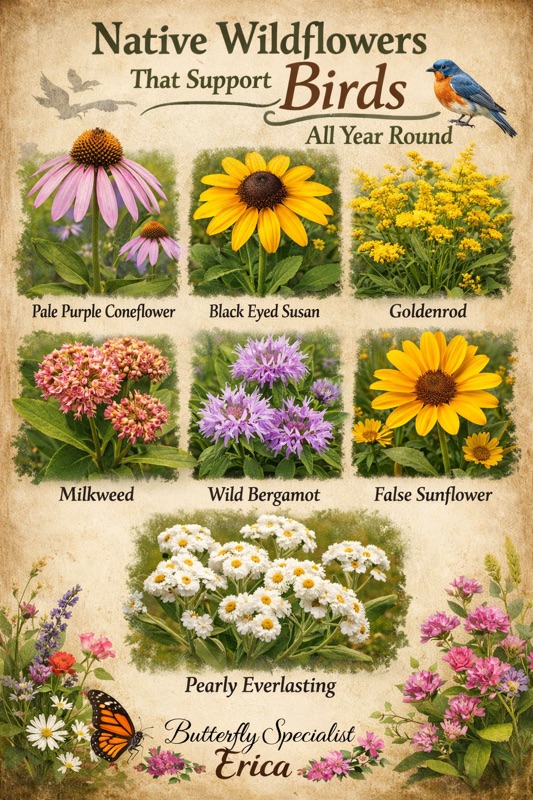
Native Ornamental Grasses That Support Songbirds 🌾
Native grasses are often overlooked, but they provide seeds, nesting material, and shelter, especially during winter.
Little Bluestem (Schizachyrium scoparium)
Little Bluestem produces seeds that birds eat and provides winter cover.
Switchgrass (Panicum virgatum)
Switchgrass offers seeds and dense cover, making it valuable for both shelter and food.
Big Bluestem (Andropogon gerardii)
Big Bluestem supports insects and provides structural habitat for birds.
Indian Grass (Sorghastrum nutans)
Indian Grass produces seeds and contributes to tall grass habitats used by birds.
Prairie Dropseed (Sporobolus heterolepis)
Prairie Dropseed provides fine seeds and nesting material for birds.
Bottlebrush Grass (Elymus hystrix)
Bottlebrush Grass supports insects and produces seeds eaten by birds.
Canada Wild Rye (Elymus canadensis)
Canada Wild Rye offers seeds and cover, helping birds survive winter conditions.
Poster Reference:
To assist with identifying these native grasses, please refer to the poster below this list. This poster was specially made to show the appearance of each species and to support individuals in selecting and planting native grasses in the future.
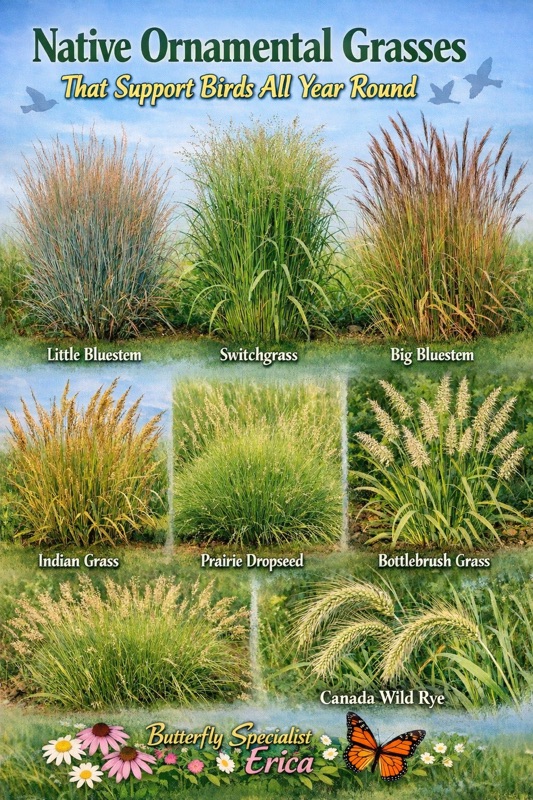
How Native Ecosystems Support Insects And Songbirds
Native ecosystems are built on deep, interconnected relationships between plants, insects, and birds. Native plants form the foundation of these ecosystems by providing food and habitat for native insects, including caterpillars, beetles, bees, and other invertebrates. Because native plants and insects evolved together over thousands of years, many insects can only survive on specific native plant species. When native plants thrive, insect populations flourish, creating a stable and natural food web.
Insects play a crucial role in the survival of songbirds. Many songbirds rely heavily on insects, especially during the breeding season when adult birds need protein-rich food to feed their chicks. Caterpillars, in particular, are one of the most important food sources for young birds. Even species that primarily eat seeds and berries as adults often depend on insects to raise their young. Without healthy insect populations, birds struggle to reproduce successfully, leading to declines in bird populations over time.
Native ecosystems also provide layered habitats that support both insects and birds. Trees, shrubs, wildflowers, and grasses create diverse environments where insects can live and birds can forage, nest, and seek shelter. When landscapes are dominated by non-native ornamental plants or heavily manicured lawns, these natural connections are disrupted. In such environments, insects disappear, and birds lose access to essential food sources.
By restoring native ecosystems through native planting, we help rebuild the natural chain that connects plants, insects, and birds. Every native tree, shrub, and flower contributes to a larger system that sustains life. Supporting native ecosystems is not only about protecting birds. It is about preserving the delicate balance of nature that allows wildlife to survive and thrive across generations.
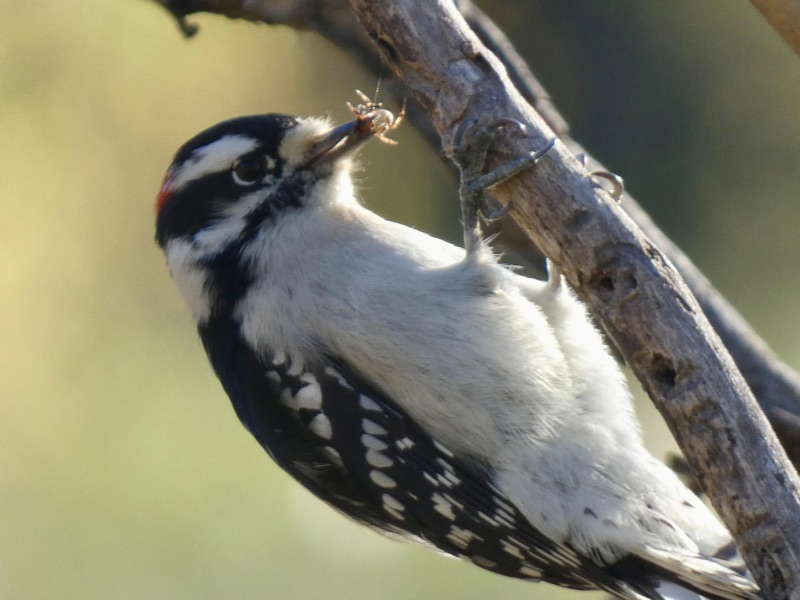
A male Downy Woodpecker on a shrub branch with a bug in his mouth.
Photo Credits: r/birding on Reddit
Long Term Impact On Biodiversity
The choices we make in our gardens and landscapes can shape biodiversity for decades to come. When native plants are preserved and planted, they create stable habitats that support a wide range of species, from insects and birds to mammals and microorganisms. Over time, these habitats grow stronger and more resilient, allowing ecosystems to adapt to environmental changes and continue supporting wildlife.
Native plants help sustain biodiversity by maintaining natural food webs. As native insects thrive on native plants, songbirds and other wildlife benefit from reliable sources of nutrition. This interconnected system supports not only individual species, but entire communities of life. In contrast, landscapes dominated by non-native ornamental plants often lack the resources needed to sustain diverse wildlife, leading to gradual declines in insect and bird populations.
The long-term impact of native planting extends beyond individual gardens. When many people choose native species, their gardens become part of a larger network of habitats that connect parks, forests, and natural areas. These connected spaces allow birds and insects to move safely across landscapes, increasing their chances of survival and reproduction. Over time, this network helps restore ecological balance and strengthens biodiversity at a regional scale.
By supporting native plants, we are investing in the future of nature. Each tree, shrub, and wildflower contributes to a living system that will continue to benefit wildlife for generations. Encouraging biodiversity through native ecosystems is not only an act of conservation. It is a commitment to protecting the richness and resilience of life in our natural world.
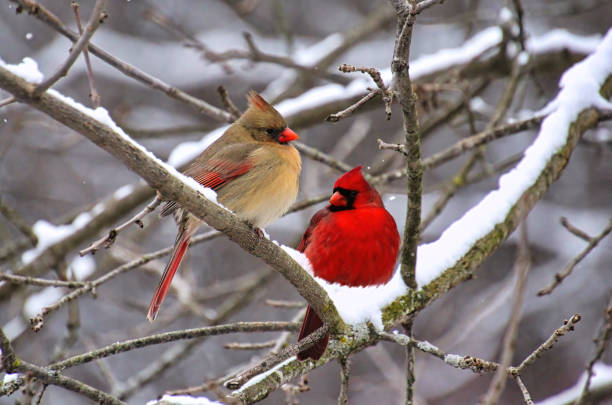
A female and male Northern Cardinal perched on a shrub.
Photo Credits: Hongkun Wang / Getty Images /iStockphoto
Did You Know? 🐦
🔘A single native oak tree can support hundreds of insect species, while many non-native trees support only a few or none.
🔘 Most songbirds rely on insects to feed their chicks, even if they eat seeds and berries as adults.
🔘 When native plants disappear, insect populations decline and bird populations often follow soon after.
🔘 Gardens filled with native plants can become mini ecosystems, supporting birds, pollinators, and countless other species.
🔘 Even small native plantings can make a big difference when many people choose to plant native species.
Native plants and healthy ecosystems provide songbirds with food, shelter, and habitat throughout the year, strengthening their ability to survive seasonal challenges. When landscapes are rich in native vegetation, birds benefit from stable food webs, diverse habitats, and natural resources that support them from spring through winter. These environments form the foundation of resilience, helping songbirds adapt to changing conditions and maintain healthy populations over time.
However, even the most supportive habitats cannot fully protect songbirds from the many pressures they face during winter. Cold temperatures, limited food sources, habitat loss, and human-related threats can make survival increasingly difficult. Understanding the challenges songbirds encounter in winter is essential to recognizing why conservation efforts, native planting, and thoughtful human actions are so important. Exploring these threats helps us better understand what songbirds are up against and how we can continue to protect them.
Threats To Songbirds In Winter
Winter is a critical and often dangerous season for songbirds. As temperatures drop and natural resources become scarce, birds must navigate a range of challenges simply to survive from one day to the next. While many species are well adapted to cold climates, winter places intense pressure on their energy reserves, access to food and water, and availability of safe shelter. These challenges are made even more difficult by changes to landscapes and human activity.
Understanding the threats songbirds face during winter helps us recognize why this season can be so unforgiving. From harsh weather and habitat loss to window collisions and disease, many of these dangers are preventable or can be reduced through awareness and thoughtful action. By learning about these threats, we can better understand the struggles songbirds endure and the important role we can play in helping them survive the cold months.
Common Winter Threats Facing Songbirds
Extreme Cold and Harsh Weather
Winter weather can be one of the most immediate and life-threatening challenges for songbirds. Prolonged cold temperatures, heavy snowfall, freezing rain, and strong winds force birds to use large amounts of energy just to stay warm. When birds are exposed to harsh weather without adequate shelter, their energy reserves can be depleted quickly, increasing the risk of hypothermia and death. Severe storms can also limit birds’ ability to forage, leaving them without the food they need to generate heat.
Limited Natural Food Sources
As winter progresses, many natural food sources disappear beneath snow and ice. Seeds, berries, and insects become harder to find, forcing birds to spend more time and energy searching for food. This increased effort can be dangerous during cold weather, as birds must carefully balance feeding with conserving energy. When food is scarce, weaker or smaller birds are especially vulnerable to starvation.
Frozen or Inaccessible Water
Access to fresh water is often overlooked as a winter threat to songbirds. Many natural water sources freeze during cold weather, leaving birds without reliable places to drink or bathe. Dehydration can weaken birds and interfere with digestion and temperature regulation. While birds can eat snow, doing so requires additional energy to melt it internally, placing further strain on already limited energy reserves.
Habitat Loss and Reduced Shelter
Habitat loss significantly increases winter survival challenges for songbirds. The removal of native trees and shrubs, excessive fall cleanups, and urban development reduce the availability of safe places for birds to roost and hide from predators. Without dense vegetation, brush piles, or tree cavities, birds are more exposed to cold temperatures and harsh winds, making winter survival much more difficult.
Increased Predation Risk
Winter forces songbirds to spend more time foraging in open areas, which can increase their exposure to predators. With fewer places to hide and limited food options, birds may take greater risks when feeding. Outdoor cats, birds of prey, and other predators can pose serious threats, especially near feeding areas where birds gather frequently.
Window Collisions
Window collisions are a significant and often underestimated threat during winter. Birds may mistake reflections of trees and sky for open space, especially when feeders are placed nearby. Collisions with glass can result in serious injuries or death. Winter feeding activity increases bird traffic near homes, making unmarked windows particularly dangerous during this season.
Disease Spread at Feeding Areas
When birds gather in large numbers at feeders and water sources, the risk of disease transmission increases. Dirty feeders, spoiled food, and contaminated water can spread illnesses such as salmonella and other infections. During winter, birds are already under stress, making them more susceptible to disease outbreaks that can impact entire flocks.
Threats Vs. Solutions
❄️ Extreme Cold & Harsh Weather
➡️ Solution:
Provide winter shelter using dense shrubs, evergreen trees, brush piles, and roost boxes to help birds block wind and conserve body heat.
🌰 Limited Natural Food Sources
➡️ Solution:
Support birds by planting native, seed- and berry-producing plants and offering supplemental food through clean, well maintained feeders during winter.
💧 Frozen or Scarce Water
➡️ Solution:
Offer shallow, unfrozen water using heated bird baths or frequently refreshed water sources so birds can stay hydrated without expending extra energy.
🌿 Habitat Loss & Lack of Shelter
➡️ Solution:
Preserve native vegetation, avoid excessive fall cleanup, and create layered habitats with trees, shrubs, grasses, and natural debris.
🐱 Increased Predation Risk
➡️ Solution:
Place feeders and water sources in safe, open locations with nearby escape cover, and keep outdoor cats indoors to protect wildlife.
🪟 Window Collisions
➡️ Solution:
Use window collision prevention stickers, decals, or patterns and place feeders thoughtfully to reduce the risk of birds striking glass.
🦠 Disease Spread at Feeding Areas
➡️ Solution:
Clean feeders and water sources regularly, remove spoiled food, and space feeders apart to reduce overcrowding and disease.
💛 Why This Matters
Many winter threats facing songbirds are made worse by human activity, but many are also preventable. Small, thoughtful actions can reduce risks and make winter a safer season for birds.
How We Can Help Reduce These Threats
Although winter presents many challenges for songbirds, there are meaningful ways people can help reduce these risks. Small, thoughtful actions when practiced consistently can make a significant difference in bird survival. Providing reliable food, clean water, and safe shelter helps birds conserve energy during cold weather and reduces the need for risky foraging. Choosing native plants, maintaining feeders properly, and being mindful of how our homes and gardens affect wildlife all contribute to creating safer environments for songbirds.
Reducing human related threats is especially important during winter, when birds are already under stress. Simple steps such as cleaning feeders regularly, preventing window collisions, placing feeders safely away from predators, and keeping outdoor cats indoors can prevent unnecessary injuries and deaths. Leaving natural areas intact, avoiding excessive fall cleanup, and supporting native habitats strengthen ecosystems over time, giving songbirds the resources they need to survive not only winter, but every season. When individuals take action, even in small ways, those efforts add up to powerful protection for songbirds and biodiversity as a whole.
Winter Threat Prevention Checklist
Use this checklist to help reduce common winter threats and create a safer environment for songbirds:
⬜ Provide consistent, nutritious food during winter using appropriate feeders.
⬜ Clean bird feeders regularly to prevent the spread of disease.
⬜ Remove wet, moldy, or spoiled seed immediately.
⬜ Offer fresh, unfrozen water daily using shallow dishes or heated bird baths.
⬜ Place feeders and water sources in safe, visible locations away from predators.
⬜ Install window collision prevention stickers or decals on nearby windows.
⬜ Keep feeders either very close to windows or farther away to reduce collision risk.
⬜ Preserve natural winter shelter such as shrubs, evergreens, brush piles, and roost boxes.
⬜ Avoid excessive fall and winter cleanup that removes seed heads, leaf litter, and shelter.
⬜ Keep outdoor cats indoors, especially during winter months.
⬜ Space feeders apart to reduce overcrowding and stress among birds.
⬜ Support long-term bird survival by planting native trees, shrubs, wildflowers, and grasses.
Every action on this checklist helps reduce winter risks. Even small efforts, when combined, can make winter safer for songbirds across neighbourhoods and communities.
Understanding the threats songbirds face during winter helps us see how vulnerable they can be during this season. Cold temperatures, habitat loss, predators, and human-related dangers all place immense pressure on birds trying to survive. While feeding can provide critical support, it is only one piece of a much larger picture. Songbirds rely on a wide range of environmental conditions and human choices that extend far beyond what happens at a feeder.
Helping songbirds means looking at how our everyday actions shape the landscapes they depend on. From the way we manage our yards and communities to how we protect habitats, reduce hazards, and advocate for wildlife, there are many meaningful ways to support birds year-round. Exploring how people can help beyond feeding allows us to move from short-term assistance to long-term conservation, creating safer, healthier environments where songbirds can truly thrive.
How People Can Help Beyond Feeding
Feeding songbirds during winter is a meaningful and important way to help, but it is only one part of supporting their survival. Songbirds are deeply connected to the landscapes they live in, and their well-being is influenced by far more than the food we place in feeders. The choices we make in our yards, communities, and daily lives can either reduce or increase the challenges birds face throughout the year.
Helping songbirds beyond feeding means creating safer environments, protecting natural habitats, and making thoughtful decisions that support wildlife long-term. From planting native species and reducing hazards to advocating for conservation and being mindful of human impacts, there are many ways people can make a difference. By looking beyond feeders, we begin to understand how everyday actions can contribute to healthier ecosystems and a more secure future for songbirds.
Habitat Protection and Restoration
One of the most impactful ways to help songbirds beyond feeding is by protecting and restoring their natural habitats. Native trees, shrubs, wildflowers, and grasses provide birds with food, shelter, nesting sites, and insects throughout the year.
Preserving existing natural areas, planting native species, and allowing landscapes to grow more naturally all contribute to healthier ecosystems. Even small habitat-friendly choices in yards, balconies, or community spaces can collectively make a significant difference for songbirds.
Reducing Human Created Hazards
Many threats to songbirds are linked directly to human activity and can be reduced with awareness and simple changes. Window collisions, outdoor cats, pesticide use, and excessive lighting all pose serious risks to birds.
Using window collision prevention markers, keeping cats indoors, avoiding chemical pesticides, and reducing unnecessary outdoor lighting can greatly improve bird safety. By identifying and minimizing these hazards, we can make everyday environments far safer for songbirds.
Supporting Native Plants and Natural Landscapes
Choosing native plants over ornamental species is one of the most effective long-term ways to support songbirds. Native plants sustain insects, which are essential food for birds, and provide seeds, berries, and shelter across seasons.
Allowing gardens to retain seed heads, fallen leaves, and natural structure further supports wildlife. These choices help rebuild the natural connections between plants, insects, and birds that are often lost in highly managed landscapes.
Advocacy and Conservation Awareness
Helping songbirds also means speaking up for their protection. Supporting conservation organizations, participating in local habitat restoration efforts, and advocating for policies that protect wildlife and natural spaces all contribute to long-term change.
Sharing educational information, encouraging native planting, and raising awareness about threats to birds help build a culture of conservation. When people work together, their collective voices can influence decisions that affect entire ecosystems.
Community Action and Education
Community involvement plays a powerful role in protecting songbirds. Neighbourhood initiatives, school programs, citizen science projects, and community gardens help create networks of safe habitats.
Teaching others about bird-friendly practices, sharing resources, and leading by example inspire broader participation. When communities come together to support songbirds, their efforts create connected habitats that benefit birds far beyond individual properties.
Ways You Can Help Beyond Feeding Checklist
Use this checklist to support songbirds through habitat protection, safer environments, and community action:
⬜ Plant native trees, shrubs, wildflowers, and grasses to provide year-round food and shelter.
⬜ Preserve existing natural habitat whenever possible, including mature trees and hedgerows.
⬜ Reduce or eliminate pesticide and herbicide use to protect insects birds rely on for food.
⬜ Install window collision prevention markers on glass surfaces near bird activity.
⬜ Keep outdoor cats indoors to reduce predation on songbirds.
⬜ Leave seed heads, fallen leaves, and natural debris to support insects and shelter.
⬜ Reduce unnecessary outdoor lighting, especially at night, to prevent bird disorientation.
⬜ Create or protect winter shelter using dense shrubs, evergreens, brush piles, or roost boxes.
⬜ Support local conservation organizations and habitat restoration projects.
⬜ Share information about bird-friendly practices with friends, family, and community members.
⬜ Participate in community science projects or local nature initiatives when possible.
⬜ Advocate for policies and practices that protect wildlife and natural spaces.
Even a few of these actions can have a lasting impact. When people take steps beyond feeding, they help create healthier ecosystems where songbirds can survive, reproduce, and thrive year after year.
As we explore the many ways people can help songbirds beyond feeding, it becomes clear that support is most effective when it is thoughtful and informed. While our actions often come from a place of care and good intentions, the way we choose to help matters just as much as the desire to help. Supporting songbirds means understanding their needs, respecting their natural behaviours, and recognizing when human involvement is helpful and when it may unintentionally cause harm.
Ethical and responsible bird support focuses on creating balance between assistance and respect for wildlife. It encourages us to make choices that protect birds’ health, independence, and long-term survival rather than creating dependency or unnecessary risks. By approaching bird support with care, awareness, and responsibility, we can ensure that our efforts truly benefit songbirds and contribute to healthier ecosystems overall.
What Ethical Bird Support Means
Ethical bird support is rooted in respect for wildlife and an understanding of birds’ natural needs and behaviours. It means offering help in ways that protect birds’ health, safety, and independence rather than interfering with their ability to survive on their own. Ethical support focuses on creating safe environments, preserving natural habitats, and providing assistance only when it is truly beneficial.
Responsible bird support also recognizes that birds are wild animals, not pets. Observing from a respectful distance, allowing birds to make natural choices, and avoiding unnecessary handling or intervention are key principles. When we support birds ethically, we work with nature rather than trying to control it, ensuring that our actions contribute to long term wellbeing rather than short-term comfort.
Common Mistakes Made With Good Intentions
Many actions that come from a place of kindness can unintentionally harm songbirds. Overfeeding or offering inappropriate foods, such as bread or processed scraps, can negatively affect bird health. Poorly maintained feeders and water sources can spread disease, while placing feeders too close to windows or predators can increase the risk of injury or death.
Another common mistake is disrupting natural behaviours by over-intervening. Attempting to rescue birds that are not injured, handling wildlife unnecessarily, or removing natural elements like leaf litter and brush can do more harm than good. These actions often stem from concern, but without understanding birds’ needs, they can reduce survival chances rather than improve them.
Best Practices for Responsible Bird Support
Responsible bird support focuses on thoughtful, informed actions that benefit birds without creating dependency. Providing clean, nutritious food during times of scarcity, offering fresh water, and maintaining safe feeding areas are important when done properly. Supporting birds through habitat creation such as planting native species and preserving natural shelter, helps meet their needs in a sustainable, long-term way.
Best practices also include minimizing human-related hazards by preventing window collisions, keeping cats indoors, avoiding pesticides, and reducing unnecessary disturbances. Learning about local bird species and staying informed through reputable conservation sources allows people to make better decisions for wildlife. When support is guided by knowledge and respect, it becomes a powerful tool for protecting songbirds and the ecosystems they depend on.
What Not To Do : Gentle Reminder For Responsible Bird Support
❌ Do not feed birds bread, processed foods, or salty snacks, as these provide little nutrition and can harm digestion.
❌ Do not neglect feeder and water cleanliness, as dirty feeding areas can spread disease quickly.
❌ Do not place feeders directly in front of unprotected windows, which increases the risk of collisions.
❌ Do not use pesticides or herbicides that harm insects birds rely on for food.
❌ Do not handle birds unnecessarily or attempt to “rescue” birds that are not injured or in danger.
❌ Do not remove all natural debris such as leaf litter, seed heads, and brush that provide shelter and food.
❌ Do not allow outdoor cats to roam freely, especially near feeding areas.
❌ Do not overcrowd feeders, as crowding increases stress and disease transmission.
❌ Do not rely solely on feeders while ignoring habitat protection and long-term ecosystem health.
Ethical & Responsible Bird Support Checklist
Use this checklist to ensure your efforts truly benefit songbirds while respecting their wild nature:
⬜ Offer support only when it is beneficial, avoiding unnecessary interference with natural behaviour.
⬜ Provide appropriate, nutritious food and avoid foods that can harm birds.
⬜ Keep feeders and water sources clean to prevent the spread of disease.
⬜ Place feeders and water in safe locations away from predators and collision risks.
⬜ Use window collision prevention markers on glass near bird activity.
⬜ Create or preserve natural habitat using native plants, shrubs, trees, and grasses.
⬜ Leave natural elements such as seed heads, leaf litter, and brush for shelter and food.
⬜ Avoid pesticides, herbicides, and chemicals that harm insects and birds.
⬜ Keep outdoor cats indoors to protect songbirds.
⬜ Observe birds from a respectful distance without handling or disturbing them.
⬜ Learn about local bird species and seasonal needs to guide responsible actions.
⬜ Support long-term conservation efforts through education, advocacy, or community involvement.
Ethical bird support is about balance by helping where needed, protecting natural systems, and allowing birds to remain wild, resilient, and independent.
Ethical and responsible bird support reminds us that helping songbirds is not only about what we do, but how and why we do it. When our actions are guided by respect, understanding, and care, they protect birds while preserving their natural behaviours and ecosystems. This mindful approach lays the groundwork for a deeper relationship between people, and the natural world one built on balance rather than control.
Beyond conservation and responsibility, supporting songbirds also offers meaningful rewards for both ecosystems and the human spirit. The presence of birds enriches our environments, signals ecological health, and fosters emotional connection, wonder, and well-being. Exploring the emotional and ecological benefits of supporting songbirds helps us understand that caring for birds is not only an act of protection, but also a source of joy, healing, and renewed connection.
Emotional & Ecological Benefits Of Supporting Songbirds
Supporting songbirds goes beyond conservation. It creates a meaningful connection between people and the natural world. The presence of birds brings life, sound, and movement into our surroundings, offering moments of calm, joy, and wonder. Watching birds at feeders, in gardens, or in natural spaces can reduce stress, encourage mindfulness, and foster a sense of purpose and responsibility. For many people, caring for songbirds becomes a deeply personal experience that strengthens emotional well-being and nurtures a lasting bond with nature.
At the same time, the benefits of supporting songbirds extend far beyond human experience. Songbirds play essential roles in ecosystems by helping control insect populations, dispersing seeds, and acting as indicators of environmental health. When birds thrive, it often signals that ecosystems are balanced and resilient. By supporting songbirds, we are also supporting the broader web of life that depends on healthy habitats. Understanding these emotional and ecological benefits reminds us that protecting songbirds is not only an act of kindness, it is an investment in the health of our planet and the well-being of future generations.
Emotional Benefits Of Supporting Songbirds
Supporting songbirds can have a powerful and positive impact on human well-being, especially during winter when nature often feels quiet and distant. The presence of birds brings movement, colour, and sound into our surroundings, helping people feel more connected to the natural world. Watching birds visit feeders, shelters, or gardens can reduce stress, ease feelings of loneliness, and create moments of calm and mindfulness. These small daily interactions often become grounding rituals that provide comfort and joy during colder, darker months.
Caring for songbirds also fosters a sense of purpose and compassion. Knowing that simple actions such as providing food, water, or shelter can help a living creature survive encourages empathy and responsibility. For many people, supporting birds becomes a meaningful way to give back to nature, strengthening emotional resilience and nurturing a deeper appreciation for life beyond ourselves. These benefits extend year-round, as birds remain a constant reminder of connection, continuity, and hope.
Ecological Benefits Of Supporting Songbirds
Songbirds play vital roles in maintaining healthy ecosystems. Many species help regulate insect populations by feeding on insects that can otherwise become pests. Others assist with seed dispersal, helping native plants spread and regenerate across landscapes. Through these roles, songbirds contribute to balanced ecosystems that support a wide variety of plant and animal life.
Because songbirds are sensitive to environmental changes, their presence often reflects the health of local ecosystems. When bird populations are strong and diverse, it usually indicates that habitats are functioning well. Supporting songbirds through habitat protection, native planting, and responsible practices helps strengthen entire ecosystems not just individual species. In this way, caring for birds also supports broader biodiversity and ecological stability.
Inspiring Stewardship and Environmental Awareness
Supporting songbirds often sparks a deeper awareness of environmental responsibility. As people learn about birds’ needs and challenges, they become more mindful of how everyday actions affect wildlife and natural spaces. This awareness can lead to broader stewardship, encouraging choices that protect habitats, reduce environmental harm, and promote sustainability.
Songbirds also serve as powerful ambassadors for conservation. Their visibility and beauty make them accessible symbols of environmental health, inspiring curiosity, learning, and advocacy. When people engage in bird-friendly practices, they often begin to see themselves as caretakers of the natural world. This sense of stewardship strengthens community connections and fosters a shared commitment to protecting nature for future generations.
Reflection & Stewardship Checklist 🐦 🌿
Use this checklist to reflect on your connection to songbirds and the role you can play in supporting them:
⬜ Do I take time to notice and appreciate songbirds in my surroundings, especially during winter?
⬜ Have I learned about the songbird species that live in or pass through my area?
⬜ Do my actions reflect respect for birds as wild animals, not pets?
⬜ Am I making choices that reduce harm, such as preventing window collisions or keeping cats indoors?
⬜ Have I considered how my yard, balcony, or community space could better support wildlife?
⬜ Do I understand the connection between native plants, insects, and birds?
⬜ Am I willing to leave parts of nature a little wild for the benefit of birds and other species?
⬜ Do I share what I learn about birds and conservation with others in a kind and educational way?
⬜ Have I reflected on how supporting songbirds benefits my own well-being and connection to nature?
⬜ Am I open to continuing to learn and grow as a steward of the natural world?
There is no “perfect” way to be a steward of nature. Every small act of awareness, care, and respect helps strengthen the connection between people, songbirds, and the ecosystems we share.
Did You Know? 🐦
🦢 Simply watching birds has been shown to reduce stress and improve mood, helping people feel calmer and more connected to nature.
🦢 Songbirds are often considered indicators of environmental health when birds are thriving, ecosystems are usually healthier too.
🦢 Small, consistent actions like planting native plants or making windows safer can have long-lasting ecological impacts.
🦢 Many people who begin supporting birds find that it deepens their sense of purpose, empathy, and stewardship over time.
Taking time to notice and care for songbirds can nourish both the natural world and our own well-being.
🦢 Simply watching birds has been shown to reduce stress and improve mood, helping people feel calmer and more connected to nature.
🦢 Songbirds are often considered indicators of environmental health when birds are thriving, ecosystems are usually healthier too.
🦢 Small, consistent actions like planting native plants or making windows safer can have long-lasting ecological impacts.
🦢 Many people who begin supporting birds find that it deepens their sense of purpose, empathy, and stewardship over time.
Taking time to notice and care for songbirds can nourish both the natural world and our own well-being.
🦢 Simply watching birds has been shown to reduce stress and improve mood, helping people feel calmer and more connected to nature.
🦢 Songbirds are often considered indicators of environmental health when birds are thriving, ecosystems are usually healthier too.
🦢 Small, consistent actions like planting native plants or making windows safer can have long-lasting ecological impacts.
🦢 Many people who begin supporting birds find that it deepens their sense of purpose, empathy, and stewardship over time.
Taking time to notice and care for songbirds can nourish both the natural world and our own well-being.
Supporting songbirds is not only about understanding their needs, but also about turning care into action. When we choose to help thoughtfully, our efforts become expressions of stewardship, creativity, and compassion. Simple, hands on activities allow us to support birds in ways that are both practical and deeply personal, strengthening the connection between people and the natural world.
The following recipes are designed as gentle, intentional ways to support songbirds, especially during challenging seasons. Each recipe offers a safe, bird friendly option that provides nourishment while encouraging mindful engagement with nature. Whether creating suet, natural feeders, or seasonal treats, these recipes are meant to be acts of care, small but meaningful contributions that honour the voices of the wild and our shared responsibility to protect them.
Northern Songbird Energy Fuel Suet Recipe
This high-energy suet recipe is designed to help native songbirds survive cold winter conditions by providing essential fats, nutrients, and protein. It uses simple, natural ingredients that support birds safely and responsibly during times when food is scarce.
🧾 Ingredients
🧈 Base (Essential Winter Fat)
• 1 cup unsalted beef suet or unsalted lard
(A solid animal fat that provides crucial energy and warmth for birds during freezing temperatures.)
🌾 Seed & Grain Mix
• ½ cup black oil sunflower seeds
• ¼ cup millet or cracked corn
• ¼ cup plain, uncooked oats
🥜 Protein Boost
• ¼ cup unsalted crushed peanuts
(Or natural, unsalted peanut butter.)
🍎 Optional Natural Add-Ins
• 2 tablespoons dried fruit (raisins, cranberries, or chopped dried apple)
• 1 tablespoon ground eggshells (for calcium support)
• 1 tablespoon flaxseed or pumpkin seeds
👩🍳 Instructions
1. Melt the unsalted suet or lard slowly in a pot over low heat. Do not boil.
2. Once melted, add the seeds, grains, nuts, and optional ingredients.
3. Stir thoroughly until all ingredients are evenly coated.
4. Pour the mixture into molds such as cups, trays, cookie cutters, pinecones, or shallow containers.
5. Allow the suet to cool and harden completely.
6. Place the hardened suet in a suet feeder or hang it outdoors in a safe, quiet location.
🌿 Why This Recipe Supports Songbirds
• High-energy fats help birds maintain body heat in freezing temperatures.
• Seeds and grains provide essential calories and nutrients.
• Protein-rich ingredients support feather health and strength.
• Natural, simple ingredients ensure the suet is safe and beneficial for wildlife.
⚠️ Important Safety Tips
Avoid adding:
• Salt or seasoned foods
• Bread or processed foods
• Chocolate or sweeteners
• Honey or syrups
• Spoiled or moldy ingredients
By offering homemade suet, we become part of the support system that helps native songbirds survive winter. Thoughtful, responsible care no matter how small can make a meaningful difference for wildlife.
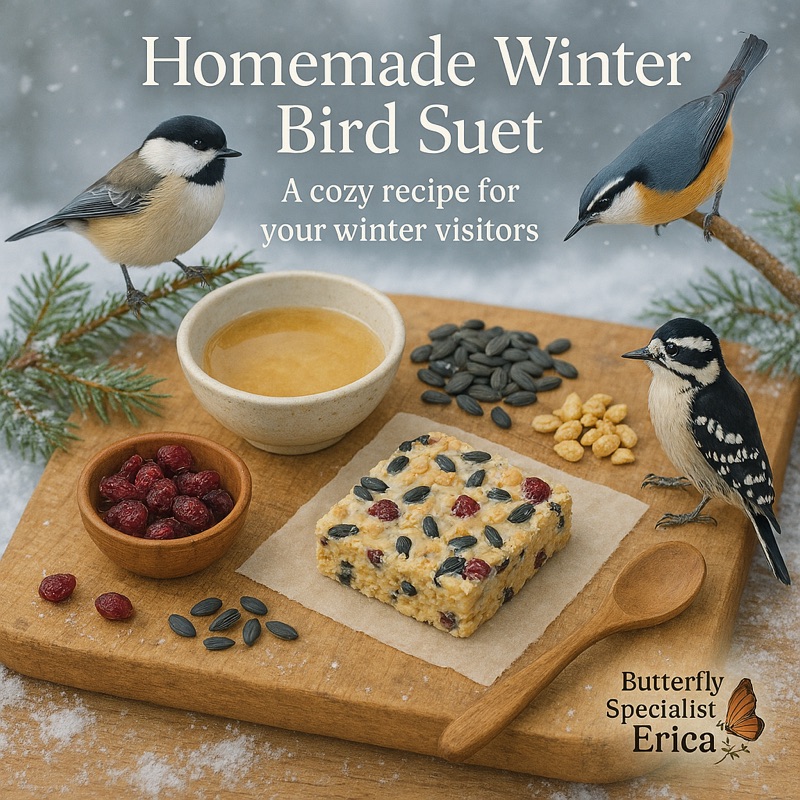
Voices Of The Wild Pinecone Feeder Recipe
This pinecone feeder recipe is a simple, hands-on way to support songbirds while fostering a deeper connection with nature. Designed to be both nourishing and meaningful, it encourages mindful care for wildlife during winter and throughout the year.
🐦 Ingredients
🌾 Winter Songbird Seed Blend
• 2 tablespoons black oil sunflower seeds
• 1 tablespoon millet (white or red)
• 1 tablespoon rolled oats or cracked corn (plain and unsweetened)
• 1 tablespoon finely chopped peanuts (unsalted)
• 1 tablespoon dried berries (unsweetened cranberries, blueberries, or raisins)
🥜 Natural Binding Mixture
• 2 tablespoons natural peanut butter (unsalted, no sugar or xylitol)
• 1 tablespoon sunflower seed butter or plain coconut oil
• 1 teaspoon mashed banana (or a very small drizzle of raw honey, optional)
🧺 Materials
• 1 large pinecone
• Natural twine or jute string
• Small bowls and a spoon
🌿 Instructions
1. Tie natural twine securely around the top of the pinecone, leaving enough length to hang it from a tree branch.
2. In a small bowl, mix the peanut butter with sunflower seed butter or coconut oil until smooth and spreadable.
3. In a separate bowl, combine all seeds, nuts, and dried berries to create the winter songbird seed blend.
4. Using a spoon or butter knife, spread the binding mixture between the pinecone scales.
5. Roll the pinecone gently in the seed mix, pressing lightly so the seeds adhere well.
6. Allow the feeder to rest for 20–30 minutes so the mixture firms slightly.
7. Hang the pinecone feeder from a tree branch in a quiet, safe outdoor area.
🐤 Helpful Tips for Bird Care
• Hang feeders 1–2 metres (3–6 feet) above the ground.
• Avoid salted, sweetened, or seasoned foods, as they can harm birds.
• Replace or remove feeders if they become wet or moldy.
• Observe visiting birds to learn which species prefer different foods and feeder styles.
🌎 A Small Act of Kindness for Wildlife
By creating the Voices of the Wild Pinecone Feeder, you are offering more than food you are participating in mindful stewardship and strengthening the bond between people and nature. Even the smallest acts of care can make a meaningful difference for songbirds.
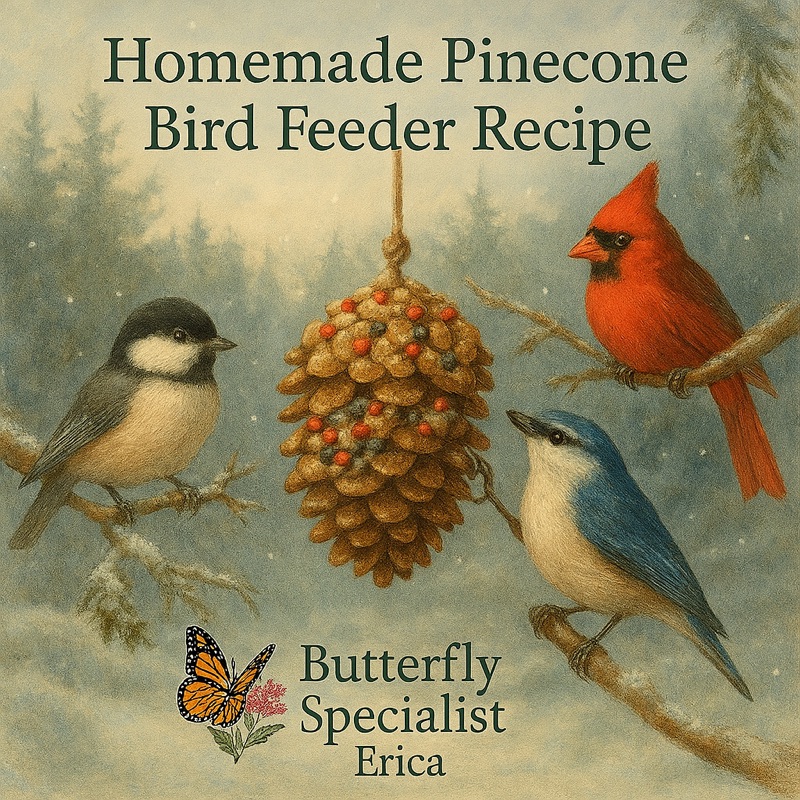
The Wreath Of Care (Ice Treat For Birds) Recipe
The Wreath of Care is a seasonal offering created to support songbirds during winter while symbolizing compassion, mindfulness, and connection to nature. This frozen wreath provides birds with access to seeds and fruit while also serving as a visual reminder that even simple, intentional actions can make a difference for wildlife.
🌿 Ingredients (Bird-Safe)
💧 Base
• Clean water
🌻 Seeds & Grains
• Black oil sunflower seeds
• Millet
• Cracked corn
• Plain oats
• Unsalted peanuts (chopped)
🍎 Fruits (optional)
• Apple slices
• Cranberries
• Blueberries
• Orange slices
🌲 Natural Decorations (optional)
• Pinecones
• Evergreen sprigs (pine, spruce, or cedar)
• Dried grasses or leaves
⚠️ Avoid salted, sweetened, or processed foods.
🥣 Instructions
1️⃣ Prepare the Mold
Use a bundt pan, wreath mold, or large bowl.
Place a smaller bowl in the center to create the wreath shape.
2️⃣ Arrange the Natural Elements
Arrange seeds, fruits, greenery, and pinecones around the mold to create a natural winter wreath design.
3️⃣ Add Water
Slowly pour clean water into the mold until the ingredients are partially covered.
4️⃣ Freeze in Layers
Freeze for 1–2 hours, then add more seeds and fruit.
Pour in additional water and freeze again.
This layered method helps distribute ingredients evenly throughout the wreath.
5️⃣ Freeze Completely
Freeze overnight until the wreath is fully solid.
6️⃣ Remove the Wreath
Run warm water over the outside of the mold to gently release the ice wreath.
7️⃣ Hang Outdoors
Use natural twine or string to hang the Wreath of Care from a tree branch, fence, or hook where birds can safely access it.
❄️ Winter Use & Safety Notes
• Best used during freezing temperatures only.
• Remove the wreath once temperatures rise above freezing to prevent spoilage.
• Place in a quiet, safe area away from predators and busy human activity.
• Replace as needed to keep offerings fresh and safe.
💛 The Meaning of the Wreath of Care
The Wreath of Care represents compassion for wildlife and mindful stewardship of nature. Each wreath is a small act of love for birds a reminder that simple, intentional actions can create meaningful support during the hardest seasons.
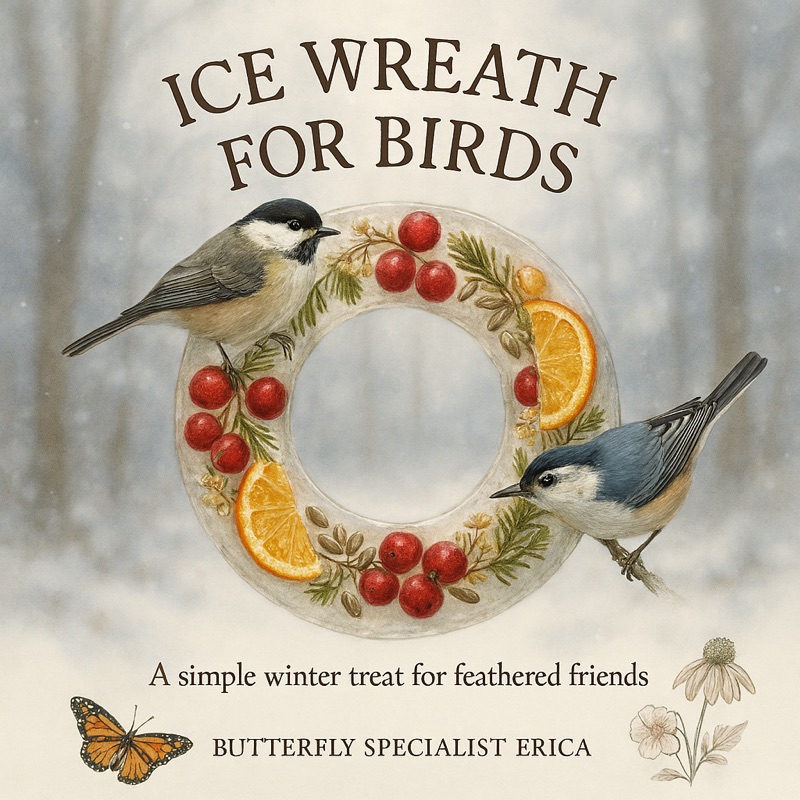
Guardians Of Nature Suet Balls Recipe
The Guardians of Nature Suet Balls are designed to provide high-energy nourishment for songbirds during cold winter months. This recipe offers essential fats, seeds, and nutrients that help birds maintain strength and warmth, while also serving as a reminder of our role as caretakers of the natural world.
🌻 Ingredients
🧈 Base Fats (Primary Energy Source)
• 1 cup natural beef suet or unsalted lard
or
• 1 cup coconut oil (plant-based option)
🌾 Dry Ingredients
• 1 cup rolled oats
• ½ cup cornmeal
• ½ cup shelled sunflower seeds
• ¼ cup millet or mixed birdseed
• ¼ cup chopped unsalted peanuts
• 2 tablespoons dried berries (cranberries, blueberries, or raisins)
🌿 Optional Natural Boosts
• 1 tablespoon crushed eggshells (for calcium)
• 1 tablespoon flaxseed or chia seeds
🚫 Avoid using salt, sugar, honey, spices, bread, or processed foods, as these can harm birds.
🥣 Instructions
1. Slowly melt the suet, lard, or coconut oil over low heat. Do not boil.
2. In a separate bowl, mix all dry ingredients together thoroughly.
3. Pour the melted fat over the dry mixture and stir until everything is evenly coated.
4. Allow the mixture to cool slightly until it begins to thicken.
5. Shape the mixture into balls by hand or press it into molds.
6. Place the suet balls on parchment paper and refrigerate for 1–2 hours until firm.
7. Hang the hardened suet balls in mesh feeders, pinecones, or place them in a suet cage for birds to enjoy.
❄️ Winter Use & Safety Notes
• Best offered during cold weather, especially when natural food sources are limited.
• Place feeders in safe, quiet locations away from predators and window hazards.
• Remove any uneaten or spoiled suet to keep feeding areas clean and healthy.
💛 Message from Butterfly Specialist Erica
By creating this recipe, I hope to encourage others to become guardians of nature. Every small act of kindness toward wildlife such as feeding songbirds in winter helps protect the fragile voices of nature that cannot speak for themselves. When we care for birds, we are also caring for the balance and beauty of our natural world.
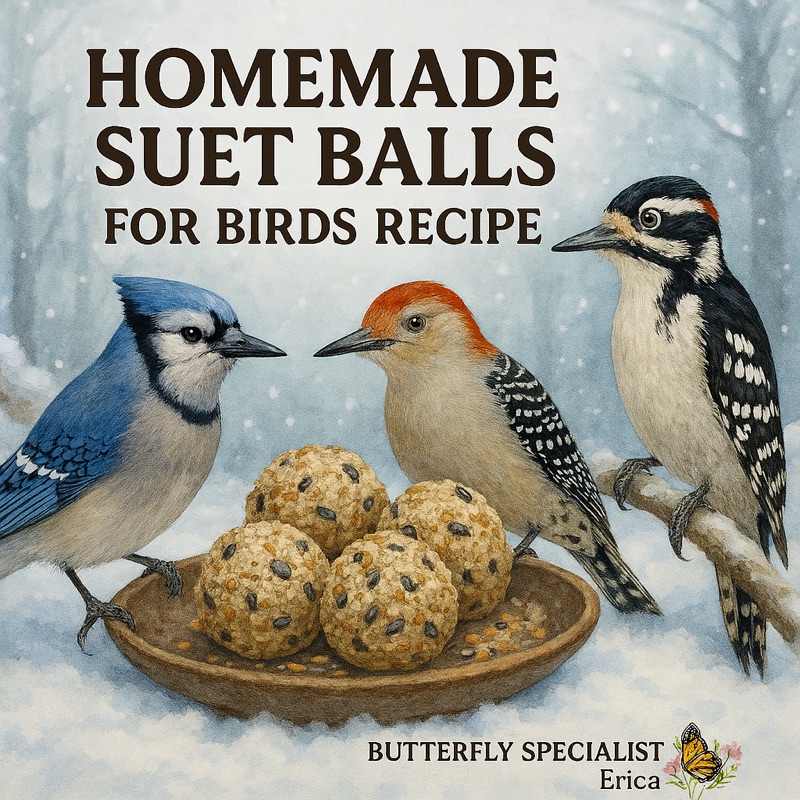
A Closing Reflection: Small Acts & Lasting Impact
Supporting songbirds is not about perfection or doing everything at once. It is about showing up with care, intention, and respect for the natural world. Each feeder made, each recipe prepared, and each thoughtful choice becomes part of a larger story of stewardship. When we take time to nourish songbirds, especially during challenging seasons, we are reminded that our actions matter, even when they feel small.
These recipes are more than food; they are expressions of connection. They invite us to slow down, observe, and engage with nature in meaningful ways. By supporting songbirds ethically and responsibly, we strengthen ecosystems, deepen our awareness, and nurture our own sense of purpose and compassion. In caring for the voices of the wild, we are also caring for the balance, beauty, and resilience of the world we share.
May these offerings serve as a reminder that kindness toward nature is always worth the effort and that when we choose to protect and support wildlife, we become part of something much greater than ourselves.
A Gentle Call To Action
If this article has inspired you, consider choosing one small way to support songbirds in your own life. Whether it is planting a native shrub, making one of the recipes shared here, sharing what you’ve learned with others, or simply taking time to notice the birds around you, every thoughtful action matters. You do not need to do everything just something.
By choosing care, awareness, and respect for nature, you become part of a growing community of people who are helping protect songbirds and the ecosystems they depend on. Together, our small, intentional choices can create safer spaces for wildlife and a more balanced, compassionate world for generations to come.
A Final Reflection
Supporting songbirds is a journey that begins with awareness and grows through intention, compassion, and respect for the natural world. From understanding the challenges birds face in winter, to providing food, water, shelter, and habitat, each choice we make shapes the environments they depend on. When we learn about native plants, ethical support, ecosystem connections, and responsible care, we begin to see songbirds not as visitors to our spaces, but as vital members of the living world we share.
This article is a reminder that meaningful change does not require grand gestures only thoughtful ones. Whether through planting native species, reducing threats, creating safe feeding spaces, or engaging in simple acts of stewardship, every effort contributes to a healthier, more balanced ecosystem. By choosing to support songbirds with care and responsibility, we strengthen biodiversity, nurture our own connection to nature, and help ensure that the voices of the wild continue to be heard for generations to come.


Comments
Post a Comment