From Bowl To Wild : The Hidden Danger of Releasing Pet Goldfish
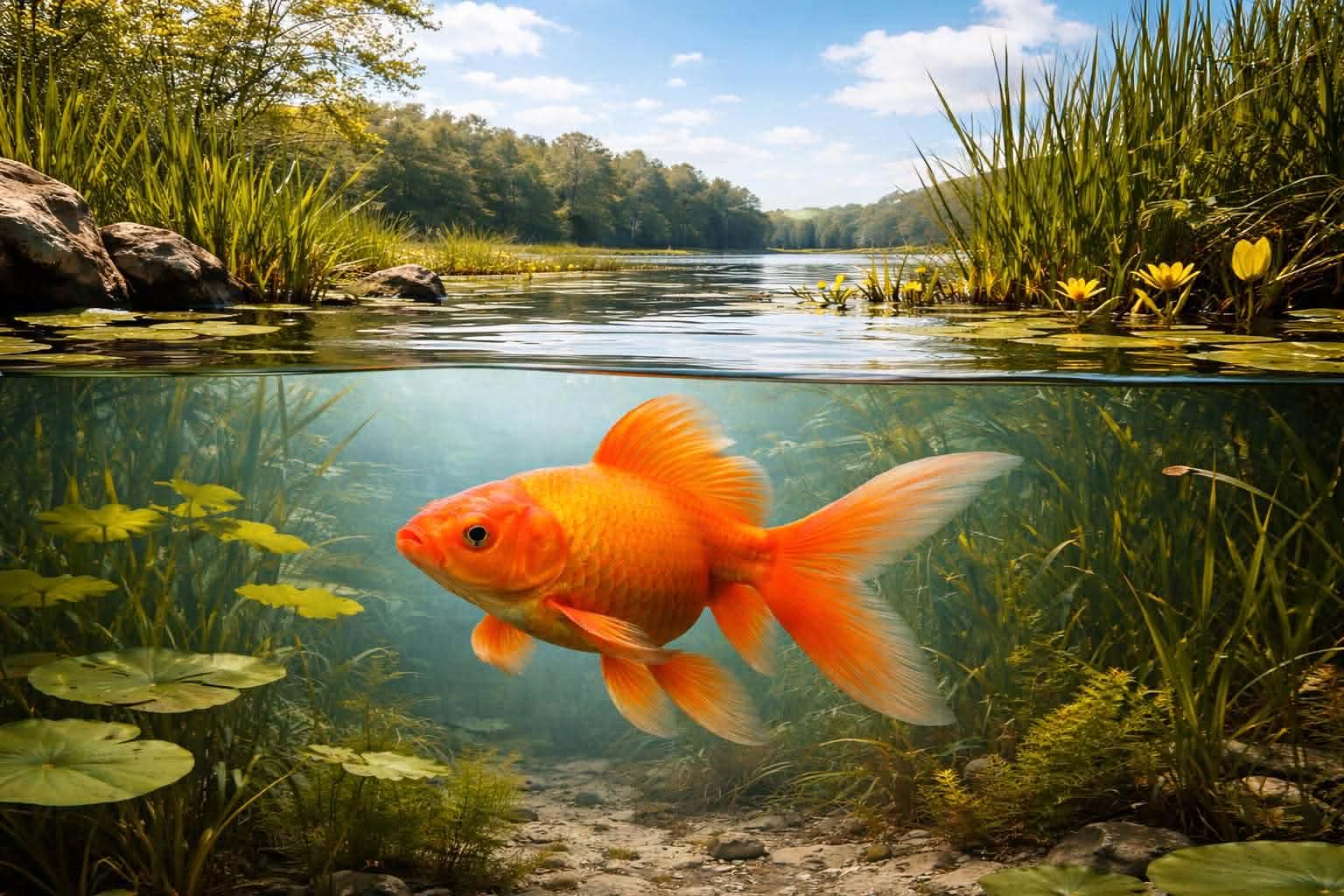
A simple act of kindness can have unintended consequences. What may seem like a harmless release can quickly become an environmental problem, putting entire aquatic ecosystems at risk. This article explores why releasing pet goldfish is far more dangerous than it appears.
Releasing a pet goldfish into a pond, lake, or stream may feel like a kind and humane choice. After all, many people believe they are giving their fish a better life than a small bowl or aquarium. However, this well-intentioned act can have serious and long-lasting consequences for native wildlife and the health of our waterways. What starts as a single release can quickly turn, into an environmental issue that is far more complex than most realize.
Pet goldfish are not native to most natural waters, and once released, they can survive, reproduce, and spread rapidly. In this article, you’ll learn how goldfish impact aquatic ecosystems, why they are considered an invasive species in many regions, and how their presence affects native fish, plants, and water quality. We’ll also explore how goldfish end up in the wild and why releasing them is harmful—even when done with good intentions.
By understanding the risks associated with releasing pet goldfish, we can make more informed and responsible choices that protect local ecosystems. This article will also share safe, humane alternatives for pet owners who can no longer care for their fish, helping ensure that kindness toward pets does not come at the expense of nature.
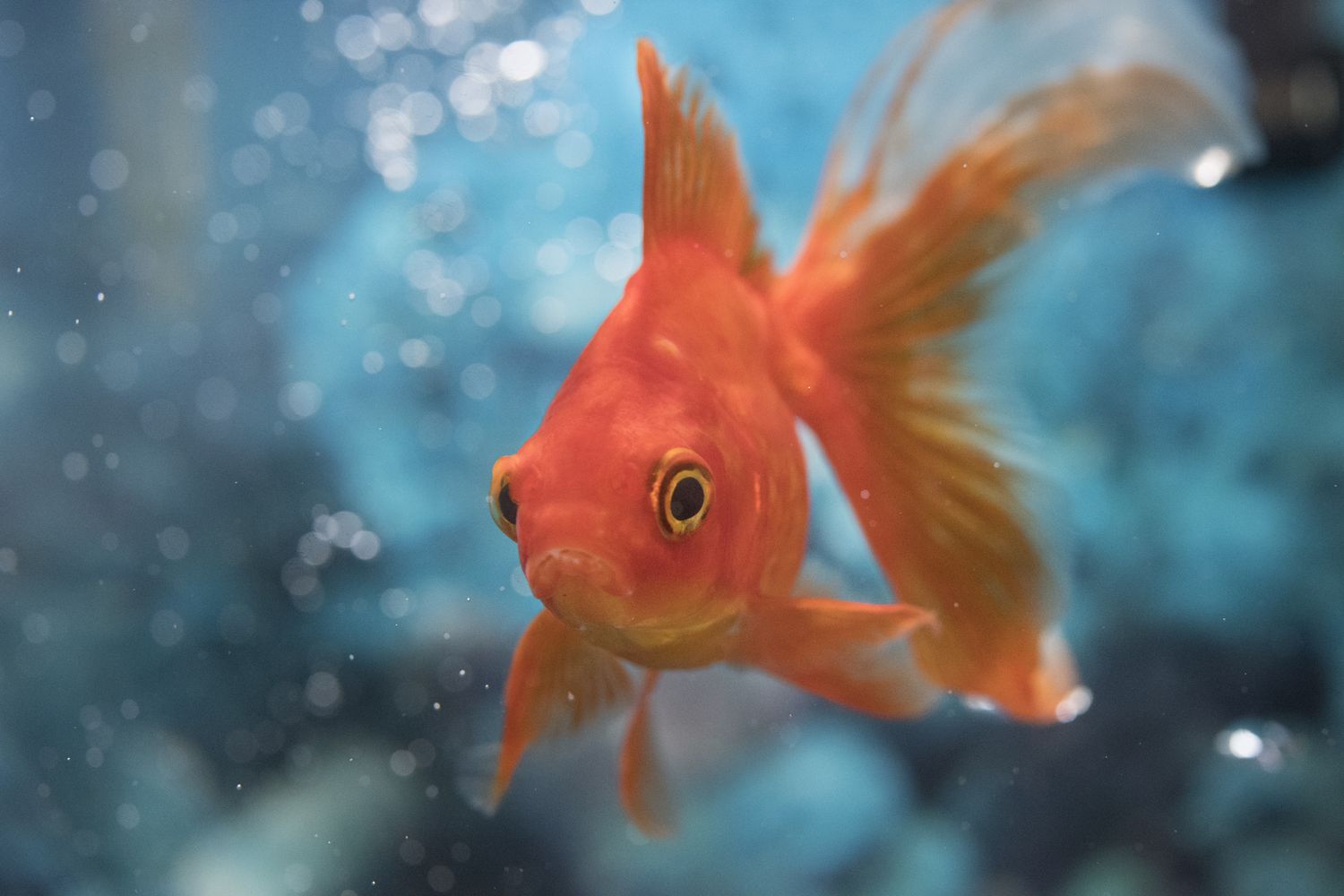
Photo Credits: Roberto Machado Noa / Getty Images
Gentle Introduction: The Misunderstanding
Many people release pet goldfish into ponds, lakes, or streams believing it is a kind and humane choice. The idea of letting a fish “live freely” in nature often feels more compassionate than keeping it in a bowl or aquarium, especially when owners can no longer care for it. For many, this decision comes from a place of empathy and a desire to do what feels right for the animal.
However, good intentions do not always lead to good outcomes. Pet goldfish are not part of most natural ecosystems, and once released, they can survive, multiply, and disrupt the delicate balance of native wildlife. What feels like an act of kindness toward one animal can unintentionally cause harm to many others, including native fish species, aquatic plants, and the overall health of the waterway.
Understanding this misunderstanding is an important first step in protecting our ecosystems. By learning why releasing goldfish is harmful even when done with compassion, we can begin to make choices that are truly kind, both to individual animals and to the natural environments they may affect.
Photo Credits: Dobe/iStock/Getty Images Plus
Photo Credits: rawpixel.com
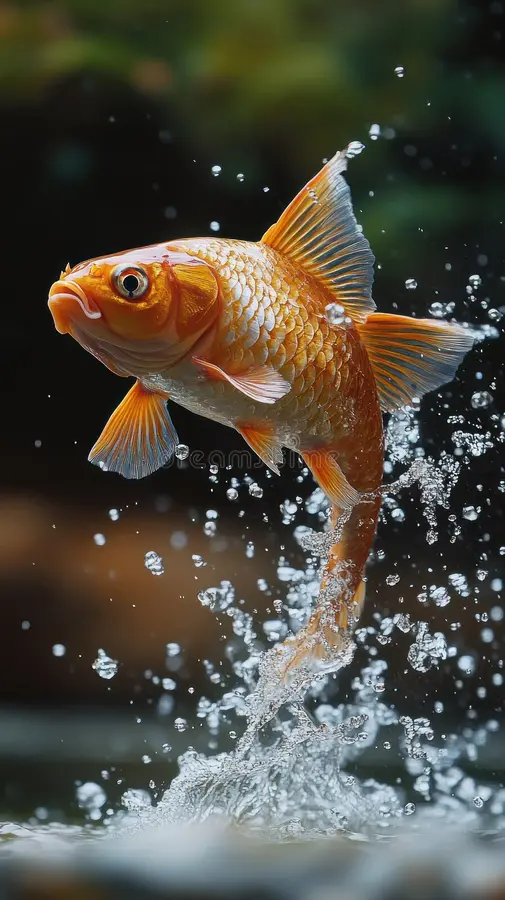
Photo Credits: Dreamstime.com
Goldfish Are Not Native To Canadian Waters
Before understanding why released goldfish cause environmental harm, it’s important to understand what goldfish actually are and what they are not. While they are commonly seen as harmless pets, goldfish are not native wildlife and do not naturally belong in Canada’s lakes, ponds, or streams. Their presence in natural waters is the result of human introduction, not natural migration or ecological balance.
Goldfish have been bred and kept by people for centuries, far removed from the ecosystems found in Canada today. When they are released into the wild, they enter environments they were never meant to inhabit, where they can quickly adapt, survive, and spread. The following subsections explain where goldfish come from, why they are considered non-native, and how they can become invasive once released.
Goldfish are Domesticated Fish, Not Native Wildlife :
Goldfish are a domesticated species that have been selectively bred by humans for generations. Unlike native fish that evolved alongside Canadian ecosystems, goldfish were developed for ornamental purposes and kept as pets. This means they did not evolve to play a natural role in local food webs or aquatic habitats.
Because they are not part of Canada’s native wildlife, goldfish lack natural population controls in many waterways. When introduced, they can survive without the predators, diseases, or environmental pressures that keep native species in balance.
Where Goldfish Originally Came From :
Goldfish originate from wild carp species native to East Asia, particularly regions of China. Over time, humans selectively bred these fish for colour, size, and appearance, creating the goldfish commonly kept as pets today.
Although modern goldfish may look very different from their wild ancestors, they retain many of the same survival traits. These traits allow them to tolerate cold temperatures, poor water quality, and a wide range of conditions making them surprisingly successful when released into natural waters.
From Non Native To Invasive :
When goldfish are released into Canadian waterways, they become a non-native species one that does not naturally belong in that ecosystem. In many cases, they can also become invasive, meaning they spread rapidly and cause harm to native species and habitats.
Goldfish can reproduce, compete with native fish for food, disturb sediments, and alter aquatic environments. Over time, their presence can lead to reduced biodiversity and degraded water quality, turning a single release into a long-term environmental problem.
Native Vs. Non Native Vs. Invasive: What Is The Difference
Native Species :
🔘 Naturally occur in an area without human introduction.
🔘 Evolved alongside local plants, animals, and ecosystems.
🔘 Play an important role in maintaining ecological balance.
🔘 Populations are kept in check by natural predators and environmental factors.
Non Native Species :
🔘 Do not naturally occur in the area.
🔘 Are introduced through human activity, intentionally or accidentally.
🔘 May survive without immediately causing harm.
🔘 Have not evolved within the local ecosystem.
Invasive Species :
🔘 A type of non-native species that spreads rapidly.
🔘 Causes harm to native species, habitats, or ecosystems.
🔘 Often lacks natural predators or controls in the new environment.
🔘 Can reduce biodiversity and alter natural processes.
Where Goldfish Fit In The List :
🔘 Goldfish are non-native to Canadian waters.
🔘 When released, they can become invasive due to their ability to survive, reproduce, and disrupt aquatic ecosystems.
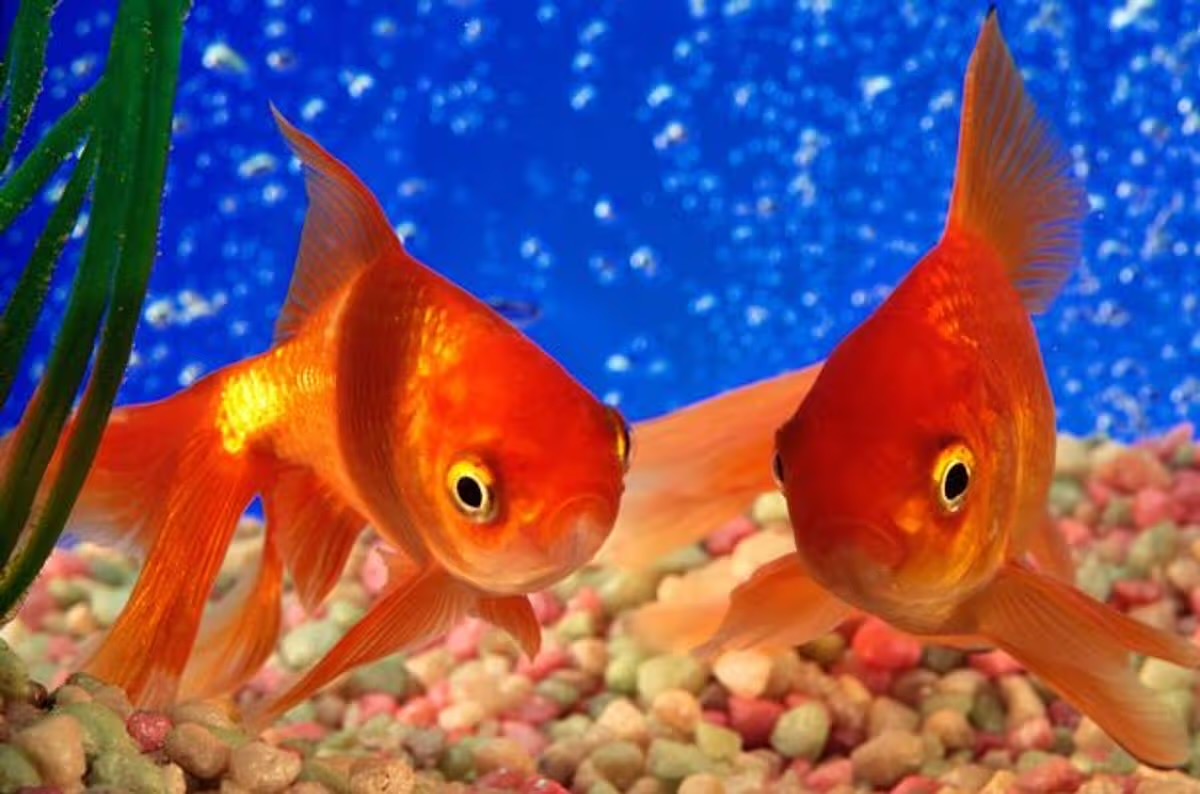
Photo Credits: Getty Images
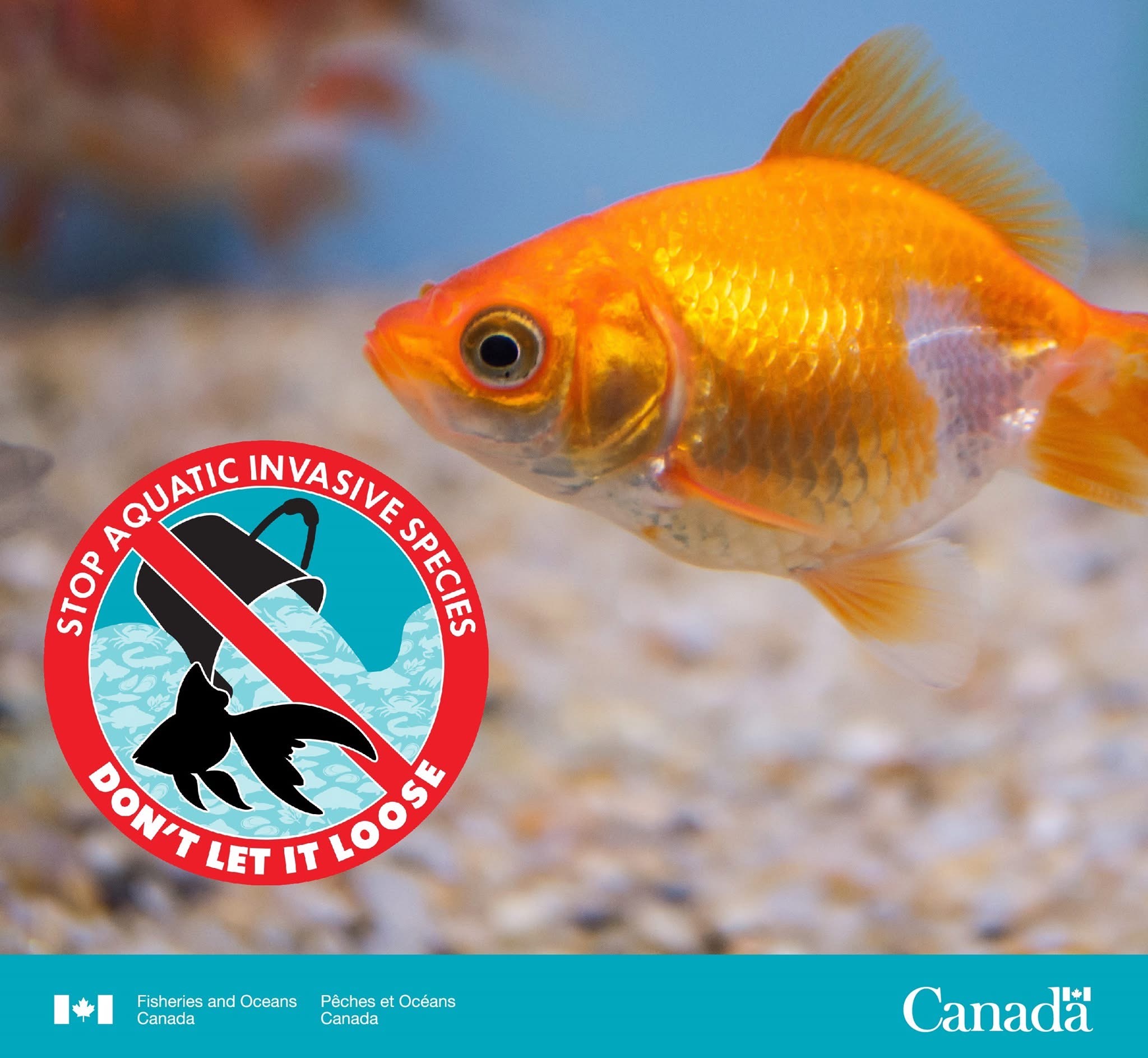
Photo Credits: Fisheries and Oceans Canada
Goldfish Don’t Stay Small
One of the most common misunderstandings about goldfish is the belief that their size is limited by their tank or bowl. Because many pet goldfish are seen while still small, it’s easy to assume they will always remain that way. In reality, a goldfish’s size is determined by its environment and natural waters provide far more space and resources than any home aquarium.
When released into ponds, lakes, or slow moving waterways, goldfish are no longer restricted by confined conditions. With access to abundant food, space, and suitable temperatures, they can grow far larger than most people expect. Understanding this growth potential helps explain why released goldfish become such a serious environmental concern.
Goldfish Grow Based On Environment, Not The Size Of The Tank :
Goldfish do not stop growing because they are meant to stay small. Instead, growth is influenced by factors such as water quality, available food, oxygen levels, and space. In small tanks or bowls, growth may be slowed due to poor conditions not because the fish has reached its natural size.
In natural water bodies, these limiting factors are removed. With better oxygen levels, diverse food sources, and room to move, goldfish are able to grow much closer to their full biological potential.
How Large Can Goldfish Get In Natural Waters?
In the wild, goldfish can grow dramatically larger than most pet owners expect. Some wild goldfish have been recorded reaching lengths of over 30 centimetres (12 inches) and weighing several pounds.
These larger sizes allow goldfish to consume more food, compete more effectively with native species, and survive harsher conditions. Their size also makes them less vulnerable to predators, further increasing their ability to persist and spread.
Why Size Matters To Ecosystems?
As goldfish grow larger, their impact on the ecosystem increases. Bigger fish require more food, disturb more sediment, and place greater pressure on native species. Larger bodies also mean higher waste production, which can contribute to nutrient imbalances and reduced water quality.
What begins as a single small pet fish can eventually become a large, long-lived individual capable of producing offspring and influencing an entire waterway. This is one of the key reasons why releasing goldfish is not a harmless act, even when done with good intentions.
Myth Vs. Fact : Goldfish Size
Myth:
Goldfish only grow as large as their tank or bowl allows.
Fact:
Goldfish grow based on their environment, including water quality, space, oxygen, and food availability. In small tanks, growth may be stunted due to poor conditions not because the fish is meant to stay small.
Myth:
Pet goldfish are too small to survive or cause problems in the wild.
Fact:
In natural waters, goldfish can grow very large, sometimes reaching over 30 cm (12 inches) and weighing several pounds, making them capable of competing with native species and surviving harsh conditions.
Myth:
Releasing a goldfish gives it a better, more natural life.
Fact:
While it may feel compassionate, releasing goldfish often leads to ecological harm and can result in stress, disease spread, and long term damage to native ecosystems.
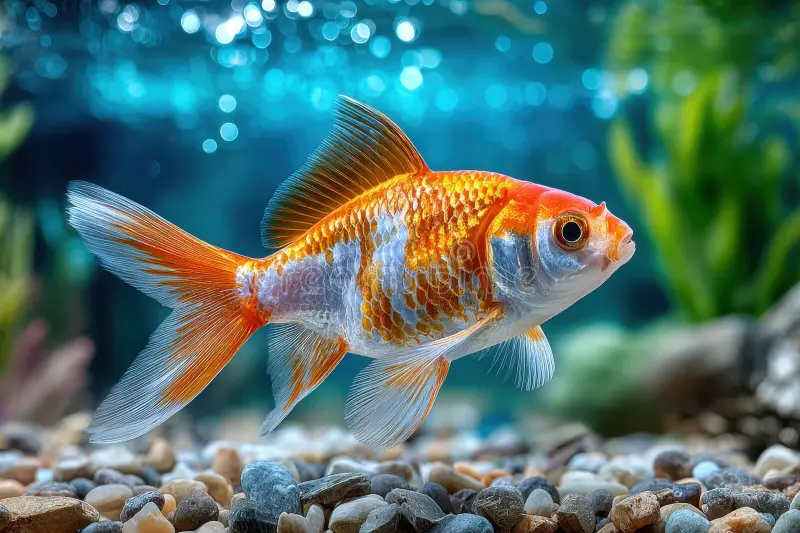
Photo Credits: Dreamstime.com
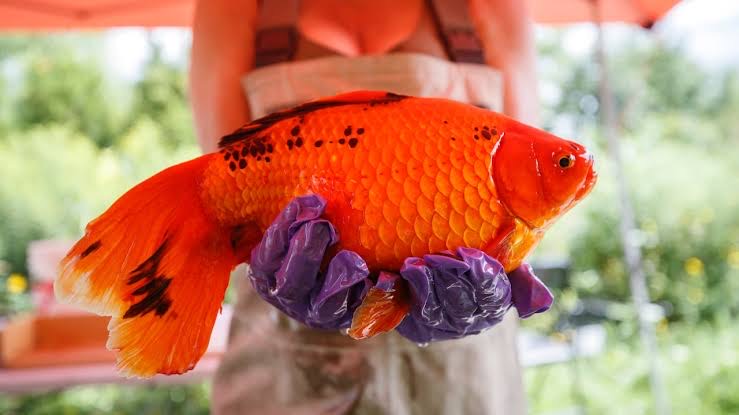
Large Goldfish in someone’s hands
Photo Credits: Cole Burston/University of Toronto Scarborough
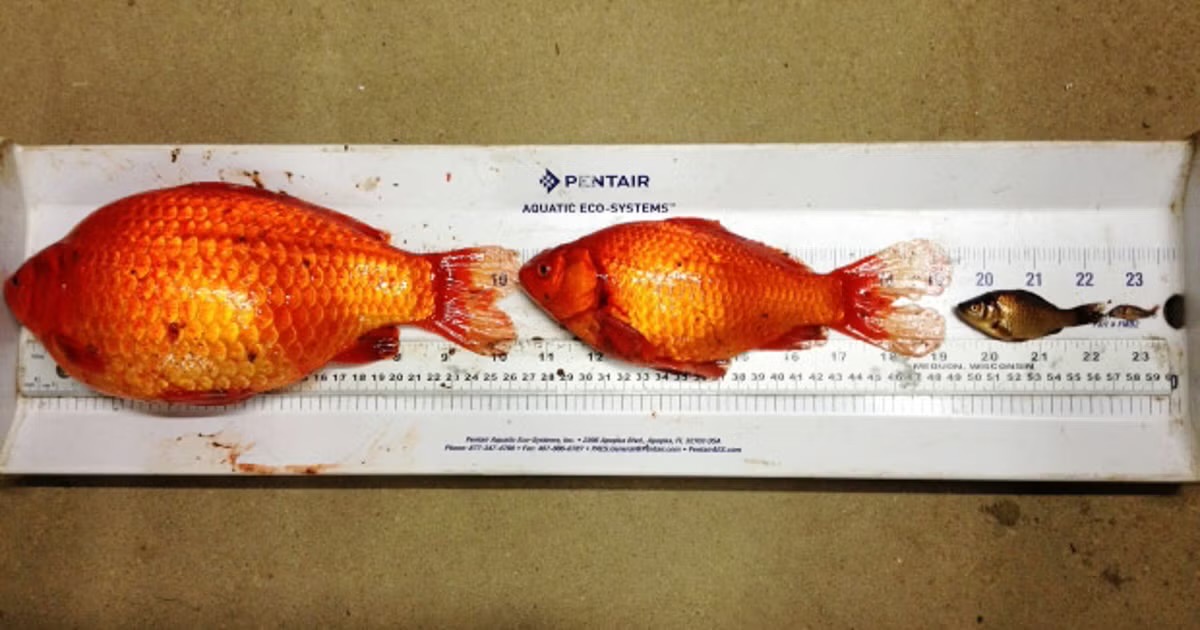
The size difference of Goldfish
Photo Credits: Rebecca Baldwin / Alberta Environment and Parks
How Released Pet Goldfish Impact Our Ecosystems
When pet goldfish are released into ponds, lakes, and waterways, their presence can quietly but significantly change the environment around them. Although they may seem harmless, goldfish interact with aquatic ecosystems in ways that native species are not adapted to handle. These impacts often build over time, making the damage easy to miss until ecosystems are already under stress.
In this section, we’ll explore how released goldfish compete with native fish for food and space, disturb sediments that increase water cloudiness, consume native fish eggs and aquatic plants, and spread diseases and parasites to wild fish populations. Together, these effects can disrupt natural balance, reduce biodiversity, and weaken the health of our freshwater ecosystems.
Competition For Food And Space:
Released goldfish compete directly with native fish for food and living space. They consume insects, small invertebrates, and plant material that native species rely on for survival. In crowded or limited habitats, this competition can reduce the resources available to native fish, making it harder for them to grow, reproduce, and thrive.
Because goldfish did not evolve alongside native Canadian species, they often have an advantage. This imbalance can lead to declining native populations, especially in ecosystems already affected by habitat loss or environmental stress.
Disturbing Sediments And Increasing Water Cloudiness :
Goldfish are bottom feeders and frequently dig through sediments while searching for food. This behaviour stirs up mud and debris from the bottom of ponds and lakes, causing the water to become cloudy.
Cloudy water reduces sunlight penetration, which affects aquatic plants that need light to grow. These plants provide oxygen, shelter, and breeding areas for many species, so when they decline, the entire ecosystem is impacted.
Eating Native Fish Eggs And Aquatic Plants :
In addition to competing for food, goldfish may consume the eggs of native fish and feed on aquatic plants. This can directly reduce the reproductive success of native species and limit the growth of plants that stabilize sediments and provide habitat.
The loss of native plants and eggs disrupts the natural life cycles within aquatic ecosystems, making it harder for native fish populations to recover and maintain healthy numbers.
Spreading Disease And Parasites:
Released pet goldfish can carry diseases and parasites that are common in captive environments but unfamiliar to wild fish populations. When introduced into natural waters, these pathogens can spread to native fish that have little resistance to them.
Disease outbreaks can weaken or kill native fish, further stressing ecosystems already facing multiple environmental challenges. Even healthy-looking pet goldfish can unknowingly introduce these risks into the wild.
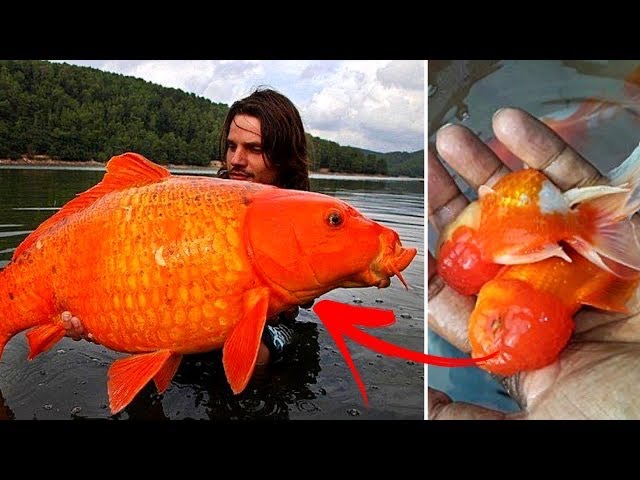
Oranda Goldfish Comparison Photo (split image of a large wild goldfish to regular size goldfish)
Photo Credits: Duknow-media on YouTube
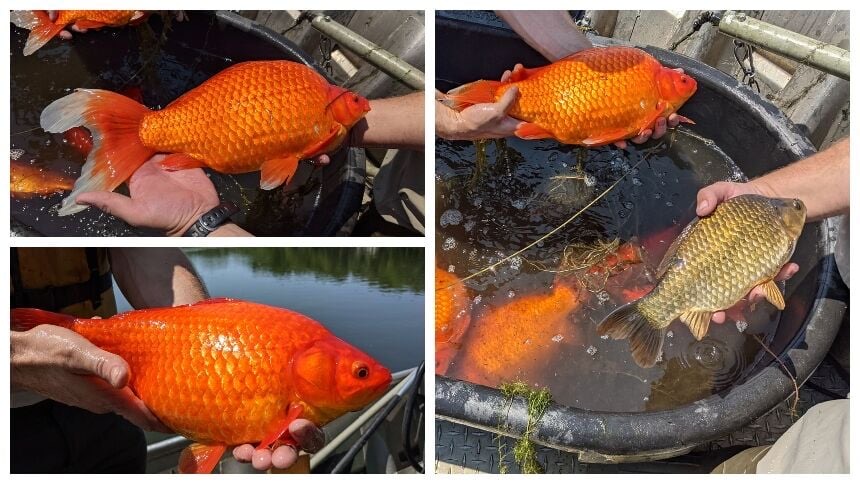
What Happens To Goldfish That Are Released Thrive Out In The Water Collage
Photo Credits: r/shittyaquariums on Reddit
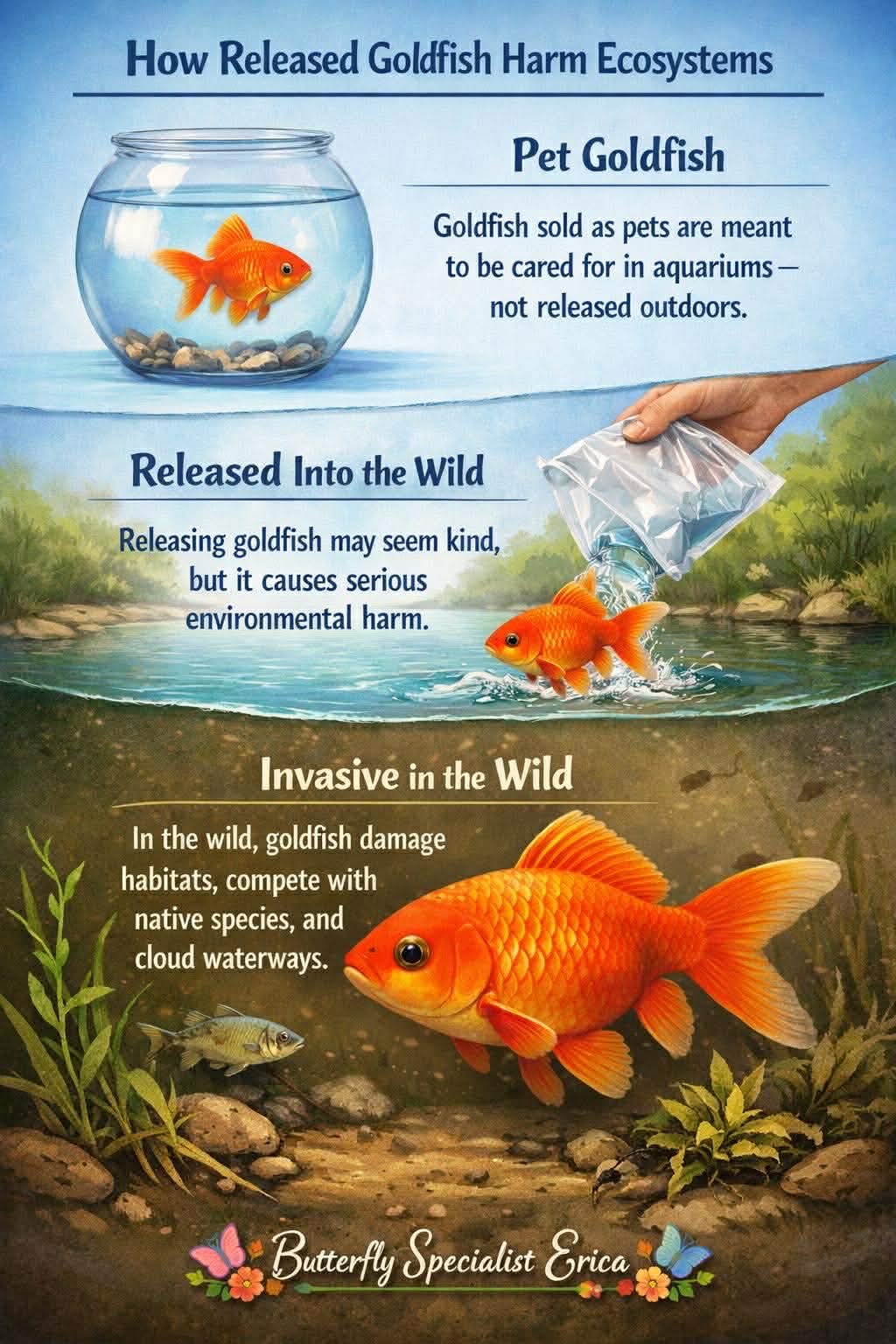
This poster was specially created for this section of the article, to spread more awareness and to draw more attention to the issue. You are more than welcome to share this poster to spread more awareness to your audience on social media. If you do share it please give me (Butterfly Specialist Erica) the credit for it. Thank You!
Sensitive Habitats
Freshwater habitats are some of the most sensitive and valuable ecosystems in Canada. Wetlands, ponds, and lakes support an incredible diversity of plants and animals, provide clean water, and help regulate local climates. However, these habitats are already under pressure from pollution, habitat loss, and a changing climate.
When non-native species like released pet goldfish are introduced into these environments, they add another layer of stress to systems that are already struggling. The following subsections explore why wetlands, ponds, and lakes are especially vulnerable and how added pressures can push these habitats beyond their limits.
Wetlands :
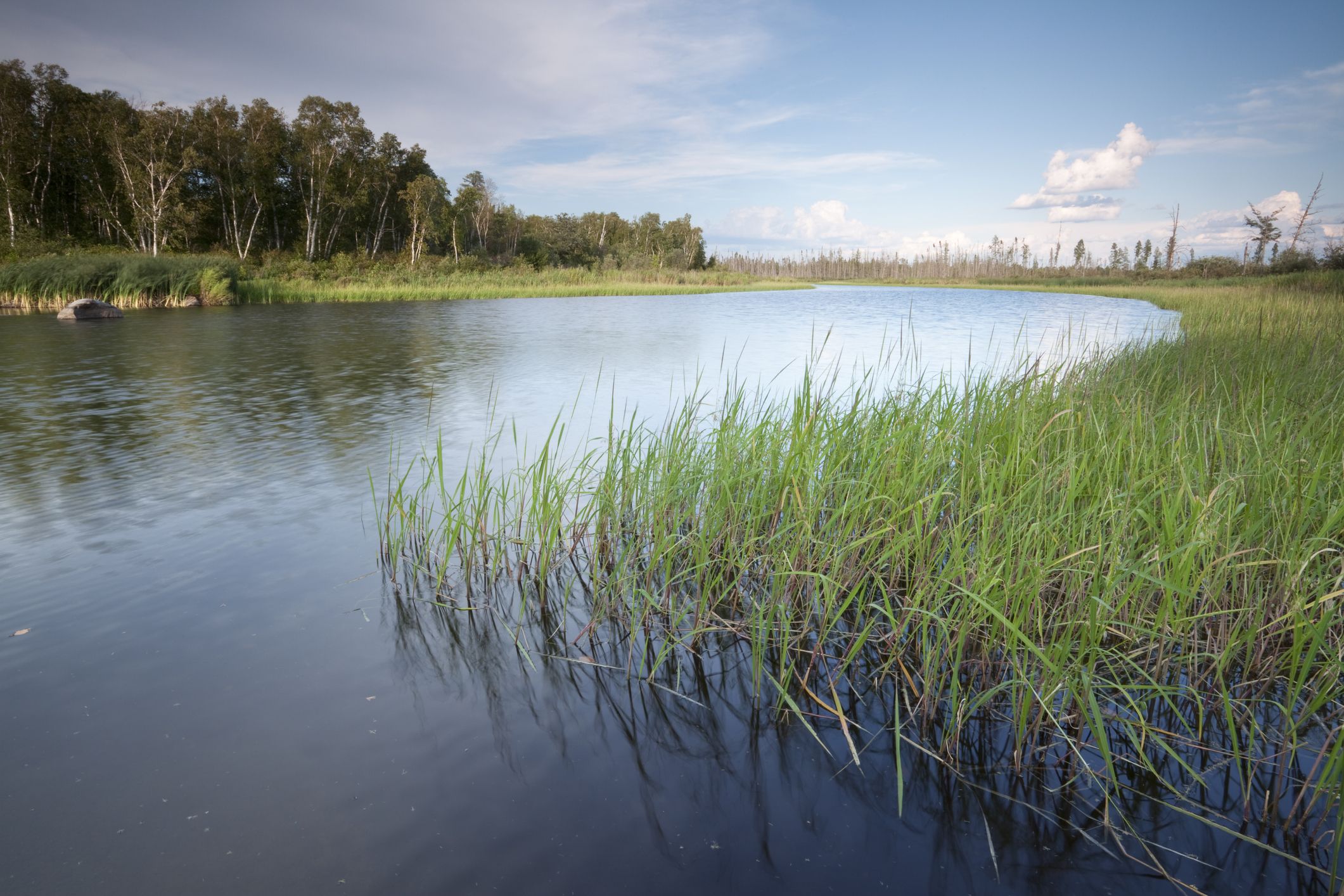 Photo Credits: Water Canada
Wetlands act as natural filters, helping clean water and reduce flooding while providing critical habitat for fish, amphibians, birds, and insects. They are highly productive ecosystems, but also extremely sensitive to disturbance.
Pollution, land development, and climate change have already reduced and degraded many wetlands. When goldfish are introduced, their sediment-disturbing behaviour and feeding habits can damage plant life and reduce water quality, weakening the wetland’s ability to support native species.
Wetlands Comparison
————————————
🔘 Healthy Wetland: Clear water, diverse plants, frogs, insects, birds, and native fish.
🔘 Stressed Wetland: Cloudy water, fewer plants, stirred sediment, and reduced wildlife.
Note: Healthy wetlands filter water and support life. Added stress can quickly reduce biodiversity.
Ponds :
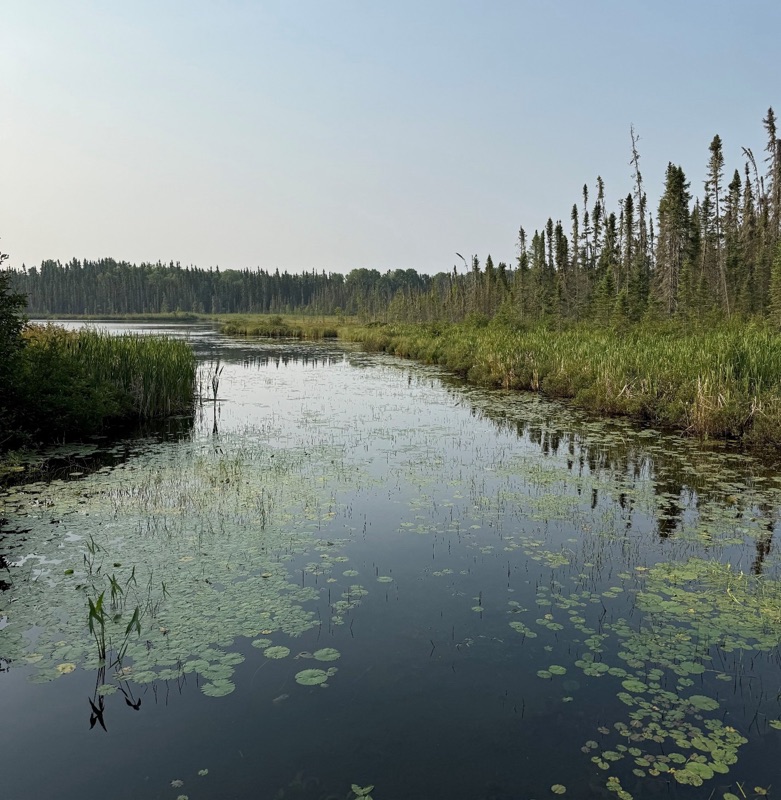 Photo Credits: Ontario Parks Blog
Ponds are often small, enclosed ecosystems with limited water movement. This makes them especially vulnerable to changes in water quality and species balance.
Because ponds already experience stress from runoff, nutrient pollution, and rising temperatures, the introduction of goldfish can quickly overwhelm the system. Increased sediment, competition, and feeding pressure can lead to algae growth, plant loss, and declines in native wildlife.
Ponds Comparison
———————————
🔘 Balanced Pond : Visible plants, clear water, native fish and insects.
🔘 Overstressed Pond : Murky water, algae growth, and fewer visible species.
Note: Small ecosystems change quickly when balance is disrupted.
Lakes :
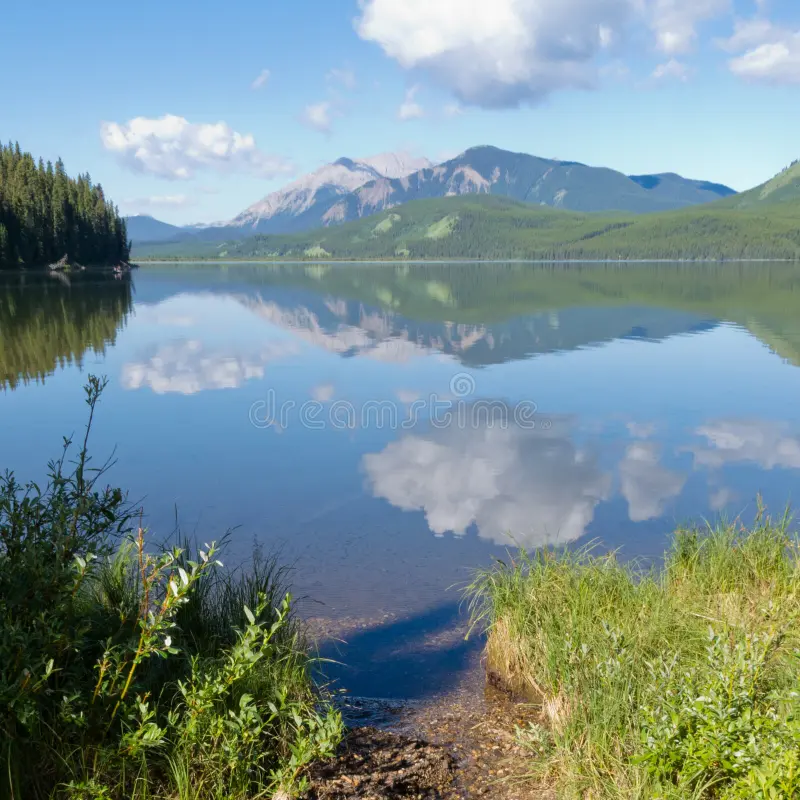 Photo Credits: Stephen Pietzko / Dreamstime.com
Lakes support complex food webs and often take years to recover from environmental disturbances. Many lakes are already facing challenges such as pollution, shoreline development, invasive species, and warming water temperatures.
When goldfish enter lakes, they can spread over large areas and establish long-term populations. Their impacts on water clarity, plant growth, and native species can accumulate over time, making lakes less resilient to other environmental stresses.
Lakes Comparison
———————————
🔘 Resilient Lake: Clear shoreline, healthy aquatic plants, and diverse fish populations.
🔘 Impacted Lake: Cloudy nearshore water, plant loss, and reduced clarity.
Goldfish Can Survive Canadian Winters
A common belief is that released pet goldfish will not survive Canada’s harsh winters. Many people assume that freezing temperatures and ice-covered lakes will naturally eliminate them. While this may sound logical, it is unfortunately not the case.
Goldfish are far more resilient than most people realize. Their biological adaptations allow them to tolerate cold temperatures and low-oxygen conditions, enabling them to survive beneath ice-covered ponds and lakes. Understanding their hardiness helps explain why releasing them is not a temporary problem that “nature will take care of.”
The Common Assumption: Winter Will Solve The Problem
It is easy to believe that cold winters act as a natural control. After all, Canada experiences long periods of freezing temperatures, and many shallow water bodies freeze over completely.
However, ice on the surface does not mean the entire body of water freezes solid. Beneath the ice, liquid water remains and this is where goldfish can survive.
Goldfish Are Surprisingly Hardy :
Goldfish are descendants of wild carp species, which evolved to tolerate a wide range of environmental conditions. They are capable of surviving in cold water, fluctuating oxygen levels, and even environments that would stress many native species.
As temperatures drop, goldfish slow their metabolism significantly. They require less oxygen and less food, allowing them to endure long winter periods with limited resources.
Surviving Beneath The Ice :
In ponds and lakes that freeze over, water remains unfrozen beneath the ice layer. Goldfish can rest in deeper areas where temperatures are more stable.
Their ability to tolerate cold, low-oxygen water allows them to overwinter successfully. When spring arrives and temperatures rise, they resume normal activity often ready to feed and reproduce.
This means that winter does not eliminate released goldfish populations. Instead, it allows them to persist year after year, increasing the likelihood of long-term establishment in natural waters.
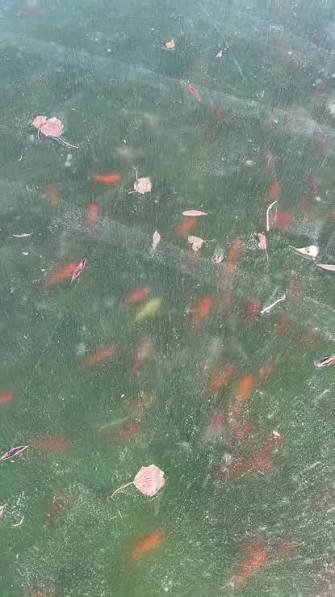
Several Goldfish underneath a frozen pond
Photo Credits: Invasive Species Centre
Releasing Goldfish Is Illegal In Many Areas
Many people are surprised to learn that releasing pet goldfish into natural waters is not just harmful, it can also be illegal in many regions. Because the act is often done with good intentions, few realize that it may violate environmental or wildlife protection laws.
These laws are not designed to punish people who care about their pets. Instead, they exist to protect ecosystems, native wildlife, and public waterways from long-term harm. Understanding the legal side of this issue helps highlight just how serious the environmental risks can be.
Releasing Pets Into The Wild Can Be Illegal :
In many provinces and municipalities, releasing domestic animals into natural environments is prohibited. This can fall under regulations related to wildlife protection, environmental protection, or invasive species management.
Even if the animal is small or seems harmless, introducing a non-native species into the wild can be considered unlawful because of the potential ecological consequences.
Considered Wildlife Dumping or Introduction of an Invasive Species :
Releasing a pet fish into a lake, pond, or stream may legally be classified as “wildlife dumping” or the unauthorized introduction of a non-native species. These actions can contribute to the spread of invasive populations, which governments actively work to prevent and control.
Environmental agencies treat introductions seriously because once a species establishes itself, removal can be extremely difficult and costly.
Laws Exist to Protect Ecosystems Not to Punish Compassion :
It is important to remember that these laws are focused on prevention and protection. Their purpose is to safeguard native species, preserve biodiversity, and maintain healthy ecosystems for future generations.
Most environmental education efforts aim to inform and prevent harm rather than penalize well-meaning individuals. By increasing awareness, we reduce the likelihood of accidental introductions and help protect freshwater habitats.
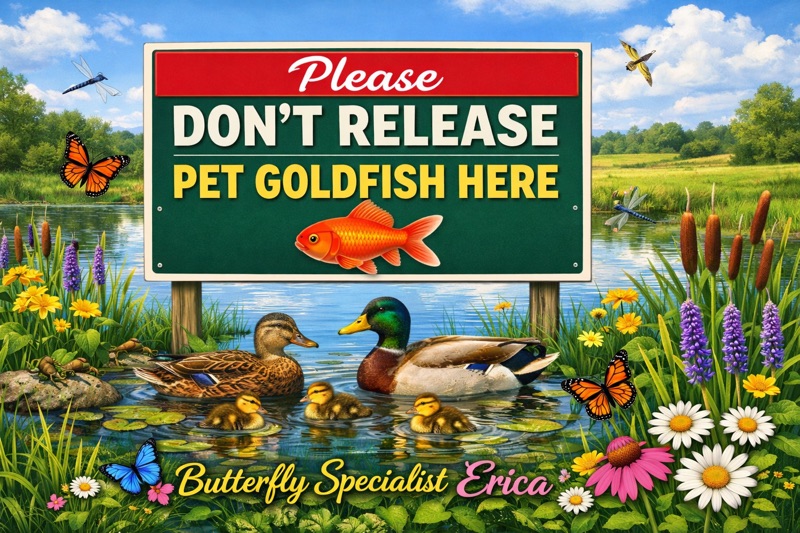
This image was specially made for this section of the article to get people to pay attention to this topic, and to spread more awareness about this issue. You are more than welcome to share this image in your own post regarding this issue. But if you do use and share this image please give me (Butterfly Specialist Erica) the credit for this image. Thank You!
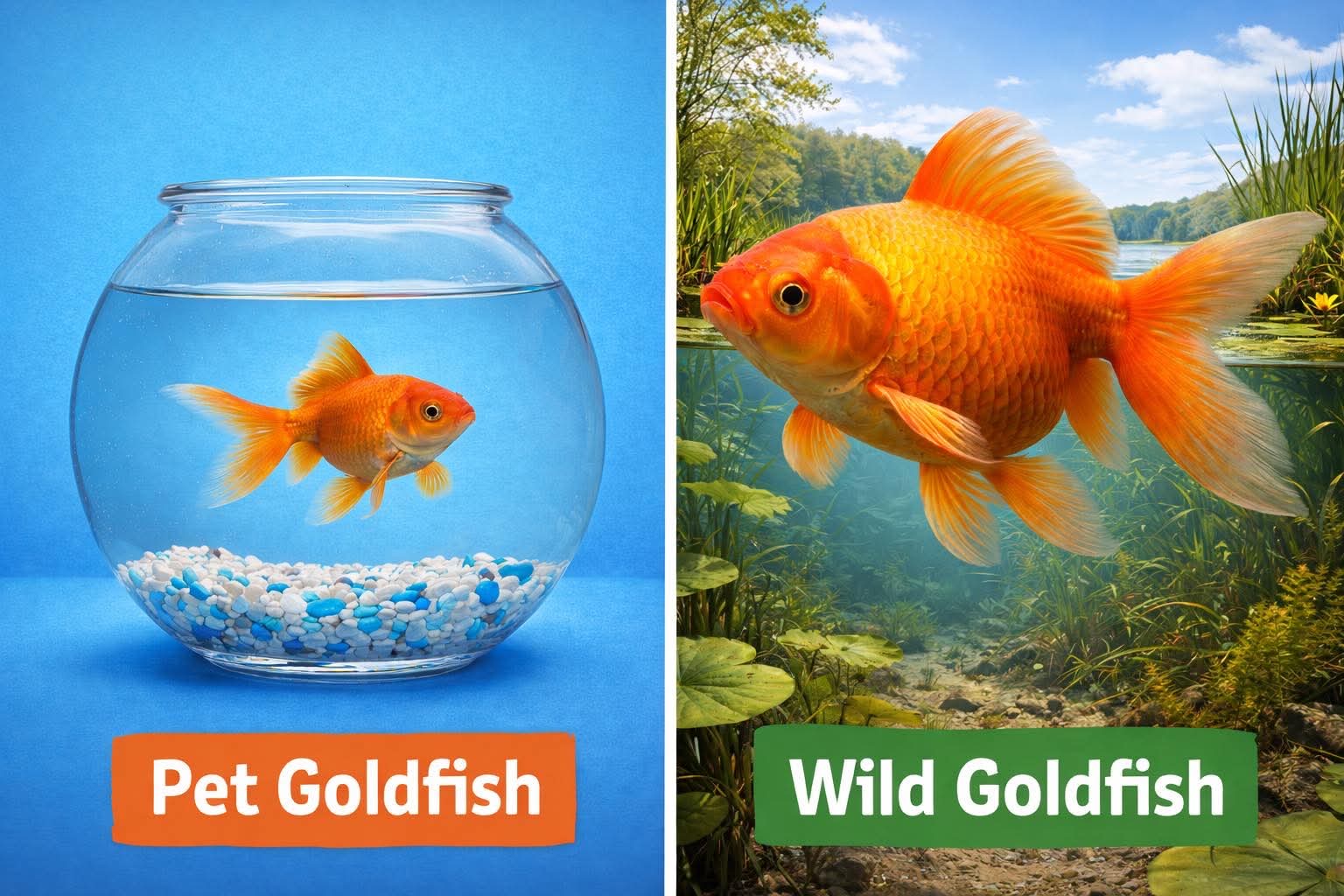
This photo comparison of a Pet Goldfish and a Wild Goldfish (a released pet goldfish) was specially made for this section of the article. You are more than welcome to use this image for your own educational post regarding releasing pet goldfish in natural waters. If you do use this image for your post please give me (Butterfly Specialist Erica) credit for the image. Thank You!
Humane and Responsible Alternatives
If you can no longer care for a pet goldfish, releasing it into a natural waterway is not the answer, but there are responsible and compassionate alternatives. Making the right choice protects both the fish and the environment.
Planning ahead and seeking safe rehoming options ensures that kindness toward your pet does not unintentionally harm native wildlife. The following alternatives offer practical, humane solutions for goldfish owners.
Rehoming through Local Aquariums or Fish Hobbyist Groups :
Local aquarium clubs, fish hobbyist groups, and online community forums often have experienced individuals willing to adopt unwanted fish. These hobbyists typically understand proper tank care and may have space available for additional fish.
Rehoming through knowledgeable communities increases the likelihood that the goldfish will continue to receive appropriate care.
Contacting Rescue Organizations or Aquatic Rescue Groups :
Some regions have fish rescues or aquatic-focused animal organizations that accept surrendered fish. These groups are familiar with responsible placement and may help rehome the goldfish safely.
Searching locally for “fish rescue,” “aquatic rescue,” or “goldfish rehoming” can help identify options in your area.
Returning Fish to Pet Stores (When Possible) :
Some pet stores may accept returns or surrenders, particularly if the fish was purchased there. Policies vary by store, so contacting them directly is important.
Even if returns are not guaranteed, asking the question can sometimes provide an unexpected solution.
Contacting Humane Societies or Animal Welfare Organizations :
While not all humane societies accept fish, some may offer guidance or referrals to appropriate rescue groups. Reaching out can connect owners with additional resources they may not have considered.
Planning Ahead Before Getting A Goldfish :
Goldfish can live for many years and grow much larger than most people expect. Before purchasing or adopting one, it’s important to research their long-term care needs, tank size requirements, and lifespan.
Responsible pet ownership begins with preparation. Understanding the commitment involved helps prevent situations where release feels like the only option.
Think Before You Release : A Gentle Checklist
Before considering releasing a pet goldfish into a pond, lake, or stream, pause and ask yourself:
☐ Is this fish native to local waters?
Goldfish are domesticated fish and do not naturally belong in Canadian ecosystems.
☐ Could this fish survive and reproduce in the wild?
Goldfish are hardy and can overwinter beneath the ice, growing much larger in natural waters.
☐ Could releasing this fish harm native wildlife?
Goldfish compete for food, disturb habitats, eat native eggs and plants, and may spread disease.
☐ Is releasing this fish legal in my area?
In many regions, releasing pets into the wild is illegal and considered wildlife dumping.
☐ Have I explored responsible alternatives?
Rehoming through hobbyist groups, rescues, pet stores, or humane organizations is a safer and kinder choice.
☐ Did I plan for this fish’s long-term care before getting it?
Goldfish can live for many years and require more space and care than many people expect.
Gentle Reminder :
True compassion means protecting both the animal in your care and the environment around you. Choosing responsible alternatives helps ensure that kindness toward one life does not unintentionally harm many others.
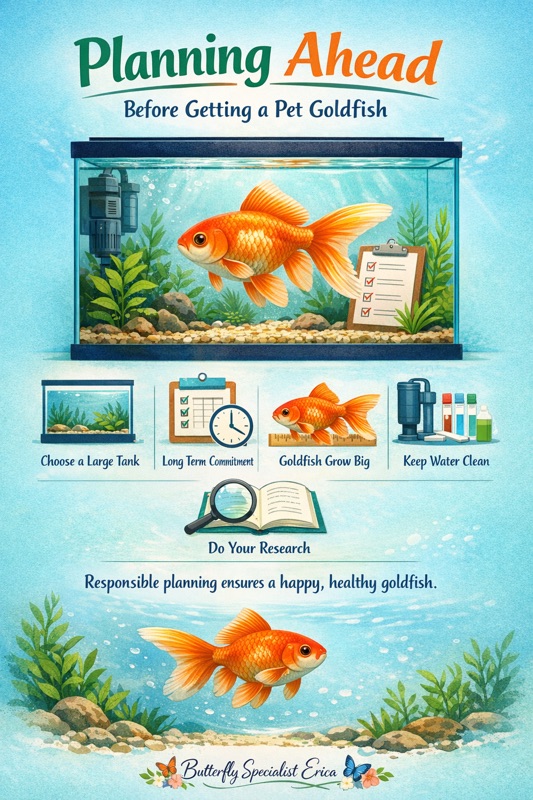
This educational poster was specifically made for this section of the article. You are more than welcome to use it and share it on your post regarding this issue. But if you do end up sharing this poster on your post please give me (Butterfly Specialist Erica) the credit for this poster. Thank You!
What to do if you see Goldfish in Natural Waters
Spotting goldfish in a pond, lake, or wetland can be surprising and sometimes concerning. Many people’s first instinct is to try to help by removing the fish themselves or relocating it. However, well-meaning actions can sometimes cause additional stress to wildlife or unintentionally spread the problem further.
The most helpful thing you can do is observe, document, and report the sighting to the appropriate organizations. In this section, you’ll learn what not to do, where to report sightings in Ontario and across Canada, and why community reporting plays such an important role in protecting freshwater ecosystems.
Do Not Remove or Relocate the Fish yourself :
If you see goldfish in natural waters, it is best not to attempt to catch, move, or relocate them on your own. Handling wildlife without proper permits or training can sometimes be unsafe, ineffective, or even illegal in certain areas.
Uncoordinated removal efforts can also stress other wildlife or accidentally spread organisms, plants, or diseases between water bodies. Instead, focus on safely documenting the sighting and reporting it to professionals who can assess the situation.
Report Sightings In Ontario 🍁📋:
If you are in Ontario, sightings of goldfish and other invasive aquatic species can typically be reported through:
• EDDMapS Ontario (Early Detection & Distribution Mapping System)
• Invading Species Hotline: 1-800-563-7711
• Online reporting through the Invading Species Centre
When reporting, try to include:
• Location (as precise as possible)
• Date of sighting
• Estimated number of fish
• Photos if it is safe to take them
Accurate reports help experts track spread and respond appropriately.
Reporting In Other Parts Of Canada 🇨🇦 📋:
If you live outside Ontario, you can report sightings to your provincial invasive species program, conservation authority, or local natural resources department. Many provinces participate in EDDMapS or have their own invasive species reporting tools.
A good first step is to search:
“Report invasive species + [your province]”
Local conservation groups and watershed organizations may also accept reports or help direct you to the correct program.
Why Reporting Matters :
Early detection is one of the most effective tools for managing invasive species. Reports from the public help scientists and conservation agencies monitor where goldfish populations are appearing and how they are spreading.
Even a single report can provide valuable data. By speaking up, community members play a direct role in protecting wetlands, ponds, and lakes for native wildlife and future generations.
Quick Reporting Checklist ✅ 📋:
If you spot goldfish in natural waters, here’s what to do:
☐ Observe from a safe distance
Avoid disturbing the fish or the surrounding habitat.
☐ Do not attempt to catch or relocate them
Uncoordinated removal can spread problems or stress wildlife.
☐ Take clear photos if possible
Include the fish and a bit of the surrounding habitat for context.
☐ Record the location
Note the water body name, nearest landmark, or GPS coordinates if available.
☐ Note the date and estimated number of fish
Even rough estimates are helpful for monitoring.
☐ Report the sighting
• In Ontario: Use EDDMapS Ontario, the Invading Species Hotline (1-800-563-7711), or the Invading Species Centre online form.
• In other parts of Canada: Contact your provincial invasive species reporting program or conservation authority.
Why Your Report Matters :
Every report helps scientists and conservation groups track the spread of non-native species. Early detection improves the chances of protecting sensitive ecosystems before populations become established.
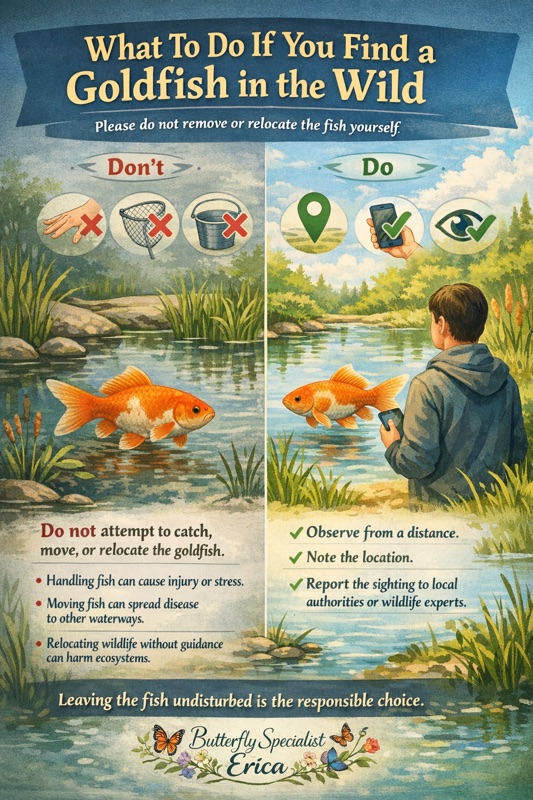 This educational poster was specially made for this section of the article. You’re more than welcome to use and share this poster on your post talking about this topic. If you do use and share this poster please give me (Butterfly Specialist Erica) the credit for this poster. Thank You!
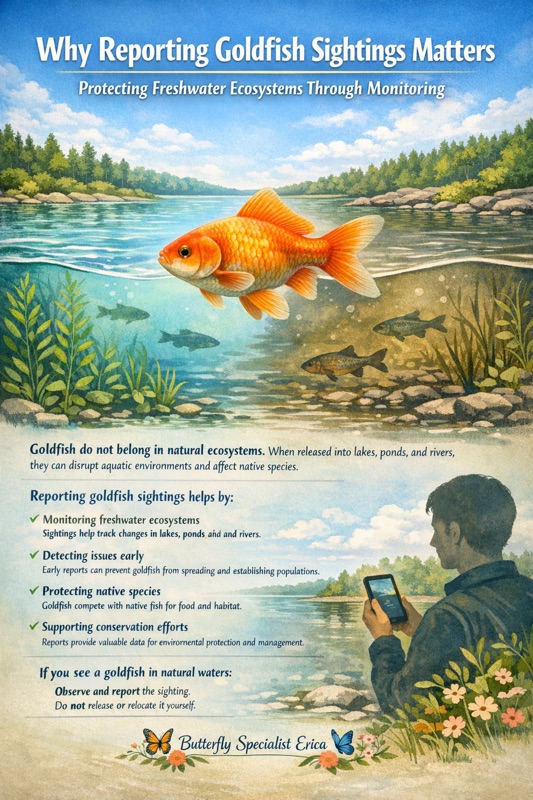
This educational poster was specially made for this section of this article. You’re more than welcome to share this poster on your post regarding this issue. If you do end up using and sharing this poster on your post, please give me (Butterfly Specialist Erica) the credit for this poster. Thank You!
Protecting Nature Starts At Home
Protecting our freshwater ecosystems does not always begin in the wild often, it begins with the everyday choices we make at home. From how we care for our pets to how we respond when challenges arise, small decisions can ripple outward in ways we may not immediately see. By becoming more aware of these connections, each of us can play a meaningful role in safeguarding native species and sensitive habitats.
Responsible pet ownership, thoughtful planning, and community education all work together to prevent the accidental spread of non-native species. The good news is that positive change does not require grand gestures. Often, the most powerful conservation actions are the small, informed choices made by caring individuals.
Responsible Pet Ownership Is Part Of Conservation:
Caring for a pet comes with both joy and responsibility. Understanding a goldfish’s long-term needs including its size, lifespan, and care requirements helps prevent situations where release feels like the only option.
When pet owners choose humane rehoming and plan ahead, they actively contribute to protecting local ecosystems. Responsible ownership is one of the simplest and most effective forms of everyday conservation.
Small Actions Can Have Big Impacts :
It may seem like releasing a single fish would not make much difference. However, many environmental challenges begin with small, repeated actions over time. One release can lead to reproduction, and one population can spread to new waterways.
On the positive side, small responsible choices also add up. Each informed decision helps reduce pressure on wetlands, ponds, and lakes, supporting healthier ecosystems overall.
Education Protects Future Generations :
Sharing knowledge is one of the most powerful tools in conservation. When communities understand why certain actions even well-intentioned ones can cause harm, they are better equipped to make choices that protect nature.
By continuing to learn, share, and educate others, we help ensure that Canada’s freshwater habitats remain vibrant and resilient for the wildlife and people who depend on them.
Conclusion
Every choice we make as pet owners has the potential to ripple outward into the natural world. While releasing a goldfish may seem like a small and caring act, we now understand that even well-intentioned decisions can carry lasting consequences for wetlands, ponds, and lakes already under pressure. The encouraging news is that with awareness comes the power to choose differently and to protect the ecosystems that native wildlife depend on.
By planning ahead, choosing responsible rehoming options, and sharing what we’ve learned with others, each of us can help prevent the spread of non-native species. Protecting nature does not always require big actions it begins with informed, compassionate choices at home. Together, through education and mindful stewardship, we can help keep Canada’s freshwater habitats healthy and thriving for generations to come. 🌿🐟
Key Points To Remember 🔑:
1️⃣ Never release pet goldfish into natural waters. What seems kind can harm native ecosystems.
2️⃣ Goldfish are not native to Canadian waterways. Once released, they can survive, reproduce, and spread.
3️⃣ They don’t stay small. In ponds and lakes, goldfish can grow much larger than in home aquariums.
4️⃣ Goldfish can survive Canadian winters. Ice cover does not eliminate released populations.
5️⃣ Released goldfish can harm ecosystems. They compete with native fish, disturb sediments, eat eggs and plants, and may spread disease.
6️⃣ Sensitive habitats are already under stress. Wetlands, ponds, and lakes are vulnerable to additional pressures.
7️⃣ Releasing pets may be illegal in many areas. Laws exist to protect ecosystems and native wildlife.
Responsible Actions You Can Take :
• Plan ahead before getting a goldfish. Understand their size, lifespan, and care needs.
• Rehome fish responsibly through hobbyist groups, aquariums, rescues, or humane organizations.
• Contact pet stores to ask about return or surrender options when needed.
• Report goldfish sightings in natural waters to invasive species programs.
• Share what you’ve learned to help prevent accidental releases in your community.
• Choose compassion that protects both pets and nature.


Comments
Post a Comment