Monarchs’ Best Friend: Discover Ontario’s Native Milkweed Species
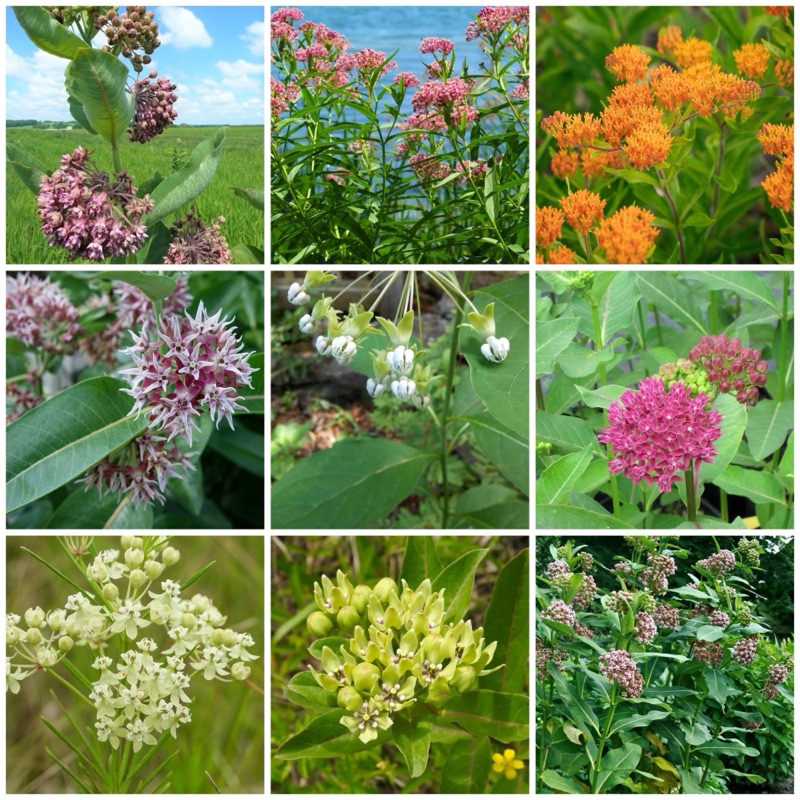
Ontario’s landscapes are home to an unsung hero of biodiversity the milkweed. Often mistaken for a common weed, these hardy native plants are actually ecological powerhouses, supporting pollinators, enriching soil, and playing a vital role in the life cycle of the endangered monarch butterfly. From the towering common milkweed to the delicate swamp milkweed, Ontario boasts a variety of species, each with its own story to tell. This article delves into the fascinating world of Ontario’s native milkweeds, exploring their importance, adaptations, and the crucial role they play in maintaining the province’s natural balance.
Common Milkweed (Asclepias syriaca)
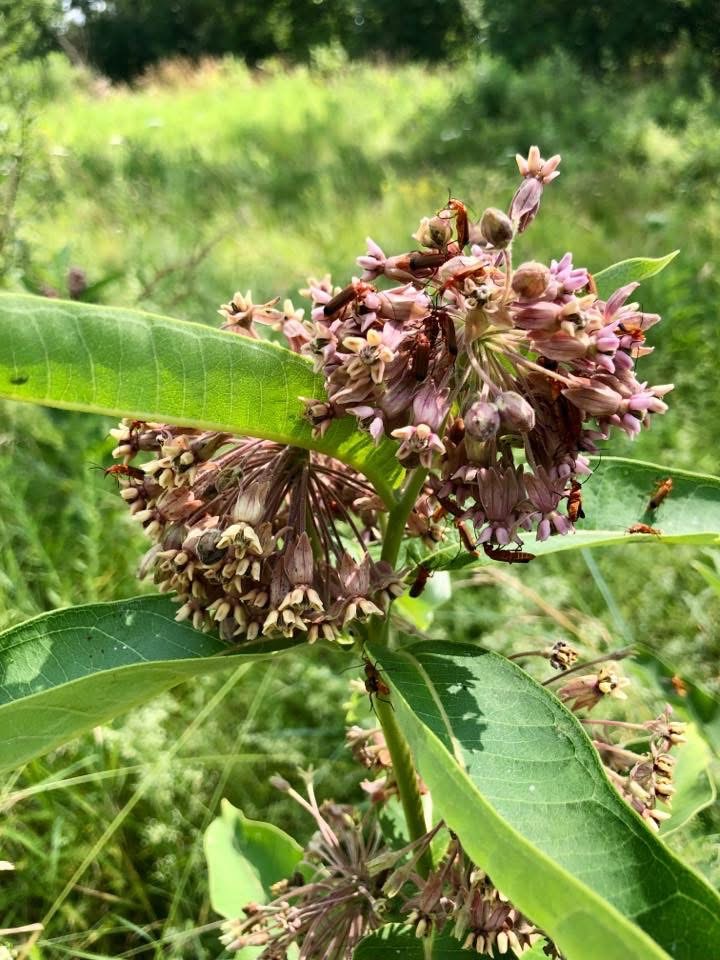 Photo Credits: Michael Dahms from The Ontario Native Plant Gardening Group on Facebook
Common Name: Common Milkweed
Scientific Name: Asclepias syriaca
Other Names: Butterfly flower, Silkweed, Silky Swallow - wort, or Virginia Silkweed.
Genus: Asclepias
Colours: pinkish purple, dark green, light green, and brown.
Flowers: Small flowers with five petals that are borne in big clusters, and the colours of the flowers is pinkish purple but sometimes they appear whitish pink to reddish purple.
Foliage: oval, oblong, or elliptical leaves that are arranged oppositely on the stem. They are dark green on the top surface, and on the bottom surface the leaves are a lighter green colour.
Height: Typically reaches a height of 3 to 5 feet (36 - 60 inches) tall.
Width: Typically reaches a width of 2 to 3 feet (24 - 36 inches) wide.
Milky Sap: Yes, Common Milkweed produces a milky sap. The milky sap is found in the stems of the leaves, the stems of flowers, the stalk, as well as at the end of seed pods. The milky sap usually appears when a leaf, flower clusters, or seed pods are taken off the plant.
Bloom Time: Typically blooms from early summer through end of summer, which usually occurs from June through August.
Soil Type: sandy, loamy, or rocky soils that are slightly acidic to neutral which is rich in organic matter as being well drained.
Moisture Requirements: medium to dry moisture and the area that it is planted in needs to have proper drainage.
Light Exposure: Full Sun ☀️
Hardiness Zones: Zones 3 through 9
Season Interest: Spring 🌸, Summer 💐, Fall 🍂, and Winter ❄️.
Host Plant For: Yes, Common Milkweed is a host plant to a local butterfly, a local moth, and three beneficial insects. It is a host plant for the Monarch Butterfly, Milkweed Tussock Moth, Red Milkweed Beetle, Small Milkweed Bug, and Large Milkweed Bug.
Common Milkweed (Asclepias syriaca) is a large sized milkweed species in The Dogbane Family. It is known for their very fragrant clusters of flowers.
2-inch round clusters arising from leaf axils in the upper plant. Individual flowers are ½ inch across with a 5-parted crown and 5 downward-curved petals. Flower color ranges from dull pale pink to deep mauve, the tips of the star-shaped crown often cream coloured.
Leaves are up to 8 inches long and 3 inches wide, generally oval to oblong with a point at the tip and a short stalk, oppositely attached, toothless and softly hairy on the underside. The prominent midrib is creamy white to pink; the side veins on the leaf surface are all connected and do not extend to the edge of the leaf, creating a border effect all around the edge. Stems are hairy to varying degrees and unbranched.
Bumpy green pods about 5 inches long containing many flat, brown seeds, each with a papery wrapping and fuzzy parachute attached.
Seeds are arranged in layers like fish scales. When the pod splits open the seeds separate and are carried away by the wind.
Swamp Milkweed (Asclepias incarnata)
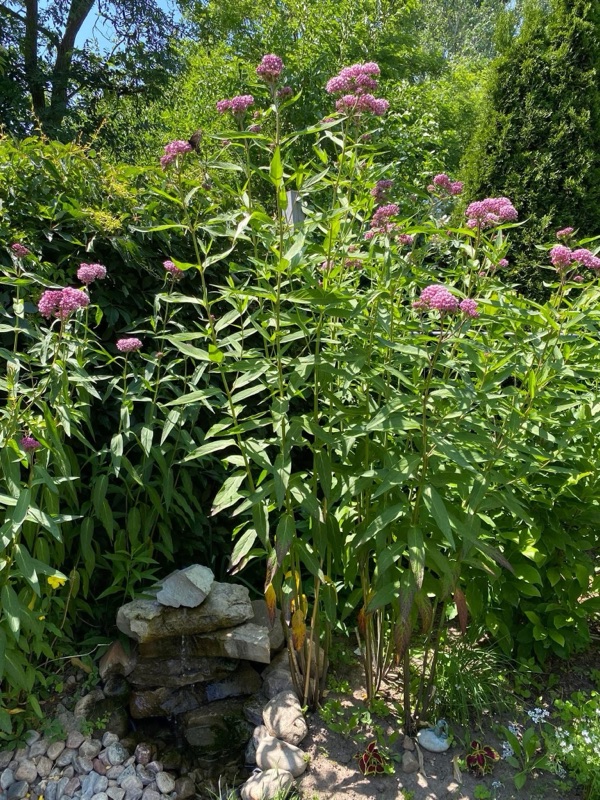 Photo Credits: Rachel Ullman from The Ontario Native Plant Gardening Group on Facebook
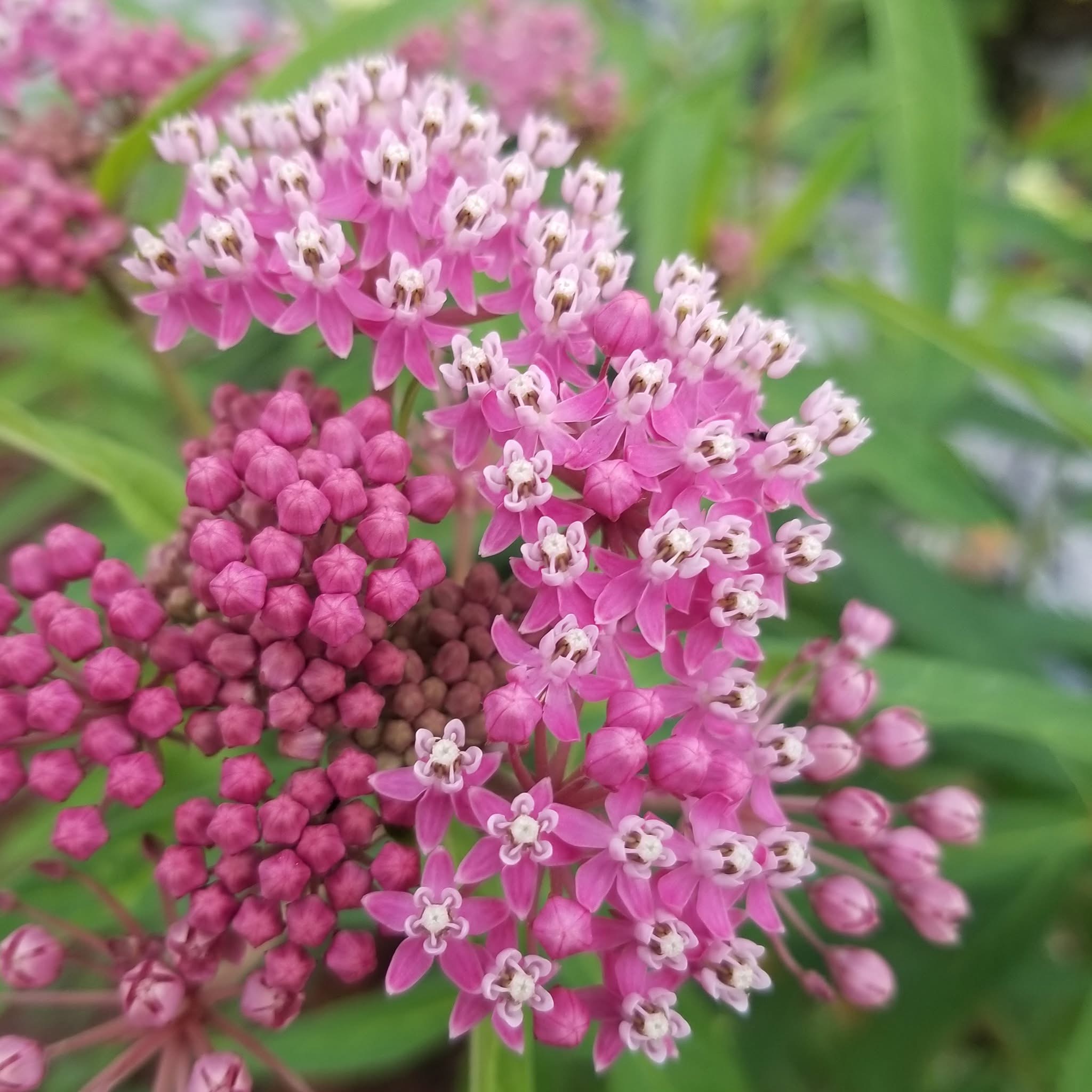 Photo Credits: Shawn Patille, Senior Horticulturalist at Humber Nurseries 2020 Ltd, from The Ontario Native Plant Gardening Group on Facebook
Common Name: Swamp Milkweed
Scientific Name: Asclepias incarnata
Other Names: Rose Milkweed, Pink Milkweed, Marsh Milkweed, Swamp Silkweed, Butterfly Flower, Swamp Indian Hemp, or Pink Indian Hemp.
Genus: Asclepias
Colours: pink, mauve, reddish violet, dark green, and light green.
Flowers: Small rounded clusters (umbels) that are at the top of the plant or at the end of branches. Each umbel (flower cluster) contains 20 or more individual flowers. The flowers are typically pink to purplish pink, but can range from near white to reddish in colour.
Foliage: The leaves are narrow and lance shaped (lanceolate) with smooth edges. The leaf arrangement is opposite each other on the stem. They maybe smooth, or have a downy (hairy) texture depending on the specific plant. On the top surface of the leaves is dark green in colour, and on the under surface of the leaves is a light green to pale green in colour.
Height: Typically reaches a height of 3 to 5 feet (36 - 60 inches) tall.
Width: Typically reaches a width of 2 to 3 feet (24 - 36 inches) wide.
Milky Sap: Yes, Swamp Milkweed does produces a milky sap. When its stems or leaves are broken or taken off of the plant the milky sap appears by dripping out of the part of the plant, just like their cousin Common Milkweed.
Bloom Time: Typically blooms from the middle of the summer till late summer, which usually occurs from mid July to late August.
Soil Type: clay or loamy soils that is slightly acidic to neutral and has good drainage but has good moisture.
Moisture Requirements: moist medium to wet conditions
Light Exposure: Full Sun ☀️
It can tolerate part shade during the hot days of summer.
Hardiness Zones: Zones 3 through 7
Season Interest: Spring 🌸, Summer 💐, Fall 🍂, and Winter ❄️.
Host Plant For: Yes, Swamp Milkweed is a host plant to a local butterfly species, a local moth species, and a beneficial insect. It is a host plant for the Monarch Butterfly, Milkweed Tussock Moth, and Swamp Milkweed Leaf Beetle.
Swamp Milkweed (Asclepias incarnata) is a medium sized milkweed species that is a member of The Dogbane Family. It is most recognized by its small clusters of pink flowers that are very fragrant, and the thin leaves that go all around the stem.
2 to 3-inch convex flower clusters at the top of the plant. Flowers are ¼-inch across with a 5-parted crown with a curved horn sticking out of each of the 5 cylindrical hoods in the crown, arching over the short column in the center. 5 downward-curved petals flare out beneath. Flower color ranges from pink to magenta to red, the central column of the star-shaped crown is usually cream coloured.
Leaves are up to 6 inches long and 1½ inches wide, hairless and toothless, tapering to a point at the tip on a short stalk; oppositely attached at the stem. Stems are mostly hairless but may have lines of fine hairs in the upper plant.
Slender pods about 4 inches long containing many flat, brown seeds, each with a fuzzy parachute attached. When the pod splits open the seeds are carried away by the wind.
Butterfly Weed (Asclepias tuberosa)
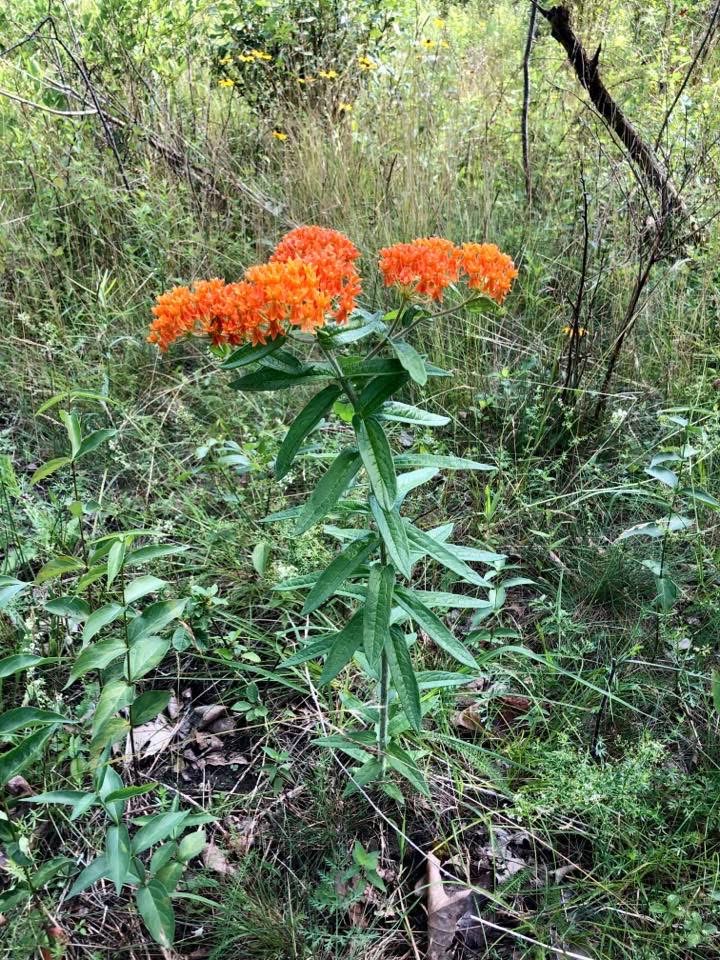 Photo Credits: Michael Dahms from The Ontario Native Plant Gardening Group on Facebook
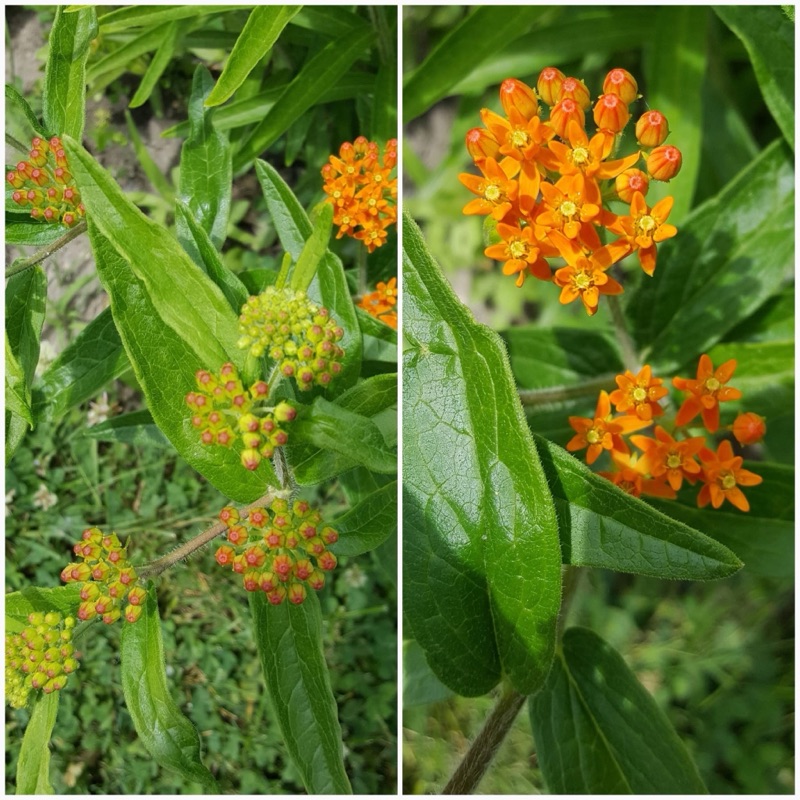 Photo Credits: Karen Hass from The Ontario Native Plant Gardening Group on Facebook
Common Name: Butterfly Weed
Scientific Name: Asclepias tuberosa
Other Names: Butterfly Milkweed, Orange Milkweed, Pleurisy root, or Chigger Flower.
Genus: Asclepias
Colours: yellow, orange, and deep green
Flowers: Vibrant bright orange (sometimes reddish or yellow) flowers arranged in flat - topped clusters called umbels. These clusters appear at the tips of the plant’s stems.
Foliage: The leaves are narrow and lance shaped that are typically arranged alternately along the stems. They are 2 - 6 inches long and about 1 inch wide. The colouration of the leaves vary depending on the season. During the summer the leaves are a deep green colour, and in the fall they turn to a yellow colour. They are coarse with a hairy texture especially on the underside of the leaves, and have a pointed tip.
Height: Typically reaches a height of 1 1/2 to 2 feet (12.5 - 18 inches to 24 inches) tall.
Width: Typically reaches a width of 1 to 1 1/2 feet (12 to 12.5 inches) wide.
Milky Sap: No, Butterfly Weed does not have a milky sap but instead this plant produces a clear sap that is watery like.
Bloom Time: Typically blooms from early summer to late summer, which usually occurs from June through August.
Soil Type: sandy, loamy, or gravelly soils that are neutral to acidic which has compost and is well drained.
Moisture Requirements: dry to medium conditions and the location that it is planted in needs to have proper drainage to prevent root rot.
Light Exposure: Full Sun ☀️
Hardiness Zones: Zones 3 through 7
Season Interest: Spring 🌸, Summer 💐, Fall 🍂, and Winter ❄️.
Host Plant For: Yes, Butterfly Weed is a host plant for a local butterfly species, a moth species, and a beneficial insect. It is a host plant for the Monarch Butterfly, Milkweed Tussock Moth, and Red Milkweed Beetle.
Butterfly Milkweed (Asclepias tuberosa) is a low growing milkweed species that is great for ground covers. It is known for their vibrant and bright orange flowers that are arranged in small clusters on the top of the stems of the plant.
Lance-shaped to narrowly egg-shaped leaves scattered singly along the stem; to 4 in. long, reclining, ascending to somewhat erect, hairy stems that branch toward the summit. Alternate and loosely spiraling, simple, narrow lanceolate to oblong, acute to obtuse, sessile to minutely-petiolate, hispidulous pubescent. The size of the leaves are 2 - 6 inches long and 1/4 to 1 inch wide.
The stems thin and short in appearance and have a hairy texture to them due to the fuzz that is all over the stems.
Clusters of bright orange to yellow-orange flowers atop upright to reclining hairy stems. The flowers have five sepals, five petals, and five stamens.
Dehiscent 4"-5" spindle-shaped follicle seed pods (3-6" long) release silky-tailed seeds which are dispersed by wind. Follicles, fusiformed, smooth, paired; seeds with silky, apical tuft of trichomes.
Showy Milkweed (Asclepias speciosa)
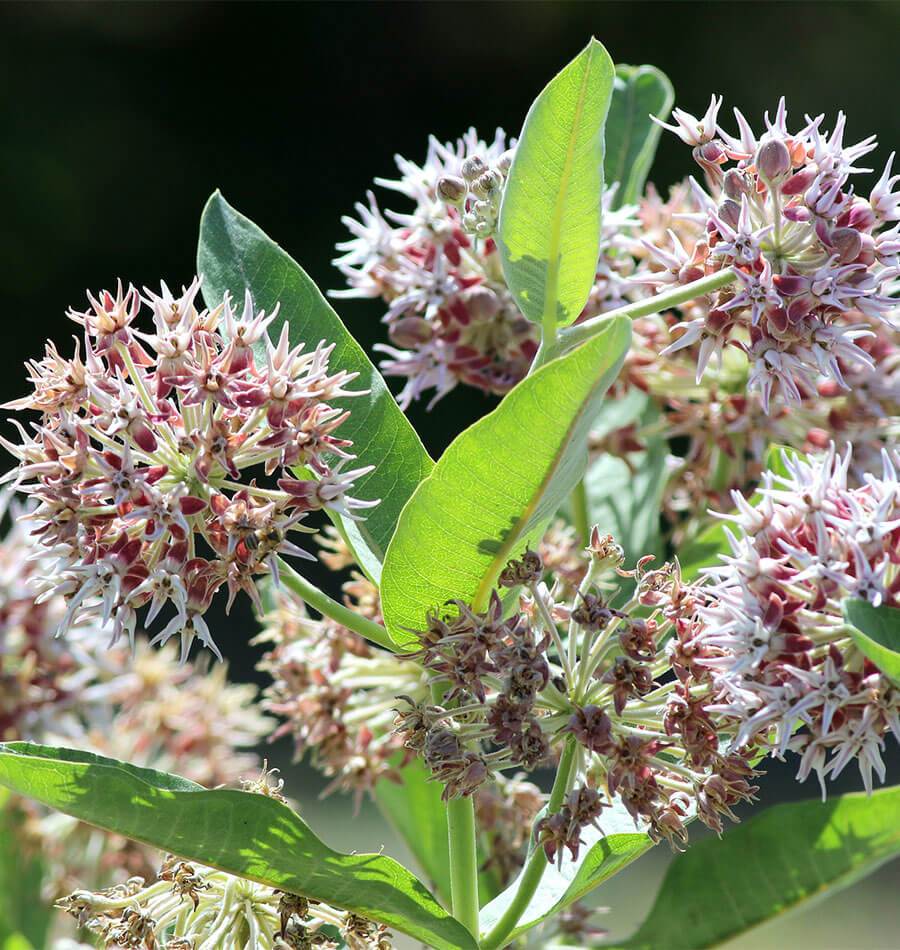 Photo Credits: West Coast Seeds
Common Name: Showy Milkweed
Scientific Name: Asclepias speciosa
Other Names: American Silkweed, Jewelweed, Silken Cissy, Silkweed, Swallowwort, Indian Hemp, or Showy Indian Hemp.
Genus: Asclepias
Colours: pink, purple, rose, white, greyish green, and bluish green.
Flowers: Striking star like or crown like blooms that appear in globular clusters at the top of the plant’s stems. The colouration of the flowers can be a purplish pink or pinkish purple hues , and turning to a yellow or tan colour as they age.
Foliage: The leaves are oval shaped that are 4 - 7 inches long and covered in velvety hairs. They grow directly across from one another on the stems of the plant. The colouration of the leaves is blue - green to grey green.
Height: Typically reaches a height of 2 to 4 feet (24 - 48 inches) tall.
Width: Typically reaches a width of 1 to 3 feet (12 - 36 inches) wide.
Milky Sap: Yes, Showy Milkweed produces a milky sap. The sap appears when a leaf or stem is broken on the plant.
Bloom Time: Typically blooms from mid summer to end of summer, which usually occurs from late June to late August.
Soil Type: Sandy, loamy, or even rocky soils with a ph level of neutral to slightly acidic that has some organic matter in it, and is well drained.
Moisture Requirements: moderate moisture
Light Exposure: Full Sun ☀️
Hardiness Zones: Zones 4 through 6
Season Interest: Spring 🌸, Summer 💐, Fall 🍂, and Winter ❄️.
Host Plant For: Yes, Showy Milkweed is a host plant for a local butterfly species, moth species, and three local beneficial insects. It is a host plant for the Monarch Butterfly, Milkweed Tussock Moth, Red Milkweed Beetle, Small Milkweed Bug, and Large Milkweed Bug.
Showy Milkweed (Asclepias speciosa) is a tall species of Milkweed in The Dogbane Family. This species of Milkweed is taller than its cousin the Common Milkweed. This milkweed is known for their pink flower clusters that are very showy.
Spidery balls of soft purple to almost hot pink flowers each ¾ to 1½ inches long, this milkweed has come by its name honestly. 2 to 4 flower clusters emerge from upper leaf axils and can be 3 inches across. The 5 long, light pink hoods are nearly three times the length of the central flower column and angled out and up, extending beyond the radius of the 5 petals below them. The horns are long and slender, curved in lightly over the top of the flower column but do not reach the center or touch one another.
Leaves are generally oval, up to 4 inches wide by 8 inches long, broad at the base to finely pointed at the tips, with a reddish mid-vein and little or no leaf stem. Leaf undersides are also hairy with upper surface velvety to smooth on the upper. Leaf edges are toothless, but may be somewhat wavy. This is a colonial species from roots with sturdy stems covered in fine hairs.
The seed pods are thick 3 - 5 long follicles that split open on one side when mature, releasing reddish brown flat seeds with white silky hair.
Poke Milkweed (Asclepias exaltata)
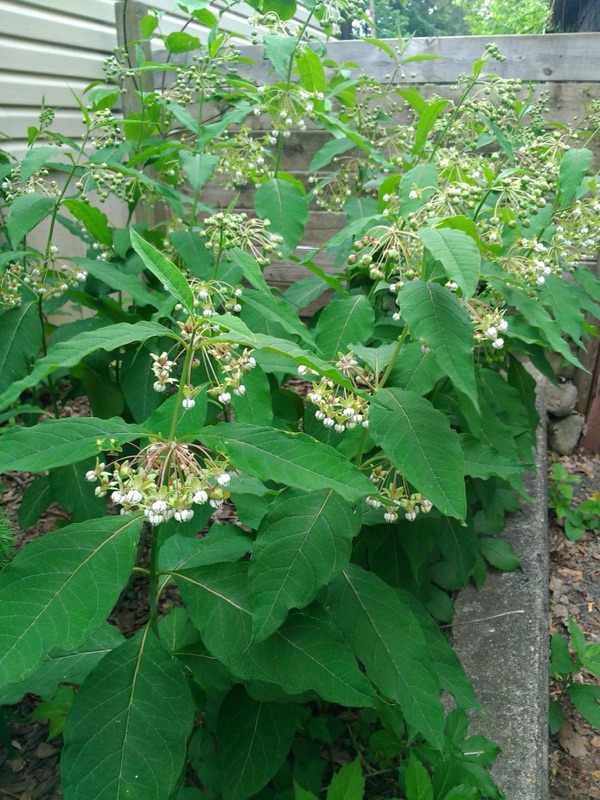 Photo Credits: Mathis Natvik from The Ontario Native Plant Gardening Group on Facebook
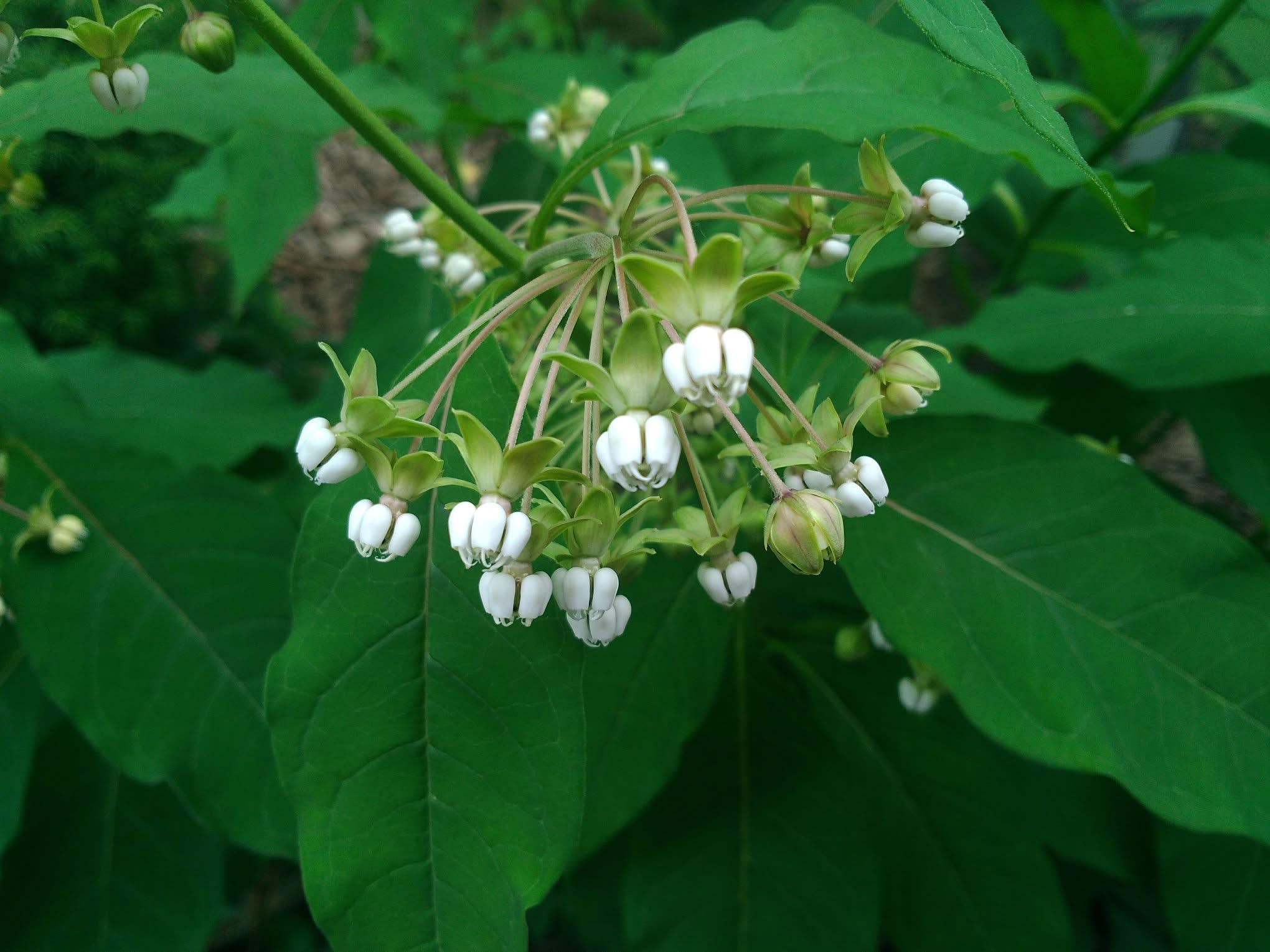 Photo Credits: Mathis Natvik from The Ontario Native Plant Gardening Group on Facebook
Common Name: Poke Milkweed
Scientific Name: Asclepias exaltata
Other Names: Tall Milkweed
Genus: Asclepias
Colours: white, light pink, lavender, and medium or dark green.
Flowers: Drooping umbels (flower clusters) of white to pink fragrant flowers with reflexed petals and curving hoods.
Foliage: The leaves are opposite, broad, and pointed with hairy stems.
Height: Typically reaches a height of 3 to 6 feet (36 - 72 inches) tall.
Width: Typically reaches a width of 2 to 3 feet (24 - 36 inches) wide.
Milky Sap: Yes, Poke Milkweed does produce a milky sap. When a leaf or stem is broken or bruised it will release a milky sap.
Bloom Time: Typically blooms from early summer to late summer, which usually occurs from June through August.
Soil Type: loamy soils with high organic matter
Moisture Requirements: moist - well drained
Light Exposure: Partial Shade 🌥️ to Full Shade ☁️
Hardiness Zones: Zones 4 through 6
Season Interest: Spring 🌸, Summer 💐, Fall 🍂, and Winter ❄️.
Host Plant For: Yes, Poke Milkweed is a host plant for a local butterfly species, moth species, and three beneficial insects. It is a host plant for the Monarch Butterfly, Milkweed Tussock Moth, Red Milkweed Beetle, Small Milkweed Bug, and Large Milkweed Bug.
Poke Milkweed (Asclepias exaltata) is a tall milkweed species that is a member of The Dogbane Family. This milkweed species is taller than Common Milkweed.
Flowers are in open droopy clusters at the end of naked stalks that arise from leaf axils in the upper part of the plant. Flowers are about 3/8 inch across and ½ inch long, have a 5-parted crown, with a horn sticking out of each of the 5 cylindrical hoods, a short column tucked in the center, and 5 flaring petals that bend back away from the flower. Crown color is creamy white to greenish or purplish, with light green petals. One plant usually has a few to several clusters.
Leaves are large and broad, to 6 inches long and 3 inches wide, roughly oval to egg-shaped, tapering to a point at both ends on a stalk ¼ to 1 inch long. Leaf edges may be slightly wavy, but are otherwise smooth. Attachment is opposite. The main stem is smooth and light green to purplish.
Fruit is a spindle-shaped pod 4 to 6 inches long, covered in downy hairs. Inside are flat brown seeds with a tuft of long white hair to carry them off in the wind.
Purple Milkweed (Asclepias purpurascens)
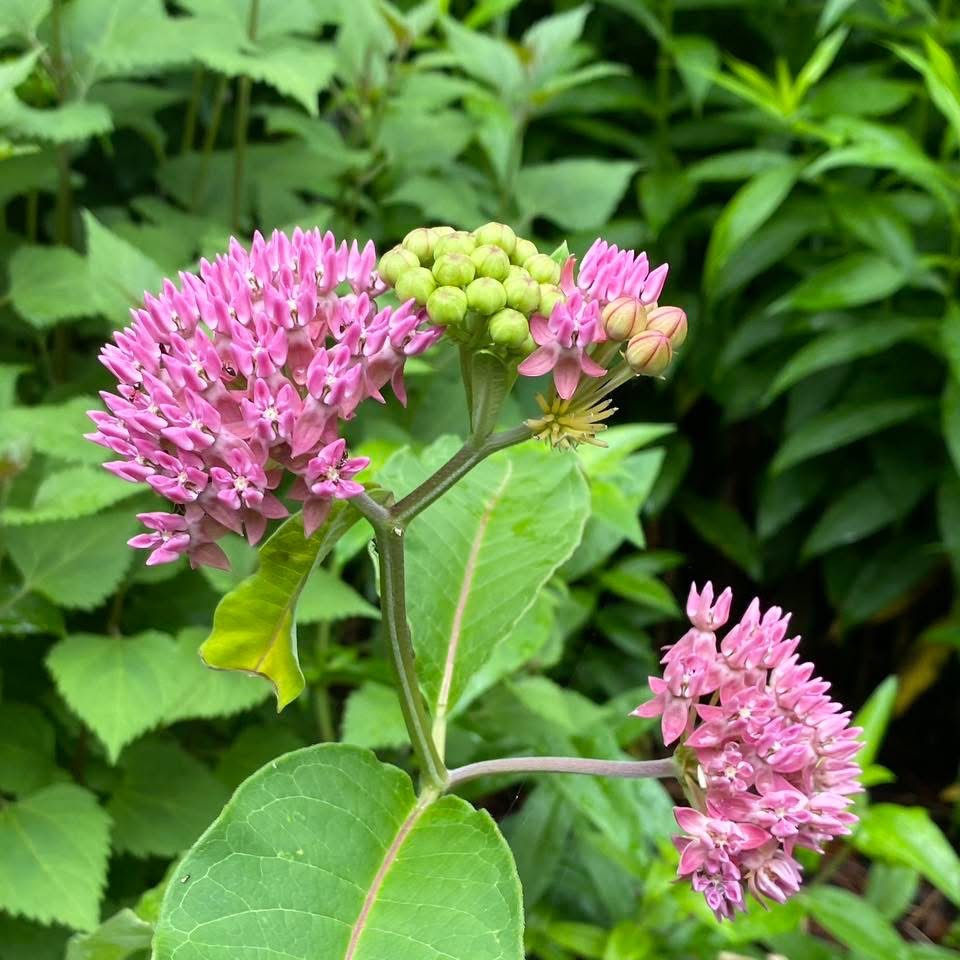 Photo Credits: Lisa Massie from The Ontario Native Plant Gardening Group on Facebook
Common Name: Purple Milkweed
Scientific Name:Asclepias purpurascens
Other Names: Marsh Milkweed, Red Milkweed, or Woods Milkweed
Genus: Asclepias
Colours: red purple, pale to deep purple, rosy or greenish tints, purplish burgundy, and green.
Flowers:The flowers are star shaped and arranged in spherical umbels (rounded clusters) that are about 2 - 3 inches across. Each flower has five rose pink petals. Above the petals are hoods modified floral structures that are connected at the base below the anther column. The horns are down curved and purplish white in colour, curving inward toward the reproductive column. The colouration of the flowers are a rich rose pink to purple hues, often appearing as purplish burgundy clusters.
Foliage: The leaves are opposite paired directly across from each other on the stem. They are broadly oval to lance - shaped, sometimes described as cordate (heart shaped) at the base. Each leaf can grow up to 6 inches long, which is half a foot long which contributes to the plant’s lush appearance. The veins are prominent net like venation, which is more noticeable than on their cousin Common Milkweed. The colouration of the leaves depends on what leaf surface you are looking at. The upper surface of the leaves is dark green and slightly softly hairy. On the lower surface of the leaves is light green and densely pubescent which gives a soft texture underneath.
Height: Typically reaches a height of 2 to 4 feet (24 - 48 inches) tall.
Width: Typically reaches a width of 1 to 3 feet (12 - 36 inches) wide.
Milky Sap: Yes, Purple Milkweed does produce a milky latex sap. It appears when a leaf, a piece of the stem, a flower cluster, or a seed pod gets broken or taken off the plant.
Bloom Time: Typically blooms late spring to late summer, which usually occurs from late May till early August.
Soil Type: loam, sandy loam, or chalky soils that has a pH of slightly acidic to neutral and is well drained.
Moisture Requirements: evenly moist conditions and the location that it is planted needs to be properly drained.
Light Exposure: Full Sun ☀️
It can tolerate partial shade but it may produce fewer blooms and leggy growth.
Hardiness Zones: Zones 3a through 9b
Season Interest: Spring 🌼, Summer 💐, Fall 🍂, and Winter ❄️.
Host Plant For:Yes, Purple Milkweed is a host plant for a local butterfly species, moth species, and three beneficial insects. It is a host plant for the Monarch Butterfly, Milkweed Tussock Moth, Red Milkweed Beetle, Small Milkweed Bug, and Big Milkweed Bug.
Purple Milkweed (Asclepias purpurascens) is a slender perennial with flowers in the typical form of flowers on other milkweeds. It is a herbaceous type of plant in The Dogbane Family.
Flowers are about 1/3 inch across and about ½ inch long, with 5 petals angled down and out with tips pointing up, deep purple throughout though can exhibit lighter shades to pink. The 5 hoods are light pink to rose to purple, more than twice as tall as the flower center column. Horns also pink to rose, short, flat and curved in over flower center. Up to 6 round flower clusters 2½ to 3 inches wide are at the top of the plant and terminal leaf axils.
Leaves are opposite with fine hairs on lower surfaces, edges are toothless but may be wavy - up and down - and will curl upwards from the mid-vein. Leaves are elongated but broad, rounded at base and narrowed to a pointed tip, up to 3 inches wide and 8 inches long, with short leaf stems. The main stem is erect, unbranched, smooth or with very fine short hairs.
The fruits of Purple Milkweed are smooth, and elongated seed pods that are typically 6 inches long and 1 inch wide, that split open to release numerous seeds with silky white hairs (coma). When young the seed pods are green in colour but they transition to brown as they mature.
Whorled Milkweed (Asclepias verticillata)
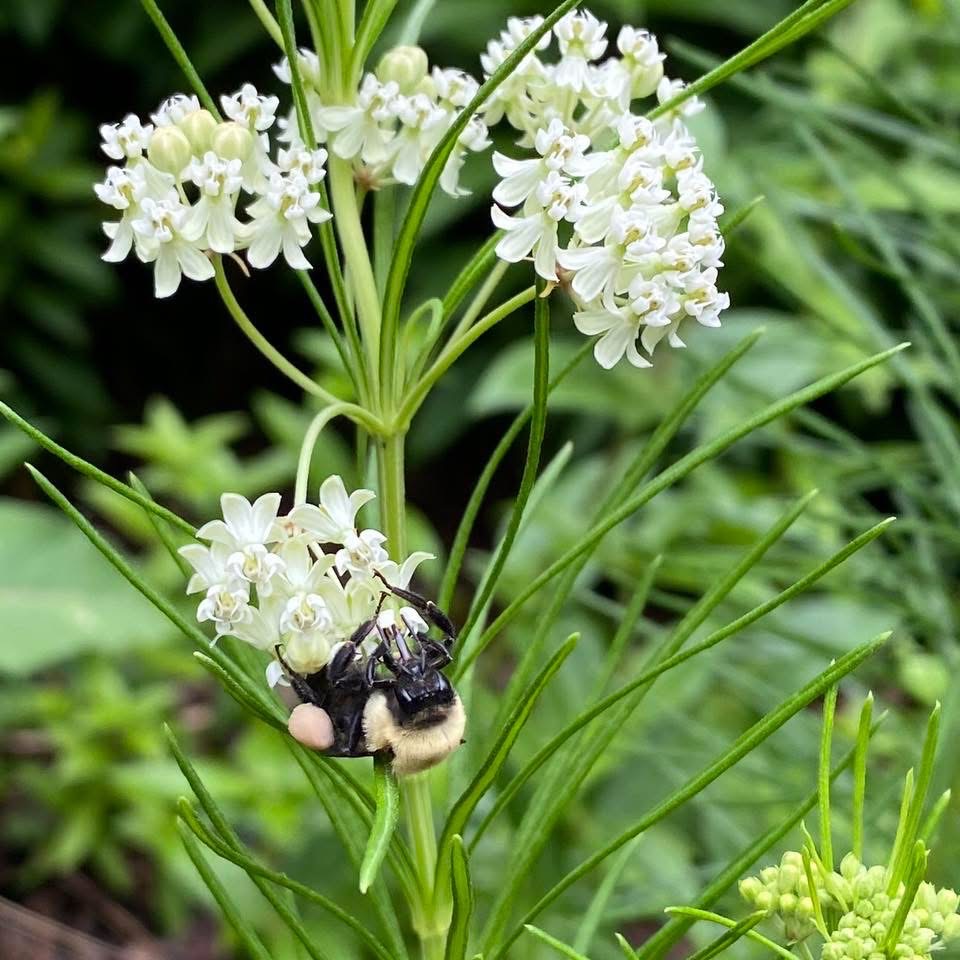
Photo Credits: Lisa Massie from The Ontario Native Plant Gardening Group on Facebook
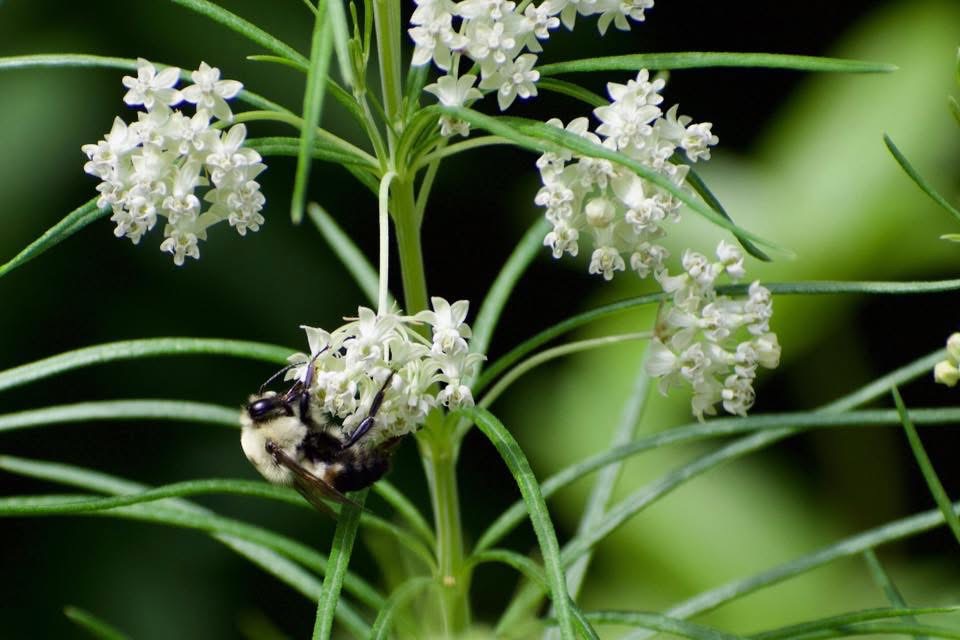 Photo Credits: Lisa Massie from The Ontario Native Plant Gardening Group on Facebook
Common Name: Whorled Milkweed
Scientific Name:Asclepias verticillata
Other Names: Eastern Whorled Milkweed, Horsetail Milkweed, or Narrow leaf Milkweed
Genus: Asclepias
Colours: white to greenish white, grey green to blue green, and yellow.
Flowers:The flowers are tiny in size and star shaped. They are arranged in flat topped clusters called umbels. Each umbel contains 3 to 20 individual flowers, which bloom at the upper leaf axils and stem tips. The colour of the flowers is usually white to greenish white, sometimes described as creamy white. They are highly fragrant which is highly noticeable in the evenings.
Foliage: The leaves are narrow,linear, and needle like which resembles pine needles in texture. They are arranged in whorls of 3 to 6 around the stem giving this milkweed species their name. The leaves are typically 1 to 3 inches long. The texture of the leaves is fine and delicate contributing to the plant’s airy appearance. The colouration of the leaves depends on the season. During the growing season (spring and summer) they are grey green to blue green. During the fall season the leaves turn to a yellow colour to create a stunning fall show.
Height: Typically reaches a height of 1 to 3 feet (12 - 36 inches) tall.
Width: Typically reaches a width of 1 to 2 feet (12 - 24 inches) wide.
Milky Sap: Yes, Whorled Milkweed does produce a milky latex sap that is sticky. The milky latex sap usually appears when leaves, stems, flower clusters, or seed pods are torn or broken off of the plant.
Bloom Time: Typically blooms from mid to late summer, which usually occurs from July through September.
Soil Type: sandy loam, loam, clay loam, rocky, slit, or sandy soils that are slightly acidic to neutral that are well drained.
Moisture Requirements: dry to moderately moist conditions and the location that this milkweed species is planted needs proper drainage.
Light Exposure: Full Sun ☀️
It does tolerate partial shade but may produce fewer blooms and leggy growth.
Hardiness Zones: Zones 4 through 9
Season Interest: Spring 🌼, Summer 💐, Fall 🍂, and Winter ❄️.
Host Plant For:Yes, Whorled Milkweed is a host plant for a local butterfly species and moth species. It is a host plant for the Monarch Butterfly and Milkweed Tussock Moth. Occasionally Red Milkweed Beetles, Small Milkweed Bugs, and Big Milkweed Bugs feed on this milkweed species even though it is not their preferred food source.
Whorled Milkweed (Asclepias verticillata) is a single stemmed unbranched perennial that has narrow and linear leaves. It Is a member of The Dogbane Family.
Flowers are in rounded clusters 1 to 3 inches across that arise from the leaf axils in the upper part of the plant, and at the top of the plant. Each cluster usually has 10 to 20 flowers. Individual flowers are about ¼ long, have a 5-parted crown with a curved horn projecting out of each of the 5 short hoods, arching over the tall column in the center. 5 light green petals bent downward and flare out beneath.
Leaves are up to 3 inches long and very narrow, less than 1/8 inch wide, with a prominent central vein. Whorls of 3 to 6 leaves are densely packed along the stem but spread out as the plant matures. Leaves initially point up but become more horizontal or turned downward with age. The stem is slender and has fine hairy lines that extend down from the base of the leaves.
Fruit is a spindly pod 3 to 4 inches long containing numerous flat brown seeds, each with a tuft of white hair to carry it off in the wind.
Green Milkweed (Asclepias viridis)
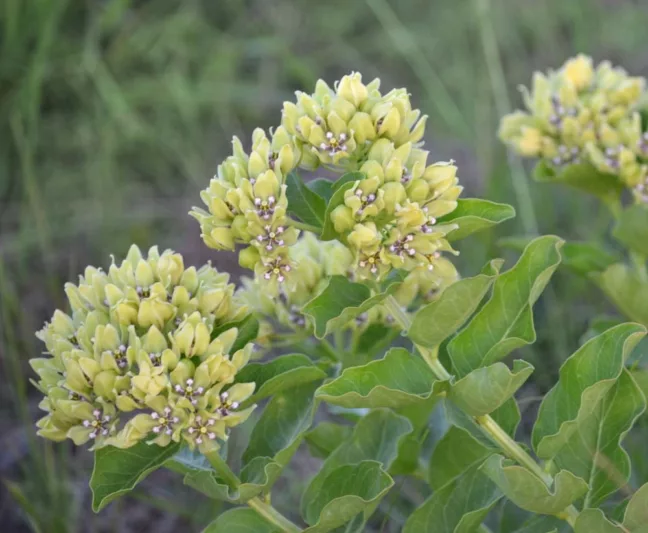 Photo Credits: Mary Anne Campbell from Shutterstock
Common Name: Green Milkweed
Scientific Name:Asclepias viridis
Other Names: Green Antelope-horn Milkweed, Spider Milkweed, or Green Comet Milkweed
Genus: Asclepias
Colours: pale green, purple, yellow green, white tinge, and deep green.
Flowers:Flowers are densely packed into rounded clusters about the size of a baseball and are perched atop sturdy stems of the plant. Each flower has five upright pale green petals that cup upward, forming a bowl like structure. Inside the petals are five purple hoods, which are shorter and sit nestled within the cupped petals. The petals rise twice as high as the hoods which creates a layered crown like appearance.
Foliage: The leaves are narrow and lance shaped often folded lengthwise, giving a slightly curled appearance. They are typically alternate along the stem and are short stalked as well as pointed. The leaves range from 2 to 5 inches (5 to 13 cm) long. The texture is smooth and non hairy surface. The colouration of the leaves is pale green to medium green.
Height: Typically reaches a height of 1 feet 6 inches (12.6) to 2 feet 6 inches (24.6) tall.
Width: Typically reaches a width of 1 feet to 2 feet (12 - 24 inches) wide.
Milky Sap: Yes, Green Milkweed does produce a latex milky sap. The white latex milky sap usually appears when a leaf, the stem, a flower cluster, or a seed pod is taken off the plant or got bent.
Bloom Time: Typically blooms from late spring to midsummer, which usually occurs from May through July.
Soil Type: loam, sandy loam, clay loam, rocky, or calcareous soils that have a pH of slightly acidic to neutral that are well drained.
Moisture Requirements: dry to medium moisture conditions and the location that the plant is planted needs to be properly drained.
Light Exposure: Full Sun ☀️
It tolerates partial sun but may slower growth and fewer blooms.
Hardiness Zones: Zones 4 through 9
Season Interest: Spring 🌼, Summer 💐, Fall 🍂, and Winter ❄️.
Host Plant For:Yes Green Milkweed is a host plant for a local butterfly species, moth species, and four beneficial insects. It is a host plant for the Monarch Butterfly, Milkweed Tussock Moth, Red Milkweed Beetle, Swamp Milkweed Leaf Beetle, Small Milkweed Bug, and Big Milkweed Bug.
Green Milkweed (Asclepias viridis) is a tall and unbranched perennial and it is not a species of milkweed that sends out shoots forming a colony. It is a member of The Dogbane Family.
Flowers are in a densely packed round cluster about 2 inches across arising from a leaf axil. Individual flowers are pale green, ¼ inch across and ½ inch long with a 5-parted crown and 5 petals that pull straight back away from the crown, sometimes flaring a bit. Sometimes there is a purplish tint to the flowers. Each plant has 1 to a few clusters.
Leaves are toothless, may have short hairs especially along the veins, are mostly opposite, though some may be alternate, and are very short stalked. Leaf shape is quite variable, from linear to lance-oblong. Linear leaves are often somewhat folded lengthwise, up to 6 inches long, less than 1 inch wide, smooth or somewhat wavy around the edges, straight or arching, usually pointed at the tip.
Lance-oblong leaves are typically shorter, up to 2½ inches wide, often very wavy along the edges and usually pointed at the tip. Stems are covered in short matted hair and may be tinged purple. Plants may be erect but tend to lean over.
Fruit is a smooth, spindle-shaped pod about 3 inches long that contains numerous flat brown seeds with a tuft of white hair to carry it off in the wind.
Sullivant’s Milkweed (Asclepias sullivantii)
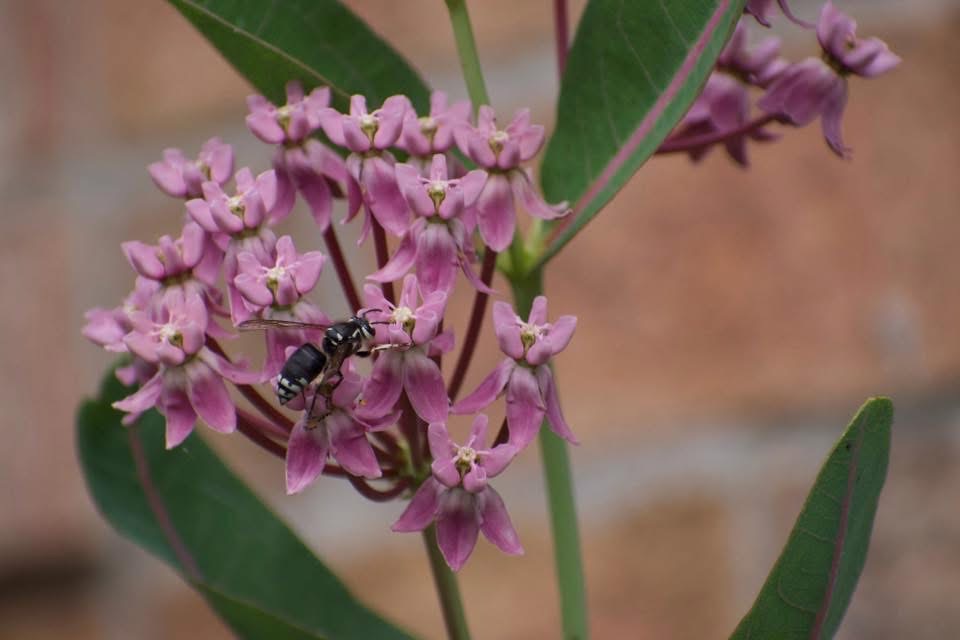 Photo Credits: Lisa Massie from The Ontario Native Plant Gardening Group on Facebook
Photo Credits: Lisa Massie from The Ontario Native Plant Gardening Group on Facebook
Common Name: Sullivant’s Milkweed
Scientific Name:Asclepias sullivantii
Other Names: Prairie Milkweed or Smooth Milkweed
Genus: Asclepias
Colours: purplish pink, rose pink, purple, and medium to deep green.
Flowers: Flowers are arranged in convex umbels (rounded clusters) about 2 1/2 to 3 inches wide. Each flower cluster may contain up to 20 individual flowers. The clusters appear at the top of the plant and from upper leaf axils. The individual flowers are about 1/3 of an inch across and 1/2 to 3/4 inch long. Each flower has five petals that fall away freely, with tips that are angled downward. The hoods are short and thick, not extending far above the flower centre. The horns are long, narrow, and curve inward overlapping at the centre. The colouration of the flowers is rich purple petals with a smooth rose pink hood, sometimes described as deep purple with delicate pink centres.
Foliage: The leaves are narrowly egg shaped to oblong, and are slightly heart shaped at the base. Often upswept giving a graceful ascending appearance. They are arranged opposite along the stem and are toothless with little to no stalk, sometimes clasping the stem. The leaves are typically 4 to 6 inches long and 1 1/2 to 3 inches wide. The colouration of the leaves are medium green to dark green and hairless on both sides, giving the leaves a smooth succulent like feel. The underside often shows a creamy or salmon coloured mid vein.
Height: Typically reaches a height of 2.5 to 3.5 feet (30 - 42 inches) tall.
Width: Typically reaches a width of 1.5 to 3 feet (18 - 36 inches) wide.
Milky Sap: Yes, Sullivant’s Milkweed does produce a latex white milky sap. The white milky sap appears when a leaf,stem,flower cluster, or seed pod gets broken or taken off of the plant.
Bloom Time: Typically blooms from early summer to mid summer, which usually occurs from early to mid June through July.
Soil Type: loam, clay loam, silty, or wet prairie soils that has a pH of neutral to slightly acidic and is well drained.
Moisture Requirements: medium moisture conditions and the location that the milkweed is planted needs to have good drainage where it has proper drainage.
Light Exposure: Full Sun
It can tolerate partial sun but may produce fewer blooms.
Hardiness Zones: Zones 3 through 7
Season Interest: Spring 🌼, Summer 💐, Fall 🍂, and Winter ❄️.
Host Plant For:Yes Sullivant’s Milkweed is a host plant for a local butterfly species, moth species, and four local beneficial insects. It is a host plant for the Monarch Butterfly, Milkweed Tussock Moth, Red Milkweed Beetle, Swamp Milkweed leaf Beetle, Small Milkweed Bug, and Big Milkweed Bug.
Sullivant’s Milkweed (Asclepias sullivantii) is a rough and weedy long lived perennial. It appears to be similar to their cousin Common Milkweed but is less aggressive and has slightly smaller flowers. This milkweed species is a member of The Dogbane Family.
Flowers are about 1/3 inch across and ½ to ¾ inch long with rich purple petals contrasted with a smooth rose/pink hood and horns. The 5 petals fall away freely, tips angled down with an open waist between petal base and hood base. The 5 hoods are short and thick, not extending half their length above flower center. Horns are long and narrow, appressed down into flower center and overlaping each other's tips. Clusters are convex, 2½ to 3 inches wide with up to 20 flowers each, at the top of the plant and 2 or more arising from upper leaf axils.
Leaves are 1½ to 3 inches wide, 4 to 6 inches long, narrowly egg-shaped to oblong, opposite, toothless, hairless, slightly heart-shaped at the base with little to no leaf stalk or somewhat clasping the stem, and are mostly upswept, revealing the creamy colored or reddish midvein from underneath. The side veins on the leaf surface are all connected and do not extend to the edge of the leaf, creating a border effect all around the edge. Stems are hairless, sturdy, single and unbranched.
The fruit is a pod containing numerous flat, brown seeds with a tuft of white hairs to carry them off in the wind.
Four - leaved Milkweed (Asclepias quadrifolia)
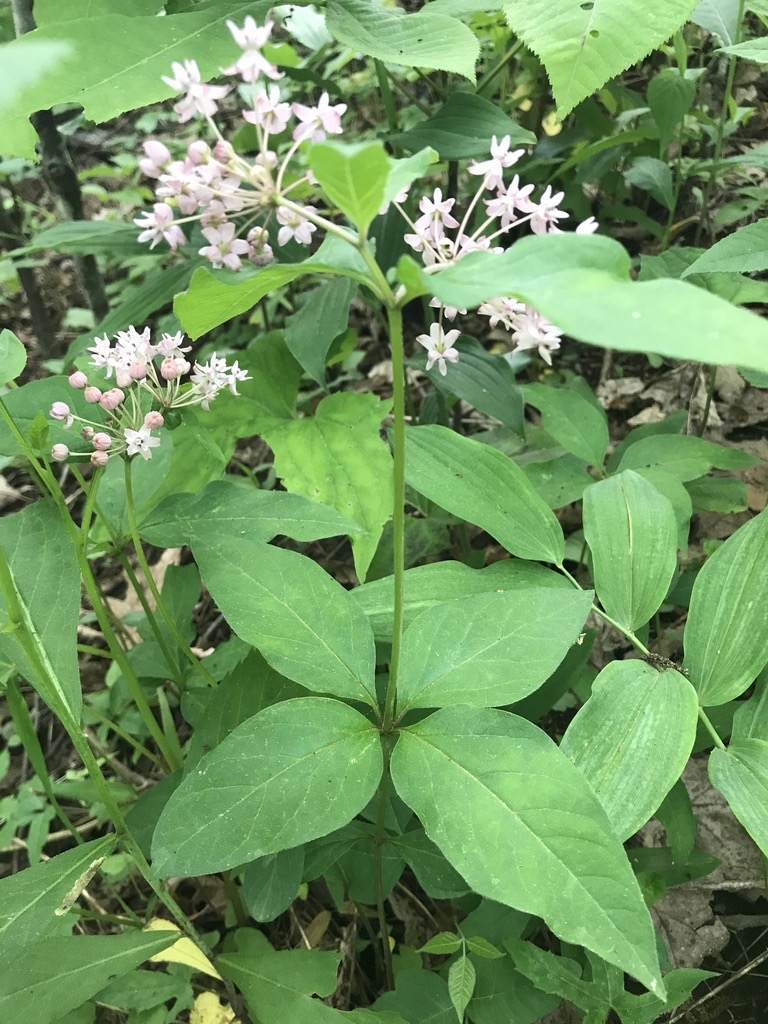 Photo Credits: erinmccombs from iNaturalist
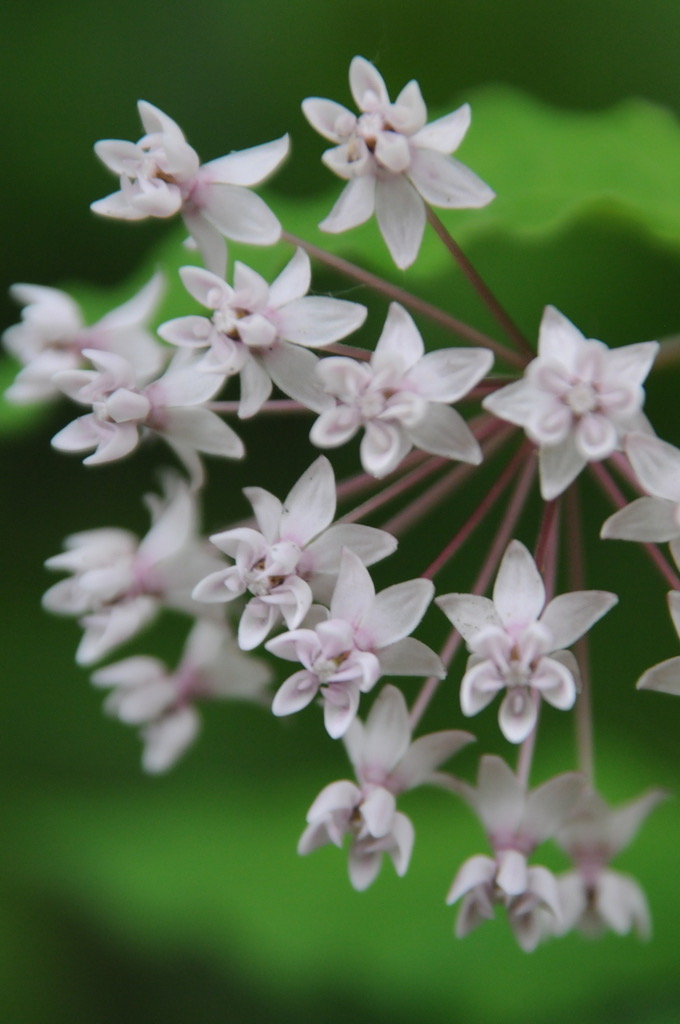 Photo Credits: zeebez from iNaturalist
Common Name: Four - leaved Milkweed
Scientific Name:Asclepias quadrifolia
Other Names: Smooth Milkweed, Prairie Milkweed, or Fourleaf Milkweed.
Genus: Asclepias
Colours: white, pale pink, rosy pink, lavender tinged, and medium green.
Flowers:The flowers are held in pendant umbels (rounded clusters) that hang slightly downward from leaf axils or the top of the stem. Each flower has five reflexed petals that curve downward. The central hoods are pale and rounded just like on other species of Milkweed. They are small and delicate which are typically less than 1/2 an inch across. The flowers open from rosy pink buds and the blooms range from white to pale pink, sometimes with a lavender tinge. They are very sweetly fragrance that attracts a wide variety of insects and pollinators.
Foliage: The leaves are elliptic to ovate (egg shaped) and have a smooth edged as well toothless. They typically appear in 3 to 4 sets along the stem. Most sets have 2 opposite leaves, but one set usually mid stem features 4 leaves arranged in a whorled. They range from 2.5 to 12 cm (1 to 4.7 inches) long and a width of 1 to 6 cm (0.4 to 2.4 inches). The leaves have a smooth surface and are hairless on both surfaces. It may show a creamy or salmon coloured mid vein underneath. The colour of the leaves is medium green.
Height: Typically reaches a height of 20 to 80 cm (8 to 31 cm) tall.
Width: Typically reaches a width of 60 cm (about 2 feet) wide.
Milky Sap: Yes, Four leaved Milkweed does produce a white latex milky sap. The milky sap usually appears when a leaf, stem, flower cluster, or seed pod is damaged or broke off of the plant.
Bloom Time: Typically blooms from late spring to beginning to mid summer, which usually occurs from late May to the end of June.
Soil Type: loam, sandy loam, rocky, shallow, or clay soils that is either slightly acidic or strongly basic and is well drained.
Moisture Requirements: dry to moderately moist conditions but the location that this milkweed is planted needs to have proper drainage.
Light Exposure: Partial Shade 🌥️ to Full Sun ☀️
Hardiness Zones: Zones 4 through 7
Season Interest: Spring 🌼, Summer 💐, Fall 🍂, and Winter ❄️.
Host Plant For:Yes Four - leaved Milkweed is a host plant for a local butterfly species, moth species, and four beneficial insects. It is a host plant for the Monarch Butterfly, Milkweed Tussock Moth, Red Milkweed Beetle, Swamp Milkweed Leaf Beetle, Small Milkweed Bug, and Big Milkweed Bug.
Four - leaved Milkweed (Asclepias quadrifolia) is an erect herbaceous perennial and is one of the smallest milkweed species in North America. This milkweed species is a member of The Dogbane Family. Unfortunately, this milkweed species is an endangered plant species here in the province of Ontario.
Whorls of 4 leaves at the middle of the stem. The upper leaves are paired. Leaves are thin, egg to lance-shaped and measure 2-6 in. long. The base of each leaf gradually narrows, or tapers.
1-4 domed, umbrella-like clusters of pink, lavender, or white flowers with pale pink corolla lobes and white hoods.
A single stemmed, upright habit. The stems, which are flattened on one side, can often take on a purple tint. Longitudinal lines are glabrous or pubescent.
The green fruit becomes dry and inflated, and with many hair-tufted seeds. They make a great addition to dried arrangements.
Wildlife Benefits
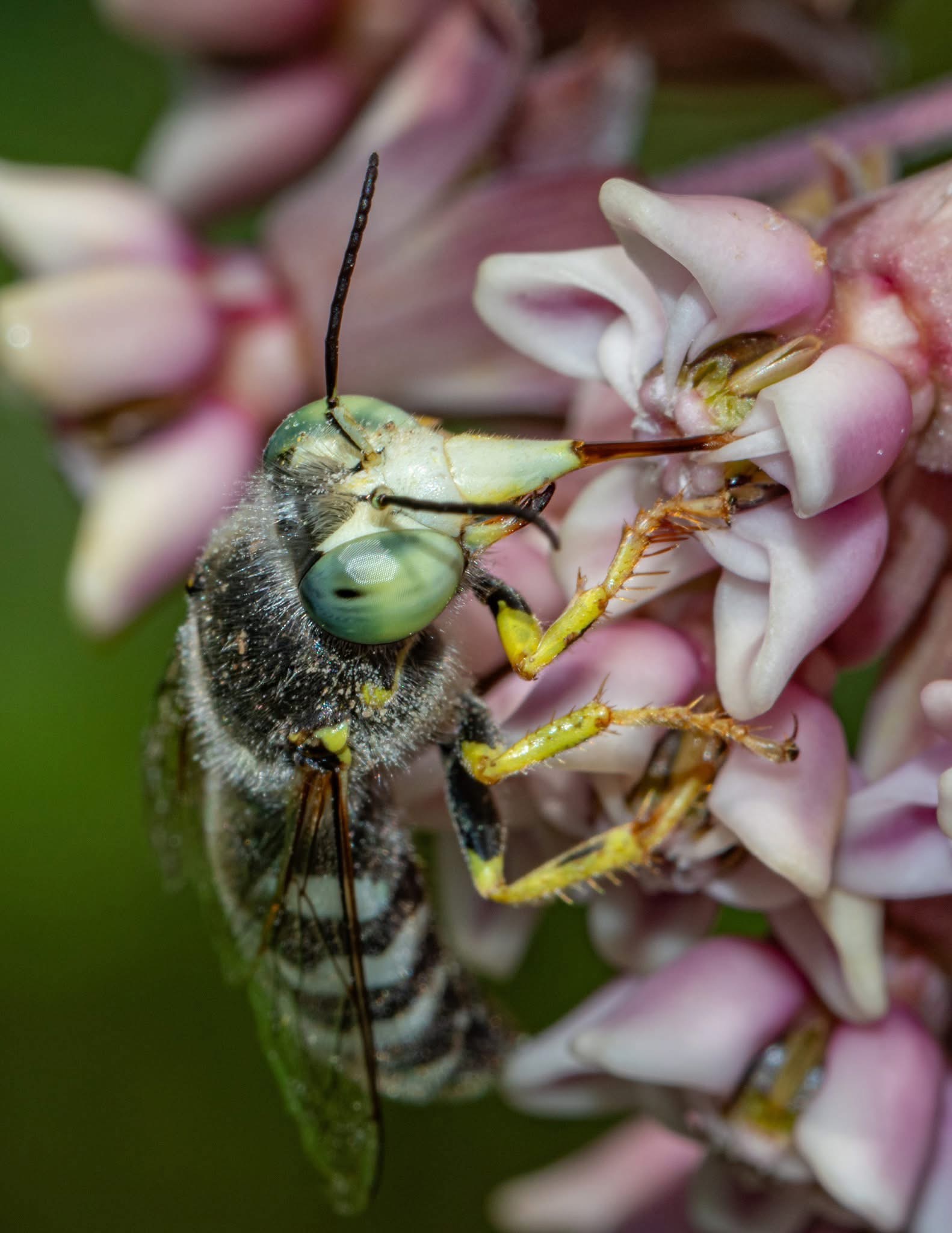 American Sand Wasp on Common Milkweed flowers
Photo Credits: Bob Noble from The Ontario Native Plant Gardening Group on Facebook
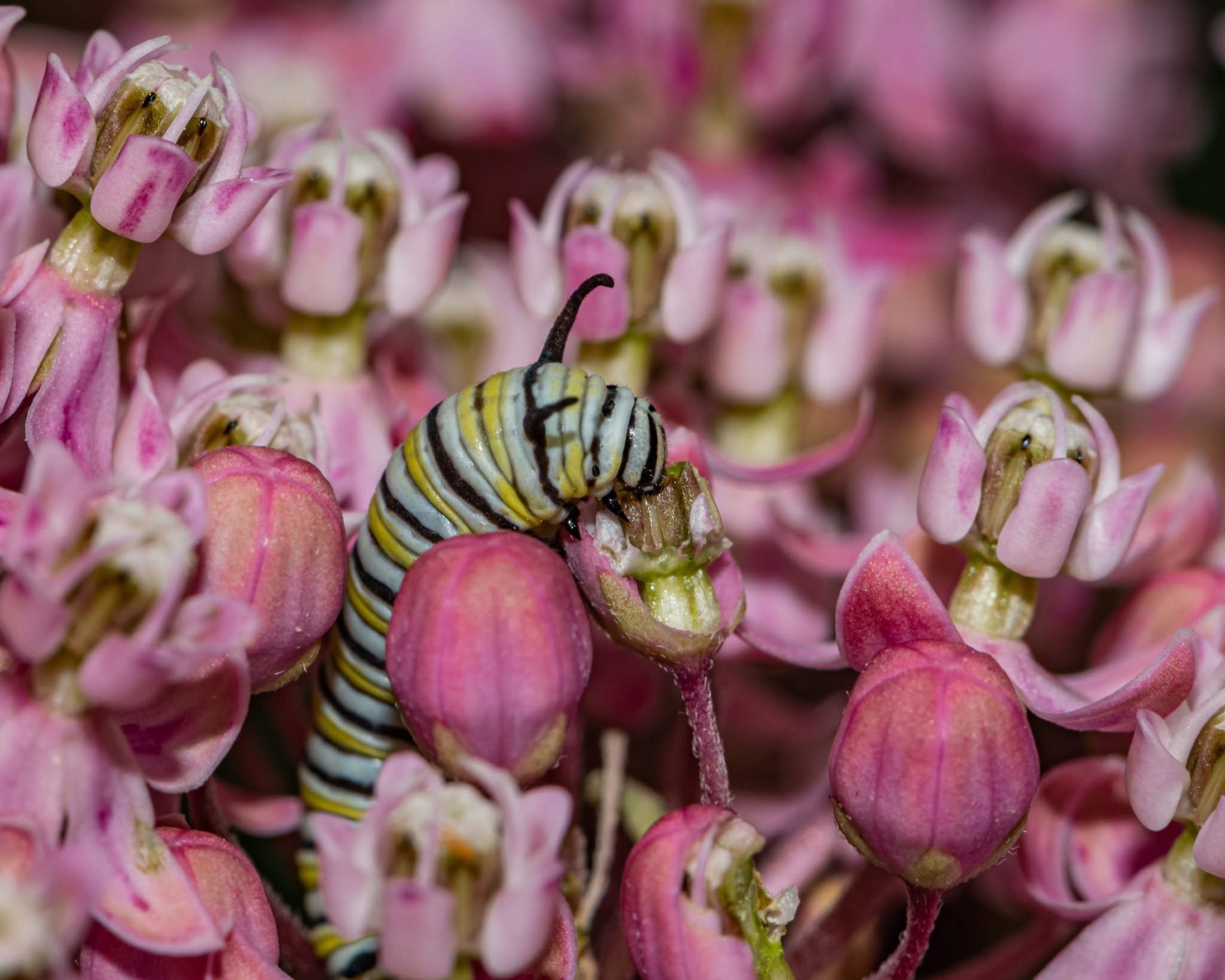 A Monarch Caterpillar on the flowers of a Swamp Milkweed Plant. Photo Credits: Bob Noble from The Ontario Native Plant Gardening Group on Facebook
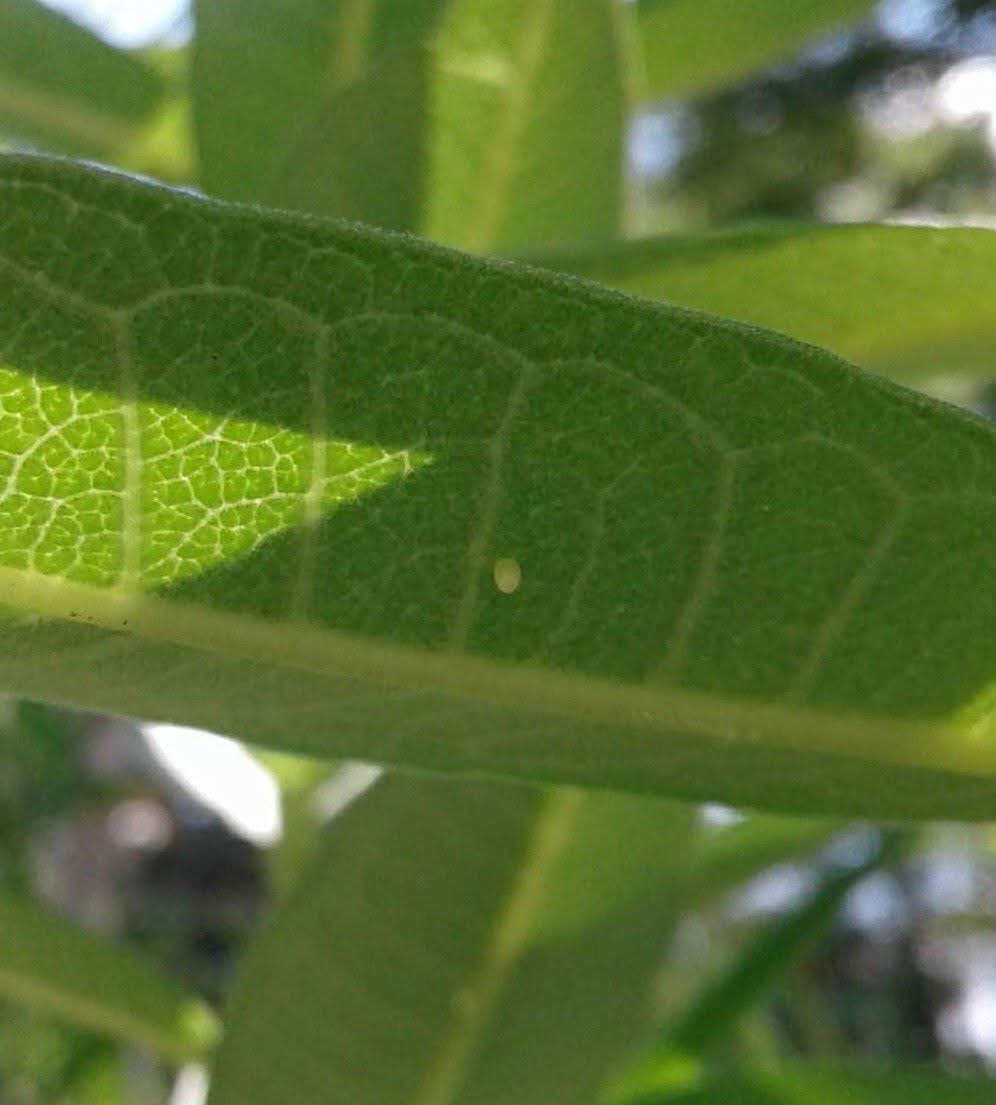 A Monarch Egg on the underside of a Common Milkweed leaf. Photo Credits: Jennifer Doolan from The Ontario Native Plant Gardening Group on Facebook
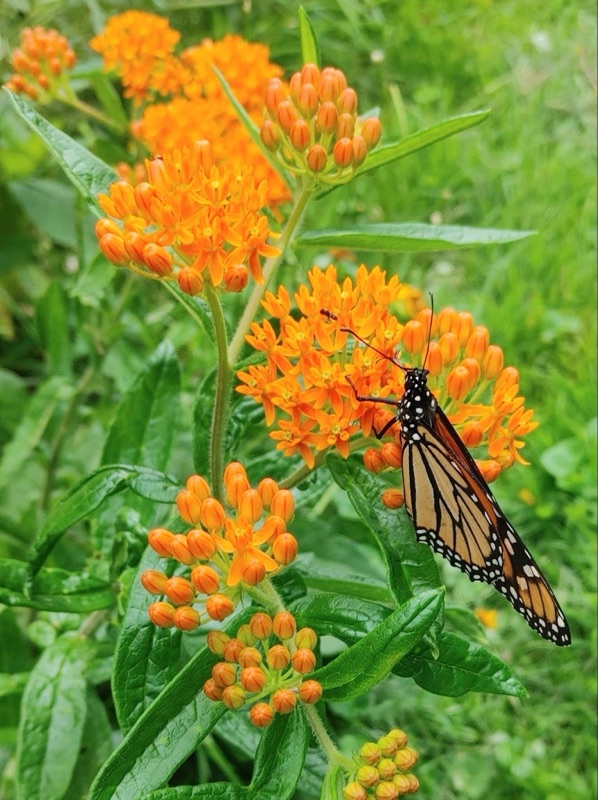
A Monarch Butterfly relaxing and sipping nectar on flowers of a Butterfly Weed Plant.
Photo Credits: Caroline Brekelmans from The Ontario Native Plant Gardening Group on Facebook
 Red Milkweed Beetle at the tip of a Common Milkweed leaf. Photo Credits: Nancy Steed Wilcox from The Ontario Native Plant Gardening Group on Facebook
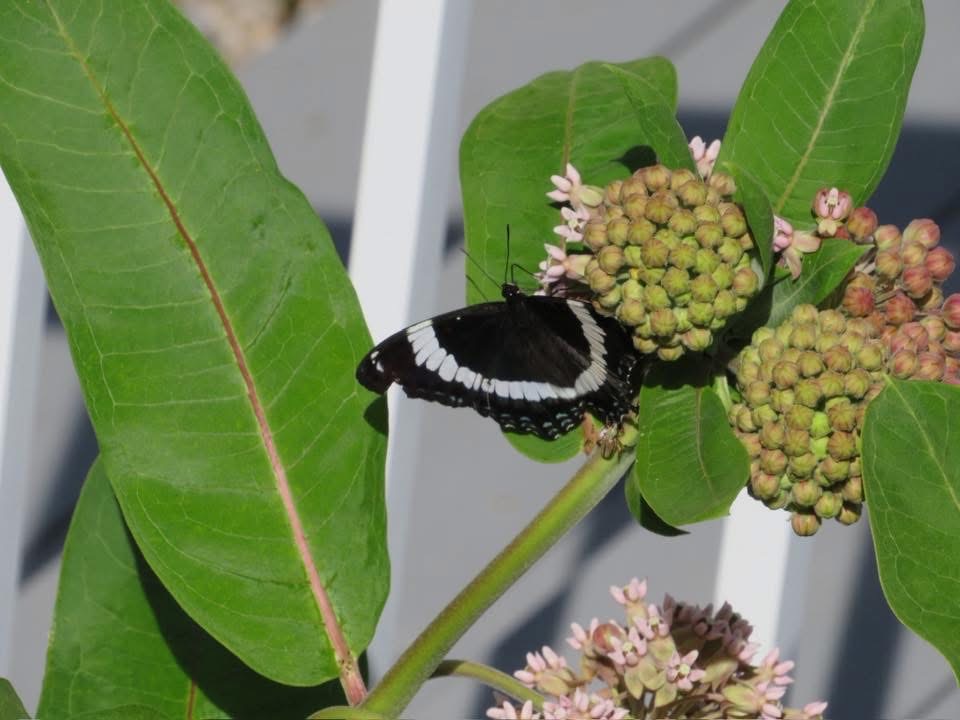 A White Admiral Butterfly on Common Milkweed flowers. Photo Credits: Pam Hiley from The Ontario Native Plant Gardening Group on Facebook
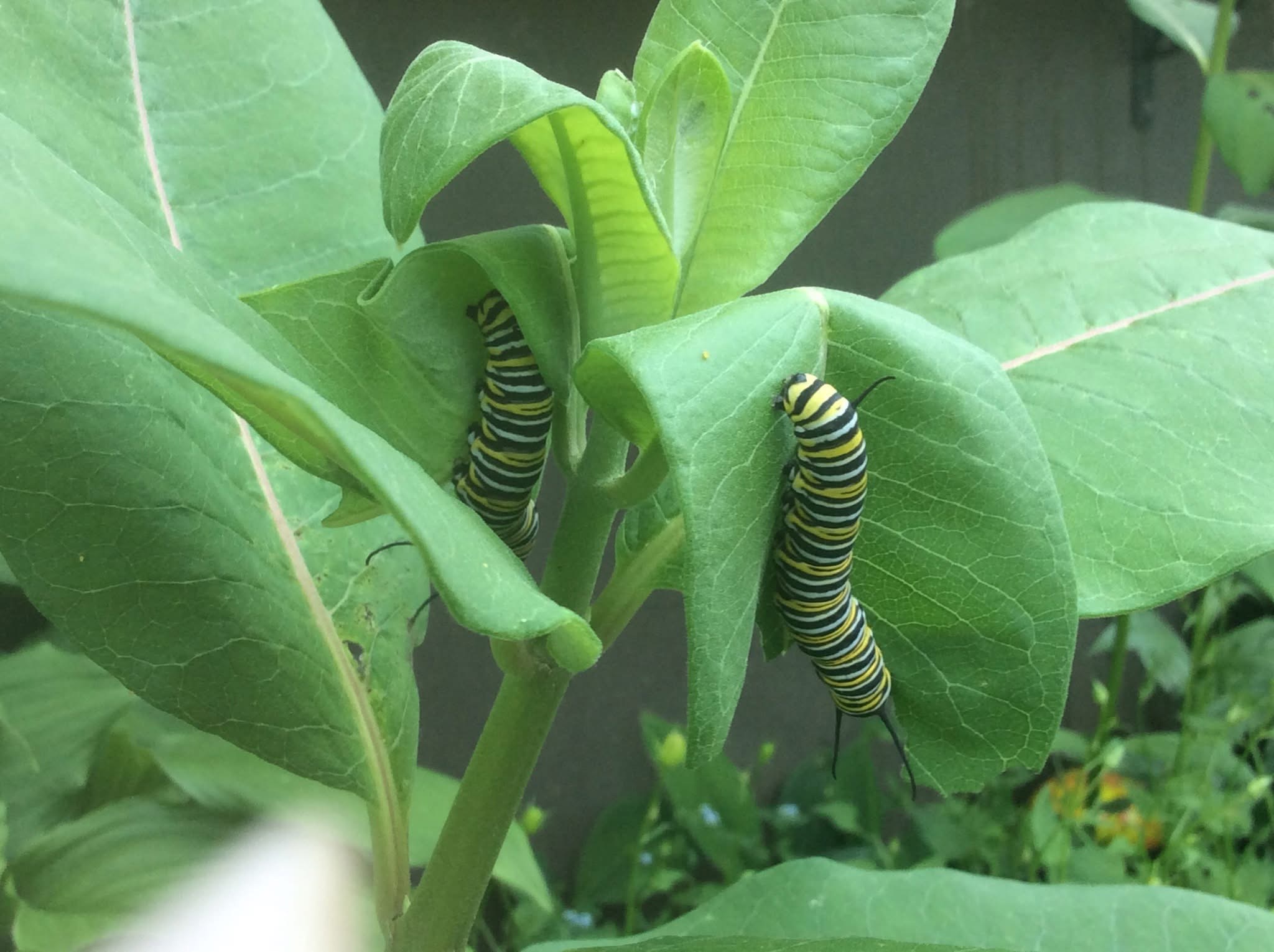 Two mature Monarch Caterpillars on Common Milkweed. Photo Credits: Lenore Marginet from The Ontario Native Plant Gardening Group on Facebook
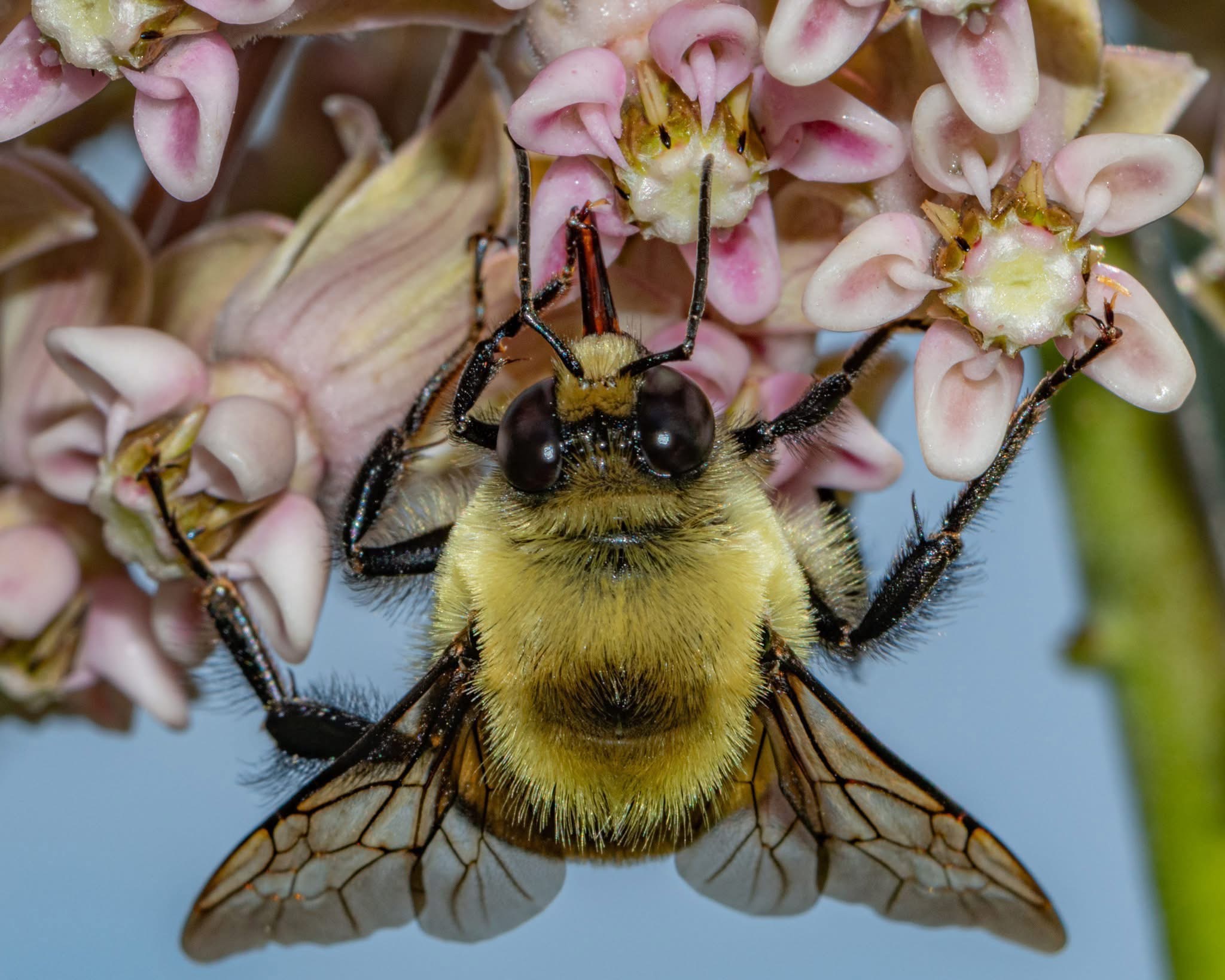 A Brown Belted Bumble Bee on Common Milkweed Flowers. Photo Credits: Bob Noble from The Ontario Native Plant Gardening Group on Facebook
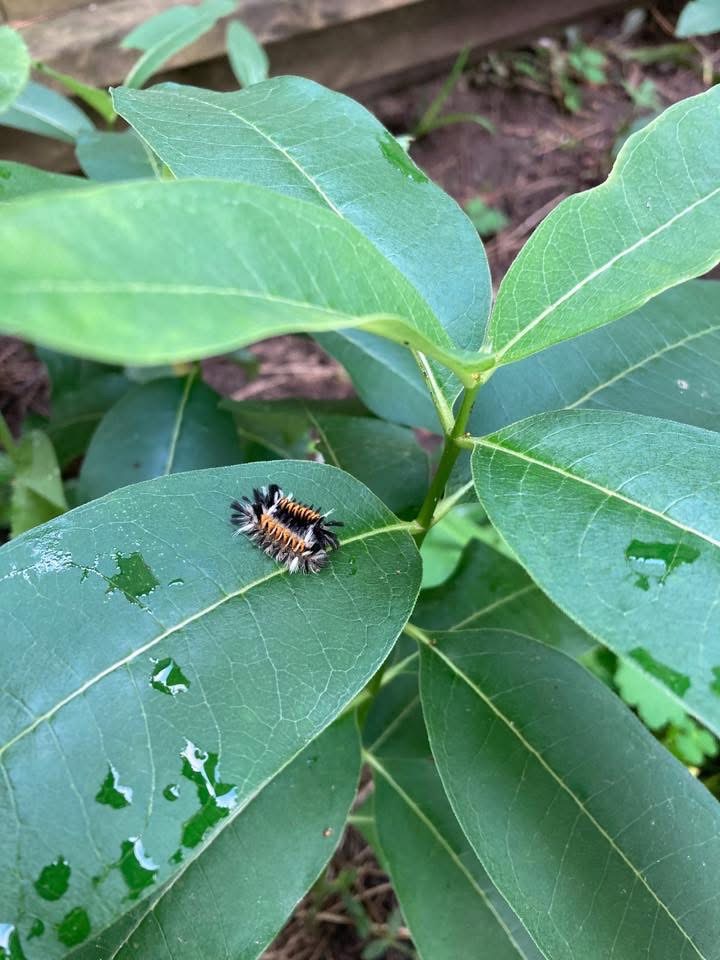 A mature Milkweed Tussock Moth Caterpillar on Common Milkweed. Photo Credits: Meridyth Wild from The Ontario Native Plant Gardening Group on Facebook
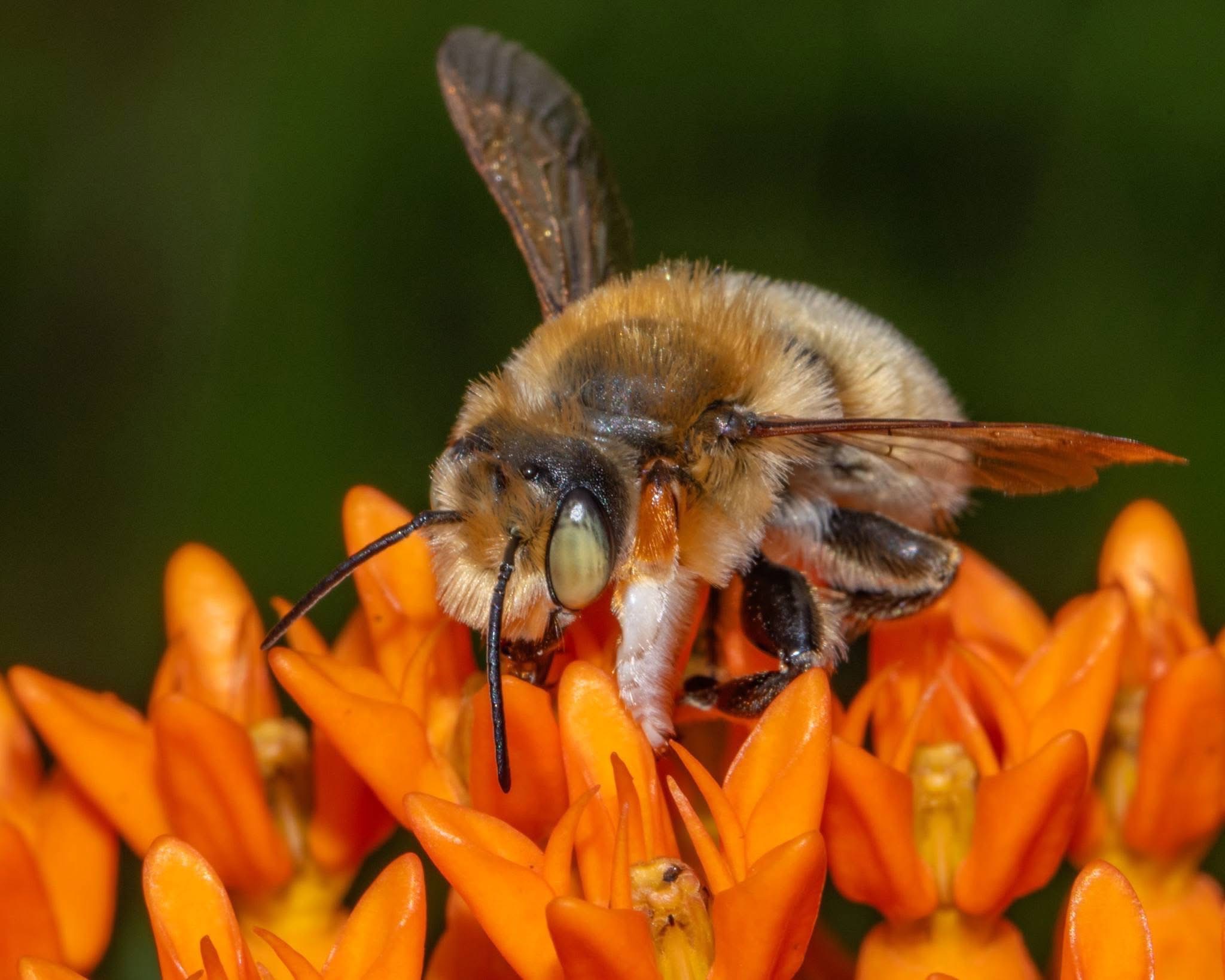 Broad - handed Leaf cutter Bee on Butterfly Milkweed flowers. Photo Credits: Bob Noble from The Ontario Native Plant Gardening Group on Facebook
The flowers on Milkweed plants attract a variety of pollinators such as bees, butterflies, wasps, pollinating flies, pollinating moths, fireflies, and even hummingbirds. Milkweed flowers are nectar rich blooms which provide both nectar and pollen for a lot of local pollinators.
By supporting pollinators milkweed enhances the health of surrounding plants and ecosystems.
The plant produces a toxic white sap that contains cardenolides that deter many herbivorous insects and animals.
It attracts ladybugs, lacewings, fireflies, and milkweed beetles which prey on common milkweed pests such as aphids, spider mites, whitefly, and thrips.
Provides food and shelter for a variety of insects and animals beyond the monarch butterfly.
Milkweed plants act as a host plant for the Monarch Butterfly, Milkweed Tussock Moth, Red Milkweed Beetle, Swamp Milkweed Leaf Beetle, Small Milkweed Bug, and Big Milkweed Bug. The females of the monarch butterfly and milkweed tussock moth lay their eggs on the foliage of milkweed plants, and once the eggs hatch into tiny hungry caterpillars the foliage becomes the only food source for them. Red Milkweed Beetles, Swamp Milkweed Leaf Beetle, Small Milkweed Bug, and Big Milkweed Bug feed on the foliage of various milkweed species because they need the toxins that milkweed produces just like the monarch butterfly and milkweed tussock moth.
Caterpillars of monarch butterflies and milkweed tussock moths feed on the leaves of various milkweed species, and the plant provides shelter during their metamorphosis.
Planting milkweed species helps combat the dramatic decline in monarch populations due to habitat loss and pesticide use.
After flowering milkweed species produce seed pods that help propagate the plant and sustain its presence. The seed pods provide an excellent food source for beneficial insects and small animals.
A variety of native bee species use the hollow stems of the old plant material from various milkweed species to overwinter or hibernate.
Various songbirds like the Baltimore Oriole use the plant fibres from various milkweed species for nesting material to protect their nests.
A Monarch Butterfly sipping nectar on the flowers of a Purple Milkweed Plant. Photo Credits: Lisa Massie from The Ontario Native Plant Gardening Group on Facebook
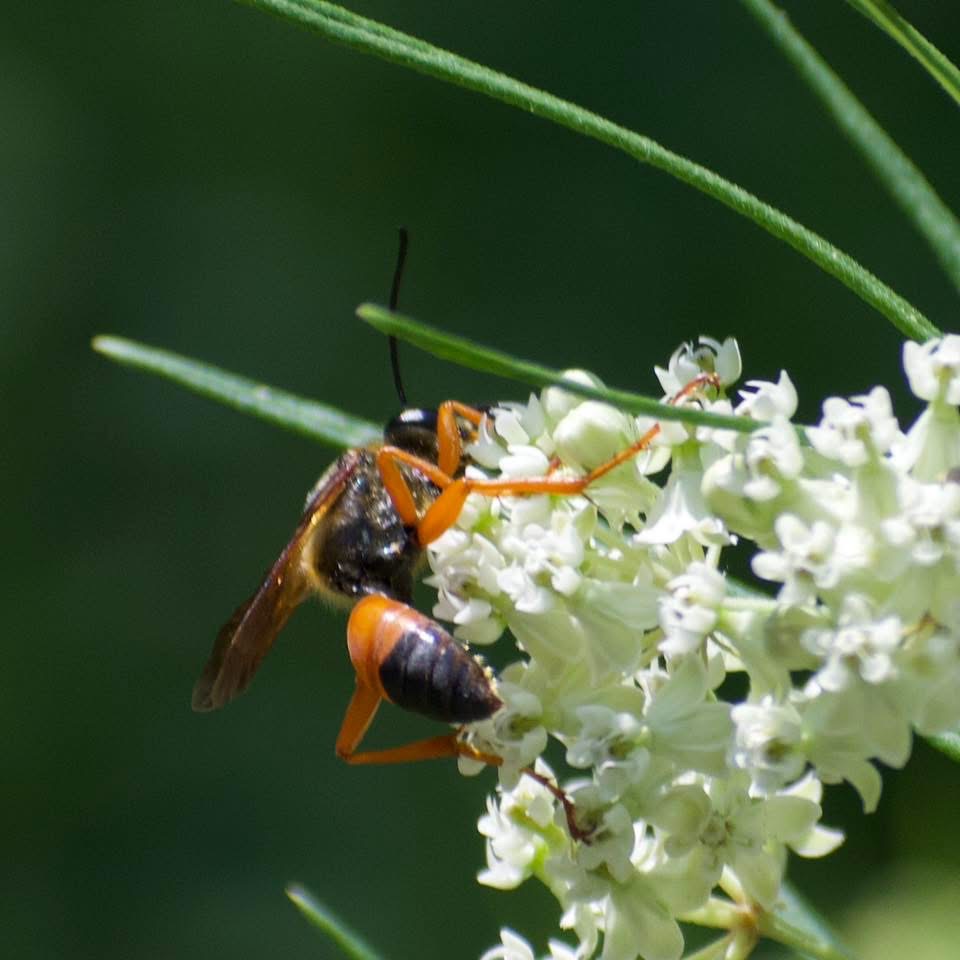
A Golden Digger Wasp pollinating the flowers on a Whorled Milkweed Plant. Photo Credits: Lisa Massie from The Ontario Native Plant Gardening Group on Facebook
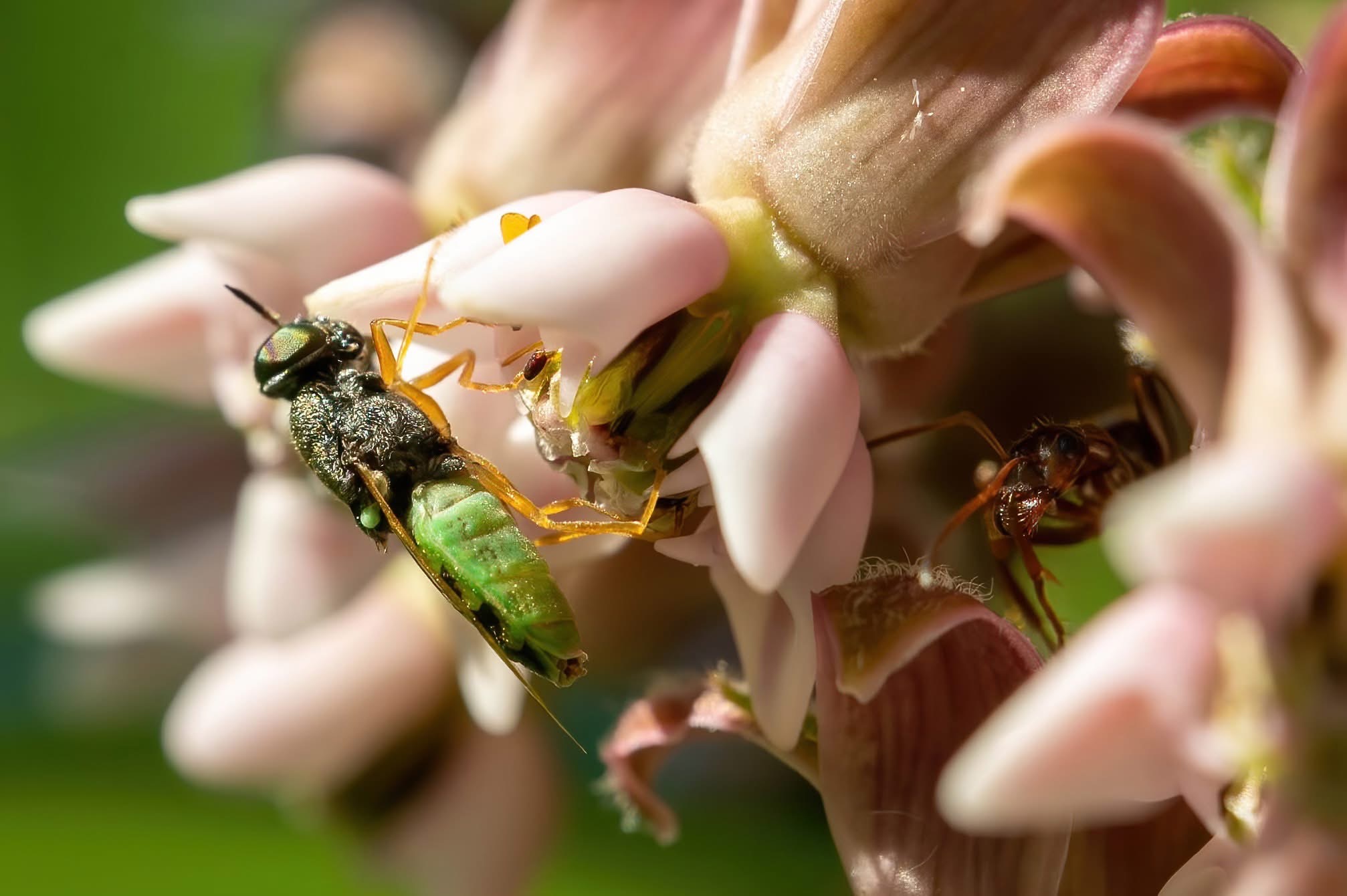
A Solider Fly and an Ant on the flowers of a Common Milkweed Plant. Photo Credits: Nancy Steed Wilcox from The Ontario Native Plant Gardening Group on Facebook
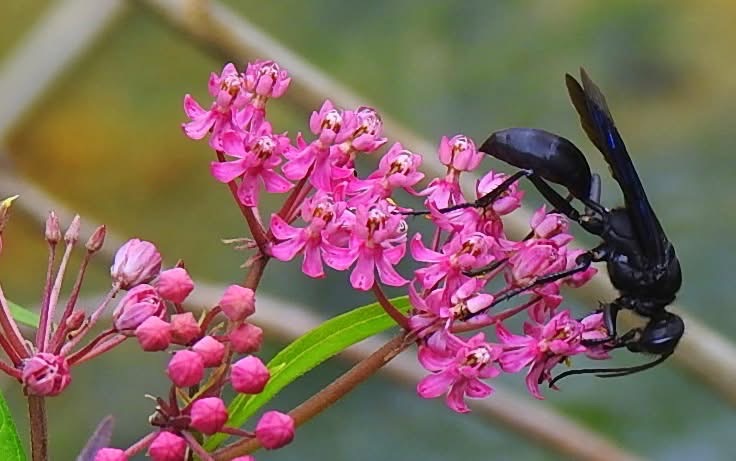
A Great Black Wasp sipping nectar from the flowers on a Swamp Milkweed Plant. Photo Credits: Alison Gauvin from The Ontario Native Plant Gardening Group on Facebook
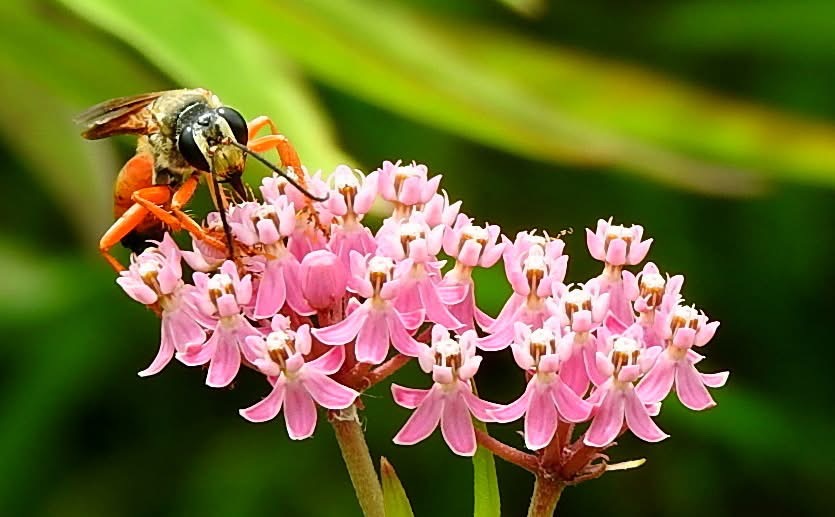
A Golden Digger Wasp sipping nectar from the flowers on a Swamp Milkweed Plant. Photo Credits: Alison Gauvin from The Ontario Native Plant Gardening Group on Facebook
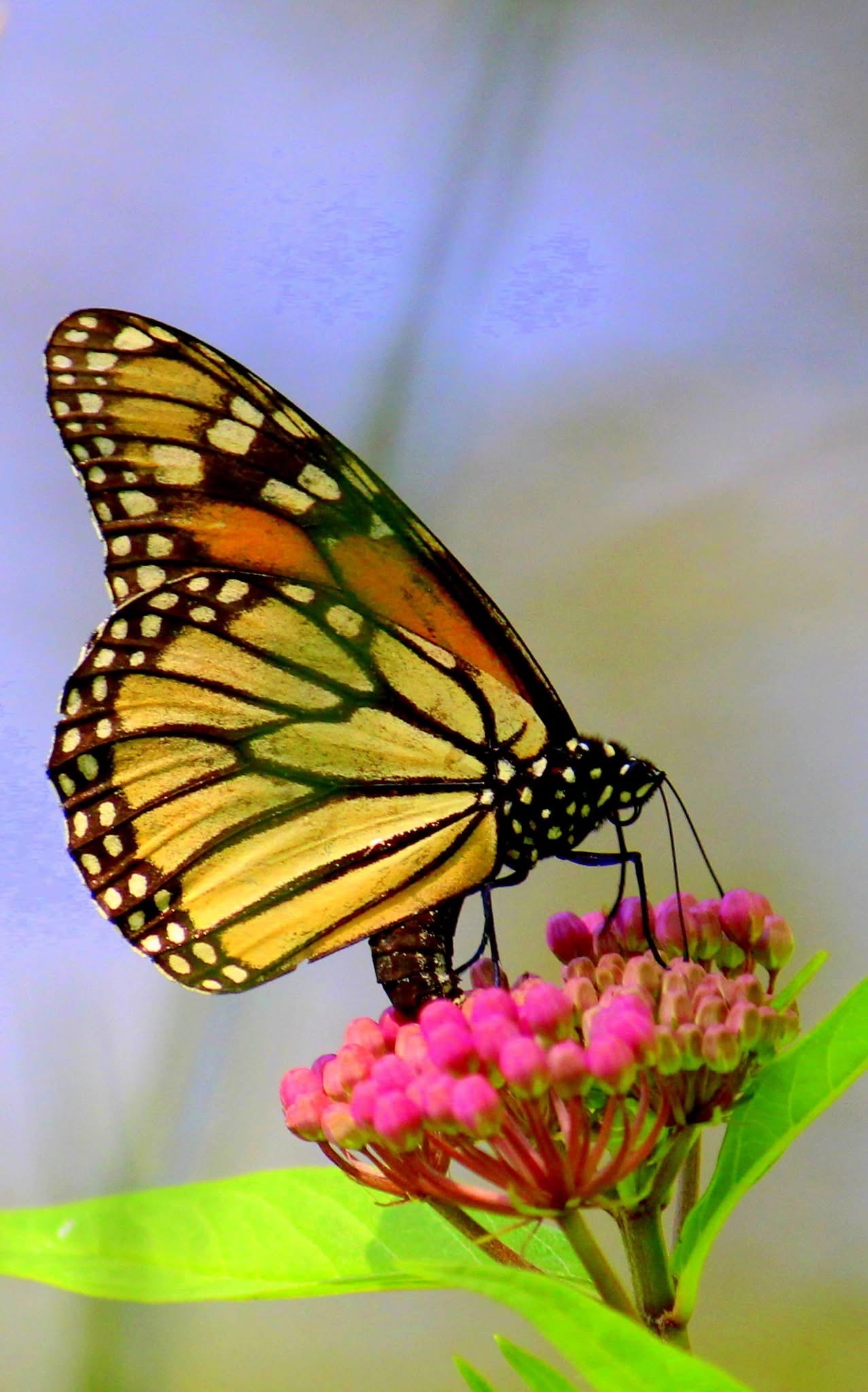
An up close view of a female Monarch Butterfly depositing her egg on the cluster of flower buds on a Swamp Milkweed Plant. Photo Credits: Alison Gauvin from The Ontario Native Plants Gardening Group on Facebook
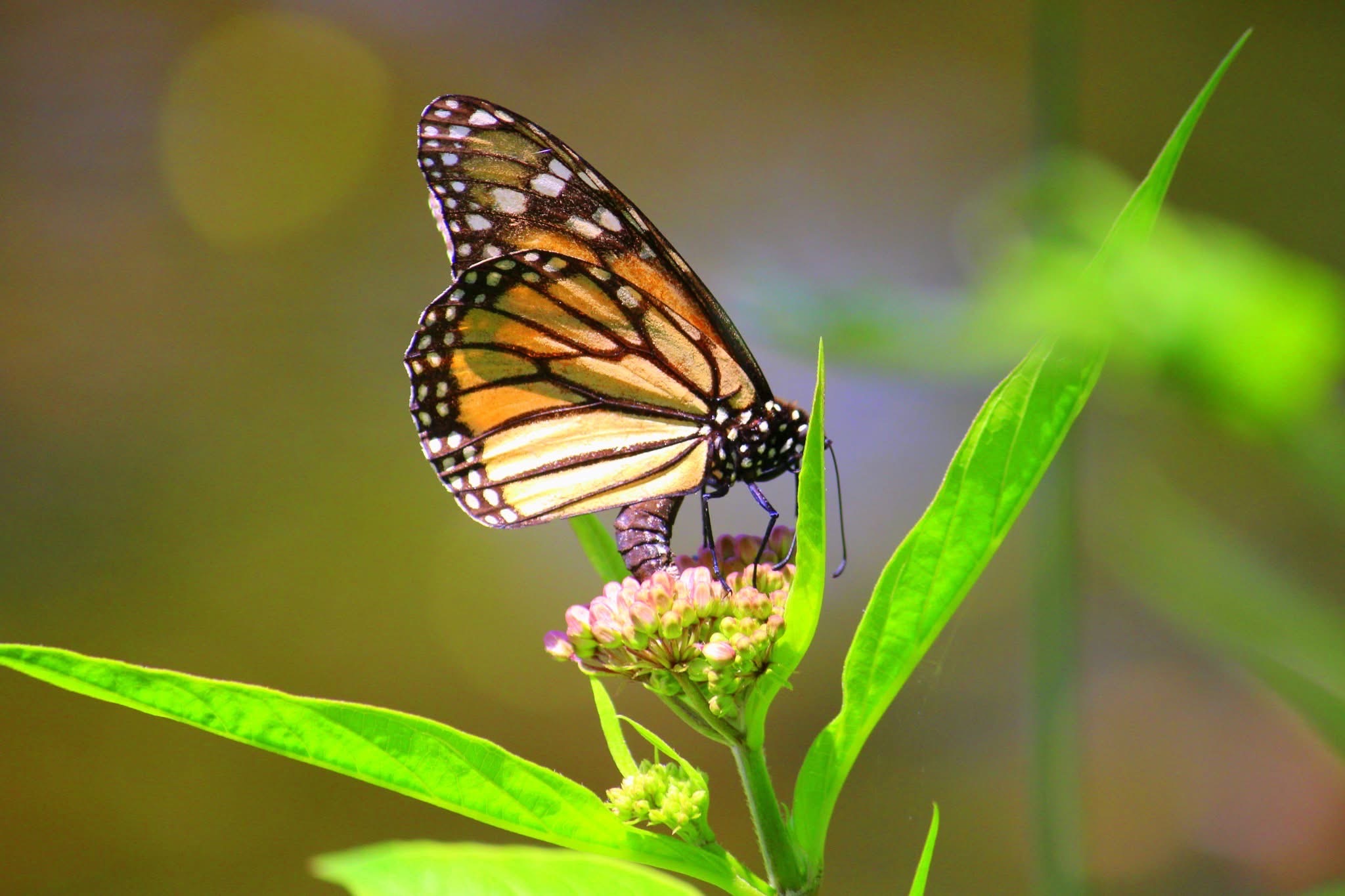
A female Monarch Butterfly laying an egg on Swamp Milkweed flower buds. Photo Credits: Alison Gauvin from The Ontario Native Plants Gardening Group on Facebook
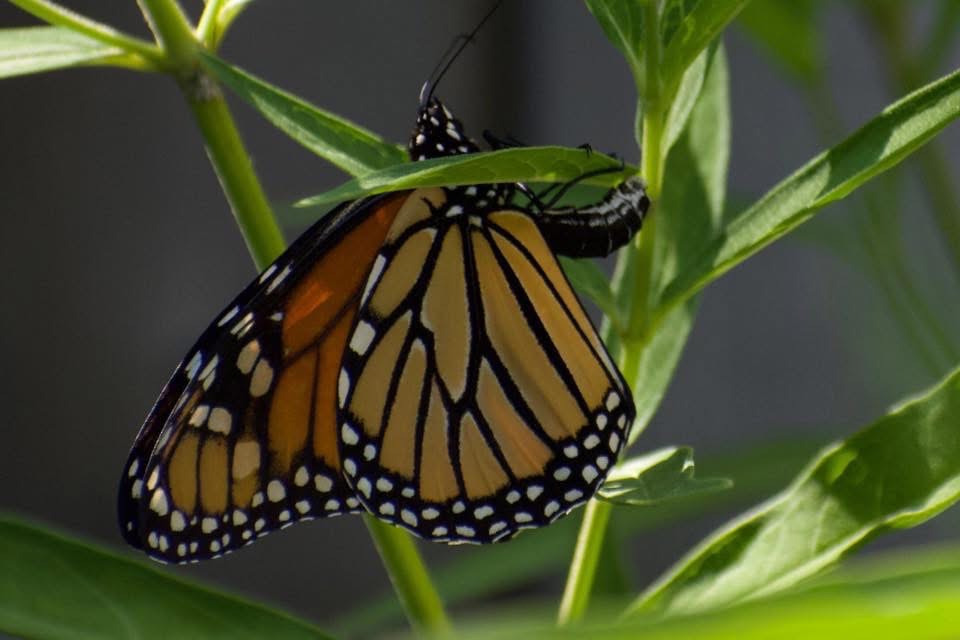
A female Monarch Butterfly depositing an egg on a leaf of a Milkweed Plant. Photo Credits: Lisa Massie from The Ontario Native Plants Gardening Gardening Group on Facebook
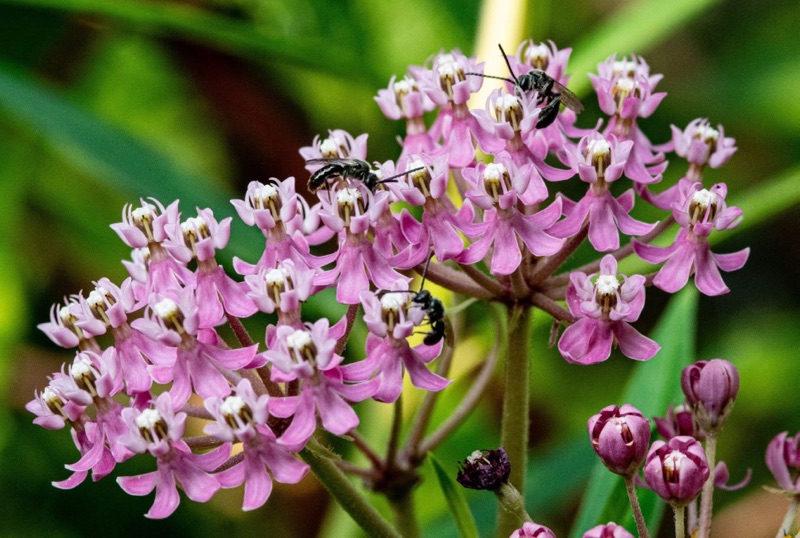
Small Carpenter Bees sipping nectar from the flowers on a Swamp Milkweed Plant. Photo Credits: Dave Keys (Christina Key’s Dad) from The Ontario Native Plant Gardening Group on Facebook

Three mature Monarch Caterpillars on the undersides of Common Milkweed leaves. Photo Credits: Pam Hiley from The Ontario Native Plants Gardening Group on Facebook
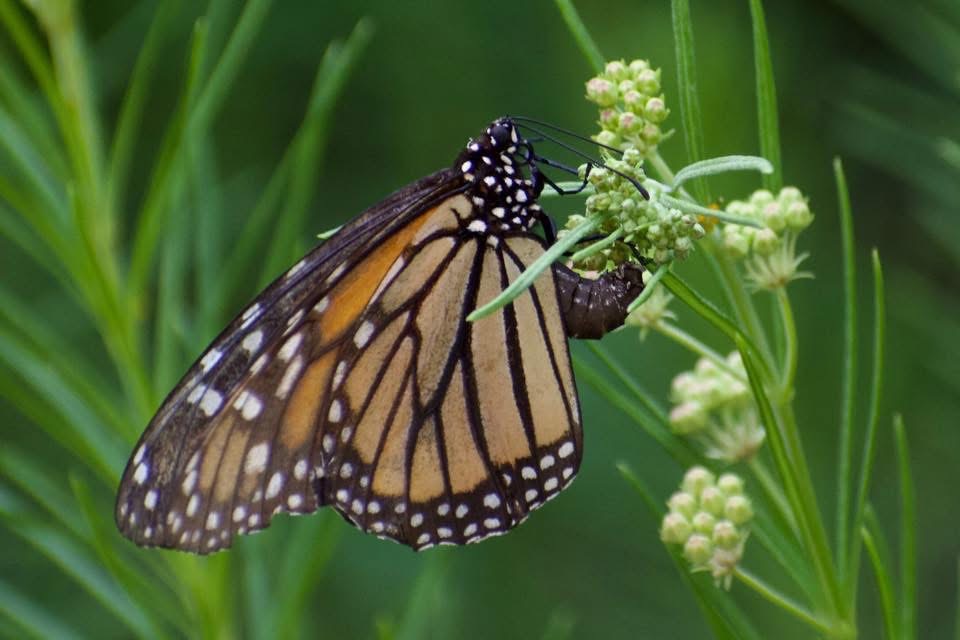
A female Monarch Butterfly depositing one of eggs on Whorled Milkweed. Photo Credits: Lisa Massie from The Ontario Native Plants Gardening Group on Facebook
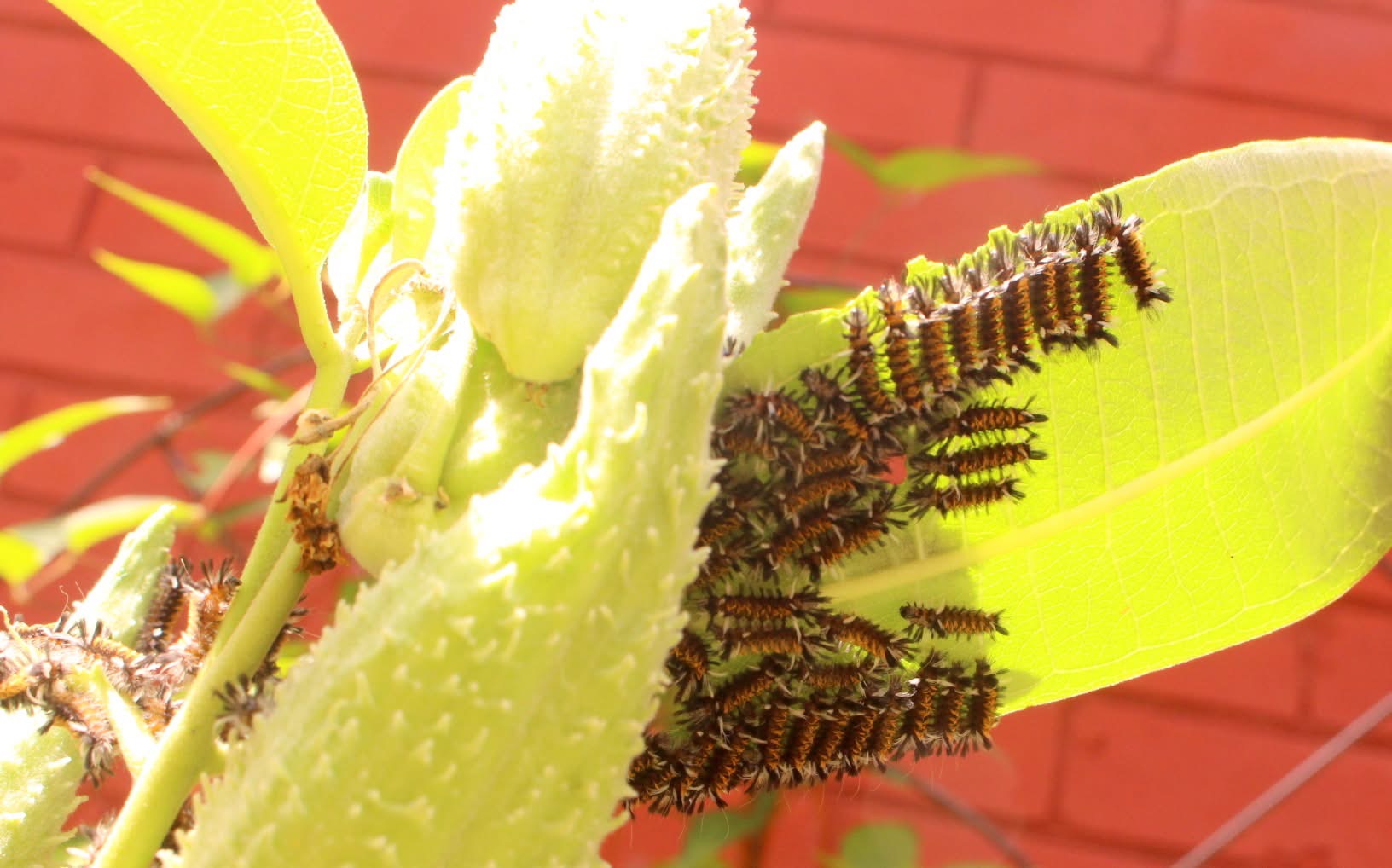
A large brood of Milkweed Tussock Moth Caterpillars on the underside of a Common Milkweed leaf. Photo Credits: Alison Gauvin from The Ontario Native Plants Gardening Group on Facebook
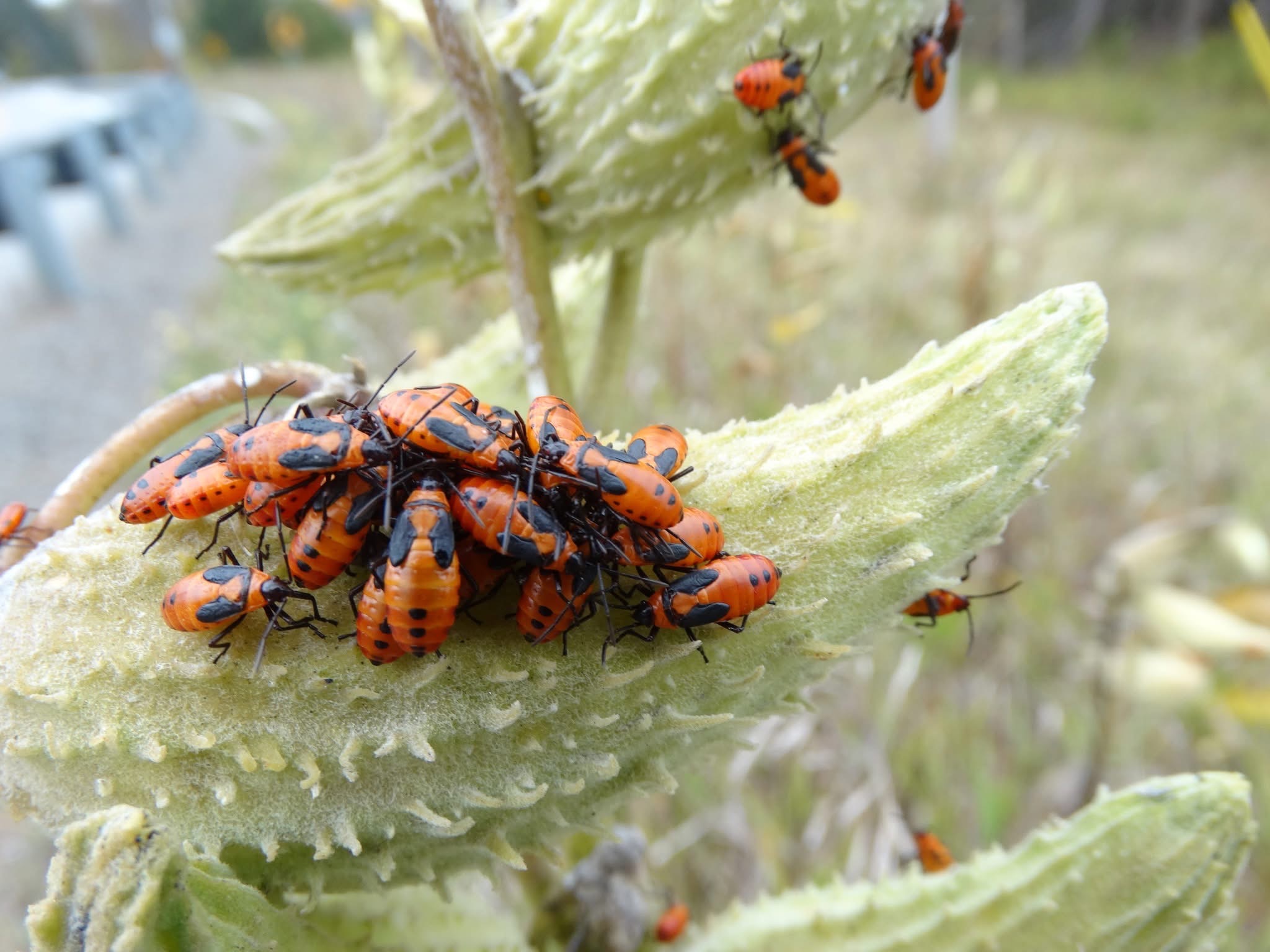
A small pile of Milkweed Bug’s Nymphs on a Common Milkweed Seed Pod. Photo Credits: Marlene Knezevich from The Ontario Native Plants Gardening Group on Facebook
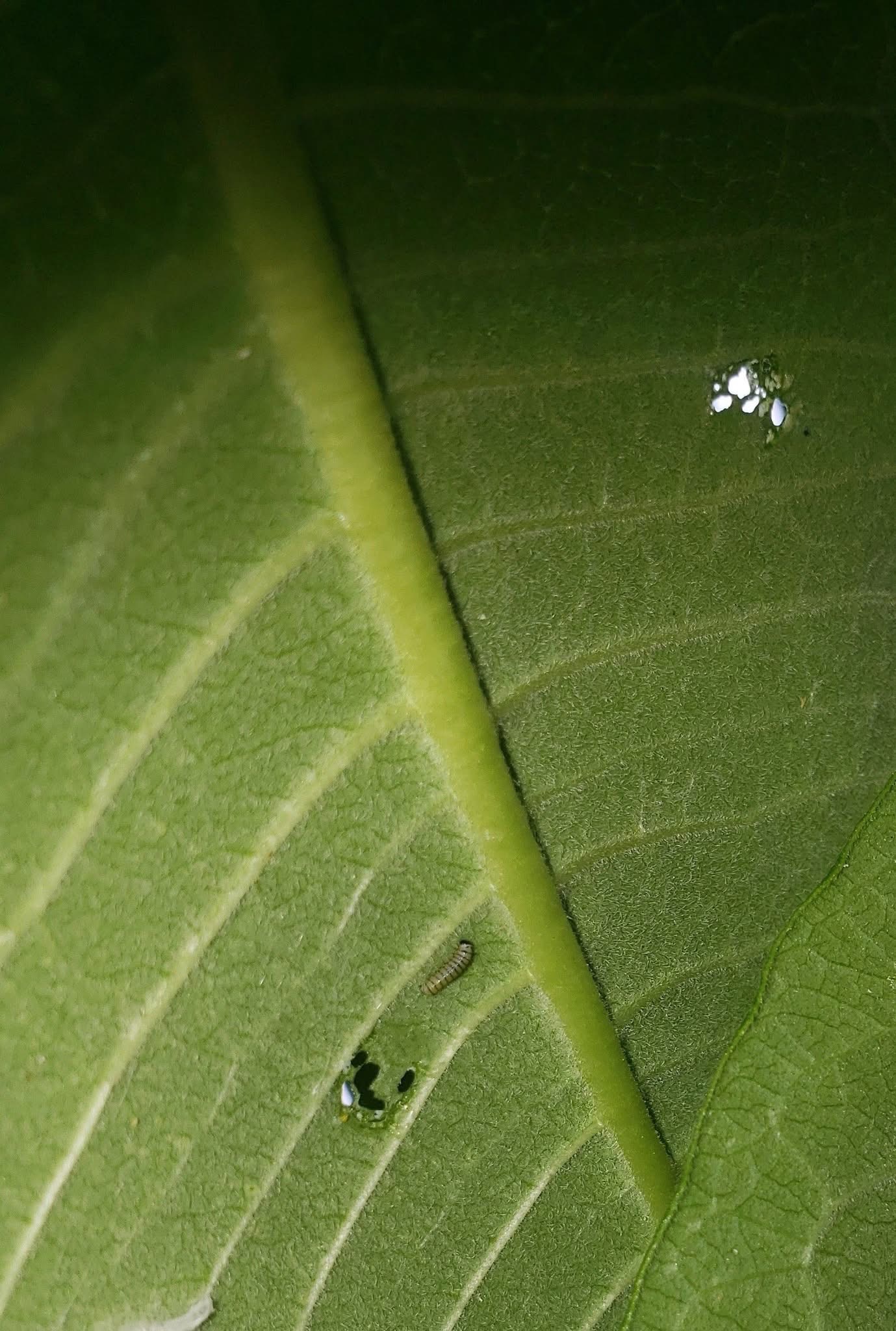
A baby Monarch Caterpillar on the underside of a Common Milkweed leaf. Photo Credits: Jennifer Doolan from The Ontario Native Plants Gardening Group on Facebook
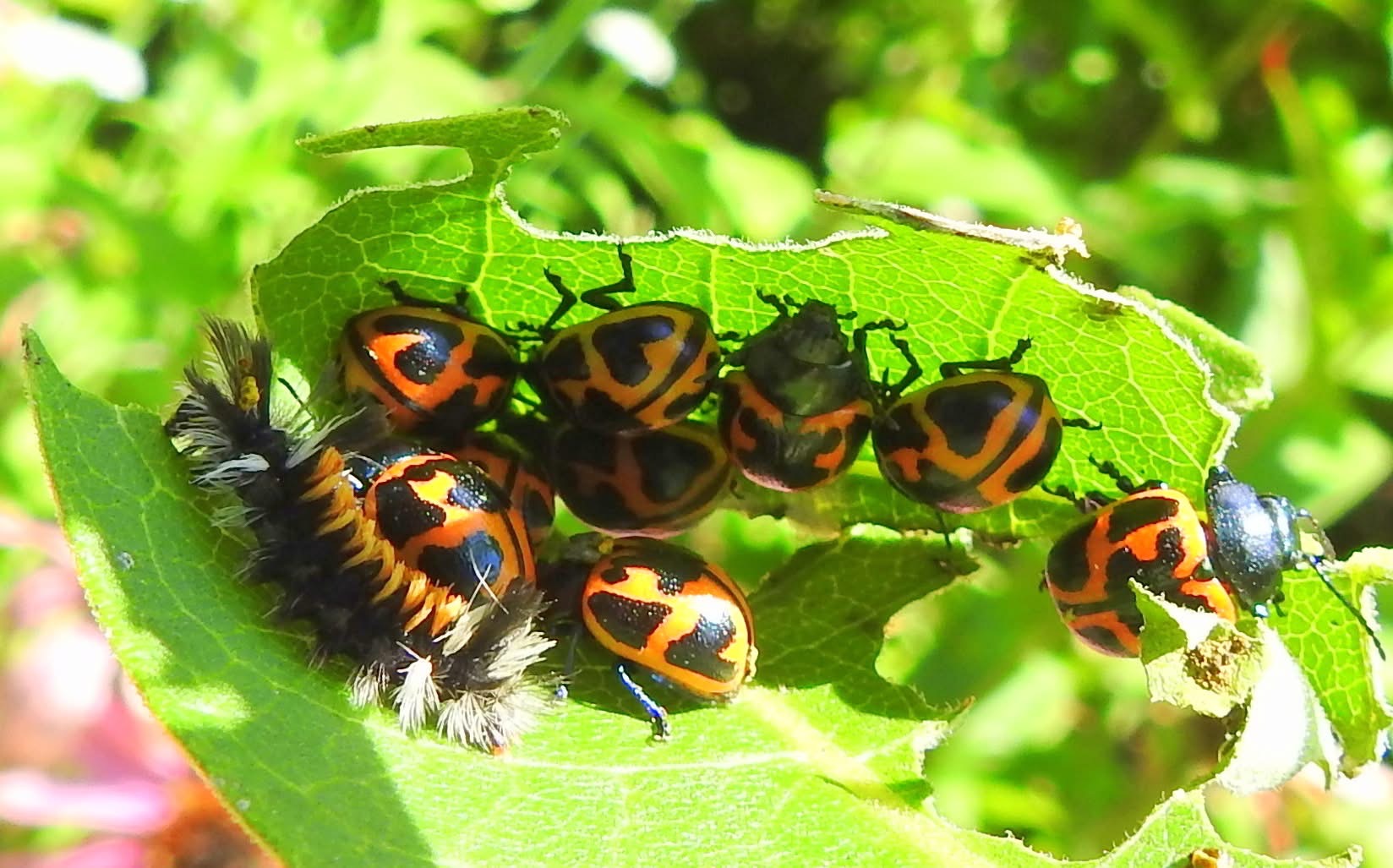
Nine mature Swamp Milkweed leaf Beetles and a mature Milkweed Tussock Moth Caterpillar all together on the underside of a chewed Common Milkweed leaf. Photo Credits: Alison Gauvin from The Ontario Native Plants Gardening Group on Facebook

A mature Monarch Caterpillar on the foliage of a Whorled Milkweed Plant. Photo Credits: Lisa Massie from The Ontario Native Plants Gardening Group on Facebook
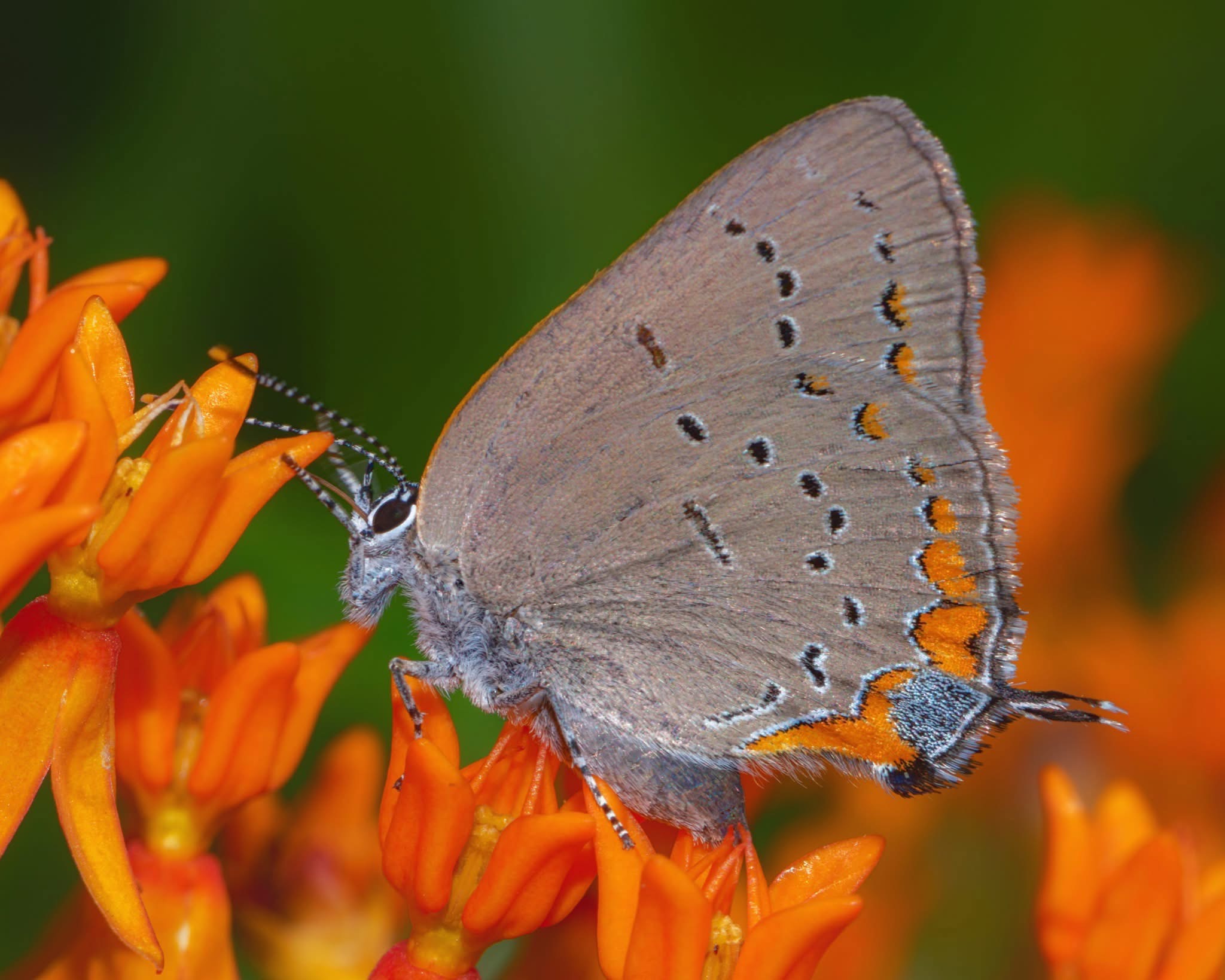
An Acadian Hairstreak resting on Butterfly Milkweed flowers. Photo Credits: Bob Noble from The Ontario Native Plants Gardening Group on Facebook
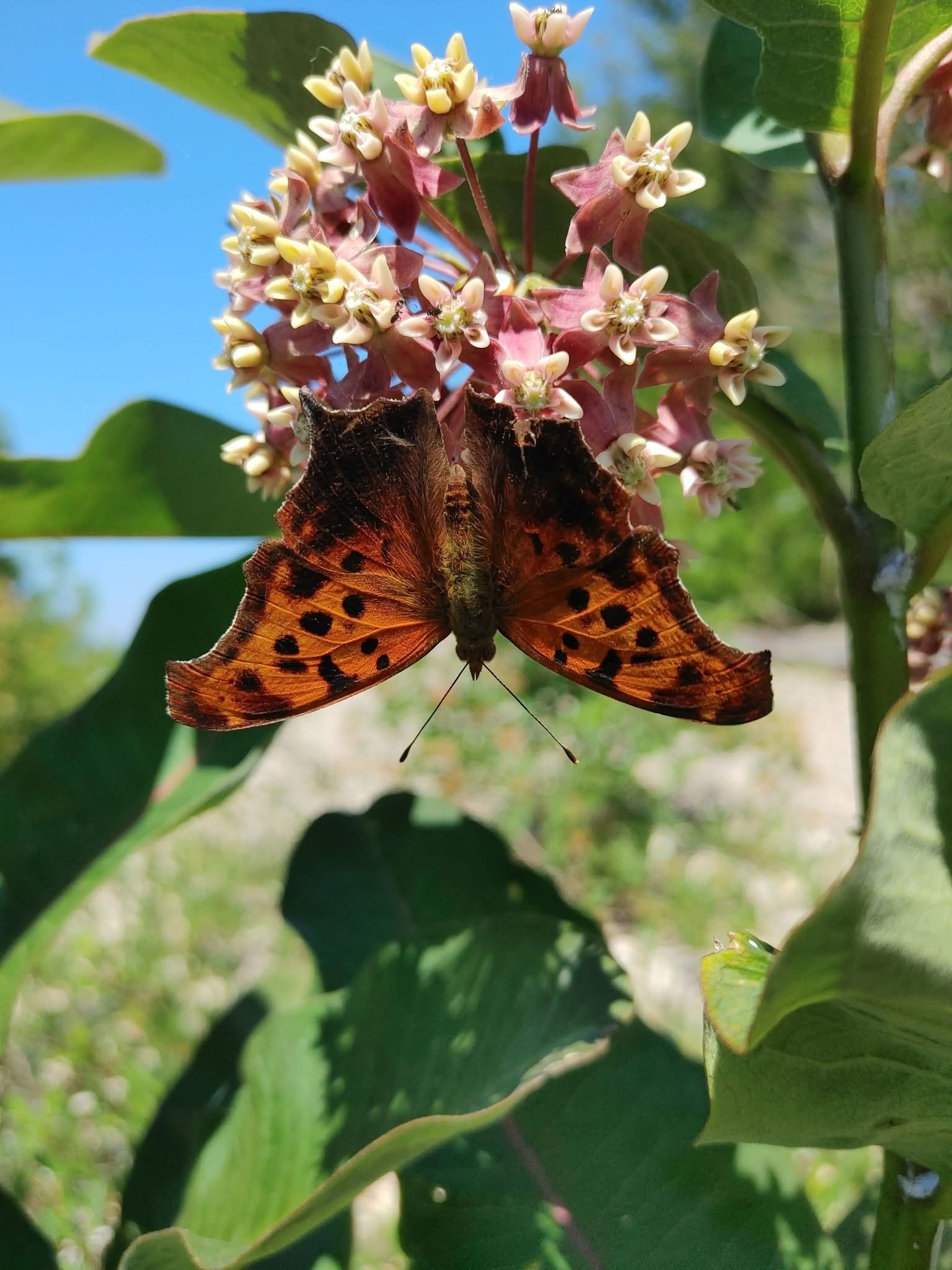
A Question Mark Butterfly on a Common Milkweed flower. Photo Credits: Caroline Breklemans from The Ontario Native Plants Gardening Group on Facebook
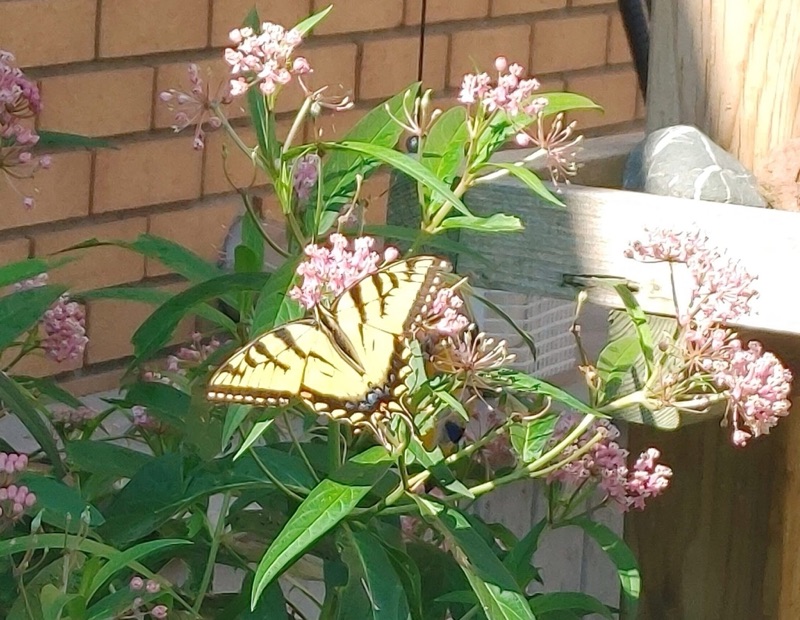
A Tiger Swallowtail Butterfly on a Swamp Milkweed Plant. Photo Credits: Caroline Breklemans from The Ontario Native Plants Gardening Group on Facebook
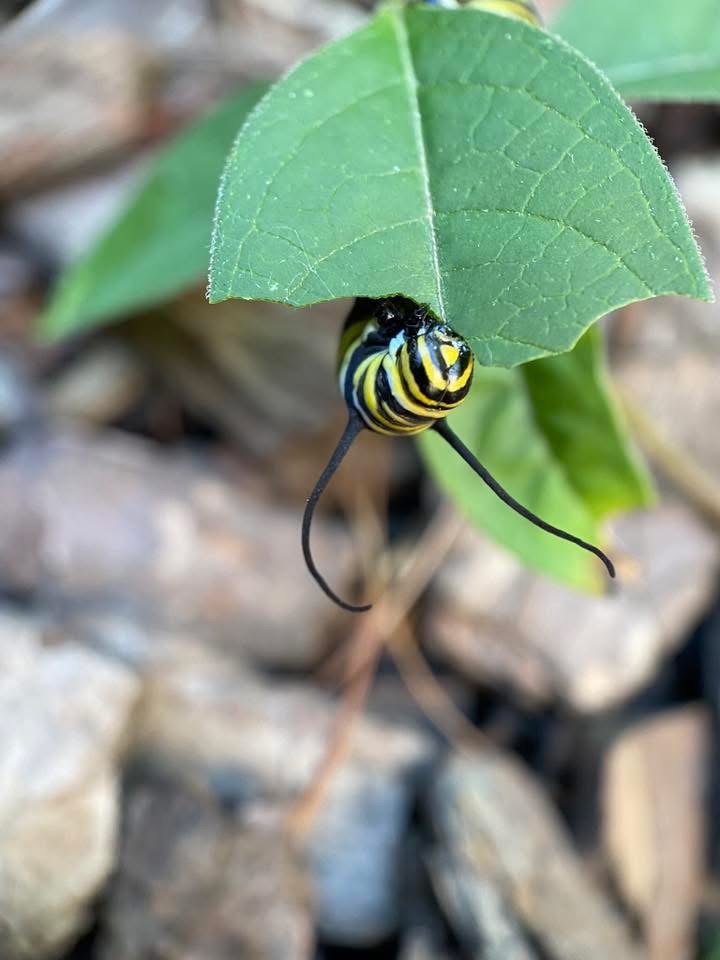
A mature Monarch Caterpillar munching away on a Milkweed leaf. Photo Credits: Lisa Massie from The Ontario Native Plants Gardening Group on Facebook
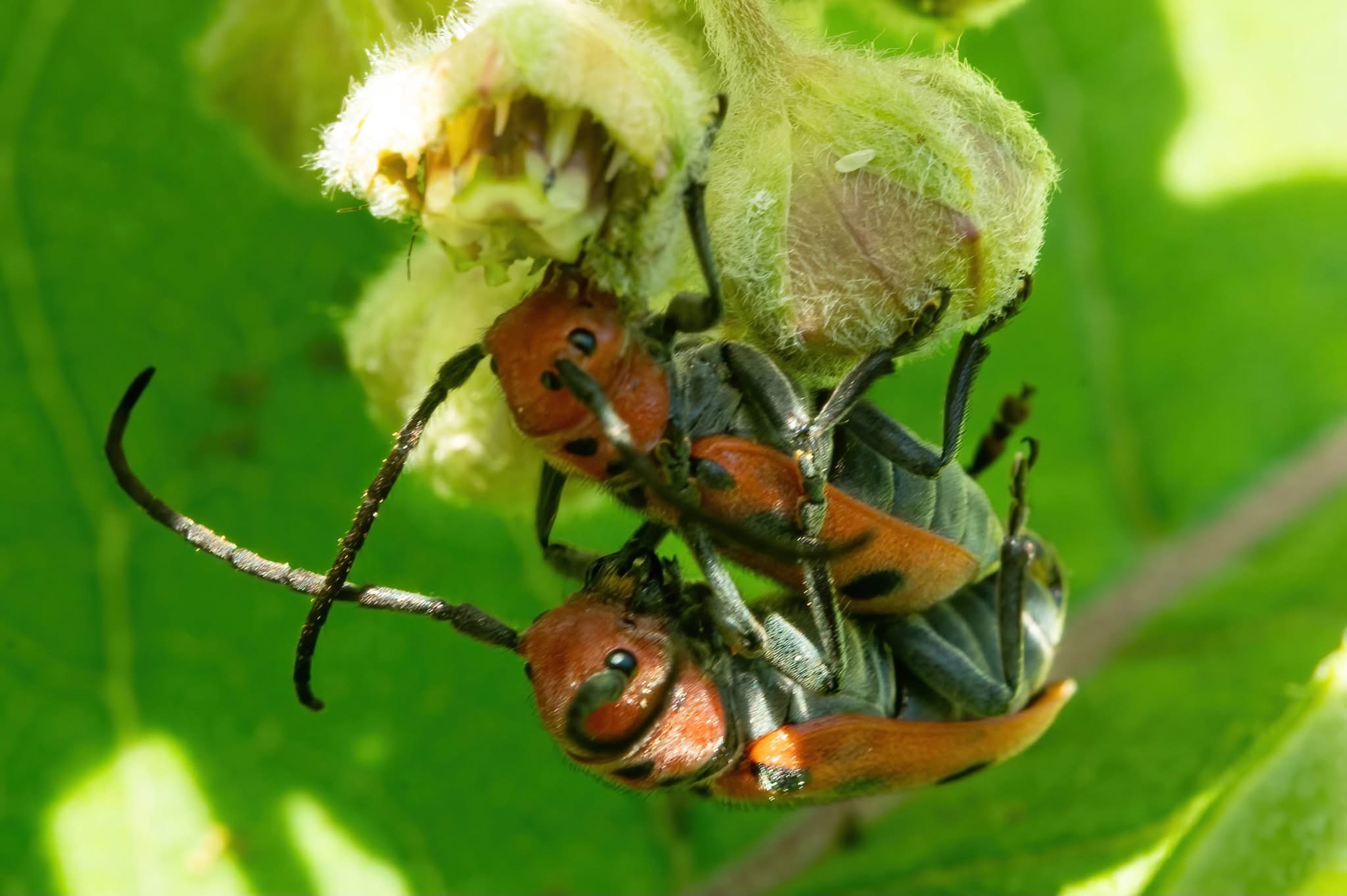
A mating pair of Red Milkweed Beetles on a cluster of Milkweed Flower Buds. Photo Credits: Nancy Steed Wilcox from The Ontario Native Plants Gardening Group on Facebook
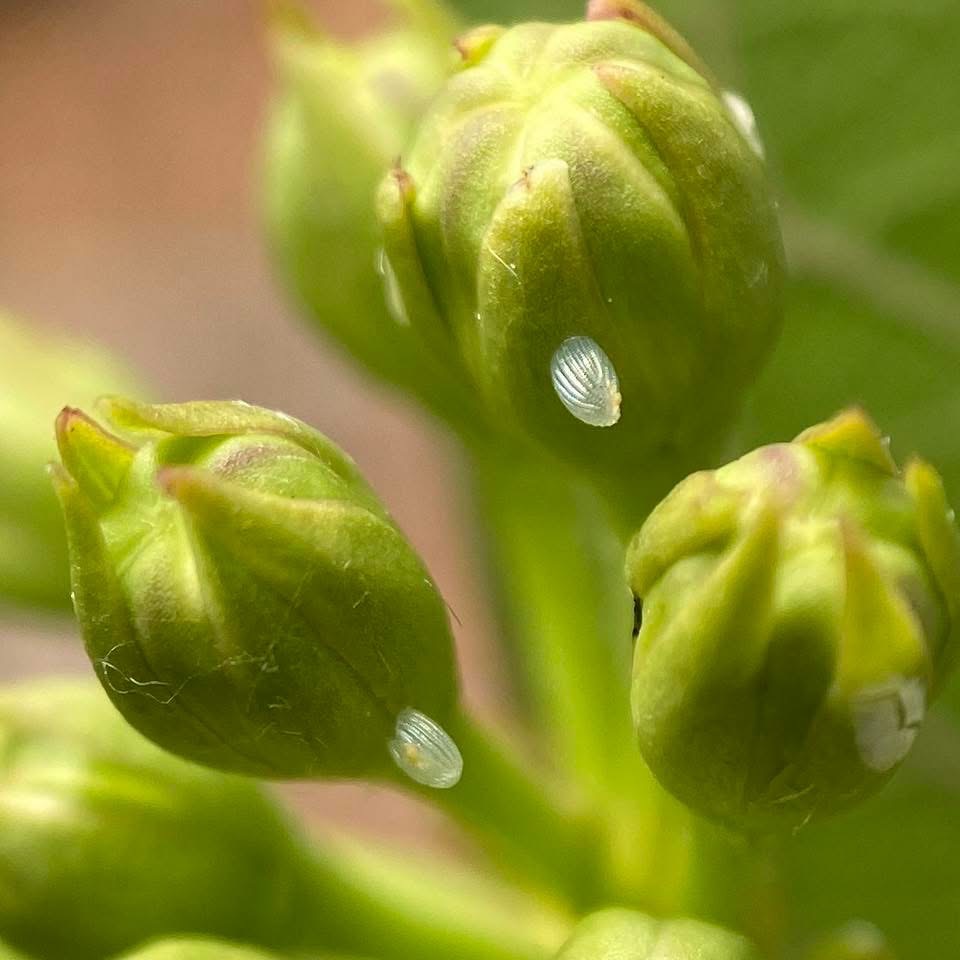
Two Monarch Butterfly eggs on Milkweed Flower Buds
Photo Credits: Lisa Massie from The Ontario Native Plants Gardening Group on Facebook
An up close view of two Monarch eggs on Milkweed Flower Buds. Photo Credits: Lisa Massie from The Ontario Native Plants Gardening Group on Facebook
🌿 In Conclusion: Plant Power With Purpose
If you’re in Ontario, planting native milkweed isn’t just a garden upgrade it’s a bold act of conservation. Species like Common Milkweed, Swamp Milkweed, and Butterfly Milkweed thrive in local soil and climate, offering a lifeline to monarchs and a feast for pollinators.
These vibrant, low maintenance plants turn any backyard into a buzzing sanctuary of life. So why not let your garden be more than beautiful, let it be meaningful. Plant milkweed, and watch your yard become a haven where butterflies are born and biodiversity blossoms.
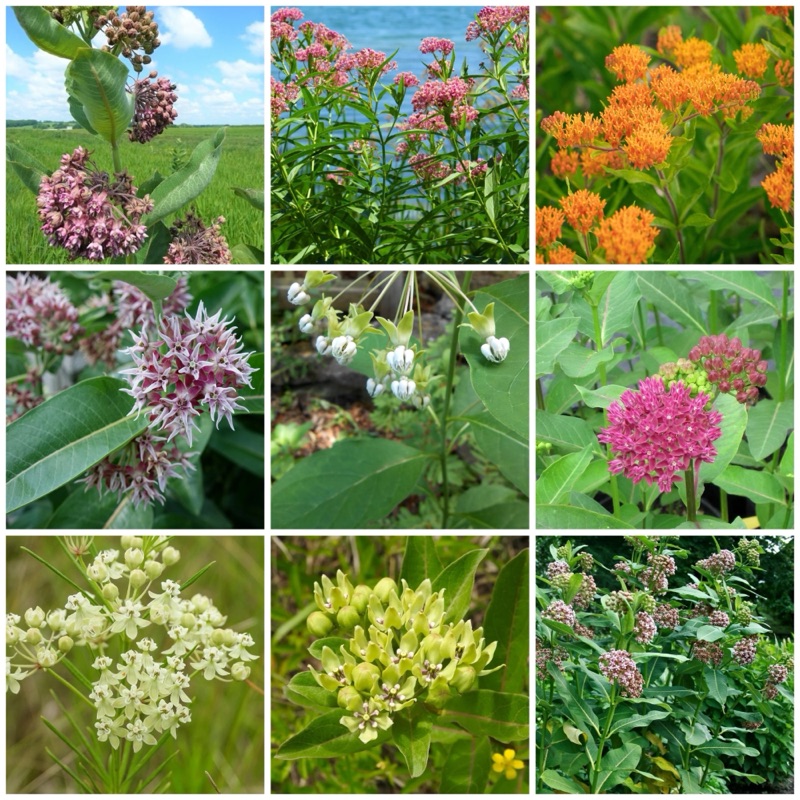 Photo Credits: Nature Hills Nursery, Ecoseedbank, Not So Hollow Farm, Vermont Wildflower Farm, IRONWEED NATIVE PLANT NURSERY, HIGH COUNTRY Gardens, Joyful Butterfly, and Ferri Seeds.
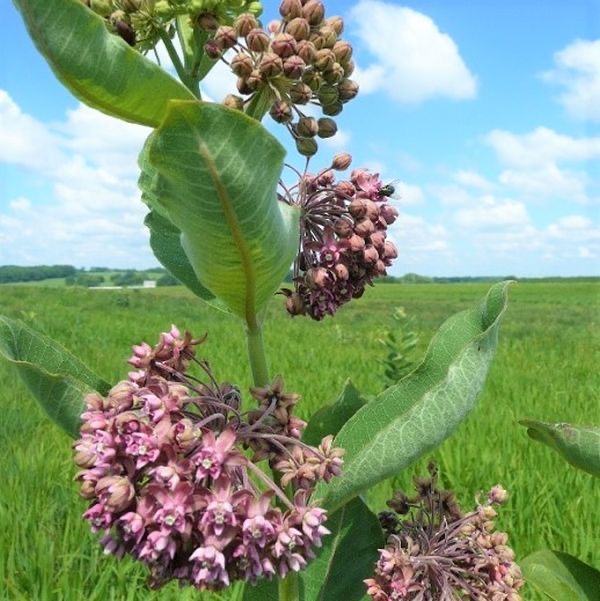
Photo Credits: Nature Hills Nursery
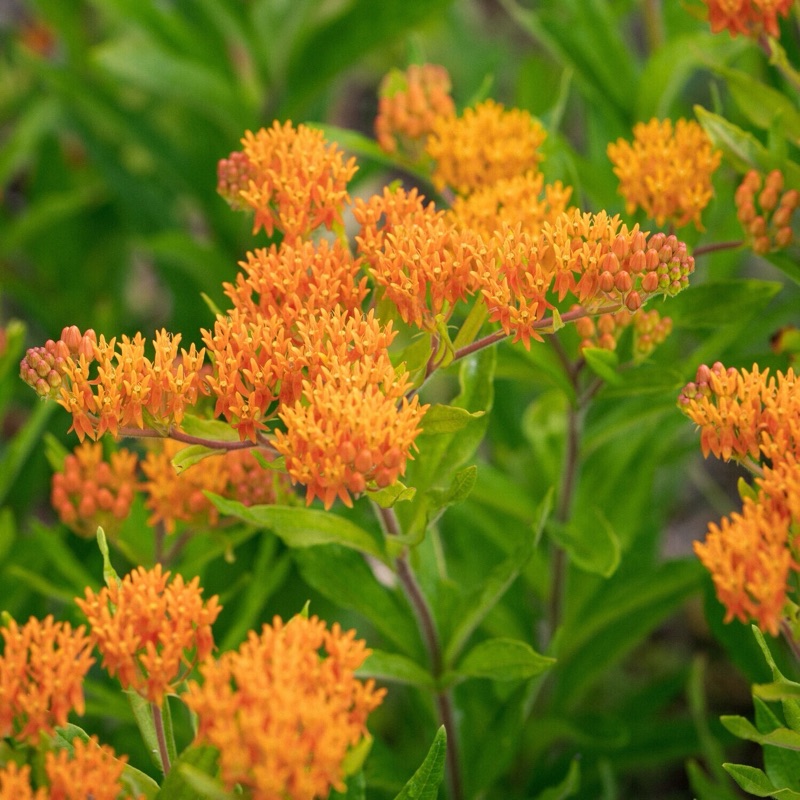
Photo Credits: Ecoseedbank
Photo Credits: Not So Hollow Farm
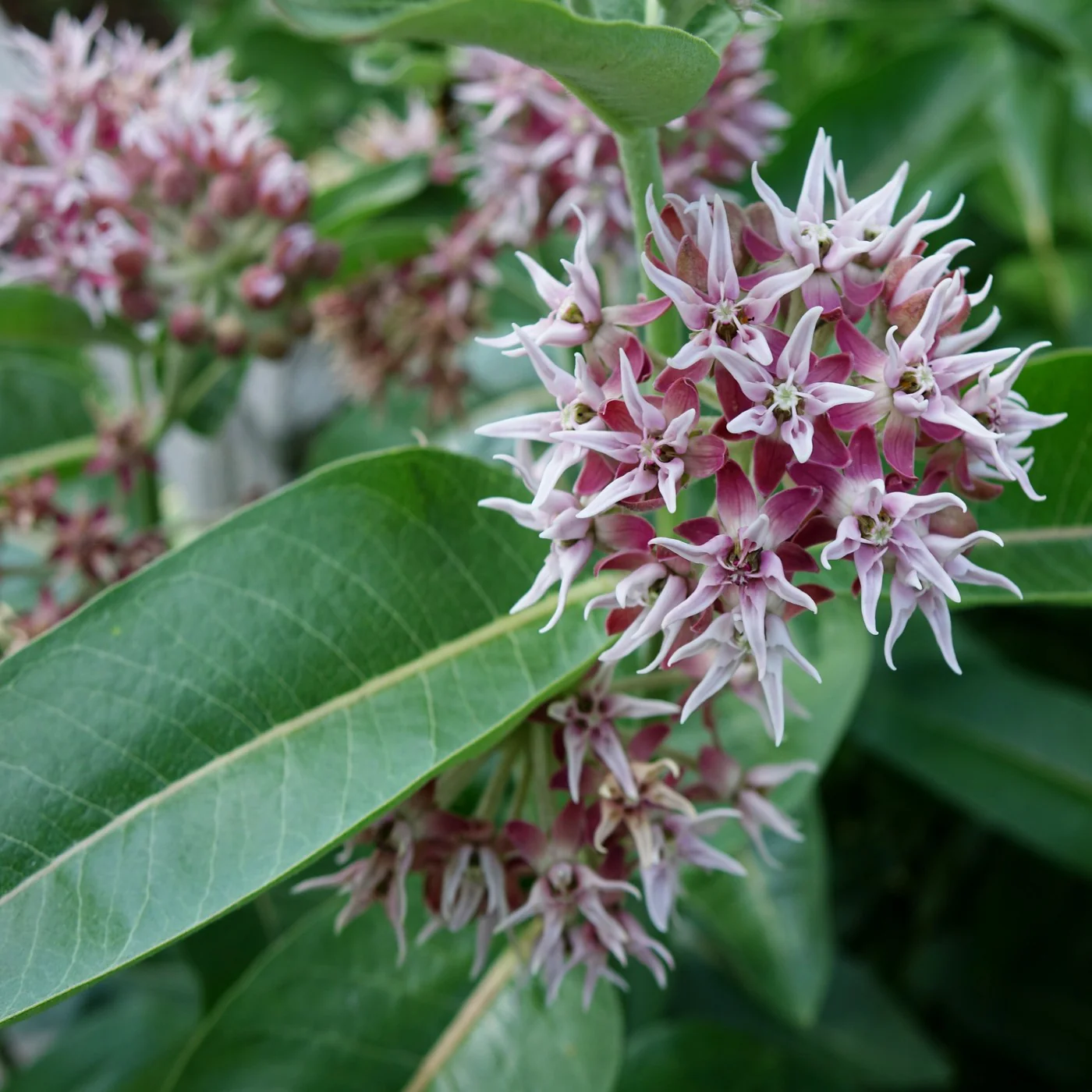
Photo Credits: Vermont Wildflower Farm
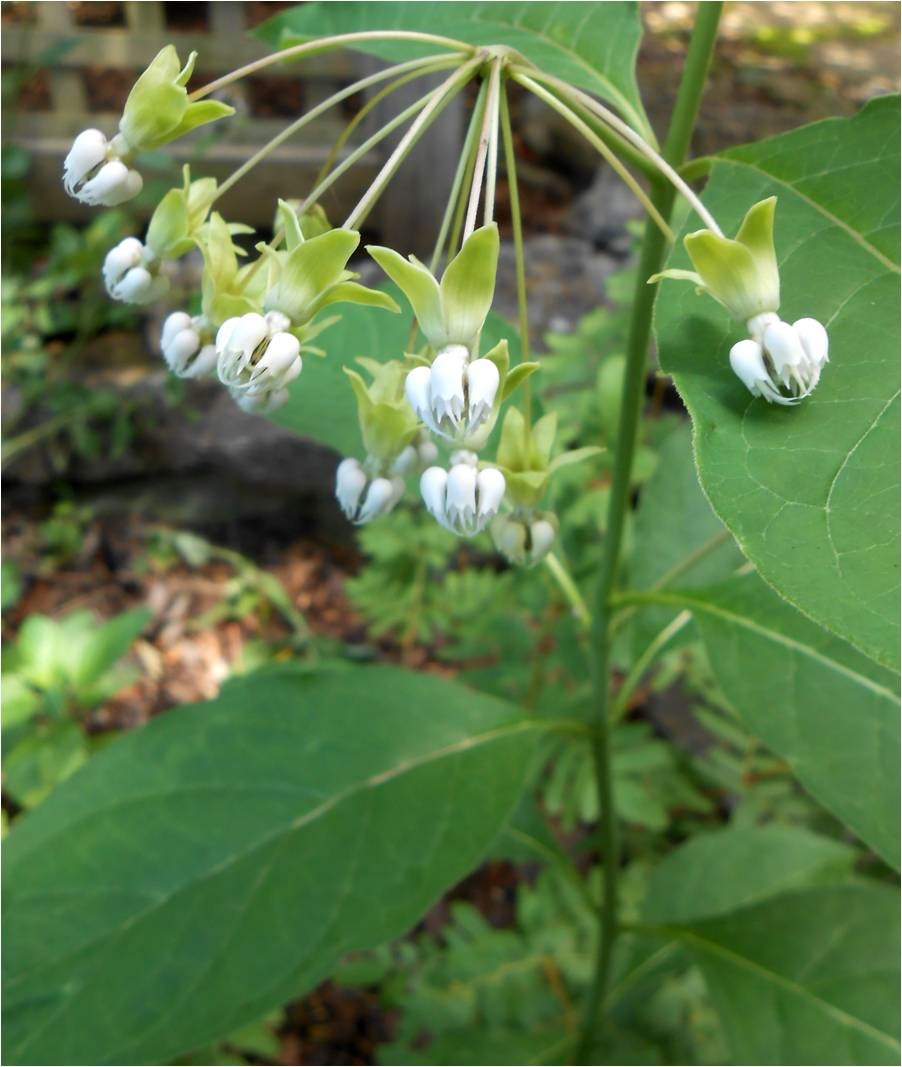
Photo Credits: IRONWEED NATIVE PLANT NURSERY
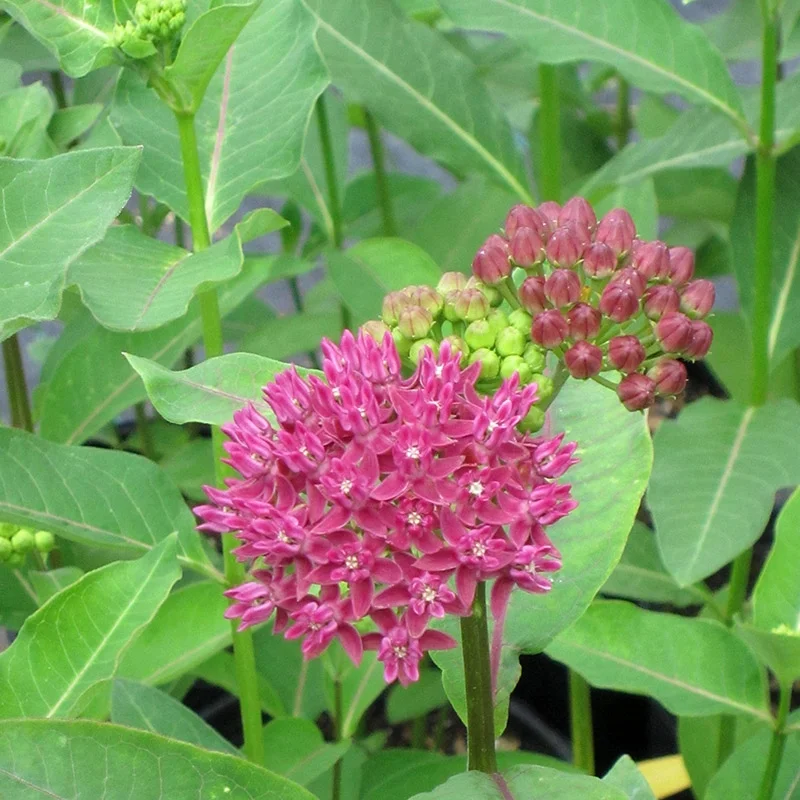
Photo Credits: HIGH COUNTRY Gardens
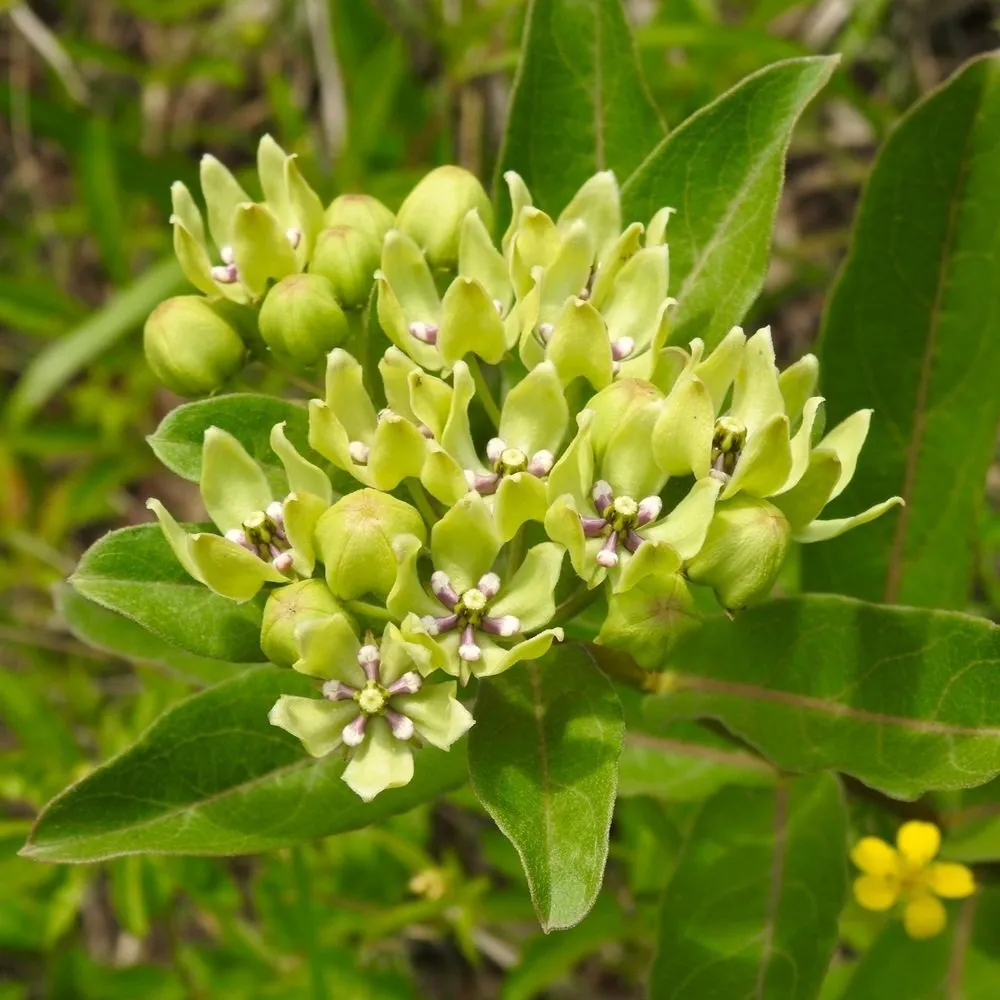
Photo Credits: Joyful Butterfly
Photo Credits: Joyful Butterfly
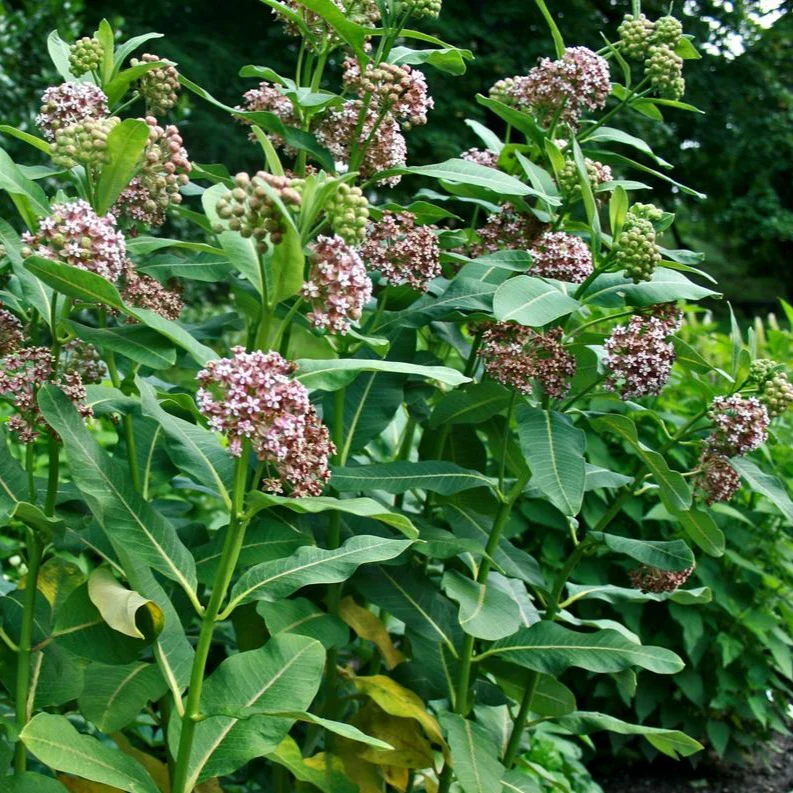
Photo Credits: Ferri Seeds


Comments
Post a Comment