The Cabbage White Butterfly: A Garden Visitor with a Hidden Story
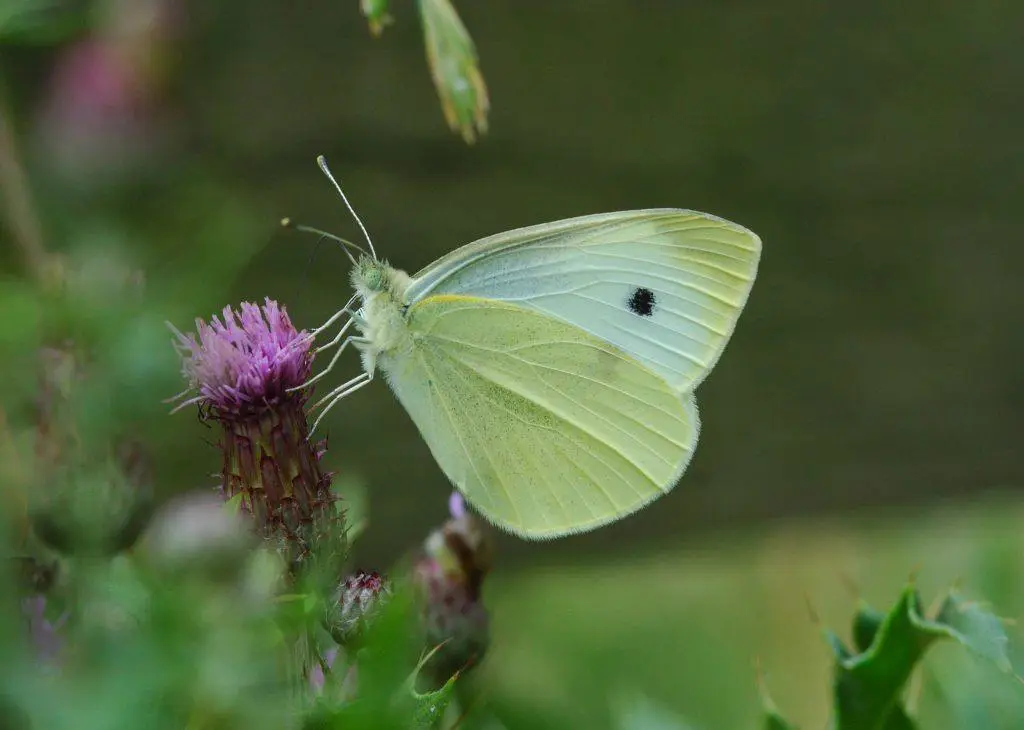
More Than Just A Garden Visitor, The Fascinating World of the Cabbage White Butterfly!
A delicate flutter of white wings drifting through gardens and fields might seem ordinary at first glance, but the cabbage white butterfly is far more intriguing than meets the eye. Often overlooked, this humble insect plays a fascinating role in ecosystems, agriculture, and even scientific research. Whether admired for its graceful movements or studied for its surprising impact, the cabbage white is a small creature with a big story to tell. Let's explore why this seemingly simple butterfly deserves a closer look.
Common Name: Cabbage White
Scientific Name: Pieris rapae
Other Names: Small White, Small Cabbage White, and White Butterfly.
Genus: Pieris
Butterfly Family: The Whites & Sulphurs Butterfly Family
Colours: white and black
Wings: Their wings are generally white with black markings on the underside, and on the upper side the wings are white or pale yellowish white with a black tip on the forewing.
Body: Has a greyish black body that is fuzzy or hair in appearance.
Wingspan: 1.2 to 2 inches (30 - 50 mm)
Native: No, the Cabbage White is not native to Canada and the United States. It is an introduced species in Canada and the United States.
Native Range: Europe and Asia
Most Identifying Feature: Is their white wings with small black spots on their forewings.
Lifespan: Between 1 and 3 weeks
Habitat: It is found in a variety of habitats including open spaces such as fields, roadsides, and gardens.
The Cabbage White butterfly (Pieris rapae) is a small butterfly with white wings that have several black markings on them.
Life Cycle Of The Cabbage White Butterfly
Egg:
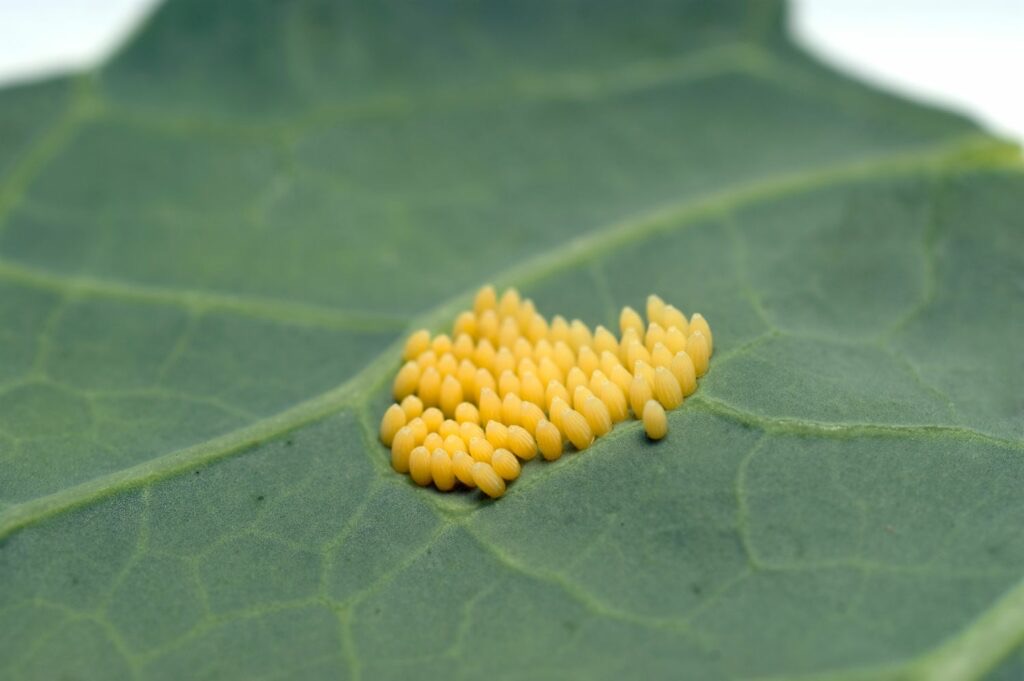 A cluster of Cabbage White Butterfly Eggs Photo Credits: Catherine Eckert / Shutterstock
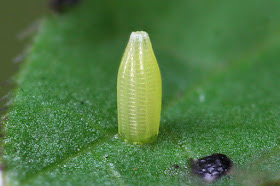 An up close view of a Cabbage White Butterfly Egg. Photo Credits: Horace Tan
The egg of the Cabbage White butterfly (Pieris rapae) is elongated, and bottle shaped that is either vibrant yellow or white in colour. It has a textured surface, and many vertical ridges on the outside.
The females of the Cabbage White butterfly (Pieris rapae) lay their eggs individually on the underside of the leaves on their host plant(s). Occasionally, the eggs can be laid in pairs or a small group.
When the egg is almost ready to hatch, the caterpillar that is on the inside can be visible from the outside and a black dot is visible at the tip of the egg from the outside.
The egg stage in the life cycle of the Cabbage White butterfly (Pieris rapae) lasts for about 4 to 8 days, which depends on the temperatures and the weather outside.
The actual size of a Cabbage White Butterfly Egg. Photo Credits: r/gardening from Reddit
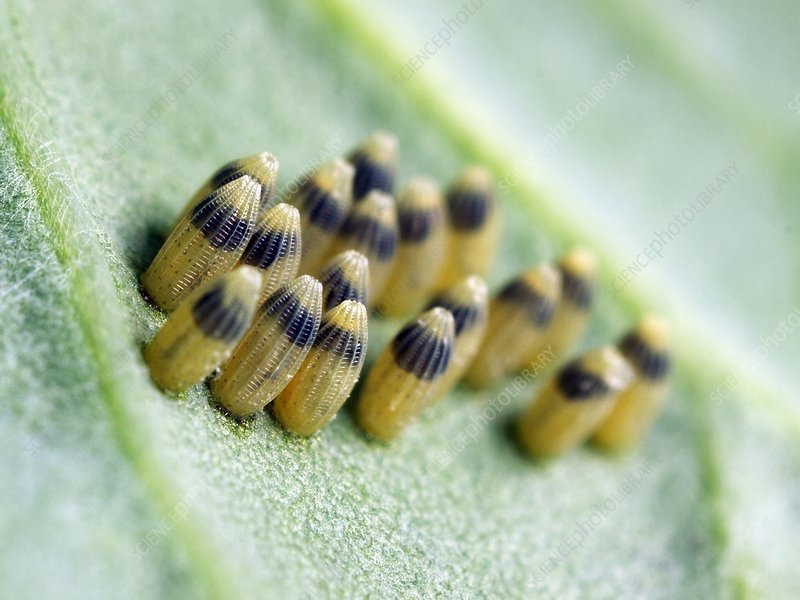 A cluster of Cabbage White Butterfly Eggs almost ready to hatch. This is moments (hours) before the eggs hatch. Photo Credits: DR. JEREMY BURGESS / Science Photo Lab
Caterpillar:
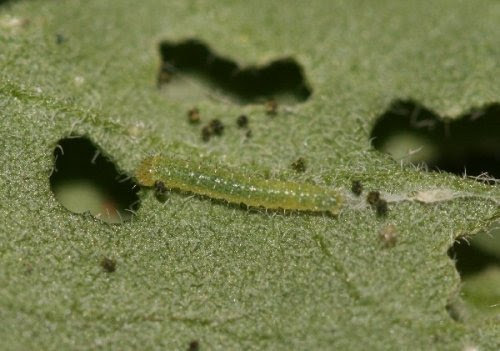 An up close view of a newborn Cabbage White Butterfly Caterpillar.
Photo Credits: raisingbutterflies.org
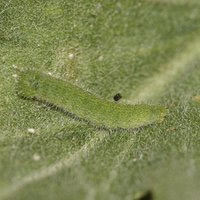
A younger Cabbage White Butterfly Caterpillar resting on a leaf. Photo Credits: Vince Massimo
After spending 4 to 8 days developing inside an egg the caterpillar of the Cabbage White (Pieris rapae) hatches out of the egg.
A newborn caterpillar of the Cabbage White (Pieris rapae) is initially tiny, and is often smaller than a grain of rice. The colour of the baby caterpillar is usually pale yellow.
A young caterpillar of the Cabbage White (Pieris rapae) goes from a pale yellow colour to a pale green colour with some fuzzy all around their body.
A fully grown caterpillar of the Cabbage White (Pieris rapae) is typically velvety green with a faint yellow dorsal stripe and a row of yellow spots along its side. They have tiny black spots and a black ring around their breathing holes. There are fine hairlike structures all over the body.
The caterpillar stage of the life cycle of the Cabbage White typically lasts between two to three weeks long.
A fourth instar Cabbage White Butterfly Caterpillar resting on a leaf. Photo Credits: raisingbutterflies.org
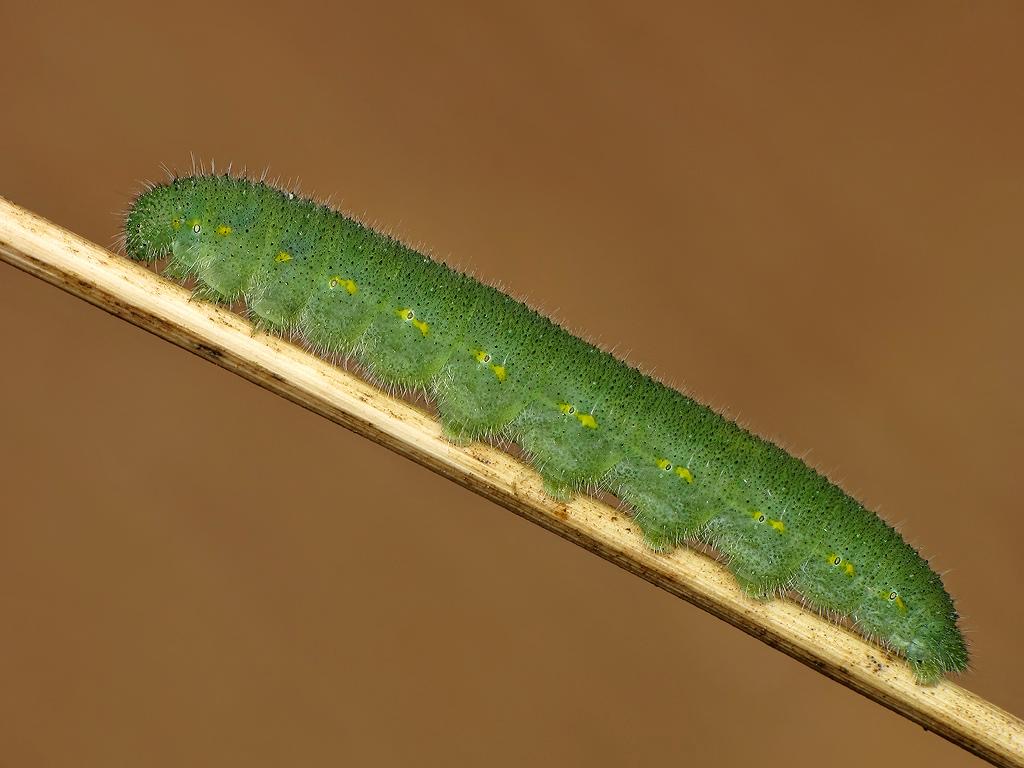 A fifth instar Cabbage White Butterfly Caterpillar resting on a wooded stem. Photo Credits: Butterfly Conservation
Chrysalis:
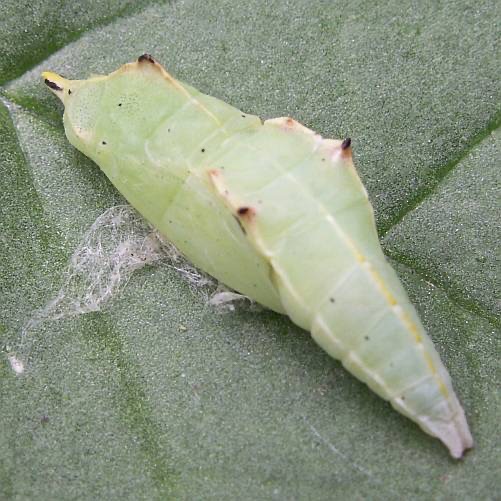 A pale greenish white colouration of a Cabbage White Chrysalis.
Photo Credits: fay.iniminimo.com
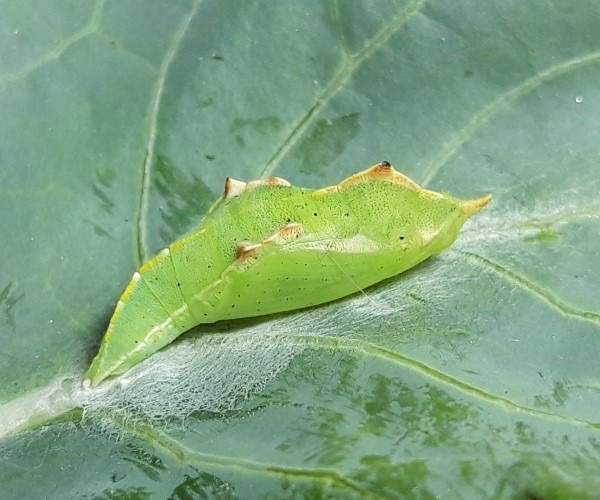 A light green or bright green colouration of a Cabbage White Chrysalis. Photo Credits: K. Bormpoudaki
 A Cabbage White Butterfly Chrysalis that has the outline of the developing butterfly’s wing which is visible from the outside. Photo Credits: raisingbutterflies.org
The chrysalis of the Cabbage White Butterfly (Pieris rapae) is typically about 3/4 inches long in size.
It has a distinctive pointed head, and the abdomen on the chrysalis may have pointed projections along the sides.
The chrysalis can be green or tan, and it may be mottled or speckled. The colour can vary depending on the season and the surface it’s attached to.
For the chrysalids that don’t over winter during the winter months are usually light green to pale green in colour.
The chrysalids that do over winter during the winter months are usually a tan or brown colour.
A week or two before the butterfly emerges from their chrysalis, the outline of the wings on the developing butterfly inside can be seen through the outside.
Then a day or a few hours leading up to the butterfly emerging from the chrysalis, the butterfly that is on the inside can be visible through the outside.
The chrysalis of the Cabbage White (Pieris rapae) is usually found on a leaf of their host plant, or outdoor structures that are tall in height.
The chrysalis stage of the life cycle of the Cabbage White (Pieris rapae) varies in length depending on the generation that the butterfly is in.
For the spring and summer generation the chrysalis stage will last for 10 to 14 days, which depends on the weather and temperature outside. The chrysalids of this generation for this butterfly come in different shades of green.
So, for the fall generation the chrysalis stage will last a lot longer, where it can last 10 months up to 1 year. The chrysalids of this generation for this butterfly come in different shades of brown.
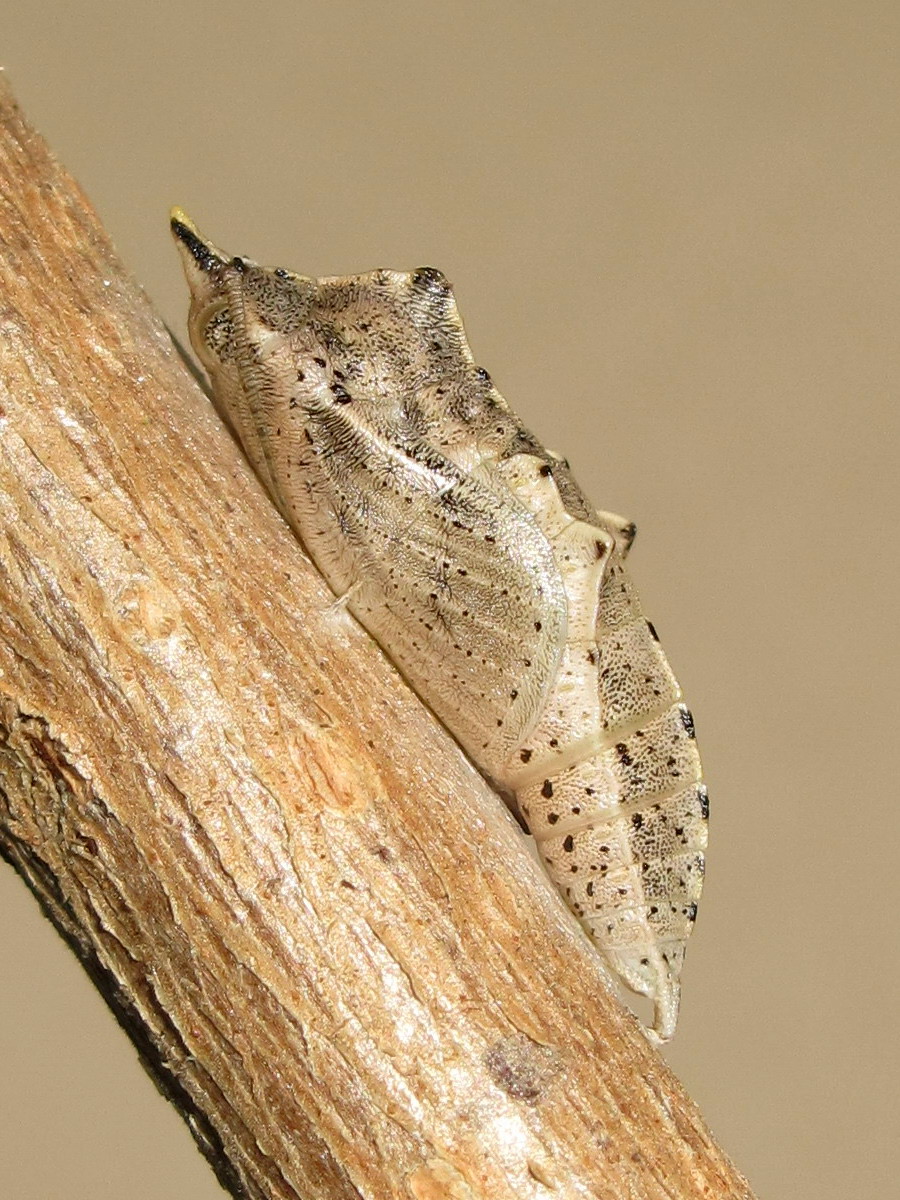 A brown colouration of the Cabbage White Chrysalis. Photo Credits: Vince Massimo
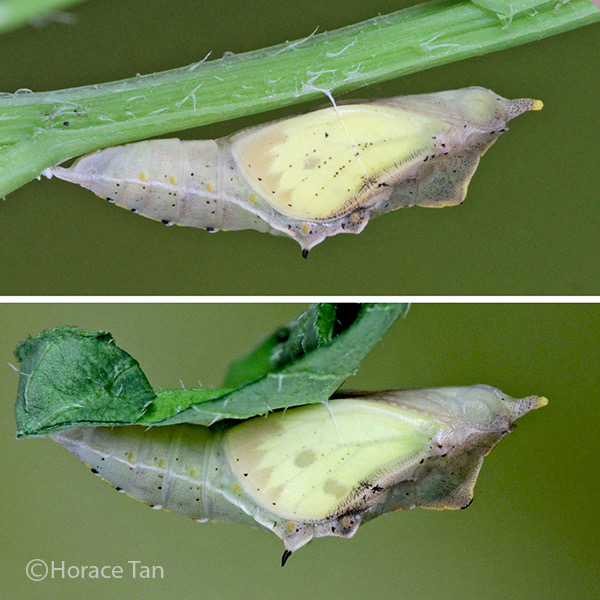 A collage of two Cabbage White Chrysalids where the butterfly is on the inside is completely visible from the outside. This occurs moments or hours before the Cabbage White Butterfly emerges. Photo Credits: Horace Tan
Adult Butterfly:
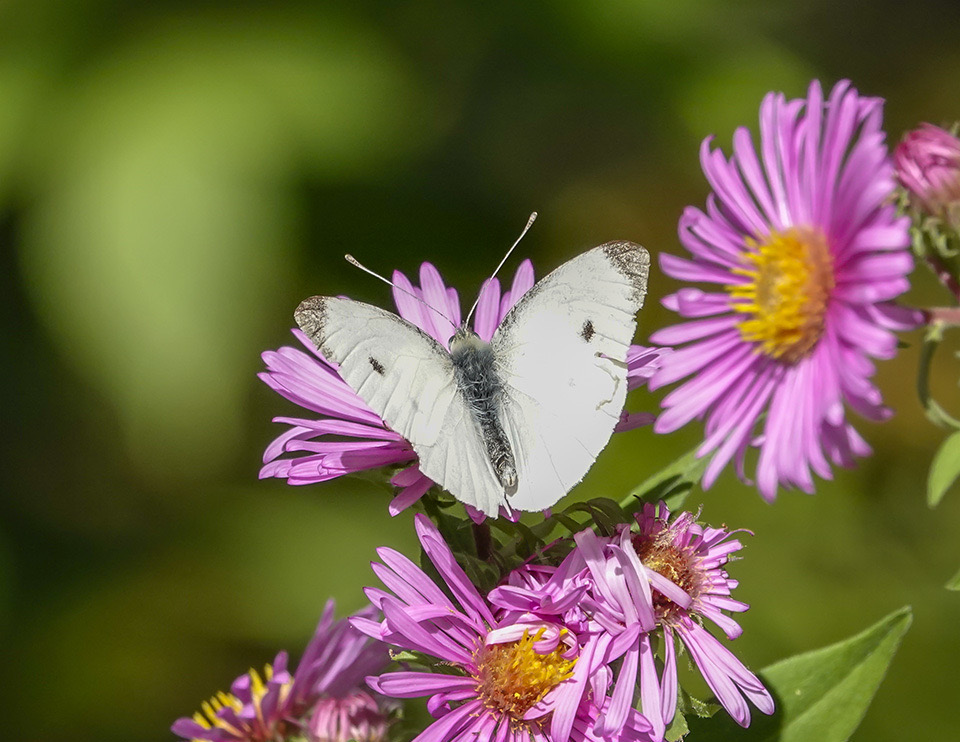 A Cabbage White Butterfly resting on a long folded up leaf or stem with their wings closed. Photo Credits: Jon Hammond from Tehachapi News
A male Cabbage White Butterfly relaxing with his wings open on pink daisy like flowers. Photo Credits: ellenjones6 from iNaturalist
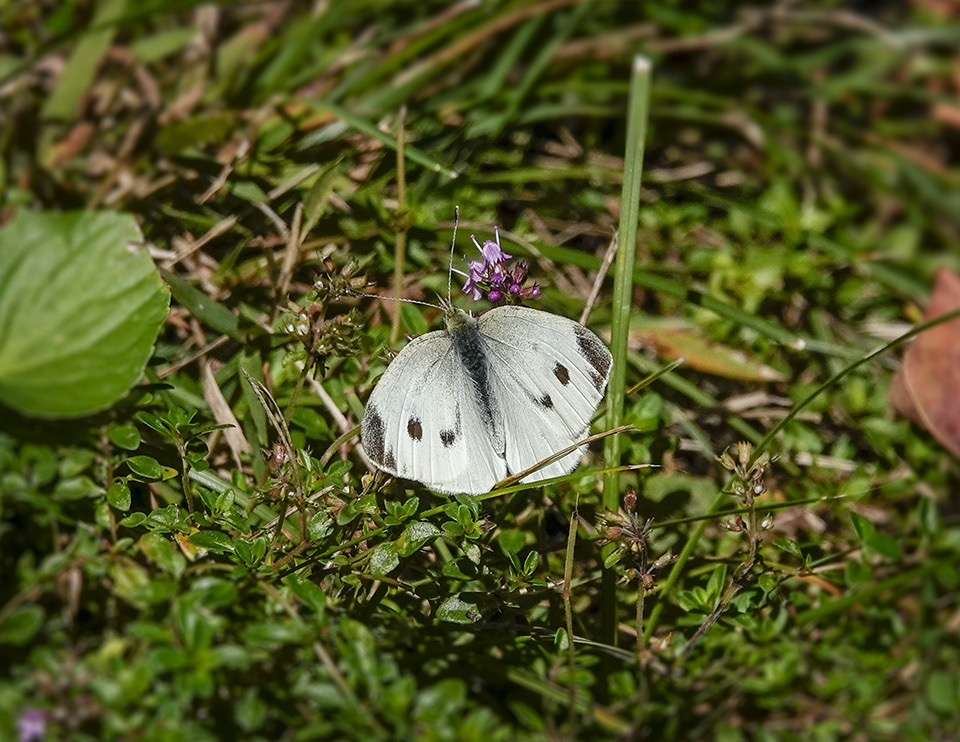 A female Cabbage White Butterfly resting with her wings open resting on the stem of a purple flower.
Photo Credits: ellenjones6 from iNaturalist
After spending 10 to 14 days up to 1 year in their chrysalis a Cabbage White Butterfly (Pieris rapae) emerges from their chrysalis.
The Cabbage White Butterfly (Pieris rapae) is a small or tiny sized butterfly that is a member of The Whites & Sulphurs Butterfly Family.
It is easily recognizable by their white wings, black spot(s) on their wings, and black or grey coloured markings on their wings.
The Cabbage White Butterfly (Pieris rapae) displays sexual dimorphism, which means that the females and males of this butterfly species look different from one another. To identify the gender of the butterfly is very easy to do.
The males of the Cabbage White Butterfly (Pieris rapae) have creamy white wings adored with a singular black spot both of their top wings. The black spot on each of their top wings are small in size, and are not thick in appearance. On their top wings there is a pale black or pale grey tips near the edge of their top wings.
On the outside of their wings there are two different colours on them. They are mostly off white and white in colour, with a black dot that is visible from the outside. There are several pale grey or light black speckles all over the wings.
At the end of their body (abdomen) it is thin and the colouration is pale white to whitish black.
The females of the Cabbage White Butterfly (Pieris rapae) have two black spots on both of their top wings. The black spots on the top of their wings are bigger, and are more darker in colour. At the tips of their top wings there is a thick black marking (line) along the edge of the wings.
When their wings are closed the females resemble a pale yellow hue that has a bit of white in it. There are several pale black speckles on the wings. The two dots that are located on each of their top wings, are completely visible from the outside.
The end of their body (abdomen) is thicker and bigger compared to the one on the males. The abdomen is more of a whitish grey in colour, and there is a black line located right where their abdomen begins.
The Cabbage White Butterfly (Piers rapae) is mostly seen with their wings are closed, and they very rarely open their wings. So the inside of their wings is not seen often.
The butterfly stage of the life cycle is the last stage of The Cabbage White Butterfly Life Cycle. This stage of the Cabbage White Butterfly (Pieris rapae) Life Cycle usually lasts about three weeks. This lifespan that the Cabbage White Butterfly (Piers rapae) is longer than most butterflies.
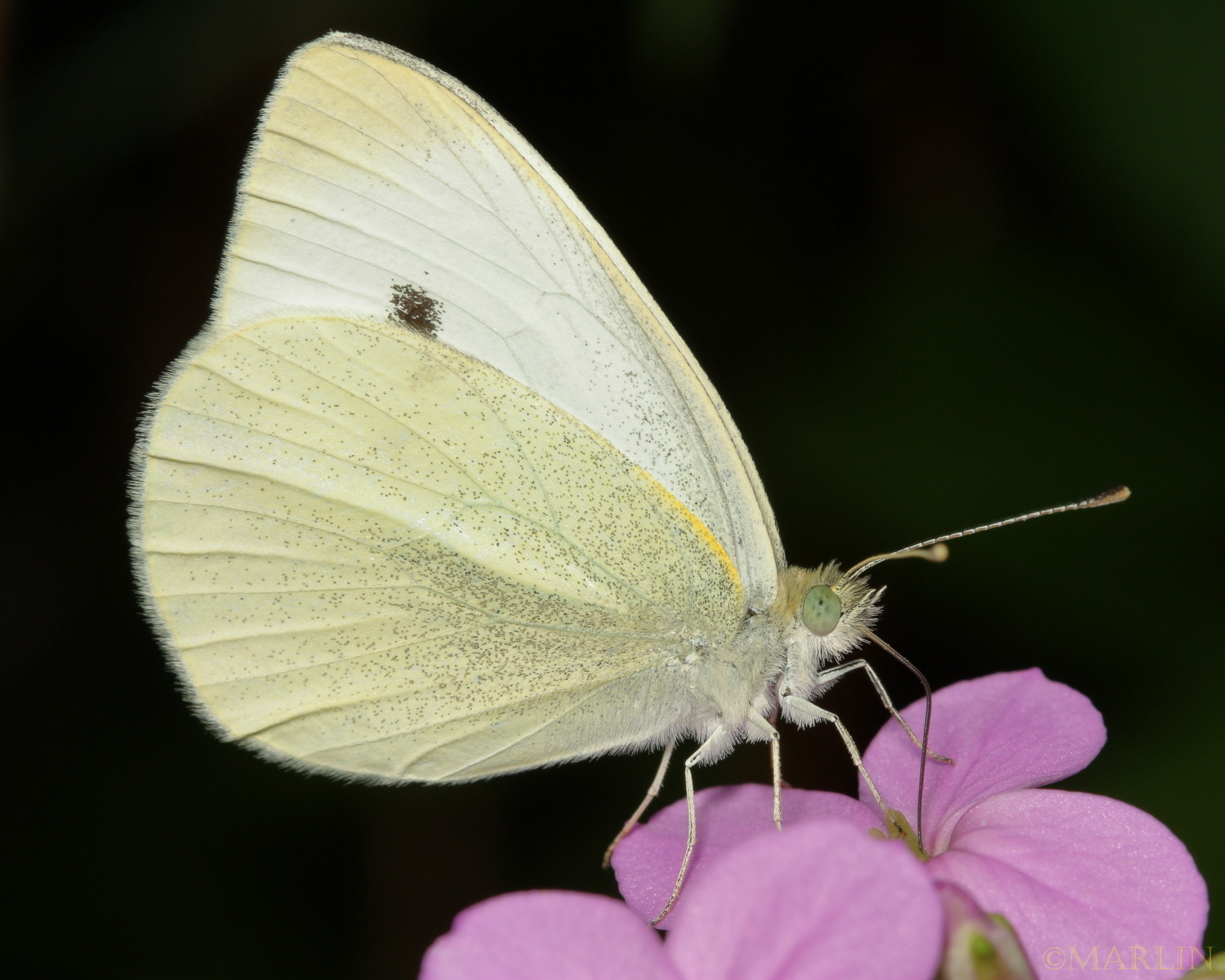 A male Cabbage White Butterfly siping nectar from a pink flower with his wings closed. Photo Credits: cirrusimage.com
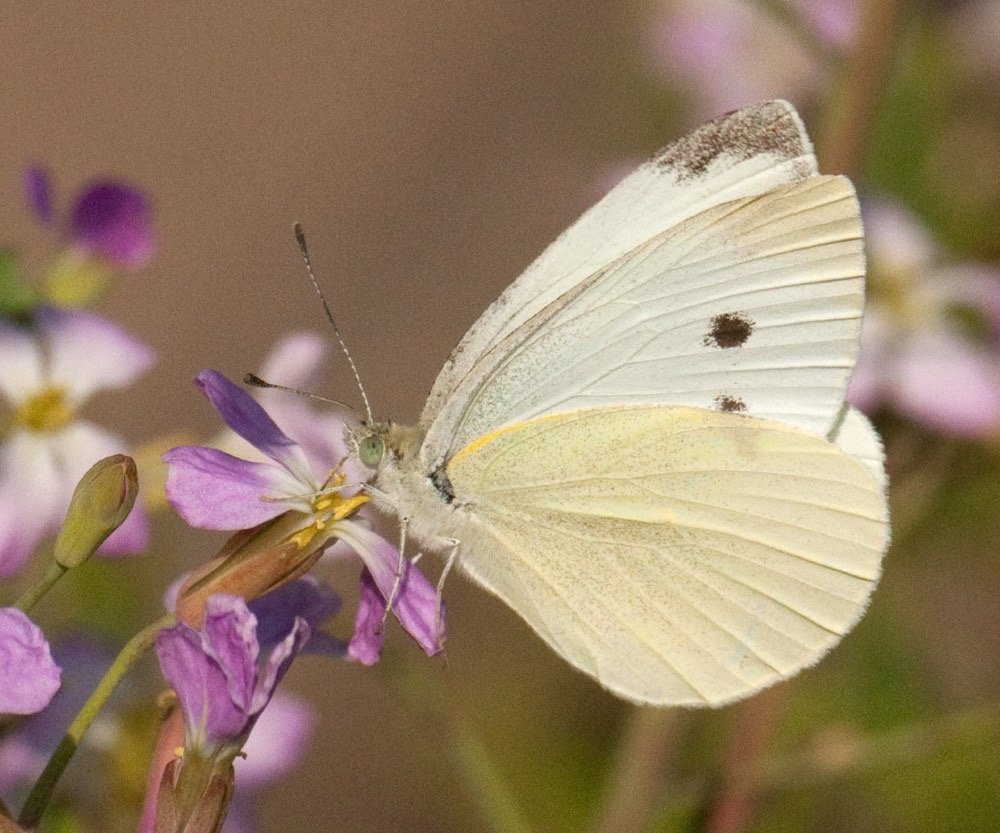 A female Cabbage White Butterfly sipping nectar from purple flowers with her wings closed. Photo Credits: Sarah Bright
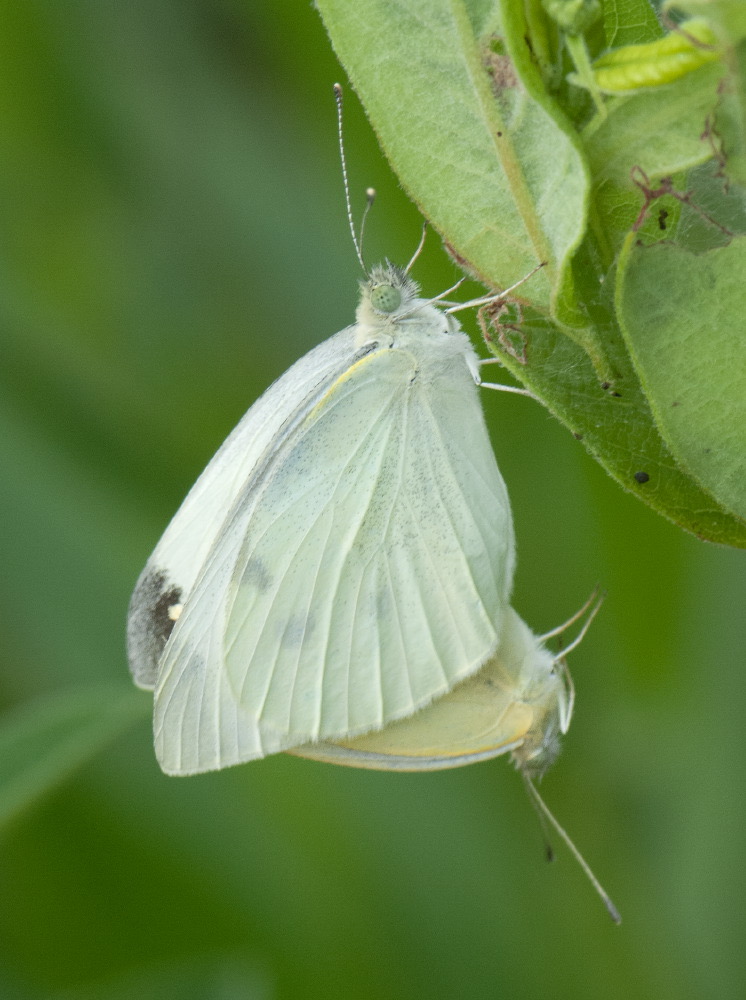 A mating pair of Cabbage White Butterflies on a leaf. Photo Credits: Sarah Bright
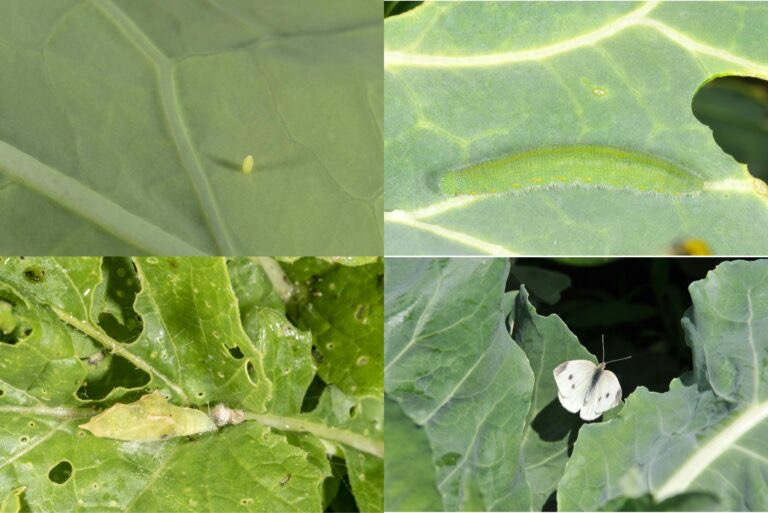 A collage of the four different stages of a Cabbage White Butterfly’s Life Cycle. Photo Credits: John Obermeyer
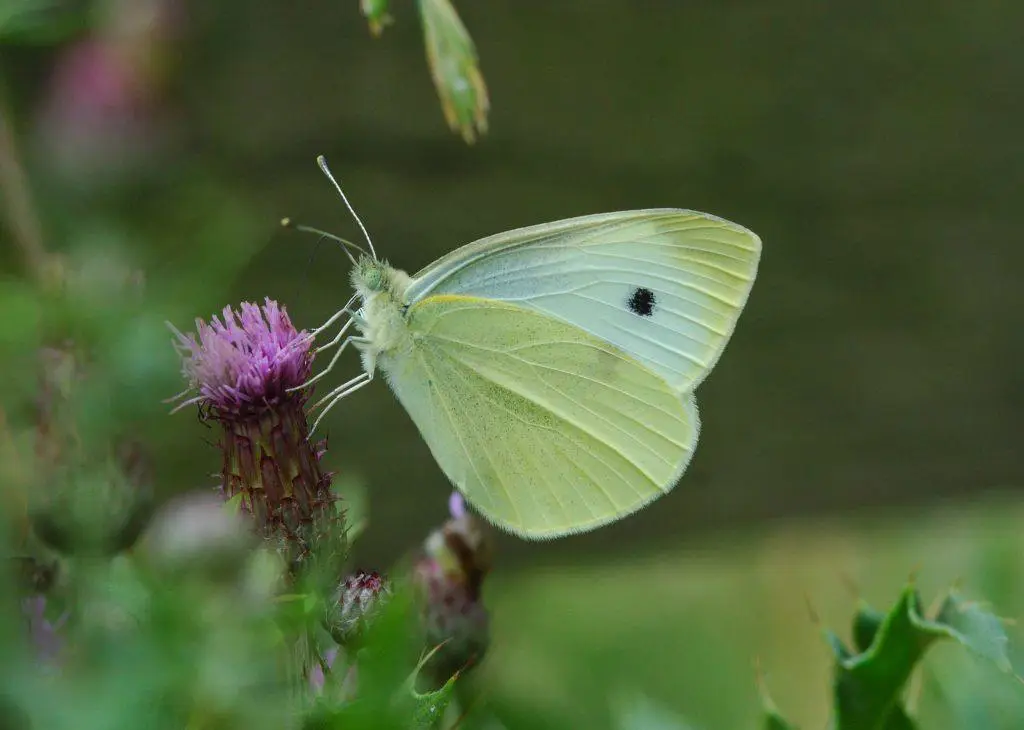 A Cabbage White Butterfly sipping nectar on a Thistle Flower with their wings closed. Photo Credits: Andrew Mitchell


Comments
Post a Comment