Spring Blooming Native Plants For Local Pollinators and Wildlife Across Canada
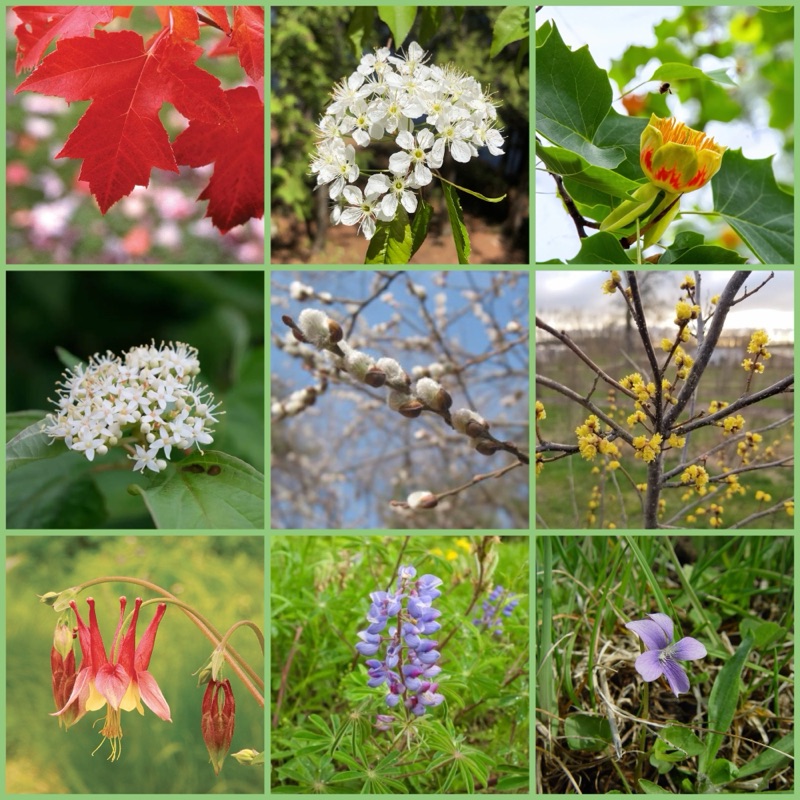
Unravel the fascinating world of Native Plants and reveal several tree, shrub, and wildflower species that bloom during the spring season that benefit local pollinators and wildlife.
Discover 31 plants that are native to Canada which bloom sometime during in the spring and learn all about these unique plants that call Canada their natural home, and how they benefit local pollinators and wildlife.
When it comes to the spring season a lot of individuals and gardeners think of dandelions, hyacinths, lily of the valley, and buttercups for local pollinators since they come up just in time for when our pollinators emerge or come out of their winter sleep. In reality, to tell you the truth these flowers are invasive across the province of Ontario and the rest of Canada. Even though our pollinators do go to these flowers they don’t provide the proper nutrients, proteins, and minerals that they need to thrive and survive out in nature.
Gardeners and other individuals don’t think about the plants that bloom during the spring time, that are native to Canada and the ones that benefit our pollinators and wildlife better.
People don’t realize that here in Canada we have 31 different species of plants which support many local butterfly species, bee species, other pollinators, and wildlife.
In this article you will learn about 9 tree species, 8 shrub species, and 14 wildflower species which are all native to Canada. You will also learn about what local insects and wildlife benefit from these local plants.
Trees 🌳 :
🔘 Red Maple (Acer rubrum)
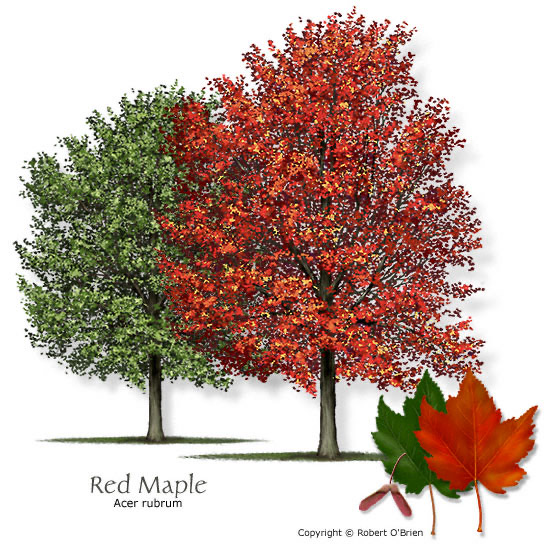 Photo Credits: Robert O’Brien
The Red Maple (Acer rubrum) is also known as Swamp Maple, Water Maple, or Soft Maple. It is one of the most common and widespread tree deciduous trees in Canada. The Red Maple is recognized as the most abundant native tree in Canada, and other places in Eastern North America.
It is a deciduous tree that is a fast growing type of tree where it usually reaches 60 to 90 feet tall. Whenever a Red Maple becomes really happy where it was planted, the tree can grow more than 100 feet in height.
The leaves are palmately veined with 3-5 principal triangular lobes with the lower 2 being much smaller. The margins on the leaves are irregularly and coarsely toothed. They are medium to dark green above, and greyish beneath with hairy veins. Each leaf is 2 - 4” inches long, and are somewhat broader than long.
During the spring and summer the leaves on a Red Maple are green in colour, but once the fall comes the leaves change to a bright red colour.
The stems on the leaves of a Red Maple are a light green colour during the spring and summer months, but once the fall season hits the stems turn to a red colour like the foliage.
The flowers are 1 inch in size, and grow in short-stemmed drooping clusters in the spring time before the leaves appear on the tree. They are red or burgundy in colour, and are catkin like.
They typically bloom in late winter to early spring. The flowering period is generally from late April into early May.
The fruit on a Red Maple is a samara type of fruit that is dry and winged. It is a “V” shaped fruit that is either red, pink, or yellow in colour. The fruit is about 3/4 of an inch long on drooping stems. The samara (type of fruit) is 1 inch in length. This fruit on a Red Maple develops after the red flowers bloom on the tree, where the fruit is seen on the tree from mid May through June.
The bark on a young Red Maple is smooth and light grey in colour. For the bark on an older Red Maple is thick, dark grey, and separated by vertical ridges into large, plate-like scales.
Some of our early spring butterflies such as the Mourning Cloak, and Eastern Comma they are particularly drawn to the tree sap that a Red Maple produces. The tree sap from this maple species is one of the primary food sources for these butterflies, because they mostly feed on tree sap.
The flowers on a Red Maple attracts Bumble Bees, Leaf-cutter Bees, Mason Bees, Sweat Bees, Sulphur Butterflies, Red Admirals, and Swallowtail Butterflies.
The fruit (samaras) of the Red Maple primarily attracts birds, squirrels, and Chipmunks.
The Red Maple is a host plant for two Moth species that are native which include the Cecropia Moth, and the Rosy Maple Moth.
The Red Maple is also used as nesting material for birds and squirrels. When this maple species becomes older it can develop cavities that become nesting sites for birds like Screeched Owls, Pileated Woodpeckers, and Northern Flickers.
🔘 Sugar Maple (Acer saccharum) :
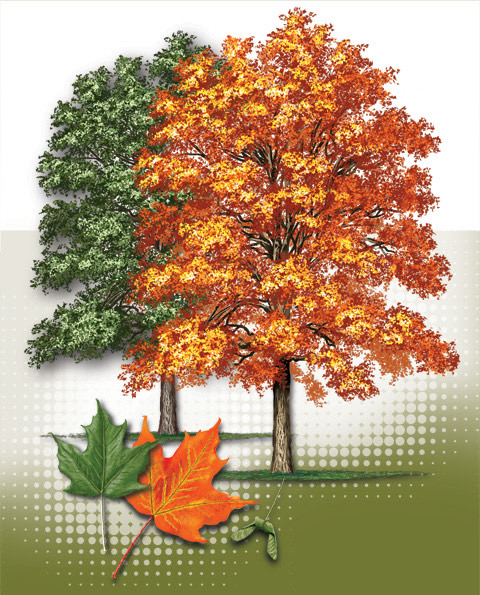 Photo Credits: Robert O’Brien
The Sugar Maple (Acer saccharum) is also known as Hard Maple or Rock Maple. It is a member of The Soapberry Family.
The Sugar Maple can live for 200 - 300 years, with some Sugar Maples reaching 400 years.
It is a slow growing deciduous tree that is loved for their exceptional fall colour.
The Sugar Maple may reach 50 to 120 feet tall, with a spreading crown that is dense and provides heavy shade.
The leaves are simple and showy that are 3 to 6 inches long and 3 to 6 inches wide. Each leaf on a Red Maple has five lobes. The basal lobes are relatively small, while the upper lobes are larger and deeply notched. The tip acuminate, base cordate and margins entire. In the summer time the colour of the leaves is green. During the fall time the colour of the leaves are yellow, orange, and red.
The stems are slender with lenticels. The stems and buds can be green, brown, to reddish brown in colour. The buds are 1/4” - 1/2”, cone shaped, and acute. They also have 4 - 8 pairs of lateral scales.
The separate male and female flowers are greenish - yellow drooping panicles on long slender stems in clusters that are up to 3 inches long. The flowering period of a Sugar Maple is from April to May, which depends on the weather and the temperatures.
The fruit is U - shaped, paired, papery-winged samara that averages 1 inch in length. The colour of the fruit is green, but when the fruit matures it turns to a brown colour. It appears on a Sugar Maple in late summer into early autumn.
The bark is generally light grey to grey - brown. It becomes furrowed, with long irregular thick plates or ridges with age.
The tree sap of a Sugar Maple is a food source for three local butterfly species such as the Red Admiral, Mourning Cloak, and Eastern Comma. These butterflies will feed on the sap of damaged Sugar Maple bark.
The flowers on a Sugar Maple attract Bumble Bees, Leaf - cutter Bees, Sweat Bees, Mason Bees, Skipper Butterflies, and Sulphur Butterflies.
The Sugar Maple is a host plant for two local moth species which are the Cecropia Moth, and the Rosy Maple Moth.
This maple species provides shelter for a variety of wildlife such as birds, insects, and small animals.
The Sugar Maple provides branches for squirrels, and a variety of nesting birds. Mature Sugar Maples offer cavities for cavity - nesting birds such as Owls and Woodpeckers.
🔘 Eastern Redbud (Cercis canadensis) :
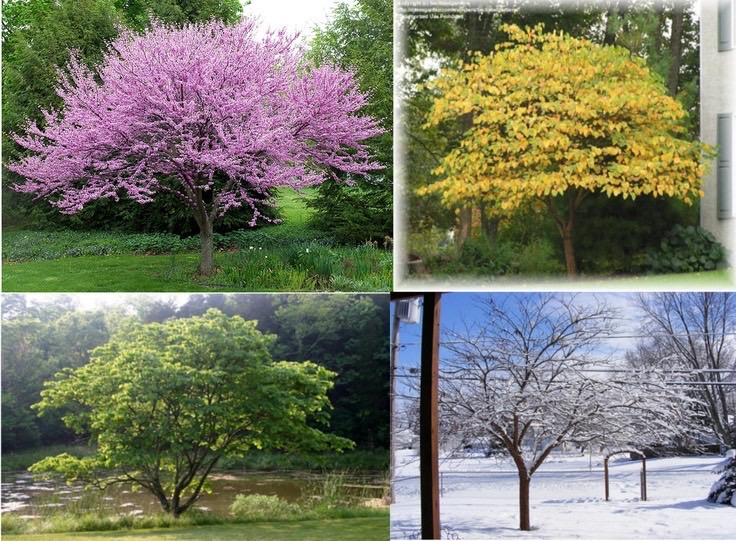 Redbud In Four Seasons Photo Credits: Melissa Keeney
The Eastern Redbud (Cercis canadensis) is also known as American Judas Tree, American Redbud, and Redbud.
It is a deciduous, and ornamental tree that is a member of The Pea Family.
The Eastern Redbud grows 20 to 30 feet tall and 20 to 35 feet wide. It is a smaller tree with nearly flat or rounded crown that is often found growing beneath taller trees.
The leaves are simple, alternate, and heart shaped. Each leaf on an Eastern Redbud Tree is 3 to 5 inches long, and 3 to 5 inches wide with smooth, entire margins. Bases are cordate, acute apex, with swelling on petioles just underneath the leaf plate. Each leaf on an Eastern Redbud has 7 palmate veins that extend from the base, The colour of the leaves is dark green in the summer, and then by the fall the leaves on the tree turn to a golden yellow colour.
The stem is slender, and glabrous that is dark - reddish brown in colour. It is in a zigzag shape, where it spreads and ascends. The trunk is usually divided close to ground.
The flowers stand out to be clearly visible on the tree. The colour of the flowers on an Eastern Redbud varies from pink, red, or purple. On an Eastern Redbud the flowers are seen before the leaves appear. They are only about 1/2 an inch wide, and there are 7 flowers in each cluster. These flowers grow on new branches as well as the older branches on the tree. Each flower is pea shaped that are borne in tight clusters. The blooming period of the Eastern Redbud is from March to May.
The bark is dark brown to black with orange inner bark that can be visible with the naked eye. When the bark is young it is smooth, but developing long, and narrow plates that seperate into scales as the Eastern Redbud matures.
The flowers on an Eastern Redbud attracts a variety of local pollinators including Bumble Bees, Mason Bees, Mining Bees, Sweat Bees, Dreamy Duskywing Butterfly, Spring Azure Butterfly, and Swallowtail Butterflies.
The canopy of the Eastern Redbud provides shelter for birds, mammals, and other wildlife.
The structure of an Eastern Redbud and their irregular branching, and often their divided trunk creates ideal spots for birds to build nests.
The seeds that the Eastern Redbud produces after their flowers bloom offer food for a various of birds such as Chickadees, Cardinals, Sparrows, and Finches.
The Eastern Redbud is also a host plant for the Henry’s Elfin Butterfly. The females of this species lay their eggs on the flowers as well as the foliage, and the foliage and the flowers become a food source for the caterpillars once they hatch.
🔘 Black Cherry (Prunus serotina) :
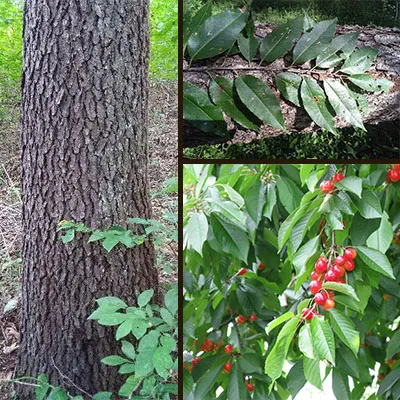 Photo Credits: INDIANA Timber and Veneer LLC
Black Cherry (Prunus serotina) is commonly called Wild Black Cherry, Rum Cherry, or Mountain Black Cherry. It is a member of The Rose Family.
Despite the name of this tree it is not closely related to cherries, as well as The Cherry Family.
Black Cherry is a medium - sized tree that is woody and deciduous. It is generally considered a fast growing tree.
The Black Cherry grows 60 to 80 feet tall and 30 to 60 feet wide. If this tree is happy where it was planted, there is a chance that it may grow even taller and wider than the average height.
The leaves on a Black Cherry are 3 to 6 inches long and .75 to 1.5 inches wide. Each leaf is a dark green colour, and has a cherry fragrance. When a leaf is ingested it has a bitter taste. The leaves are alternate with incurvate teeth that are fine. They have inconspicuous glands on the stem and a yellow - brown colouring on their undersides. The fall colour of the leaves is a yellowish orange. The scent that the leaves give off when crushed is of bitter almonds.
The stem is satiny reddish brown twigs with a strong scent of bitter almonds.
There are 3 - 6 inches long pendulous racemes of many small, and fragrant flowers that appear with the foliage. The colours of the flowers varies from pink or white. The flower blooming season for a Black Cherry is from April through May.
The younger bark is shiny and has vertical lenticels. The bark of a mature Black Cherry develops a dark scaly or flaky pattern. The inner bark has a bitter almond flavour.
The fruit is purple - black cherries that are 3/8 inch in size. The black cherries are grown in drooping clusters on the branches, just like how the flowers on a Black Cherry Tree appear. The fruit has a bitter tasting off of the tree. The black cherries of the tree contain cyanogenic compounds, but the cyanide is not liberated until acted upon by digestive enzymes.
The flowers of the Black Cherry Tree attract specialized bees such as Leaf - cutter Bees, Mining Bees, and Mason Bees. These flowers also attract other pollinators such as butterflies, beetles, flies, and moths.
The Black Cherry Tree also produces tree sap and the insects who are attracted to the sap include the Red Admiral Butterfly, and Hummingbirds.
This tree species can be a nesting site for cavity nesting birds such as Owls, Woodpeckers, Nuthatches, Chickadees, Northern Flickers, and Tree Swallows.
The Black Cherry doesn’t provide nesting material directly, but their dense branches and foliage offer excellent shelter and support for nest building by various bird species.
The berries (fruit) of a Black Cherry Tree provide food for many local bird species such as Cedar Waxwings, Woodpeckers, Thrushes, Robins, Bluebirds, Blue Jays, Eastern Kingbirds, and Grey Catbirds. They also are an important food source for many of our migratory birds.
The Black Cherry Tree is a host plant for various local butterfly species and moth species including the Eastern Tiger Swallowtail, Red Spotted Purple, Viceroy, Cherry Gall Azure, Cecropia Moth, Promethea Moth, Columbia Silk Moth, Small - eyed Sphinx Moth, Wild Cherry Sphinx Moth, and Banded Tussock Moth.
REMINDER 🎀 : The Black Cherry Tree is toxic towards humans, pets, and livestock. Their leaves, flowers, twigs, bark, berries, and seeds are the most toxic parts of the tree. It is Not Recommended to digest any part of the Black Cherry due to its toxicity, and if any part of the tree is digested it will cause sickness as well as side effects.
🔘 Pin Cherry (Prunus pensylvanica) :
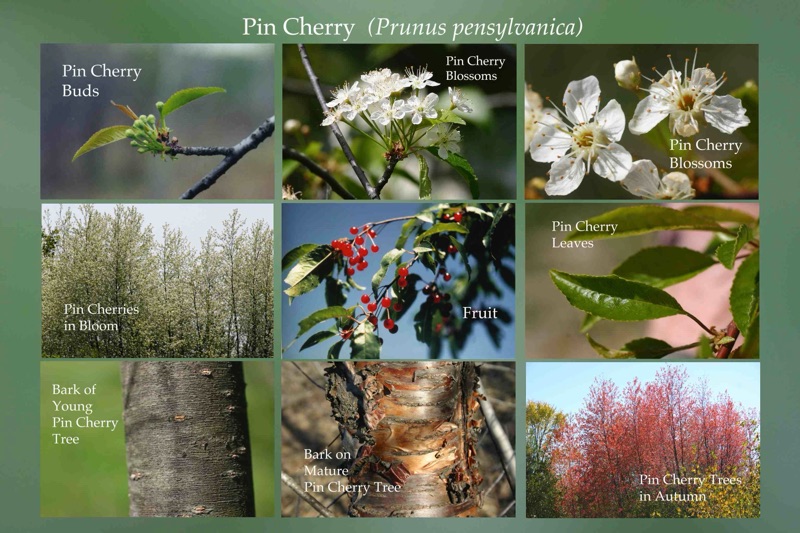 Photo Credits: Kuse Nature Preserve
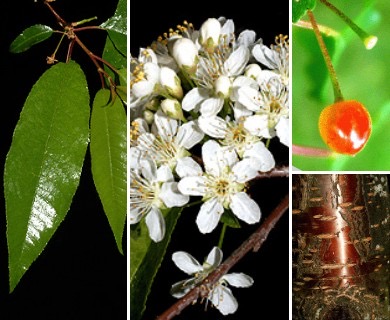 Photo Credits: Virginia Tech FREC
The Pin Cherry (Prunus pensylvanica) is also known as Bird Cherry, Fire Cherry, and Red Cherry. It is a member of The Rose Family.
Pin Cherry is a woody and deciduous tree, and it is considered as a fast growing type of tree.
The Pin Cherry is typically 15 to 49 feet tall and 10 to 15 feet wide. If a Pin Cherry is very happy where it was planted, the tree is capable of growing up to 50 feet or over 100 feet tall.
The bark is a shiny reddish brown to greyish brown that has numerous horizontal fissures called lenticels. The bark may peel off in horizontal strips.
The twigs are slender and reddish brown like the young bark on the tree. The spring buds are also reddish brown, and there will be a cluster of them at the branch tips while the lateral buds are single and held close to the twig.
The leaves are alternate and simple, and are also lanceolate in shape. Each leaf on a Pin Cherry is 1.5 to 5 inches long with long pointed tips. The leaf margins have fine teeth. The top of the leaves is bright green, and are paler colour on the bottom. Each leaf has a 7 to 40 mm long stalk at the bottom.
The Flowers occur in small umbels with 5 to 7 flowers per umbel all with equal length stalks. The stalks are 10 to 30 mm long and subtended by minute bracts. The clusters form near the end of twigs. The individual flowers have 5 rounded white petals and numerous extended stamens with deep yellow anthers. The sepals of the flowers are small and reflexes when the flower opens.
The flowers mature to small sour drupe, that are no more than 1/3 inch long which contains a single hard seed. The seeds of the fruit contain cyanide compounds just like the fruit of a Black Cherry Tree.
The flowers on a Pin Cherry Tree attract some of our specialized bees such as Mason Bees, Mining Bees, Sweat Bees, and Leaf - cutter Bees. The butterfly species that are attracted to the flowers are Spring Azure, Viceroy, Red Spotted Purple, and Eastern Tiger Swallowtail.
This species of tree can offer good nesting cover, especially if it grows in dense thickets which provides shelter for birds that are building nests.
The sap that the Pin Cherry Tree produces provides a food source for many birds such as Blue Jays, Robins, Baltimore Orioles, Hummingbirds, and Woodpeckers. The Pin Cherry Sap also attracts a couple butterfly species that include Red Admiral, Red Spotted Purple, Eastern Comma, Question Mark, Viceroy, and Coral Hairstreak.
The cherries (fruit) on a Pin Cherry Tree provide a food source for many of our local bird species including Blue Jays, Northern Cardinals, Robins, Baltimore Orioles, Cedar Waxwings, Eastern Bluebirds, Grey Catbirds, American Goldfinches, Northern Flickers, Hummingbirds, Pileated Woodpeckers, Red Bellied Woodpeckers, Downy Woodpeckers, and Hairy Woodpeckers.
The Pin Cherry Tree is a host plant for many local butterfly species including Viceroy, Red Spotted Purple, Eastern Tiger Swallowtail, and Coral Hairstreak. It is also a host plant to several local moth species including Hummingbird Clearwing Moth, Wild Cherry Sphinx Moth, Columbia Silk Moth, Cecropia Moth, and Promethea Moth.
REMINDER 🎀 : The Pin Cherry Tree is toxic and poisonous to humans, pets, and livestock. Especially the cherries, seeds, flowers, and bark. It is not recommended to digest any part of the tree, because of the toxicity and can cause sickness.
🔘 Tulip Tree (Liriodendron tulipfera) :
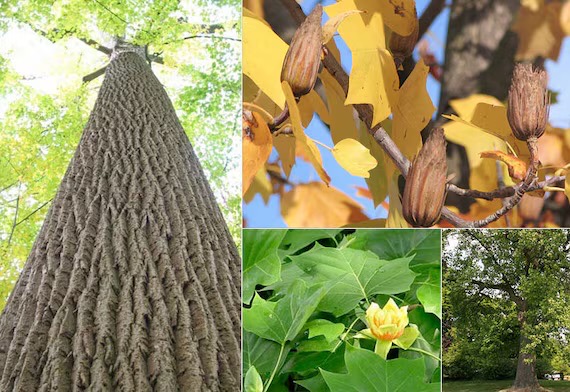 Photo Credits: Panter Nursery
The Tulip Tree (Liriodendron tulipfera) is also known as Tulip Poplar, Yellow Poplar, or Tulip Magnolia. This tree is a member of The Magnolia Family.
It is a type of tree that is woody, and deciduous. The Tulip Tree is considered a fast growing tree. It can grow 60 to 80 feet high, and can spread 30 to 40 feet wide. If a Tulip Tree is extremely happy in the location it was planted, the tree can reach 90 feet up to well over an 100 feet high. This tree can add on 2 to 3 feet per year.
The leaves are smooth, and simple that are typically 3 to 8 inches across and long. A unique feature of the leaves is the V - shaped notch at the top where the two lobes meet, making the leaves on the tree look square in shape. The leaf stalk causes the leaves to twist and flutter in the wind.
The flowers are showy, and goblet shaped resembling tulip flowers. They are orange yellowish in colour. Each flower on a Tulip Tree has six petals and is about 5 centimetres long. The flowers on a Tulip Tree are often hard to spot, because they are high up in the tree canopy. The blooming season of the Tulip Tree is late spring to early summer, in which typically is between May and June.
The fruit of the Tulip Tree is a dry, cone like structure that is brown in colour. It consists of an aggregate of overlapping samaras (winged seeds). These samaras contain numerous, and winged light brown seeds. The seeds that are inside each samara are about 1.5 inches long. The fruit is available from September through October.
When a Tulip Tree is young the bark is smooth, and dark green. The bark becomes brown once it is older, and it develops ridges or furrows.
The flowers on a Tulip Tree attract specialized bees such as Bumble Bees, and Long - tongued Bees. They also attract butterflies and hummingbirds.
The sap that the Tulip Tree produces attracts Yellow - bellied Sapsuckers, and Hummingbirds. These two bird species actually feed on the Tulip Tree sap.
The dense leaves and branches on a Tulip Tree provide shelter and protection for birds, small mammals, and insects from predators and harsh weather conditions.
The Tulip Tree is a host plant for the Eastern Tiger Swallowtail, Promethea Moth, Cecropia Moth, and Luna Moth.
🔘 Flowering Dogwood (Cornus florida) :
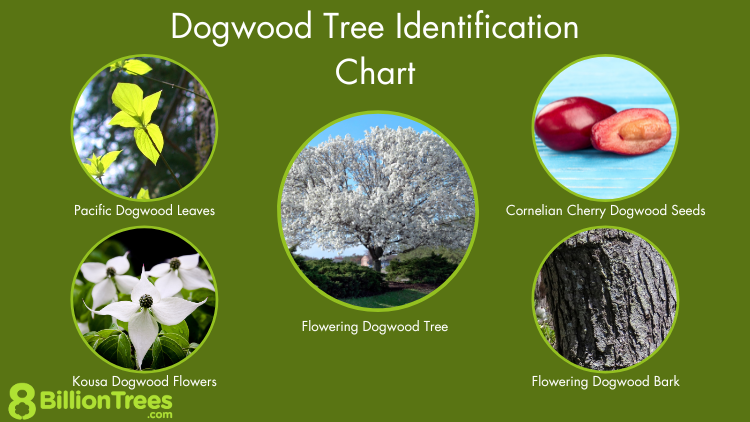 Photo Credits: 8BillionTrees.com
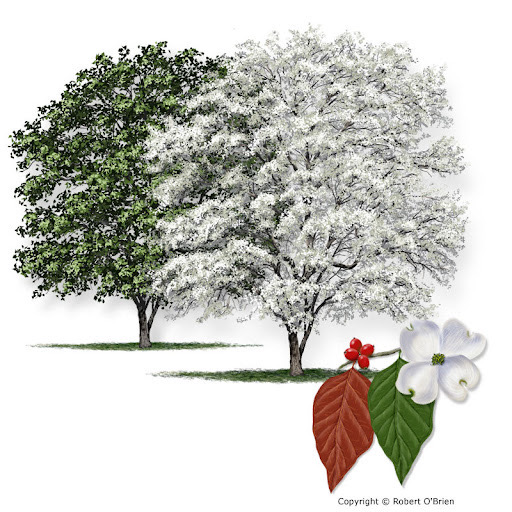 Photo Credits: Robert O’Brien
The Flowering Dogwood (Cornus florida) is also known as Dogwood, Eastern Flowering Dogwood, White Cornel, Eastern Flowering Dogwood, or White Dogwood. This species of tree is a member of The Dogwood Family.
The Flowering Dogwood is a small deciduous tree, which is not considered as a fast growing tree. It grows up to 15 to 30 feet tall and 15 to 30 feet wide.
The leaves on a Flowering Dogwood are broadly oval or ovate, simple, and opposite in arrangement. Each leaf has an entire margin (smooth edge), even though they may appear very finely toothed under a lens. The leaves are typically 3 to 6 inches in length, and 1 to 3 inches wide. During the summer the leaves are usually medium green to a dark green in colour. When it is fall the leaves turn to vibrant shades of red, purple, or maroon.
The flower buds are round and flattened at the ends of stems. They’re greenish yellow in colour, and is a biscuit kind of shape. The flower buds are glabrous and flattened at the branch ends, and are grey - green in colour at the branch ends. At the branch ends they are covered by 2 large silky scales becoming 2 of the showy white bracts. The flowers on a Flowering Dogwood are tiny yellow flowers that grow in clusters at the ends of small branches and are surrounded by four large showy white leaves that look like flower petals. The white leaves are usually easily mistaken for the petals on the flowers. The blooming season is usually from April through May, sometimes the season can last into June.
The fruit is a glossy, bright, and shiny oval drupes that are red in colour. On a Flowering Dogwood the fruit is in clusters that are tight. The clusters consists of 3 or 4 fruit on each one. The size of the fruit is 1 inch tall and 1 inch wide. The fruit of a Flowering Dogwood is on the tree from August to October. They have a bitter taste and are edible to humans, but the fruit on the tree is so loved by birds.
The stems are smooth, slender, and straight that have horizontal branching. They are sometimes coated with fine powder, but are pubescent when they’re young, and the stems are glabrous when they’re older and mature. The stems are purplish like lavender purple or red in colour. The bark is broken into small squarish and rectangular, and is greyish brown to blackish blocks.
The bark is attractive dark grey to brown or even black in colour. It is broken into small scaly blocks as the tree matures.
The flowers on a Flowering Dogwood attracts a variety of our specialized bees including Bumble Bees, Sweat Bees, Leaf - cutter Bees, and Andrenid Bees. They also attract other pollinators which include butterflies, hummingbirds, pollinating flies, and beetles.
The sap from Flowering Dogwood will not primarily attract pollinators, like the sap does on other native trees. The honey bees may visit Flowering Dogwood to collect the sap from the tree, and they will use the amount of sap they collected to make honey in their hives. Even though honey bees are non - native and out competes the native bee species, they still are important to Flowering Dogwood since they use their sap to add to the honey.
The fruit on a Flowering Dogwood provides a food source for many of our local wildlife including robins, northern flickers, red - bellied woodpeckers, northern cardinals, eastern bluebirds, wild turkeys, northern bob white quail, raccoons, foxes, chipmunks, squirrels, bears, rabbits, skunks, and deer.
The Flowering Dogwood is a host plant for the Spring Azure Butterfly, Summer Azure Butterfly, and Cecropia Moth.
🔘 Sweet Crabapple (Malus coronaria) :
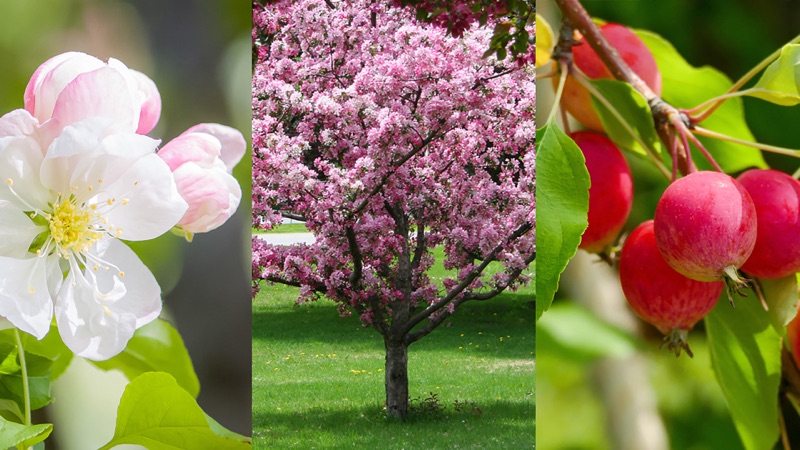 Photo Credits: Getty Images
The Sweet Crabapple (Malus coronaria) is also known as American Crabapple, Garland Crab, or Wild Crabapple. it is a member of The Rose Family.
It is a deciduous tree that is not considered as a fast growing tree. The Sweet Crabapple is known as a small to medium sized tree. This tree reaches 15 to 30 feet tall and 20 to 30 feet wide.
The leaves on a Sweet Crabapple are typically simple, alternate, and oval shaped with coarsely toothed margins. Each leaf on the tree is 1 1/2 - 3 inches long and 3/4 - 2 inches wide. The surface on the leaves is hairless on both the upper and lower surface. The colour of the leaves is yellowish - green to bright green on the upper surface, and they’re pale green on the under surface.
The flowers on a Crabapple Tree are borne in clusters of 2 - 6 flowers on slender pedicels. Each flower has a total of 5 petals and is very showy making them look very attractive on the tree. The individual flowers are 1 - 1 3/4 inches across. Some of the flowers have the scent of Apple Blossoms, while others can have more of an exotic fragrance. The blooming season is from mid spring to late spring, and the blooming lasts about 2 weeks.
The fruit of a Sweet Crabapple Tree is small, and globe shaped pome fruits that are typically less than 2 inches in diameter. They are green initially, but as the fruit matures they can turn to yellow or yellowish - green when it reaches maturity. The skin on the fruit is smooth and waxy. The fruit is juicy and sour - tasting.
The stems on a Crabapple Tree are often thorny branches, especially on the older trees. There is a presence of thorns that typically have a thicker base, a constriction, and a narrower end.
The bark is typically reddish - brown and scaly, and it has a rough texture and longitudinal scales. It may exhibit patterns or exfoliating bark. On a Sweet Crabapple Tree the bark can also be reddish - grey and brown with smooth stems. As the Sweet Crabapple matures the bark can become slightly rougher and more textured.
The flowers of a Crabapple Tree attracts specific local bees that are known as specialized bees which include bumble bees, long horned bees, mining bees, and small short - tongued bees. Crabapple Tree blossoms also attract a few local butterfly species including the Red Spotted Purple, Viceroy, Eastern Tiger Swallowtail, and a variety of Skipper Butterflies. The flowers attract other insects including pollinating flies, beetles, and the moth species that pollinate.
Sweet Crabapple fruits are a valuable food source for many animals, particularly birds and mammals. Several species are known to enjoy these fruits including robins, finches, cardinals, bluebirds, woodpeckers, orioles, deer, squirrels, chipmunks, rabbits, foxes, coyotes, wild turkeys, black bears, and wasps.
The thickets that a crabapple Tree creates provide nesting sites, shelter, and food for large and small birds.
The Sweet Crabapple is a host plant for the Red Spotted Purple Butterfly, Cecropia Moth, Promethea Moth, and Polyphemus Moth.
🔘 American Plum (Prunus americana) :
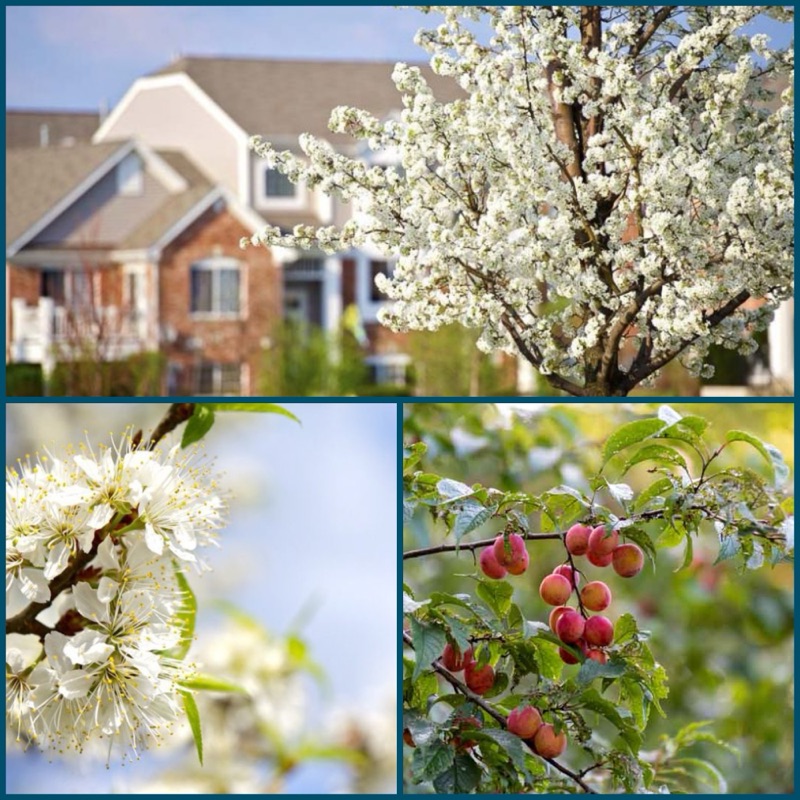 Photo Credits: GARDENIA Creating Gardens
The American Plum (Prunus americana) is also called Wild Plum, and Marshall’s large yellow sweet plum. it is a member of The Rose Family.
The American Plum is a large deciduous and fast growing tree that grows up to 15 - 25 feet tall and 15 - 25 feet wide.
The leaves on an American Plum Tree are 2 to 4 inches long. On an American Plum the leaves are alternate on the branches. They can vary in shape (ovate, oblong, elliptical, or obovate), and are smooth or somewhat hairy. The colour of the leaves on the American Plum varies depending on what season it is. In the summer the colour of the leaves is dark green. In the fall the colour of the leaves is yellow, orange, or red.
The flowers on an American Plum are small, where they are about 1 inch in diameter. Each flower on the American Plum has five petals. They are usually white in colour, but in some cases the flowers can be pinkish. The flowers on the tree can be found singly or in clusters of 2 to 3 flowers, which form flat - topped or umbel - like structures. The scent of the blossoms on an American Plum Tree is sweet and pungent. Some people find the scent of the flowers very pleasant, while others have found the scent of the blossoms is perfume -y. The blooming period of the American Plum is from early spring to mid spring, and the timing varies slighting depending on the specific location and climate.
The flowers are followed by small plums that are 1 inch in length and 1 inch wide. The plums are thick skinned, edible, and round in shape. The colouring of the plums is reddish - purple with bright yellow pulp that ripens in July and August. This species is usually grown for ornamental value and not for fruit production. Although the plums can be eaten raw, the quality of the fruit is somewhat poor. The fruits (plums) on an American Plum would be best to use them preserves and jellies.
The branches and twigs are an attractive dark reddish - brown and sometimes have thorny lateral branchlets.
The bark on an American Plum is smooth and reddish - grey with numerous horizontal lenticels. As the tree ages, the bark becomes rough with irregular ridges and exfoliating - curling strips.
The flowers of the American Plum attract some of our local bees who are called specialized bees including bumble bees, small sweat bees, mining bees, mason bees, cuckoo bees, and cellophane bees. The local butterfly species that the flowers on an American Plum Tree attract include coral hairstreak, eastern tiger swallowtail, red spotted purple, viceroy, and spring azure. The other pollinators that are attracted to the flowers on an American Plum are pollinating flies, hoverflies, and pollinating moths.
The fruit on a American Plum Tree provide a food source for many of our local wildlife including bluejays, brown thrashers, grackles, catbirds, grosbeaks, orioles, robins, waxwings, woodpeckers, squirrels, chipmunks, opossums, raccoons, foxes, bears, coyotes, deer, and wasps.
The American Plum Tree is a host plant for a few local butterfly species which includes coral hairstreak, red spotted purple, eastern tiger swallowtail, and viceroy. It is also a host plant for a few of our local moth species which includes cecropia, promethea, polyphemus, columbia, and lo.
Shrubs 🌿 :
🔘 Common Chokecherry (Prunus virginiana) :
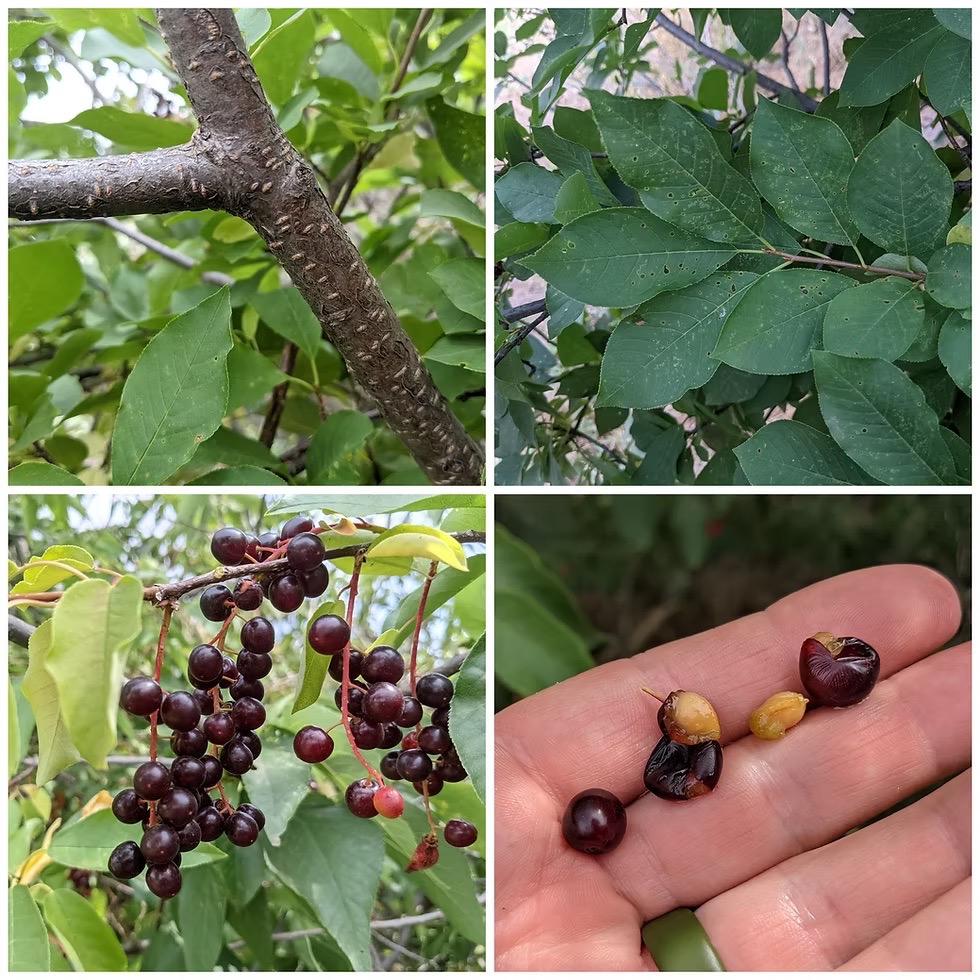 Photo Credits: FORAGE COLORADO
Common Chokecherry (Prunus virginiana) is commonly called bitter - berry, chokecherry, virginia bird cherry, western chokecherry, and black chokecherry. It is a member of The Rose Family, as well as The Cherry Family.
It is known as a deciduous shrub that is “not” a fast growing shrub. The Common Chokecherry grows 20 - 30 feet tall and 15 - 20 feet wide. When a Common Chokecherry is really happy where it was planted, the shrub can grow to be 30 feet tall and 20 feet wide.
The flowers are small and cup shaped, and about 1/4 to 3/8 inch in diameter. They are arranged in dense, and cylindrical racemes which are elongated clusters typically 3 to 6 inches long. Each flower has 5 petals and 5 sepals. The sepals are small and may be glandular - dentate (with glands or glandular serrations along the edges). The petals of the flowers are white, and the central part of the flower may have a yellowish or orange - yellow hue. The flowers are bisexual, meaning they both have male and female reproductive parts, and are pollinated by insects. The fragrance of the flowers is a pleasant, and sweet almond - like scent. Common Chokecherry flowers can be seen from anywhere between April to July.
The fruits are small, round, and about 1/4 to 1/2 of an inch in diameter. They grow on the shrub in clusters of 6 to 12. The fruits are fleshy fruits with a hard pit. The colouring of the fruit is typically reddish - purple, but to the naked eye they are more of a black colour.
The leaves are 2.5 - 10 cm long and 1.2 - 5 cm wide. They are oval to broadly elliptical in shape. The edges of the leaves are toothed with sharp pointed teeth. The leaves on a Common Chokecherry are thin and glossy with a dark green colour on the upper side, and on the underside they are a paler green in colour sometimes with tufts of hairs at the vein axils.
The twigs are slender, smooth, and brown. On the twigs that are younger they potentially could be hairy. They have a distinct, bitter, and almond like odour when they’re bruised or broken.
The bark is smooth and reddish - brown when it is young, but as the bark becomes more mature it can get scaly, grey, or even black in colour.
The flowers of the Common Chokecherry attract some of our local bees that are known as specialized bees such as bumble bees, mining bees, sweat bees, and leaf - cutter bees. These flowers also attract other local pollinators including butterflies, beetles, pollinating flies, and wasps. The Common Chokecherry flowers provide nectar and pollen for the local pollinators that are listed up above.
The fruit of a Common Chokecherry Shrub provides a food source for a variety of our local wildlife including woodpeckers, cedar waxwings, thrushes, grosbeaks, rabbits, hares, rodents, squirrels, chipmunks, raccoons, deer, elk, and moose.
The dense and thick foliage of the Common Chokecherry provides shelter, and nesting sites for many birds, small mammals, and insects.
The Common Chokecherry is a host plant for a couple of our local butterfly species such as the lorquin admiral, eastern tiger swallowtail, spring azure, red spotted purple, coral hairstreak, and two - tailed swallowtail. It is also a host plant for some of our local moth species including cecropia moth, hummingbird clearwing moth, lo moth, polyphemus moth, small - eyed sphinx moth, black - waved flannel moth, and columbia moth.
🔘 Red Osier Dogwood (Cornus sericea) :
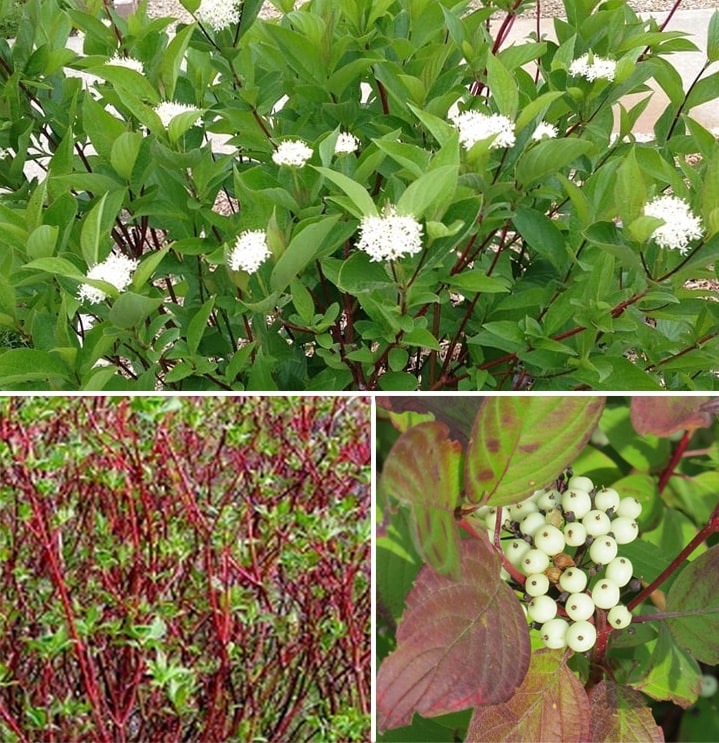 Photo Credits: BambooPlants.ca
The Red Osier Dogwood (Cornus sericea) is commonly called red willow, redstem dogwood, redtwig dogwood, red - rood, american dogwood, creek dogwood, and western dogwood. Is a member of The Cosmopolitan Family, and The Dogwood Family.
It is a deciduous and woody medium sized shrub. Red Osier Dogwood grows up to 6 - 9 feet tall and 6 - 10 feet wide. If the shrub is very happy where it was planted, the shrub can grow up to 12 feet tall and 9 - 10 feet wide.
The flowers are small, and flat - topped clusters that are typically 1.2 to 2.4 inches in diameter, and are composed of individual tiny flowers that are 5 - 10 mm wide. Being in dense and flat clusters it gives them an umbrella kind of look. The individual flowers are dull white in colour, while the overall cluster has a creamy - white hue. The scent of the flowers is often describe as orange - like with a hint of jasmine. The blooming season of the Red Osier Dogwood from late spring to early summer, where the flowers bloom from late May to early June.
The fruit is small and it is about 1/4 inch in diameter. It is round, berry - like, and drupe - like which means that they have a fleshy outer layer and a hard pit (seed) inside. Red Osier Dogwood fruit forms in umbrella - shaped clusters. They start out as being green, then when the fruit ripens the colour changes to white or pale blue. The fruit typically ripens in late summer to early fall, which is usually around August and September.
The leaves are typically simple, opposite, lance - shaped or ovate, and they have smooth margins. They are dark green in colour on the upper - side, and on the underside the leaves are more paler in colour as well as sometimes hairy. The leaves are 2 to 4 inches long and 1 to 3 inches wide. In the fall season the leaves transition to a vibrant red or reddish purple hue.
Red Osier Dogwood is easily identified by its bright red to purple twigs and branches during the dormant season (winter). During the growing season they turn to more of a muted red or a light green in colour.
The flowers on a Red Osier Dogwood Shrub attracts some of our local bees that are known as specialized bees including carpenter bees, bumble bees, and miner bees. Red Osier Dogwood flowers also attract other local pollinators including butterflies, hummingbirds, beetles, pollinating flies, and wasps. These flowers on this shrub provide both nectar and pollen for the pollinators that are mentioned up above.
The fruit on a Red Osier Dogwood provides a food source for a variety of wildlife such as songbirds, upland birds, waterfowl, squirrels, chipmunks, rabbits, bears, and beavers.
The woody and dense appearance of the Red Osier Dogwood provides nesting sites for a variety of wildlife including songbirds, squirrels, and amphibians.
The Red Osier Dogwood is a host plant for two of our local butterfly species which are the spring azure, and summer azure. It is also a host plant for two of our local moth species which are the cecropia moth, and polyphemus moth.
🔘 Pussy Willow (Salix discolor) :
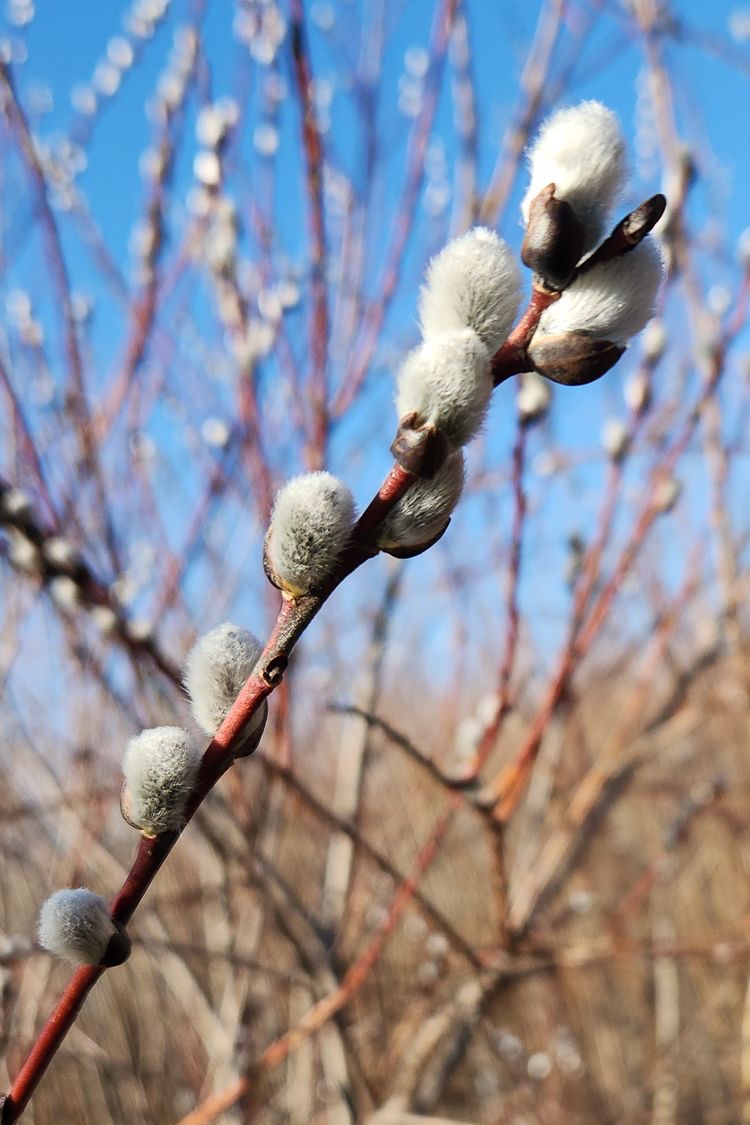 A cluster of catkins on a Pussy Willow Photo Credits: Prairie Nursery
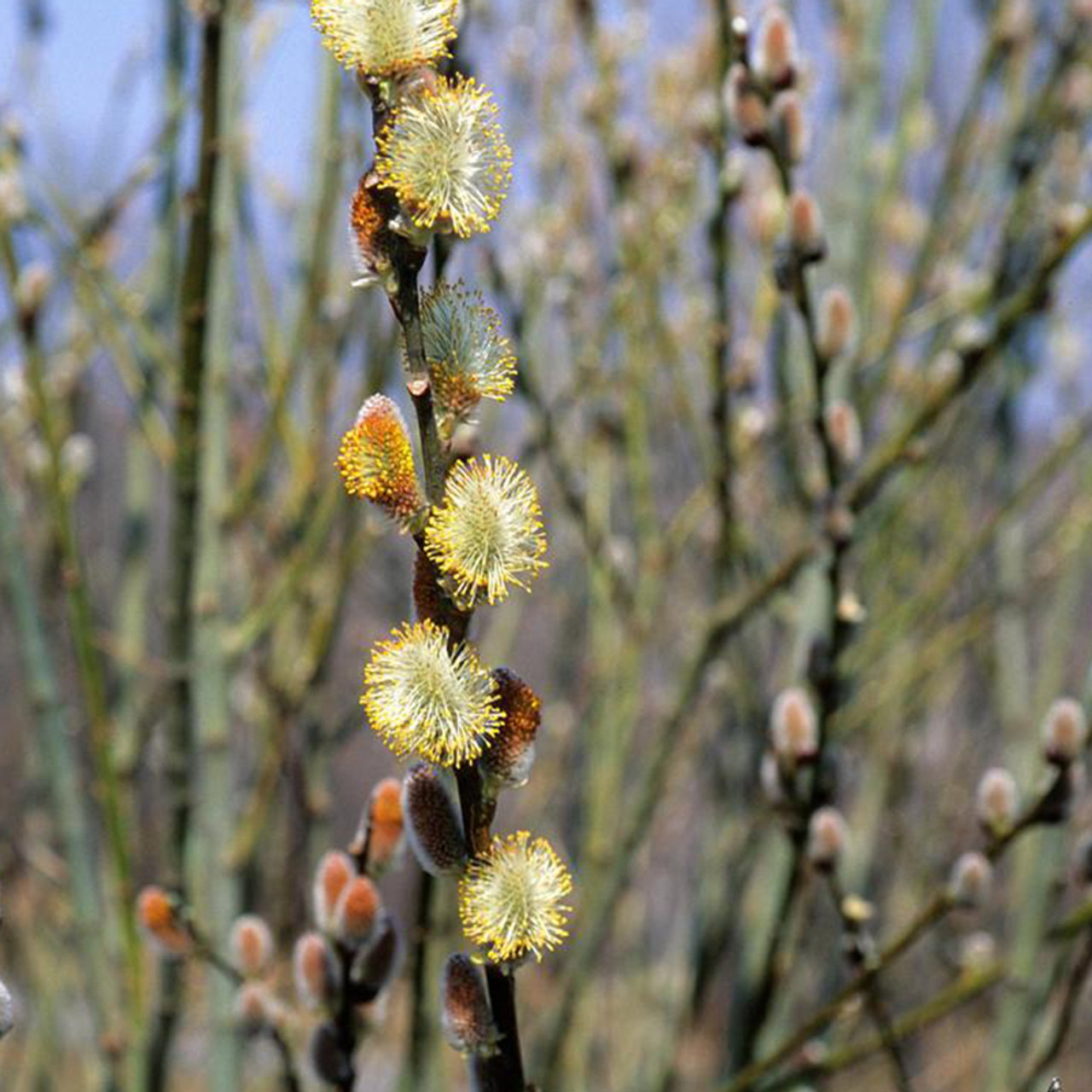 The flowers on a Pussy Willow just started to bloom. Photo Credits: Plant Addicts
Pussy Willow (Salix discolor) is commonly called american pussy willow, or glaucous willow. It is a member of The Willow Family.
The Pussy Willow (Salix discolor) is commonly called american pussy willow, or glaucous willow. It is a member of The Willow Family.
The Pussy Willow is a narrow and deciduous shrub that is fast growing. it grows up to 6 - 15 feet tall and 4 - 12 feet wide. If the Pussy Willow is very happy where it was planted, the shrub can grow up to be 25 feet tall and 15 feet wide.
The shrub produces lance - shaped, finely toothed leaves that are dark blue green on the upper surface and pale to white on the underside. During the autumn season the leaves change to a greenish - yellow colour adding some seasonal interest.
Pussy Willow is a shrub that has male reproductive organs and female reproductive organs on separate trees. A male shrub produces a display of silky, pearl grey catkins, that are 1.5 inches long along their reddish - brown stems. A female shrub produces small green catkins. The flowers bloom before the foliage appears on the shrub. They bloom in early spring from March to May.
The bark on a Pussy Willow is grey and smooth on younger stems, becoming furrowed and darker with age.
The flowers develop into fruit that are small and brown capsules within the mature catkins, which eventually split open to release the cottony seeds. These capsules are 6 to 11 mm long and yellowish when mature. The fruit (capsules) ripens in late spring to early summer.
The flowers of the Pussy Willow attract some of our local bee species which are known as specialized bees including bumble bees, miner bees, and mason bees. The butterfly species that are attracted to the Pussy Willow flowers include the red spotted purple, mourning cloak, viceroy, and red admiral. The other pollinators that are attracted to the flowers include pollinating flies, wasps, and beetles. These flowers provide nectar and pollen that is long - lasting for the pollinators that were mentioned up above.
The fruit (capsules) of the Pussy Willow provides a food source for a variety of wildlife such as ruby - crowned kinglets, chickadees, american goldfinch, yellow warblers, squirrels, chipmunks, deer, and smaller mammals.
The Pussy Willow is a host plant for three of our local butterfly species such as the mourning cloak, viceroy, and red spotted purple. It is also a host plant for a several of our local moth species such as lo moth, cecropia moth, polyphemus moth, promethea moth, small - eyed sphinx moth, imperial moth, twin - spotted sphinx moth, cynthia moth, elm sphinx moth, and modest sphinx moth.
Pussy Willow is a narrow and deciduous shrub that is fast growing. it grows up to 6 - 15 feet tall and 4 - 12 feet wide. If the Pussy Willow is very happy where it was planted, the shrub can grow up to be 25 feet tall and 15 feet wide.
The shrub produces lance - shaped, finely toothed leaves that are dark blue green on the upper surface and pale to white on the underside. During the autumn season the leaves change to a greenish - yellow colour adding some seasonal interest.
Pussy Willow is a shrub that has male reproductive organs and female reproductive organs on separate trees. A male shrub produces a display of silky, pearl grey catkins, that are 1.5 inches long along their reddish - brown stems. A female shrub produces small green catkins. The flowers bloom before the foliage appears on the shrub. They bloom in early spring from March to May.
The bark on a Pussy Willow is grey and smooth on younger stems, becoming furrowed and darker with age.
The flowers develop into fruit that are small and brown capsules within the mature catkins, which eventually split open to release the cottony seeds. These capsules are 6 to 11 mm long and yellowish when mature. The fruit (capsules) ripens in late spring to early summer.
The flowers of the Pussy Willow attract some of our local bee species which are known as specialized bees including bumble bees, miner bees, and mason bees. The butterfly species that are attracted to the Pussy Willow flowers include the red spotted purple, mourning cloak, viceroy, and red admiral. The other pollinators that are attracted to the flowers include pollinating flies, wasps, and beetles. These flowers provide nectar and pollen that is long - lasting for the pollinators that were mentioned up above.
The fruit (capsules) of the Pussy Willow provides a food source for a variety of wildlife such as ruby - crowned kinglets, chickadees, american goldfinch, yellow warblers, squirrels, chipmunks, deer, and smaller mammals.
The Pussy Willow is a host plant for three of our local butterfly species such as the mourning cloak, viceroy, and red spotted purple. It is also a host plant for a several of our local moth species such as lo moth, cecropia moth, polyphemus moth, promethea moth, small - eyed sphinx moth, imperial moth, twin - spotted sphinx moth, cynthia moth, elm sphinx moth, and modest sphinx moth.
🔘 Downy Serviceberry (Amelanchier arborea) :
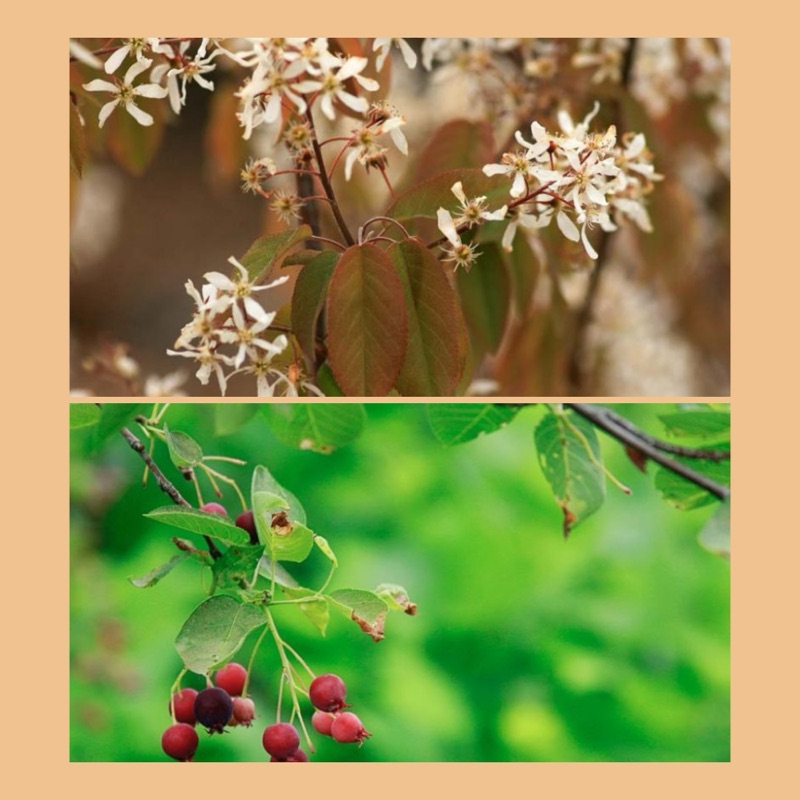 Photo Credits: Gardenia.net
The Downy Serviceberry (Amelanchier arborea) is commonly called common serviceberry, shadbush, juneberry, junebrush, shadblow, and sarvis. This shrub is a member of The Rose Family.
It is a deciduous and woody shrub that is slow growing. They grow up to be 15 - 25 feet tall and 15 - 25 feet wide. When a Downy Serviceberry is extremely happy where it got planted, the shrub can get to be 40 feet tall.
The flowers on a Downy Serviceberry are showy, and white that appear in drooping clusters on the tips of new branches. They appear way before the foliage on the shrub emerges. Each flower is about 8 - 12 mm in length, and have five strap - like petals. The Downy Serviceberry flowers have a mildly sweet and pleasant scent. The scent of the flowers is not overpowering, but it is noticeable when you are close to the shrub. The blooming period for the flowers is from late March to early April.
The leaves on a Downy Serviceberry are deciduous, alternate, and simple with an oval to oblong shape. They are finely toothed along the margins, and typically range from 1.5 to 3 inches in length and 1 to 2 inches in width. The leaves are smooth and green on the upper side, while the underside especially when young is densely hairy or downy giving the shrub their name.
When the bark is young it is smooth, greyish, with a network of darker vertical lines. When the bark is mature it is rough and scaly, with long vertical splits and furrows.
The fruit of the Downy Serviceberry is a reddish - purple to black, berry - like pome that is typically 1/3 to 1/2 of an inch in diameter. The berries are found in clusters on long stalks and are borne on trees or shrubs that have smooth and grey bark with white flowers that appear before the leaves. The fruit on Downy Serviceberry is edible, and has a sweet sometimes tart flavour that is often compared to blueberries 🫐 or grapes 🍇. The berries on a Downy Serviceberry typically ripens in late June to early July.
The flowers on a Downy Serviceberry attracts a few of our local bee species that are known as specialist bees such as mining bees, sweat bees, leaf - cutter bees, and bumble bees. These flowers attract three of our local butterfly species such as the red spotted purple, viceroy, and striped hairstreak. The Downy Serviceberry flowers also attract some other beneficial insects including beetles, pollinating flies, wasps, and hoverflies.
The fruit of the Downy Serviceberry provides a food source for a variety of local wildlife including cedar waxwings, thrushes, woodpeckers, robins, cardinals, bluejays, chickadees, chipmunks, squirrels, deer mice, and deer.
The foliage and structure of the Downy Serviceberry provides excellent nesting sites for several bird species including cardinals, robins, chickadees, orioles, goldfinches, and bluejays.
The Downy Serviceberry is a host plant for a few of our local butterfly species such as the eastern tiger swallowtail, red spotted purple, viceroy, and striped hairstreak. It is also a host plant for some of our local moth species such as the small - eyed sphinx moth, serviceberry leafroller moth, columbia moth, and giant tiger moth.
🔘 Canadian Serviceberry (Amelanchier canadensis) :
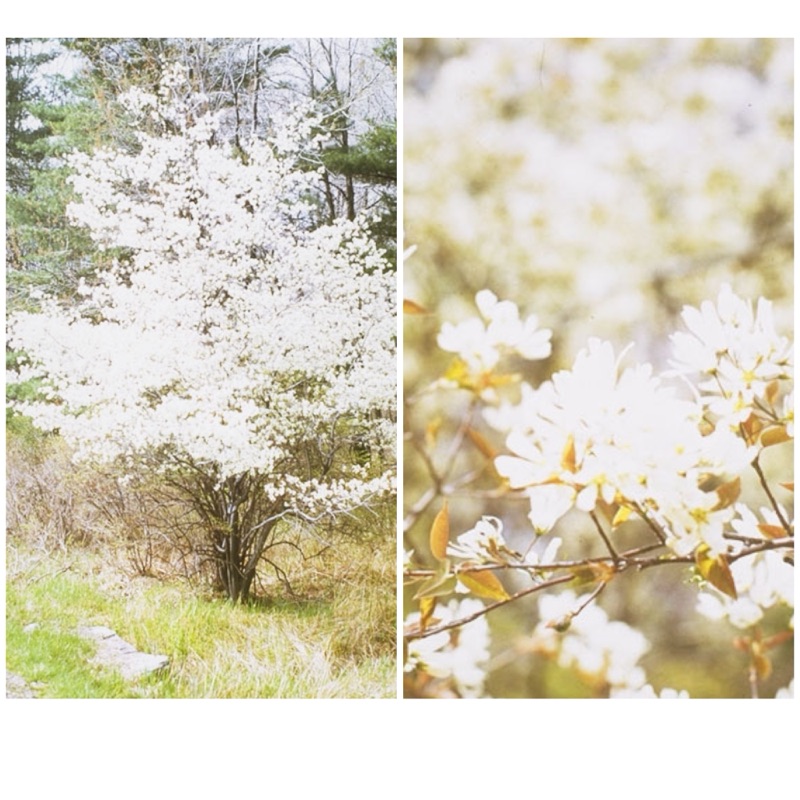 Photo Credits: Vick. Albert F. W
The Canadian Serviceberry (Amelanchier canadensis) is commonly called eastern serviceberry, juneberry, serviceberry, shadblow serviceberry, shadbush, and shadbush serviceberry. This shrub is a member of The Rose Family.
It is a deciduous and woody shrub that has a moderate growth rate. A Canadian Serviceberry typically grows to be 15 - 25 feet tall and 15 - 20 feet wide. Some say that a Canadian Serviceberry can reach to 20 - 30 feet tall and 15 - 20 feet wide.
The flowers on a Canadian Serviceberry are showy, white, and star shaped blossoms that appear in clusters on the branches in early spring before the leaves on the shrub emerges. The blooming period is typically in March to May.
The leaves on a Canadian Serviceberry are medium to dark green, with a finely toothed edge and an elliptic shape. They’re typically 1.5 inches to 2.5 inches long and 1 inch wide. The leaves transform into a stunning array of fall colours ranging from orange, red, and yellow during the fall season.
The bark on a Canadian Serviceberry is typically smooth and light grey to brown in colour with vertical dark stripes. As the Canadian Serviceberry becomes more mature and is older it can be more textured and rough with longitudinal ridges and furrows.
The fruit of a Canadian Serviceberry is a small, and round pome similar to an apple or pear, that is typically less than 1 inch in diameter which is quite small and tiny. It ripens from green to red, then to its final purplish - black colour. The flavour of the fruit is sweet and somewhat reminiscent of blueberries 🫐. The fruit is edible and can be used in various ways such as eating them fresh, baking, and making jams.
The flowers of the Canadian Serviceberry attract a few of our local bee species which are known as specialized bees such as mining bees, mason bees, and bumble bees. These flowers attract a few of our local butterfly species such as the viceroy, white admiral, red spotted purple, and striped hairstreak. The Canadian Serviceberry flowers also attract some of our beneficial insects that are known as pollinators such as the pink spotted lady beetle, eastern common firefly, hoverflies, pollinating flies, golden digger wasps, nine spotted lady beetle, black fireflies, and green lacewings.
The fruit of the Canadian Serviceberry provide a food source for a variety of our local wildlife including cedar waxwings, woodpeckers, catbirds, thrushes, orioles, robins, squirrels, chipmunks, moose, deer, rabbits, hares, and bears.
The foliage and structure of the Canadian Serviceberry provides nesting sites for several local bird species including robins, cardinals, catbirds, cedar waxwings, bluejays, chickadees, and thrushes.
The Canadian Serviceberry is a host plant for some of our local butterfly species such as viceroy, red spotted purple, white admiral, and striped hairstreak. It is also a host plant for some of our local moth species such as the serviceberry clearwing moth, banded tussock moth, and american dagger moth.
🔘 American Elderberry (Sambucus canadensis) :
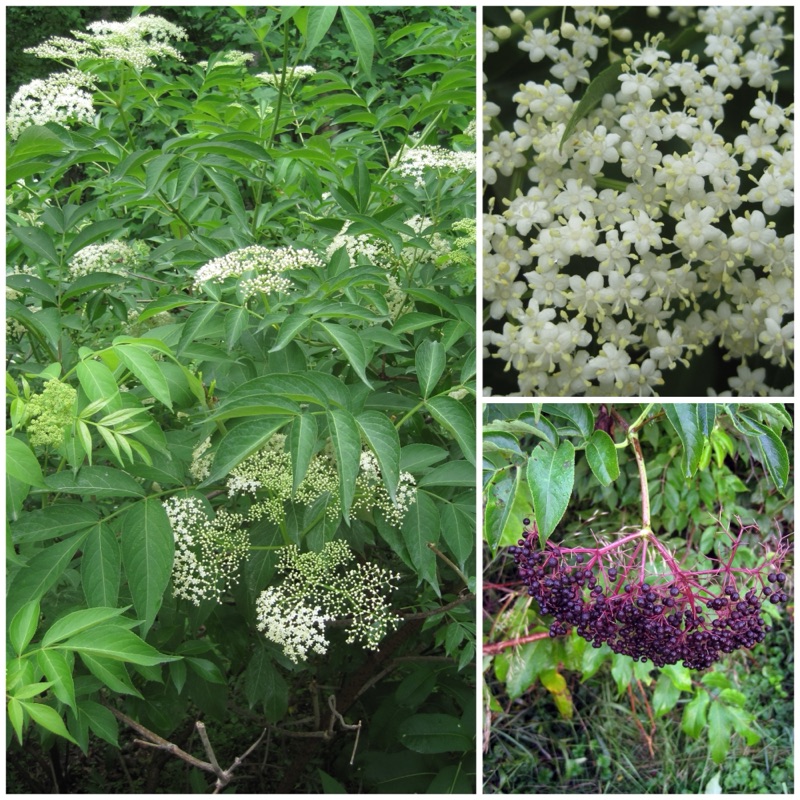 Photo Credits: U.S. Forest Service
The American Elderberry (Sambucus canadensis) is commonly called common elderberry, and canadian elderberry. This shrub is a member of The Moschatel Family.
It is a deciduous and woody shrub that is fast growing. The American Elderberry typically reaches 5 to 12 feet tall and 6 to 12 feet wide. If this shrub is extremely happy in its location, the American Elderberry can grow up to be either 19 feet tall or 20 feet tall.
The flowers on an American Elderberry are small, fragrant, and appear in large flat topped clusters at the tips of the branches. These clusters can sometimes reach up to 10 inches in diameter. The individual flowers are small, and are about 3 mm (0.1 inch) wide with four to five petals. The American Elderberry blooms from May through July, but sometimes this shrub can bloom from June to July. The blooming period depends on where you live in the country.
The leaves on an American Elderberry are usually lance - shaped, oval, or elliptic. They are typically 2 - 6 inches long and 1 - 2 inches wide. The leaves of an American Elderberry are opposite where they grow in pairs directly across from each other on the stem. The leaf margins are finely serrated, with sharp pointed teeth especially near the tip. During the summer the leaves are typically bright green in colour, and then during the fall the leaves turn to a yellowish - green colour.
When the bark on American Elderberry is young it is soft, smooth, and has a greyish brown colour. The young bark will have prominent corky bumps and small pores. As the American Elderberry becomes mature the bark is more rougher and begins to develop fissures, that have thin scales that are plate - like.
The fruit of the American Elderberry is a dark purple to black berry that is typically 3 - 5 mm in diameter, and grows in drooping clusters of 10 - 20 berries on the branches of the shrub. Each berry (fruit) contains 3 - 5 stone like seeds. The berries have a bittersweet taste to them. These berries are often mistaken for black currants and are often used in recipes like pie, jelly, and wine. The fruit typically ripens between mid August and mid September.
CAUTION ⚠️ : The raw elderberries contain a toxic substance that can cause nausea 🤢, vomiting 🤮 , and diarrhea 💩 so they should be cooked before they are consumed.
The flowers of the American Elderberry attracts some of our local bee species that are known as specialized bees such as bumblebees, little carpenter bees, mason bees, sweat bees, and leaf - cutter bees. These flowers attract some of our local butterfly species such as swallowtails, fritillaries, and painted ladies. The American Elderberry flowers also attract some of our local beneficial insects that are known as pollinators such as the pink spotted lady beetle, bee flies, common eastern fireflies, black fireflies, green lacewings, hoverflies, golden digger wasps, great black wasps, and pollinating flies.
The fruit on the American Elderberry provide a food source for a variety of our local wildlife such as songbirds, bears, squirrels, chipmunks, deer, elk, and moose.
The foliage and structure of the American Elderberry provide a nesting habitat for smaller bird species such as hummingbirds, warblers, and vireos.
The American Elderberry is a host plant for a local butterfly species which is the echo azure butterfly. It is also a host plant for some of our local moth species such as the polyphemus moth, cecropia moth, white - lined sphinx moth, imperial moth, white - marked tussock moth, and elderberry moth.
🔘 Red Elderberry (Sambucus racemosa) :
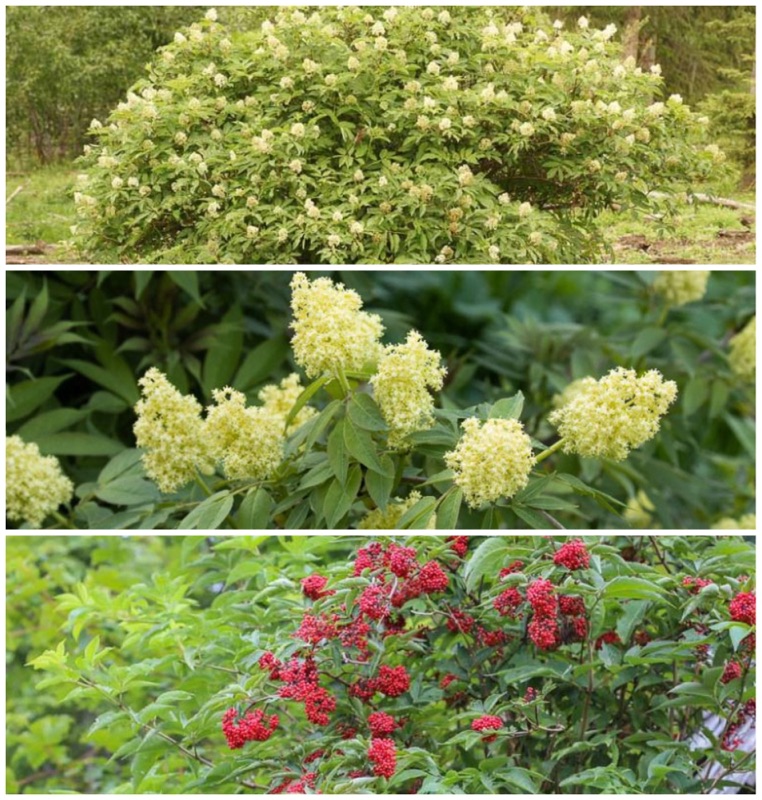 Photo Credits: gardenia.net
The Red Elderberry (Sambucus racemosa) is commonly called scarlet elder, and red - berried elder. It is a member of The Honeysuckle Family.
It is a deciduous and woody shrub that is medium sized. The Red Elderberry typically grows to a height of 4 - 20 feet and a width of 10 feet. Sometimes the Red Elderberry reaches 15 - 20 feet in height and a width of 10 - 15 feet.
The flowers on a Red Elderberry are small, fragrant, and typically white to cream - coloured. They appear in large pyramidal clusters on the shrub. These flowers are generally about 1/4 inch in diameter, and have a total of five petals. The flower buds can be pink before they open, and the stalks are green in colour. The flowers have a light floral scent to them. The blooming period for the flowers is typically from mid May to June.
The fruit of the Red Elderberry is small and bright red that are pea sized. They grow in large pyramidal clusters or conical clusters on the tips of branches. Each fruit typically contains 3 to 5 seeds. The fruit usually ripens in mid summer to late summer, which is typically from August to September.
Caution ⚠️: The fruit is edible when it is cooked. Raw berries can be toxic and can cause nausea if they are digested.
When the stems are young they’re green with creamy white pith, and they develop into dark reddish - brown or purple twigs with numerous small raised pores. The stems that are older have rough bark that is grey in colour. The pith inside the twigs is initially creamy white but turns to orange - brown with age.
The leaves are opposite and form very early in spring. There are 5 - 7 lance - shaped leaflets that make up the pinnately compound leaf. The margins of the leaflets are serrate, the tips are pointed and the base is often unequal. The upper side of the leaves is dark green in colour, and the under side of the leaves is paler as well as having fine hairs, and longer hairs on the veins. The leaf stalks and central rachis of the leaves are usually reddish - brown in colour. The buds on the branches are pinkish in colour before they open.
The flowers of the Red Elderberry attract some of our local bee species that are known as specialized bees such as bumblebees, sweat bees, leaf - cutter bees, mining bees, and mason bees. These flowers attract some of our local butterfly species such as sarah’s orangetip, echo azure, red spotted purple, red admiral, white admiral, spring azure, viceroy, hairstreaks, and swallowtails. The Red Elderberry flowers also attract other local beneficial insects that are known as pollinators including beetles, pollinating flies, bee flies, wasps, fireflies, and hoverflies. Red Elderberry flowers provide both nectar and pollen for the local pollinators that are discussed up above.
The berries (fruit) of the Red Elderberry provides an excellent food source for a wide range of local wildlife such as red - eyed vireos, ruffed grouse, sparrows, woodland thrushes, grey catbirds, brown thrushes, chipmunks, squirrels, black bears, raccoons, porcupines, mice, hares, deer, and rabbits.
This shrub offers both shelter and nesting sites for a variety of birds, and small mammals. The dense foliage of the shrub offers shelter and protection from the elements and predators. The hollow stems offer nesting cavities for local bee species such as mason bees, mining bees, and sweat bees.
The Red Elderberry is a host plant for a local butterfly species which is the echo azure. It is also a host plant for some of our local moth species such as the white - lined sphinx moth, imperial moth, polyphemus moth, cecropia moth, and white - marked tussock moth.
🔘 Northern Spicebush (Lindera benzoin) :
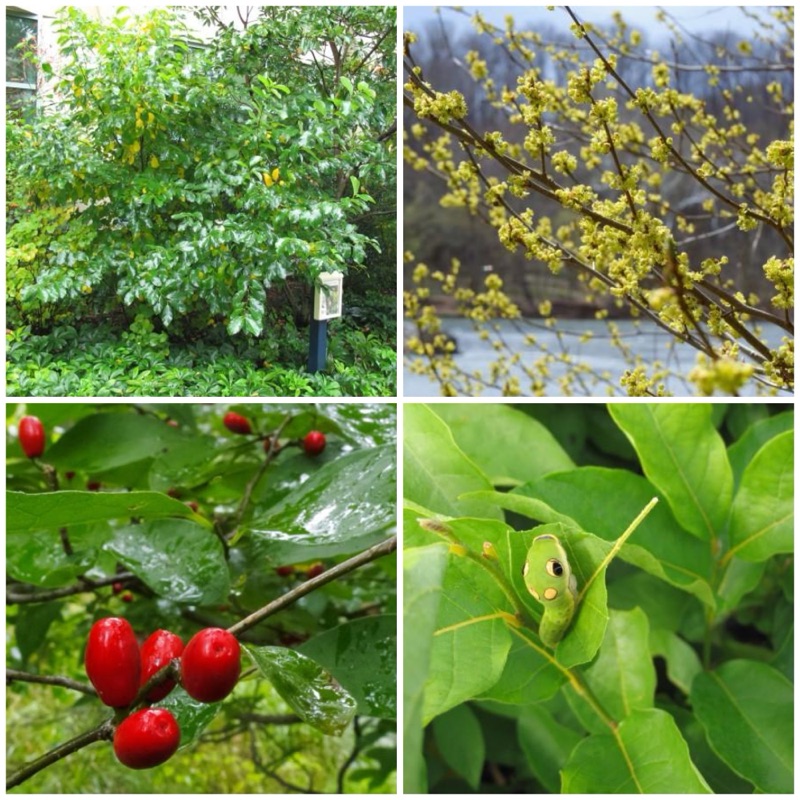 Photo Credits: Miri Talabac
The Northern Spicebush (Lindera benzoin) is commonly called common spicebush, wild allspice, or benjamin bush. It is a member of The Laurels Family.
It is a deciduous and woody shrub that is considered fast growing. The Northern Spicebush typically reaches a height of 6 - 12 feet and a width of 6 - 12 feet. Occasionally it can grow up to 15 feet tall or even 20 feet tall.
The flowers on a Northern Spicebush are small and pale yellow in colour that bloom in dense umbel - like clusters. The male flowers and female flowers are on separate shrubs. The male flowers have numerous stamens (9 or more) that stick out from each flower. The female flowers have a single pistil (the female reproductive organ). The Northern Spicebush flowers have an aromatic scent. The blooming season of the flowers is typically from late March to early April, which occurs way before the leaves become visible on the shrub.
The fruit on a Northern Spicebush is a red, shiny, and oval - shaped berry that is about 1 cm long in size. The berries are drupe meaning that they’re fleshy and have a single seed inside that is large in size. The fruit (berries) are the most flavourful when they are ripe and red in colour. They can be used when fresh, dried, or even powered. The berries (fruit) have a unique flavour profile that reminiscent of orange 🍊, allspice, and clove 🌿. The Northern Spicebush fruit (berries) typically ripens between August and September.
Caution ⚠️: While the berries (fruit) of the Northern Spicebush are generally safe to eat, it is always best to be sure you are identifying the Northern Spicebush CORRECTLY and to avoid eating any wild plant if you are unsure of its edibility.
The bark of the Northern Spicebush is light brown and speckled with small and corky spots. The twigs of the Northern Spicebush are slender, smooth, and aromatic often appearing greenish - brown to brown in colour. They can be identified by their pleasant, spicy aroma when scratched or broken.
The leaves on the Northern Spicebush do not droop, and they are aromatic when crushed. They are simple and alternate and 2 - 6 inches long with a width of 1 - 3 inches. They are broadest above the middle to oval, tip pointed, base narrowing to a sharp angle, and the margins of the leaves are not toothed or lobed. They are thin and bright green on the upper side, and then on the under side they are whitish in colour. The leaves stay green during the growing season, but then once autumn hits they change to a yellow or greenish yellow.
The flowers of the Northern Spicebush attract some of our local bee species that are known as specialized bees such as mining bees, mason bees, sweat bees, and bumblebees. These flowers attract some of our local butterfly species such as swallowtails, red admiral, red spotted purple, white admiral, viceroy, hairstreaks, and skippers. Northern Spicebush flowers also attract other beneficial insects that are known as pollinators such as predatory wasps, bee flies, beetles, pollinating flies, and hoverflies. The flowers provide both nectar and pollen to the pollinators that are listed up above.
The fruit of the Northern Spicebush provide a food source for a wide variety of local wildlife such as cardinals, grey catbirds, robins, chickadees, thrushes, woodpeckers, bluejays, deer, cottontail rabbits, opossums, squirrels, and chipmunks.
The dense foliage of the Northern Spicebush provides shelter and protection from the elements and predators for a wide variety of bird species, small mammals, and insects. The structure of the Northern Spicebush provides nesting sites for songbirds, and small mammals.
The Northern Spicebush is a host plant for two local butterfly species which are the spicebush swallowtail, and eastern tiger swallowtail. It is also a host plant for some of our local moth species such as the promethea moth, lo moth, and imperial moth.
Wildflowers 💐:
🔘 Wild Geranium (Geranium maculatum) :
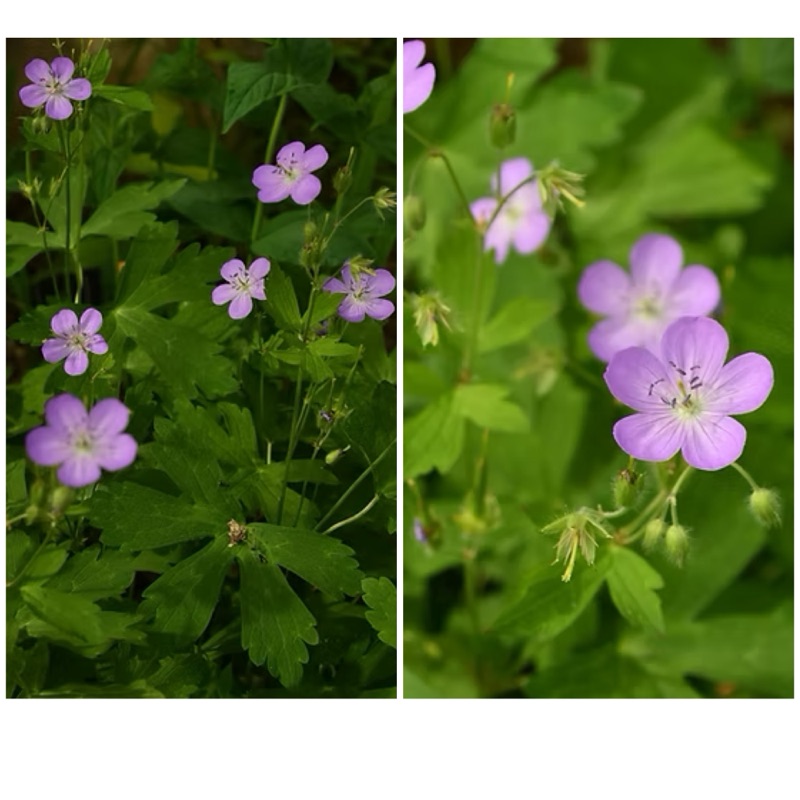 Photo Credits: CAMP CREEK NATIVES
The Wild Geranium (Geranium maculatum) is commonly called spotted geranium, wood geranium, or cranesbill. It is a member of The Geranium Family.
It is an erect native perennial flowering plant that reaches up to 2 feet in height.
The large palmately - divided basal leaves have 5 - 7 lobes which are irregularly cleft, with wedge shaped bases and have long stalks on which are white hairs. There is also one pair of opposite and smaller leaf - like bracts on short stalks on the flowering stem, which grows directly from the root.
The Wild Geranium boast attractive flowers that are saucer shaped that are typically ranging from pink to lilac or lavender in colour. These blossoms are generally 1 - 1.5 inches across featuring five rounded petals, five green sepals, and ten yellow stamens. They have a mild and somewhat pleasant, but it is not particularly a strong scent.
The fruit of the Wild Geranium is an erect, capsule - like structure that is typically 1 to 1 1/2 inches long. The main feature of the fruit is a long, central column that resembles a crane’s beak. The column is divided into five sections, each attached at the base to an oval - shaped carpel containing a single seed. When the fruit dries, the sections separate from the central column and rapidly curl outward, launching the seeds away from the plant.
Wild Geraniums typically bloom in late spring to early summer, which is usually from May to June. The fruit on a Wild Geranium typically ripens about 3 - 5 weeks after the plant has finished blooming, which usually is late summer or early fall.
The flowers on a Wild Geranium provide both pollen and nectar for local pollinators including bumblebees, mason bees, cuckoo bees, sweat bees, long - horned bees, hairstreak butterflies, skipper butterflies, sulphur butterflies, bee flies, and hoverflies.
The seeds from a Wild Geranium provide a food source for mourning doves, bobwhite quails, and deer.
The Wild Geranium is a host plant for some of our local butterfly species including the baltimore checkerspot, grey hairstreak, and eastern tailed blue. It is also a host plant for some of our local moth species including the leaf-mining moth, white - marked tussock moth, geranium budworm moth, and leaf-roller moth.
🔘 Ohio Spiderwort (Tradescantia ohiensis) :
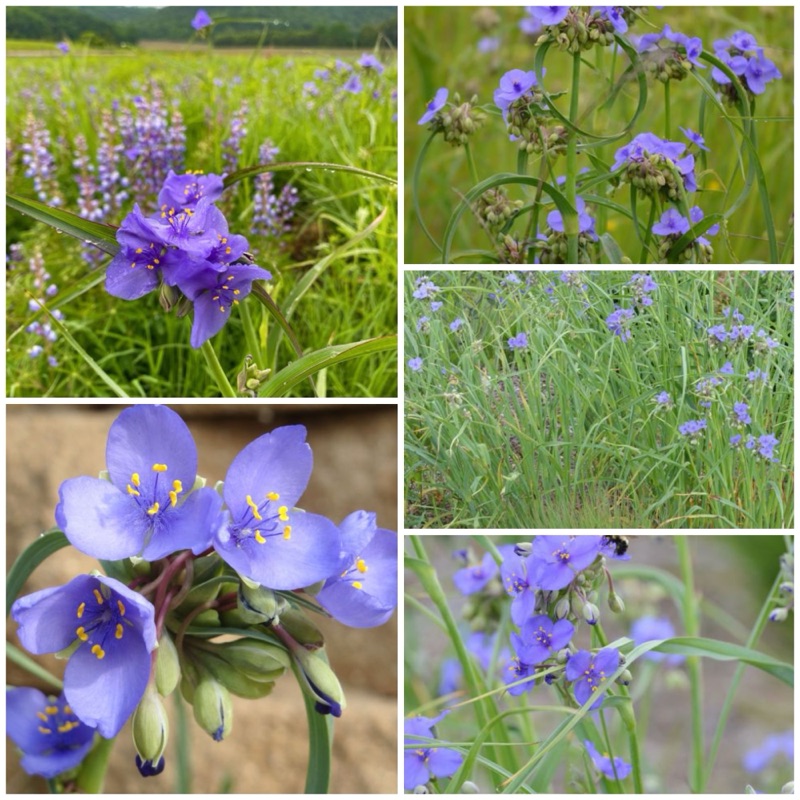 Photo Credits: PRAIRIE MOON NURSERY
The Ohio Spiderwort (Tradescantia ohiensis) is commonly called blue jacket or smooth spiderwort. It is a member of The Dayflower Family and The Spiderwort Family.
It is an herbaceous flowering plant that is vigorous and clump forming type of plant. The Ohio Spiderwort grows up to 2 - 3 feet tall and 18 - 30 inches wide.
The leaves are flat, smooth, and with a sheath that is surrounding the stem. Leaves are alternate in a spiral fashion 🌀 on the stem. Larger leaves are usually less than 1/2 inch wide, linear, flat, and very long. The edges and surfaces are smooth and the long leaf bends downward beyond the middle. Sometimes there can be fine cottony hair on the leaf edges just above the sheath.
The flowers of the Ohio Spiderwort are three petaled, bluish - purple to light blue in colour, and are typically 1 inch in diameter. Each flower has six stamens with bright yellow tips and long spiderweb - like hairs. The flowers are borne in clusters or racemes on the tops of stems, with multiple flowers opening sequentially for a long period. Ohio Spiderwort flowers open in the morning, and typically close in the heat of the afternoon. Each individual flower on the Ohio Spiderwort lasts only for one day, but there are lots more individual flowers on the flowering plant to keep the plant blooming for a long period of time.
The fruit of the Ohio Spiderwort is a dry, and light green capsule that splits into three sections when mature on the plant. These sections release 3 to 6 brown . The capsule is about 4 - 6 mm long and matures 2 - 3 weeks after flowering, surrounded by three green bracts.
Ohio Spiderwort typically blooms from late spring into mid summer, which usually occurs from June to August. The fruit of the Ohio Spiderwort ripens from late August through September.
The flowers on Ohio Spiderwort provides both nectar and pollen for local pollinators including bumblebees, mason bees, small carpenter bees, sweat bees, long - tongued bees, painted lady butterflies, monarch butterflies, american lady butterflies, hairstreak butterflies, skipper butterflies, sulphur butterflies, bee flies, hoverflies, and beetles.
The seeds from Ohio Spiderwort provide a food source for some local wildlife including goldfinches, mourning doves, sparrows, deer, rabbits, squirrels, and chipmunks.
The Ohio Spiderwort is a host plant for a local butterfly species which is the common buckeye. It is also a host plant for a local moth species which is the golden looper moth.
🔘 Western Spiderwort (Tradescantia occidentalis) :
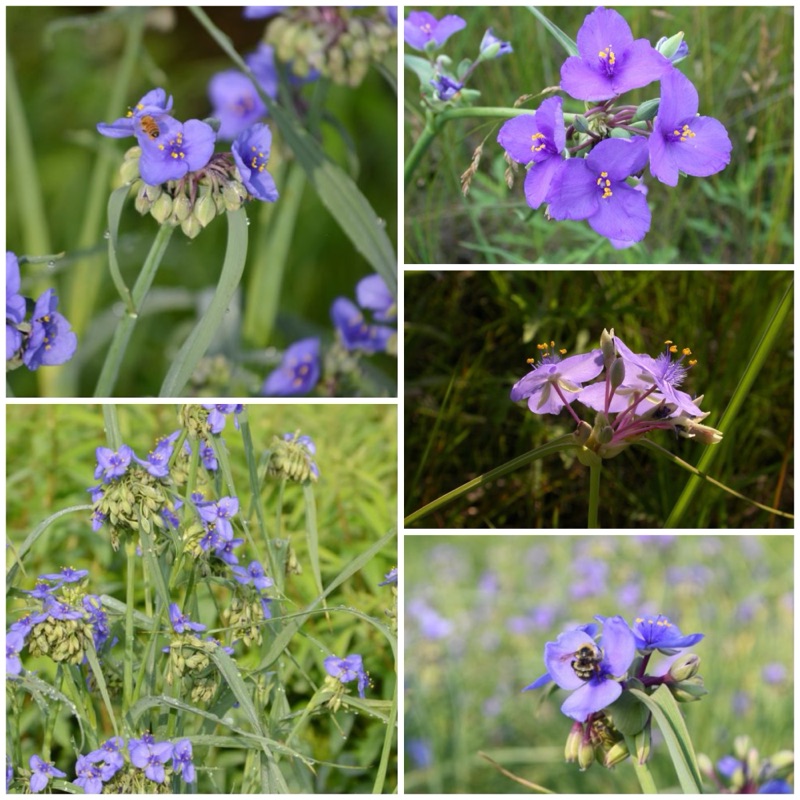 Photo Credits: PRAIRIE MOON NURSERY
The Western Spiderwort (Tradescantia occidentalis) is commonly called prairie spiderwort. It is a member of The Dayflower Family and The Spiderwort Family.
It is a vigorous and clump forming herbaceous perennial flowering plant that grows up to 12 - 24 inches tall and 12 - 18 inches wide.
The leaves are flat, smooth, and with a sheath surrounding the stem. Leaves are alternate in a spiral fashion 🌀on the stem. Leaves that are larger are usually less than 1 inch wide but are liner and flat, and 8 to 10x as long as wide. Edges and surfaces are smooth and the long leaf bends downward beyond the middle. Sometimes there can be fine cottony hairs, on the edges of the leaves just above the sheath. Leaf nodes are swollen at the sheath and the underside of the leaf more prominently shows the veining.
The Western Spiderwort flowers have three petals and six stamens with bright yellow anthers. The petals are usually blue violet to rose in colour. The flowers are borne in clusters at the top of the plant. Each individual flower lasts for only one day, and closes by the middle of day.
The fruit of the Western Spiderwort is a dry, and papery capsule that is typically 0.4 - 1.0 cm long. These capsules contain 2 - 6 seeds. The seed pods are a dark grey colour and are smaller than a grain of rice.
The blooming period of Western Spiderwort typically happens from late spring through midsummer. Specifically, its blooming period is often observed in May, June, and July. The fruit typically ripens from late summer to early fall, and the seeds are released usually from August to October.
The flowers on Western Spiderwort provide both nectar and pollen for some local pollinators including sweat bees, flies, orchid skipper butterfly, common ringlet butterfly, white fringed skipper butterfly, monarch butterfly, painted lady butterfly, american lady butterfly, bee flies, and hoverflies.
The seeds from Ohio Spiderwort provide a food source for some local wildlife including goldfinches, mourning doves, sparrows, deer, rabbits, squirrels, and chipmunks.
The Western Spiderwort is a host plant for a local butterfly species which is the common buckeye. It is also a host plant for a local moth species which is the golden looper moth.
🔘 Blue Flag Iris (Iris versicolor) :
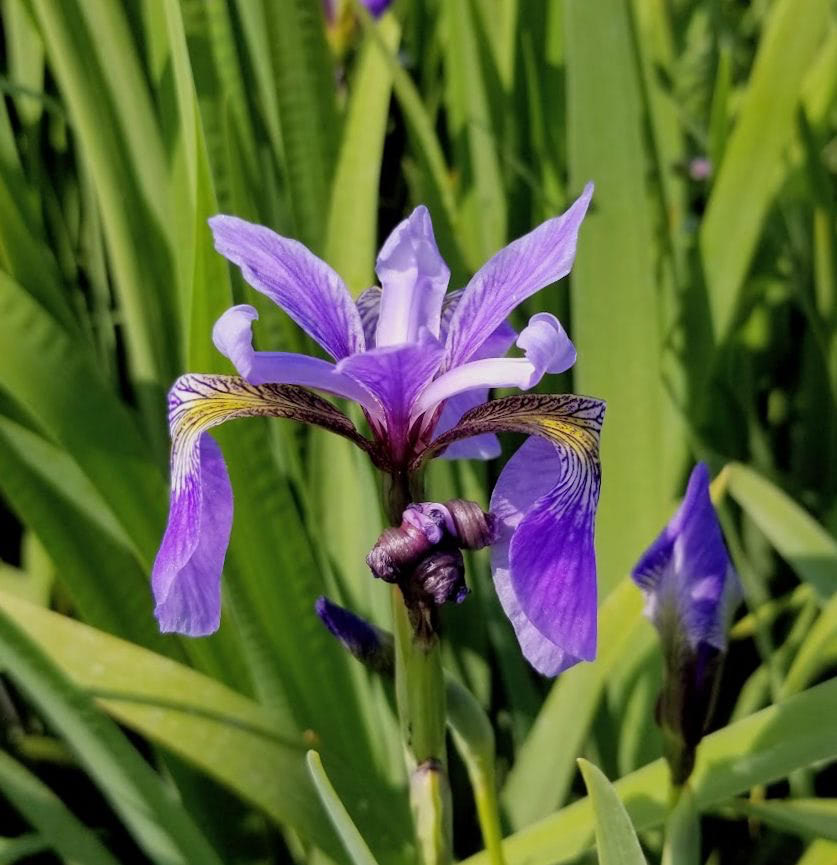 Photo Credits: Ontario Native Plants
The Blue Flag Iris (Iris versicolor) is commonly called northern blue flag, harlequin blue flag, larger blue flag, and poison flag. In Great Britain and Ireland it is known as the purple iris. It is a member of The Iris Family.
It is a graceful, sword - leaved herbaceous perennial flowering plant. The Blue Flag Iris typically grows to a height of 24 - 30 inches with a width of 18 - 24 inches.
The leaves are sword - shaped and are 20 to 40 inches long. They are green to greyish green in colour and prominently veined, with a thickened mid - rid in mature leaves. As basal leaves, they rise from the root in a fan shape and erect where they will droop later on. The flower stem may also have a few leaves and these are usually short and do not rise above the flower stalk.
The flowers are a deep blue or deep purple, sometimes with white or pale variations. They have spreading sepals with purple veins, narrowing to a white base with a greenish - yellow signal.
The fruit of the Blue Flag Iris is a three - angled and oblong capsule that matures to release seeds. These capsules are typically around 1 1/3 to 2 1/4 inches long and about 1/3 as wide. They split open at maturity, revealing numerous dark brown seeds inside.
The Blue Flag Iris typically blooms from late spring to early summer, which usually occurs from May to July. The fruit typically ripens in late summer into early fall, which usually occurs from August into September.
The flowers on Blue Flag Iris provides both nectar and pollen for some local pollinators including bumblebees, mason bees, sweat bees, digger bees, bee flies, hairstreak butterflies, skipper butterflies, hoverflies, hummingbirds, and hummingbird moths.
The seeds from the Blue Flag Iris provide a food source for some of our local wildlife including birds, small mammals, muskrats, and aquatic rodents.
The Blue Flag Iris is a host plant for a local moth species which is the virginia ctenucha moth.
🔘 Marsh Marigold (Caltha palustris) :
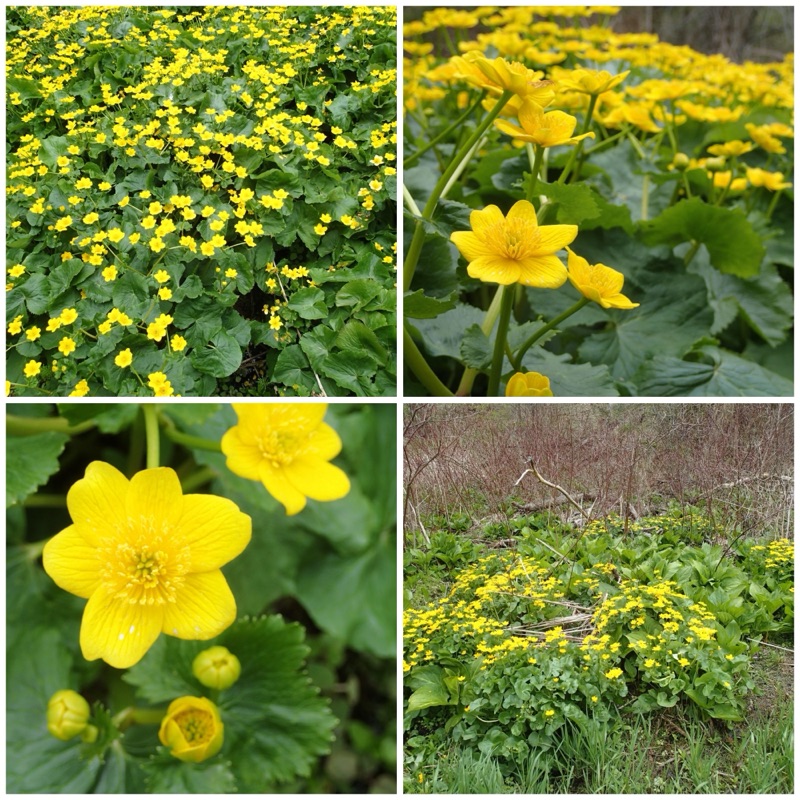 Photo Credits: TORONTO BOTANICAL GARDEN
The Marsh Marigold (Caltha palustris) is commonly called yellow marsh marigold, kingcup, or cowslips. It is a member of The Buttercup Family.
It is a rhizomatous and herbaceous perennial. Marsh Marigold has a height of 1 foot - 2 feet and a width of 1 foot - 1 foot and 6 inches.
The flowers on a Marsh Marigold are small, bright, and shiny yellow. They resemble a large buttercup, with rounded petal - like sepals. The rounded petal - like sepals on the flowers appear to be yellow in colour to us humans, but appear to be a mix of yellow and ultraviolet to the insects who visit them.
The Marsh Marigold leaves are typically glossy, heart - shaped or kidney - shaped, with smooth or slightly scalloped edges. The basal leaves on the flowering plant can be quite large, where they end up being 6 inches wide. They are typically a vibrant green, which is often described as a rich or glossy green. The basal leaves have long petioles, while stem leaves on the plant have shorter petioles or no petioles.
The fruit on a Marsh Marigold is a follicle, a unique type of fruit where the seed - containing part splits open along one side to release the seeds. The follicles (fruit) are initially green and erect, but as they mature, the fruit spread out and turn a light greenish - brown colour. The fruit (follicles) on the plant are small, and about 3/8 of an inch in length.
Marsh Marigold typically blooms in spring from April to May, with the flowering period extending into early summer. The seeds (fruit) of Marsh Marigold are typically ready and ripe from late May to early June.
The flowers of Marsh Marigold attract specialized bees that are local species that includes sweat bees, bumble bees, mason bees, and halictid bees. These flowers attract some of our local butterfly species including the red admiral, baltimore checkerspot, sulphurs, hairstreaks, and gossamer winged butterflies. The flowers also attract bee flies, and hoverflies. Marsh Marigold flowers provide both nectar and pollen to the specific pollinators that are talked about up above.
The seeds (fruit) of the Marsh Marigold provide a food source for some of our local wildlife such as mourning doves, robins, cardinals, chickadees, sparrows, bluejays, bluebirds, waterfowl, chipmunks, voles, moles, and squirrels.
Marsh Marigold is a host plant for some of our local insects such as leaf beetles, leaf - mining fly, and the baltimore checkerspot butterfly.
🔘 Wild Columbine (Aquilegia canadensis) :
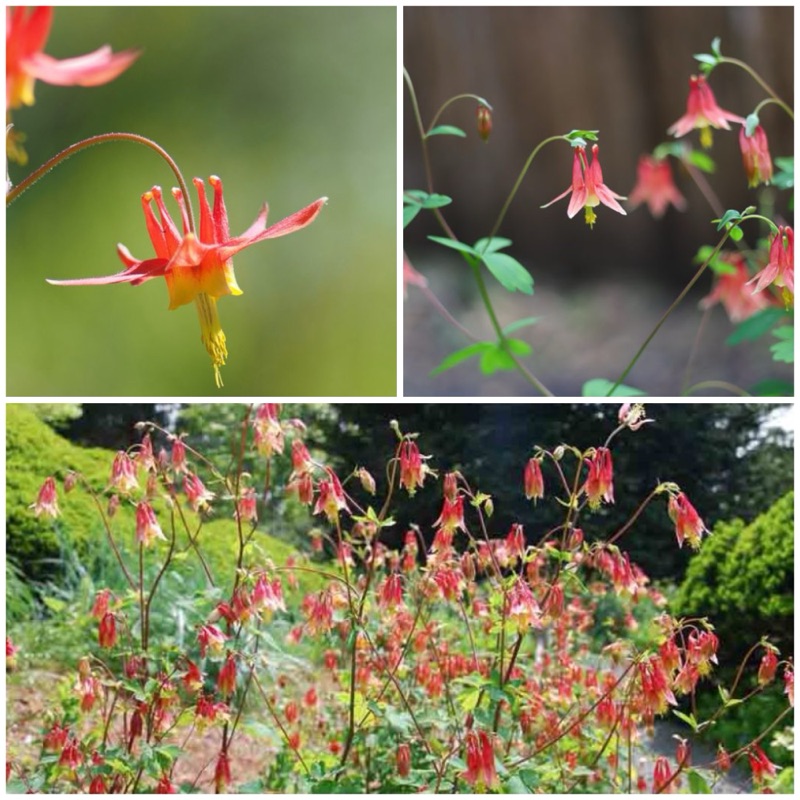 Photo Credits: Beth Beebe, Tamas V, and Shutterstock
The Wild Columbine (Aquilegia canadensis) is commonly called eastern red columbine, red columbine, canada columbine, wild red columbine, and canadian columbine. It is a member of The Buttercup Family or The Crowfoot Family.
It is an erect, branching, herbaceous, and deciduous perennial. Wild Columbine has a height of 1 foot - 3 feet and a width of 1 foot - 1 foot and 6 inches.
The flowers on a Wild Columbine are drooping, and bell shaped with petals that extend upwards. The Wild Columbine flowers are red on the outside (sepals and spurs), and are yellow on the inside(petals). There are numerous yellow stamens that dangle below the petals on the flowers. Each individual flower on Wild Columbine has five yellow petals, each with a long, upward pointing red spur that holds nectar. There are five red sepals that surround the petals of the flowers. The key feature of the flowers are long, and hollow spurs that are red in colour where they point upwards towards the nectar.
The leaves are alternate on the stems, which means they are arranged singly and in an alternating pattern. Each leaf on the plant is divided into 3 leaflets, and each leaflet is further divided into 2 or 3 lobes. The leaflets are typically rounded or broadly egg - shaped with rounded lobes. The basal leaves (those growing from the base of the plant) are long - stemmed and often form a mound of foliage. The leaves on the upper part of the stem may be shorter, less lobed, or have shorter petioles compared to the basal leaves. They can be described as having a delicate and lacey appearance. The leaves are typically a light green to blue - green in colour.
The Wild Columbine fruits are follicles, which are essentially dry, seed - containing pods that split open along one side. These follicles typically appear as five to fifteen per flower, semi - erect structures with slightly connate (joined together) tips. The fruit is a tan colour and holds many seeds. The follicles (fruit) form at the end of the pistils.
The Wild Columbine typically blooms from mid spring to early summer. Sometimes this plant blooms from mid May to late May. The blooming period of the Wild Columbine depends on where you are located in the country. The flowers usually bloom for four weeks, which is a month in time. The fruit (seeds) on Wild Columbine usually ripens in late summer into early fall, which usually occurs from August to October.
The flowers on Wild Columbine attracts a few of our local bee species such as bumblebees, digger bees, leaf - cutting bees, and sweat bees. These flowers also attract other local pollinators such as butterflies and hummingbirds.
The seeds on Wild Columbine provide a food source for some of our local wildlife such as finches, buntings, and small mammals.
Wild Columbine is a host plant for two local insect species such as the columbine duskywing butterfly, and the columbine borer moth.
🔘 Wild Strawberry (Fragaria vesca) :
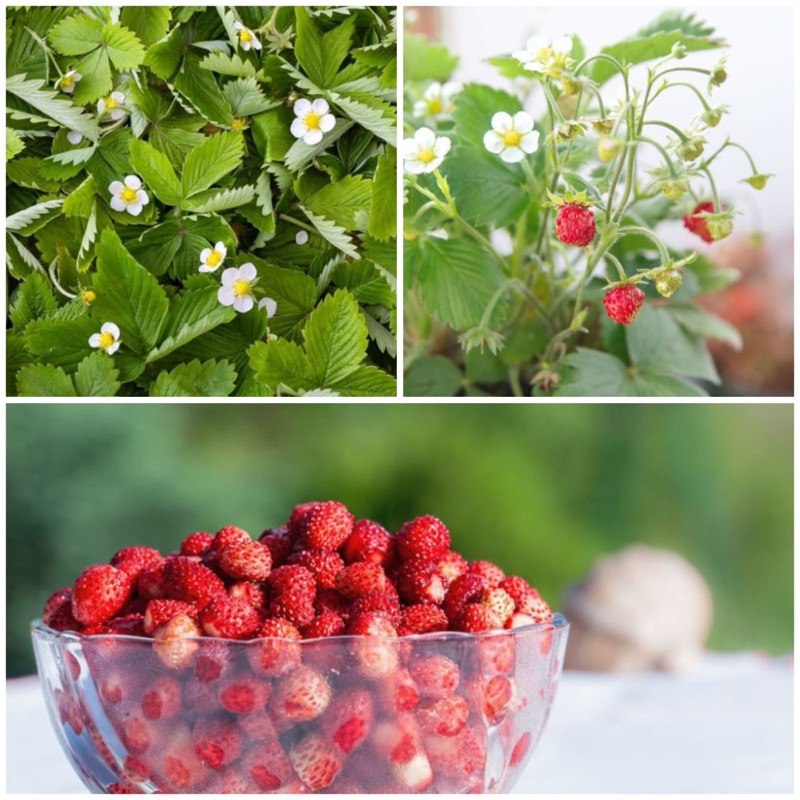 Photo Credits: Aniana, Cora Muller, MMCez, and Shutterstock
The Wild Strawberry (Fragaria vesca) is commonly called woodland strawberry, alpine strawberry, or carpathian strawberry. It is a member of The Rose Family.
It is a fast growing, herbaceous, and deciduous perennial that is a low growing flowering plant. Wild Strawberry typically grows to be between 3 - 6 inches tall and 12 - 24 inches wide. Some sources have said that Wild Strawberry can grow up to be a foot or 3 feet in height, but that doesn’t happen all the time.
The flowers on Wild Strawberry are small, and white with five rounded or oval petals. They are typically less than 1 inch wide in size, which is quite smaller compared to other native wildflowers. The Wild Strawberry flowers appear in clusters of 2 - 15 on a short and hairy stalk, which is usually shorter than the height of the leaves on the flowering plant.
Wild Strawberry leaves are trifoliate, with each leaf composed of three leaflets. The edges of the leaflets are toothed or serrated, with the terminal tooth of each leaflet being longer than the others. The leaflets are oval to wedge - shaped and rounded at the tip. Each leaflet on the plant is typically 1 to 1.5 inches long in size. The undersides of the leaves on the plant can be hairy. They are typically basal, meaning they grow from the base of the plant. The leaves are typically bluish - green or green in colour.
Wild Strawberries 🍓 are typically smaller than a regular strawberry (which is usually found at a local grocery store 🏬), and are often compared in size to raspberries. They are described as a condensed version of the domesticated strawberry. The fruit (strawberry) is a vibrant red colour, sometimes turning into a deeper shade of red when they have reached the peak of ripen season. The fruit has a translucent white inner flesh. The stem is bright green in colour with serrated edges and a subtly hairy texture. At ripeness, wild strawberries are tender and easily disintegratedue to their delicate structure and high moisture content. The fruit’s stem is shorter than the leaves. The seeds are small and green, and they are embedded in the fruit’s surface. They are known for their sweet, aromatic, and slightly floral flavour, with hints of rose and violet. They are considered to have a richer sugar content and more concentrated flavour than store bought strawberries.
Wild Strawberry typically blooms from April to May, and some sources say that the blooming period can extend to into the month of June. The fruits (wild strawberries) are ripen and typically ready for harvest from late May to October.
The flowers on Wild Strawberry attracts some of our local bee species such as sweat bees, carpenter bees, cuckoo bees, andrenid bees, and bumblebees. These flowers also attract some of our other local pollinators such as small butterflies, bee flies, and hoverflies. Wild Strawberry flowers provide both nectar and pollen for the pollinators who are listed up above.
The strawberries on a Wild Strawberry Plant provides a food source to some of our local wildlife such as thrushes, grouse, robins, eastern towhees, squirrels, chipmunks, deer, cottontail rabbits, hares, and black bears.
Wild Strawberry is a host plant for three local insect species such as the grey hairstreak butterfly, grizzled skipper butterfly, and purple - lined sallow.
🔘 Field Strawberry (Fragaria virginiana) :
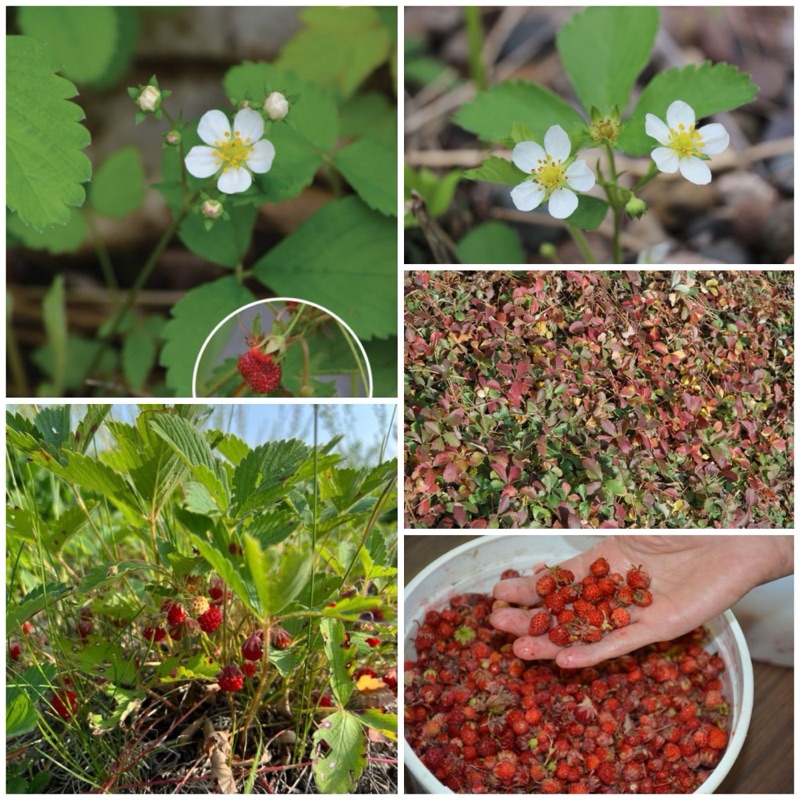 Photo Credits: PRAIRIE MOON NURSERY
The Field Strawberry (Fragaria virginiana) is commonly called virginia strawberry, common strawberry, or mountain strawberry. It is a member of The Rose Family.
It is a small, ground hugging, creeping, deciduous, herbaceous, perennial flowering plant. Field Strawberry typically grows up to 4 - 8 inches tall and 12 - 24 inches wide.
Field Strawberry has small flowers that have five white petals, and numerous yellow - anthered stamens that form the centre. The flowers are typically 2 cm in diameter. They appear in clusters or umbels with about 4 to 6 flowers per flower cluster. The flowers on the Field Strawberry are often at the same level as or slightly below the leaves of the plant.
The leaves on Field Strawberry are generally 1 to 1.5 inches long and 0.75 to 1 inch wide. They are basal type leaves, which means that the leaves grow directly from the base of the plant in a rosette - like pattern. The leaves’ complexity is trifoliate, which means that each leaf has three leaflets that are attached to a single stalk. They are typically obovate which means inverted egg - shaped, with a rounded tip and a wider end. The edges of the leaflets are coarsely toothed , with the terminal tooth often being smaller than the adjacent tooth. While some leaves may have fine hairs, particularly on the underside, others can have a relatively smooth surface. The leaves have long, hairy stalks (petioles) that connect them to the base of the plant. There are also small, fused stipules at the base of the petioles. The upper surface of the leaflets is often a bluish - green, while the underside may be a paler green or have a slightly hairy texture.
Field Strawberries 🍓 are small and bright red in colour. They are hemispheric fruit, typically about 1 cm in length, with a sweet - tart flavour. It's an aggregate fruit, meaning it's made up of many individual fruits (achenes) embedded in the fleshy receptacle. These achenes are small, yellow - brown seeds, that are about 1.5 mm long, and are partially sunken in the fruit’s surface. The fruit (field strawberries) resembles a miniature version of store bought strawberries. The fruit is fleshyand the individual achenes (seeds) are embedded in sunken pits on the surface.
The Field Strawberry blooming period is typically from late May and early June. The flowers will bloom for a three week. The berries (fruit) on the plant usually become ripe and ready to be picked from July through October.
The flowers on Field Strawberry attracts some of our local bee species such as sweat bees, carpenter bees, cuckoo bees, andrenid bees, and bumblebees. These flowers also attract some of our other local pollinators such as small butterflies, bee flies, and hoverflies. Field Strawberry flowers provide both nectar and pollen for the pollinators who are listed up above.
The strawberries on a Field Strawberry Plant provides a food source to some of our local wildlife such as thrushes, grouse, robins, eastern towhees, squirrels, chipmunks, deer, cottontail rabbits, hares, and black bears.
Field Strawberry is a host plant for three local insect species such as the grey hairstreak butterfly, grizzled skipper butterfly, and purple - lined sallow.
🔘 Downy Yellow Violet (Viola pubescens) :
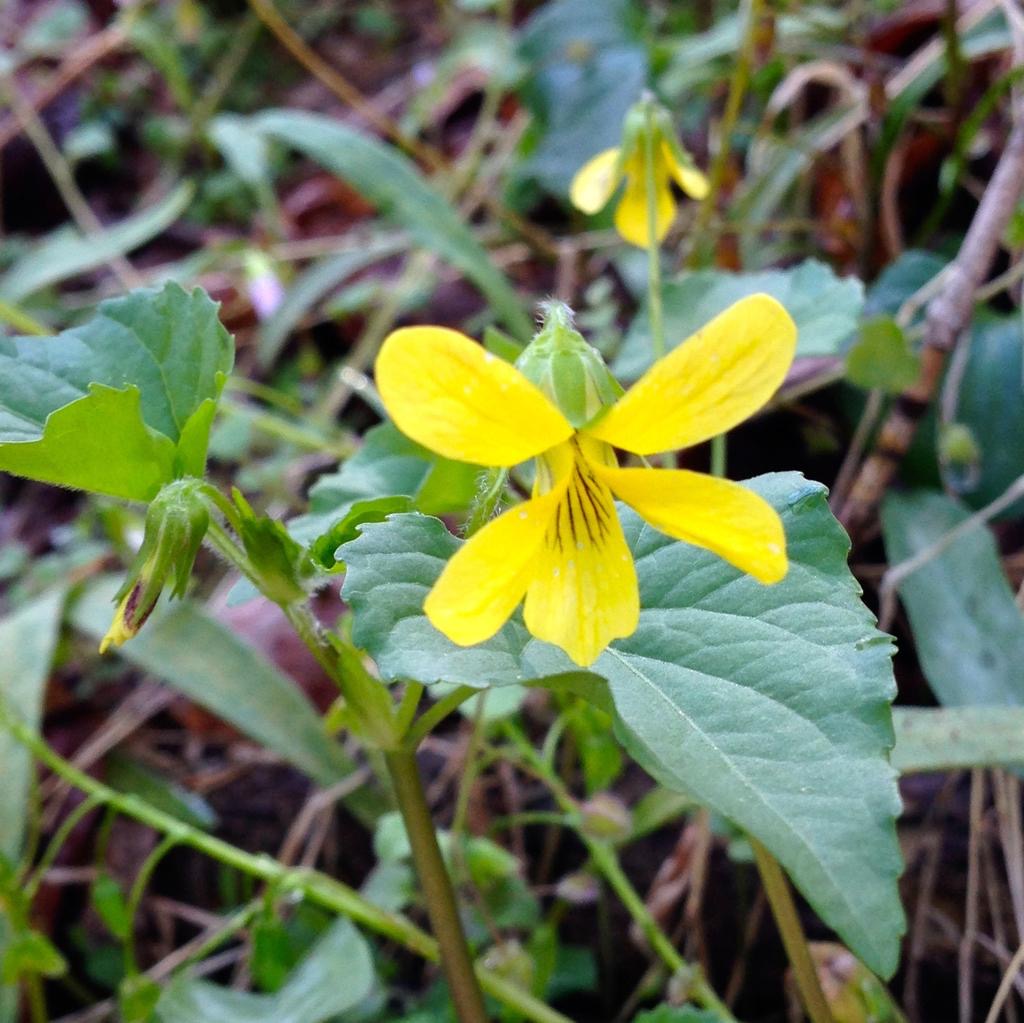 Photo Credits: Kara Jones
The Downy Yellow Violet (Viola pubescens) is commonly called downy violet, hairy yellow violet, yellow violet, and common yellow violet. It is a member of The Violet Family.
Downy Yellow Violet is a clump forming perennial wildflower that typically grows up to 6 - 12 inches tall and 6 - 12 inches wide.
Individual flowers are 3/4” with 5 yellow petals, and branched brownish - purple veins occurring along the lowest petals and sometimes on the 2 lateral petals. Small tufts of hair are at the base of the two lateral petals.
Heart - shaped basal leaves are formed in spring which are 1.5 - 2 inches long and nearly as wide. 1 - 2 leafy, hairy stems form which are 4 - 10 inches tall with alternate leaves that have hairs on the undersides and are 2 - 4 inches long and 2 - 3.5 inches wide.
Egg - shaped, 1/2 inch long, and oval 3 angled seed capsules are light green and mature to brown. They split into 3 parts to eject their seeds.
The blooming season for the Downy Yellow Violet is from late spring to early summer, which usually occurs from April through May. The blooming season of this violet depends on your location, because this violet may bloom shorter or longer. The fruit (seeds) on a Downy Yellow Violet is usually ripe and ready in July through October.
The Downy Yellow Violet flowers attract some of our local bee species that are known as specialized bees such as mason bees, carpenter bees, mining bees, sweat bees, and bumblebees. The flowers attract a few of our local butterfly species such as skipper butterflies, fritillaries, and sulphurs. They also attract some other pollinators that are local which includes bee flies and hoverflies. Downy Yellow Violet flowers provide both nectar and pollen for the pollinatorsthat are discussed in the list up above.
The fruit of the Downy Yellow Violet provides a food source for some of our local wildlife which includes juncos, ruffed grouse, wild turkey, mourning doves, bobwhite, mice, chipmunks, and squirrels.
The Downy Yellow Violet is a host plant for some of our local butterfly species such as the great spangled fritillary, regal fritillary, and meadow fritillary.
🔘 Northern Bog Violet (Viola nephrophylla) :
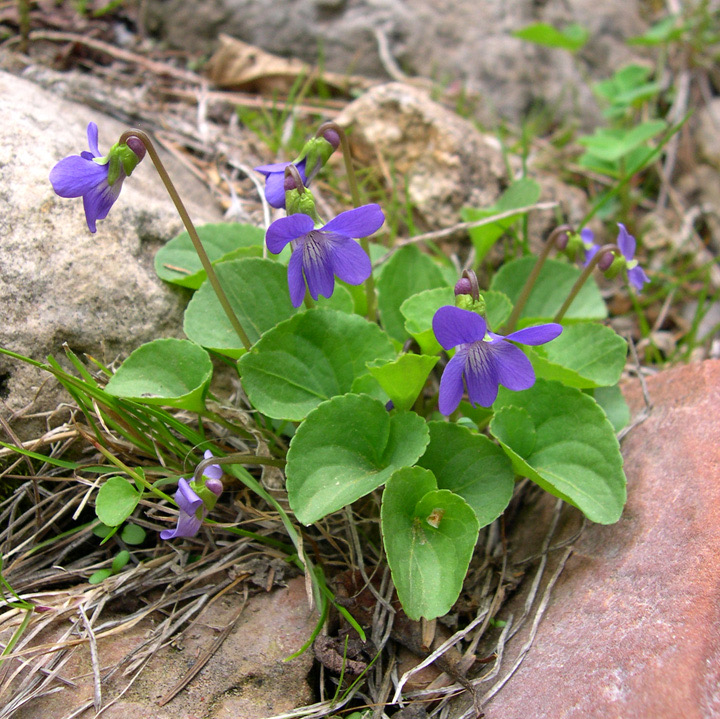 Photo Credits: Max Licher
The Northern Bog Violet (Viola nephrophylla) is commonly called bog violet, leconte violet, or kidney leaved violet. It is a member of The Violet Family.
Northern Bog Violet is a stemless and herbaceous perennial wildflower that typically grows up to 5 - 10 inches tall and 0.5 inches wide.
The flowers are typically less than 1 inch in diameter, and the flowering stalks can reach up to 8 cm in height. They are five petaled and often described as having a “bearded” look due to the hairs on the lateral petals. The flowers are most often a blue - purple colour, but the flowers can also be white in colour. A distinctive spur is present on the lower petal, which may be used to guide pollinators. The flowers are borne on long, slender stalks that rise above the leaves.
The leaves are typically cordate (heart-shaped) or reniform (kidney-shaped). They are usually as broad as they are long, and the mature leaves can reach up to 2.75 inches long. The margins can have low, rounded teeth (crenate). The leaves are smooth (hairless) and may have a purple or blue tinge on the underside. The Northern Bog Violet leaves are basal, meaning they arise from the baseof the plant on short stalks (petioles).
The Northern Bog Violet’s fruit is an ovoid capsule , which is initially green in colour and it dries to a tan colour when mature. These capsules are 7 - 10 mm long and mature in the summer. The capsules open explosively, where they release small, brown to dark olive - brown coloured seeds. The fruits are produced through both petal - bearing (chasmogamous) and petal - less(cleistogamous) flowers.
The Northern Bog Violet typically blooms in late spring to early summer from mid May to early June. The fruit on a Northern Bog Violet is usually ready from July to October.
The Northern Bog Violet flowers attract some of our local bee species that are known as specialized bees such as mason bees, carpenter bees, mining bees, sweat bees, and bumblebees. The flowers attract a few of our local butterfly species such as skipper butterflies, fritillaries, and sulphurs. They also attract some other pollinators that are local which includes bee flies and hoverflies. Downy Yellow Violet flowers provide both nectar and pollen for the pollinatorsthat are discussed in the list up above.
The fruit of the Northern Bog Violet provides a food source for some of our local wildlife which includes juncos, ruffed grouse, wild turkey, mourning doves, bobwhite, mice, chipmunks, and squirrels.
The Northern Bog Violet is a host plant for some of our local butterfly species such as the variegated fritillary, aphrodite fritillary, and great spangled fritillary.
🔘 Canada Violet (Viola canadensis) :
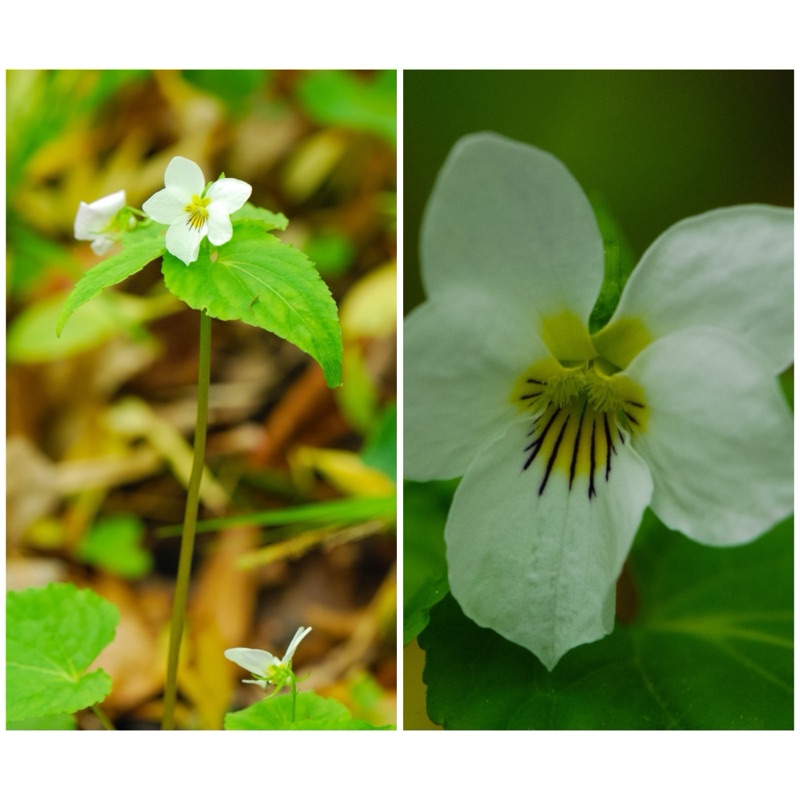 Photo Credits: Joshua Mayer
The Canada Violet (Viola canadensis) is commonly called canadian white violet, tall white violet, or white violet. It is a member of The Violet Family.
Canada Violet is a leafy - stemmed perennial that typically grows up to 8 to 16 inches tall and 1 to 2 feet wide.
The single flowers are about 1 inch across or less, and slightly irregular with 5 white petals, distinctly yellow at the base, and dark purple lines on the lower petals. The side petals are “beared” with tufts of short hairs. The backs of the petals are tinged purple.
The basal and stem leaves are mostly heart - shaped with scalloped edges or shallow teeth. Each individual leaf on the plant is 2 - 4 inches long and 3 inches wide. The tips are sharply pointed. The stem leaves are longer and narrower than the basal ones. Some fine hairs are on leaf edged and along major veins.
The oval capsule is up to 1/2 inch (half an inch) long and covered in fine hairs. The capsule changes from green to brown before splitting into 3 sections to release numerous brown seeds.
Canada Violet blooms primarily from mid - spring to early summer, which typically occurs from April to June. The fruit on a Canada Violet usually appears on the plant just two months after the flowers have bloomed on the plant. Canada Violet’s fruit is typically from August to October.
The Canada Violet flowers attract some of our local bee species that are known as specialized bees such as mason bees, carpenter bees, mining bees, sweat bees, and bumblebees. The flowers attract a few of our local butterfly species such as skipper butterflies, fritillaries, and sulphurs. They also attract some other pollinators that are local which includes bee flies and hoverflies. Downy Yellow Violet flowers provide both nectar and pollen for the pollinators that are discussed in the list up above.
The fruit of the Canada Violet provides a food source for some of our local wildlife which includes juncos, ruffed grouse, wild turkey, mourning doves, bobwhite, mice, chipmunks, and squirrels.
The Canada Violet is a host plant for some of our local butterfly species such as the great spangled fritillary, variegated fritillary, aphrodite fritillary, and atlantis fritillary.
🔘 Wild Blue Lupine (Lupinus perennis) :
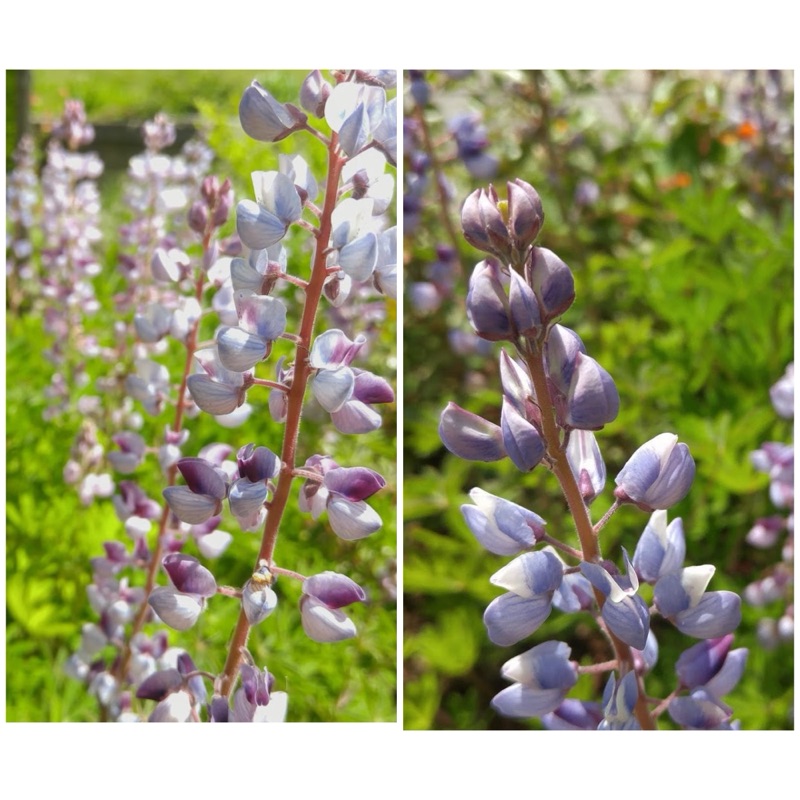 Photo Credits: Ontario Native Plants
The Wild Blue Lupine (Lupinus perennis) is commonly called wild perennial lupine, sundial lupine, blue lupine, indian beet, or old maid’s bonnets. It is a member of The Legumes Family.
Wild Blue Lupine is a showy perennial that typically grows up to 24 inches tall and 10 - 18 inches wide.
The blue flowers appear on multiple spikes up to 8 inches wide. They are typical pea - shapedflowers with 5 petals that may be two - toned in blue and purple or blue and white. They can also rarely appear as pink or white flowers. Each individual flower on the plant is 3/4 to 1 inch long. The lower petals are forced opened by bees to reveal a horned - shaped stamen.
The green palmate compound leaves grow on a long stem and stalk, where the leaves have 7 - 10 leaflets that radiate from a central point. Leaflets are oblanceolate, with hairy undersides and are up to 2.5 inches long and 1/2 inch wide. The base is tapered, the tip is rounded and may have a sharp point at the apex.
The pea pods are hairy and about 2 inches long. They turn black at maturity and have 2 - 7 seedsthat can be expelled several feet when the pod splits.
The blooming period for Wild Blue Lupine is typically from mid spring to mid summer, which usually occurs from May through June or July. The fruit of this plant is usually occurs from July and August, sometimes the fruit season of the plant goes till September or October.
The flowers of Wild Blue Lupine attracts some of our local bee species that are known as specialized bees such as leaf - cutter bees, mason bees, carpenter bees, and bumblebees. It attracts some of our local butterfly species such as skippers, hairstreaks, and sulphurs. Wild Blue Lupine flowers provide both nectar and pollen for the pollinators that are discussed up above.
The fruit (seeds) of the Wild Blue Lupine provides a food source for some of our local wildlife such as songbirds, small mammals, chipmunks, and squirrels.
Wild Blue Lupine is a host plant for three local butterfly species such as the karner blue, frosted elfin, and eastern persius duskywing.
🔘 Wild Blue Phlox (Phlox divaricata) :
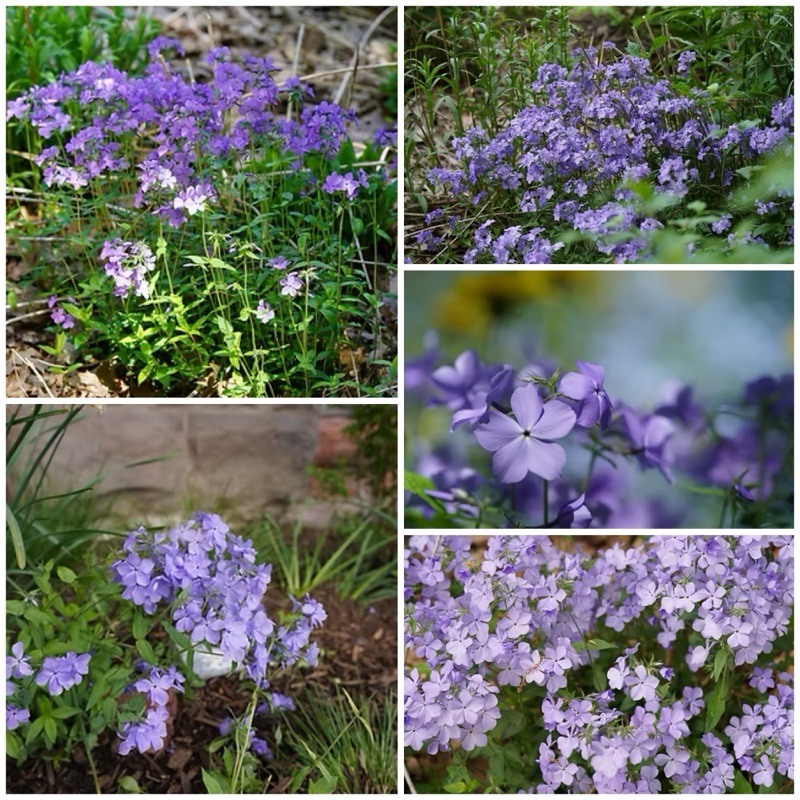 Photo Credits: Dorte Windmuller
The Wild Blue Phlox (Phlox divaricata) is commonly called blue phlox, wild sweet william, or louisiana phlox. It is a member of The Phlox Family.
Wild Blue Phlox is a semi evergreen perennial that typically grows up to 6 - 12 inches tall and 10 - 20 inches wide.
This phlox species has loose clusters of slightly , tubular, lilac to rose to blue flowers (to 1.5" wide) with five, flat, wedged shaped, notched, petal - like lobes that appear at the stem tips in spring. The Wild Blue Phlox’s stamens are recessed. Stems are both hairy and sticky. The five petals are various shades of sky blue to violet.
It has hairy, lance - shaped to elliptic opposite leaves (to 2" long). They can form large colonies over time as leafy shoots spread along the ground rooting at the nodes.
The fruit is an ovoid (egg-shaped) capsule. It's a three - chambered capsule. Initially green, the capsule dries to a brown colour as it matures. The capsule splits open at the top into three sectionsor valves, in which releases the seeds that are inside. The seeds are small and dark in colour.
The blooming period for Wild Blue Phlox is typically from April to June. The fruit of the Wild Blue Phlox is usually ready from July through August.
The flowers on the Wild Blue Phlox attracts some of our local pollinators such as bumblebees, carpenter bees, mason bees, swallowtail butterflies, skipper butterflies, sulphur butterflies, hairstreak butterflies, hummingbirds, and moth species that can pollinate. Wild Blue Phlox flowers provide both nectar and pollen for the pollinators that are listed up above.
The fruit (seeds) of Wild Blue Phlox provide a food source for some of our local wildlife including birds, small animals, chipmunks, squirrels, and rabbits.
Wild Blue Phlox is a host plant for two local insect species such as the grey hairstreak and phlox moth.
🔘 Golden Alexander (Zizia aurea) :
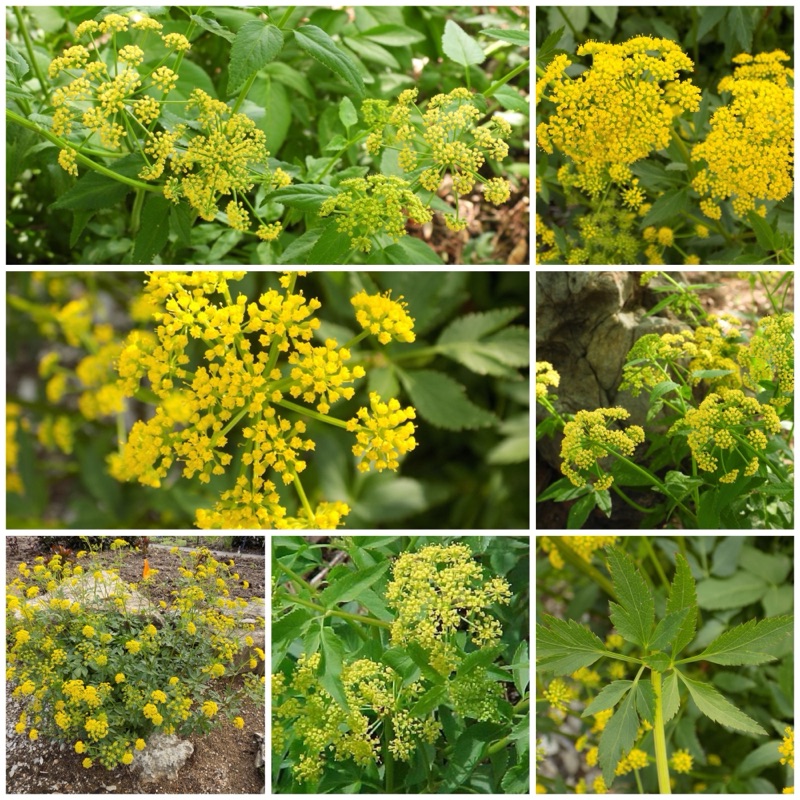 Photo Credits: MISSOURI BOTANICAL GARDEN
The Golden Alexander (Zizia aurea) is commonly called golden zizia, yellow alexander, or yellow golden alexander. It is a member of The Parsley Family or The Carrot Family.
Golden Alexander is a short lived flowering herbaceous perennial plant that typically grows up to 18 - 36 inches tall and 18 - 24 inches wide.
The flowers are small, typically less than 1/8 inch long, and have five petals that may curl inward. Each flower has five sepals, five petals, and five stamens protruding from between the petals. They are bright yellow or golden yellow in colour. The tiny flowers are arranged in flat - topped or slightly rounded clusters like the shape of umbrellas.
The leaves are compound, with 3 to 5 leaflets per leaf. The edges of the leaflets are typically serrated, which means that the leaflets have small teeth. Leaflets can vary from broad and rounded(ovate) to long and narrow (lanceolate). The leaves are arranged alternately on the stems, with basal leaves (at the base of the plant) having long stalks (petioles) and upper leaves having shorter stalks or being stalkless (sessile). Some leaves have slightly heart - shaped (cordate) based, while others are rounded or broadly tampered. One or two lobes may occur near the bases of some leaves.
The fruit is ovoid (egg-shaped) and is slightly flattened . It is relatively small, with each section being about 3 - 4 mm long. The fruit is a schizocarp, meaning it splits into two sections when dry but doesn’t open to release the seeds. Each section of the mature fruit has five distinctlongitudinal ribs. They start green, then turn purple - green, and eventually brown as they mature.
The blooming season for Golden Alexander is usually from May to July. The fruit of Golden Alexander is usually ready in during the fall season, which usually is from September through October.
The flowers on Golden Alexander attract some of our local pollinators such as sweat bees, mason bees, mining bees, bee flies, hoverflies, skipper butterflies, sulphur butterflies, hairstreak butterflies, eastern common fireflies, and black fireflies.
Golden Alexander is a host plant for a local butterfly species which is the Eastern Black Swallowtail.
As you can see here in Canada we have several great spring blooming trees, shrubs, and wildflowers that are all native to the country. Each of these trees, shrubs, and wildflowers provide and support many of our pollinators, butterflies, moths, and other beneficial insects. All of them are a host plant that supports our local butterfly species, moth species, and other insect species where the females will lay their eggs on these plants so their life cycle can repeat over and over again.
Without these plants the butterfly species, moth species, and insect species are not able to complete their life cycle and their life cycle won’t be able to repeat over and over again.
They would use their secondary host plants if their primary host plant(s) are not available to them, but their secondary host plants are usually non native, and they wouldn’t provide the proper food that their babies will need in order to thrive out in nature.
Planting our local tree species, shrub species, and wildflower species that bloom in the spring will provide both nectar and pollen for our native pollinators, as well as host plants for many of our pollinators including butterflies;moths;and other insects.
Remember for the next time when you and your family are wanting to support and provide for our local pollinators and wildlife especially during the spring to add local tree species, shrub species, and wildflower species that bloom during the spring season to your property because 1. these plants are native to Canada, 2. they provide both nectar and pollen for many of our local pollinators, 3. these plants are actually host plants to several of our local pollinators, 4. they provide fruits and seeds for many of our local wildlife, 5.these plants provide both shelter and protection for both insects and small wildlife from inclement weather and predators, and 6. the plants are better for our environment and ecosystems.
If you have a small property you can add a couple of these native plants that bloom during the spring, but if you have a big or large property you can plant several of these plants on your property. The size of your pollinator habitat or pollinator haven for our local pollinators does not matter to them, and they will come visit no matter the size. Our pollinators will thank you for creating a space just for them on your property.
When you support pollinators and their life cycles by planting tree species, shrub species, and wildflower species that are native to Canada it is VERY IMPORTANT to NOT USE any type of HERBICIDE, PESTICIDE, or INSECTICIDE because these chemicals will do more harm than good towards our local pollinators, and the life cycles of our pollinators.
Once you add some of these tree species, shrub species, and wildflower species on your property you will get to see and experience how amazing these plants are, the ways they benefit both pollinators and wildlife, watching the life cycles of butterflies and moths repeat themselves in front of your eyes, how they provide shelter and protecting for both insects and wildlife, and how much better they are for our environment and ecosystems. As the saying goes “If you plant it they will come.”
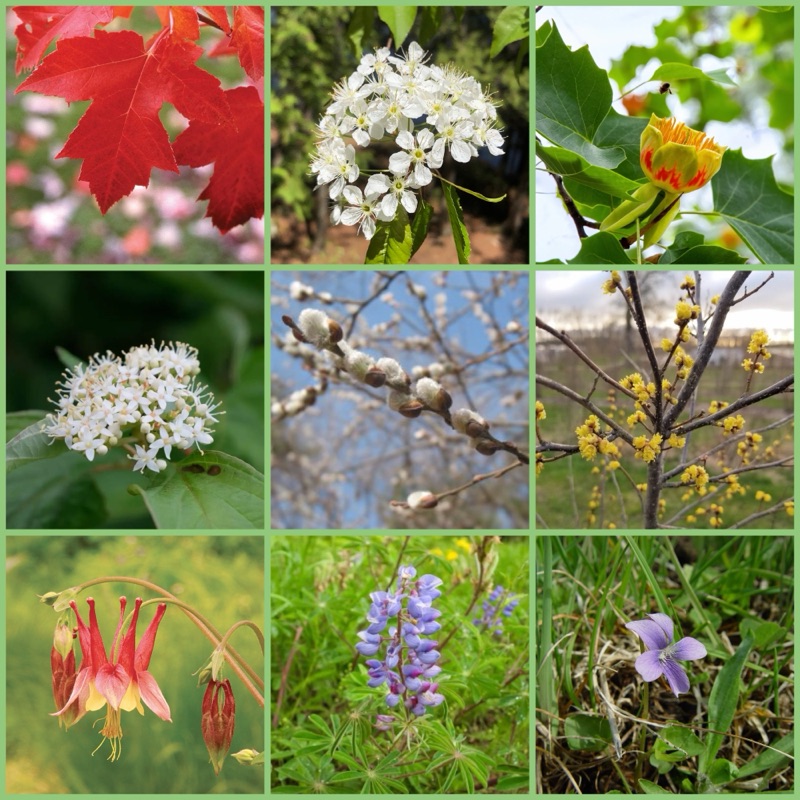 Photo Credits: Johnson’s Nursery, Ontario.ca, Freedom Tree Farms, Little Tree Farm, FERGUSON Tree Nursery, Ontario Native Plants, MISSOURI WILDFLOWERS NURSERY, The Plant Native, and Arthur Haines.
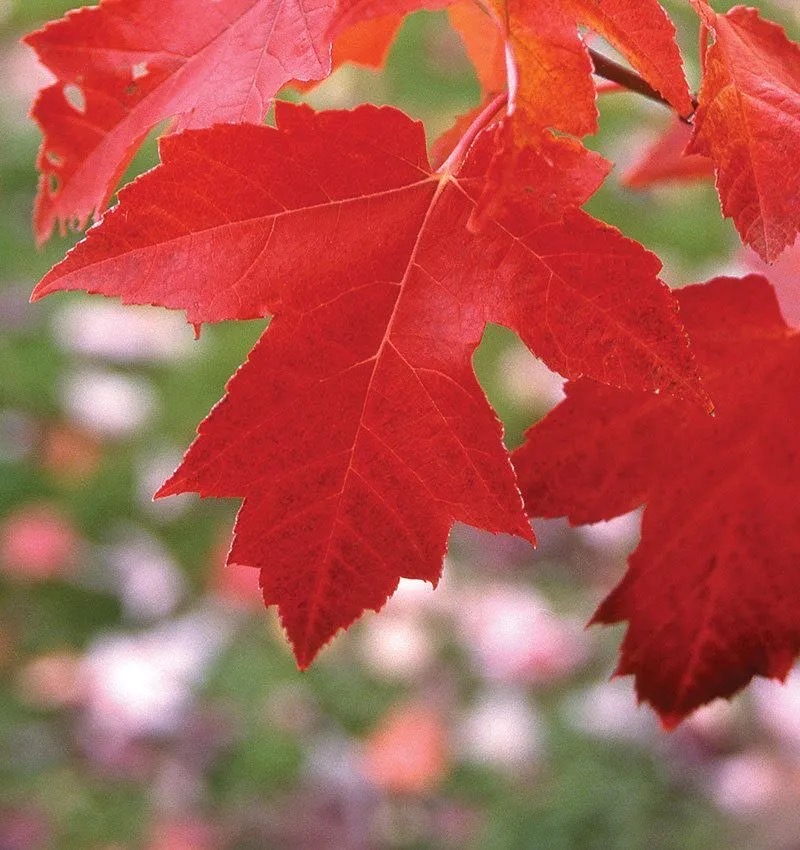 Photo Credits: Johnson’s Nursery
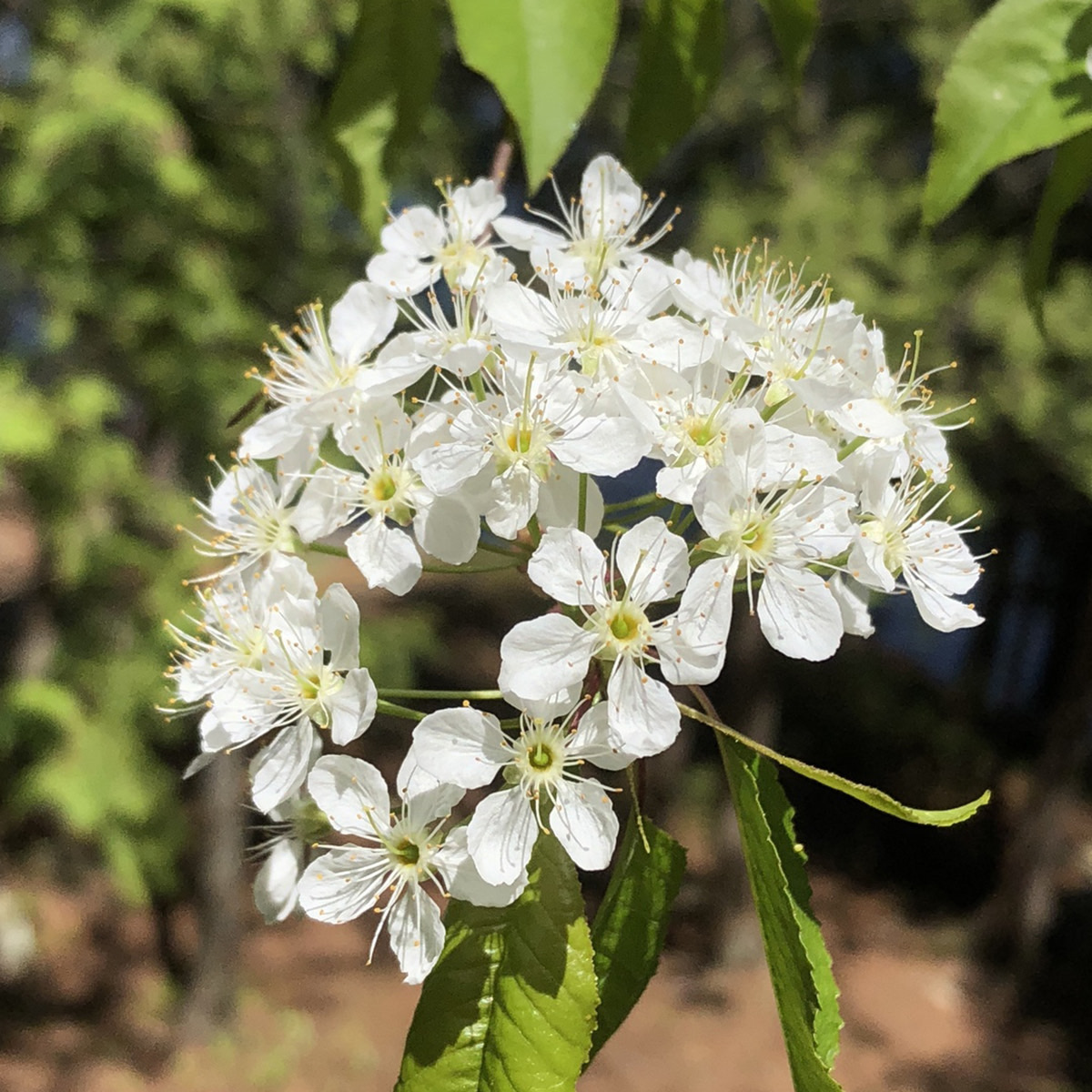 Photo Credits: Ontario.ca
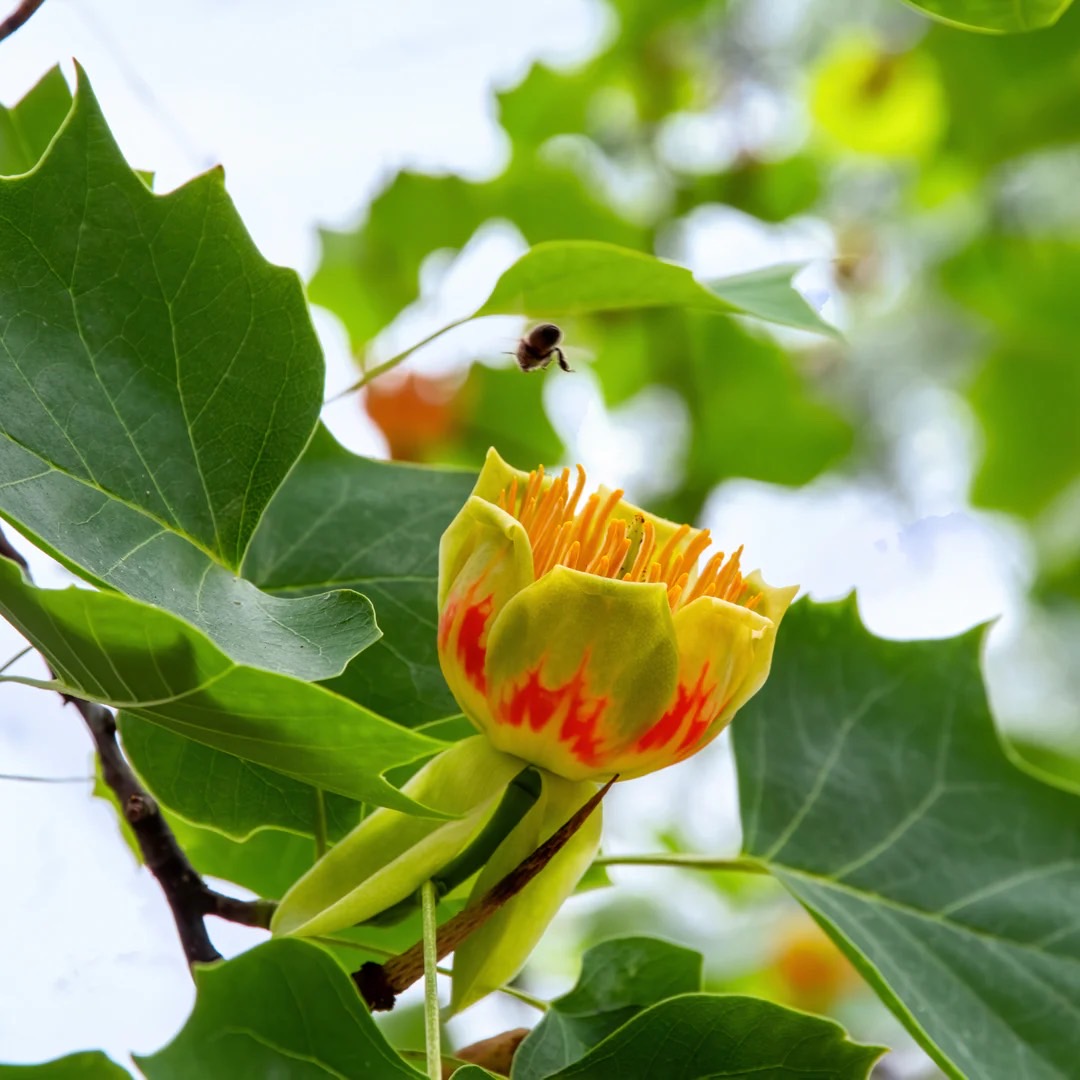 Photo Credits: Freedom Tree Farms
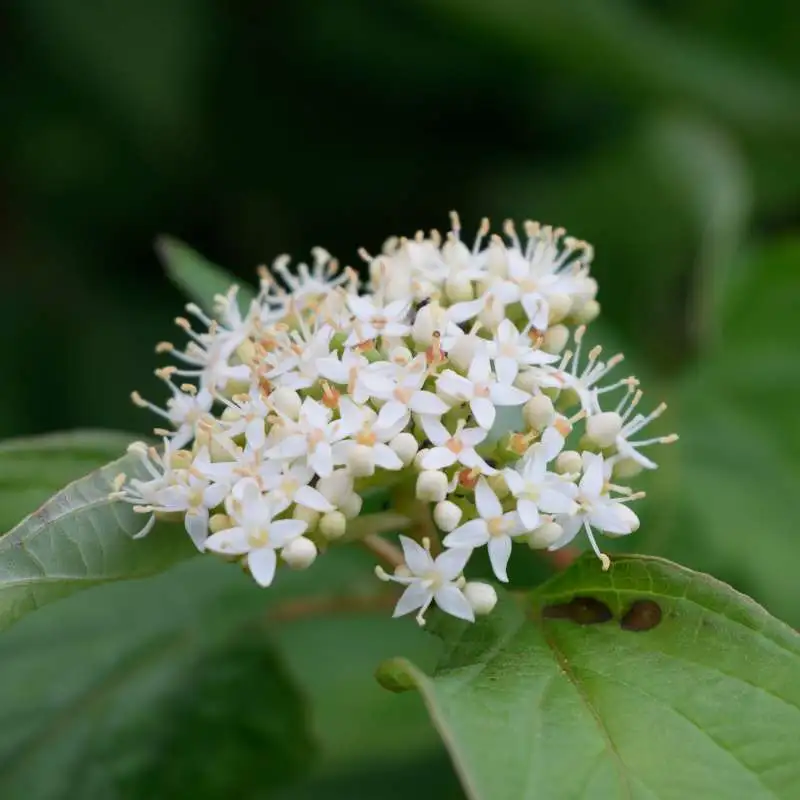 Photo Credits: Little Tree Farm
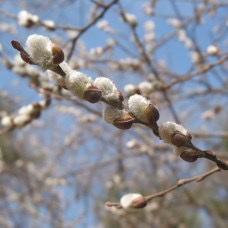
Photo Credits: FERGUSON Tree Nursery
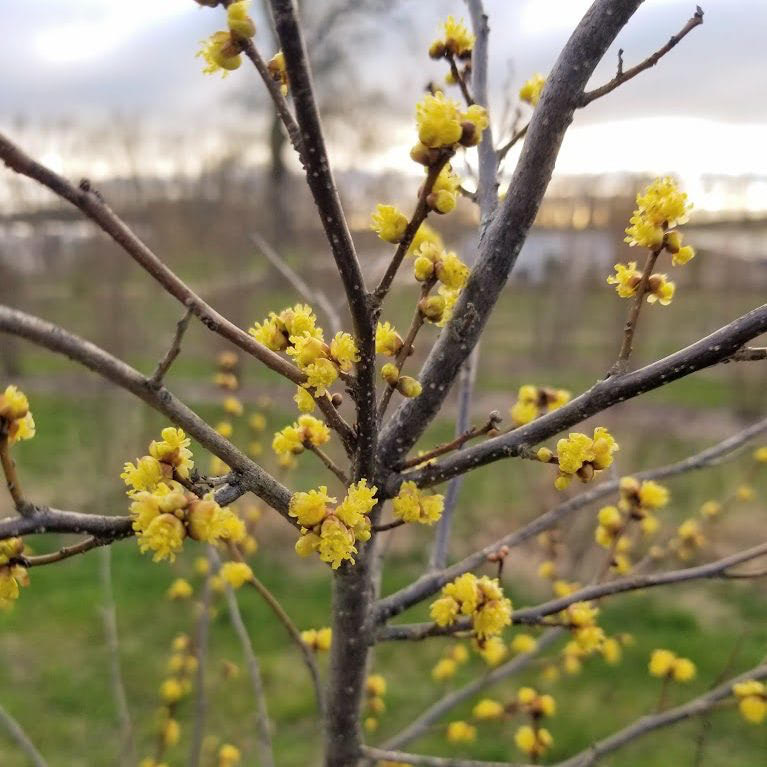 Photo Credits: Ontario Native Plants
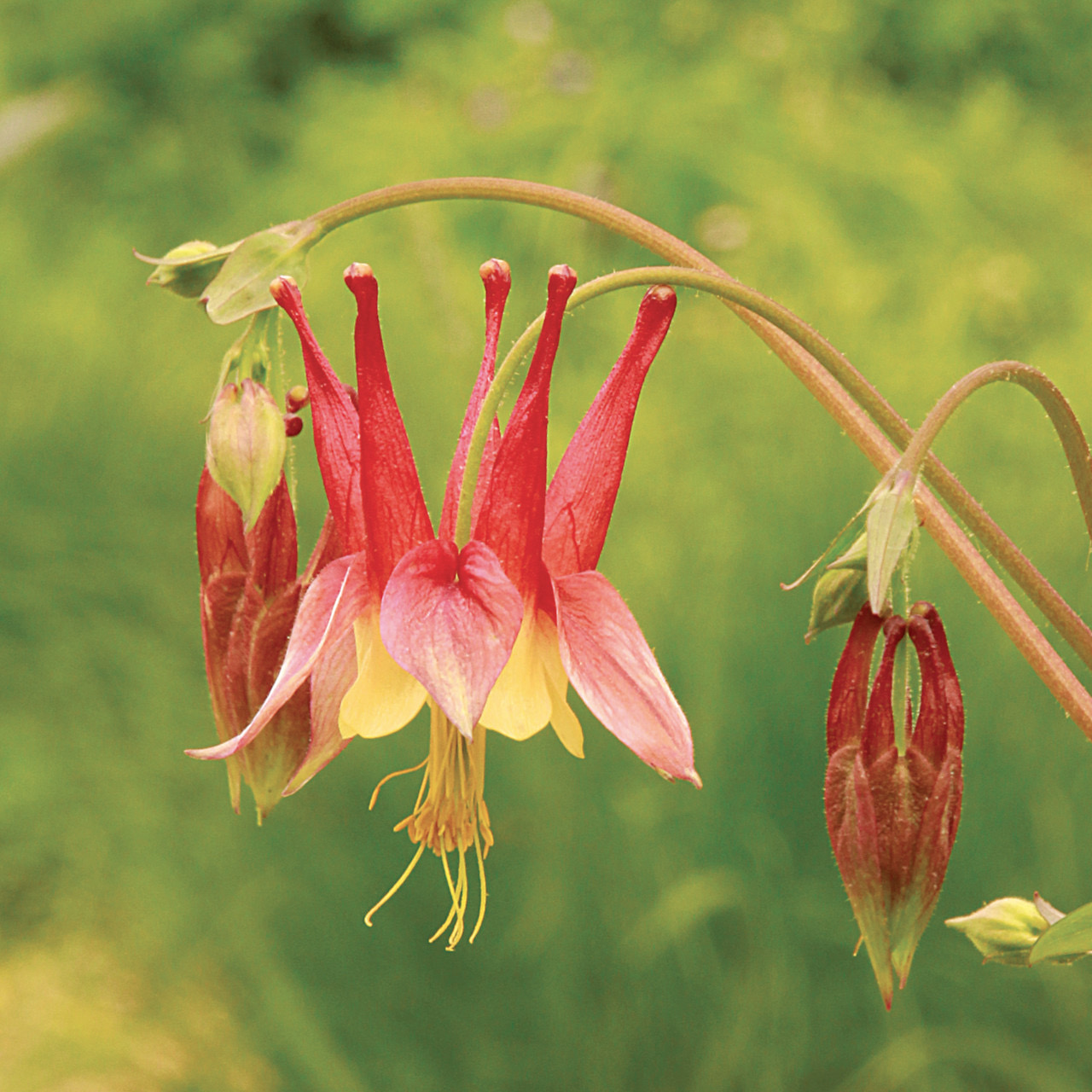 Photo Credits: MISSOURI WILDFLOWERS NURSERY
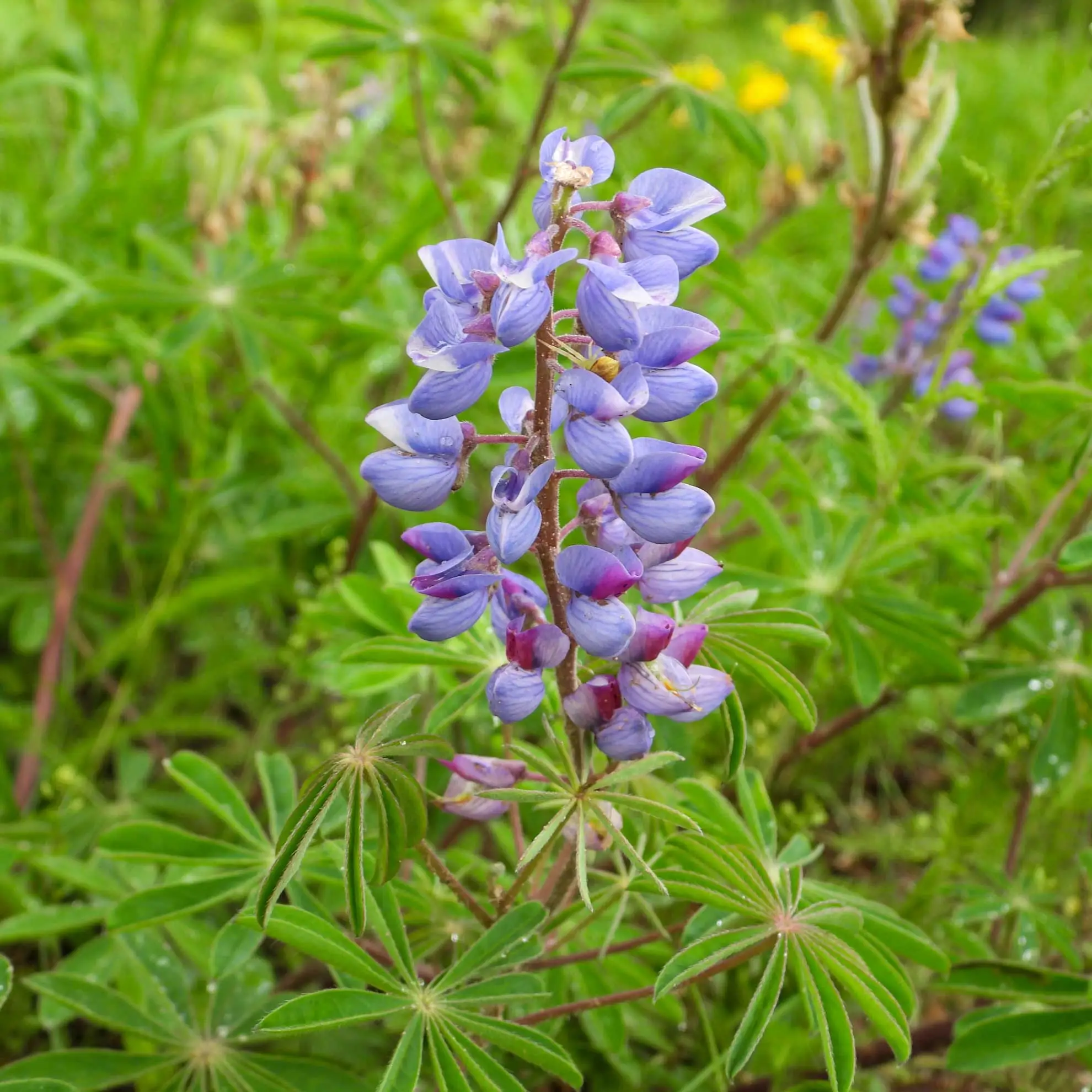 Photo Credits: The Plant Native
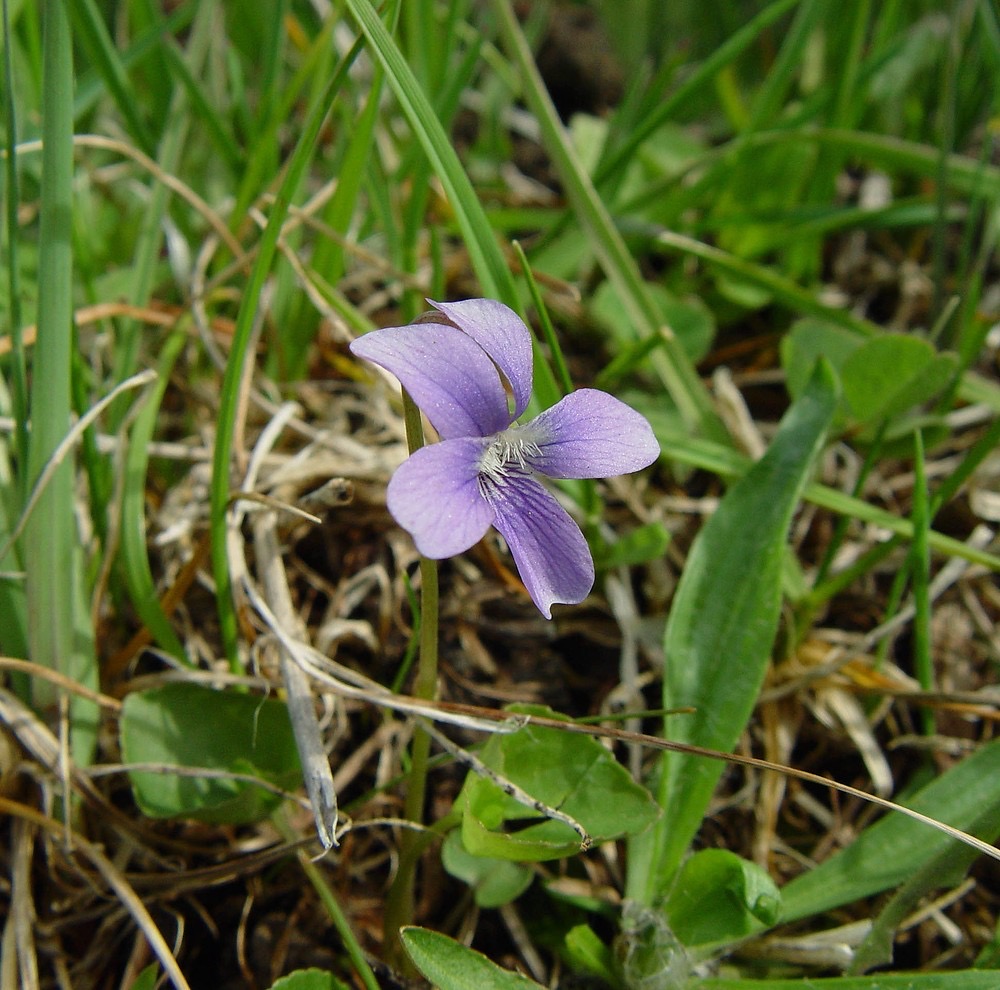 Photo Credits: Arthur Haines


Comments
Post a Comment