Ontario Native Violets
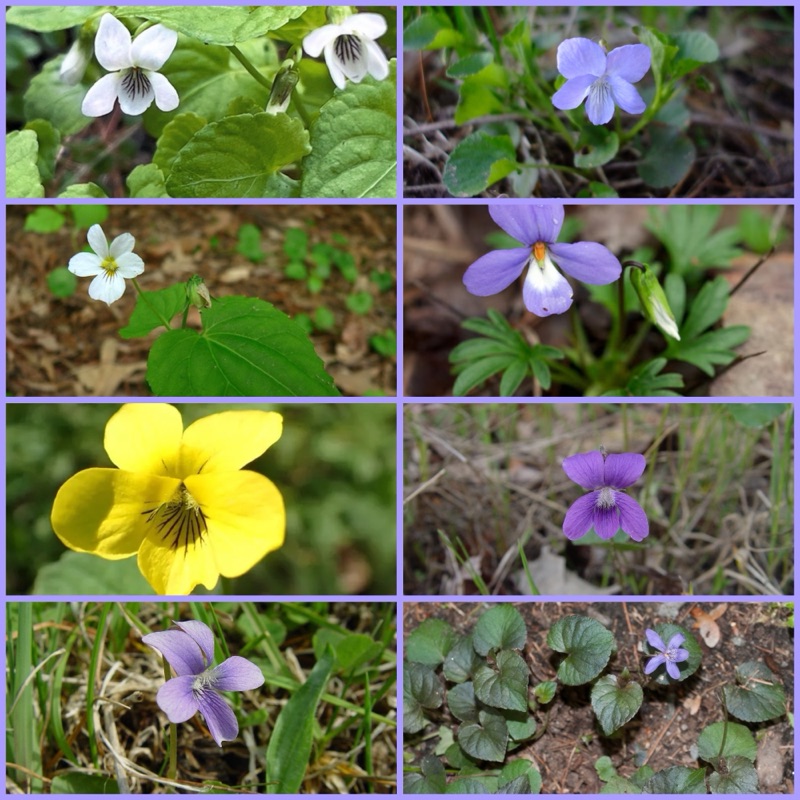
“Unveil Ontario’s Native Violets - Nature’s Hidden Gems Await!
Delicate yet resilient, Ontario’s native violets add a touch of quiet beauty to forests, meadows, and even backyards. These charming wildflowers play a vital role in local ecosystems, supporting pollinators and enriching biodiversity. Whether you’re captivated by their heart-shaped leaves or intrigued by their secret underground flowers, these small blooms have big stories to tell. Ready to uncover the hidden wonders of Ontario’s violets? Let’s dive in!
Sweet White Violet(Viola blanda)
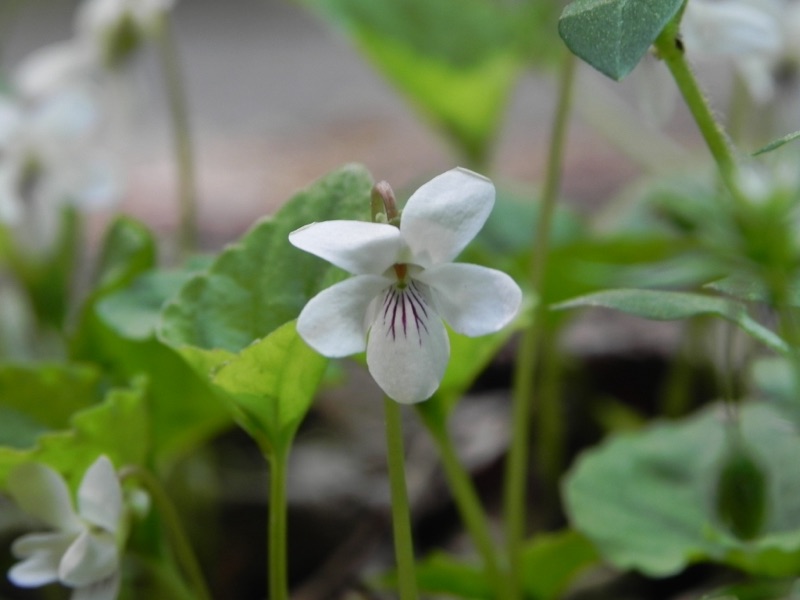 Photo Credits: MyWildflowers.com
Common Name: Sweet White Violet
Scientific Name: Viola blanda
Other Names: Willdenow Violet, Woodland White Violet, or Large - leaved White Violet.
Genus: Viola
Family: Violet Family
Hardiness Zones: 3 through 8
Average Bloom: Typically happens from late spring to early summer, which usually occurs in May through June.
Moisture: Thrives in areas that have moist but well drained conditions.
Soils: Thrives in chalk, clay, loam, or sandy soils that is a bit of acid, alkaline, or neutral. These soils need to be moist but have good drainage.
Light Exposure: They thrive in partial shade to light shade. Canada Violet prefers dappled sunlight or shade through an upper canopy, but can also tolerate a bit of direct sunlight if the soil stays moist.
Average Height: Typically reaches a height of 3 to 6 inches tall.
Average Width: Typically reaches a width of 4 to 8 inches wide.
Flowers: Delicate and fragrant white flowers with a subtle purple tint and yellow throat.
Edible: Yes Sweet White Violet is edible to humans. The flowers, and leaves of the plant are all edible parts.
The flowers are the most commonly used part of the sweet white violet for culinary purposes. The leaves of Sweet White Violet can be eaten either fresh in salads or cooked like a green vegetable.
⚠️WARNING : ⚠️
The roots of Sweet White Violet are not edible, and they should be avoided at all costs.
Spread: It can spread relatively quickly, primarily through runners (stolons) that form new plants. It can also propagate through seeds.
While it's not known for aggressive expansion, it can establish itself well in suitable conditions and form a groundcover.
Host Plant: It is a host plant for a local fritillary butterfly species which is the Great Spangled Fritillary.
Attracts: The flowers attract solitary bees, bumblebees, mining bees, bare dogwood miner bees, plated miner bees, various fritillary butterflies, hairstreak butterflies, skipper butterflies, and gossamer - winged butterflies.
Wildlife Use: Sweet White Violet attracts various bees and butterfly species through their nectar - rich flowers. It provides a food source for caterpillars of various Fritillary Butterfly species.
Sweet White Violet (Viola blanda) is a low growing, fragrant perennial that is known for its delicate, white flowers and heart-shaped leaves.
Imagine a delicate, charming wildflower gracing your garden with its subtle beauty—meet the Sweet White Violet (*Viola blanda*). This petite perennial boasts dainty, fragrant white blossoms with a hint of cream and soft lilac veins, creating an enchanting ground cover that thrives in shaded woodland settings. Not only does it offer visual appeal, but its nectar-rich blooms attract pollinators like bees and butterflies, enhancing your ecosystem with life and movement. Perfect for naturalistic landscapes or serene garden corners, this low-maintenance gem effortlessly brings a touch of elegance to your property while supporting local wildlife. Give your space a whisper of wild charm with Sweet White Violet!
Dog Violet (Viola conspersa)
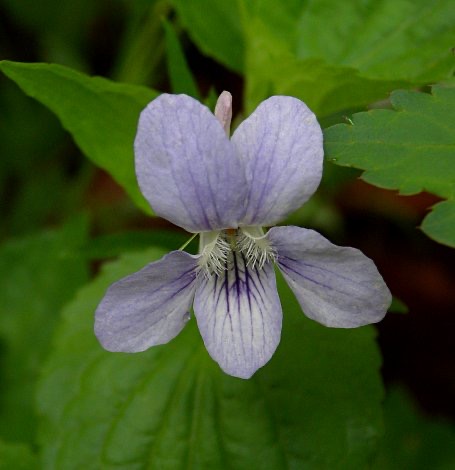 Photo Credits: Illinois Wildflowers
Common Name: Dog Violet
Scientific Name: Viola conspera
Other Names: American Dog Violet
Genus: Viola
Family: Violet Family
Hardiness Zones: This species of Violet thrives in hardiness zones 3a through 8b.
Average Bloom: Typically blooms from April into June.
Moisture: Generally prefers locations that are moist and have good drainage.
Soils: Dog Violet thrives in a variety of soils including sandy (light), loamy (medium), and clay (heavy) soils as long as they are well drained.
They prefer soils that are mildly acidic or neutral, and moist but not waterlogged.
Light Exposure: Generally thrives in partial sun but can tolerate full sun. It does best in locations that mimic their natural understory habitat, such as near the edge of woodlands or in spots with morning sun and afternoon shade. While they can handle full sun, it can lead to increased water loss and potential leaf scorch.
Average Height: Typically grows to be 3 - 6 inches (7 - 15 cm) tall.
Average Width: Typically grows to be 4 - 8 inches (10 - 20 cm) wide.
Flowers: Small and delicate pure white with a faint tint of purple and a yellow throat.
Edible: Yes Dog Violet is edible to humans. The flowers, and leaves of the plant are all edible parts.
The flowers are the most commonly used part of the dog violet for culinary purposes. The leaves of dog violet can be eaten either fresh in salads or cooked like a green vegetable.
⚠️WARNING : ⚠️
The roots of Dog Violet are not edible, and they should be avoided at all costs.
Spread: It typically spreads moderately through rhizomes and stolons, forming colonies.
Host Plant: It is a host plant for three local fritillary butterfly species such as the Great Spangled Fritillary, Atlantis Fritillary, and Regal Fritillary.
Attracts: It primarily attracts butterflies, bees, and hoverflies.
Wildlife Use: The flowers provide both nectar and pollen for a variety of bees, butterflies, and hoverflies. It is also a food source for some caterpillars of fritillary butterfly species that are local.
The Dog Violet (Viola conspera) is a small, perennial plant with distinctive, light blue to violet flowers and heart-shaped, yellow-green leaves.
Add a touch of untamed charm to your lawn with Dog Violet (*Viola conspersa*)—a resilient and graceful wildflower that thrives in shaded or semi-shaded areas. Its delicate purple blooms create a stunning contrast against lush greenery, offering visual appeal without the hassle of high maintenance. This hardy violet spreads naturally, filling in bare patches and weaving a beautiful, natural tapestry across your landscape. Plus, its nectar-rich flowers attract pollinators like butterflies, contributing to a thriving local ecosystem. If you’re looking for a subtle yet enchanting addition to your outdoor space, Dog Violet is the perfect choice!
Canada Violet (Viola canadensis)
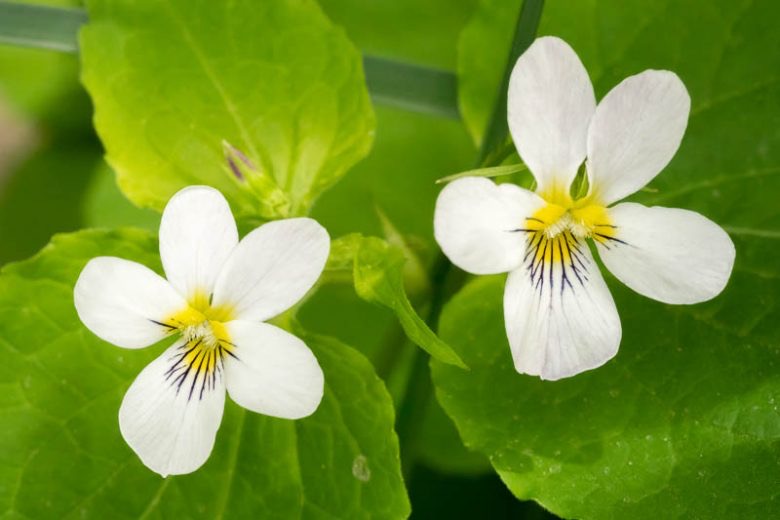 Photo Credits: Dana Henry Photography
Common Name: Canada Violet
Scientific Name: Viola canadensis
Other Names: Canadian White Violet, Tall White Violet, or Canadian Violet.
Genus: Viola
Family: Violet Family
Hardiness Zones: 2 through 7
Average Bloom: Canada Violet typically blooms from April to July. The peak bloom period is usually in May and June.
Moisture: This violet species requires a location that is consistently moist, but not waterlogged conditions because they don’t like being waterlogged.
Soils: Canada Violet prefers loamy, clay, or humus rich soils that are well draining. They grow best in neutral to slightly alkaline soils.
Light Exposure: Generally prefers partial shade to full shade. They thrive in dappled sunlight, mimicking their natural forest habitat. While they can tolerate some direct sun in the spring, they need more shade, particularly during the summer months.
Average Height: Typically grows to be 12 - 18 inches tall.
Average Width: Typically grows to be 1 - 2 feet wide
Flowers: White flowers with yellow bases and often has purple streaks.
Edible: Yes, the Canada Violet is an edible plant. Both the leaves and flowers on this plant are edible.
You can eat the young leaves and flower buds raw or cooked, and the flowers can be used to make jelly or decorate cakes. The leaves are also a good substitute for tea.
⚠️WARNING:⚠️
The roots of Canada Violet are toxic and should not be digested.
Spread: Canada Violet is a plant that has a moderately spread.
Host Plant: It is a host plant for three fritillary butterfly species that are local which are Atlantis Fritillary, Regal Fritillary, and Great Spangled Fritillary.
*The Atlantis Fritillary prefers Canada Violet as a host plant. *
Attracts: Attracts pollinators such as bees, butterflies, and hoverflies.
Wildlife Use: The flowers provide both nectar and pollen for a variety of local bee species, butterfly species, and hoverflies. It is a host plant for some fritillary butterfly species. The foliage and flowers also attract deer, rabbit, squirrels, and chipmunks.
The Canada Violet (Viola canadensis) is a clump-forming perennial herb with fragrant, white flowers that bloom in early spring. These flowers are typically white with yellow bases and may have streaks of purple. The heart-shaped, dark green leaves form a lush, carpet-like ground cover, making them ideal for shaded areas.
Elevate your lawn’s natural beauty with Canada Violet (*Viola canadensis*), a graceful wildflower that thrives in dappled shade. With elegant white blooms accented by a hint of pale purple and striking yellow centers, this charming perennial adds a touch of sophistication to any landscape. Beyond its aesthetic appeal, Canada Violet attracts pollinators like bees and butterflies, supporting local biodiversity while requiring minimal care. Whether nestled beneath trees or weaving through garden edges, this versatile violet brings effortless charm and ecological benefits to your outdoor space. Let nature flourish—invite Canada Violet to your lawn!
Birdfoot Violet (Viola pedata)
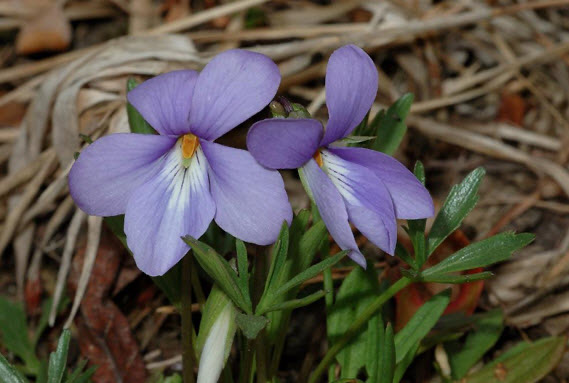 Photo Credits: Ron Gould
Common Name: Birdfoot Violet
Scientific Name: Viola pedata
Other Names: Mountain Pansy, Beardless Birdfoot Violet, or Crowfoot.
Genus: Viola
Family: The Violet Family
Hardiness Zones: 4,5,6,7,8
Average Bloom: Typically blooms from mid May to mid June. It can also bloom again in late September to mid October in ideal conditions.
Moisture: Dry to medium moisture
* Bird's-foot violet is a native plant that favors dry conditions. It prefers well-draining soils and can tolerate drought conditions once established. However, it's important to keep it watered, especially when young, until it develops a strong root system. *
Soils: It grows best in sandy or gravelly soils that drain well. Avoid planting in heavy clay soils that retain water, as this can lead to root rot.
Light Exposure: Bird's-foot violet requires full sun or at least 6 hours of direct sunlight per day. While it can tolerate some shade, especially in hot climates, it won't flower as profusely in shade.
Average Height: Typically grows up to a height of 4 - 8 inches tall.
Average Width: Typically grows up to a width of 4 - 8 inches wide.
Flowers: Small in size and each one has five petals. They are typically pale to dark purple, or lilac purple with the two upper petals often being a deeper violet or blue. The lower three petals may have dark veins.
Edible: Yes Birdfoot Violet is an edible plant to humans. Both the flowers and young leaves can be consumed raw or cooked, and the leaves can also be used to make tea. The flowers have a sweet, slightly spicy flavor and can be candied or used as a garnish.
Spread: The Birdfoot Violet can spread relatively spread quickly, particularly in ideal conditions, and using both seed dispersal and root division.
Host Plant: It is the host plant for the Great Spangled Fritillary, Atlantis Fritillary, Aphrodite Fritillary, Variegated Fritillary, Bog Fritillary, Silver - bordered Fritillary, and Meadow Fritillary.
Attracts: bumblebees, digger bees, long - tongued bees, skipper butterflies, sulphur butterflies, other small butterflies, and ground feeding birds.
Wildlife Use: The flowers provide both nectar and pollen for pollinators such as bees and butterflies. It is a host plant for a variety of local fritillary butterfly species, where this violet species provides a food source for the caterpillars of these butterflies. The green capsules (seed pods) that this violet produces attracts a wide range of ground feeding birds such as mourning doves, dark eyed juncos, goldfinches, sparrows, chickadees, and cardinals.
The Birdfoot Violet (Viola pedata) is a low growing rhizomatous perennial.
It is easily recognized by its unique, deeply divided leaves that resemble a bird's foot, hence its common name.
The plant blooms in spring with lilac to purple flowers, often with two upper petals that are a deeper blue or violet in colour.
This violet species is a showstopper in any garden, boasting striking purple petals that fan out like a delicate masterpiece. Unlike common violets, its intricate foliage resembles bird feet, adding a whimsical touch to its charm. This hardy native thrives in well-drained soil and welcomes pollinators, making it a perfect addition for those looking to support local wildlife while adding effortless beauty to their landscape. If you're dreaming of an eye-catching, low-maintenance bloom that stands out, this violet is calling your name.
Downy Yellow Violet (Viola pubescens)
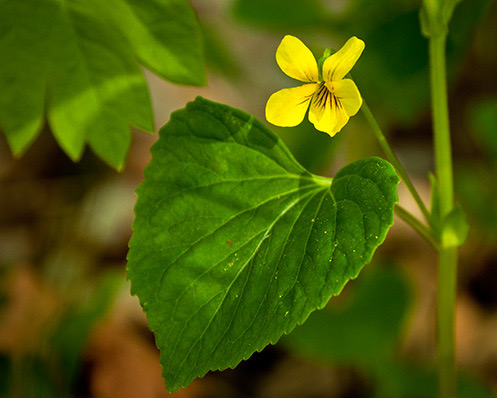 Photo Credits: Gninnanhoyan P. Toure
Common Name: Downy Yellow Violet
Scientific Name: Viola pubescens
Other Names: Common Yellow Violet, Hairy Yellow Violet, Smooth Yellow Violet, or Hairy Yellow Forest Violet.
Genus: Viola
Family: The Violet Family
Hardiness Zones: 3 through 7
Average Bloom: late April to June
Moisture: It thrives in locations that have average, medium to wet conditions that are well drained.
Soils: Thrives in a variety of soils including loam and sandy loam, as long as they have good drainage. These soil types are well-suited for downy yellow violet because they offer good drainage and aeration, which are important for healthy root growth.
Light Exposure: Part Sun ⛅️ to Full Shade ☁️
Average Height: Typically grows to a height of between 6 to 12 inches tall. Some sources say that this Violet species can reach up to 18 inches tall.
Average Width: Typically grows to a width of between 6 to 12 inches wide. Some sources say that this Violet species can reach up to 18 inches wide.
Flowers: Small and bright yellow in colour that has five petals. There are usually brownish or purplish lines on the lower petals.
Edible: Yes, the Downy Yellow Violet is considered edible. Both the leaves and the flowers are safe to consume, with the leaves being a good source of vitamins A and C. The leaves of a Downy Yellow Violet can be added to salads, soups, or cooked as a pot herb. The flowers on a Downy Yellow Violet can be used in teas, jams, cakes, and candy.
Spread: The Downy Yellow Violet is considered a gradual spreader. While it spreads, it's not considered an aggressive or vigorous spreader, and it does not send out runners under the ground.
Host Plant: It is a host plant for the Meadow Fritillary, Regal Fritillary, Arctic Fritillary, Great Spangled Fritillary, Aphrodite Fritillary, Variegated Fritillary, and Bog Fritillary.
Attracts: small bees, mason bees, carpenter bees, mining bees, sweat bees, skipper butterflies, gossamer - winged butterflies, sulphur butterflies, and birds.
Wildlife Use: The flowers provide both nectar and pollen to local bee species and butterfly species. The seeds of the Downy Yellow Violet provide a food source for some birds including juncos, ruffed grouse, mourning doves, bobwhite, wild turkeys, goldfinches, sparrows, and cardinals.
The Downy Yellow Violet (Viola pubescens) is a small perennial wildflower that has heart-shaped leaves with toothed edges, often with thin hairs on the underside. The flowers are bright yellow, with 5 petals and sometimes brownish or purple lines on the lower petals.
This violet species is a hidden gem among native wildflowers, offering vibrant golden blooms that brighten shaded woodland gardens. Unlike its more common purple cousins, this cheerful violet stands out with its sunny petals and soft, fuzzy stems, adding a unique touch to any landscape. It thrives in rich, moist soil and provides early-season nectar for pollinators, making it a perfect choice for eco-conscious gardeners looking to support local wildlife while enhancing their property with effortless charm. If you’re seeking an elegant yet understated burst of colour, this violet is ready to shine.
Woolly Blue Violet (Viola sororia)
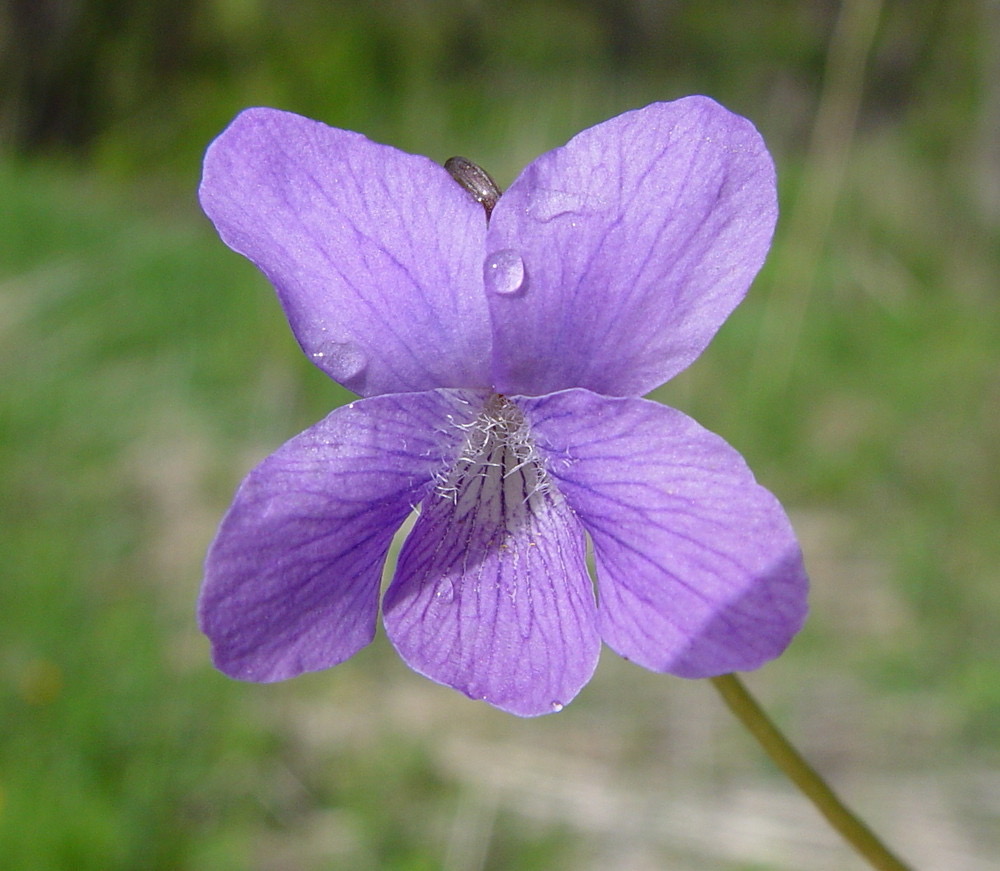 Photo Credits: Arthur Haines
Common Name: Woolly Blue Violet
Scientific Name: Viola sororia
Other Names: Common Blue Violet, Common Meadow Violet, Purple Violet, or Wood Violet.
Genus: Viola
Family: The Violet Family
Hardiness Zones: 3 through 7
Average Bloom: It blooms during the mid to late spring, which typically occurs from May to July.
Moisture: Thrives in locations that are average to moist which have good drainage.
*The area that this violet is planted in needs to retain moisture, but shouldn’t be waterlogged. *
Soils: They prefer moist and rich soils that are well drained. The Woolly Blue Violet prefers a pH between 6 and 6.5, but tolerates sandstone and limestone soils.
*The soil should retain moisture and be moist frequently, because this species of Violet doesn’t do well in constant dry soils. But the Woolly Blue Violet does not like soils that are water logged, so make sure you don’t have the soil water logged. *
Light Exposure: It thrives in partial shade ⛅️ or light shade 🌥️.
Average Height: Typically reaches a height between 4 to 6 inches (10 - 15 cm) tall.
Average Width: Typically reaches width between 4 to 6 inches (10 - 15 cm) wide.
Flowers: Attractive blue - violet flowers with white throats.
Edible: Yes, the Woolly Blue Violet is considered an edible plant. Both the leaves and flowers of a Woolly Blue Violet are edible to humans. The leaves and flowers of the Woolly Blue Violet are great additions to salads, herbal teas, or decorative element in dishes.
Spread: The Woolly Blue Violet is considered a fast spreader.
Host Plant: It is a host plant for the Bog Fritillary, Regal Fritillary, Great Spangled Fritillary, Variegated Fritillary, Arctic Fritillary, and Atlantis Fritillary.
Attracts: mason bees, sweat bees, violet mining bees, small carpenter bees, bumblebees, ants, flies, skipper butterflies, other small butterflies, and birds.
Wildlife Use: The flowers provide both nectar and pollen to local pollinators including bees, butterflies, flies, and ants. It is a host plant for a variety of local fritillary butterfly species. The seeds of the Woolly Blue Violet provided a food source for some bird species including wild turkeys, mourning doves, bob white quail, cardinals, chickadees, and juncos. The foliage and the seeds provide a food source for small mammals such as squirrels, chipmunks, voles, rabbits, mice, and rats.
The Woolly Blue Violet (Viola sororia) is a low-growing, stemless perennial with glossy, heart-shaped leaves and attractive blue-violet flowers with white throats.
This violet species is a resilient native beauty that brings a lush carpet of deep purple blooms to gardens, meadows, and shaded landscapes. Its softly hairy leaves give it a distinctive texture, while its flowers provide an early-season feast for pollinators like bees and butterflies. As a low-maintenance, spreading ground cover, it thrives in a variety of conditions, making it perfect for naturalizing spaces with effortless charm. If you’re looking for a hardy yet enchanting addition to your property, this violet is ready to flourish.
Northern Bog Violet (Viola nephrophylla)
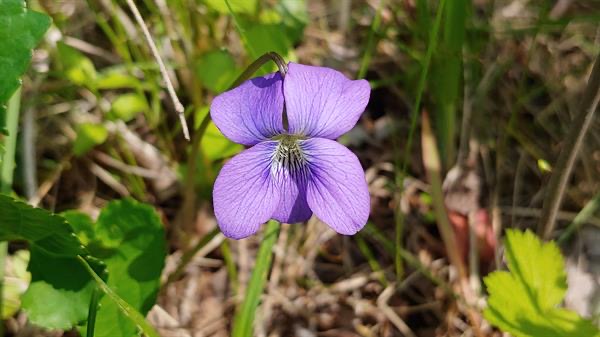 Photo Credits: Ryan Sorrells
Common Name: Northern Bog Violet
Scientific Name: Viola nephrophylla
Other Names: Wanderer Violet, Entire - leaved Prairie Violet, or Small Mottled Blue Violet.
Genus: Viola
Family: The Violet Family
Hardiness Zones: 2 through 7
Average Bloom: The bloom period is typically from May to June. Some sources say that the Northern Bog Violet blooming period can extend to July.
Moisture: Medium to wet
Soils: Sand loam, Loam, Clay Loam, and Organic.
Light Exposure: Part Shade 🌥️ to Full Sun ☀️
Average Height: Typically grows to a height of 5 - 10 inches (12 - 25 cm) tall.
Average Width: Typically grows to a width of 5 - 10 inches (12 - 25 cm) wide.
Flowers: The flowers are dainty with a characteristic of 5 petals, and they’re blue purple in colour.
Edible: Yes, the Northern Bog Violet is an edible plant to humans. Both the flowers and leaves on the Northern Bog Violet are edible. The leaves can be sautéed, steamed, or added to soups. They can also be used to thicken soups. The flowers can be used to decorate dishes, sprinkled on salads, or added to desserts.
Spread: It is not considered a slow spreader, but in ideal conditions the Northern Bog Violet can spread quickly.
Host Plant: It is a host for several fritillary butterfly species including the Regal Fritillary, Great Spangled Fritillary, Atlantis Fritillary, Aphrodite Fritillary, Arctic Fritillary, Bog Fritillary, and Frigga Fritillary.
Attracts: bumblebees, violet mining bees, sweat bees, mason bees, small butterflies, birds, small mammals, and ants.
Wildlife Use: The flowers provide both nectar and pollen for bees and small butterflies. It is a host plant for a variety of local fritillary butterfly species, where the foliage of the flower provides food for the caterpillars of these butterfly species. The seeds provide a food source for a variety of seed feeding birds which includes songbirds, wild turkeys, quail, and various sparrows. Northern Bog Violet’s seeds also provide food small mammals such as mice, rats, rabbits, squirrels, and chipmunks. The ants are attracted to the seeds, and they help dispersing the seeds in new locations.
The Northern Bog Violet (Viola nephrophylla) is a low-growing, stemless perennial with heart-shaped, kidney-shaped leaves and delicate, blue-purple flowers. The flowers have five petals, with the lower petal having a spur and dark purple veins. The leaves are typically found in clusters at the base of the plant, and the flowers are borne on individual stalks.
This violet species is a charming little wildflower that brings a splash of delicate purple to damp meadows and wetlands. Not only is it a visual delight, but it plays a vital role in supporting pollinators, especially early-emerging bees and butterflies that rely on its nectar. This native violet thrives in moist soils, making it a perfect choice for rain gardens or shaded areas where other plants might struggle. By adding Northern Bog Violets to your property, you're not just cultivating beauty—you're creating a haven for pollinators that keep ecosystems thriving. A small plant with a big impact!
Alpine Violet (Viola labradorica)
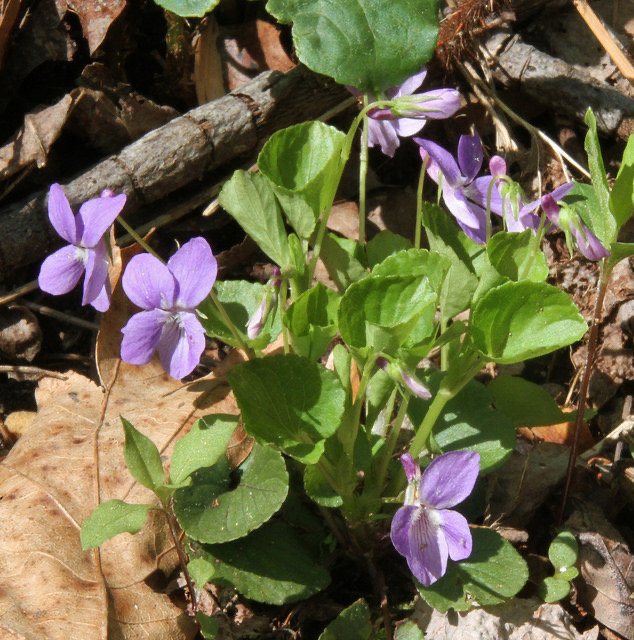 Photo Credits: Jim Stasz
Common Name: Alpine Violet
Scientific Name: Viola labradorica
Other Names: American Dog Violet or Labrador Violet.
Genus: Viola
Family: The Violet Family
Hardiness Zones: 2 through 7
Average Bloom: Typically blooms during the spring and early summer, which occurs from April through June. Some sources say that the Alpine Violet’s blooming period can extend into July and August.
Moisture: It is best grown in locations that have average to moist conditions which has good drainage.
Soils: Alpine Violets thrive in loamy soils that are moist but not waterlogged.
Light Exposure: Full Sun ☀️ to Partial Shade 🌥️
Average Height: Typically grows to a height of 2 - 4 inches tall.
Average Width: Typically grows to a width of 3 - 6 inches wide.
Flowers: The flowers are small and dainty, and are typically a pale blue or purple in colour.
Edible: Yes, the Alpine Violet is an edible plant to humans. Both the leaves and flowers can be eaten by humans. The young leaves and flower buds are generally considered the most palatable, and can be eaten raw or cooked. The leaves are a good addition to salads, soups, and teas. The flowers are a good addition to salads, add flavour to stuffings, or even to make a tea.
Spread: This violet species is capable of spreading quickly.
Host Plant: It is a host plant for several local fritillary butterfly species including the Freija Fritillary, Great Spangled Fritillary, Aphrodite Fritillary, Atlantis Fritillary, Arctic Fritillary, Meadow Fritillary, and Silver - bordered Fritillary.
Attracts: bumblebees, solitary bees, violet mining bees, small butterflies, small mammals, birds, and ants.
Wildlife Use: The flowers provide both nectar and pollen for bees and butterflies. It is a host plant for a variety of fritillary butterfly species, where their foliage will provide food for the caterpillars of these butterfly species. The seeds of the Alpine Violet provides a food source for a variety of wildlife including mourning doves, ruffed grouse, wild turkeys, chickadees, cardinals, sparrows, rabbits, squirrels, chipmunks, mice, and rats. Ants are attracted to the seeds of the Alpine Violet, and they help disperse the seeds in new locations to assist with making new plants.
The Alpine Violet (Viola labradorica) is a low-growing, spreading perennial with heart-shaped leaves and small, dainty, pale blue or purple flowers.
This violet species is a resilient and charming perennial that thrives in rocky, cool climates. Its deep purple flowers and heart-shaped leaves create a striking contrast, making it a favorite among gardeners looking to add color to shaded or moist areas. This violet is not only visually appealing but also plays a crucial role in supporting pollinators like bees and butterflies. It can spread naturally, forming a lush ground cover that enhances biodiversity. Whether tucked into woodland gardens or used as a border plant, the Alpine Violet is a low-maintenance beauty that brings life to any landscape.
Ontario’s native violets are more than just delicate woodland flowers—they are essential lifelines for local wildlife, especially fritillary butterflies. These butterflies rely entirely on violets as host plants for their caterpillars, making them a crucial part of their survival. By planting native violets such as Common Blue Violet (*Viola sororia*) or Northern Bog Violet (*Viola nephrophylla*), you’re not just adding beauty to your backyard; you’re creating a thriving habitat where pollinators, songbirds, and small wildlife can flourish. These resilient plants adapt well to shaded and moist areas, filling in garden spaces effortlessly while supporting biodiversity. A small step in planting violets leads to a big impact in preserving Ontario’s delicate ecosystem!
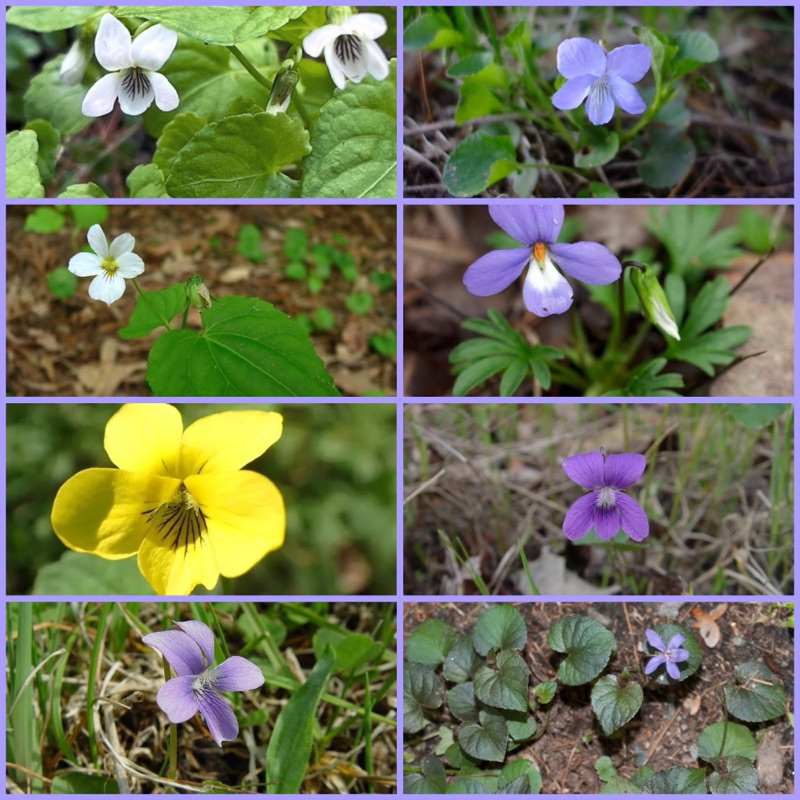 Photo Credits: Design By Nature Upper Peninsula Native Plants, LLC, wildflowerid.info, Wikipedia, MalorasGrove/Etsy, PictureThis, Donald Cameron, Arthur Haines, and Thomas H. Kent.
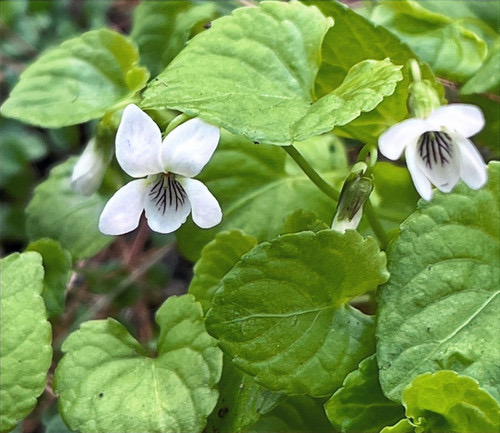 Photo Credits: Designs By Nature Upper Peninsula Native Plants, LLC.
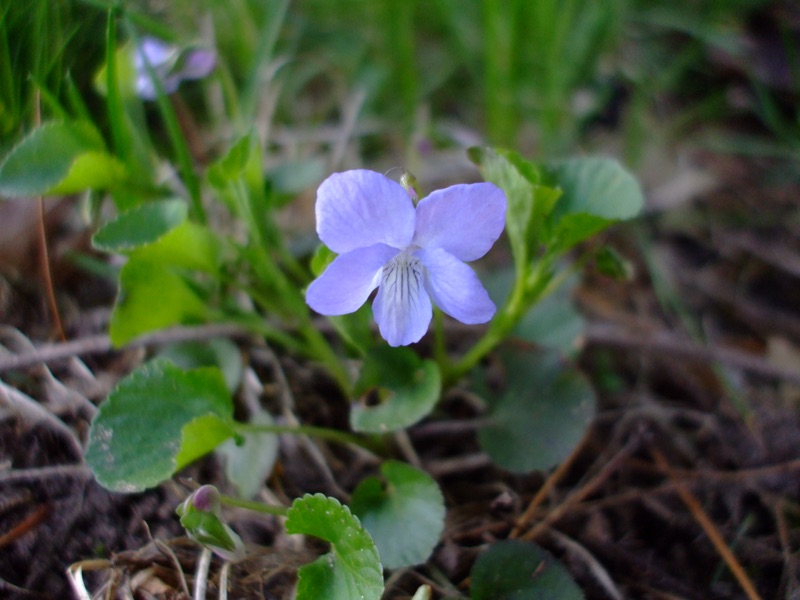 Photo Credits: wildflowerid.info
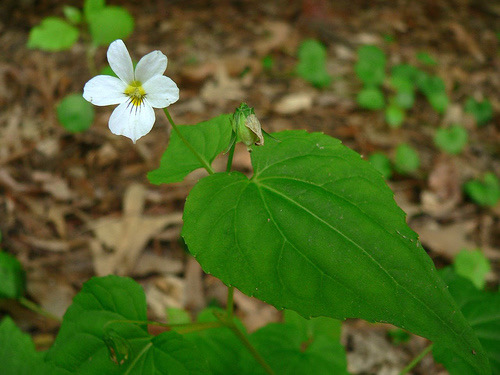 Photo Credits: Wikipedia
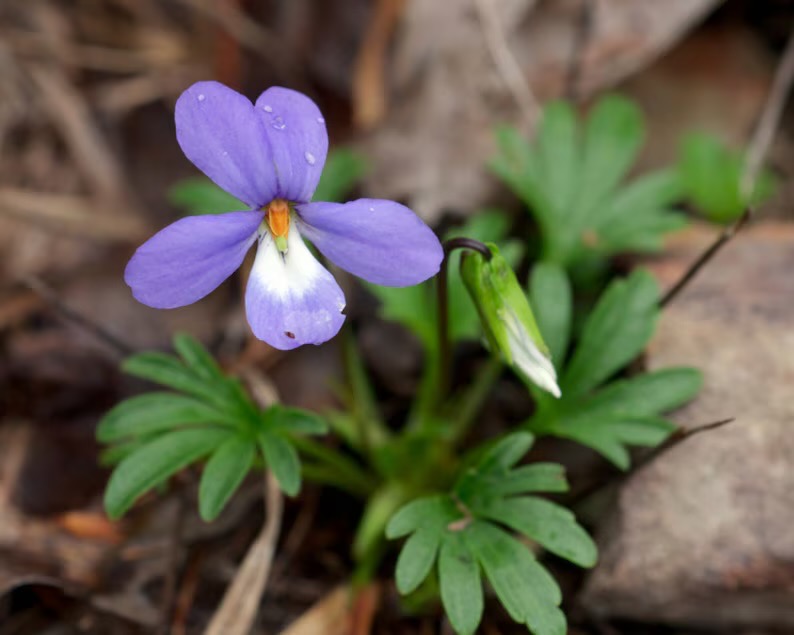 Photo Credits: MalorasGrove/Etsy
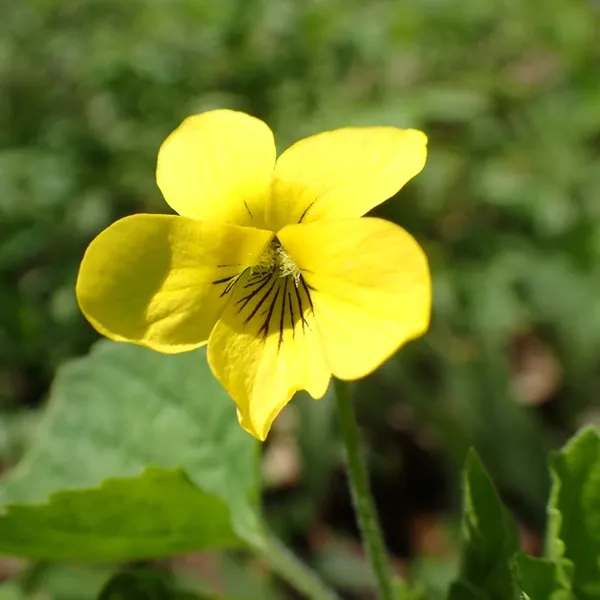 Photo Credits: PictureThis
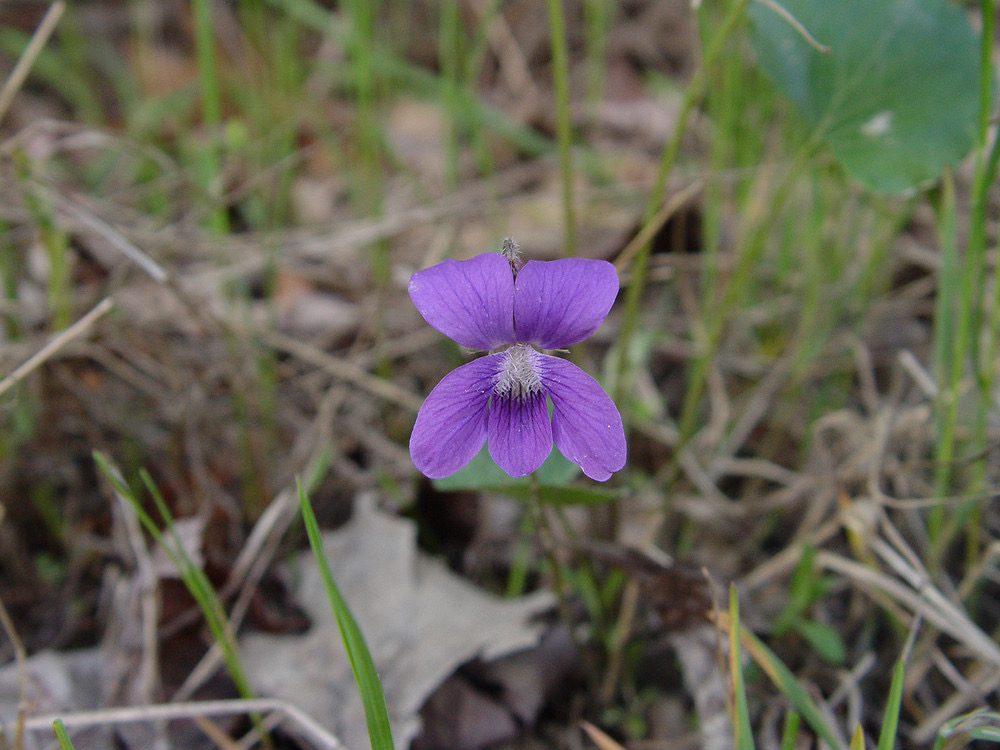 Photo Credits: Donald Cameron
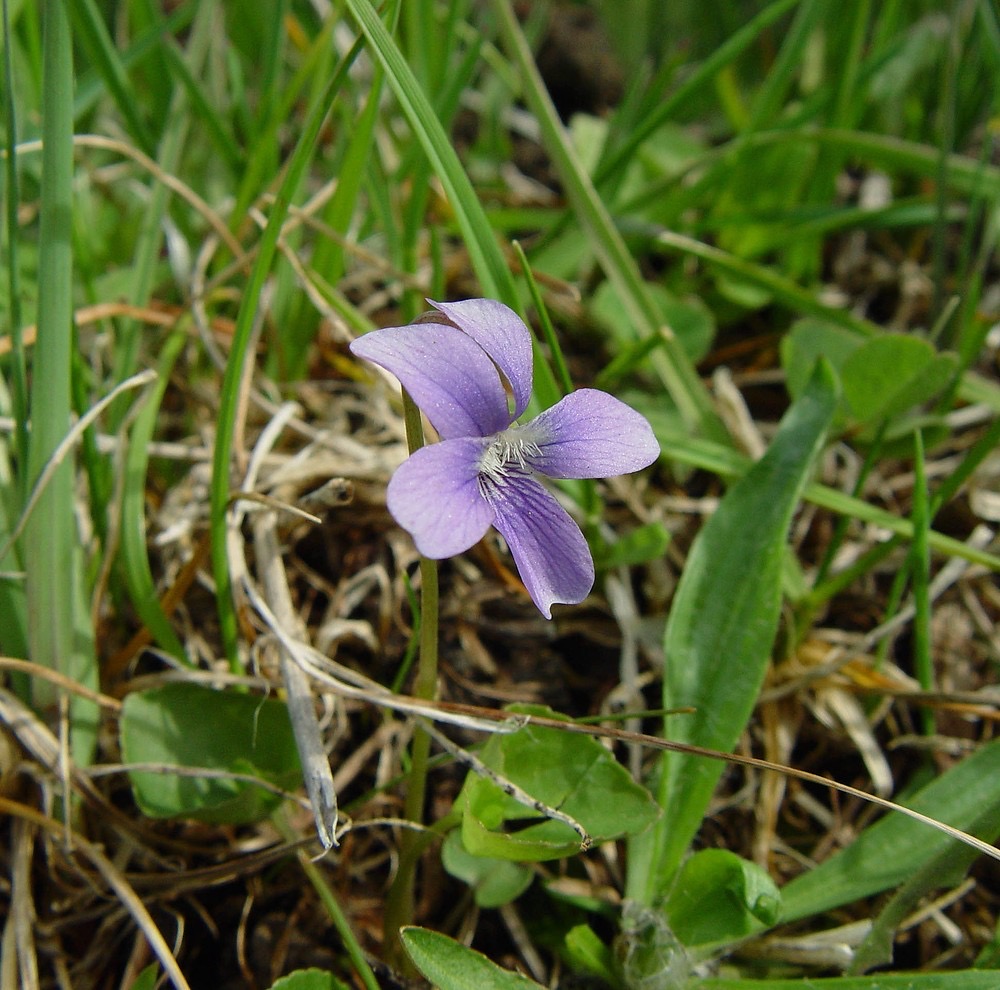 Photo Credits: Arthur Haines
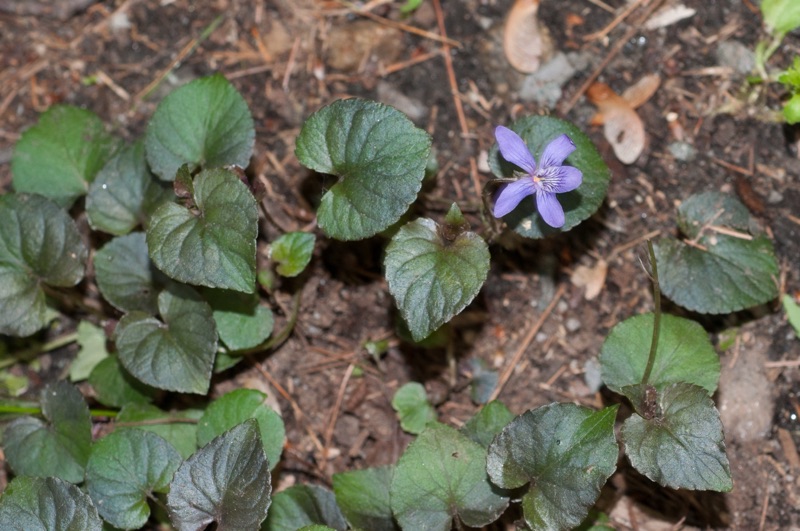 Photo Credits: Thomas H. Kent


Comments
Post a Comment