Local Giant Silk Moths In Canada
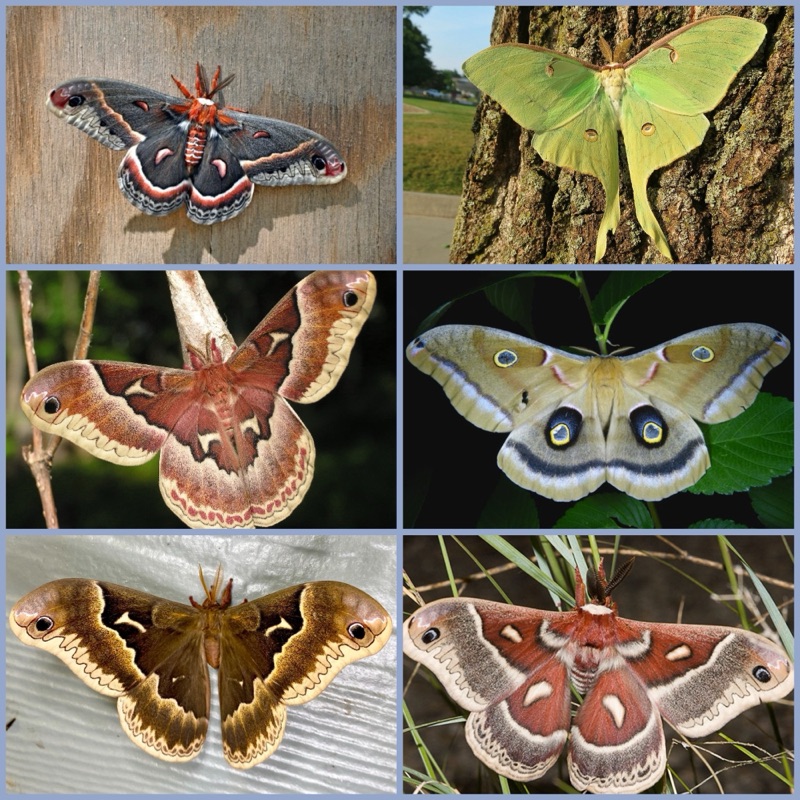
Enter the fascinating world of Giant Silk Moths that are native to Canada, to reveal how amazing and cool these Moths really are.
This article is all about the six Giant Silk Moth species that are native to Canada where you get to learn about each moth species, how to identify each species, what their host plants are, a few fascinating facts about each species, and how to support and provide for each species on your own property.
Welcome to the fascinating world of Giant Silk Moths that are native to Canada! In Canada we have a total of six Giant Silk Moth species which are Cecropia Moth, Luna Moth, Promethea Moth, Polyphemus Moth, Tulip Tree Moth, and Columbia Silk Moth. Each of these moth species are unique and different from one another in their own way, and everything about them is so neat and fascinating.
What are native moth species? Native moth species refers to moth species that naturally occur and live within a specific geographical region or ecosystem without being introduced by humans. These moths have evolved to adapt to the local environment and have a natural ecological role within their region.
What are giant silk moths? They are a family of Lepidoptera (butterflies and moths) characterized by their large size and ability to produce silk for cocoons. These moths have stout, hairy bodies, feathery antennae (especially in males), and are known for their striking beauty and unique patterns.
Our Giant Silk Moths are local insect specie that are less talked, and not many people are aware of their existence because butterflies are always the ones who put on the show, and people are more aware of them since butterflies are most commonly seen than our beautiful Giant Silk Moths.
Moths in general especially Giant Silk Moths are the forgotten important insects in Canada, and what they do for the ecosystems, environment, and the food chain is unknown or not noticed as much as what butterflies do in the garden.
In general as well as in gardening butterflies are the most beloved pollinator across Canada for their beauty, and the work that they do in gardens. Sadly, Giant Silk Moths didn’t get so lucky with the gardening world because a lot of people are scared of them, individuals don’t realize how important they are, and they are not as well known as their cousins the butterflies.
Come along on this journey to explore these Giant Silk Moths, and learn about what is so special about each of these moth species.
Cecropia Moth (Hyalophora cecropia)
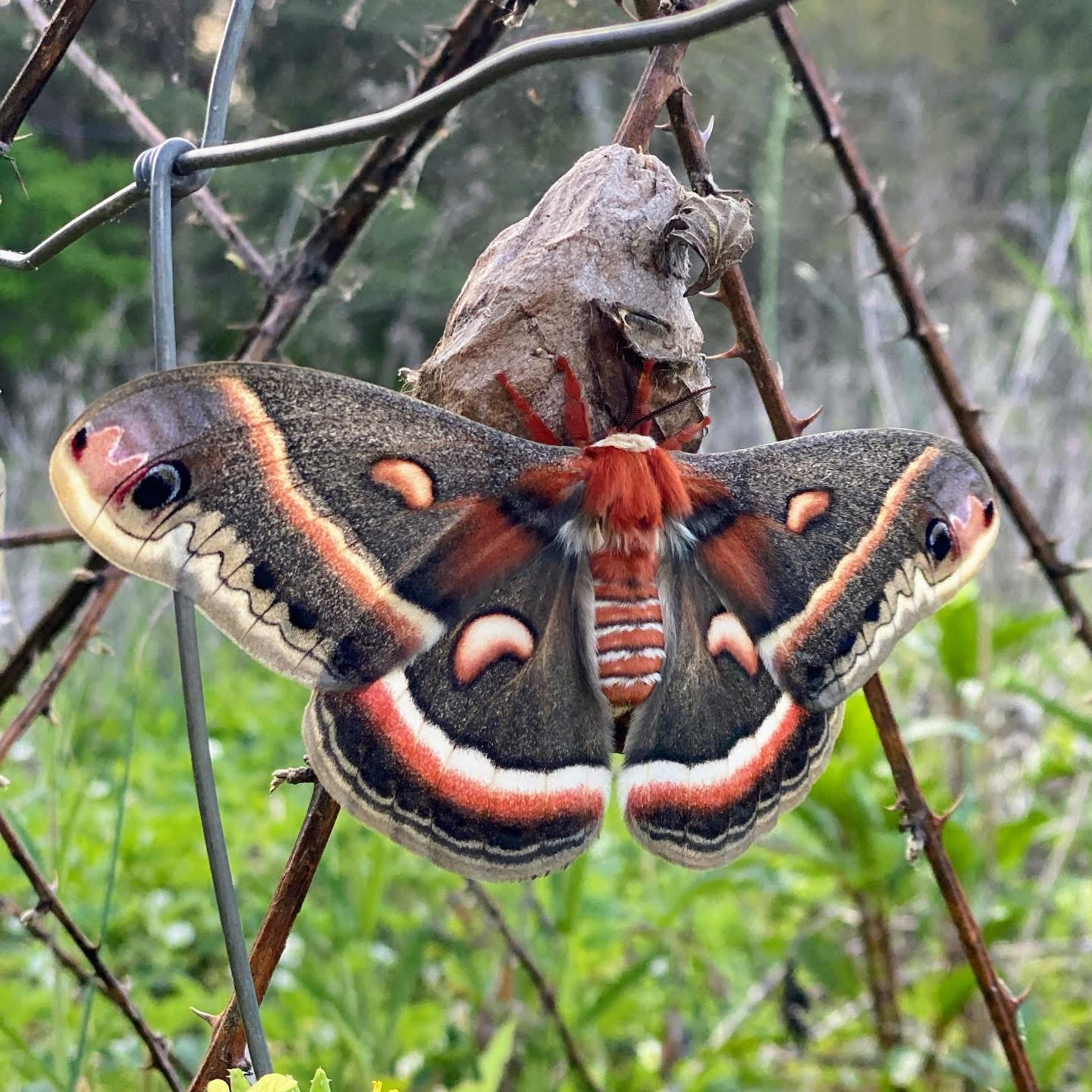 Photo Credits: Sunshine Farm And Animal Sanctuary
Common Name: Cecropia Moth
Scientific Name: Hyalophora cecropia
Other Names: Robin Moth
Family: Saturniidae
Genus: Hyalophora
Group Behaviour: Solitary except during the mating season.
Body: The body is typically reddish, especially towards the front, with white bands across the abdomen.
Wings: The wings are dark brown or black with bands of white, red, and tan, and they have rounded tips.
Most Distinctive Feature: It’s size
Diet: It does not eat at all as an adult mature moth, but when it was a caterpillar their main diet was the foliage of their host plant that they were laid on as an egg.
Colour:
Yellow
Red
White
Grey - brown
Skin Type: Exoskeleton
Weight: 0.1 lb
Length: 5 to 7 inch wingspan
Age of Sexual Maturity: Shortly after it emerges from their cocoon.
The Cecropia Moth (Hyalophora cecropia) is a beautiful silk moth with a reddish body and black to brown wings surrounded by bands of white, red, and tan. There are crescent moon shaped spots on their wings. The Cecropia Moth has eyespots on the tips of their forewings. They have markings on their wings that resemble snake heads, in which can fool their predators into thinking that they’re face to face with a snake. It has a wingspan of 7 inches up to 11 inches wide, which makes the Cecropia as the largest Moth in North America as well as in Canada.
Common Host Plants: Birch, Cherry, Maple, Apple, Ash, Elm, Willow, and Buttonbush.
*These host plants are favourited by the Cecropia Moth, and they are chosen quite frequently which means they’re the Cecropia Moth’s go to when it comes to eating as a caterpillar. They also do way better on these plants as caterpillars, and these plants give them great growth rate as well as health. *
Secondary Host Plants: Beech, Spicebush, lilac, and Oak
*These host plants are not the Cecropia Moth’s main choices, but they will go to these plants to lay their eggs when their primary host plants are not available to them. The caterpillars do enjoy eating these plants, but they don’t get as chunky as when they feed on one of their primary host plants. *
Luna Moth (Actias luna)
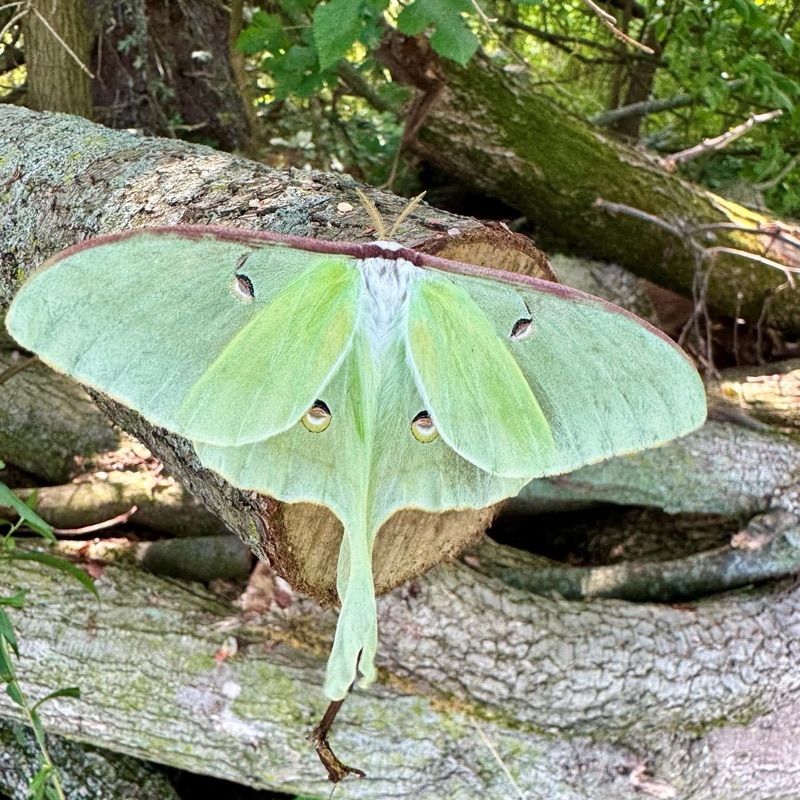 Photo Credits: Leaves For Wildlife Native Plant Nursery
Common Name: Luna Moth
Scientific Name: Actias luna
Other Names: Moon Moth
Family: Saturniidae
Genus: Actias
Group Behaviour: Solitary except during the mating season.
Body: The body is white and somewhat hairy.
Wings: Are a lime green colour, and have brown and white markings. There is a long twisted tail like feature on each hindwing.
Most Distinctive Feature: The moon - like eyespots on the hindwings.
Diet: It does not eat at all as an adult mature moth, but when it was a caterpillar their main diet was the foliage of their host plant that they were laid on as an egg.
Colour: Green
Skin Type: Exoskeleton
Weight: 0.06 - 0.1 ounce
Length: 3 to 4.5 inches
Age of Sexual Maturity: Shortly after it emerges from their cocoon.
The Luna Moth (Actias luna) is known for its pale to lime-green wings. The wings have a dark border on the forewings and a long, curving tail on the hindwings.
Each of the four wings has a transparent eyespot, which is believed to be a defense mechanism to confuse predators.
The long tails on the hindwings are thought to confuse predators, particularly bats, during their echolocation hunt.
Common Host Plants: White Birch, Black Walnut, Hickory, and Sweetgum.
*These plants are the Luna Moth’s primary host plants which means that they choose these plants quite frequently than other plants. White Birch, Black Walnut, Hickory, and Sweetgum are the Luna Moth’s go to when it comes to laying their eggs. The caterpillars that feed on these plants will do much better, have a healthy growth rate, and they become a healthy moth. *
Other Potential Host Plants: Cherry, Elm, Butternut, Sumac, and Beech.
*These plants are other host plants for the Luna Moth, but they are not their primary host plants which means they will only go to these when their primary ones are not available to them. *
Promethea Moth (Callosamia promethea)
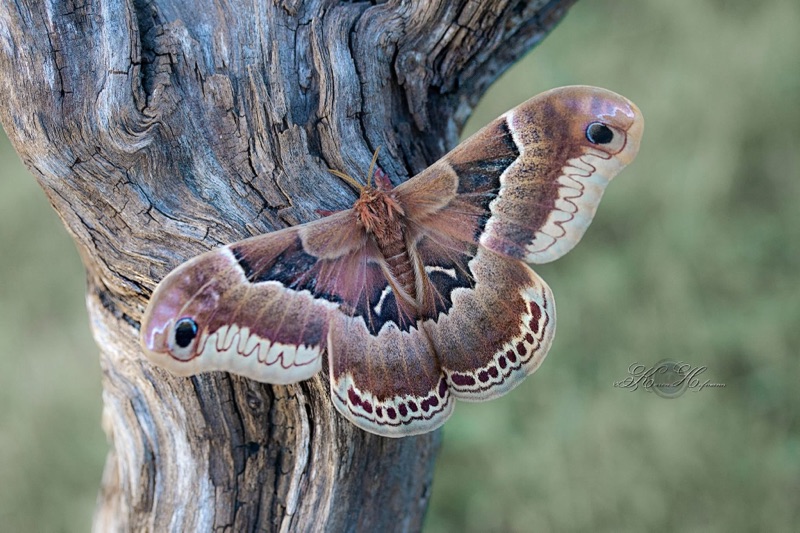 Photo Credits: Karen Hofmann
Common Name: Promethea Moth
Scientific Name: Callosamia promethea
Other Names: Spicebush Silk Moth
Family: Saturniidae
Genus: Collosamia
Group Behaviour: Solitary except for during the mating season.
Body: Stout and hairy
Wings: Are large for most moths in general, and the wing colour varies depending on the gender.
Most Distinctive Feature: Their most distinctive feature is its spindle shaped cocoon, which is wrapped around a leaf and secured with silk. Additionally, the Promethea Moth is recognizable by their large size, hairy body, and the eyespot on each forewing.
Diet: It does not eat at all as an adult mature moth, but when it was a caterpillar their main diet was the foliage of their host plant that they were laid on as an egg.
Colour: The colouring varies depending on the gender of the moth.
Reddish - brown or dark brown wings.
Black wings
Skin Type: Exoskeleton
Weight: 8 ounces
Length: 7.5 to 10 cm
Age of Sexual Maturity: Shortly after it emerges from their cocoon.
The Promethea Moth (Callosamia promethea) is a large rusty coloured moth. The physical appearance of the Promethea Moth varies depending on the gender of the moth.
The males have black wings with a tan border, while females have brown or reddish-brown wings with a tan border.
The females have dark brown to reddish-brown wings with tan borders and well-developed tan cell spots on all wings.
Both genders of the Promethea Moth have eyespots on their forewings.
Common Host Plants: Spicebush, Sassafras, Tulip Tree, Sweetbay Magnolia, lilac, White Ash, Black Cherry, and Buttonbush.
*These plants are the Promethea Moth’s primary host plants, and are favourited by the adult moths. The Promethea Moth mostly frequently goes to these plants to lay their eggs. The caterpillars of this moth species do better on these plants, where they grow big and chunky in size. *
Other Potential Host Plants: Basswood, Birch, Maples, Chokecherry, Apples, Plums, and Poplars.
*These host plants are not the Promethea Moth’s first choice of host plants for their young (caterpillars), which means they are the moth’s secondary host plants. The Promethea Moth will go to these host plants when their primary host plants are not available to them. *
Polyphemus Moth (Antheraea polyphemus)
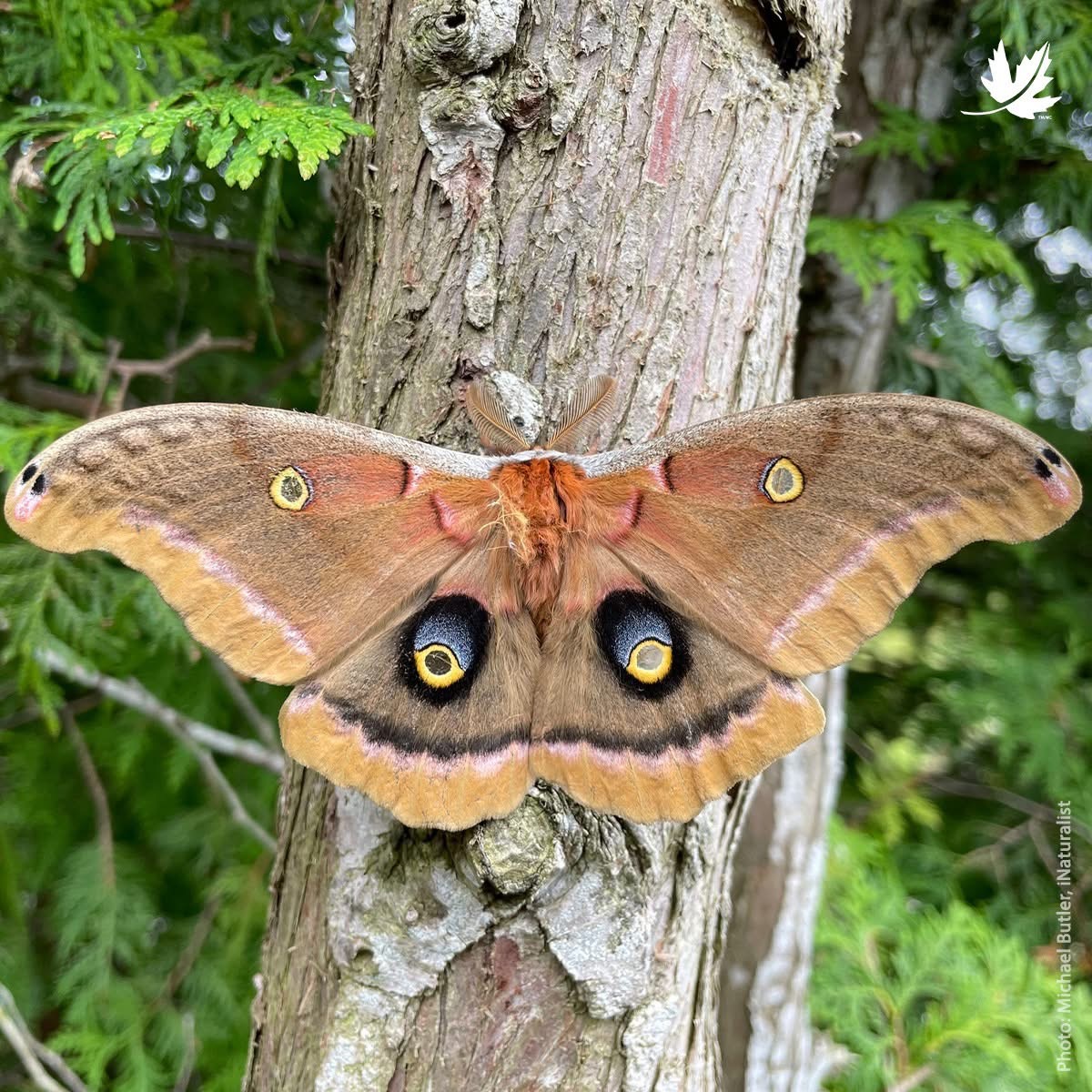 Photo Credits: Michael Butler/iNaturalist
Common Name:Polyphemus Moth
Scientific Name: Antheraea polyphemus
Other Names: N/A
Family: Saturniidae
Genus: antheraea
Group Behaviour: Solitary until the mating season begins.
Body: Stout and hairy body that is tan to a light brown colour.
Wings: Large wings that are brown to yellowish brown with large eyespots.
Most Distinctive Feature: The eyespot markings on their wings that mimic the eyes of a larger animal like the Great Horned Owl.
Diet: The adult moth does not feed because it doesn’t have a digestive system and mouth parts. When it was a caterpillar their main food source is the foliage off of the host plant that they were laid on as eggs.
Colour: brown, tan, or even reddish brown
Skin Type: Exoskeleton
Weight: A Polyphemus Moth typically weighs between 3 to 5 grams.
Length: Approximately 4 to 6 inches which is between 10 and 15 cm.
Age of Sexual Maturity: Shortly after it emerges from their cocoon.
The Polyphemus Moth (Antheraea polyphemus) is a large striking moth with distinctive large eyespots on its hindwings and a generally tan or brown colouration.
The most remarkable feature besides their grand size would be its clear eyespots on the wings.
An oval with a yellow ring with a dark center sits on each of the four wings. The hindwings' eyespots seem larger thanks to a black border and blue eyeshadow.
If startled, the moth opens and closes its wings, flashing all of its eyespots as a way to disorient a predator.
The forewings have a curve along the bottom. A red and pink line crosses each forewing near the head. A black and pink band follows the bottom edge of all the wings, leaving a brown border. Antennae are brown and feathery.
Host Plants: Oak, Alder, Birch, Chestnut, Elm, Maple, Poplar, Hickory, Rose, Willow, and Basswood.
Tulip Tree Moth (Callosamia angulifera)
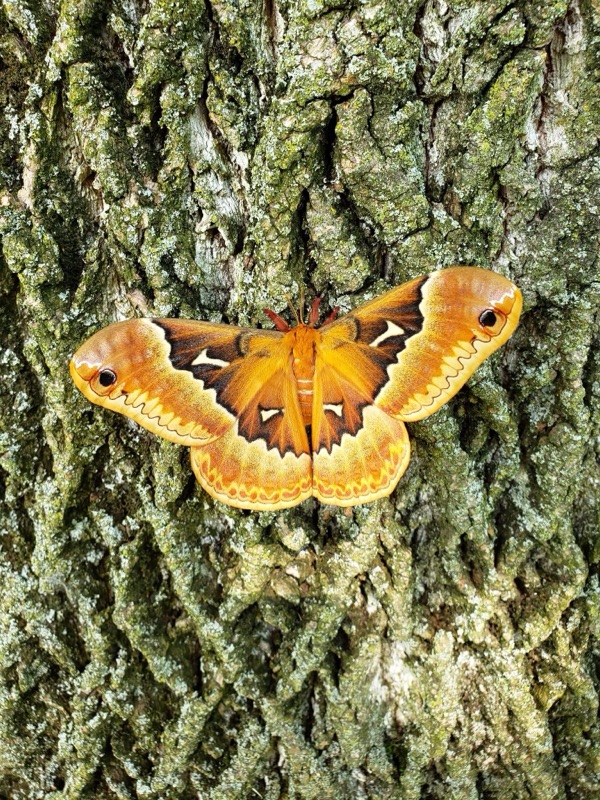 Photo Credits: Frank Civi from All Bugs Go To Kevin
Common Name: Tulip Tree Moth
Scientific Name: Callosamia angulifera
Other Names: Tulip Tree Silk Moth and Giant Silk Moth
Family: Saturniidae
Genus: Callosamia
Group Behaviour: Solitary until the mating season begins.
Body: Stout and hairy that is a brown colour.
Wings: Velvety large wings
Most Distinctive Feature: The Tulip Tree Moth has a couple distinctive features. They have a wavy white line and a T shaped white mark on their wings. There is an eyespot that is present on each forewing, which resembles the head of a snake. The males and females look different from one another.
Diet: As an adult Moth the Tulip Tree Moth does not eat because it doesn’t have a digestive system, and they don’t have any mouth parts. So, they mainly eat when they’re a caterpillar and their food source as a caterpillar is the foliage (leaves) of their host plant that they were laid on as eggs.
Colour: The colours of the Tulip Tree Moth varies depending on the gender.
brown, yellow - brown, or orange brown.
Skin Type: Exoskeleton
Weight: The weight would vary depending on factors like the size and stage of development of the moth, but it would likely be very small, in the range of grams at most.
Length: 3.1 to 4.2 inches
Age of Sexual Maturity: Shortly after it emerges from their cocoon.
The Tulip Tree Moth (Callosamia angulifera) is a large silk moth but smaller than the Cecropia Moth, and around the same size as the Polyphemus Moth.
The physical appearance of males and females vary from one another, and they have easily recognizable differences.
The Tulip-tree Silkmoth male is dark brown and the female is more orange. Both have a black eyespot in the outer corner of each forewing. All four wings have an ivory or white "T"-shaped mark. The wings are rounded or curved and have a dark brown scalloped line on their ivory-bottomed edges.
The inner parts of the wings are all darker in color than the outer parts. The boundary between these sections is clearly outlined in ivory for males and in black for females with a golden gradient.
The abdomen is short, hairy, and plump. The antennae are comb-like and wide in the middle, tapering at the tips.
Primary Host Plant: Tulip Tree
Other Host Plants: Black Cherry, Sassafras, and Chokecherry.
Columbia Silk Moth (Hyalophora columbia)
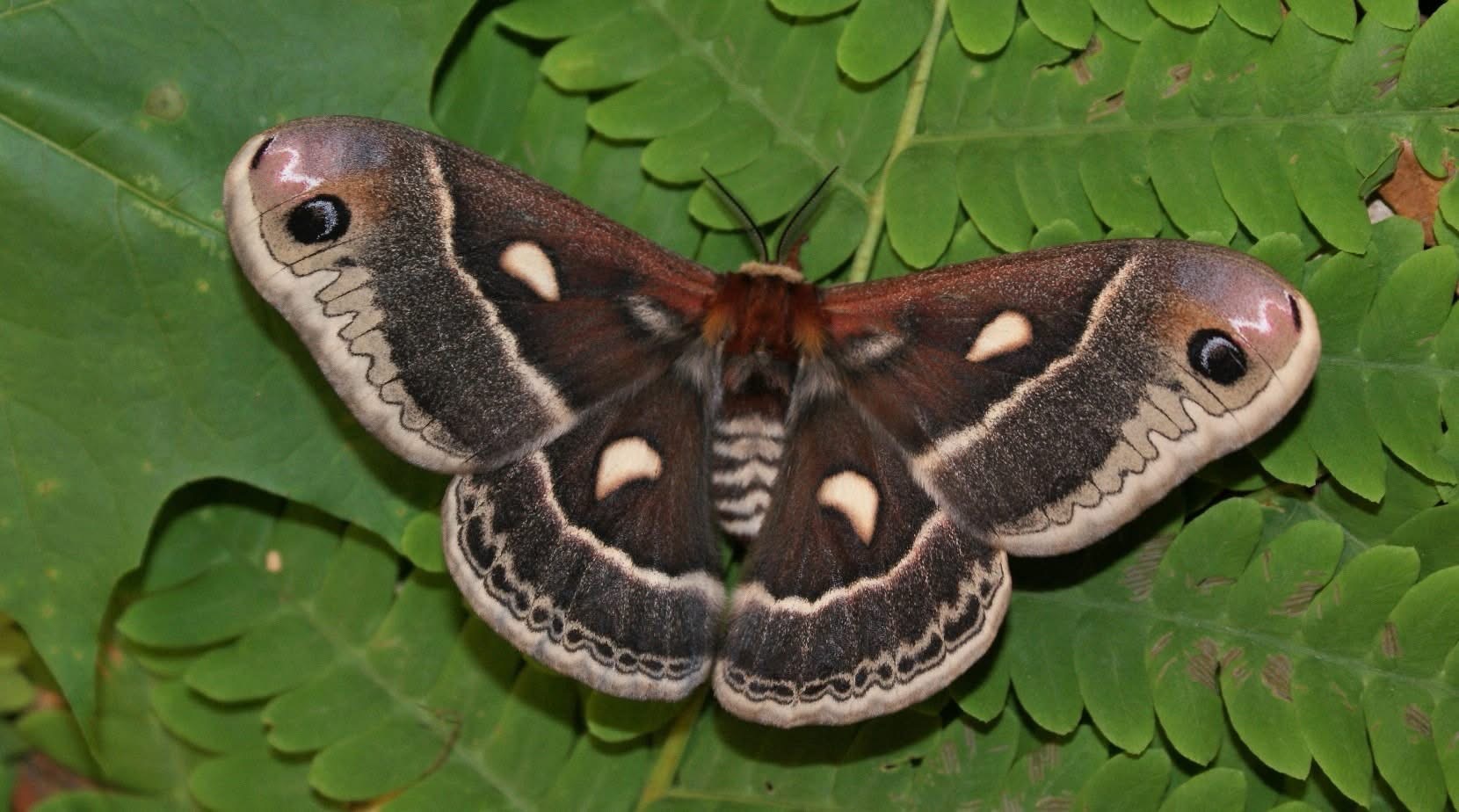 Photo Credits: Baz Conlin
Common Name: Columbia Silk Moth
Scientific Name: Hyalophora columbia
Other Names: Larch Silk Moth
Family: Saturniidae
Genus: Hyalophora
Group Behaviour: Solitary until the mating season begins.
Body: Dark reddish brown body that is stout and hairy.
Wings: Large dark reddish brown wings and there are crescent shaped markings that are white in colour on both forewings.
Most Distinctive Feature: The characteristic stripe on its wings with only two colour layers (black and white), and the crescent shaped markings on its fore and hind wings.
Diet: The Columbia Moth does not eat as an adult moth because it doesn’t have a digestive system, and it also has no mouth parts. The only time it ate was during their caterpillar stage, where they ate the foliage (leaves) of the host plant that they were laid on as an egg.
Colour: reddish brown
Skin Type: Exoskeleton
Weight: The weight of the Columbia Silk Moth is unknown.
Length: 80 to 100 mm
Age of Sexual Maturity: Shortly after it emerges from its cocoon.
The Columbia Silk Moth (Hyalophora columbia) is a large giant silk moth with mainly reddish brown wings and body, easily confused with the Cecropia Moth.
The wings of the Columbia Silkmoth have crescent-shaped markings in the middle of both the fore wing and the hind wing, although occasionally the spots on the fore wing may be small or absent.
There is a large black spot near the apex of the fore wing. Each wing also has a stripe with two color layers: black and white. This contrasts with the stripe on the Cecropia Moth, which also has a reddish orange layer. The tips of the wings of the Columbia are rounded.
Host Plants: Tamarack, Pin Cherry, Speckled Alder, White Birch, Western Chokecherry, and Bitter Cherry.
The Cecropia Moth, Luna Moth, Promethea Moth, Polyphemus Moth, Tulip Tree Moth, and Columbia Moth are very unique moths due to their physical appearance, lifespan, wing patterns, size, and life in general.
Did You Know? The Cecropia Moth, Luna Moth, Promethea Moth, Polyphemus Moth, Tulip Tree Moth, and Columbia Moth spends 10 months up to 1 year inside their cocoon where they emerge in the spring of the following year.
Did You Know? The Cecropia Moth, Luna Moth, Promethea Moth, Polyphemus Moth, Tulip Tree Moth, and Columbia Moth have one generation per year.
These moths don’t have a long lifespan where they only live for a few days. Their main purpose during their short life is to find a mate, in order for their life cycle to repeat again. This is due to them not having a digestive system and mouth parts, and spending a long period of time as caterpillars and cocoons.
The cocoons of these moths are usually found on the host plant that they ate as caterpillars, where they would be on the branches or twigs. Occasionally they can be found in leaf litter on the ground.
These beautiful creatures usually emerge from their cocoons between the end of spring and the beginning of summer, which usually occurs from the end of May and beginning of June.
Just like butterflies, as soon as these moths emerge from their cocoons their bodies are swollen and wings are wet as well as deflated. So they need to hang themselves upright for several hours , in order for their wings to dry and to pump all of the liquid that is in their abdomen into the wings.
Cecropia Moths, Luna Moths, Promethea Moths, Polyphemus Moths, Tulip Tree Moths, and Columbia Moths are normally ready to take their first flight several hours after their wings are dried which is usually at dusk and the middle of night hours.
Sadly, our Giant Silk Moths are in a decline due to a combination of factors including habitat loss, pesticide use, parasitism by an introduced fly and wasp, light pollution, and climate change all play a factor.
Fortunately, there are things that we can do to help these beautiful moths and to provide for them on our private properties. Some of the things that we can do to help our beautiful moths is by planting one or more of their host plants in the backyard, stop using harmful chemicals like pesticides in the garden and yard, provide shelter for the adult moths like planting a shrub that is native to your area, stop using your porch lights and house lights during the night, turn off your outdoor lights when your not using them, place large flat rocks in your garden that are underneath or in between shrubs to provide resting spots for the adult moths, and stop introducing non native species and invasive plants on your property.
“The moth prefers the moon and detests the sun, while the butterfly loves the sun and hides from the moon. Every living creature responds to light, but it depends on the amount of light you have inside, determines which lamp in the sky your heart will swoon. “ ~ Suzy Kassem ~
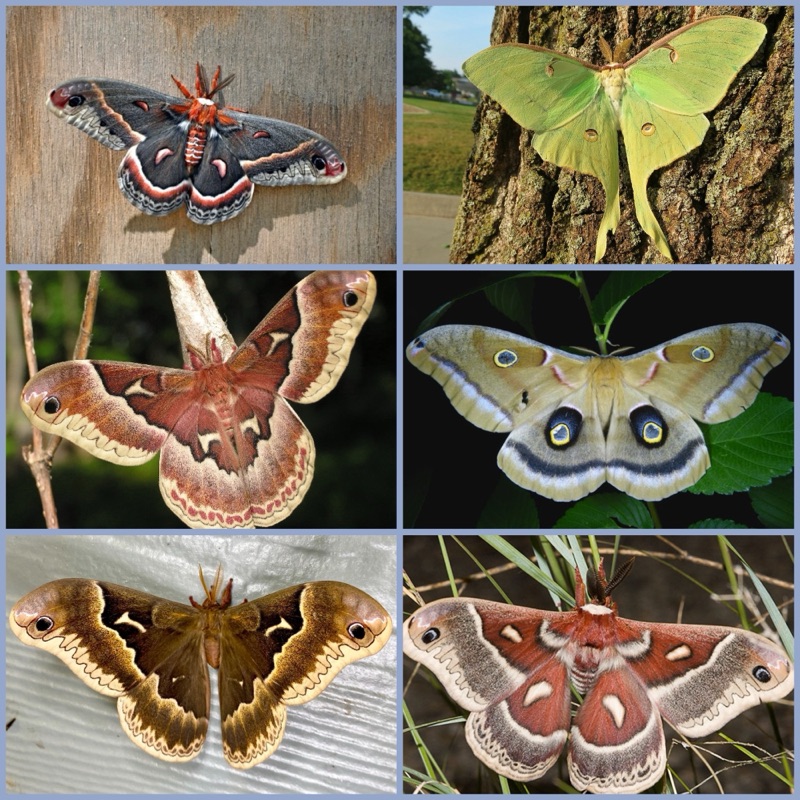 Photo Credits: CALVIN ANDERSON, United States Fish And Wildlife Service, Stan Malcolm Photos, Prairie Haven, Dan McCord, and John Davis.
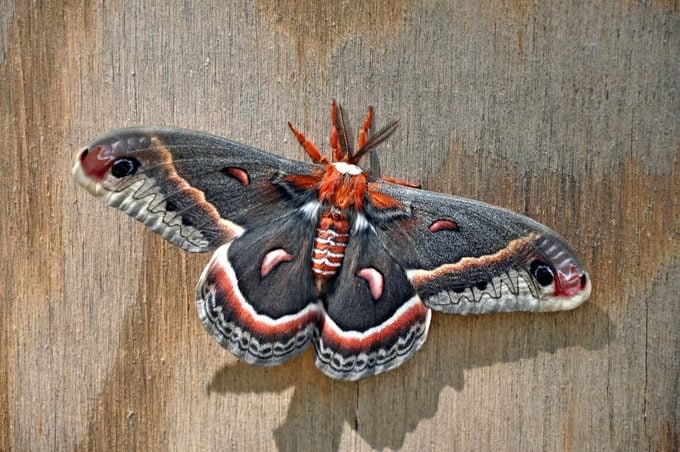 Photo Credits: CALVIN ANDERSON
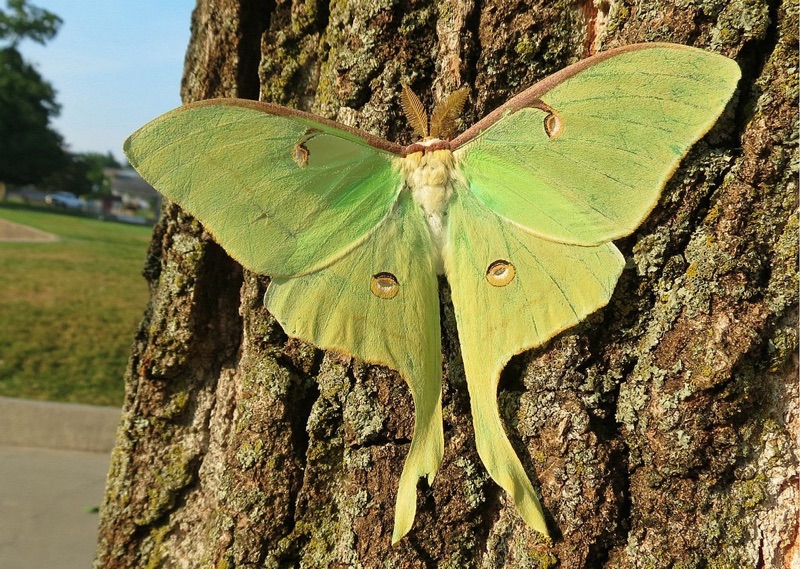 Photo Credits: United States Fish And Wildlife Service
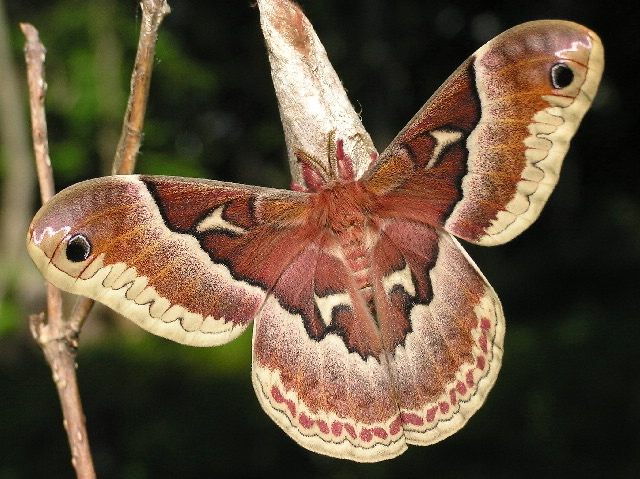 Photo Credits: Stan Malcolm Photos
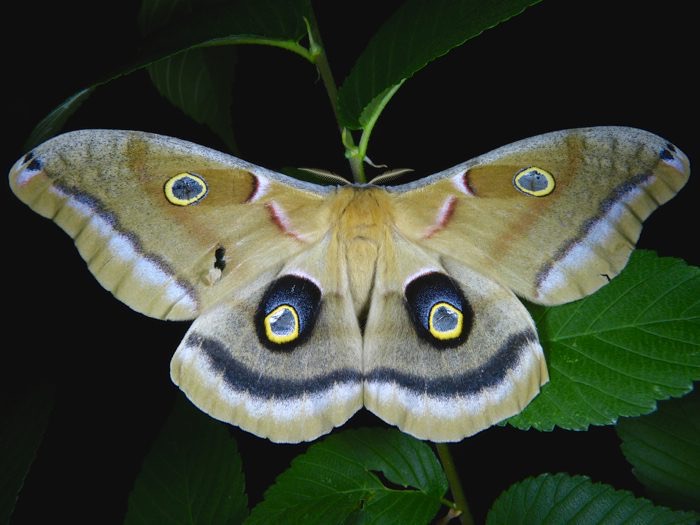 Photo Credits: Prairie Haven
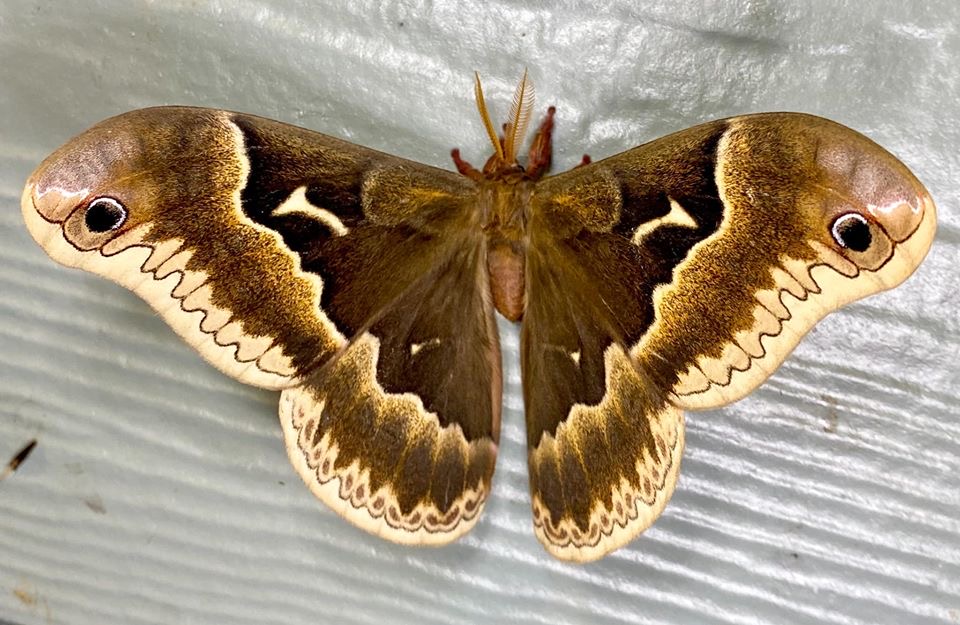 Photo Credits: Dan McCord
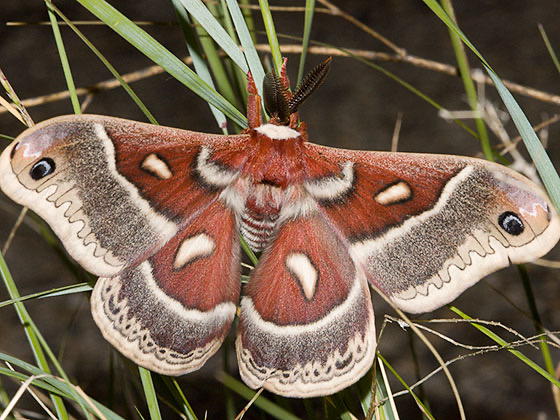 Photo Credits: John Davis


Comments
Post a Comment