Fritillary Butterflies Of Ontario
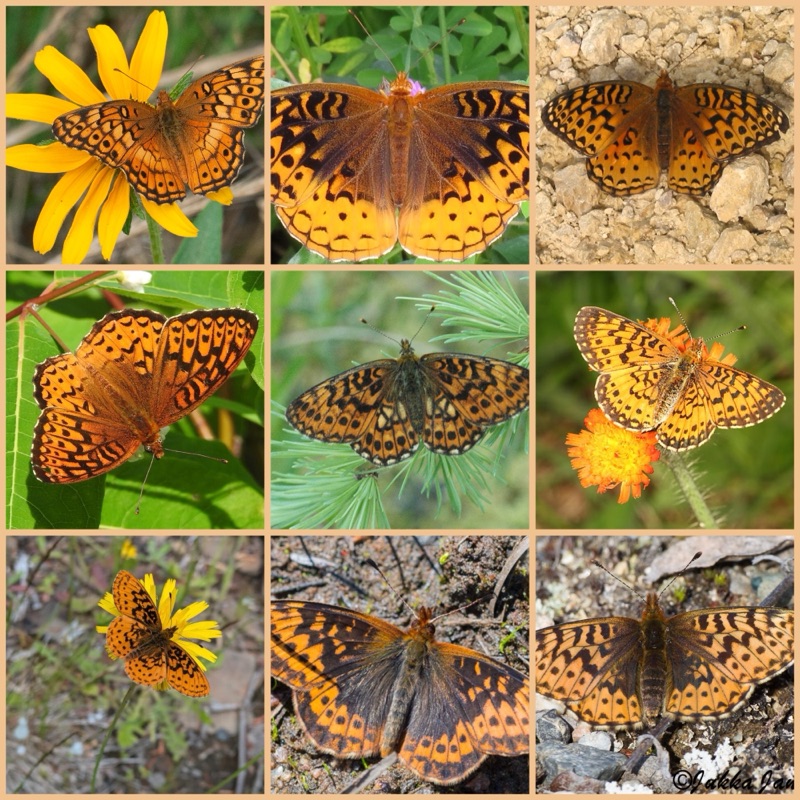
Fritillary Butterflies Of Ontario: A Dance Of Gold In The Wild!
With their dazzling golden-orange wings patterned like delicate lace, Ontario’s fritillary butterflies flutter through meadows and forests, bringing a touch of magic to the landscape. These graceful pollinators are more than just a pretty sight—they play a crucial role in local ecosystems, interacting with wildflowers and supporting biodiversity. But there’s more to these butterflies than meets the eye! From their fascinating life cycle to their secret survival strategies, fritillaries have incredible stories to tell. Let’s uncover the hidden wonders of these golden-winged gems!
Variegated Fritillary (Euptoieta claudia)
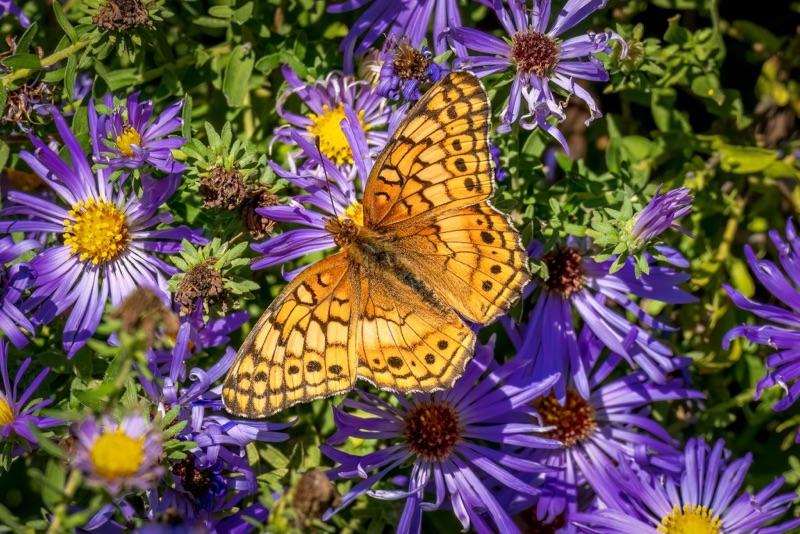 Photo Credits: Bob Hurst
Common Name: Variegated Fritillary
Scientific Name: Euptoieta claudia
Other Names: Pansy Worm Butterfly
Genus: Euptoieta
Family: The Brush - footed Butterflies Family
Group Behaviour: nomadic behaviour
Body: A orange body marked by black stripes and white spots.
Wings: The Variegated Fritillary has wings that are dull orange, darker at the wing bases, with a complex pattern of black spots and lines on the upperside.
Colours: orange, black, brown, and grey.
Most Distinctive Features: Is their checkered pattern of black and orange across its wings, along with its generally orange-brown colour.
Diet: As adults their primary food source is nectar from various different kinds of flowers.
Skin Type: Exoskeleton
Flight Period: The flight period typically extends from May to October, with peak activity occurring in July and August.
While they can be observed throughout this period, they are most commonly seen during mid-summer and early fall.
Wingspan: Has a wingspan of approximately 1.75 to 2.25 inches (44 to 57 mm). Sometimes a Variegated Fritillary has a wingspan that ranges from 1.75 to 3.2 inches (4.5 to 8 cm).
Early Season Variegated Fritillaries are smaller in size, so they have a smaller wingspan than others.
Flight Pattern: The butterfly’s flight is characterized as slow and erratic, adding an unpredictable beauty to their presence in nature.
Life History: Males patrol short distances in flat, dry, open places. Eggs are laid singly on host plant stems and leaves; caterpillars eat leaves and flowers.
Lifespan: Varies from 2 weeks up to 10 weeks.
Host Plants: Common Blue Violet
Favourite Flowering Plants For Nectar: Butterfly Weed, Red Clover, Swamp Milkweed, and Tick Trefoil.
The Variegated Fritillary (Euptoieta claudia) is an orange butterfly with black markings, easily recognizable by its checkered pattern across the wings.
Invite the striking Variegated Fritillary (*Euptoieta claudia*) into your yard and watch its vibrant wings bring your garden to life! With intricate patterns of orange and brown adorning its wings, this butterfly is a captivating sight as it flutters among blooms. To attract these beauties, plant host plants like violets (native) and passionflowers (non native), which provide essential food for their caterpillars, and offer nectar-rich flowers such as coneflowers and lantanas to nourish the adults. By creating a welcoming habitat, you’ll not only enjoy the mesmerizing presence of the Variegated Fritillary but also support the delicate balance of nature in your own backyard. Let your garden become a haven for these graceful pollinators!
Great Spangled Fritillary (Speyeria cybele)
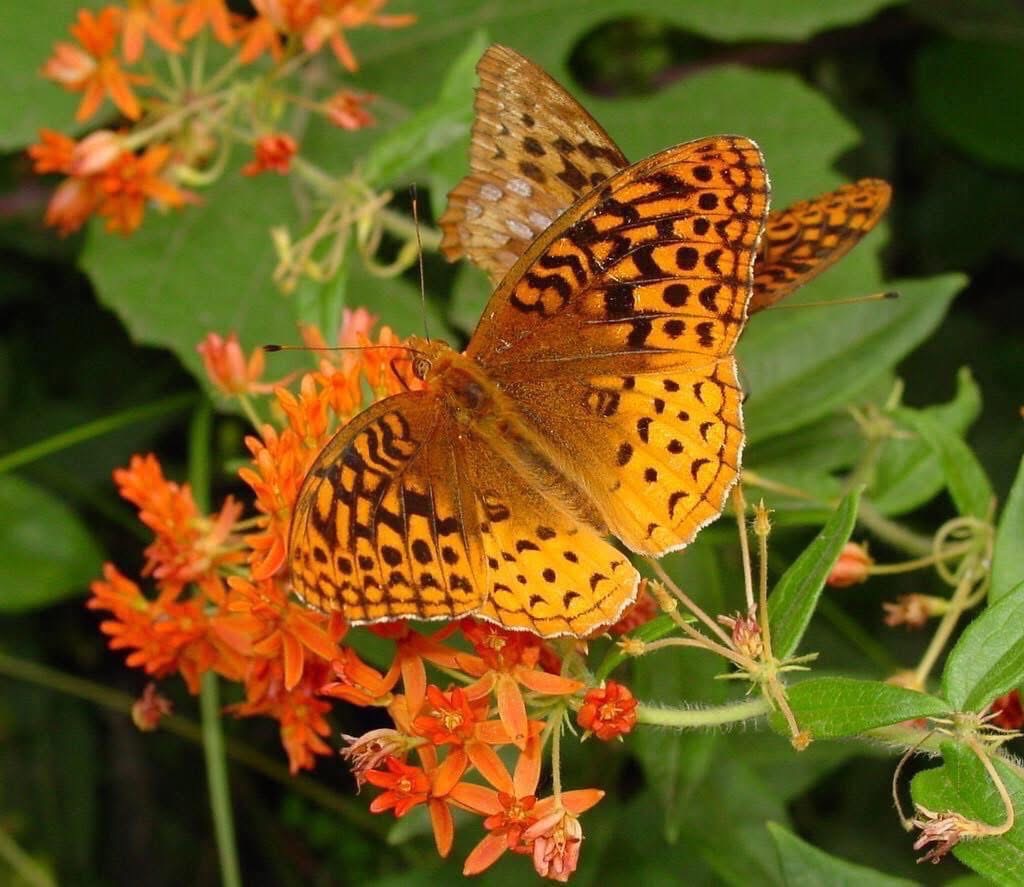 Photo Credits: Pondhawk, CC By 2.0
Common Name: Great Spangled Fritillary
Scientific Name: Speyeria cybele
Other Names: N/A
Genus: Speyeria
Family: The Brush - footed Butterflies Family
Group Behaviour: diurnal behaviour, meaning they are active during the day and stay close to food sources.
Body: Reddish brown to dark brown in colour and hairy.
Wings: Orange wings with black markings on the upper surface, and silvery spots on the underside especially on the hindwings.
Colours: The colouration of this fritillary species varies depending on the gender. Male Great Spangled Fritillaries are typically tan to orange in colour. Female Great Spangled Fritillaries tend to be darker and more tawny.
Most Distinctive Features: Is their wide light coloured submarginal band on the underside of the hindwing.
Diet: As adults their primary food source is nectar from various different types of flowers.
Skin Type: Exoskeleton
Flight Period: Their flight period is typically from mid June to mid September. While they can be seen throughout this period, they are most common in July.
Wingspan: It has a wingspan of 2.4 to 3.5 inches wide.
Flight Pattern: These butterflies exhibit a medium-speed flight, often moving in a straight line, a testament to their strong and determined nature.
Life History: Males patrol open areas for females. Eggs are laid in late summer on or near host violets. Newly-hatched caterpillars do not feed, but overwinter until spring, when they eat young violet leaves.
Lifespan: 2 weeks up to 10 weeks
Host Plants: Common Blue Violet and Canada Violet.
Favourite Flowering Plants For Nectar: Milkweed, Thistles, Verbena, Vetch, Wild Bergamot, Red Clover, Joe Pye Weed, and Pale Purple Coneflower.
The Great Spangled Fritillary (Speyeria cybele) is a large, conspicuous butterfly known for its orange and black markings. Males are typically orange with black patterning, while females tend to be browner and have more black in the outer margin of their wings.
Transform your yard into a fluttering haven for the breathtaking Great Spangled Fritillary (*Speyeria cybele*). With its striking golden-orange wings adorned with delicate black markings, this butterfly is a dazzling presence in any garden. To entice these beauties, plant native violets (essential host plants for their caterpillars), and provide nectar-rich blooms (like milkweed, coneflowers, and bee balm) for the adults to feast on. By cultivating a pollinator-friendly space, you’ll not only welcome these graceful creatures but also contribute to the balance of your local ecosystem. Let your garden burst with life and colour by inviting the Great Spangled Fritillary to make it their home!
Aphrodite Fritillary (Speyeria aphrodite)
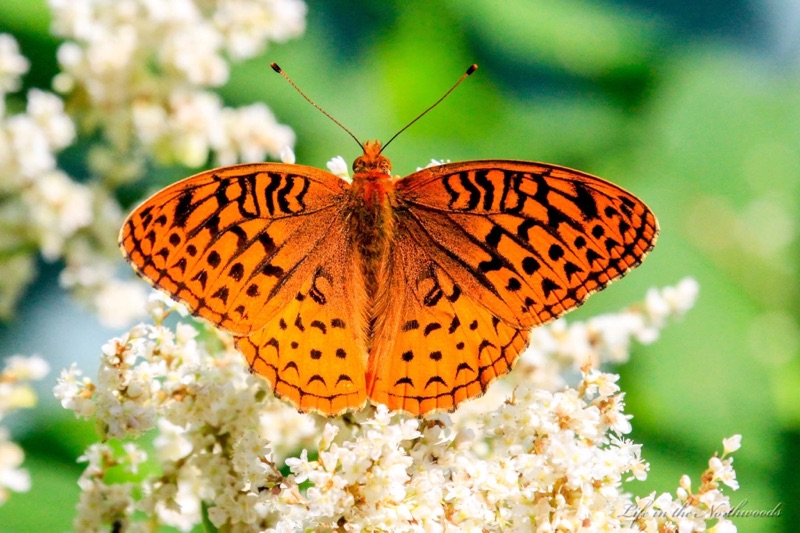 Photo Credits: Mrs. M. Crowley
Common Name: Aphrodite Fritillary
Scientific Name: Speyeria aphrodite
Other Names: N/A
Genus: Speyeria
Family: The Brush - footed Butterflies Family
Group Behaviour: Aphrodite Fritillary exhibit solitary behaviour, though they can gather in larger numbers when abundant nectar sources are available.
Body: The body generally black with orange or tan markings, particularly on the lower half.
Wings: The wings are typically reddish orange or brown with black spots.
Colours: orange, black, brown, and white.
Most Distinctive Features: Is the extra black spot on the forewing near the base which is often below the forewing cell.
Diet: As adults their primary food source is nectar from mid and late summer flowers.
Skin Type: Exoskeleton
Flight Period: Generally spanning from mid June to mid September. However, this can vary slightly depending on the location and even year-to-year.
Wingspan: The Aphrodite Fritillary has a wingspan of 2 to 2 7/8 inches (51 to 73 mm) in wide.
Flight Pattern: The Aphrodite Fritillary’s flight is characterized by an average pace interspersed with erratic flaps, a dance through the air that is both purposeful and whimsical.
Life History: Males patrol for females during warm hours. Females walk about on the ground to lay single eggs near violets. First-stage caterpillars do not feed, but overwinter until spring, when they eat young leaves of violets.
Lifespan: About 1 year
Host Plants: Common Blue Violet and Canada Violet
Favourite Flowering Plants For Nectar: Milkweeds, Thistles, Clovers, Daisies, Joe Pye Weed, Tall Ironweed, Verbena, and Coneflowers.
The Aphrodite Fritillary (Speyeria aphrodite) is a medium sized butterfly that is orange with black markings on the upperside of its wings, often with a black spot near the base of the forewing. The underside of the hindwings is red-brown and may have a light brown band between the rows of silver spots.
It is a stunning butterfly that adds a vibrant touch to any landscape with its fiery orange wings and intricate black patterns. This elegant species thrives in open meadows and gardens rich in native wildflowers. To support its life cycle, planting violets—its essential host plants—provides nourishment for its caterpillars, while nectar-rich flowers like milkweed, coneflowers, and black-eyed Susans sustain the adults. By creating a pollinator-friendly habitat, you’ll not only welcome this graceful butterfly but also contribute to biodiversity, ensuring a thriving ecosystem right in your own backyard!
Atlantis Fritillary (Speyeria atlantis)
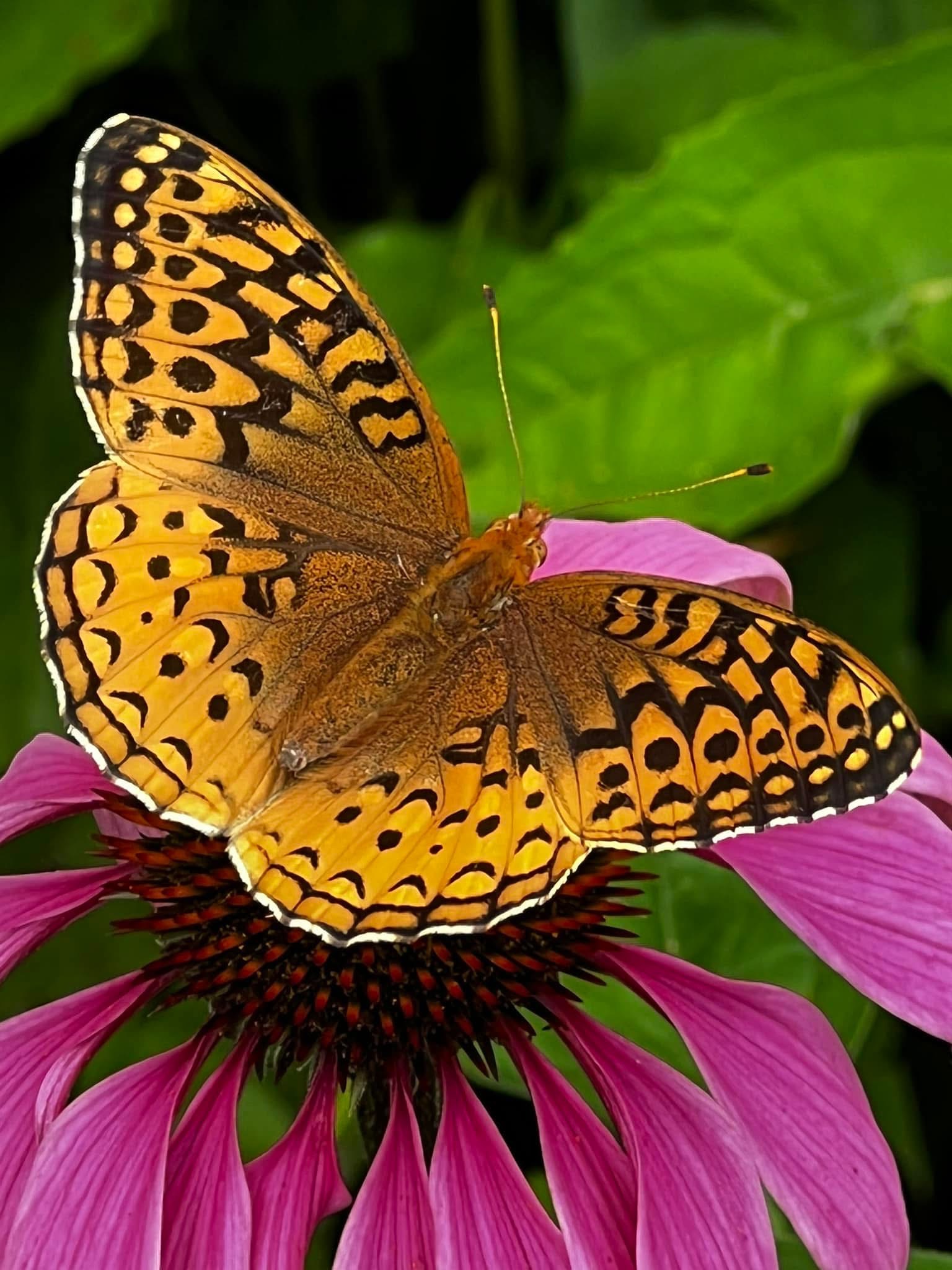 Photo Credits: Cassie Taylor from Ontario Native Plants Facebook Group
Common Name: Atlantis Fritillary
Scientific Name: Speyeria atlantis
Other Names: Mountain Silverspot, Mountain Fritillary, or Mountain Silver - spotted Butterfly.
Genus: Speyeria
Family: Brush - footed Butterflies Family
Group Behaviour: They exhibit solitary behaviour except for when it is mating season, where both males and females search for their mate. Occasionally, they can be seen drinking from mud puddles and animal poop.
Body: Has a body characteristic of other fritillary species, which is a medium sized body that is orangish brown in colour and a bit furry all over.
Wings: Has smaller wings compared to the Great Spangled Fritillary and Aphrodite Fritillary. The upperside and underside of the wings are different colours. On the upperside they are orange - brown, and darker at the base with black outer margins. On the underside there is a basil disk that is chocolate brown or purplish and there are spots which are silver in colour.
Colours: Orange and brown, with a lighter yellow or yellowish orange in females.
Most Distinctive Features: The most distinctive feature on the Atlantis Fritillary is their darker more smudged outer margin on the wings compared to other fritillary species.
Diet: The Atlantis Fritillary primarily feeds on nectar from various flowers. They are known to visit mud and rotting vegetation for nutrients,
Skin Type: Exoskeleton
Flight Period: The flight period for the Atlantis Fritillary is typically from mid June to mid September. They are most commonly observed in July and August.
Wingspan: 2.4 inches wide
Flight Pattern: Their flight is described as slow and low, often seen near the ground close to the flowers that they like.
Life History: Males patrol during the day in forested areas or along streams. Eggs are laid singly on leaf litter near host plant. Unfed first-stage caterpillars overwinter, emerging in spring to feed on leaves.
Lifespan: 14 to 27 days
Host Plants: Canada Violet, Woolly Blue Violet, and Northern Bog Violet.
*The Atlantis Fritillary prefers to use Canada Violet as a host plant, but they will go to other species of Violets.*
Favourite Flowering Plants For Nectar: Butterfly Weed, Swamp Milkweed, Spotted Joe Pye Weed, Sweet Joe Pye Weed, Common Milkweed, Blue Vervain, Hoary Vervain, Tall Ironweed, Buttonbush, Thistles, and Red Clover.
The Atlantis Fritillary (Speyeria atlantis) is a butterfly with a distinctive appearance, often described as having a bright orange or tawny colour on the upperside of its wings, punctuated by numerous black spots and thickened black veins. The hindwings often exhibit a dark chocolate-brown underside with silvery-white spots.
This fritillary species is a striking butterfly with intricate, orange-brown wings adorned with delicate black markings and shimmering silver spots on its underside. This graceful pollinator thrives in meadows, woodland edges, and open fields, relying on native violets for its larvae and nectar-rich flowers for its adult stage. By planting native wildflowers and protecting open habitats, you can create a haven for this stunning fritillary while supporting a vital piece of the ecosystem. If you’re looking to add both beauty and biodiversity to your landscape, this butterfly is worth welcoming.
Bog Fritillary (Boloria eunomia)
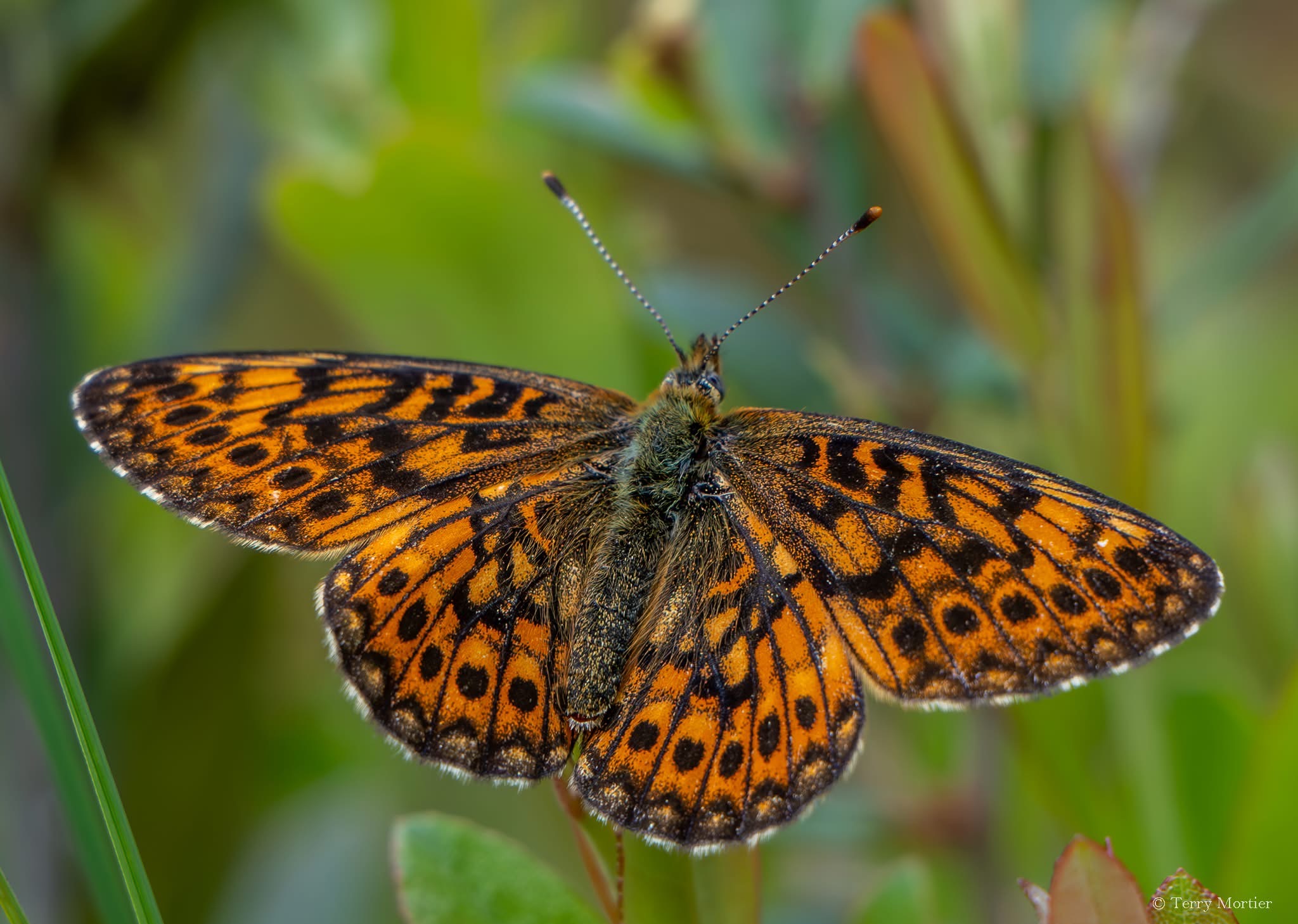 Photo Credits: Terry Mortier
Common Name: Bog Fritillary
Scientific Name: Boloria eunomia
Other Names: Ocellate Bog Fritillary
Genus: Boloria
Family: Brush - footed butterflies Family
Group Behaviour: Bog Fritillaries can be found flying singly, and they don’t exhibit solitary behaviour. They are known to gather in larger groups, particularly during mating season, and can be found in abundance in their preferred habitats.
Body: Has a body that is similar to other fritillaries which includes a small to medium sized body that is orangish brown to tan colour, and it is known to be a bit hairy all over.
Wings: The wings on a Bog Fritillary are orange - brown with dark markings. The underside and upperside of the wings are different in colouration and patterns.
Colours: Orange - brown, dark black, and white.
Most Distinctive Features: The Bog Fritillary’s most distinctive feature is the row of white submarginal spots on the underside of the hindwing.
Diet: Their primary food source as adults is nectar from various flowers.
Skin Type: Exoskeleton
Flight Period: The Bog Fritillary typically flies from late May to early August. More specifically, it's often observed from mid-June to July in northern regions, and can be found in southern regions from Mid May to the end of June.
Wingspan: 1 1/4 to 1 3/4 inches (3.2 to 4.5 cm) wide.
Flight Pattern: They typically fly close to the ground, darting and fluttering near their host plants and the flowers that they like.
Life History: Males patrol in wet areas for females. Eggs are laid in groups of 2-4 under host plant leaves, which the caterpillars eat. Third- and fourth-stage caterpillars overwinter.
Lifespan: 14 to 27 days
Host Plants: Northern Bog Violet and Downy Yellow Violet.
*The Bog Fritillary prefers to use the Northern Bog Violet as a host plant, but they will use Downy Yellow Violet when their primary host plant is not available.*
Favourite Flowering Plants For Nectar: Butterfly Weed, Button Bush, Woodland Phlox, Swamp Milkweed, Wild Bergamot, Spotted Joe Pye Weed, Black eyed Susan, Pale Purple Coneflower, Common Milkweed, Field Thistle, and Tall Ironweed.
The Bog Fritillary (Boloria eunomia) is a small butterfly characterized by orange-brown wings with dark markings, and a row of pearly spots on the underside of the hindwings. It's found in bogs, moist tundra, and willow seeps, and is known to feed on nectar from various flowers.
This fritillary species is a delicate yet resilient butterfly that thrives in wet meadows, bogs, and marshy landscapes. Its vibrant orange wings, marked with intricate black patterns, make it a stunning sight as it flutters through damp habitats searching for nectar-rich wildflowers. This species depends on native violets for its larvae, making it essential to preserve and plant these host plants. By creating a pollinator-friendly space with native vegetation and moist, undisturbed areas, you can provide vital support for this rare and beautiful fritillary, helping it flourish in your own backyard.
Silver - bordered Fritillary
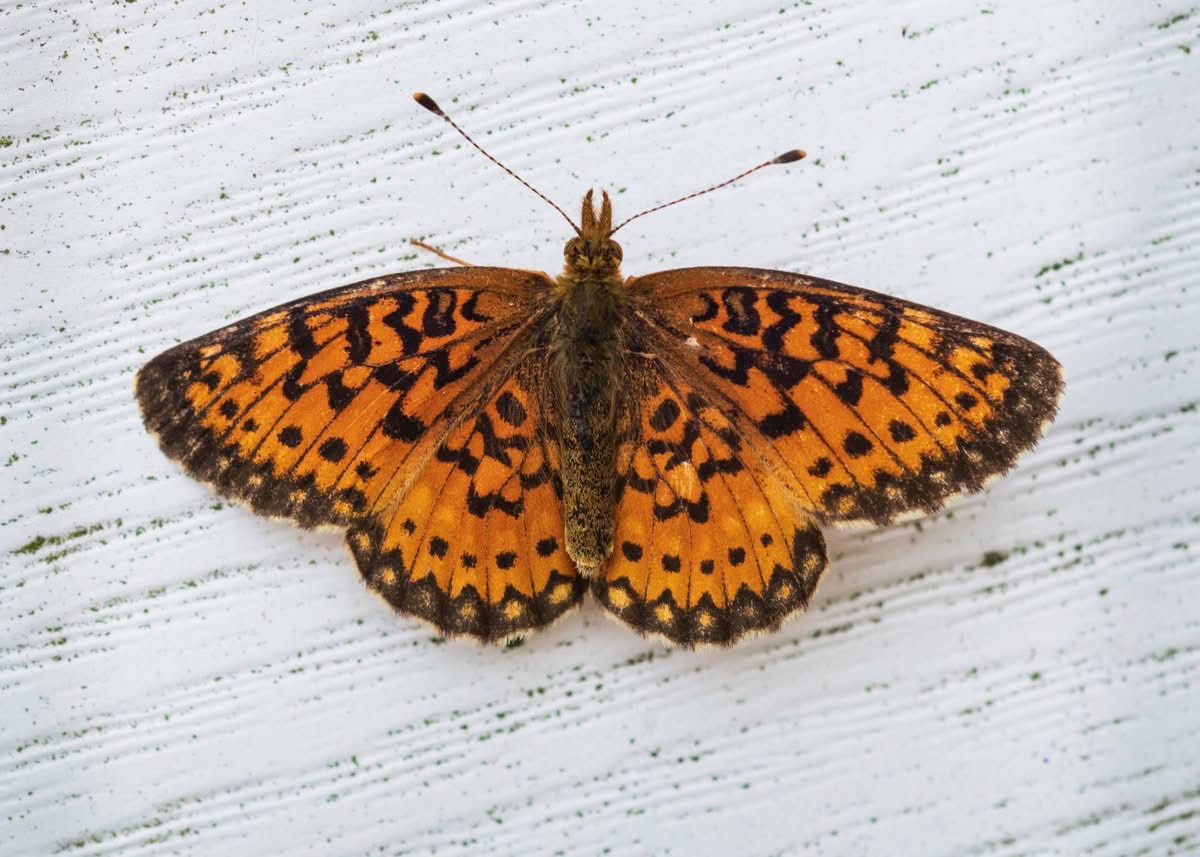 Photo Credits: David Tomes from The Insects And Arachnids Of Ontario Facebook Group.
Common Name: Silver - Bordered Fritillary
Scientific Name: Boloria selene
Other Names: Small Pearl - bordered Fritillary
Genus: Boloria
Family: Brush - footed Butterflies Family
Group Behaviour: It is considered a solitary butterfly, where they show being alone most of the time. Once it is mating season they become not solitary.
Body: Has a medium sized body that is either brownish tan or orangish brown in colour, and it is also a bit hairy all over.
Wings: The upperside of the wings is orange with black markings. The black margins enclose pale orange spots. The underside of the wings has a silver border along both outer wing margins, and there is also four rows of metallic silver spots.
Colours: Bright orange, black, yellow, brown, white, and silver.
Most Distinctive Features: On the Silver - bordered Fritillary their most distinctive feature is their bright metallic silver spots on an orange brown base.
Diet: Their primary food source as adults is nectar from various flowers.
Skin Type: Exoskeleton
Flight Period: late May to September
Wingspan: 1.5 to 2 inches (35 to 51 mm) wide
Flight Pattern: Their flight pattern is fast, and flies low to the ground near their host plants and flowers they like for nectar.
Life History: Males patrol wet areas for females. Eggs are laid singly near host plants. Caterpillars feed on leaves; third-stage caterpillars hibernate.
Lifespan: 14 - 27 days
Host Plants: Northern Bog Violet, Canada Violet, Woolly Blue Violet, Downy Yellow Violet, Dog Violet, and Sweet White Violet.
Favourite Flowering Plants For Nectar: Goldenrod, Black eyed Susan, Milkweed, Thistles, Bee Balm, Woodland Phlox, Wild Geranium, and Pale Purple Coneflower.
The Silver - Bordered Fritillary (Boloria selene) is a small, orange-and-black butterfly with a distinctive silver border on its wings, particularly noticeable on the underside.
This fritillary butterfly species is a dazzling butterfly, its bright orange wings framed by delicate silver spots that shimmer in the sunlight. This small yet lively pollinator thrives in wet meadows, marshes, and grasslands, relying on violets for its larvae and nectar-rich wildflowers to fuel its graceful flight. By planting native violets and maintaining open, moisture-rich habitats, you can create a haven for this enchanting species while supporting the delicate balance of your local ecosystem. If you want to welcome a splash of silver-winged beauty to your property, this fritillary is ready to flutter in.
Meadow Fritillary (Boloria bellona)
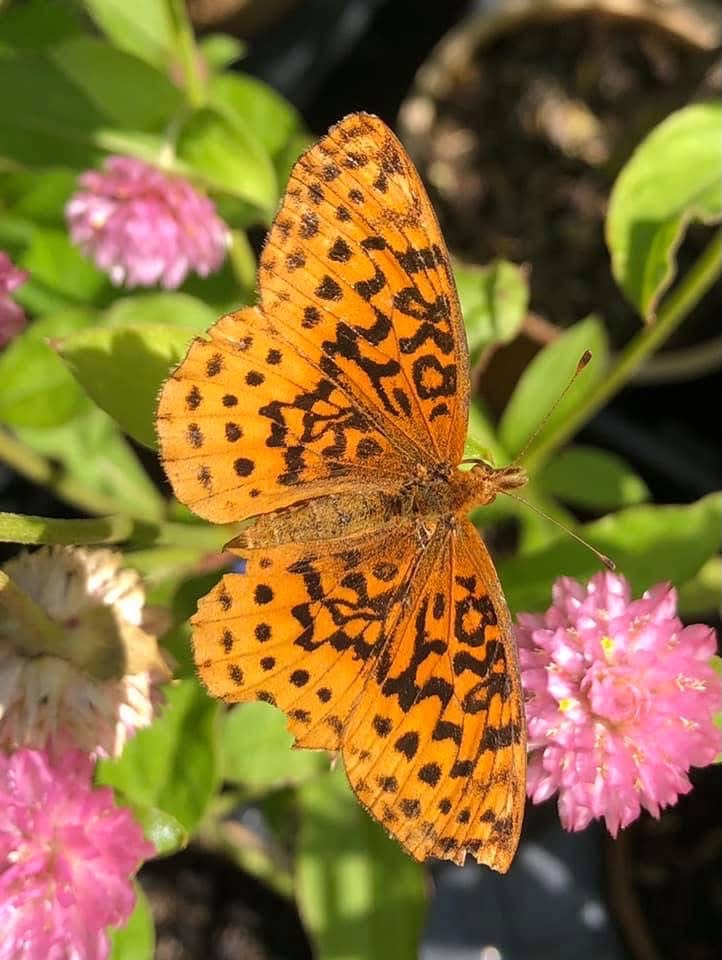 Photo Credits: Draper Springs Nursery & Gardens
Common Name: Meadow Fritillary
Scientific Name: Boloria bellona
Other Names: Gold Spot Fritillary, Silver Spot Fritillary, or Heath Fritillary.
Genus: Boloria
Family: Brush - footed Butterflies Family
Group Behaviour: Meadow Fritillaries are generally solitary butterflies, and are often seen flying around on their own.
They prefer to spend time by themselves, where they don’t spend time with other butterflies in the same species.
Body: Has a smaller body that is a darker brown near the head, and a more tanner colour near the end. The body also seems a bit fuzzy and hairy all over.
Wings: Has smaller wings compared to other fritillary species. The wings are bright orange with irregular black markings on the upperside. The forewings seem to be squared off, giving the wings a truncated tip. The underside of the wings is more mottled, with orange and purplish-brown colours.
Colours: bright orange, red, black, orange, and purple - brown.
Most Distinctive Features: The Meadow Fritillary has three distinctive features. The first one is their square off or truncated tip on the forewings. The second one is their black markings on the upperside of the wings. The third one is the heavily patterned muted coloured triangles that are located on the underside of their wings.
Diet: As adults the Meadow Fritillary primarily feeds on nectar from various flowers.
Skin Type: Exoskeleton
Flight Period: Typically has a flight period that stretches from mid May to mid June and mid July to mid August.
Wingspan: The Meadow Fritillary has a wingspan of approximately 1 1/4 to 1 7/8 inches (3.5 to 5.1 cm) wide.
Flight Pattern: The Meadow Fritillary exhibits a low, rapid, and jerky flight pattern.
Life History: Males patrol meadows with a low flight, during warm daytime hours. Females lay eggs on twigs and plants other than the host violets. Caterpillars feed on violet leaves and hibernate when in the third to fourth stage of development.
Lifespan: 14 - 27 days
Host Plants: Downy Yellow Violet, Dog Violet, Sweet White Violet, Birdfoot Violet, Woolly Blue Violet, and Alpine Violet.
Favourite Flowering Plants For Nectar: Black eyed Susan, Smooth Oxeye, Common Milkweed, Sweet Joe Pye Weed, Butterfly Weed, Spotted Joe Pye Weed, and Mint.
The Meadow Fritillary (Boloria bellona) is a small orange butterfly that has a distinctive black line and dot patterning on its bright orange upperside, and a heavily-patterned underside with muted coloured triangles.
This fritillary species is a lively, fluttering jewel that adds a touch of brilliance to open fields and grasslands. Its vibrant orange wings, patterned with intricate black markings, make it a striking presence as it dances among wildflowers. This butterfly relies on native violets for its larvae, making them essential for its survival. By cultivating open meadows with nectar-rich blooms and host plants, you can create a welcoming sanctuary for this cheerful pollinator. If you want to bring movement, colour, and ecological harmony to your backyard, the Meadow Fritillary is the perfect guest to invite in.
Frigga Fritillary (Boloria frigga)
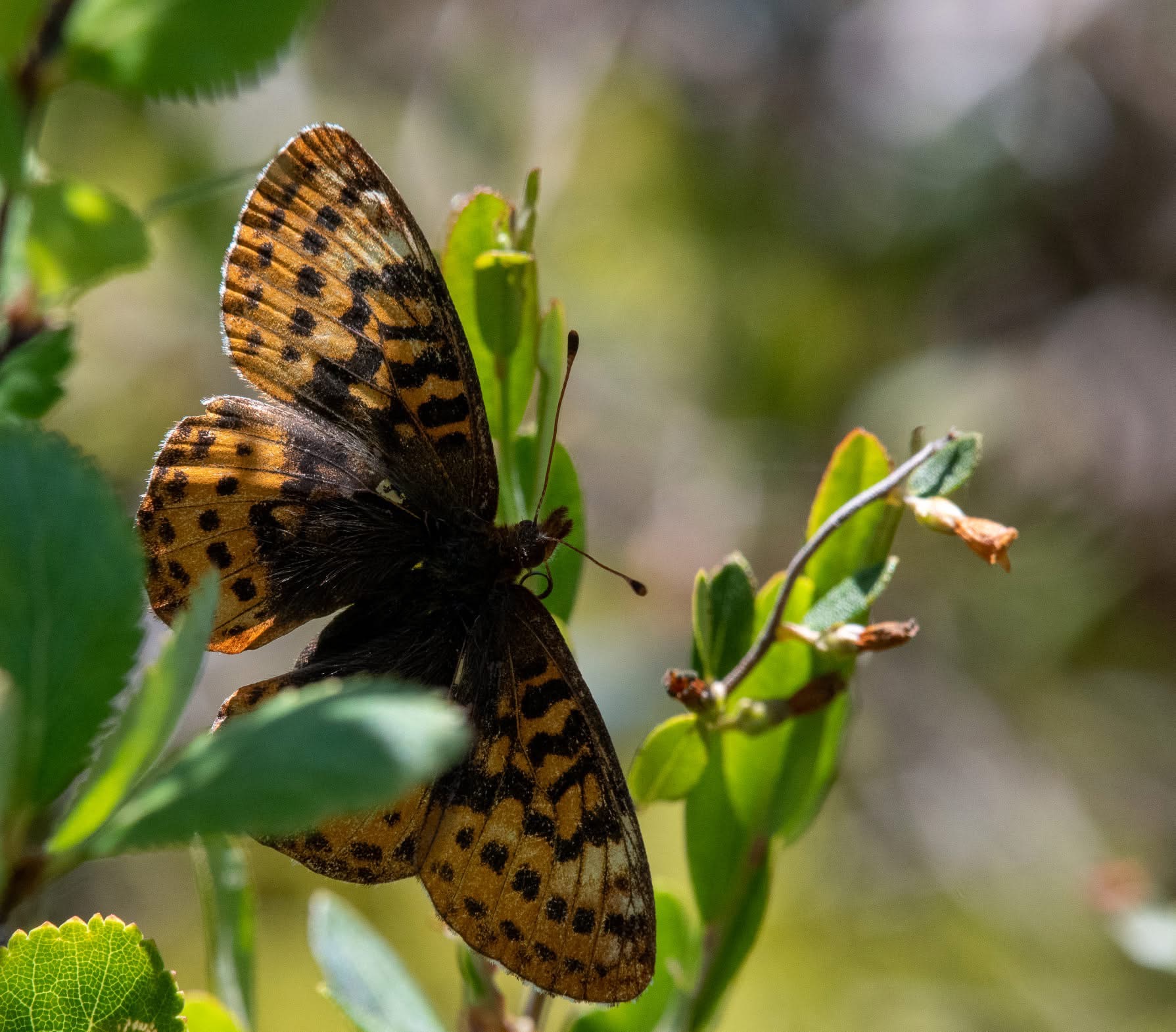 Photo Credits: Terry Mortier
Common Name: Frigga Fritillary
Scientific Name: Boloria frigga
Other Names: N/A
Genus: Boloria
Family: Brush - footed Butterflies Family
Group Behaviour: Frigga Fritillaries are known to be alone during flight and feeding on nectar from various flowers. During breeding season, drinking from mud puddles and rain puddles, and drinking the nutrients from animal poop they can be seen in small groups.
Body: Has a small to medium sized body like other fritillaries, and the body is orange - brown in colour featuring black or dark brown markings.
Wings: Has small to medium sized wings compared to other fritillary species. On the upperside the wings are primarily orange - brown, with a variety of black spots and markings. The underside exhibits a pink frosted appearance in the outer third, gradually transitioning to a deep purplish hue.
Colours: pale reddish - yellow with black markings.
Most Distinctive Features: The most distinctive feature of the Frigga Fritillary is the combination of their darker basal half of the dorsal wing surface, the solid black discal cell end bar on the forewing, and the purplish pink frosted underside hindwing.
Diet: As adults the primary food source for Frigga Fritillaries is nectar from various flowers.
Skin Type: Exoskeleton
Flight Period: Typically is from late May to early August.
Wingspan: 1 1/2 to 2 inches (3.8 to 5.1 cm) wide
Flight Pattern: The Frigga Fritillary has a moderate, zigzag flight pattern. This butterfly typically flies in a bobbing, and dodging manner.
Life History: Males patrol in low areas of willow bogs. Hibernation is by nearly full-grown caterpillars.
Lifespan: 10 - 14 days as an adult butterfly
Host Plants: Northern Bog Violet, Canada Violet, Downy Yellow Violet, Alpine Violet, and Woolly Blue Violet.
Favourite Flowering Plants For Nectar: Frigga Fritillaries are not as commonly seen on flowers compared to other butterflies. While not their primary food source, they have been observed on bog laurel and bog rosemary, which are common in their boggy habits. They are also seen visiting flowers such as Cardamine, Pedicularis, Polygonum, Salix, Sedum, and Valeriana. The Frigga Fritillary also drinks from puddles and mud as a food source, because they both provide salts and minerals that adult butterflies need.
The Frigga Fritillary (Boloria frigga) is a butterfly with a distinctive appearance, particularly on its underside. The upper surface of its wings is typically a pale reddish yellow with black markings, which are more pronounced towards the base and margins. The underside of the hindwing shows a pinkish-purple frost, especially on the outer third, and a prominent, off-white to silver oblong patch near the base of the costal margin.
This fritillary butterfly species is a rare and enchanting butterfly that thrives in cool, boggy landscapes and northern woodlands. Its rich orange wings, delicately patterned with black markings, give it a distinctive, understated beauty as it flutters through wet meadows in search of nectar. This species relies on native violets for its larvae, making conservation efforts crucial for its survival. By planting violets and maintaining damp, open spaces, you can create a welcoming habitat for this elusive fritillary, ensuring its graceful presence remains a part of the ecosystem for years to come.
Freija Fritillary (Boloria freija)
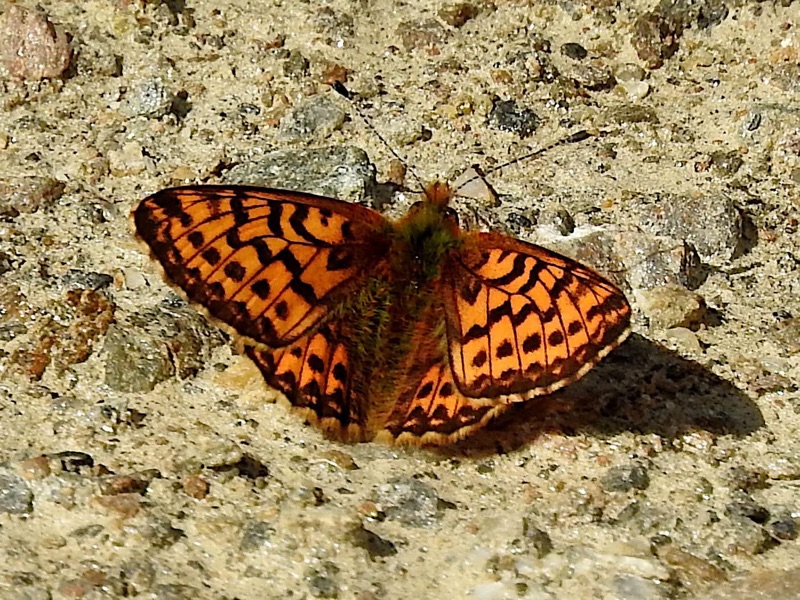 Photo Credits: Doug Taron
Common Name: Freija Fritillary
Scientific Name: Boloria freija
Other Names: Freyer’s Fritillary
Genus: Boloria
Family: Brush - footed Butterflies Family
Group Behaviour: Freija Fritillaries are generally solitary, but they tend to be in groups and not alone during the breeding season and feeding on puddles.
Body: Has a small to medium sized body like other fritillary species, and it is orange and brown with a bit of black markings.
Wings: Have small to medium sized wings like the Meadow Fritillary. Their wings are primarily orange with black blotches on the upperside, and a characteristic black zigzag line on the underside. The underside also features white arrowhead-shaped spots and a rust-red area with darker blotches.
Colours: orange, black, and white.
Most Distinctive Features: The most distinctive feature on the Freijga’s Fritillary is their jagged looking white markings.
Diet: As adults their primary food source is nectar from various flowers.
Skin Type: Exoskeleton
Flight Period: The flight period is typically from late May to early June.
Wingspan: Is typically 28 to 38 mm but their wingspan can get up to between 30 to 40 mm wide.
Flight Pattern: They are described as flying low and fast over grassy areas and especially near areas where their host plants are located.
Life History: Males patrol for females in open areas during warm hours. Females lay eggs on or near the host plants. Caterpillars feed on leaves; fourth-stage caterpillars overwinter.
Lifespan: 14 to 27 days as an adult butterfly
Host Plants: Canada Violet, Alpine Violet, Woolly Blue Violet, and Downy Yellow Violet.
*In the wild Freija Fritillaries are known to use Dwarf Bilberry, Wild Cranberry, and Heaths as host plants but they do prefer various Violet species. *
Favourite Flowering Plants For Nectar: Butterfly Weed, Mints, Common Milkweed, Thistles, Boneset, and Willows. The Freija Fritillary really enjoys sipping from rotting fruit and tree sap as a food source.
The Freija Fritillary (Boloria freija) is a small butterfly that has orange or tawny, upperside with black markings, and on the underside there is a black zigzag median line and arrowhead-shaped white spots at the outer margin of the hindwing. The hindwing also has a "duck head" pattern with a black "eye" and a silver-white "bill".
This fritillary species is a striking butterfly that graces bogs, wetlands, and northern forests with its warm orange wings patterned in deep black markings. This elusive species thrives in cool, undisturbed habitats, relying on native violets as host plants for its larvae. Supporting this fritillary means fostering wild spaces rich in nectar sources and maintaining moisture-rich landscapes where it can flourish. If you're looking to welcome a rare and resilient pollinator while contributing to conservation efforts, the Freija Fritillary is a perfect addition to your property’s ecosystem.
Arctic Fritillary (Boloria chariclea)
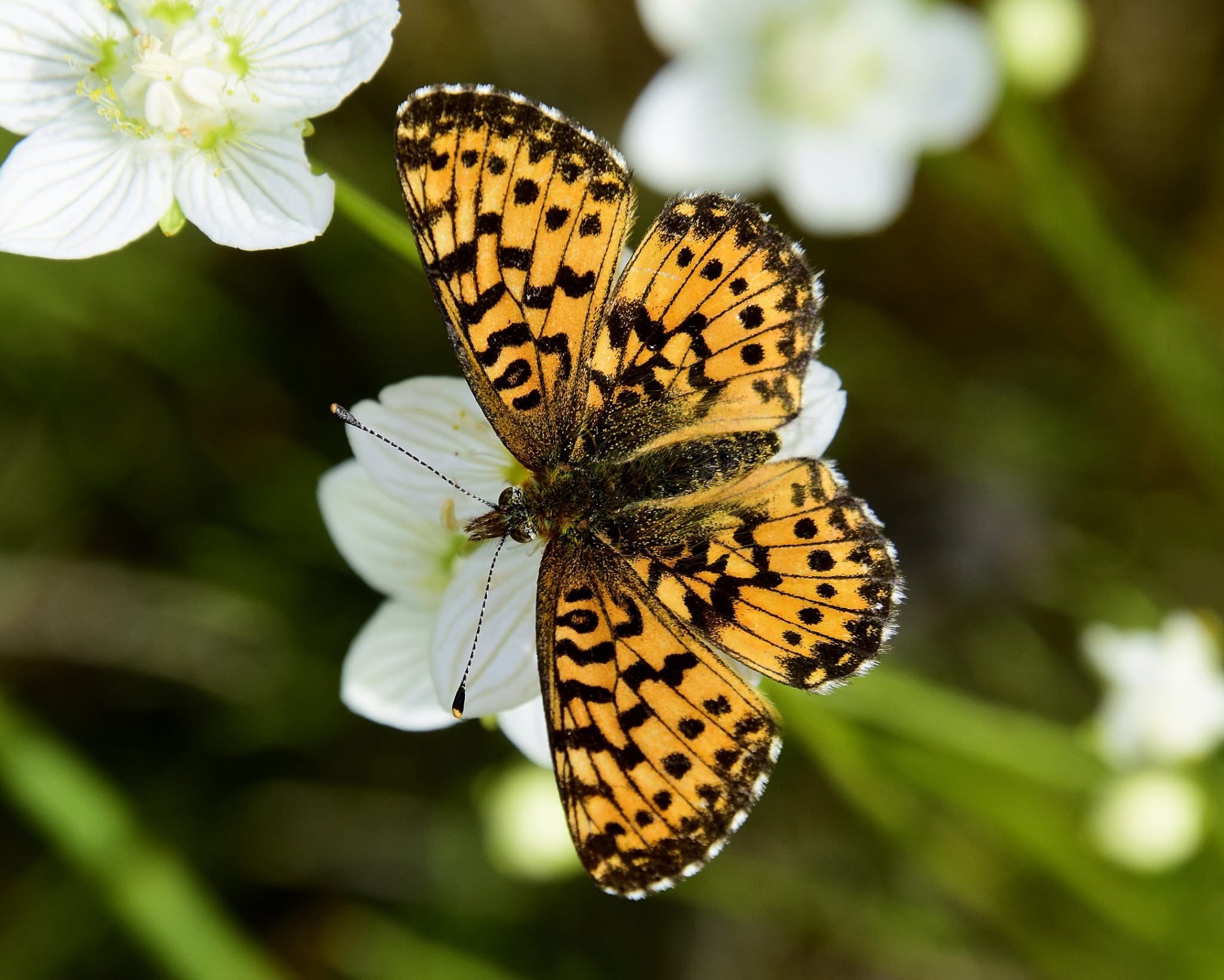 Photo Credits: Lotze Art & Design
Common Name: Arctic Fritillary
Scientific Name: Boloria chariclea
Other Names: Purplish Fritillary
Genus: Boloria
Family: The Brush - footed Butterflies Family
Group Behaviour: They exhibit solitary behaviours where this butterfly tends to be alone for most of the time, except for when it is mating season.
Body: Has a small body that is dark brown to black in colour, white freckle like spots at the bottom located near the abdomen, and is hairy or fuzzy all over.
Wings: The Arctic Fritillary has orange-brown wings with black blotches on the upper surface. The underside of the hindwing is characterized by a purplish or reddish-brown base with a broken yellow to rust-coloured band, and white marginal spots capped with black chevrons. A row of black spots is also present above these marginal spots.
Colours: orange, black, brownish - red, and yellow.
Most Distinctive Features: The most distinctive features of the Arctic Fritillary include its orange-brown wings with dark markings, particularly the complete series of black triangles with flat bottoms on the forewing. The underside of the hindwing also features a marginal row of white spots capped by brown crescents or triangles.
Diet: As an adult the Arctic Fritillary their primary food source is nectar from specific flowers.
Skin Type: Exoskeleton
Flight Period: Their flight period is generally from late June to August. There has been some sightings in the past of Arctic Fritillaries flying as late as September.
Wingspan: 32 to 44 mm (1.25 to 1.64 inches)
Flight Pattern: The Arctic Fritillary typically flies low to the ground, spending much of their time above and around vegetation. Their flight is characterized as quick and active, allowing it to move efficiently through its environment.
Life History: Males patrol during warm daytime hours along edges of bogs and in valleys. Females lay eggs singly on the lower surface of leaves of many different plants; caterpillars eat the leaves of their host plants. This species requires 2 years to mature in high elevations of Colorado, Alberta, and the arctic; newly-hatched caterpillars hibernate the first winter, fourth-stage caterpillars hibernate the second winter. In other locations newly-hatched caterpillars overwinter, then complete their development the following spring and summer.
Lifespan: two weeks
Host Plants: Alpine Violet, Canada Violet, Sweet White Violet, Downy Yellow Violet, and Woolly Blue Violet.
Favourite Flowering Plants For Nectar: Butterfly Weed, Mints, Common Milkweed, Spotted Joe Pye Weed, Sweet Joe Pye Weed, Buttonbush, Field Thistle, Goldenrod, Black eyed Susan, and Pale Purple Coneflower.
The Arctic Fritillary (Boloria chariclea) is a small, orange-brown butterfly with distinctive markings. The upper surface is typically orange-brown with black markings, and the underside of the hindwings features a marginal row of white spots capped by brown crescents or triangles.
This fritillary butterfly species is a fascinating species adapted to cold climates, with a wingspan of about 3.5 to 5 cm. Its wings are a vibrant orange with intricate black spots, allowing it to blend into its tundra or alpine meadow habitats. To support and attract this unique butterfly, planting native violets is key, as they serve as host plants for their caterpillars.
Regal Fritillary (Speyeria idalia)
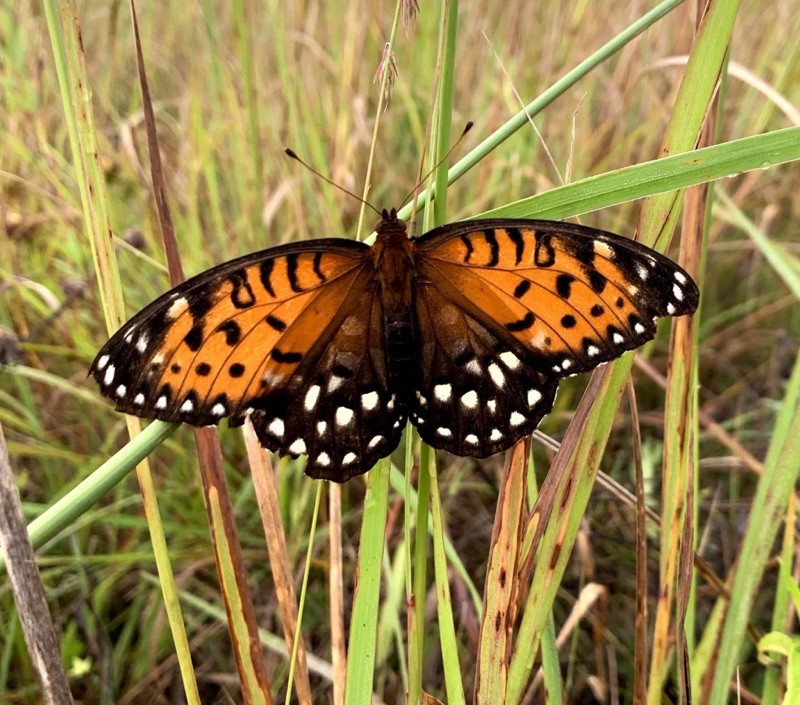 Photo Credits: Anna Delafuente
Common Name: Regal Fritillary
Scientific Name: Speyeria idalia
Other Names: N/A
Genus: Speyeria
Family: The Brush - footed Butterflies Family
Group Behaviour: Regal Fritillaries don’t form large social groups, and they tend to be on their own. They do gather in areas where their host plants and nectar sources are abundant, where more than one of them can be seen in those areas.
Body: Has a medium to large body compared to other fritillary butterflies, and it is brownish black in colour.
Wings: Their forewings are a bright rusty orange colour with black markings, and a row of white flecks along the outer margin. The hindwings are mostly black, with a row of white spots curving across the middle of the wing (a postmedian row) and another row of spots closer to the outer margin.
Colours: bright orange, black, white, and dark brown.
Most Distinctive Features: The Regal Fritillary’s most distinctive features include their large size, unique wing colouration, and striking pattern.
Diet: As an adult their primary food source is nectar from various flowers.
Skin Type: Exoskeleton
Flight Period: Their flight period spans from June to September.
Wingspan: 68 to 105 mm (2.7 to 4.1 inches)
Flight Pattern: The Regal Fritillary exhibits a circular flight pattern. They are also known for a floating and graceful flight.
Life History: Males patrol for females with a low, steady flight. Females walk through vegetation to lay single eggs on various plants, even if the host violets are not present. Most eggs are laid in August. The caterpillars hatch and overwinter unfed; in spring they eat leaves of host plants.
Lifespan: 14 to 60 days
Host Plants: Woolly Blue Violet, Northern Bog Violet, Canada Violet, Dog Violet, and Birdfoot Violet.
Favourite Flowering Plants For Nectar: Butterfly Weed, Dense Blazing Star, Wild Bergamot, Cylindrical Blazing Star, Scarlet Bee Balm, Black eyed Susan, Pale Purple Coneflower, Sweet Joe Pye Weed, Tall Ironweed, Spotted Joe Pye Weed, and Field Thistle.
The Regal Fritillary (Speyeria idalia) is a large butterfly known for its vibrant orange and black wings. It's one of the largest and most easily identifiable of the "greater fritillaries". The forewings are typically orange with black spots and a dark border, while the hindwings are darker and have a pattern of white spots or orange spots.
This fritillary species is quite a stunner with its orange and black wings. It's rare and prefers prairies and meadows.
The Regal Fritillary is a striking butterfly found in the tall grass and mixed grass prairies. It has a deep orange colour with dark hindwings featuring two bands of spots, that are white on females and orange on males.
Ontario is home to several native fritillary butterfly species, including the **Meadow Fritillary** (*Boloria bellona*) and the **Atlantis Fritillary** (Speyeria atlantis). These butterflies, with their intricate orange and black patterns, are not just beautiful—they play a vital role in pollination and maintaining the delicate balance of local ecosystems. However, habitat loss has made it increasingly difficult for them to thrive. By planting native wildflowers such as violets, milkweed, and coneflowers, homeowners can create safe havens for these butterflies, ensuring their continued presence in Ontario’s landscapes. Supporting these species isn’t just an act of conservation—it’s an invitation to witness nature’s artistry unfold right in your own backyard.
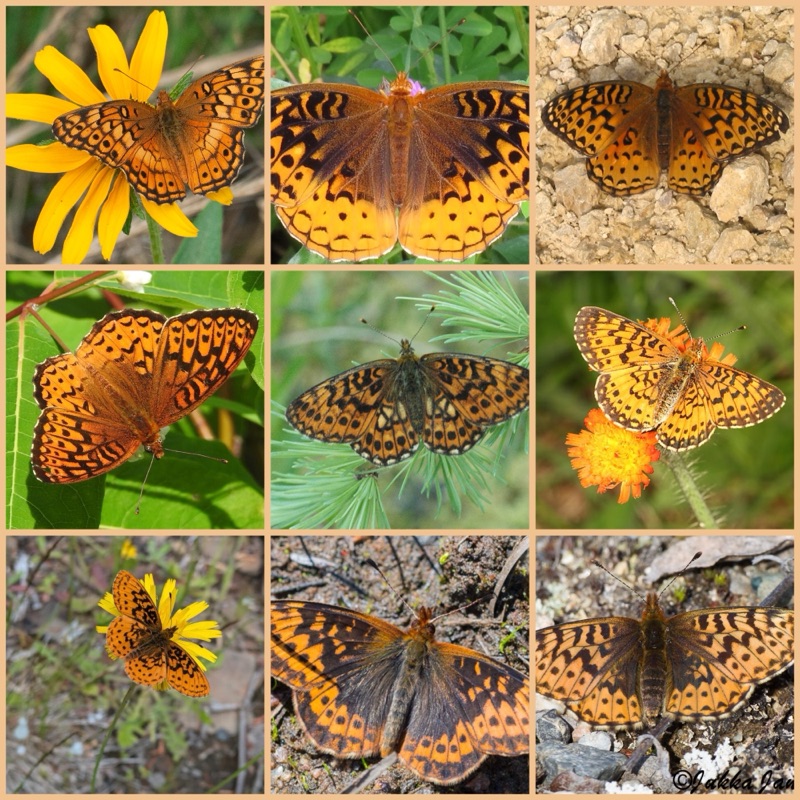 Photo Credits: Sarah Bright, Rob Van Epps, Prairie Haven, Tom Dudones, wisconsinbutterflies.org, Tom Murray, mellenhead14, Larry de March, and Frogbandit.
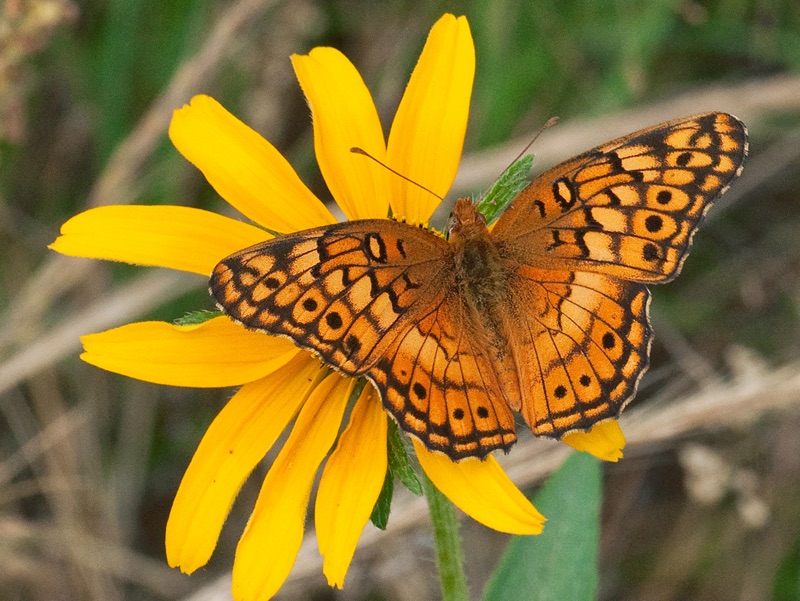 Photo Credits: Sarah Bright
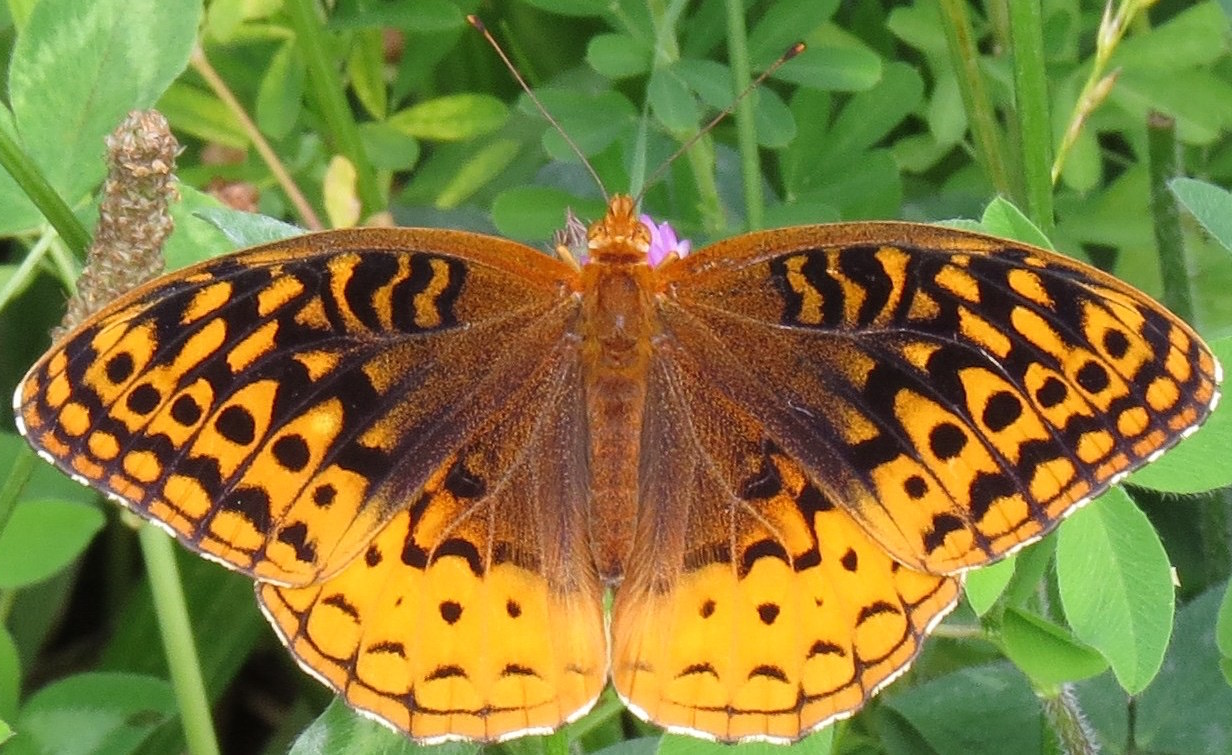 Photo Credits: Rob Van Epps
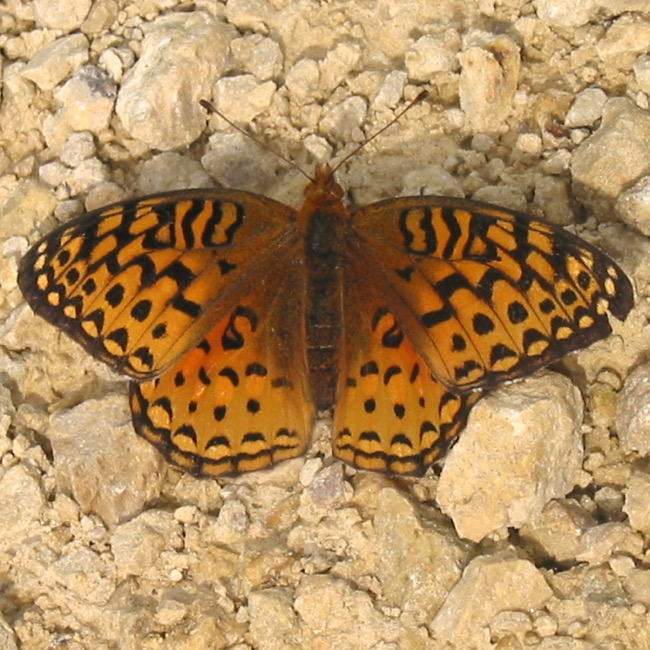 Photo Credits: Prairie Haven
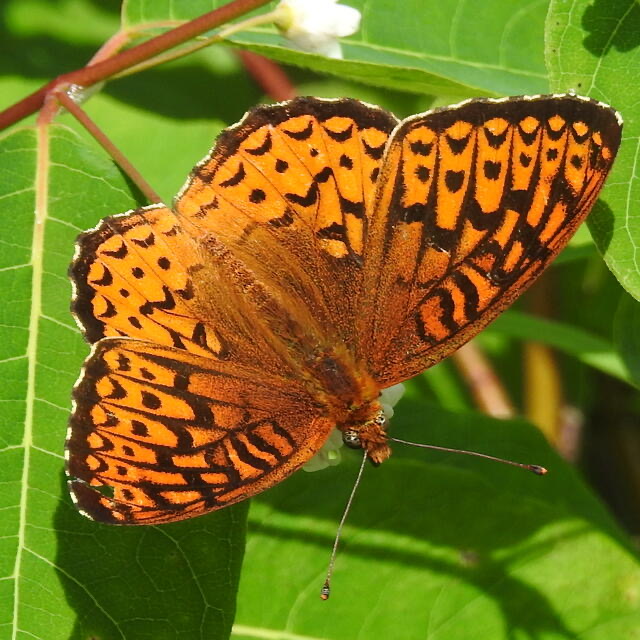 Photo Credits: Tom Dudones
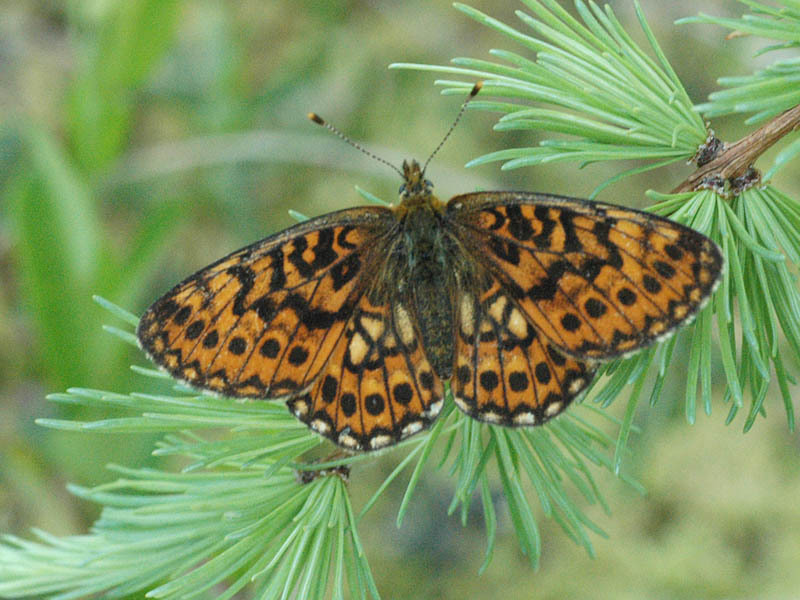 Photo Credits: wisconsinbutterflies.org
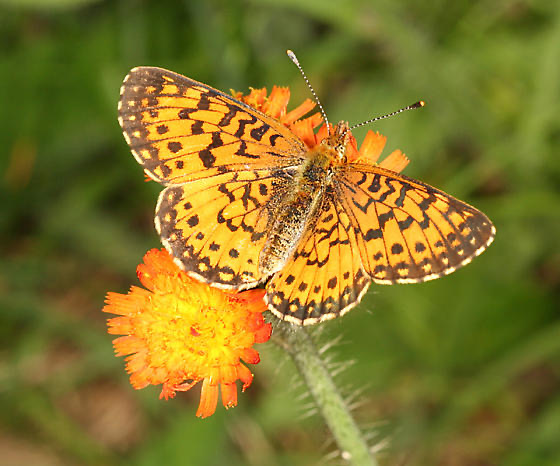 Photo Credits: Tom Murray
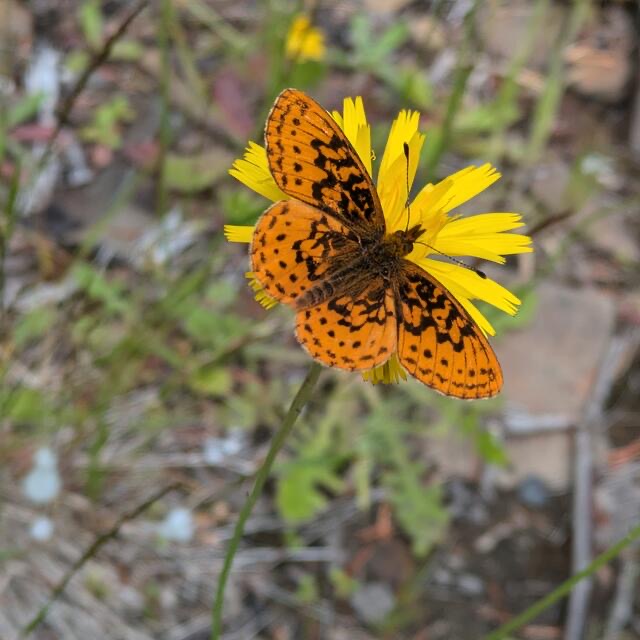 Photo Credits: mellenhead14
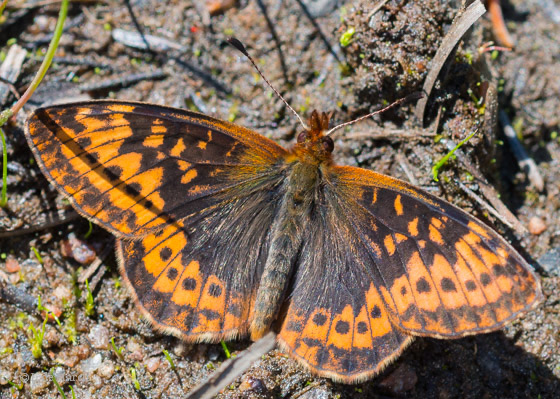 Photo Credits: Larry de March
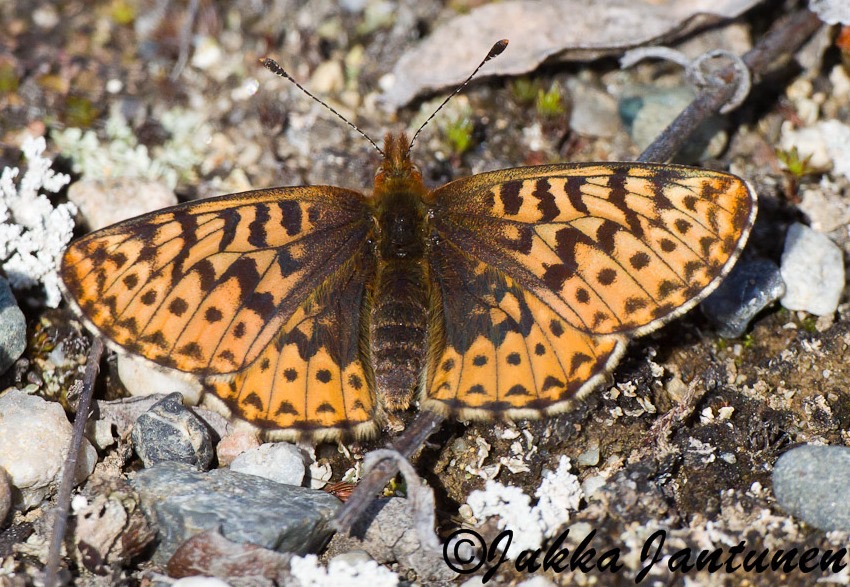 Photo Credits: frogbandit


Comments
Post a Comment